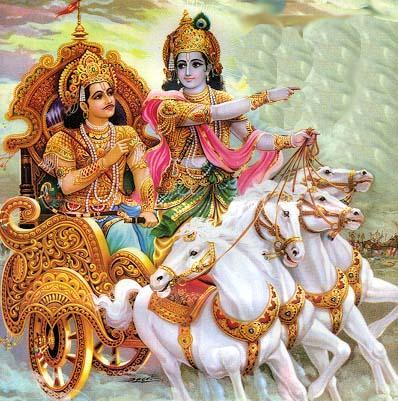
|
1 Introduction. Krishna’s Peace Mission, Vidura’s Wisdom, Kuru War Foretold.
40 33.6 28 |
| 2 Sanat-sujata Parva. Sanat-sujata’s Wisdom, Kuru Debate, Krishna’s Divinity Revealed. 31 104.3 1:26:55 |
| 3 Bhagwat Yana Parva. Krishna’s Embassy, Divine Revelation, Karna’s Choice, War Begins. 89 302.9 4:12:25 |
| 4 Uluka Dutagamana Parva. Uluka’s Taunts, Bhishma’s Vow, Shikhandi’s Destiny, Armies March. 39 142 1:58:20 |
1 Introduction. Krishna’s Peace Mission, Vidura’s Wisdom, Kuru War Foretold. 40 33.6 28
|
2 Sanat-sujata Parva. Sanat-sujata’s Wisdom, Kuru Debate, Krishna’s Divinity Revealed.
31 104.3 1:26:55
|
|
|
1  Mahabharata
18 12,829 178:11 Mahabharata
18 12,829 178:11
|
Menus
| Total 983.6 13:40 |
| 0 Intro Menu. 56w Words. :14 Seconds |
| 1 #s Menu. 2.6 2:10 |
| 2 10 Word Menu. 10.5 8:45 |
| 3 50 Word Menu. 35.4 29:30 |
| 4 250 Word Menu. 174.8 2:25:40 |
| 5 Original. 744 16:35:23 |
|
Page Data
| 1 Chapters 4/199 |
| 2 Pages per chapter. 3.74 |
| 3 Years per page. ? |
|
Views
 |
 Visitors Visitors
 |
3 Bhagwat Yana Parva. Krishna’s Embassy, Divine Revelation, Karna’s Choice, War Begins.
89 302.9 4:12:25
|
4 Uluka Dutagamana Parva. Uluka’s Taunts, Bhishma’s Vow, Shikhandi’s Destiny, Armies March.
39 142 1:58:20
|
|
1 5 Udyoga Parva. 10 Word Menu. 4/199 744 16:35:23 
1 Introduction. Krishna’s Peace Mission, Vidura’s Wisdom, Kuru War Foretold. 40 33.6 28
|
| 9 Indra's fear, hubris, violence birth Vritra; gods retreat, seek Vishnu.. |
| 10 Indra tricks Vritra via Vishnu, wins, then vanishes burdened by guilt.. |
| 11 Nahusha crowned, grows virtuous arrogant, lusts after Sachi, downfall begins.. |
| 12 Nahusha lusts, defies counsel; Sachi delays, Vrihaspati protects, downfall approaches.. |
| 13 Sachi delays Nahusha; Vishnu purifies Indra; sacrifice restores hope.. |
| 14 Divination guides Sachi to hidden Indra; she urges his return.. |
| 15 Indra plots Nahusha’s fall; Sachi tricks him into abusing sages.. |
| 16 Agni finds Indra; gods unite, restore him, prepare Nahusha’s overthrow.. |
|
| 17 Agastya curses Nahusha; pride destroys him, Indra restored, cosmos rejoices.. |
| 18 Indra returns triumphant; lesson of endurance, righteousness, destiny assures Pandavas’ victory.. |
| 19 Pandava allies assemble seven Akshauhinis; Kauravas muster eleven, covering Kurujangala.. |
| 20 Pandava priest urges justice, peace; warns Kurus against war’s ruin.. |
| 21 Bhishma supports Pandavas’ rights; Karna protests; Dhritarashtra sends Sanjaya.. |
| 22 Dhritarashtra urges peace, sends Sanjaya, fearing Pandavas’ power and righteousness.. |
| 23 Sanjaya meets Yudhishthira; mutual courtesies, concerns for elders, warnings recalled.. |
| 24 Sanjaya reports state, recalls Pandava might, urges peace, delivers message.. |
|
| 25 Sanjaya urges peace, praises Pandavas, warns war, conveys Dhritarashtra’s plea.. |
| 26 Yudhishthira favors peace, condemns Kaurava counsel, demands Indraprastha only.. |
| 27 Sanjaya urges peace, renunciation of desire, warns war destroys virtue.. |
| 28 Yudhishthira defends conditional duty, rejects unrighteous gain, defers final judgment Krishna.. |
| 29 Krishna upholds action, condemns injustice, seeks peace, warns inevitable war.. |
| 30 Sanjaya departs bearing universal goodwill; peace urged, Indraprastha demanded or war.. |
| 31 Yudhishthira seeks unity, forgives wrongs, asks five villages to avert war.. |
| 32 Sanjaya returns, reports Pandavas’ goodwill, rebukes Dhritarashtra, warns Kuru destruction.. |
|
| 33 Vidura counsels Dhritarashtra: unrest from injustice; restore Pandavas, save dynasty.. |
| 34 Vidura warns Dhritarashtra: injustice, uncontrolled senses doom Kurus; heed Yudhishthira. |
| 35 Vidura urges truth, kindness, warns favoritism toward Duryodhana brings ruin. |
| 36 Vidura teaches restraint, truth, unity; urges peace, warns pride destroys dynasties. |
| 37 Vidura warns folly destroys kings; urges peace, intellect, restraint, Pandavas lions. |
| 38 Vidura teaches hospitality, restraint, secrecy, wise trust; unworthy power brings ruin. |
| 39 Vidura urges abandoning Duryodhana, favor Pandavas, choose virtue over destiny.. |
| 40 Vidura urges virtue; Dhritarashtra acknowledges wisdom yet clings Duryodhana still.. |
|
|
2 Sanat-sujata Parva. Sanat-sujata’s Wisdom, Kuru Debate, Krishna’s Divinity Revealed. 31 104.3 1:26:55
|
|
| 53 Dhritarashtra foresees Pandavas’ might, regrets war, urges peace, admits blindness.. |
| 54 Sanjaya rebukes king: injustice doomed Kurus; heed warnings, restrain sons.. |
| 55 Duryodhana boasts confidence, claims superior army, predicts certain victory.. |
| 56 Sanjaya describes Pandavas’ divine chariots, celestial steeds, confident readiness for war.. |
| 57 Pandavas assemble vast allies, assign foes; Dhritarashtra fears sons’ defeat.. |
| 58 Dhritarashtra begs peace; Duryodhana defies, sealing Kauravas’ tragic destruction.. |
|
| 59 Sanjaya meets Krishna, Arjuna; peace urged, war inevitable, Pandavas destined victorious.. |
| 60 Dhritarashtra foresees Pandavas’ divine strength, urges peace to avert destruction.. |
| 61 Duryodhana mocks gods, boasts invincibility, arrogance sealing inevitable downfall.. |
| 62 Duryodhana mocks gods, boasts invincibility, arrogance sealing inevitable downfall.. |
| 63 Duryodhana boasts solo victory; Vidura extols self-restraint, virtue, true success.. |
| 64 Vidura warns division breeds ruin; unity preserves kin, peace averts destruction.. |
|
|
|
3 Bhagwat Yana Parva. Krishna’s Embassy, Divine Revelation, Karna’s Choice, War Begins. 89 302.9 4:12:25
| 72 Yudhishthira asks Krishna for help, fearing for his safety. Krishna reassures him, offering to negotiate a peace. |
| 73 Krishna urges Yudhishthira to fight, citing Duryodhana's wrongdoings and deserving of death. |
| 74 Bhima urges Krishna to approach Duryodhana with mildness, fearing his wrath will destroy their race. |
| 75 Kesava surprises Bhima, recalling his vows to slay Duryodhana, and urges him to stand firm as a Kshatriya. |
| 76 Bhima boasts, "My arms can crush anyone! I'll trample all Kshatriyas!" |
| 77 Krishna tells Bhima, "I spoke out of affection. Success comes from Destiny and Exertion. War's burden will be on you and Arjuna." |
| 78 Arjuna: "O Krishna, strive for peace or accomplish our good. Duryodhana deserves destruction for his evil deeds." |
| 79 Krishna: "I'll strive for peace, but it's unlikely with Duryodhana." |
| 80 Nakula: "Speak words of mildness and threat, Krishna, and accomplish Yudhishthira's object." |
|
|
| 91 Krishna refused Duryodhana's offers, supporting the virtuous Pandavas. |
| 92 Vidura warned Krishna of Duryodhana's wicked nature and cautioned him against entering a hostile environment. |
| 93 Krishna sought to liberate the earth from calamity, believing his efforts would have merit even if unsuccessful. |
| 94 Krishna and Vidura conversed, then Krishna proceeded to court, surrounded by soldiers and citizens, and took his seat in silence. |
| 95 Krishna urged Dhritarashtra to establish peace, warning of danger and destruction. |
| 96 Jamadagni's son warned Duryodhana: pride leads to defeat, make peace with Pandavas. |
| 97 Kanwa urged Duryodhana to make peace, citing eternal powers and wisdom over strength. |
| 98 Narada and Matali searched for a husband for Matali's daughter in Varuna's realm, beholding wonders. |
| 99 Narada described Patalam's wonders, seeking a bridegroom for Matali's daughter, but Matali saw none, fascinated by a mysterious egg. |
| 100 Narada showed Matali Hiranyapura, where powerful Danavas lived, but Matali refused to search for a bridegroom there due to god-Danava hostility. |
|
| 101 Narada described birds, descendants of Garuda, who subsist on snakes and worship Vishnu, but lack compassion. |
| 102 Narada: "We're in Rasatala, where Surabhi's milk creates the Milky Ocean." |
| 103 Narada: "Bhogavati, ruled by Vasuki, king of Nagas. Shesha supports the earth." |
| 104 Narada praises Matali, strong and virtuous. Sumukha marries Gunakesi, granted immortality. |
| 105 Garuda boasts of his strength, challenges Indra, and is humbled by Vishnu's power. |
| 106 Narada tells the story of Galava and Viswamitra, where Galava fulfills a difficult task to grant his preceptor's wish. |
| 107 Galava, filled with regret, seeks Vishnu's help. Garuda appears, offering to take him to Vishnu. |
| 108 Garuda asks Galava to choose a direction: east (sacred), south (ancestors), west (sunset), or north (gods). |
| 109 Garuda describes Dakshina, where Pitris and celestials reside, and legendary events unfolded. |
| 110 Garuda describes the western quarter, favored by King Varuna, where the sun's rays dismiss at day's end. |
|
| 111 Garuda describes the northern quarter, where virtue reigns, and Krishna, Jishnu, and Brahman reside. |
| 112 Galava asks Garuda to take him to the east, where gods reside, and is overwhelmed by Garuda's speed and beauty. |
| 113 Garuda's wings fell off after eating with Sandili, but she forgave him and restored them, warning against contempting women. |
| 114 Garuda advises Galava to seek wealth from King Yayati, who has immense wealth, to pay off his debt to Viswamitra. |
| 115 Yayati gives his daughter Madhavi to Galava as alms. |
| 116 Madhavi proposes a solution to Galava's demand for 800 steeds. |
| 117 Divodasa marries Madhavi, fathers Pratardana. |
| 118 Galava offers Madhavi to Usinara for 400 steeds. |
| 119 Garuda advises Galava to offer Madhavi and 600 steeds to Viswamitra. |
| 120 Madhavi chooses forest over Swayamvara, Yayati becomes proud and falls from grace. |
|
|
|
| 141 Karna reveals his past to Krishna, refusing to join the Pandavas due to loyalty to Duryodhana. |
| 142 Krishna tells Karna that the Pandavas' victory is certain, their banner a symbol of triumph. He warns Karna of the impending battle, where the Pandavas will fight with all their might, and the sound of Gandiva will pierce the sky. He instructs Karna to inform the other kings that the time for battle has come, and those who die will attain an excellent state. |
| 143 Karna acknowledges defeat, describing omens and visions of Pandava victory. |
| 144 Kunti decides to use a boon to summon Surya, Karna's father, to persuade him to join the Pandavas. |
| 145 Kunti reveals to Karna that he is her son, born of Surya, and urges him to join the Pandavas. |
| 146 Karna refuses to join Pandavas, seeking redemption through fighting Arjuna. |
| 147 Bhishma advises Duryodhana to make peace with the Pandavas. |
| 148 Drona and Vidura urge Duryodhana to make peace with the Pandavas. |
| 149 Dhritarashtra advises Duryodhana to yield to Yudhishthira's rightful claim. |
| 150 Duryodhana refuses to yield to Yudhishthira's rightful claim. |
|
| 151 Yudhishthira chooses Dhrishtadyumna as leader. |
| 152 Pandava army marches to Kurukshetra, blows conchs, roars with joy. |
| 153 Yudhishthira's army encamps at Kurukshetra, preparing for battle. |
| 154 Duryodhana prepares for war, setting up camps on Kurukshetra. |
| 155 Yudhishthira seeks Krishna's guidance, warning of Duryodhana's deceit. |
| 156 Duryodhana distributed his troops, equipping them with weapons and ornaments. |
| 157 Dhritarashtra's son asked Bhishma to lead their army. |
| 158 Yudhishthira prepared for battle, appointing leaders, as Balarama arrived and departed. |
| 159 Rukmi offered to help Arjuna, but was declined and departed. |
| 160 Dhritarashtra felt trapped by Duryodhana's actions, Sanjaya attributed war to destiny. |
|
|
|
4 Uluka Dutagamana Parva. Uluka’s Taunts, Bhishma’s Vow, Shikhandi’s Destiny, Armies March. 39 142 1:58:20
| 161 Duryodhana sent Uluka to taunt the Pandavas, mocking Bhima's past as a cook and Arjuna's boasts. He claimed his army was unbeatable, like an uncrossable ocean, and ridiculed their allies. He said the Pandavas would repent and be crushed, with none spared. |
| 162 Uluka taunts Pandavas, mocking their past defeats. |
| 163 Uluka provokes Pandavas, Bhima vows to slay Duryodhana. |
| 164 Arjuna vowed to slay Bhishma, Bhima to quaff Dussasana's blood. |
| 165 Yudhishthira's army prepared to face the Kauravas, with key warriors assigned to battle each other. |
| 166 Bhishma boasted of his prowess, listing skilled warriors in the Kaurava army. |
| 167 Bhishma praised Kaurava warriors, naming notable Rathas. |
| 168 Bhishma praised Kaurava warriors, naming notable Rathas and Maharathas. |
| 169 Bhishma criticized Karna, calling him half a Ratha, leading to a heated exchange. |
| 170 Bhishma praised the Pandavas' strength, citing Arjuna as a mighty Ratha. |
|
| 171 Bhishma praised Abhimanyu, Satyaki, and others as powerful allies of the Pandavas. |
| 172 Bhishma praised Sikhandin, Dhrishtadyumna, and others as mighty warriors. |
| 173 Bhishma praised warriors, predicting great feats, and vowed to fight with honor, except against Sikhandin. |
| 174 Bhishma defeated suitors in battle, taking three maidens by force, showcasing strength and valor. |
| 175 Amva begged Bhishma to let her go, revealing she had chosen another husband. |
| 176 Amva pleaded with Salwa, but he rejected her, fearing Bhishma. |
| 177 Amva, rejected by Salwa, sought redemption in ascetic life. |
| 178 Amva sought ascetic life; Hotravahana advised seeking Rama's help. |
| 179 Amva chose Rama to defeat Bhishma in battle. |
| 180 Rama vowed to slay Bhishma if necessary. |
|
| 181 Bhishma and Rama faced off, refusing to back down. |
| 182 Bhishma and Rama fought fiercely, then Bhishma sought forgiveness. |
| 183 Bhishma and Rama fought fiercely, exchanging arrows. |
| 184 Bhishma and Rama fought fiercely, exchanging celestial weapons. |
| 185 Bhishma and Rama fought fiercely, with Brahmanas reviving Bhishma. The battle raged on for 23 days. |
| 186 Bhishma sought help from the gods and Brahmanas, and in a dream, they revealed the secret of the Praswapa weapon. |
| 187 Bhishma and Rama clashed, exchanging arrows. The Brahma weapon was invoked, causing chaos. Bhishma recalled the Praswapa weapon. |
| 188 Bhishma and Rama clashed, but celestial voices intervened, ending the battle with mutual respect. |
| 189 Maiden sought revenge on Bhishma, practiced asceticism, became a river. |
| 190 Princess of Kasi sought revenge, practiced austerities, and became Shikhandi, destined to defeat Bhishma, with Lord Rudra's promise. |
|
| 191 King Drupada's child, Shikhandi, born a daughter, later became a man. |
| 192 Drupada raised Shikhandi as a son, but her true gender was discovered, enraging King Hiranyavarman. |
| 193 King Drupada sought his wife's counsel, fearing Hiranyavarman's wrath over Sikhandin's gender. |
| 194 Sikhandin's mother revealed the truth to King Drupada, and Sikhandin sought a Yaksha's boon to become a man. |
| 195 Sikhandin, a woman, became a man with Yaksha's help. Bhishma vowed not to slay her. |
| 196 Duryodhana asked Bhishma how long to defeat Pandavas. Bhishma said a month. Karna boasted five days, but Bhishma doubted him. |
| 197 Arjuna boasted he could exterminate the three worlds with Vasudeva's help. He listed their allies, saying they could slay the celestial army. Yudhishthira expressed confidence in their strength. |
| 198 Kings marched against Pandavas, purified and armed. Led by Duryodhana, they included Vinda, Bhishma, and others, ready for battle. |
| 199 Yudhishthira's army marched against the Kauravas, led by Dhrishtadyumna and other warriors, with thousands of elephants, horses, and foot-soldiers. |
|
|
|
|
2 5 Udyoga Parva. 50 Word Menu. 4/199 744 16:35:23
1 Introduction. Krishna’s Peace Mission, Vidura’s Wisdom, Kuru War Foretold. 40 33.6 28
| 1 After Abhimanyu’s wedding, the Pandavas and allied kings gathered in Virata’s court. Krishna recalled Yudhishthira’s unjust defeat, exile, and fidelity to truth, urging a righteous solution. He proposed sending a virtuous envoy to seek half the kingdom peacefully, and the assembly agreed, recognizing the moment’s grave importance. |
| 2 Baladeva urged a conciliatory approach, proposing a respectful envoy to learn Duryodhana’s intentions and seek peace. He argued Yudhishthira’s loss stemmed from his own error at dice, not deceit, and warned war would be costly. Conciliation, he said, might secure lasting peace—but Sini’s son angrily opposed him.. |
| 3 Satyaki angrily denounced Baladeva as cowardly, declaring Yudhishthira was cheated at dice and owed his kingdom. Begging, he said, was disgraceful; war was righteous. He vowed to fight, boasting no warrior could withstand his fury, and promised to restore Yudhishthira by force.. |
| 4 Drupada warned Duryodhana would never yield peacefully and mild words would fail. Dhritarashtra, Bhishma, and Drona would side with him. Therefore war was inevitable. He urged immediate preparation, summoning allies and armies, and sending a learned priest to convey a firm, unambiguous message to the Kurus.. |
| 5 Krishna urged a diplomatic attempt through Virata, respected by the Kurus, to seek fair peace. If refused, war would follow. Virata sent Krishna home; the Pandavas prepared for battle, summoned allies, filled the land with armies, and dispatched Drupada’s priest to deliver their message.. |
|
| 6 Drupada praised his learned priest and tasked him to address Dhritarashtra with righteous words, exposing the Pandavas’ injustices and hardships. By influencing Vidura, Bhishma, and Drona, he would weaken Kuru unity. Sent under auspicious signs, the priest departed for Hastinapura to serve Pandu’s sons.. |
| 7 Dhananjaya and Duryodhana sought Krishna’s aid. Though Duryodhana arrived first, Arjuna was seen first and chose Krishna himself, unarmed. Duryodhana took the Narayana army and rejoiced. Krishna became Arjuna’s charioteer, valuing wisdom over numbers, and returned with him, alliances set.. |
| 8 Salya advanced with an Akshauhini. Duryodhana deceived him with lavish hospitality, won a boon, and secured his command. Salya later honored the Pandavas, praised Yudhishthira’s virtue, revealed his pledge, and agreed to undermine Karna as charioteer. He consoled Yudhishthira, affirming destiny, patience, and Draupadi’s coming joy after exile, war awaited.. |
| 9 Salya narrates Indra’s suffering: Twashtri’s three-headed ascetic slain by Indra, sin incurred, Vritra’s creation, gods defeated and Indra swallowed. Escaping through divine aid, Indra and the gods, terrified and weakened, retreat to Mount Mandara and finally seek refuge in Vishnu alone.. |
| 10 Indra, helpless before all-pervading Vritra, sought Vishnu’s aid. Vishnu devised a stratagem: peace was made under strict conditions. At twilight, Indra slew Vritra with sea-foam empowered by Vishnu. Though victorious, Indra was overwhelmed by guilt, vanished, and left the world leaderless and afflicted.. |
|
| 11 After Indra vanished, the gods crowned Nahusha king. Ruling virtuously at first, Nahusha grew arrogant and sensual, intoxicated by power. Desiring Sachi, Indra’s queen, he demanded her. She fled to Vrihaspati, who protected her. Nahusha’s pride and lust thus set the stage for his inevitable downfall.. |
| 12 When Nahusha lusted after Sachi, the gods warned him to restrain himself, but he ignored them. Sachi sought refuge with Vrihaspati, who refused to betray her. By divine counsel, she asked Nahusha for time, a delay meant to undo him, as pride ripens toward ruin.. |
| 13 Nahusha demanded Sachi submit; she cleverly asked time to learn Indra’s fate. The gods sought Vishnu, who prescribed a horse-sacrifice to purify Indra. Though restored, Indra hid again. Despairing, Sachi prayed to Night and Truth, seeking Indra’s whereabouts through chastity and righteousness.. |
| 14 Divination appeared to chaste Sachi and guided her to Indra’s hiding place in a lotus lake beyond Himavat. Finding him reduced and concealed, Sachi praised his deeds and revealed Nahusha’s tyranny. She implored Indra to return, destroy Nahusha, reclaim heaven, and restore righteousness and cosmic order.. |
| 15 Indra warned Sachi that force would fail and devised a ruse: Nahusha must approach her borne by great Rishis. Flattered, Nahusha arrogantly agreed, abusing holy sages. Vrihaspati assured Sachi that this sacrilege sealed Nahusha’s doom, while Agni searched in vain for Indra, unable to enter the waters.. |
|
| 16 Vrihaspati urged Agni into the waters, where he found Indra hidden in a lotus. The gods restored Indra’s strength, recalled Nahusha’s tyranny, and pledged aid. Indra granted each deity sovereign shares in sacrifice, forging unity to overthrow Nahusha and restore cosmic order.. |
| 17 Agastya told Indra that Nahusha, drunk with power, insulted sages, denied the Vedas, and struck Agastya. For abusing holy Rishis, his merit was exhausted. Agastya cursed him to fall from heaven and live ten thousand years as a serpent. Indra was restored, and all beings rejoiced.. |
| 18 Salya said Indra, after exile and misery, returned triumphant, restored order, and rejoined Sachi. Likewise, Yudhishthira would regain his kingdom after suffering. As Nahusha fell through pride, so Duryodhana would perish. This sacred tale grants victory and merit. Salya agreed to weaken Karna as his charioteer.. |
| 19 Vaisampayana said mighty allies gathered for both sides. Seven Akshauhinis assembled for the Pandavas under Yuyudhana, Drupada, Virata, and others. Duryodhana mustered eleven Akshauhinis from many kings. The Kaurava host overflowed Kurujangala, filling plains and forests with awe-inspiring armies.. |
| 20 Vaisampayana said Drupada’s priest urged the Kurus to honor justice: Pandu’s sons were rightful heirs, unjustly dispossessed and grievously wronged. Despite suffering exile and insult, they now sought peace, not war. With mighty allies and Krishna’s support, resistance meant ruin; righteousness demanded restoring their lawful share.. |
|
| 21 Bhishma honored the priest, affirmed the Pandavas’ rightful claim, and praised Arjuna’s unmatched might. Karna objected, insisting the dice loss was binding and mocking peace. Bhishma rebuked him. Dhritarashtra supported Bhishma, dismissed the priest honorably, and sent Sanjaya to negotiate further with the Pandavas.. |
| 22 Dhritarashtra sent Sanjaya to Upaplavya to seek peace, praising the Pandavas’ virtue and admitting their suffering was unjust. He warned that opposing Yudhishthira, Arjuna, Krishna, and Bhima meant ruin. Urging gentle speech, he asked Sanjaya to convey goodwill and avert a war that would destroy the Kurus.. |
| 23 Sanjaya greeted Yudhishthira at Upaplavya with Dhritarashtra’s goodwill. Yudhishthira welcomed him warmly, enquired after Kuru elders and Brahmanas, recalled the Pandavas’ past victories, and lamented that despite patience and virtue, Duryodhana’s obstinacy still threatened the Kuru race with ruin.. |
| 24 Sanjaya said the Kurus were well, recalling the Pandavas’ might and virtue. Dhritarashtra regretted their wrongs but could not restrain Duryodhana. Fate is mysterious, yet Yudhishthira would recover his kingdom. |
| 25 Sanjaya conveyed Dhritarashtra’s plea for peace, praising the Pandavas’ virtue and warning that kin-slaying brings only sin. Both armies were unconquerable and war ruinous. He urged Krishna and the elders to secure reconciliation, declaring Dhritarashtra and Bhishma’s heartfelt wish for lasting peace between the houses.. |
|
| 26 Yudhishthira affirmed his lifelong preference for peace over war, condemning desire and wicked counsel as roots of ruin. He blamed Duryodhana’s advisers for Kuru folly, warned of Pandava strength, yet offered full forgiveness. Content with justice alone, he asked only Indraprastha to preserve peace and save the Bharata race.. |
| 27 Sanjaya urged Yudhishthira to renounce war, warning that violence against kin brings only sin and infamy. Desire and wrath destroy virtue; righteous fame alone endures beyond death. Even conquest yields sorrow. Better poverty with virtue than sovereignty through bloodshed. He implored Yudhishthira to restrain anger and remain on heaven’s path.. |
| 28 Yudhishthira argued that virtue changes in calamity and must be judged by reason. Necessity can alter duty without sin, but unrighteous gain is never justified. Unsure whether peace or war best suits Kshatriya duty, he appealed to Krishna—wise, just, and impartial—as the final arbiter of righteousness.. |
| 29 Krishna affirmed his desire for peace but declared war just when injustice persists. Action, not renunciation alone, sustains cosmic order and duty. The Kurus’ seizure of the Pandavas’ inheritance and silence over Draupadi’s humiliation demand redress. He vowed to seek peace personally—or ensure their destruction.. |
| 30 Sanjaya departed with blessings for peace. Yudhishthira praised his integrity and entrusted greetings to elders, Brahmanas, allies, women, servants, and even enemies. He sent special reverence to Vidura and instructed Sanjaya to tell Duryodhana plainly: restore Indraprastha in justice, or let war decide.. |
|
| 31 Yudhishthira said all beings are ruled by the Creator. He urged Sanjaya to seek peace, honor elders, and forgive past wrongs to avoid ruin. The Pandavas would accept even five villages, but not injustice. He sought unity, harmony, and peace—yet stood ready for war if denied justice.. |
| 32 Sanjaya returned to Hastinapura and delivered Yudhishthira’s respectful greetings. He said the Pandavas sought only their rightful share and prized non-violence and virtue. Then he sternly warned Dhritarashtra that injustice, bad counsel, and refusal of peace would doom the Kurus, for Arjuna would destroy them like fire.. |
| 33 Dhritarashtra, sleepless with fear, summoned Vidura for counsel. Vidura declared Yudhishthira supremely virtuous and wronged, warned that wicked advisers destroy kingdoms, and taught restraint, forgiveness, and righteousness. He urged Dhritarashtra to restore the Pandavas’ share, regain peace, and save the Kuru dynasty.. |
| 34 Vidura warned Dhritarashtra that truth must guide action, not injustice or desire. Uncontrolled senses and wicked counsel ruin kings. Self-mastery brings mastery over foes. Desire and anger destroy wisdom. Yudhishthira, righteous and destined to rule, suffered to protect Dhritarashtra’s honor; ignoring this truth would bring inevitable ruin.. |
| 35 Vidura urged kindness to all, truth above gain, and warned against lying for land or favoring a son to ruin. Through Kesini’s tale, he taught that virtue, restraint, and honesty preserve intelligence and prosperity, while pride and sin destroy them. Trusting the virtuous Pandavas, not wicked counselors, alone ensures lasting good.. |
|
| 36 Vidura taught that tranquillity, self-restraint, truth, and moral speech free the heart. Silence surpasses harsh words; endurance overcomes slander. True nobility lies in conduct, not wealth. Association with the virtuous brings prosperity. Unity strengthens families; anger destroys peace. He urged restraining Duryodhana, honoring the Pandavas, and choosing peace.. |
| 37 Vidura warned that folly, pride, lust, anger, and falsehood lead kings to ruin. Grave sins destroy kingdoms, while truth and humility save them. He reproached Dhritarashtra for ignoring wise counsel, praised the Pandavas’ strength, and urged peace, restraint, and reconciliation to prevent self-destruction.. |
| 38 Vidura taught sacred hospitality, urging reverence to guests and Brahmanas. He defined true ascetics as self-controlled and inwardly powerful. Trust must be measured, speech kind, wives protected, and plans kept secret. Prosperity arises from virtue and restraint; kings who empower the unworthy soon fall from greatness. |
| 39 Vidura advised Dhritarashtra to abandon Duryodhana, citing his evil nature. Dhritarashtra refused, but approved Vidura's words. Vidura urged him to favor the Pandavas, warning that relatives can either rescue or ruin each other. He stressed the importance of humility, forgiveness, and avoiding wicked companions. |
| 40 Vidura advised Dhritarashtra to embrace virtue, humility, and sincerity, warning against pride, deceit, and unrighteousness. He likened life to a river, urging control over senses and desires. Vidura described duties of the four social orders, encouraging support for Yudhishthira's royal duties. Dhritarashtra acknowledged Vidura's wisdom but felt helpless against fate and his own inclination towards Duryodhana. |
|
|
|
|
2 Sanat-sujata Parva. Sanat-sujata’s Wisdom, Kuru Debate, Krishna’s Divinity Revealed. 31 104.3 1:26:55
| 41Dhritarashtra urged Vidura to speak further wisdom. Vidura deferred, naming the immortal sage Sanat-sujata as the supreme authority on death and truth. When summoned by thought, Sanat-sujata appeared. Vidura asked him to resolve Dhritarashtra’s deepest doubts, so the king might endure sorrow, fear, desire, and change with equanimity. |
| 42Dhritarashtra questioned Sanat-sujata about death and immortality. The sage taught that ignorance itself is death, while knowledge is immortality. Desire, lust, and wrath bind souls to rebirth; self-restraint frees them. Action aids the ignorant, knowledge liberates the wise. True asceticism, humility, truth, and self-control alone lead to Brahman. |
| 43Dhritarashtra asks Sanat-sujata about true asceticism and liberation. Sanat-sujata teaches that silence is realization of the Supreme Soul, not mere speech-restraint. Knowledge, self-restraint, renunciation, and truth destroy ignorance, desire, and death. Scriptures without virtue cannot save; only realization of Brahman frees one from rebirth. |
| 44 Sanat-sujata explained to Dhritarashtra that the knowledge of Brahman requires Brahmacharya, which involves restraining the senses and merging the will into the pure intellect. He described Brahmacharya as a state of utter absence of worldly thought, leading to the attainment of immortality. Brahman is beyond human comprehension, omnipresent, and the basis of everything. |
| 45 Sanat-sujata warned Dhritarashtra about 12 grave faults and listed 12 practices of a Brahmana, emphasizing self-control, renunciation, and knowledge. He described true friendship and encouraged seeking Brahman through restraint and asceticism, rather than just work. |
|
| 46 Sanat-sujata emphasized that this Eternal One, endued with Divinity, is beheld by Yogins and is the ultimate reality, beyond human comprehension. |
| 47 Vaisampayana said, "The king spent the night conversing with Sanat-sujata and Vidura. The next day, the princes and chiefs gathered in the court-hall to hear Sanjaya's message from the Pandavas. The hall was beautiful, filled with mighty bowmen. Sanjaya entered, adorned with ear-rings, and addressed the Kauravas, 'I have returned from the Pandavas. They offer their congratulations and respects.' Sanjaya began to recount Dhritarashtra's message, his voice clear and strong. |
| 48 Vaisampayana said, "Sanjaya returned with the Pandavas' message, offering congratulations and respects. They seek unity and peace, but demand their rightful share. The hall erupted into a murmur, with Bhishma, Drona, and Kripa conferring gravely, while Duryodhana's anger flared." |
| 49 Bhishma told Duryodhana, "Nara and Narayana, ancient deities, aided Indra in battle. Now united as Krishna and Arjuna, they're unbeatable. You'll soon see them and remember my words." Karna boasted, "I'll slay the Pandavas!" Bhishma retorted, "You're no match for them, and your boasts are empty." |
| 50 Dhritarashtra asked Sanjaya about Yudhishthira's response to their assembled forces. Sanjaya replied, "Yudhishthira is ready to march into battle with his allies, including Dhrishtadyumna, Bhimasena, Vijaya, and other heroes." Sanjaya listed the Pandavas' allies, concluding, "Yudhishthira is prepared for battle." |
|
| 51 Dhritarashtra feared Bhima's wrath, comparing him to a tiger and a lion. He recalled Bhima's childhood feats and his overthrow of Jarasandha. Dhritarashtra lamented that his sons wouldn't listen and were doomed to destruction by Bhima's deadly mace. He saw no escape and anticipated the wailing of women when his sons were slain. |
| 52 Dhritarashtra said, "Arjuna, with Gandiva and Krishna, is invincible. I fear defeat, as Arjuna's wrath is difficult to pacify. He has never been defeated and will consume my army like a blazing conflagration. I see him shooting arrows, committing havoc, and my troops running away in panic." |
| 53 Dhritarashtra said, "The Pandavas and their allies are eager for victory, resolved to sacrifice their lives. I fear Yudhishthira's wrath, Arjuna's prowess, and the strength of the Twins and Bhimasena. Yudhishthira is like a blazing fire that will destroy my sons. I see the folly of war and predict our destruction. Let us strive for peace." |
| 54 Sanjaya said, "You're wise, O king, but follow your sons' counsel. You injured the Pandavas, laughed at their loss, and didn't intervene when they were insulted. Arjuna's arrows will consume us all. His car, with the blazing Ape banner, will destroy us like the wheel of Time." |
| 55 Duryodhana said, "We can vanquish the foe! Bhishma, Drona, Kripa, and Karna are equal to celestials and can defeat Sakra himself. Arjuna can't face them alone, and united, they'll slay him. My success is certain, and my foes' defeat is inevitable." |
|
| 56 Duryodhana asked Sanjaya about Yudhishthira's army. Sanjaya replied that the Pandavas were ready for battle, with Arjuna's celestial car adorned with divine banners and pulled by white, celestial steeds. The other Pandavas had similar divine steeds, presented by the celestials, and were eager for combat. |
| 57 Dhritarashtra asked Sanjaya about the Pandavas' army and allies. Sanjaya replied that Krishna, Chekitana, Satyaki, Drupada, Virata, and other kings had joined the Pandavas. Dhrishtadyumna led the host, and the Pandavas had assigned their opponents to various warriors. Dhritarashtra feared defeat and his sons' death, but Duryodhana was confident in his own strength. Dhrishtadyumna urged the Pandavas to fight, and Yudhishthira relied on him to rescue them. |
| 58 Dhritarashtra appealed to Duryodhana to make peace with the Pandavas, warning of devastating consequences. But Duryodhana refused, boasting he and Karna could defeat them. He vowed to conquer or die, and wouldn't surrender any land. Dhritarashtra lamented, foreseeing the Kauravas' downfall and the Pandavas' victory. |
| 59 Sanjaya found Krishna and Arjuna seated on a golden dais, their feet resting on each other's laps. He conveyed Dhritarashtra's message, and Krishna spoke, warning of danger and urging peace. Krishna declared Arjuna invincible, and Arjuna echoed his determination to win. Sanjaya saw the Pandavas' victory and the Kauravas' defeat. |
| 60 Dhritarashtra weighed the merits and demerits, realizing the Pandavas had human and divine support, while the Kurus were weaker. He feared Arjuna's celestial bow and quivers, and his car striking fear into their enemies. He saw Arjuna as superhuman, capable of defeating the gods, and urged Duryodhana to seek peace, deeming the Pandavas mightier. |
|
| 61 Duryodhana scoffed at his father's fears, boasting his powers surpass those of the gods. He claimed he could extinguish Agni's flames, reunite sundered mountains, and calm tempests. He asserted his superiority in intelligence, energy, and knowledge, predicting the defeat of the Pandavas and their allies. |
| 62 Karna boasted of slaying the Pandavas, citing his Brahma weapon from Rama. Bhishma rebuked him, predicting defeat and the destruction of his weapons by Krishna and Arjuna. Karna, offended, laid down his weapons and vowed to only appear in court. Bhishma laughed, questioning Karna's promises and mocking his claims of virtue. |
| 63 Vidura rebuked Duryodhana's boastfulness, emphasizing the importance of self-restraint and righteous conduct. He praised the virtues of self-restraint, including forgiveness, truthfulness, contentment, and control over the senses. Vidura encouraged Duryodhana to cultivate self-restraint and follow the righteous path, rather than relying on strength and pride alone. |
| 64 Vidura told stories of a fowler and honey on a mountain, warning Dhritarashtra that family division leads to destruction. He urged reconciliation with Yudhishthira, citing Arjuna's past victories and the strength of his allies. Vidura cautioned that war would bring irreparable losses, imploring Dhritarashtra to unite the family and avoid destruction. |
| 65 Dhritarashtra warned Duryodhana: "Don't underestimate the Pandavas! They're like the five elements, unstoppable. Listen to Bhishma, Drona, and others; share the kingdom and avoid war. Krishna's power is unmatched; don't challenge him. Seek peace, lest our dynasty falls." |
|
|
|
|
|
| 70 Sanjaya describes Krishna's divine names and attributes, revealing their meanings and significance. He explains that Krishna's names symbolize his unity with eternal peace, his triumph over demons, and his role as creator, preserver, and destroyer. Sanjaya highlights Krishna's eternal nature, self-control, splendor, and all-encompassing knowledge, emphasizing his divine nature and supreme being. |
| 71 Dhritarashtra envies those who will behold Krishna, describing him as radiant and supreme. |
|
|
3 Bhagwat Yana Parva. Krishna’s Embassy, Divine Revelation, Karna’s Choice, War Begins. 89 302.9 4:12:25
| 72 Yudhishthira appeals to Krishna for help, lamenting exile and the insult of being offered only five villages. He fears acceptance would invite future harm. Krishna vows to go to the Kuru court, confident of safety, to seek peace through diplomacy. |
| 73 Krishna contrasts Yudhishthira’s righteousness with Duryodhana’s malice, urges him to fulfill his Kshatriya duty, and declares war inevitable. He promises to seek peace first, expose Duryodhana’s crimes, rally opinion to Yudhishthira, and prepare the Pandavas for righteous battle. |
| 74 Bhima urges Krishna to speak gently to Duryodhana, hoping mild words might avert war. Though he sees Duryodhana as sinful and destructive, Bhima longs for reconciliation, recalling past harmony and preferring even humiliation to a war that would annihilate the Kuru race.. |
| 75 Kesava teasingly challenges Bhima’s sudden call for peace, recalling his former vows to crush Duryodhana. He suggests fear and despair have softened Bhima’s resolve, urges him to remember his Kshatriya duty, past valor, and to stand firm, since honor and sovereignty are won only through courage and strength.. |
| 76 Bhima fiercely answers Vasudeva, rejecting any charge of cowardice. He proclaims his unmatched strength, love of battle, and unwavering resolve to protect his brothers and destroy their foes. He endures restraint only to spare the Bharata race, vowing that his terrible prowess will be revealed in war.. |
|
| 77 Krishna reassures Bhima that his words came from affection, not reproach. He urges balance amid uncertainty, teaching that action depends on both destiny and effort. He promises to seek peace without harming Pandava interests, but if war comes, Bhima and Arjuna will bear it, with Krishna as Arjuna’s charioteer.. |
| 78 Arjuna tells Krishna that peace may still be possible through wise effort, though Duryodhana’s greed makes it unlikely. He entrusts Krishna fully—whether to secure peace or hasten destruction—reminding him of past wrongs, Draupadi’s humiliation, and Duryodhana’s unrepentant evil, and urges swift action for the Pandavas’ good.. |
| 79 Krishna says he will seek peace, but only if providence allows, since human effort alone cannot succeed. Duryodhana’s sinful nature makes peace unlikely. Krishna will try through counsel and action, yet foresees war, affirming loyalty to Yudhishthira and the inevitability of the Kauravas’ downfall.. |
| 80 Nakula urges Krishna to adapt to the moment, using both mildness and threat. With the Pandavas’ immense strength assembled, fear should sway Duryodhana. Krishna’s eloquence, aided by Vidura and elders like Bhishma and Drona, may persuade the Kurus to avoid war and grant justice.. |
| 81 Sahadeva urges war, declaring that only Duryodhana’s death can avenge Draupadi’s humiliation, even if peace were offered. Satyaki agrees, recalling past injustices and demanding battle. The assembled warriors applaud fiercely, united in wrath, and eagerly prepare for war, their resolve overwhelming all calls for restraint.. |
|
| 82 Draupadi, weeping, implores Krishna to avenge her humiliation and the Pandavas’ wrongs, recalling her abuse by Duryodhana and Dussasana. Krishna consoles her, vows certain retribution, foretells the enemies’ destruction, and promises Pandava victory and restored justice, renewing her hope.. |
| 83 Arjuna urges Krishna to seek peace as friend to both sides. Krishna agrees and journeys to Hastinapura with Satyaki, amid auspicious signs and attending sages. The Pandavas honor him, entrust messages, and warn that refusal will bring total war.. |
| 84 Krishna journeyed to Hastinapura with warriors and troops amid fearful omens shaking the world. Yet wherever he passed, signs turned auspicious: gentle breezes, falling flowers, joyful hearts. Honored by Brahmanas and women, he brought calm, prosperity, and sacred delight despite looming catastrophe.. |
| 85 Dhritarashtra ordered Krishna’s grand reception, praising him as lord of wisdom and power, whose favor ensured prosperity. Lavish pavilions, gems, and pleasures were prepared under Duryodhana’s charge. Krishna arrived unmoved by splendor, ignoring all luxury and intent solely on securing peace.. |
| 86 Dhritarashtra planned an extravagant welcome for Krishna, praising him as mighty and virtuous. He offered golden chariots, elephants, maid-servants, rich garments, gems, dancers, and a splendid residence, ordering citizens and princes to honor Krishna like the rising sun, sparing no luxury in reverence.. |
|
| 87 Vidura warned Dhritarashtra that wealth and luxury could not sway Krishna, whose loyalty to the Pandavas was firm. He urged sincere honesty, not bribery, and said Krishna sought only peace. Acting as a true father to both houses, Dhritarashtra should restore justice and unity, ensuring lasting prosperity and honor.. |
| 88 Duryodhana opposed honoring Krishna, fearing weakness, and proposed imprisoning him to force Pandava submission. Dhritarashtra and Bhishma condemned this as unjust and dangerous. Bhishma rebuked Duryodhana and left in anger. Ignoring all counsel, Duryodhana persisted in arrogance, bent on humiliating Krishna.. |
| 89 Krishna entered Hastinapura with honor from all Kurus except Duryodhana. Bhishma, Drona, and Dhritarashtra welcomed him reverently. After formal worship and gifts, Krishna declined royal lodging and went instead to Vidura’s house, sharing news of the Pandavas with their loyal friend.. |
| 90 Pritha mourned her sons’ fall from royal comfort to forest hardship, recalling their virtues and former joy. Trusting Krishna’s power and righteousness, she sought his help. Krishna consoled her, foretold the Pandavas’ restoration, praised her and her sons, and departed to confront Duryodhana.. |
| 91 Krishna went to Duryodhana's palace, like the abode of Purandara, and greeted the kings. He refused Duryodhana's offers, saying he wouldn't abandon virtue for desire, wrath, or gain. He supported the virtuous Pandavas, and his words were clear and distinct. He then went to Vidura's abode, where he was entertained with clean and savory food. |
|
| 92 Vidura warned Krishna that Duryodhana was driven by desire and pride, disregarding virtue and reason. He feared Krishna's words would fall on deaf ears and cautioned him against entering a hostile environment where enemies had united against him and the Pandavas. Vidura expressed his love and concern for Krishna's well-being. |
| 93 Krishna praised Vidura's wisdom, acknowledging the difficulty of reasoning with Duryodhana. He sought to liberate the earth from calamity, believing his efforts would have merit even if unsuccessful. Krishna vowed to bring peace, willing to go to great lengths, and face opposition, to prevent war. |
| 94 Krishna and Vidura conversed through the night, discussing virtue and profit. At dawn, choristers awoke Krishna with music. He worshipped the sun, gave away wealth, and mounted his car. Thousands of soldiers marched ahead as he proceeded to the court. The citizens gathered, thronging the streets. Krishna entered, arm-in-arm with Vidura and Satyaki, and took his seat. The assembly trembled with delight, and all gazed at him in silence. |
| 95 Krishna urged Dhritarashtra to establish peace between the Kurus and Pandavas, warning of danger and destruction if not. He appealed to the king's noble qualities and promised to set right the Pandavas if Dhritarashtra did the same with his sons. Krishna stressed the benefits of peace and cautioned against battle, imploring the king to save the world and revive his affection for the Pandavas. |
|
| 96 Jamadagni's son told a story to Duryodhana about King Dambhodbhava, who was defeated by Nara using grass blades. He warned Duryodhana that pride would lead to defeat and urged him to make peace with the Pandavas, recognizing their strength and the futility of resistance. |
| 97 Kanwa advised Duryodhana to make peace with Yudhishthira, citing the eternal nature of Brahman, Nara, and Narayana. He shared the story of Matali's search for a worthy husband for his daughter, emphasizing the importance of wisdom, virtue, and character over physical strength. |
| 98 Narada joined Matali on his journey, visiting Varuna's realm. They searched for a suitable husband for Matali's daughter, beholding wonders like Pushkara, Varuna's son, and the golden abode. Narada showed Matali blazing weapons, the fire of blazing flames, Vishnu's discus, and the knotty bow, a fearsome weapon held by Varuna's sons. |
| 99 Narada described Patalam's wonders: Asura-fire, Amrita residue, moon's phases, Vishnu's rise, Airavata's water, and revived creatures. Defeated Danavas and ascetic Rishis dwelled there. Narada sought a bridegroom for Matali's daughter, but Matali saw none eligible, fascinated by a mysterious, blazing egg. |
| 100 Narada showed Matali the city of Hiranyapura, built by Maya, where powerful Danavas lived, exhibiting illusions. Matali refused to search for a bridegroom among them, citing eternal hostility between gods and Danavas. Narada understood and agreed to search elsewhere, marveling at the city's beauty and wonders. |
|
| 101 Narada described birds, descendants of Garuda's sons, who subsist on snakes and possess excellent feathers. They're prosperous, powerful, and worship Vishnu, but lack compassion and spiritual enlightenment. Narada listed their names, noting their achievements, and offered to search elsewhere for a suitable husband for Matali's daughter. |
| 102 Narada said, "We're in Rasatala, where Surabhi, mother of all kine, dwells. Her milk creates the Milky Ocean, supporting the four quarters. The gods and Asuras churned the ocean, obtaining treasures mixed with her milk. Surabhi's milk becomes Swaha, Swadha, or Amrita, depending on who drinks it." |
| 103 Narada said, "Bhogavati is ruled by Vasuki, king of Nagas. Shesha, with a thousand heads, supports the earth. Many Nagas, with diverse forms and ornaments, live here. I'll name a few: Vasuki, Takshaka, Karkotaka... Matali, pleased with Sumukha, asked Narada to secure him as a son-in-law for Gunakesi." |
| 104 Narada praises Matali, a strong and virtuous charioteer and friend of Indra. Matali seeks a husband for his daughter Gunakesi, and Narada suggests Sumukha, Aryaka's grandson. Despite threats from Garuda, they seek Indra's help, and Vishnu grants Sumukha immortality. Sumukha marries Gunakesi, and they return home, joyful. |
| 105 Garuda, infuriated by Indra's grant of immortality to Sumukha, boasts of his strength and challenges Indra. Vishnu, provoked, challenges Garuda to bear the weight of his right arm. Garuda fails, humbled, and begs forgiveness. Vishnu forgives him, and they become friends. The story is told to Duryodhana as a caution against fighting the Pandavas, but he refuses to listen. |
|
| 106 Narada tells the story of Galava and Viswamitra to illustrate the importance of listening to good advice. Viswamitra, tested by Dharma, was awestruck and took a long time to prepare food. Galava, his disciple, waited 100 years and asked what gift he could give. Viswamitra asked for 800 white horses with one black ear, a task Galava eventually fulfilled after much effort. |
| 107 Galava, filled with anxiety and regret, laments his promise to Viswamitra to deliver 800 white horses with one black ear. He feels hopeless and considers suicide, but then decides to seek Vishnu's help. Garuda appears, offering to take Galava to Vishnu, and urges him to come along. |
| 108 Garuda asks Galava to choose a direction for their journey. He describes the east as the most sacred and auspicious, where the gods perform ceremonies and the Vedas were sung. The east symbolizes wisdom, knowledge, and new beginnings. Galava can choose another direction: south (ancestors), west (sunset), or north (gods and Amrit). |
| 109 Garuda describes the south, Dakshina, where the Pitris, smoke-dwelling celestials, and Viswedevas reside. Human lifespans are measured, and deeds of the dead bear fruit. Rakshasas and Gandharvas guard the realm, entrancing the heart and mind. Legendary events unfolded here, including Ravana's quest and Vritra's conflict. The river Vaitarani flows with bodies of the damned, and the region is shrouded in gloom. |
| 110 Garuda describes the western quarter, favored by King Varuna. The sun's rays dismiss here at day's end, making this the west. Varuna rules over aquatic creatures, and the moon rejuvenates here. The Daityas were defeated and bound, and Night and Sleep spread from here. Sakra slew the Maruts, and Surabhi pours milk into a golden lotus lake. The elements are pain-free, and the sun's course devi
ates from the straight path. Garuda asks Galava which direction to journey to next. |
|
| 111 Garuda describes the northern quarter, superior to all others, where virtue reigns. Krishna, Jishnu, and Brahman reside here. Maheswara sports with Prakriti, and only Vishnu can behold him. The moon was installed, Ganga fell from heaven, and Kuvera was made sovereign. The Siddhas have their abodes, and the seven Rishis with Arundhati can be seen. Only Narayana and Nara have passed beyond the guarded Ganges' source. |
| 112 Galava asks Garuda to take him to the east, where gods reside. As they fly, Galava is overwhelmed by Garuda's speed and beauty, likening him to the sun. He begs Garuda to slow down, fearing for his life, and reveals his promise to give his preceptor 800 white steeds. Garuda offers to help, suggesting they rest on the seaside mountain Rishabha. |
| 113 Galava and Garuda met Sandili on Rishabha's peak. After eating, Garuda's wings fell off, and he became a flesh ball. Sandili forgave him, restoring his wings, warning him against contempting her or women. They left, still searching for steeds to fulfill Galava's promise to Viswamitra. |
| 114 Garuda advises Galava to seek wealth from King Yayati, son of Nahusha, who has immense wealth. They visit Yayati, who receives them hospitably. Garuda explains Galava's debt to Viswamitra and suggests Yayati's gift will help Galava and increase Yayati's own wealth of asceticism, comparing it to milk in a conch-shell. |
| 115 Yayati gives his daughter Madhavi to Galava as alms, hoping for a grandson. Madhavi's beauty and virtue have attracted many suitors. Galava plans to find a king to marry her and secure a dower to fulfill Viswamitra's demand for 800 steeds. |
|
| 116 King Haryyaswa marries Madhavi, but only has 200 of the 800 steeds demanded by Galava. Madhavi proposes a solution: she'll bear a son, then return to Galava, who can seek the remaining steeds from other kings. She reveals a boon that makes her a maiden again after each delivery. |
| 117 Galava and Madhavi arrive at King Divodasa's court. Divodasa agrees to beget a child with Madhavi, noting his wealth is similar to Haryyaswa's. He weds Madhavi and fathers a son, Pratardana. The union is likened to mythological couples, emphasizing the divine nature of marriage. Galava returns, and Divodasa returns Madhavi, keeping his promise. |
| 118 Galava offers Madhavi to King Usinara in exchange for 400 steeds. Usinara accepts, but only has 200 steeds, and agrees to beget only one son. Galava praises Usinara's virtue and gives him Madhavi. She bears a son, Sivi, and Galava takes her back, leaving Usinara to his kingdom. |
| 119 Garuda tells Galava to offer Madhavi and 600 steeds to Viswamitra, citing Richika's example. Viswamitra accepts, begets Ashtaka, and sends him to a city with the steeds. Galava bids Madhavi farewell, acknowledging her role in saving her father, four kings, and himself. He releases Garuda and returns Madhavi to her father, finally free to pursue ascetic penances. |
| 120 King Yayati takes Madhavi to a hermitage for Swayamvara, but she chooses the forest as her lord and devotes herself to asceticism. Yayati lives for thousands of years, becomes proud, and is eventually shunned by the gods and dwellers of heaven. His splendor is lost, and none recognize him. |
|
| 121 Yayati, filled with remorse, falls from heaven towards earth. He requests to fall amongst the righteous and lands amongst four mighty kings performing a sacrifice. They offer their virtues to restore his merit, but he declines, citing his Kshatriya heritage. Madhavi, his daughter, arrives and offers her ascetic merits, joined by her sons and husband Galava, collectively restoring Yayati's heavenly status. |
| 122 King Yayati falls from heaven, but his daughter's sons - Vasumanas, Pratardana, Sivi, and Ashtaka - offer their virtues to restore him. Each king's words lift Yayati higher, until he returns to heaven. United, they declare their royal attributes and virtues, affirming their relationship and enabling his ascension. |
| 123 Yayati returns to heaven, welcomed with celebrations. The Grandsire praises his virtue but attributes his fall to vanity. Yayati learns that vanity exhausts merit, and disregarding others leads to ruin. Narada relates this to Galava's obstinacy, emphasizing the importance of humility, self-awareness, and wisdom. |
| 124 Krishna urges Duryodhana to make peace with the Pandavas, warning him that his sinful actions will lead to death. He encourages virtue, profit, and desire through righteous means, and cautions against disregarding friends' counsel and seeking aid from strangers. |
| 125 Bhishma, Drona, Vidura, and Dhritarashtra urge Duryodhana to make peace with the Pandavas, warning of destruction and suffering if he refuses. They emphasize the wisdom of Krishna's counsel and the importance of unity. |
|
| 126 Bhishma and Drona urge Duryodhana to make peace with the Pandavas, describing the devastation of war and envisioning a joyful reunion between the brothers. They appeal to his reason, compassion, and kinship, urging him to choose peace and unity. |
| 127 Duryodhana refuses to compromise, boasting of his strength and citing his duty as a Kshatriya to fight. He taunts Krishna, claiming even His powers can't aid the Pandavas. His words reveal arrogance, pride, and a refusal to listen to reason. |
| 128 Krishna rebukes Duryodhana for his refusal to compromise, citing past wrongdoings. Dussasana threatens to bind him and hand him over to the Pandavas. Bhishma predicts the Kauravas' downfall, and Krishna suggests binding Duryodhana to make peace, sacrificing one person to save the Kshatriya race. |
| 129 Gandhari rebukes Duryodhana, urging him to make peace with the Pandavas. She warns of destruction if he persists in his stubbornness, and advises him to conquer his senses and passions first. She predicts the wrath of Bhishma, Drona, and Kripa if he refuses to make peace. |
| 130 Duryodhana ignores Gandhari's warnings and plots to seize Krishna. Satyaki discovers the plan and informs Krishna, Dhritarashtra, and Vidura. Vidura warns Dhritarashtra that his sons will perish if they try to seize Krishna, highlighting his invincibility. Duryodhana refuses to listen, and his plan is doomed to fail. |
|
| 131 Krishna reveals his divine form, showing his invincibility. Gods emerge from his body, and his arms transform into weapons. The kings are awed, except for Drona, Bhishma, Vidura, and Sanjaya. Celestial drums beat, and a floral shower falls upon him. Krishna withdraws his divine form and exits the court, leaving behind a stunned audience. |
| 132 Kunti advises Yudhishthira to uphold kingly duties, conquer earth with his arms, and recover lost kingdom through any means. She cites King Muchukunda's example, urging Yudhishthira to take action, use strength and cunning, and restore family honor. Kunti's words are practical, rooted in Kshatriya duties, and reminiscent of ancestral bravery. |
| 133 Vidula, a wise queen, rebukes her son for cowardice after defeat. She urges him to take action, display prowess, and recover the lost kingdom. She emphasizes the importance of courage, determination, and risk-taking, and encourages him to blaze up like a fire, rather than smoldering like a flameless fire. |
| 134 Vidula urges her son Sanjaya to embrace his Kshatriya duties, fight for his rightful place on the throne, and risk his life to achieve greatness. She reminds him of their family's history, the importance of bravery and honor, and the responsibilities that come with being a member of the royal family. |
| 135 Kunti urges Sanjaya to battle, citing duty and profit. She encourages him to seek allies and wealth, and to use diplomacy to achieve his goals. Kunti reminds Sanjaya that success requires effort and determination, and that he must be brave and reckless to achieve it. |
|
| 136 Kunti urges Sanjaya to be brave, revealing secret treasure houses to aid him. Inspired, Sanjaya vows to rescue his kingdom or perish. Kunti's words, like "wordy arrows," pierce his heart, rousing him to action. The story of Kunti and Sanjaya, called Jaya, inspires might and energy, and can even influence the birth of a heroic son. |
| 137 Kunti shares a celestial prophecy with Krishna, declaring Arjuna's destiny to conquer the earth and perform great sacrifices. She asks Krishna to remind Arjuna of his unstoppable nature and Bhima's determination. The Kurus lament their fate, blaming Duryodhana's folly. Krishna departs, his swift coursers devouring the distance like fleet hawks, symbolizing the inevitability of the Pandavas' victory. |
| 138 Bhishma and Drona urge Duryodhana to make peace with the Pandavas, recalling Arjuna's victories and Yudhishthira's virtue. They warn of devastating war consequences, pointing to ominous portents. With urgency, they implore Duryodhana to listen, avoid regret, and unite with his brothers to rule the earth together. |
| 139 Bhishma and Drona urge Duryodhana to make peace with the Pandavas, recalling Yudhishthira's virtue and Arjuna's prowess. They warn of disaster and devastation if he refuses. Their words hang in the air, a final chance for Duryodhana to change his course and avoid doom. |
| 140 Krishna urges Karna to join the Pandavas, promising a grand ceremony and the allegiance of the Pandavas and their allies. He appeals to Karna's sense of identity and belonging, seeking to heal the rift between Karna and his brothers. Krishna reminds Karna of his noble qualities and his rightful place among the Pandavas. |
|
| 141 Karna reveals his past to Krishna, explaining he's the son of Kunti and Surya, abandoned as a child, and adopted by Adhiratha and Radha. He feels a stronger bond to his adoptive family and Duryodhana, refusing Krishna's offer to join the Pandavas, citing loyalty and honor. Karna predicts a great sacrifice in the war, destined to face Arjuna in a final battle, torn between loyalty and morality. |
| 142 Krishna tells Karna that the Pandavas' victory is certain, their banner a symbol of triumph. He warns Karna of the impending battle, where the Pandavas will fight with all their might, and the sound of Gandiva will pierce the sky. He instructs Karna to inform the other kings that the time for battle has come, and those who die will attain an excellent state. |
| 143 Karna acknowledges the signs of defeat for the Kauravas, describing omens and visions of the future where the Pandavas triumph. He sees Yudhishthira and his brothers victorious, and himself and other Kauravas defeated. Karna accepts his fate, knowing the war's outcome is sealed. Krishna warns Karna that his refusal to listen will lead to his downfall. |
| 144 Vidura shares his concerns with Kunti about the impending war, lamenting the Kurus' refusal to accept peace. Kunti, filled with sorrow, reflects on the futility of war and decides to use a boon to summon Surya, Karna's father, to persuade him to join the Pandavas. She approaches Karna by the Ganga river and reveals herself, filled with love and concern. |
| 145 Kunti reveals to Karna that he is her son, born of Surya, and urges him to join the Pandavas. She appeals to his sense of duty and honor, promising glory and recognition if he joins forces with Arjuna. She asks him to shed the shame of being called "Suta's son" and embrace his true identity as a Partha, a warrior of great energy. |
|
| 146 Karna refuses to join the Pandavas, feeling abandoned by Kunti and seeking redemption through fighting against them, particularly Arjuna. Kunti, grief-stricken, implores Karna to spare her sons' lives, and he agrees, but remains determined to fight against Arjuna. With a heavy heart, Kunti blesses Karna and departs. |
| 147 Bhishma advises Duryodhana to make peace with the Pandavas, sharing his own story of sacrifice for the Kuru race. He urges Duryodhana to give the Pandavas half the kingdom, warning that refusal will lead to destruction. Vasudeva (Krishna) emphasizes that Bhishma's words reflect the opinions of Dhritarashtra, Gandhari, and Vidura, and urges Yudhishthira to heed their counsel. |
| 148 Drona and Vidura urge Duryodhana to make peace with the Pandavas, warning of destruction if he refuses. Vidura implores Bhishma to act to prevent the extinction of the Kuru race, and Gandhari admonishes Duryodhana to uphold the noble traditions of their race and yield to the rightful heirs, the Pandavas. |
| 149 Dhritarashtra advises Duryodhana to relinquish his claim to the throne, citing examples of Yadu and Devapi, who were passed over due to flaws. He urges Duryodhana to acknowledge Yudhishthira's rightful claim, citing his virtues and qualities, and warns of destruction if he refuses to share the kingdom. |
| 150 Vasudeva reports Duryodhana's refusal to yield to Yudhishthira's rightful claim, despite wise counsel from Bhishma, Drona, Vidura, Gandhari, and Dhritarashtra. Bhishma leads the Kaurava army, and Vasudeva concludes that chastisement is the only means to deal with the sinful Kauravas, who are bent on destruction. |
|
| 151 Yudhishthira seeks his brothers' counsel to choose a leader to withstand Bhishma and Drona. Sahadeva suggests Virata, Nakula suggests Drupada, Arjuna suggests Dhrishtadyumna, and Bhima suggests Sikhandin. Krishna approves of all but chooses Dhrishtadyumna, assuring Yudhishthira of their army's strength and invincibility. |
| 152 The Pandava army marches towards Kurukshetra with enthusiasm and din, led by Yudhishthira, Bhimasena, and others. Draupadi remains at Upaplavya, worried for her husbands. The army enters the field, blows their conchs, and roars with joy, making the earth and oceans resound. |
| 153 Yudhishthira's army encamps at Kurukshetra, avoiding sacred areas. Krishna and Arjuna scatter enemy outposts, while Dhrishtadyumna and Satyaki plan strategy. Allies arrive with forces, and the Pandavas prepare for battle, stocking weapons and food, and bringing in elephants cased in steel plates. |
| 154 Duryodhana, filled with wrath, orders his brothers and allies to prepare for war. They set up camps on Kurukshetra, with weapons and supplies, and make necessary preparations. The city is filled with the sound of weapons and armor, and the atmosphere is festive. The capital looks like a vast ocean, with crowds, cars, elephants, and horses ready for battle. |
| 155 Yudhishthira seeks Krishna's guidance, recalling his words in the Kuru court. Krishna warns that Duryodhana, driven by deceit, refuses to listen to wise counsel and seeks to win at any cost. The kings nod in agreement, and Yudhishthira orders his troops to prepare for battle, expressing sorrow and reluctance to fight against his superiors. |
|
| 156 Duryodhana distributed his troops, arranging them into three classes. He equipped his men, elephants, cars, and steeds with various weapons and ornaments. Each car had four steeds and two drivers. Elephants had seven warriors, and the army had thousands of elephants, steeds, and foot-soldiers, all well-trained and decked with golden ornaments. |
| 157 Dhritarashtra's son asked Bhishma to be their commander, citing the strength of a united army. Bhishma agreed, but said he'd also seek the Pandavas' good and wouldn't fight Arjuna openly. He offered to slay 10,000 warriors daily, unless the Pandavas slew him first. Despite fierce portents, Bhishma led the troops to Kurukshetra. |
| 158 Yudhishthira learned of Bhishma's installation as commander and prepared for battle. He appointed seven leaders, with Dhrishtadyumna overall commander and Arjuna leading the leaders. Balarama arrived, greeted the Pandavas, and expressed hope they would emerge safely from the impending slaughter. He revealed his equal affection for Bhima and Duryodhana, and departed for the Saraswati river. |
| 159 Rukmi, Bhishmaka's son, offered to help Arjuna, boasting of his prowess. But Arjuna declined, citing his own abilities and past victories. Rukmi, rejected, departed with his army and later approached Duryodhana, who also refused his aid. Two powerful warriors withdrew from the battle, their pride wounded. |
| 160 Dhritarashtra lamented his inability to restrain Duryodhana, feeling trapped by his son's actions. Sanjaya attributed the impending war to destiny, presenting three perspectives on human agency. He urged Dhritarashtra to listen patiently, consoling him that man is not always in control of his actions. |
|
|
|
|
4 Uluka Dutagamana Parva. Uluka’s Taunts, Bhishma’s Vow, Shikhandi’s Destiny, Armies March. 39 142 1:58:20
| 161 Duryodhana concluded by saying that the Pandavas would eventually repent and turn away from their hopes of ruling the earth. He said that they would be crushed by his army, and that their defeat was inevitable. He ended his message by saying that he would not spare any of them, and that they would all be slain in battle. Uluka was instructed to deliver this message to the Pandavas, and to taunt them into fighting. |
| 162 Uluka, sent by Duryodhana, challenged the Pandavas to battle, mocking their past defeats and exile. He boasted of Duryodhana's army, likening it to an uncrossable ocean, and ridiculed the Pandavas' hopes of sovereignty, saying they would repent when faced with defeat and the slaughter of their kin. |
| 163 Uluka, Duryodhana's messenger, provoked the Pandavas with harsh words, mocking their past defeats and exile. Bhima vowed to slay Duryodhana and his brothers, and drink Dussasana's blood. Arjuna and Yudhishthira also responded with anger, and Krishna warned Duryodhana of his wrath. The Pandavas burned with anger, and the stage was set for a fierce battle. |
| 164 Arjuna, eyes blazing with anger, vowed to slay Bhishma, while Bhima vowed to quaff Dussasana's blood. Nakula, Sahadeva, Virata, Drupada, Sikhandin, and Dhrishtadyumna also vowed to fulfill their words. Yudhishthira sanctioned their feats, urging clemency. Uluka repeated all to Duryodhana, who ordered his troops to prepare for battle. Messengers rode through the encampment, promulgating the order to array themselves for battle. |
| 165 Yudhishthira's army, led by Dhrishtadyumna, prepared to face the Kauravas. Arjuna was assigned to face Karna, Bhima to face Duryodhana, and Sikhandin to face Bhishma. Abhimanyu, regarded as superior to Arjuna, was assigned to face Vrishasena and other kings. Dhrishtadyumna kept Drona for himself. The Pandava army awaited battle with determination and courage. |
|
| 166 Bhishma boasted of his prowess, claiming he could confound the Pandavas. He listed many skilled warriors in the Kaurava army, including Duryodhana's brothers, Kritavarman, Salya, Bhurisravas, and Jayadratha. Bhishma praised them as Atirathas, capable of destroying the enemy ranks, and assured Duryodhana of their victory. |
| 167 Bhishma praised Kaurava warriors, estimating their strength and prowess. He named Sudhakshina, Nila, Vinda, Anuvinda, Trigarta brothers, Lakshmana, Dussasana's son, Dandadhara, Vrihadvala, and Kripa as notable Rathas. Bhishma's words boosted morale and inspired fierce fighting. |
| 168 Bhishma praised Kaurava warriors, naming Sakuni, Aswatthaman, Drona, Vrihadvala, Vrishasena, Jalasandha, and Bhagadatta as notable Rathas and Maharathas. He highlighted their bravery, skill, and loyalty, predicting they would inflict significant damage on the Pandava army. |
| 169 Bhishma criticized Karna, calling him half a Ratha due to his boastful nature. Karna responded angrily, accusing Bhishma of hatred and envy. Bhishma dismissed Karna's claims, citing his own past victories and Karna's lack of experience. The exchange highlighted the tension between them, with Karna feeling underappreciated and Bhishma remaining calm and confident. |
| 170 Bhishma described the Pandavas' strength, citing Arjuna as a mighty Ratha, equal to eight Rathas. Bhima and the twins were also formidable
warriors. Bhishma warned that each Pandava could slay all the kings of the earth, and only he and Drona could face Arjuna, but even they were no match for him. |
|
| 191 King Drupada, seeking revenge against Bhishma, prayed to Lord Shiva for a son. Shiva granted his wish, but the child was first born as a daughter, later transforming into a male. Raised as a son, Shikhandi was trained in war, destined to play a crucial role in Kurukshetra. Only the king and queen knew the truth. |
| 192 Drupada raised Shikhandi as a son, teaching her arts and weapons. When she came of age, he found her a wife, the daughter of King Hiranyavarman of Dasarnakas. However, the daughter discovered Shikhandi's true gender and reported it to her father, who was filled with wrath and threatened to slay Drupada and his relatives for the deception. |
| 193 King Drupada, fearing King Hiranyavarman's wrath, sought his wife's counsel, confessing his mistake and asking for the truth about Sikhandin's gender. He promised to act suitably to ensure their safety, pretending ignorance to proclaim his innocence. His queen, understanding the situation, replied, "My lord, I will tell you the truth..." |
| 194 Sikhandin's mother revealed the truth to King Drupada, admitting she pretended their daughter was a son due to fear of her co-wives. Drupada consulted his ministers to protect their city from his brother's wrath. Meanwhile, Sikhandin, filled with shame, sought out a Yaksha named Sthunakarna, begging him to grant her a boon: to become a perfect man and save her family. |
| 195 Sikhandin, formerly a woman, became a man with the help of Yaksha Sthunakarna. Drupada's daughter was born as a female but later obtained manhood. Bhishma vowed not to slay Sikhandin, considering her a woman, remembering Maheswara's words and fearing the righteous would speak ill of him. |
|
| 196 Duryodhana asked Bhishma how long it would take to annihilate the Pandava army. Bhishma estimated a month, taking 10,000 warriors and 1,000 car-warriors daily. Drona, Kripa, and Aswatthaman also gave estimates, but Karna boasted he could do it in five days. Bhishma laughed, skeptical of Karna's claim, knowing Arjuna's strength. |
| 197 Yudhishthira told his brothers about Duryodhana's conversation with the Kuru leaders. Arjuna boasted that with Vasudeva's help, he could exterminate the three worlds in an instant. He listed their allies, including Bhima, Nakula, Sahadeva, Yuyudhana, Dhristadyumna, and Sikhandin, saying they could slay the celestial army. Yudhishthira expressed confidence in their strength and determination to fight with honor. |
| 198 The kings, led by Duryodhana, marched against the Pandavas. They had purified themselves, wore white robes, and carried weapons and standards. All were skilled in combat, conversant with the Vedas, and had practiced excellent vows. The army included Vinda, Anuvinda, Kekayas, Bharadwaja's son, Aswatthaman, Bhishma, Jayadratha, and others, their chariots and weapons at the ready. The encampment was like a second Hastinapura, with provisions for all. |
| 199 Yudhishthira ordered his warriors to march against the Kauravas, led by Dhrishtadyumna, Virata, Drupada, and other mighty warriors. The army was divided into three divisions, with Bhimasena leading the first, Virata and Jayatsena leading the middle, and Yudhishthira leading the third. Thousands of elephants, horses, cars, and foot-soldiers marched, ready for battle. |
|
|
|
|
3 5 Udyoga Parva. 250 Word Menu. 4/199 744 16:35:23
1 Introduction. Krishna’s Peace Mission, Vidura’s Wisdom, Kuru War Foretold. 40 33.6 28
| 1 Vaisampayana said, "The valiant descendants of Kuru, having joyfully celebrated Abhimanyu's wedding, gathered in Virata's court, filled with riches, gems, and precious stones. Virata and Drupada sat on seats, surrounded by esteemed rulers, including Valarama, Krishna, Yudhishthira, Bhima, Arjuna, and the sons of Madri. The princes, sons of Draupadi, sat on golden seats, shining like stars in the firmament. After conversing on various topics, Krishna drew their attention to the Pandavas' affairs, reminding them of Yudhishthira's deceitful defeat at dice, his exile, and the stipulation to regain his kingdom. Krishna praised Yudhishthira's unwavering adherence to truth and his desire for only what is rightfully his. He requested the assembly to consider the good of both Yudhishthira and Duryodhana, and to consult together to find a solution consistent with righteousness, propriety, and the rules of virtue. Krishna suggested sending a virtuous ambassador to beseech Duryodhana to give half the kingdom to Yudhishthira, emphasizing the importance of peace and harmony. Yudhishthira's elder brother praised Krishna's words, marked by prudence, virtue, and a pacific spirit, and the assembly listened intently, aware of the gravity of the situation. |
| 2 Baladeva said, "You have all listened to Krishna's speech, characterized by virtue and prudence. The Pandavas are willing to give up half their kingdom for peace, demonstrating their commitment to harmony. I suggest sending a messenger to ascertain Duryodhana's mind and explain Yudhishthira's views, with the goal of finding a mutually beneficial solution. Let him respectfully salute the elders and heroes of the Kuru race, including Bhishma, Drona, and Vidura, showing reverence for their wisdom and experience. Let him speak humble words, serving Yudhishthira's interests, without provoking them or stirring up unnecessary conflict. Yudhishthira lost his kingdom due to his own mistake, challenging Sakuni to a dice game despite being unskilled and warned by friends. No blame attaches to Sakuni, who simply took advantage of Yudhishthira's error. The messenger should use conciliatory words to bring Duryodhana around, appealing to his sense of reason and fairness. War may not gain us our objective, and even if it did, it would come at a great cost. But conciliation may achieve our goals without the need for bloodshed, and its benefits will be more enduring." While Baladeva was still speaking, the son of Sini suddenly rose up and indignantly condemned his words, disagreeing with his approach. |
|
| 3 Satyaki said, "Your words reveal your heart, Baladeva! You speak like a coward, not a brave warrior. Yudhishthira was deceived and defeated in a dice game by cheats, not brave men. They exploited his trust and won unfairly, using tricks and deceit. How can they claim righteousness? Yudhishthira has fulfilled his promise and deserves his ancestral throne, which was unjustly taken from him. He shouldn't beg, and we won't let him. Begging is unbefitting a king, and it's our duty to protect his honor. We'll fight and force them to surrender, and I'll lead the charge. My wrath is formidable, and no one can withstand my fury, not even Arjuna or Krishna. Who can face Bhima, the twin brothers, Dhrishtadyumna, or Subhadra's son, all skilled warriors and mighty heroes? We'll slay our enemies and put Yudhishthira on the throne, where he rightfully belongs. It's not sinful to defend ourselves and our king, but begging is impious and infamous. Let Yudhishthira reclaim his kingdom today, or I'll slay our foes and lay them on the earth, and their shame will be remembered for generations!" |
| 4 Drupada said, "Duryodhana's stubbornness won't allow him to relinquish the kingdom peacefully, and Dhritarashtra's blind affection for his son will lead him to support Duryodhana's defiance. Bhishma and Drona, though wise, will unfortunately follow suit, and Karna and Sakuni will act with their typical foolishness. While Valadeva's words are wise and reasonable, Duryodhana's vicious nature won't respond to mild appeals. He'll only consider gentle words a sign of weakness. We must prepare for war and send urgent messages to our allies, calling upon them to gather an army. Let swift messengers go to Salya, Dhrishtaketu, Jayatsena, and the prince of the Kekayas, as well as other rulers who value justice and honor. We must act quickly, as Duryodhana will undoubtedly send word to his own allies, seeking their support. I recommend sending word to various rulers, including Salya, Bhagadatta, Hardikya, Ahuka, and others, urging them to join our cause. Our priest, a learned Brahmana, should be sent to Dhritarashtra with a clear message and instructions on how to address Bhishma, Drona, and Duryodhana, to ensure our words are not misunderstood or misrepresented." |
|
| 5 Krishna said, "As we seek a politic course, our first duty is to promote Pandu's son's interests. Our relationship to both Kurus and Pandus is equal, despite their differences. We've been invited to a marriage celebration, and now it's time to return home. You, king, are esteemed for your wisdom and age. Dhritarashtra respects you, and you're friends with Drona and Kripa. I ask you to send a message to the Kurus on behalf of the Pandavas. If they make peace on fair terms, brotherly feelings will be preserved. But if Duryodhana refuses, we'll summon allies and take action. The holder of Gadiva will unleash his wrath, and Duryodhana will meet his fate." Vaisampayana said, "King Virata honored Krishna and sent him home. Then, Yudhishthira and his followers prepared for war. Virata and Drupada sent word to various monarchs, who responded with their armies. The land was filled with military forces, and the earth seemed to tremble beneath their feet. The king of Panchalas, after consulting Yudhishthira, sent his priest to the Kurus with a message." |
| 6 Drupada said, "Among living beings, intelligent ones are superior. Among intelligent creatures, men are superior. Among men, the twice-born are superior. And among the twice-born, those who study the Veda are superior. You, sir, are superior in understanding and learning. You are equal to Sukra or Vrihaspati in intellect. You know the characters of Dhritarashtra and Yudhishthira. The Pandavas were deceived by their opponents, and Dhritarashtra follows his son's advice. Sakuni cheated Yudhishthira in a gambling match. They won't give up the kingdom easily. If you speak words of righteousness to Dhritarashtra, you'll gain the hearts of his warriors. Vidura will use your words to alienate Bhishma, Drona, and Kripa. When their adherents are estranged, the Pandavas will prepare for war. You must act virtuously and describe the hardships the Pandavas have faced. Estrange the hearts of the aged by discussing family usages. I have no doubt in this matter. You are a Brahmana, versed in the Vedas, and an ambassador, so you need not fear danger. Set out under the Pushya combination and at the Jaya hour to promote the Pandavas' interests." Vaisampayana continued, "Thus instructed, the virtuous priest set out for Hastinapura with his disciples to promote the welfare of Pandu's sons." |
|
| 7 Vaisampayana said, "Dhananjaya and Duryodhana went to Dwaraka to meet Krishna, hoping to gain his support in the impending war. Duryodhana arrived first, but Krishna saw Arjuna first, which gave Arjuna the upper hand. Duryodhana asked Krishna to help him in the war, citing their friendship and his arrival first. He reminded Krishna that he had come to him before Arjuna, and that right-minded persons always support those who come to them first. Krishna replied that he would help both, but Arjuna had the right to choose first. He offered to send an army of cowherds, known as the Narayanas, or himself, unarmed, to one of them. Arjuna chose Krishna, knowing that his presence would be more valuable than any army. Duryodhana, on the other hand, took the army of Narayanas, delighting in their strength and numbers. Despite knowing that Krishna's support was crucial, Duryodhana was pleased with his choice. He then met Rukmini's son, Kritavarman, who refused to fight against Krishna, citing their close
relationship. Duryodhana next met Kritavarman, who gave him an Akshauhini of troops. Krishna asked Arjuna why he chose him, and Arjuna replied that he wanted Krishna's fame and his presence as his charioteer. Krishna agreed, and they returned to Yudhishthira, ready to face the challenges ahead." |
| 8 Vaisampayana said that Salya, lord of the Madras, marched toward the Pandavas with a vast army, an Akshauhini so immense it shook the earth. Hearing of his approach, Duryodhana hastened to intercept him and secretly arranged magnificent pavilions along the route, filled with food, drink, entertainment, and every luxury. Salya, believing these honors were prepared by Yudhishthira’s men, was overwhelmed with delight and asked to reward those responsible. At this moment, Duryodhana revealed himself, and Salya realized the truth. Embracing his nephew, Salya granted him a boon, and Duryodhana immediately asked that Salya lead the Kaurava army. Salya consented. Salya then proceeded to Upaplavya to visit the Pandavas, where he was warmly received and honored according to custom. He affectionately embraced Yudhishthira, Bhima, Arjuna, and the twins, praising Yudhishthira’s endurance, virtue, and righteousness through exile and hardship. He assured him that suffering borne with patience leads to future prosperity, and urged him to remain steadfast in truth, generosity, self-control, and compassion. Salya then disclosed his promise to Duryodhana. Yudhishthira approved his keeping of truth but requested one difficult favor: when Karna and Arjuna met in single combat, Salya must act as Karna’s charioteer and undermine him for Arjuna’s sake. Though improper, Yudhishthira asked this out of necessity. Salya agreed, declaring he would dispirit Karna with cutting words, ensuring his defeat. He consoled Yudhishthira, reminding him that destiny governs all, that even the gods endure suffering, and that Draupadi’s sorrows would soon end in joy. |
|
| 9 Yudhishthira asked Salya how Indra, lord of the gods, once suffered great misery with his queen. Salya replied with an ancient tale. Twashtri, angered by Indra, created a powerful three-headed son through severe austerities. This being, radiant and disciplined, read the Vedas with one mouth, drank wine with another, and surveyed the universe with the third. Fearing that the ascetic’s growing power might supplant him, Indra sought to corrupt him through sensual temptation. He sent celestial nymphs to allure the three-headed being, but despite their efforts, the ascetic remained unmoved, calm and self-controlled like a full ocean. Failing in this, Indra resolved to destroy him by force and hurled his thunderbolt, slaying the ascetic. Even after death, the being’s radiance terrified Indra. At Indra’s command, a carpenter severed the three heads, from which birds flew forth—symbols of the ascetic’s divided faculties. Though freed from fear, Indra incurred grave sin. When Twashtri learned of his son’s death, he created the terrible Asura Vritra to destroy Indra. Vritra grew immensely powerful and attacked the gods, eventually swallowing Indra himself. The gods, in terror, created Jrimbhika, and through divine intervention Indra escaped. A long and dreadful battle followed. At last, overpowered by Vritra’s strength, Indra and the gods retreated and sought counsel from sages. Seated upon Mount Mandara, despairing and fearful, they finally turned their minds to Vishnu, the indestructible, as their only refuge. |
| 10 Indra declared to the gods that Vritra had pervaded the entire universe and was impossible to oppose by force. Once powerful, Indra now felt helpless, fearing that Vritra could devour the three worlds along with gods, Asuras, and men. He resolved that only Vishnu could provide deliverance, and led the gods and sages to seek Vishnu’s protection. They praised Vishnu as the preserver who had subdued Vali, restored Indra’s sovereignty, and upheld the cosmos. Vishnu agreed to aid them and devised a stratagem: the gods and sages were to approach Vritra peacefully and negotiate a truce, while Vishnu would secretly enter Indra’s thunderbolt and secure victory. The sages approached Vritra, radiant and vast, consuming the worlds. They urged him to accept peace, arguing that endless war harmed all beings and that friendship among the righteous was noble and timely. Vritra replied that peace between enemies was impossible unless strict conditions were met: he must not be slain by anything dry or wet, by stone or wood, by weapon or missile, nor during day or night. The sages agreed, and peace was concluded. Though outwardly reconciled, Indra remained intent on Vritra’s death and searched anxiously for a loophole. At twilight on the seashore—neither day nor night—Indra saw sea-foam, neither dry nor wet, nor a weapon. Remembering Vishnu, he hurled the foam infused with the thunderbolt. Vishnu, dwelling within it, slew Vritra. The worlds rejoiced, and Indra was praised. Yet Indra soon fell into despair, overwhelmed by guilt for earlier Brahmanicide. He vanished into the waters, leaving the earth kingless, barren, and afflicted, while gods and sages feared the chaos of a world without Indra. |
|
| 11 Salya said that when Indra vanished, the gods and sages resolved to crown Nahusha as king of heaven. Though renowned and virtuous, Nahusha at first protested, claiming weakness and insisting that Indra alone was fit to rule. The gods reassured him that supported by their austerities he would grow strong, absorbing the power of any being within his sight. Urged to uphold virtue and protect gods and sages, Nahusha accepted the crown and became ruler of heaven. At first he governed righteously, placing virtue above all else. But intoxicated by power and sovereignty, Nahusha gradually succumbed to sensuality. Surrounded by celestial nymphs, Gandharvas, and divine musicians, he indulged in pleasures across sacred groves, mountains, seas, and rivers. Music, fragrance, gentle breezes, and living embodiments of the seasons attended him, and his mind turned increasingly toward enjoyment rather than restraint. While thus immersed in luxury, Nahusha beheld Sachi, the queen of Indra. Overcome by desire, he arrogantly ordered that she be brought to him, declaring himself ruler of gods and worlds. Distressed, Sachi fled for refuge to Vrihaspati, the preceptor of the gods. She implored him to protect her, reminding him of his earlier assurances that she bore all auspicious marks, was devoted to Indra, and destined never to be widowed. Vrihaspati comforted her, promising that Indra would soon return and that Nahusha posed no true danger. Trusting his words, Sachi remained under his protection. When Nahusha learned that Indra’s queen had taken refuge with Vrihaspati, his pride turned to rage, marking the beginning of his downfall and the consequences of unrestrained power. |
| 12 Salya said that when Nahusha burned with desire, the gods and sages appealed to him to restrain his wrath, warning that the universe trembled when he was enraged. They reminded him that Sachi was another’s wife and urged him to uphold righteousness and protect his subjects. Blinded by lust, Nahusha dismissed their counsel and justified himself by recalling Indra’s past transgressions, claiming the gods had tolerated unrighteous acts before. He demanded that Sachi submit to him, declaring it beneficial to all. Unable to oppose him directly, the gods went to Vrihaspati and informed him of Nahusha’s command, urging him to surrender Sachi and accept Nahusha as superior to Indra. Hearing this, Sachi wept and begged Vrihaspati for protection, declaring she would never accept Nahusha as her lord. Vrihaspati firmly refused, stating that abandoning one who seeks refuge is a grave sin. He cited ancient law: one who betrays a suppliant loses prosperity, virtue, lineage, and divine favor. Declaring his resolve, he vowed never to surrender Sachi. The gods then urged Vrihaspati to find a solution consistent with sound policy. Vrihaspati proposed that Sachi request time from Nahusha to consider his proposal, knowing that delay itself could become a weapon, since time undermines the proud and powerful. The gods approved this stratagem. They reassured Sachi that her chastity upheld the worlds and promised that Nahusha’s fall was near and Indra’s sovereignty would be restored. Trusting their words, Sachi approached Nahusha with modesty. Seeing her beauty, Nahusha, intoxicated by desire, rejoiced—unaware that this very indulgence would hasten his ruin. |
|
| 13 Salya said that Nahusha, king of the gods, demanded that Sachi accept him as her lord. Terrified yet composed, Sachi asked for time, declaring she must first learn what had become of Indra. If no news were found, she promised to return. Pleased by her words, Nahusha granted her request, trusting her pledge. Sachi then returned to Vrihaspati, while the gods deliberated how best to restore Indra. They approached Vishnu, confessing that Indra had been overwhelmed by the sin of Brahmanicide after slaying Vritra. They begged Vishnu to prescribe a means of purification. Vishnu replied that Indra must perform a great sacrifice to him. By completing the horse-sacrifice, Indra would be purified and regain his sovereignty, while Nahusha would inevitably be destroyed by his own arrogance. The gods were instructed to remain patient and vigilant. Guided by Vishnu’s counsel, the gods and sages found Indra in hiding and performed the horse-sacrifice, which removed the sin of Brahmanicide. Indra divided the sin among trees, rivers, mountains, earth, and women, and was freed from torment. Yet when he beheld Nahusha—terrible and empowered by a boon—Indra vanished once more, choosing to remain invisible until the proper moment. Bereft of Indra, Sachi fell into deep sorrow. In anguish, she prayed to the goddess Night, invoking her chastity, truth, and past acts of virtue. She implored Night to protect her purity and reveal Indra’s whereabouts. Purified in body and spirit, she turned to divination, beseeching truth itself to uncover the hidden lord of the gods, trusting that righteousness would guide her to him. |
| 14 Salya said that the goddess Divination appeared before the chaste queen Sachi, radiant and youthful. When Sachi asked who she was, Divination replied that she revealed herself only to the truthful and self-restrained. Because of Sachi’s devotion to Indra, her purity, and her religious observances, Divination promised to show her where Indra, slayer of Vritra, lay concealed. Leading the way, Divination guided Sachi across celestial groves and mountains, beyond the Himavat, to the northern sea. There they reached a vast island covered in trees and plants, and upon it a magnificent lake stretching for hundreds of miles. The lake shimmered with thousands of five-colored lotuses, humming with bees. At its center stood a great white lotus rising high above the rest. Entering its stalk, Divination and Sachi found Indra hidden within its fibers, reduced to a minute form. Sachi likewise assumed a subtle form and praised Indra by recounting his heroic deeds. Moved by her words, Indra asked how she had found him and why she had come. Sachi then revealed Nahusha’s actions: intoxicated by power, Nahusha had seized the sovereignty of the worlds and demanded that she submit to him, even fixing a time for her surrender. Fearful and desperate, she had sought Indra’s protection, knowing that without his intervention she would be overpowered. She implored Indra to reveal himself, destroy the wicked Nahusha, and reclaim his rightful throne. Calling him the slayer of Daityas and Danavas, she urged him to resume his strength and restore order in heaven, so that righteousness and the cosmic balance might again prevail. |
|
| 15 Salya said that Indra told Sachi this was not the moment for open force, for Nahusha had grown stronger through the merits granted by the Rishis. Instead, Indra devised a stratagem and instructed Sachi to carry it out in secret. She was to tell Nahusha that she would accept him only if he came to her borne upon a palanquin carried by great Rishis—a vehicle unlike that of gods or Asuras. Sachi returned to Nahusha and repeated Indra’s words with humility and praise. Flattered and intoxicated by pride, Nahusha swore to fulfill her wish, boasting that none in the universe could withstand him. Delighted by the novelty of the request, he declared that employing Rishis as bearers would display his unmatched greatness. In his arrogance, he ordered revered ascetics to carry him, disregarding their sanctity and virtue. Sachi then returned to Vrihaspati in distress, explaining that little time remained before Nahusha’s appointed demand. Vrihaspati reassured her that Nahusha’s downfall was already certain, for his sin lay in abusing holy sages. He promised to discover Indra’s whereabouts and to perform rites for Nahusha’s destruction. Vrihaspati kindled a sacred fire and commanded Agni to search for Indra. Assuming a subtle form, Agni swiftly searched earth, sky, forests, and mountains but found no trace of the king of the gods. He reported that only the waters remained unsearched, yet he could not enter them, for fire is extinguished by its own source. Acknowledging this natural law—that elements cannot penetrate their origins—Agni submitted to Vrihaspati’s guidance, as the search for Indra continued through divine means.
|
| 16 Vrihaspati praised Agni as the mouth of the gods, bearer of offerings, knower of all beings, and sustainer of the universe. He reminded Agni that fire contains all waters and all worlds, and urged him to enter the waters without fear, strengthened by Vedic hymns. Pleased, Agni agreed and entered seas and ponds, searching the lotuses until he found Indra hidden within the fibers of a lotus-stalk, reduced to a minute form. Returning swiftly, Agni informed Vrihaspati. Vrihaspati, accompanied by gods, sages, and Gandharvas, approached Indra and glorified him by recalling his past victories over Namuchi, Samvara, Vala, and Vritra. Encouraged, Indra gradually regained strength, assumed his true form, and asked what danger yet remained. Vrihaspati told him of Nahusha, a human king elevated to heaven through the power of the sages after Indra’s disappearance. Endowed with their austerities, Nahusha had grown terrifying, harnessing holy Rishis as bearers and draining the energy of all beings. The gods now hid in fear, unable to look upon him. As they spoke, the guardians of the worlds—Yama, Varuna, Kuvera, and Soma—arrived and rejoiced at Indra’s return. Indra asked for their aid against Nahusha. Though fearful, they agreed on condition that their shares of sacrificial offerings be restored. Indra consented, promising sovereignty: Kuvera over wealth and Yakshas, Yama over the Pitris, Varuna over the waters. Agni too requested a share and was granted joint offerings with Indra. Thus allied with gods and guardians, Indra prepared to overthrow Nahusha, restoring cosmic order through shared authority, sacrifice, and divine cooperation. |
|
| 17 Salya said that as Indra deliberated with the guardians of the world on how to destroy Nahusha, the great sage Agastya appeared. Honoring Indra, Agastya rejoiced that both the being of universal form and Vritra had been slain, and that Nahusha had already fallen from heaven. Indra welcomed the sage with due rites and asked him to recount how Nahusha was overthrown. Agastya explained that Nahusha, intoxicated by power and pride, had committed grievous offenses while being carried by Brahmanas and celestial sages. When questioned about sacred Vedic hymns, Nahusha arrogantly declared them spurious, contradicting ancient authority. Rebuked by the sages, he grew insolent and, driven by delusion, struck Agastya on the head with his foot. By this act, and by degrading holy Rishis into beasts of burden, Nahusha exhausted all merit gained through austerity. Agastya then pronounced a curse: stripped of his splendor and power, Nahusha would be hurled from heaven and roam the earth for ten thousand years in the form of a great serpent. Only after that term would he regain his former state. Thus Nahusha fell from the throne of heaven, undone by pride, impiety, and contempt for the righteous. Agastya urged Indra to return to heaven, rule justly, restrain his senses, protect the worlds, and earn the praise of sages. Hearing this, the gods, saints, Pitris, Yakshas, Gandharvas, Rakshasas, serpents, and celestial nymphs rejoiced. Rivers, mountains, seas, and all beings celebrated Indra’s restoration and the downfall of Nahusha, the enemy of the Brahmanas, whose arrogance had led inevitably to ruin. |
| 18 Salya said that Indra, praised by Gandharvas and celestial nymphs, mounted Airavata and returned in triumph, accompanied by Agni, Vrihaspati, Yama, Varuna, and Kuvera. Reunited with his queen, Indra joyfully resumed his rule, protecting the three worlds with righteousness. The sage Angiras then arrived and worshipped Indra with Atharva hymns. Pleased, Indra granted him recognition in the Atharva Veda and a share in sacrifices. Honoring all gods and ascetic sages, Indra governed virtuously and restored cosmic order. Salya concluded that even Indra had endured misery, concealment, and separation before regaining sovereignty. Therefore, Yudhishthira should not grieve over exile, suffering, or Draupadi’s hardships. Just as Indra recovered his kingdom after destroying Vritra, so too would Yudhishthira regain his realm. Nahusha, corrupted by arrogance and hostile to Brahmanas, was destroyed by Agastya’s curse; likewise, Duryodhana, Karna, and other wicked men would soon perish. Salya foretold that Yudhishthira would rule the earth to the seas alongside his brothers and Draupadi. He declared this narrative of Indra’s victory sacred like the Veda, to be heard by kings seeking triumph before battle. One who listens with faith, Salya said, is cleansed of sin, gains long life, freedom from fear, prosperity, and unfailing victory in this world and the next. Encouraged, Yudhishthira honored Salya and asked him to act as Karna’s charioteer and weaken him by praising Arjuna. Salya agreed and then departed with his army to rejoin Duryodhana, the stage set for war. |
|
| 19 Vaisampayana said that Yuyudhana of the Satwata race arrived before Yudhishthira with a vast and valiant army of infantry, horses, chariots, and elephants. His warriors, drawn from many lands and armed with every kind of weapon, enhanced the splendor of the Pandava host. Their arms—axes, spears, swords, clubs, and arrows—made the army resemble a dark mass of storm clouds lit by lightning. Though numbering a full Akshauhini, Yuyudhana’s force merged seamlessly into Yudhishthira’s host, like a river entering the sea. Soon after, Dhrishtaketu of the Chedis, Jayatsena of Magadha, and the Pandya king from the southern coast each arrived with an Akshauhini. Drupada’s army, strengthened by his sons and warriors from many regions, joined them, as did Virata of the Matsyas with allies from the hill country. Thus, from all directions, seven Akshauhinis assembled for the Pandavas, their banners filling the horizon and filling the sons of Pandu with confidence and joy. Meanwhile, Duryodhana also gathered immense strength. Bhagadatta came with a golden-hued host of Kiratas and Chinas; Salya and Bhurisravas each arrived with an Akshauhini; Kritavarman led the Bhojas, Andhas, and Kukuras; Jayadratha brought the Sindhu-Sauvira forces; Sudakshina arrived with Kambhojas, Yavanas, and Sakas; Nila of Mahishmati and the two kings of Avanti added further armies; and the princes of Kekaya joined as well. In all, Duryodhana amassed eleven Akshauhinis. So vast was the Kaurava host that Hastinapura could not contain it. The plains, forests, rivers, and fertile regions of Kurujangala were entirely covered by their encampments, a sight beheld with awe by the Panchala priest sent to observe them. |
| 20 Vaisampayana said that Drupada’s priest was received with honor by Dhritarashtra, Bhishma, and Vidura. After conveying greetings from the Pandavas, he addressed the Kaurava leaders, recalling the eternal duties of kings. Dhritarashtra and Pandu, he said, were brothers and equal heirs; therefore, their sons were equally entitled to the paternal kingdom. Yet the sons of Pandu had been entirely deprived of their rightful share, which the sons of Dhritarashtra seized for themselves. He reminded them that the Pandavas had survived repeated murderous plots only because their destined lives were not yet spent. When they later won a kingdom by their own valor, it was deceitfully taken from them with Dhritarashtra’s approval, and they were sent into exile for thirteen years. They suffered grave humiliations in the assembly hall along with their wife, endured severe hardships in the forest, and bore further indignities during their concealment in Virata. Despite all this, the Pandavas now sought peace alone. Forgetting past injuries, they desired only the restoration of their rightful share, without plunging the world into ruin. War, the priest declared, could never be justified on moral grounds. The Pandavas possessed seven Akshauhinis, supported by heroes like Bhima, Satyaki, and the twins, while Arjuna alone equaled countless armies, and Krishna surpassed even him in wisdom and power. Who, he asked, would willingly oppose such forces? He urged the Kurus to act according to righteousness and agreement, to return what was due, and not let this final opportunity for peace pass away. |
|
| 21 Vaisampayana said that after hearing the priest’s speech, Bhishma—wise, radiant, and venerable—honored him and replied with fitting words. He rejoiced that the Pandavas were safe with Krishna, had secured allies, and still desired peace with their cousins. Bhishma affirmed the truth of the priest’s words, acknowledging that the sons of Pandu had been grievously wronged, both in the city and in exile, and that by law they were entitled to their father’s entire property. He praised Arjuna as an unmatched car-warrior, declaring that no one—not even Indra himself—could withstand Dhananjaya in battle, and that Arjuna was equal to all three worlds. As Bhishma spoke, Karna angrily interrupted, dismissing these facts as well known. He argued that Yudhishthira had lost his kingdom fairly in the dice game and had accepted exile by stipulation, which he had not yet fulfilled. Confident in support from allies, Karna claimed, Yudhishthira now sought to reclaim the throne unjustly. Karna insisted that Duryodhana would never surrender even a foot of land out of fear, though he would give up everything if righteousness truly demanded it. He proposed that the Pandavas complete their exile and then live as dependents of Duryodhana, warning that war against the Kurus would end in regret. Bhishma rebuked Karna sharply, reminding him how Arjuna had once defeated six great warriors single-handedly, and warned that ignoring the priest’s counsel would lead to their destruction. Dhritarashtra then calmed Bhishma, reproved Karna, and declared Bhishma’s advice beneficial for all. He resolved to send Sanjaya to the Pandavas for further deliberation, dismissed the priest with honor, and summoned Sanjaya to the council-hall, setting the next course of events in motion. |
| 22 Dhritarashtra instructed Sanjaya to go to Upaplavya and enquire after the Pandavas, greeting Yudhishthira affectionately and acknowledging the unjust hardships they had endured. He confessed that the Pandavas had always been righteous, truthful, and dutiful, never deceitful or indulgent, and always generous, disciplined, and virtuous. No one in the Kuru race hated them except Duryodhana and Karna, whose envy only strengthened the Pandavas’ resolve. Dhritarashtra admitted it was folly to believe the Pandavas could be deprived of their rightful share while alive. Yielding to Yudhishthira before war, he said, was the only wise course—especially with Arjuna, Krishna, Bhima, Satyaki, the twins, and the Srinjayas at his side. Arjuna alone, wielding the Gandiva, could devastate the world; Krishna, lord of the three worlds, was equally invincible. Bhima, unmatched in strength and skill, could annihilate the Kauravas in fury, while Nakula and Sahadeva would leave no enemy alive. He feared not Arjuna or Bhima so much as Yudhishthira’s righteous wrath, born of austerity and restraint, which could destroy the Kurus utterly if provoked. He recalled Krishna’s past feats—slaying Sisupala effortlessly and routing mighty kings—confirming that no foe could withstand the Pandavas led by the two Krishnas together on one chariot. Dhritarashtra urged Sanjaya to speak gently and wisely, to enquire after Krishna and the Pandavas, declare his desire for peace, and say whatever might benefit the Bharata race without provoking war. |
|
| 23 Vaisampayana said that Sanjaya went to Upaplavya and respectfully greeted Yudhishthira, conveying Dhritarashtra’s enquiries about the Pandavas’ welfare. He expressed joy at seeing Yudhishthira healthy and surrounded by allies, likening him to Indra, and asked after Bhima, Arjuna, the twins, and Draupadi—praising her truthfulness, energy, and devotion to her sons. Yudhishthira warmly welcomed Sanjaya, saying that seeing him was like seeing Dhritarashtra himself. He then carefully enquired about the health of the elders and warriors among the Kurus: Bhishma, Dhritarashtra, Vahlika, Drona and his son, Kripa, Somadatta, Bhurisravas, Yuyutsu, and Karna. He asked whether the Brahmanas were still properly supported, their gifts respected, and their forbearance maintained, warning that neglect of Brahmanas leads inevitably to destruction. Yudhishthira hoped that Dhritarashtra’s house remained free from internal treachery and that the Kurus did not falsely accuse the Pandavas of wrongdoing. He expressed hope that the Kurus remembered Arjuna’s past feats—the thunderous flight of Gandiva’s arrows, his unmatched skill, and his victories in every quarter. He recalled Bhima’s terror in battle, Sahadeva’s conquests, and Nakula’s western campaign, as well as the humiliation of the Kurus at Dvaitavana when they were rescued by the Pandavas after being defeated by their enemies. Yudhishthira concluded with restrained sorrow, noting that happiness cannot be secured by isolated good deeds when all efforts fail to win over Dhritarashtra’s son, whose obstinacy endangered the entire race. |
| 24 Sanjaya replied that the Kurus about whom Yudhishthira had enquired were healthy and high-spirited. Among Dhritarashtra’s followers, he said, were both righteous elders and wicked men. Duryodhana was known even to give gifts to enemies, and it was unlikely he had withdrawn offerings made to Brahmanas. Yet Sanjaya cautioned that the Kshatriya habit of harming those who bear no ill-will was dangerous and unrighteous. Dhritarashtra, he said, deeply regretted the wrong done to the Pandavas and grieved inwardly, having learned from Brahmanas that family dissension is the greatest of sins. Though unable to restrain his son fully, the old king did not approve of the injury inflicted upon Yudhishthira and his brothers. Sanjaya affirmed that the Kurus remembered well the Pandavas’ might: Arjuna’s leadership in battle, Bhima’s terrifying power with the mace amid the clash of drums and conches, and the tireless valor of Nakula and Sahadeva, who never trembled and poured arrows upon the foe from every direction. He reflected that the designs of fate cannot be fully known, since even Yudhishthira—endowed with every virtue—had endured such extreme suffering. Yet he expressed confidence that Yudhishthira, through wisdom and intelligence, would restore what had been lost. Sanjaya declared that the Pandavas, equal to Indra, would never forsake virtue for pleasure. He urged Yudhishthira to employ his judgment so that peace might be attained among the sons of Pandu and Dhritarashtra, the Srinjayas, and all the assembled kings. Finally, he asked Yudhishthira to hear attentively the message Dhritarashtra had sent after consulting his ministers and sons. |
|
| 25 Yudhishthira asked Sanjaya to deliver fully the message entrusted to him, in the presence of the Pandavas, their allies, Krishna, and the Srinjayas. Sanjaya respectfully greeted Yudhishthira, Bhima, Arjuna, the twins, Krishna, Satyaki, Drupada, Dhrishtadyumna, and the assembled chiefs. He declared that Dhritarashtra, eager for peace, had hastened his journey and now implored Yudhishthira to accept reconciliation. Sanjaya praised the sons of Pritha as virtuous, mild, steadfast, and humane—men born to noble conduct and incapable of base deeds. He warned that war would stain their spotless fame, for violence between kinsmen leads only to universal slaughter and sin, whether the outcome be victory or defeat. True sons of the Kuru race, he said, are those who would even lay down their lives to preserve the welfare of their family. To destroy one’s own kin is a fate worse than death, leaving no joy in survival. He acknowledged the terrifying strength on both sides: the Pandavas, aided by Krishna, Satyaki, Chekitana, and Dhrishtadyumna, were unconquerable; yet the Kurus, guarded by Bhishma, Drona, Kripa, Karna, Asvatthaman, and Salya, were equally formidable. No one could defeat either host without ruin to themselves. Therefore, Sanjaya saw no good in war at all. With folded hands, he sought refuge with Krishna and the elder Panchalas, begging them to act for the benefit of both Kurus and Srinjayas. He affirmed that Krishna and Arjuna would sacrifice even their lives if peace demanded it. This, he concluded, was the heartfelt wish of Dhritarashtra and Bhishma: that lasting peace be firmly established between the two houses. |
| 26 Yudhishthira told Sanjaya that he had never spoken words favoring war, for peace is always preferable. Who, he asked, would choose war when another course exists? Desire for pleasure only breeds misery, while freedom from desire brings peace. Like fire fed with fuel, desire only grows stronger when indulged. The Pandavas seek happiness rooted in righteousness, not sensual gain, and never delight in wrongdoing. He observed that Dhritarashtra’s prosperity did not bring peace of mind because he had followed the wicked counsel of Duryodhana. From the beginning, Dhritarashtra ignored Vidura—the wisest of the Kurus—out of blind affection for his son. Yudhishthira said he foresaw the Kurus’ ruin during the dice game itself, when Vidura’s wise warnings were dismissed. Ever since Vidura’s banishment, prosperity had abandoned the Kauravas. Duryodhana’s counselors, he noted, were Dussasana, Sakuni, and Karna—men driven by envy, wrath, deceit, and sensuality. Though they knew Arjuna to be unmatched with the bow, they foolishly believed he could be resisted. The Kauravas remained confident only because they had not yet heard the twang of Gandiva or faced Bhima’s wrath. Yudhishthira warned that even Indra would not dare rob the Pandavas of their kingdom while Bhima, Arjuna, and the twins lived. Despite everything, Yudhishthira said he was willing to forgive all past wrongs out of respect for Sanjaya and his desire for peace. Let matters remain as before, he urged. Let Duryodhana grant him Indraprastha alone. With that just share, peace could yet be preserved and the race of Bharata spared destruction. |
|
| 27 Sanjaya praised Yudhishthira’s well-known righteousness and urged him not to perish through war, which brings only infamy. He argued that if the Kurus refused to yield Yudhishthira’s rightful share without bloodshed, it would be better to live on alms among the Andhakas and Vrishnis than to gain sovereignty through sin. Mortal life, he said, is brief, unstable, and full of suffering, while a stainless name endures beyond death. Therefore, one should never commit sin for worldly gain. Sanjaya warned that desire is the great enemy of virtue. The thirst for wealth binds men like fetters and inevitably corrodes righteousness. A wise man destroys desire beforehand and shines by virtue alone, while the wicked fall into ruin even if they conquer the entire earth. He reminded Yudhishthira that he had studied the Vedas, lived austerely, performed sacrifices, and given generously to Brahmanas. One who pursues pleasure without religious discipline, Sanjaya said, becomes miserable when wealth fades and desires remain. Deeds, whether good or evil, inevitably follow the soul into the next world and are never destroyed. Yudhishthira’s past actions, Sanjaya affirmed, were glorious and would bring him bliss hereafter. Therefore, he urged him not to abandon truth, humanity, and sobriety through war. If hatred now led the Pandavas to violence, then their long exile, hardships, and self-restraint would have been in vain. Sanjaya reproached Yudhishthira for allowing enemies to grow powerful while weakening friends, and asked why war was now desired when the proper moment had passed. Wrath, he warned, is a bitter poison that destroys fame and leads to sin. Even total conquest would not free one from death or sorrow. Slaying Bhishma, Drona, Karna, and kinsmen would bring no happiness. Therefore, Sanjaya implored Yudhishthira to swallow wrath, desist from war, and remain on the path leading to heaven. |
| 28 Yudhishthira replied that righteous action is indeed supreme, but true virtue must be carefully discerned. In times of distress, virtue may resemble vice and vice may appear as virtue, and only reason can distinguish them. Duties prescribed by birth must ordinarily be followed, yet in seasons of calamity those duties may rightly change. When livelihood is destroyed, one may seek other means to uphold essential obligations. Even the Creator has ordained expiation for those who, without self-destructive intent, act beyond their usual order in distress—showing that necessity alters conduct. Yudhishthira explained that those who adhere to their duties in normal times, and even those who depart from them under necessity, deserve respect; blame lies with those who reverse this pattern. For seekers of self-knowledge, practices of the Brahmanas apply universally; for others, the rules of their own order must guide them in peace or hardship alike. This, he said, is the path followed by the ancients and remains the orthodox view. He declared that no wealth—on earth, among the gods, or even in Brahma’s realm—was worth pursuing through unrighteous means. Turning then to Krishna, Yudhishthira asked him to judge whether abandoning peace for battle would be blameworthy or whether fighting would still accord with Kshatriya duty. Krishna, he said, seeks the welfare of both sides and is supremely wise, learned, and just. Yudhishthira praised Krishna as the guide of the Vrishnis, Andhakas, and allied tribes, whose prosperity and virtue flourish under his leadership. Kings blessed by Krishna thrive as the earth thrives under rain. Declaring Krishna the final arbiter of right and wrong, Yudhishthira concluded that he never disregards Krishna’s counsel. |
|
| 29 Krishna declared that he desired prosperity for both the sons of Pandu and for Dhritarashtra with his many sons, and that peace had always been his aim. Yudhishthira’s restraint, he said, was rare and noble. Yet when Dhritarashtra’s sons remain covetous and unjust, hostility becomes unavoidable. Krishna rebuked Sanjaya for reproaching Yudhishthira, who has always acted for family welfare according to moral law. Krishna explained that learned men differ on whether salvation comes from action or renunciation, but action is essential: hunger is not stilled by knowledge of food, but by eating. All cosmic order functions through work—the sun rises, rivers flow, fire burns, Indra pours rain, and the gods attained their stations through austerity and effort. Thus action, rightly done, is indispensable. He affirmed that each caste has prescribed duties: Brahmanas study and sacrifice; Kshatriyas protect, rule justly, and fight when necessary; Vaisyas trade and sustain society; Sudras serve. Kings must uphold righteousness impartially, restrain desire, and punish injustice. When rulers become covetous, war arises to destroy plunderers—this too is righteous. Krishna condemned the Kurus for seizing the Pandavas’ lawful inheritance and recalled their greatest crime: remaining silent when Draupadi was publicly dishonoured. Vidura alone protested; the rest were complicit. These insults, Krishna warned, will not be forgotten. He vowed to go personally to the Kurus to seek peace. If peace succeeds, great merit will be gained; if not, destruction awaits them at the hands of Arjuna and Bhima. He closed with a metaphor: the Pandavas are tigers, the Kurus the forest—each sustains the other. Dhritarashtra must now choose wisely, for the Pandavas are ready for peace, yet fully prepared for war. |
| 30 Sanjaya took leave of the Pandavas, praying for their prosperity and peace, and expressed the hope that he had spoken nothing offensive. Yudhishthira warmly dismissed him, affirming Sanjaya’s purity of heart, fidelity, calm temperament, and truthfulness. He praised Sanjaya as the dearest of envoys, beloved like Arjuna himself, and entrusted him with many messages of goodwill. Yudhishthira instructed Sanjaya to convey his greetings and inquire after the welfare of Brahmanas devoted to study, forest ascetics, elders of all classes, priests, preceptors, and state officials. He asked that due reverence be paid to Drona, Asvatthaman, Kripa, Bhishma, and the blind king Dhritarashtra, as well as to Somadatta, his virtuous son, and other honorable Kurus who desired peace. Even Duryodhana, Dussasana, Karna, Sakuni, and other adversaries were to be asked after, without malice. Special affection was reserved for Vidura, whom Yudhishthira called father, mother, friend, and counselor. He directed that greetings be offered to queens, mothers, daughters-in-law, young women, servants, the aged, the infirm, and the destitute, assuring them that when justice prevailed they would be cared for with gifts and protection. Yudhishthira further instructed Sanjaya to inquire after allied kings, warriors, officials, merchants, guards, and ambassadors, affirming his own welfare to all. Finally, he charged Sanjaya to tell Duryodhana plainly: the desire to rule without a rival is unjust. The Pandavas seek no harm—but demand what is theirs. Let Indraprastha be restored, or let battle decide. |
|
| 31 Yudhishthira said that all beings—righteous or unrighteous, strong or weak, young or old—are governed by the Creator, who bestows wisdom or folly according to His will. If Dhritarashtra should ask of the Pandavas’ strength, Sanjaya was to answer truthfully, after consulting all present. He was to salute Dhritarashtra in Yudhishthira’s name, touch his feet, and inquire after his welfare, then say: “By your grace, O king, the sons of Pandu live in happiness. It was through you that they first obtained a kingdom. Having once bestowed it, you should not now abandon them, for such neglect would bring ruin. No kingdom is fit to be possessed by one alone. We desire to live united—do not allow yourself to be overcome by foes.” Sanjaya was next to salute Bhishma, reminding him that he had revived the race of Santanu when it was near extinction, and asking him to act so that his grandsons might live in harmony. Vidura was to be urged to continue counseling peace for Yudhishthira’s good. Duryodhana too was to be addressed gently but firmly. The Pandavas would forgive the public insult to Draupadi, their exile in deerskins, and all other wrongs—including Dussasana’s violence—solely to avoid the destruction of the Kurus. Yet their rightful share could not be denied. Yudhishthira declared that even five villages—Kusasthala, Vrikasthala, Makandi, Varanavata, and one more—would suffice to end the quarrel. “Let brothers unite with brothers,” he said. “Let Kurus and Pancalas live in joy together.” He affirmed that he was capable of both war and peace, of firmness and gentleness—and that he sought peace, if justice were granted. |
| 32 Vaisampayana said that, dismissed with honour by the Pandavas, Sanjaya returned swiftly to Hastinapura. Reaching the palace, he informed the gatekeeper that he bore an urgent message from the sons of Pandu. Upon hearing this, Dhritarashtra ordered Sanjaya’s immediate admission. Entering the royal chamber, Sanjaya bowed respectfully and conveyed Yudhishthira’s salutations, reporting that the Pandavas enquired earnestly after the king’s welfare and that of his sons, grandsons, counsellors, and dependents. Dhritarashtra returned his blessings and asked after Yudhishthira’s condition. Sanjaya replied that Pandu’s son was well, guided by wise counsellors, and sought only what had formerly been his—pursuing virtue and prosperity without blame. Yudhishthira, he said, valued non-violence even above virtue, and virtue above wealth, his mind ever inclined toward righteous joy. Observing Yudhishthira’s sufferings, Sanjaya reflected on the power of destiny, which often overrules human effort. Turning grave, Sanjaya rebuked Dhritarashtra, declaring that by clinging to his son’s counsels and sanctioning injustice, the king had earned ill-repute in this world and misery in the next. The denial of the Pandavas’ rightful share, loudly condemned by all, was unworthy of him. Surrounded by counsellors resolved against justice, Dhritarashtra was, Sanjaya warned, the root of the coming destruction of the Kurus. If peace were denied, Arjuna would consume them like fire consuming dry grass. Sanjaya concluded that by rejecting faithful advisers and trusting the unworthy, Dhritarashtra had imperilled his own empire. Wearied from travel, he requested leave to rest, saying that on the morrow, before the assembled Kurus, he would deliver Yudhishthira’s full message. |
|
| 33 Vaisampayana said that King Dhritarashtra, troubled and sleepless, ordered Vidura to be summoned at once. The messenger went to Vidura, who immediately repaired to the palace. Admitted without delay, Vidura entered the king’s chamber and respectfully announced his presence. Dhritarashtra, burning with anxiety since Sanjaya’s return, confessed that he had been unable to sleep, fearing the message Yudhishthira would deliver before the court the next day. He asked Vidura for counsel that might soothe a mind afflicted by restlessness and moral doubt. Vidura replied that sleeplessness overtakes thieves, the covetous, the lustful, the ruined, the fearful, and those who covet another’s wealth, and he hoped the king was free from such causes. At Dhritarashtra’s request, Vidura spoke plainly. He declared that Yudhishthira, adorned with every virtue, was worthy to rule the three worlds, yet had been unjustly exiled despite his reverence for elders and devotion to righteousness. Dhritarashtra, though learned, had erred gravely by entrusting the kingdom to Duryodhana, Sakuni, Karna, and Dussasana—men governed by envy, pride, and deceit. Vidura then set forth the essence of wisdom: mastery over anger and desire; adherence to righteousness and profit without enslavement to pleasure; restraint in speech; patience in adversity; secrecy in counsel; generosity without arrogance; forgiveness joined with strength. He warned that poison or weapons destroy individuals, but wicked counsel destroys entire kingdoms. Forgiveness, he said, is the ornament of the strong, righteousness the highest good, and covetousness the gate of ruin. Finally, Vidura reminded Dhritarashtra that the Pandavas—raised by him and obedient still—were like five Indras. By restoring their rightful share, the king would regain peace, secure his dynasty, and inspire confidence among gods and men. |
| 34 Dhritarashtra asked Vidura to counsel him, for his mind burned with anxiety and sleeplessness. He feared future calamity and blamed himself for past guilt. With an anguished heart, he begged Vidura to reveal what lay in Yudhishthira’s mind and what course would bring good to Ajatasatru and the Kurus. Vidura replied that truth must be spoken even when unasked, whether pleasing or painful, if one seeks another’s good. He warned the king not to pursue success by unjust or improper means. A wise man, he said, must judge an act before undertaking it—by weighing his own capacity, the nature of the deed, and its consequences. Kings who lack measure in gain, loss, punishment, and governance cannot long retain their realms. Vidura taught that the senses, when uncontrolled, disturb the world as planets disturb the stars. The man enslaved by his senses multiplies calamity, while one who conquers himself first will surely conquer counsellors and foes. The body is a chariot, the soul its driver, and the senses its horses: well-trained, they carry one safely; unbridled, they lead to ruin. Desire and anger shatter wisdom as a great fish breaks a net. He warned that rulers undone by lust for territory fall by their own acts, and that association with the wicked taints even the blameless. Evil men lack simplicity, truth, restraint, and steadiness; the virtuous possess patience, charity, self-knowledge, and forgiveness. Speech, Vidura said, is the sharpest weapon: wounds of words never heal, though physical wounds may. Finally, Vidura declared that when destruction nears, wrong appears as right. Such clouded intellect had seized Dhritarashtra’s sons through hatred of the Pandavas. Yudhishthira—obedient, righteous, and marked for sovereignty—had borne immense suffering solely to protect the king’s honour. Vidura urged Dhritarashtra to recognize this truth before ruin became unavoidable. |
|
| 35 Dhritarashtra begged Vidura to continue, saying his thirst for such counsel was unquenched. Vidura replied that kindness to all creatures equals—indeed may surpass—bathing in every holy place. He urged the king to show kindness to all his sons, for lasting fame on earth becomes glory in heaven. To teach truth, Vidura told of Kesini’s swayamvara, where the Asura Virocana and the Brahmana Sudhanvan disputed who was superior. Kesini tested them. Sudhanvan refused to share Virocana’s golden seat, saying only equals may sit together. The two wagered their lives and appealed to Prahlada, Virocana’s father, who would not lie even for his son. Sudhanvan warned that false testimony brings terrible ruin—greater still when spoken for gold or land. Prahlada declared the Brahmana superior and placed Virocana’s life in Sudhanvan’s hands; Sudhanvan spared him but required Virocana to wash his feet publicly. Vidura concluded: never speak untruth for land, and do not, from affection for your son, rush to destruction with your children and counsellors. The gods do not protect with clubs; they protect by granting intelligence. He then listed paths to avoid—drinking, quarrels, widespread enmity, household strife, disloyalty—and warned that even innocent rites become harmful when done from pride. He named many grave sins and corrupt callings, and taught that gold is tested by fire, the well-born by conduct, the brave by panic, the self-controlled by poverty, and friends by calamity. Virtue strengthens intelligence; repeated sin destroys it. True righteousness rests on truth, simplicity, self-restraint, and non-injury—qualities impossible in the deceitful. Finally, Vidura warned Dhritarashtra that trusting Duryodhana, Sakuni, Dussasana, and Karna cannot bring prosperity; the virtuous Pandavas depend on him like sons, and he should depend on them in return. |
| 36 Vidura continued by recounting an ancient discourse between the sage, son of Atri, and the Sadhya deities. When asked for counsel, the wandering Rishi taught that tranquillity, mastery over the passions, and true religion loosen all knots of the heart. One should treat pleasure and pain alike, never returning slander with slander, for silent endurance consumes the slanderer and transfers his virtues to the one who bears it. Harsh speech, he warned, scorches the vitals like fire; the wise should endure verbal wounds patiently, knowing that companionship shapes character just as dye colours cloth. Silence is best; if speech is needed, truth is better; if truth, then what is agreeable; and if agreeable, then what accords with morality. The sage described the truly good man as one who desires the welfare of all, is humble, truthful, self-controlled, unmoved by praise or blame, and free from joy or grief. The wicked, by contrast, are uncontrolled, wrathful, ungrateful, suspicious, and incapable of friendship. Prosperity belongs to those who associate with the good, never the bad, for wealth gained by the wicked never yields honour or noble conduct. Asked what constitutes a “high family,” Vidura replied that asceticism, self-restraint, Vedic learning, sacrifice, pure marriages, charity, and hospitality mark true nobility. Wealth without conduct is nothing; poverty with good conduct is honourable. Such families are known for humility, reverence to Brahmanas, truthfulness, and kindness to guests. When Dhritarashtra confessed his fear of destruction, Vidura urged knowledge, asceticism, restraint of the senses, and abandonment of greed. Fear is dispelled by self-knowledge; peace by self-restraint. Discord with relatives destroys happiness, while unity gives strength, like clustered trees resisting the storm. Anger, Vidura said, is a bitter poison; swallowing it brings peace. He concluded by urging Dhritarashtra to restrain Duryodhana, cherish the Pandavas, preserve his fame, and make peace—lest crooked prosperity perish, while strength tempered with gentleness endures through generations.
|
|
| 37 Vidura continued by warning Dhritarashtra of the many kinds of folly described by Manu—men who strive after the impossible, flatter enemies, restrain what cannot be restrained, boast of deeds, act improperly despite noble birth, provoke the powerful while weak, deny received gifts, or defend falsehood as truth. Such men, he said, are dragged to ruin by Yama’s messengers. Pride, excess in speech or appetite, anger, lust, and internal dissension shorten life more surely than death itself. Vidura next listed grave sins equal to slaying Brahmanas: violating trust, preceptors, or protected lives, seizing sacred lands, and abusing the helpless. In contrast, those who accept wise teaching, live truthfully, show gratitude, humility, non-violence, and charity attain heaven. Rare indeed are those who can speak and hear harsh but healing truth; yet such counsel strengthens kings. Sometimes sacrifice is necessary: for the family, the individual; for the kingdom, the village; but never should the soul be sacrificed for land. He reproached Dhritarashtra for ignoring his warnings at the dice game, likening the Pandavas to lions and peacocks and the Kauravas to jackals and crows. True kings, he said, reward loyal servants, maintain alliances, and value counsellors who speak for the king’s good. Strength, Vidura explained, has five forms: arms, counsellors, wealth, noble birth, and above all intellect—the source of all others. He warned against trusting women, kings, enemies, or fleeting life, and likened noble men to fire hidden in wood—outwardly calm yet devastating when provoked. The Pandavas, he concluded, are the lions of the Kuru forest, while Dhritarashtra’s sons are but creepers. Forest and lions depend on each other; to destroy one is to doom both. Therefore, he urged peace, restraint, and reconciliation, lest the Kurus perish by their own folly. |
| 38 Vidura explained that when a venerable guest enters a house, the host should rise, salute him, offer a seat, water for washing the feet, enquire after his welfare, and then provide food with due consideration. A household, he said, is fruitless where a learned Brahmana departs without accepting even water, honey, or curds, whether from the host’s fear, miserliness, or insincerity. Hospitality is sacred: even undeserving guests should at least be offered water. Certain trades and practices are forbidden to Brahmanas, for commerce in sacred or essential goods degrades both the man and his lineage. Vidura then described the true ascetic: one free from anger and grief, indifferent to praise and blame, detached from pleasure and pain, and self-controlled. Such men, though outwardly calm, may possess immense inner power—like fire hidden in wood. Therefore, one should never feel secure after wronging an intelligent person, even from afar. Trust, he warned, must be measured; misplaced trust destroys one’s very roots. He urged kindness in speech, protection of wives, fairness in giving what is due, and vigilance in one’s own affairs. Wives of virtue are embodiments of household prosperity and must be carefully protected. Kings, especially, must guard secrecy: intentions should never be spoken aloud until accomplished. Ministers must be tested thoroughly, for both wealth and counsel depend on them. The greatest ruler is one whose plans are hidden, whose treasury is controlled, and whose actions are known only after completion. Vidura concluded that prosperity arises from self-control, intelligence, gratitude, honesty, and restraint in speech. A king who abandons the virtuous and entrusts power to the unworthy, he warned, will soon see his greatness collapse—like a fallen Vali, stripped of his former glory. |
|
| 39 Dhritarashtra said, "Man is subject to Destiny and can't control his prosperity or adversity." Vidura replied, "Even the wise can be ignorant and reproached. One becomes agreeable through gifts, sweet words, or incantations. He who is naturally agreeable remains so. One attributes good qualities to loved ones and evil to hated ones. Abandoning Duryodhana would secure your other sons' prosperity. Avoid those eminent in wealth but lacking good qualities." Dhritarashtra approved Vidura's words but refused to abandon Duryodhana. Vidura said, "He who is virtuous and humble never ignores others' sufferings. Quarrelsome people always speak ill of others and strive to cause pain. Their companionship is fraught with danger. One should avoid vile and wicked-minded persons and seek the growth of their race through helping relatives. Prosperity comes from behaving well towards all relatives." Vidura urged Dhritarashtra to favor the Pandavas and assign them villages for maintenance. He warned that relatives can either rescue or ruin each other. Dhritarashtra should re-instating the Pandavas to avoid future regrets. Vidura concluded that a wise person should keep counsels secret and avoid intoxication, sleep, and unskilful envoys to succeed. |
| 40 Vidura offered wise counsel to Dhritarashtra, urging him to embrace virtue and humility, and to abandon pride and arrogance. He emphasized the importance of sincerity and truthful intentions, warning that deceit and unrighteousness lead to destruction. Vidura reminded the king that knowledge and pleasure are mutually exclusive, and that one must choose between pursuing wisdom and indulging in fleeting pleasures. Vidura also spoke of the impermanence of life, likening it to a river that flows inexorably towards the sea. He encouraged Dhritarashtra to control his senses and desires, and to seek advice from wise and experienced friends. By doing so, the king could navigate the challenges of life and earn merit through righteous deeds. Vidura went on to describe the duties of the four social orders: Brahmanas, Kshatriyas, Vaisyas, and Sudras. He emphasized the importance of each varna fulfilling its respective duties, and encouraged Dhritarashtra to support Yudhishthira in his royal duties as a Kshatriya. Dhritarashtra acknowledged Vidura's wisdom, but felt helpless against the forces of fate and his own inclination towards Duryodhana. He lamented that despite his better judgment, he was unable to resist the influence of his wicked son. Vidura's words, though wise and well-intentioned, seemed to fall on deaf ears, as the king remained trapped in his own web of deceit and corruption. |
|
|
2 Sanat-sujata Parva. Sanat-sujata’s Wisdom, Kuru Debate, Krishna’s Divinity Revealed. 31 104.3 1:26:55
| 41 "Dhritarashtra said,
'If there is anything still left unsaid by you, O Vidura, say it then, as I am ready to listen to you. The discourse is, indeed, charming.'
"Vidura said,
'O Dhritarashtra, O you of the Bharata race, that ancient and immortal Rishi Sanat-sujata who, leading a life perpetual celibacy, has said that there is no Death,—that foremost of all intelligent persons,—will expound to you all the doubts, in your mind, both expressed and unexpressed.'
"Dhritarashtra said,
'Dost you not know what that immortal Rishi will say unto me? O Vidura, do you say it, if indeed, you have that degree of wisdom.'
"Vidura said,
'I am born in the Sudra order and, therefore, do not venture to say more than what I have already said. The understanding, however, of that Rishi leading a life of celibacy, is regarded by me to be infinite. He that is a Brahmana by birth, by discoursing on even the profoundest mysteries, never incurs the censure of the gods. It is for this alone that I do not discourse to you, upon the subject.'
"Dhritarashtra said,
'Tell me, O Vidura, how with this body of mine I can meet with that ancient and immortal one?'
"Vaisampayana said, 'Then Vidura began to think of that Rishi of rigid vows. And knowing that he was thought of, the Rishi, O Bharata, showed himself there. Vidura then received him with the rites prescribed by ordinance.
And when, having rested a while, the Rishi was seated at his ease, Vidura addressed him, saying,
'O illustrious one, there is a doubt in Dhritarashtra’s mind which is incapable of being explained away by me. It behoves you, therefore, to expound it, so that listening to your discourse, this chief of men may tide over all this sorrows, and to that gain and loss, what is agreeable and what disagreeable, decrepitude and death, fright and jealously, hunger and thirst, pride and prosperity, dislike, sleep, lust and wrath, and decrease and increase may all be borne by him!'"
|
| 42 Vaisampayana recounts that Dhritarashtra, after praising Vidura, secretly questioned Sanat-sujata about death and immortality. The king had heard two views: that death can be avoided through certain acts, and that death does not truly exist. Which, he asked, was correct? Sanat-sujata replied that both statements are true. Death, he explained, is not a being that devours creatures like a tiger. Rather, ignorance itself is death, and knowledge is immortality. Because of ignorance, the Asuras fell into defeat and mortality; through knowledge, the gods attained Brahman. What people call Yama is only a symbolic expression. In truth, wrath, desire, pride, and greed—born of ignorance—bring about death. Those attached to desire cycle through birth and rebirth, pursuing fleeting pleasures. Desire, lust, and anger destroy the soul’s clarity. But one who conquers desire through self-restraint and self-knowledge overcomes death entirely. Dhritarashtra then asked why, if rituals promise heavenly realms, a wise person should not rely on them. Sanat-sujata answered that rituals benefit those still attached to desire, granting temporary rewards. True emancipation comes only through renouncing desire and realizing the Self. There is but one Supreme Brahman, though ignorance makes people imagine many gods. Action and virtue can purify, but knowledge alone grants final liberation. True seekers avoid pride, secrecy, and self-display. Truth, humility, self-control, purity, and wisdom are the gates to the highest state. |
|
| 43 Dhritarashtra asks Sanat-sujata about the true nature of mauna (ascetic silence) and whether it leads to liberation. Sanat-sujata explains that true mauna is not merely restraint of speech but realization of the Supreme Soul, which transcends both the Vedas and the mind. The Supreme is the source of Om and all sound. Knowledge of scriptures alone cannot save one who lacks self-restraint; the Vedas abandon the deceitful like fledglings leaving a nest.
Asceticism and sacrifice aim at realizing the Supreme. When purified by virtue, knowledge destroys sin and leads to liberation. Without mastery of the self, austerities yield only temporary heavenly rewards, after which one returns to worldly existence. Asceticism succeeds only when free from desire, vanity, and pride. Sanat-sujata lists faults that corrupt austerity: anger, lust, greed, envy, cruelty, pride, malice, falsehood, and others. Even one can destroy a person. In contrast, righteousness, truth, self-restraint, generosity, compassion, modesty, perseverance, and scriptural wisdom are noble qualities. Liberation rests on self-control, renunciation, and knowledge of Self, all founded on truth. Renunciation has six forms, especially the abandonment of desire before enjoyment. Knowledge of Self requires truthfulness, meditation, discernment, non-injury, chastity, and detachment. There is only one Brahman, though ignorance makes people imagine many gods. Ritual without realization is incomplete; true understanding comes through steadfast truth and inner discipline. The Supreme cannot be found outwardly but within the purified self. One who knows his own nature and abides in truth alone truly knows Brahman and attains immortality.
|
| 44 Sanat-sujata explained to Dhritarashtra that the knowledge of Brahman is not easily attained, but requires the practice of Brahmacharya, which involves restraining the senses and merging the will into the pure intellect. He described Brahmacharya as a state of utter absence of worldly thought, and emphasized its importance in manifesting the knowledge of Brahman. Sanat-sujata also explained that Brahmacharya involves twelve virtues, including perseverance in Yoga-meditation, and that it leads to the attainment of immortality. Dhritarashtra asked about the nature of Brahman, and Sanat-sujata replied that it is beyond human comprehension, and cannot be described in terms of color or form. He emphasized that Brahman is omnipresent, eternal, and the basis of everything in the universe. Sanat-sujata concluded that those who are acquainted with Brahman are emancipated, and that it is the ultimate goal of human existence. |
|
| 45 Sanat-sujata warned Dhritarashtra about twelve grave faults that can destroy men's lives, including sorrow, anger, covetousness, and ignorance. He also listed twelve practices of a Brahmana, such as righteousness, truth, asceticism, and self-restraint, which can lead to emancipation. Sanat-sujata emphasized the importance of self-control, renunciation, and knowledge, and cautioned against the accompaniments of mada (pride), which include ill-will, detraction, and cruelty. He also described the six indications of true friendship and the importance of restraint and asceticism in achieving bliss and regions of bliss hereafter. Sanat-sujata emphasized that knowledge of Brahman is essential for attaining emancipation, and that work alone is not enough. He encouraged Dhritarashtra to seek Brahman by restraining the external senses and avoiding mental exertion, and to follow the successive steps indicated in the Vedas to attain Brahman even in this life. |
| 46 Sanat-sujata described the primary Seed, Mahayasas, as pure Knowledge, destitute of accidents, and the source of creation. This Eternal One, endued with Divinity, is beheld by Yogins and upholdeth the body, senses, and universe. The Seed leadeth the senses and is the Sun's Sun, upholding both the creature-Soul and Iswara. It is from this Seed that directions, rivers, seas, and the vast universe have derived their origin. The body is like a car destined to destruction, but the acts of wisdom lead to the Increate and Unchangeable One. This Stream of illusion is terrible, guarded by the gods, and hath twelve fruits. The creature-Soul, having reflected, enjoyeth half of the fruits of his acts in the other world. Souls divested of accidents, resorting to Avidya, assume accidents and take births in different orders. Accidents raise the universe from Brahman, which is Full. Dispelling accidents, what remains is Brahman in its Fulness. Everything has sprung from this Seed, called TATH in the Vedas. The Supreme Soul, endued with four legs, treads above worldly affairs, and the vital air called Apana is swallowed up by Prana, Will, Intellect, and the Supreme Soul. The Supreme Controller, worthy of reverential hymns, is manifest as Knowledge in creature-Souls. |
|
| 47 Vaisampayana said, "The king spent the night conversing with Sanat-sujata and Vidura, discussing matters of great importance. The next day, the princes and chiefs gathered in the court-hall, eager to hear Sanjaya's message from the Pandavas. The hall was beautiful, with a golden floor and seats made of gold, wood, marble, and ivory. The walls were adorned with intricate carvings and the ceiling was high and vaulted. The atmosphere was tense with anticipation as the kings and princes took their seats. Bhishma, Drona, Kripa, and other heroic kings entered the hall, their faces grave and solemn. They were followed by Duryodhana and his brothers, their eyes gleaming with a fierce light. The hall was filled with mighty bowmen, their energy and effulgence likened to lions in a mountain-cave. The air was thick with the weight of their collective strength and power. After all the kings had taken their seats, the orderly announced Sanjaya's arrival. Sanjaya, adorned with ear-rings and dressed in fine clothes, entered the hall and addressed the Kauravas, 'I have returned from the Pandavas. They offer their congratulations to all the Kurus, and have sent their respects to the aged ones, their equals, and those younger than them.' Sanjaya then began to recount the message he had been instructed to deliver to the Pandavas by Dhritarashtra, his voice clear and strong in the silent hall. |
| 48 Vaisampayana said, "Sanjaya returned with the Pandavas' message, entering the beautiful hall filled with mighty bowmen. The princes and chiefs gathered around, eager to hear his words. Sanjaya, adorned with ear-rings, began to speak, his voice clear and strong. 'I have returned from the Pandavas,' he said. 'They offer their congratulations and respects to the Kurus, acknowledging their elders, equals, and juniors.' The hall was silent, the kings and princes listening intently to Sanjaya's words. 'The Pandavas remember the days of old,' Sanjaya continued, 'when they lived in harmony with their cousins. They wish to revive that unity and peace.' Sanjaya paused, surveying the room. 'But they will not back down from their rights. They demand what is rightfully theirs.' The hall erupted into a murmur, the kings and princes conferring with each other. Bhishma, Drona, and Kripa spoke in hushed tones, their faces grave with concern. Duryodhana's eyes flashed with anger, his jaw clenched in determination. The fate of the kingdom hung in the balance, as the Kurus debated their response to the Pandavas' message. |
|
| 49 Vaisampayana said, "Bhishma told Duryodhana, 'Nara and Narayana, two ancient deities, were once visited by Vrihaspati and Sakra. They were praised by Brahma as powerful and ascetic, and were worshipped by the gods and Gandharvas. Indra sought their aid in battle against the Asuras, and they granted it. Nara, also known as Arjuna, slew many foes, including Jambha and the Nivatakavachas. Narayana, also known as Krishna, is equally mighty. These two are now united and cannot be vanquished by the Asuras or gods. They are born repeatedly to fight in destructive wars. You will soon see them, O Duryodhana, and remember my words.' Karna responded, 'I have adopted Kshatriya duties and done no wrong. I will slay the Pandavas and do what is agreeable to Dhritarashtra and Duryodhana.' Bhishma replied, 'You are not equal to a sixteenth part of the Pandavas. Your boasts are empty. You did nothing when the Pandavas were insulted, and you did nothing when they were in danger. It is folly to rely on you, and you will bring calamity to the Kurus.' |
| 50 Dhritarashtra asked Sanjaya, "What did Yudhishthira say when he heard about our assembled forces?" Sanjaya replied, "Yudhishthira is restraining his brothers and sons, ready to march into battle. The Panchalas, Kekayas, and Matsyas are rejoicing at their union with Yudhishthira. Brahmanas, Kshatriyas, and Vaisyas are all coming to behold Partha in his coat of mail." Dhritarashtra asked about the forces of Dhrishtadyumna and the Somakas. Sanjaya fell into a swoon, and when he awoke, he said, "I saw the mighty car-warriors, the sons of Kunti. With Dhrishtadyumna, Bhimasena, Vijaya, Nakula, Sahadeva, Sikhandin, and other heroes, the Pandavas will fight against you." Sanjaya listed the allies of the Pandavas, including the Kekaya princes, Yuyudhana, Virata, the lord of Kasi, the sons of Draupadi, Abhimanyu, Dhrishtaketu, Vasudeva, Sarabha, Sahadeva, Jayatsena, and Drupada. He concluded, "Relying on these and other kings, Yudhishthira is prepared for battle." |
|
| 51 Dhritarashtra feared Bhima's wrath, comparing him to a tiger and a lion, and believed that even combined, his sons couldn't match Bhima's strength. He recalled Bhima's childhood feats, such as slaying Yakshas and Rakshasas, and his overthrow of Jarasandha, the powerful king of Magadha. Dhritarashtra lamented that his sons wouldn't listen to him and were doomed to destruction by Bhima's mace, which he described as a deadly weapon, straight, made of steel, thick, with beautiful sides, adorned with gold, capable of slaying a hundred, and producing a terrible sound when hurled at the foe. He saw no escape from Bhima's fury and believed that his sons would flee in terror, like animals before a lion. Dhritarashtra resigned himself to fate, feeling tied to the wheel of Time, and anticipated the wailing of women when his sons were slain. He lamented that his sons were like moths rushing into the flame of Bhima's wrath, and that their destruction was certain. He wished that they had never been born, or that they had died in childhood, rather than facing the terror of Bhima's mace. Dhritarashtra's fear of Bhima's wrath consumed him, and he saw no hope of escape from the impending doom. |
| 52 Dhritarashtra said, "Arjuna, with his unerring arrows and Gandiva, is invincible. Even Drona and Karna may not be able to withstand him. The encounter between them will be fierce, but I fear the victory will not be mine. Arjuna's wrath, once excited, is difficult to pacify. He has never been defeated and has conquered even the celestials. With Krishna as his charioteer, he is unbeatable. I see Arjuna shooting his arrows, committing havoc, and consuming my army like a blazing conflagration. My troops are running away in panic, struck by the rattle of his car. Arjuna's weapons will consume all, like a tremendous fire urged by the wind. He will vomit innumerable arrows and become irresistible like Death itself. I will constantly hear evil omens and destruction will overtake the Kurus." Dhritarashtra lamented that Arjuna's wrath was excited against his sons and feared the worst for his army. He saw Arjuna as unstoppable, with his Gandiva and Krishna by his side. He predicted that his army would be consumed by Arjuna's arrows, like a fire consuming dry leaves. |
|
| 53 Dhritarashtra said, "The Pandavas and their followers are eager for victory and resolved to sacrifice their lives. Even their allies, like the kings of Panchala, Kekaya, Matsya, and Magadha, are mighty enemies. Krishna, who can subjugate the three worlds, is bent on giving victory to the Pandavas. Satyaki, trained by Arjuna, will fight with my host, shooting shafts like a husbandman sowing seeds. Dhristadyumna, a mighty car-warrior, acquainted with superior weapons, will also join the battle. I fear the wrath of Yudhishthira, the prowess of Arjuna, and the strength of the Twins and Bhimasena. When they spread their net of arrows, my troops will be destroyed like moths in a flame. Yudhishthira is a virtuous soul, endued with great energy, wisdom, and patience. He is like a blazing fire that will destroy all my sons, who are like moths destined to be consumed by that fire. I have behaved deceitfully towards him, and now see the folly of war. I think it's not proper to fight, and predict the destruction of our race if we do. Let us strive for peace, for Yudhishthira will never be indifferent to our distress. He censures me only as the cause of this unjust war. If we act accordingly, my mind may have peace. Alas, I have been blinded by my affection for my sons, and have not seen the folly of this war." |
| 54 Sanjaya said, "You are wise, O king, yet you follow your sons' counsel. You have injured the Pandavas from the start and committed sins repeatedly. You laughed when they lost at dice and did not intervene when they were insulted. The Pandavas won this empire for you with their strength, but you think you acquired it yourself. When your sons were captured by the Gandharvas, Arjuna saved them. You laughed at the Pandavas' exile, but Arjuna's arrows will consume us all. His car, with the blazing Ape banner, will destroy us like the wheel of Time. The whole earth is his, and he has Bhima and Arjuna fighting for him. The Kauravas will meet destruction, struck by fear of Bhima and Arjuna. The Matsyas, Panchalas, Salways, and Surasenas no longer pay you homage and have joined the Pandavas. Check your sinful son and his adherents by all means. Your lamentations are useless, as Vidura and I warned you at the gambling match." |
|
| 55 Duryodhana said, "Fear not, O king. We are fully capable of vanquishing the foe in battle. Bhishma, Drona, Kripa, and Drona's son are all capable of defeating all the kings of the earth single-handedly. I have assembled a vast army, and all the kings are on my side, ready to fight for me. The Pandavas are without allies and destitute of energy, while my army is superior in strength and numbers. I am skilled in the use of the mace and capable of defeating Bhima, who is considered the strongest of the Pandavas. Bhishma, Drona, Kripa, and Karna are all equal to the celestials and can inflict pain on Sakra himself. Arjuna cannot look at any one of them singly, and when united, they will certainly slay him. My success is as certain as a fruit held fast in my own grasp. The utter defeat of my foes is already known, and my victory is inevitable. Why do you apprehend danger from the Pandavas, O king? Our army is superior, our warriors are braver, and our weapons are mightier. We will surely emerge victorious in this battle." |
| 56 Duryodhana asked Sanjaya about Yudhishthira's army and preparations for war. Sanjaya replied that Yudhishthira, Bhimasena, and Arjuna were all cheerful and ready for battle, with their warriors and weapons at the ready. Arjuna's celestial car was illuminated and adorned with divine banners, created by the artificer Tashtri, aided by Sakra and Dhatri. The banners displayed various celestial forms, including large and small images, and were immune to obstruction, able to move freely through the air without hindrance. The car was pulled by a century of white, celestial steeds, presented by Chitrasena, which could not be impeded in their course, moving with the speed of the mind. Similarly, Yudhishthira's car was pulled by white steeds, Bhimasena's by wind-speed steeds, and Sahadeva's by sable steeds with variegated backs, all presented by the celestials. Nakula's steeds were presented by Indra himself, and were mighty and swift, able to carry him into battle with ease. The sons of Subhadra and Draupadi were carried by excellent steeds, all presented by the celestials, and were eager to prove themselves in combat. With their powerful weapons and divine steeds, the Pandavas were ready to face the Kauravas in the great battle. |
|
| 57 Dhritarashtra asked Sanjaya about the Pandavas' army and allies, and Sanjaya replied that a formidable force had assembled to support the Pandavas. Krishna, Chekitana, Satyaki, Drupada, Virata, and other kings had joined the Pandavas, each with their own Akshauhini of troops. Dhrishtadyumna, a great car-warrior and the son of Prishata, led the host. The Pandavas had distributed their opponents into shares, with Bhishma assigned to Sikhandin, Duryodhana and his brothers to Bhimasena, Karna to Arjuna, and so on. Dhritarashtra lamented that his sons, led by Duryodhana, were no match for the mighty Pandavas and their allies. He feared that his host would be defeated and his sons slain. Sanjaya replied that the Pandavas were powerful and had the support of the celestials, but Duryodhana was confident in his own strength and that of his allies. Duryodhana boasted that he could defeat the Pandavas with ease, but Dhritarashtra knew that his son was no match for the mighty Arjuna, who was protected by the celestials and had the divine Gandiva bow. Dhrishtadyumna urged the Pandavas to fight, saying he could withstand all the Kauravas alone. Yudhishthira relied on Dhrishtadyumna's prowess and steadiness to rescue them from the war. The stage was set for a great and terrible battle. |
| 58 Dhritarashtra passionately appealed to Duryodhana to avoid war and make peace with the Pandavas, warning him of the devastating consequences of battle. He emphasized that even half of the kingdom was sufficient for Duryodhana and his followers, and that all the Kauravas, including the wise Bhishma, the skilled Drona, and the powerful Aswatthaman, desired peace. However, Duryodhana remained obstinate, boasting that he and Karna alone could defeat the Pandavas. He vowed to either conquer the Pandavas or sacrifice his life in the attempt, and stubbornly refused to surrender even a small portion of land. Dhritarashtra lamented that his son was leading the Kauravas towards their downfall, and that he himself would mourn the loss of his sons and kin. He foresaw the Pandavas, led by the brave Bhimasena and the skilled Satyaki, emerging victorious and the Kaurava host being annihilated. He urged Duryodhana to reconsider his decision and make peace, but the prince remained resolute in his defiance. Dhritarashtra's words fell on deaf ears, and the stage was set for a tragic and devastating conflict. |
|
| 59 Sanjaya entered the inner apartments, where he found Krishna and Arjuna seated on a golden dais, adorned with celestial ornaments. Krishna's feet rested on Arjuna's lap, while Arjuna's feet rested on Krishna's and Satyabhama's laps. Sanjaya was struck by the auspicious marks on Arjuna's soles and felt a sense of fear, recognizing the two as Indra and Vishnu incarnate. He conveyed Dhritarashtra's message, and Krishna spoke, his words sweet, charming, and mild, yet awful and alarming. Krishna warned Dhritarashtra of a great danger threatening him and his kin, urging him to make peace and avoid the impending war. He reminded Dhritarashtra that Yudhishthira was eager for victory and that Arjuna was invincible, capable of vanquishing even the celestials. Krishna declared that he himself would aid Arjuna in battle, and that their combined strength was unstoppable. Arjuna also spoke, echoing Krishna's words and emphasizing his own determination to win. Sanjaya was convinced that the Pandavas would emerge victorious and that the Kauravas would face defeat and destruction. He realized that Dhritarashtra's stubbornness and refusal to listen to wise counsel would lead to his own downfall. |
| 60 Dhritarashtra carefully considered Sanjaya's words, meticulously weighing the merits and demerits of the situation. He thoroughly counted the strengths and weaknesses of both sides, and his analysis led him to a sobering realization: the Pandavas possessed both human and divine support, while the Kurus were decidedly weaker. He trembled at the thought of the Pandavas' unity and the aid they would receive from powerful celestials like Agni and Dharma. The monarch envisioned Arjuna, wielding his celestial bow Gandiva and inexhaustible quivers, cutting down their enemies with ease. He pictured Arjuna's car, adorned with the monkey-image banner, striking fear into the hearts of their foes. Dhritarashtra regarded Arjuna as a superhuman warrior, capable of defeating even the gods in battle. The king's anxiety grew as he foresaw a terrible destruction awaiting the Kurus if they failed to make peace with the Pandavas. With a heavy heart, he urged Duryodhana to seek peace, convinced that the Pandavas were mightier than the Kurus. |
|
| 61 Duryodhana, his anger burning brighter, scoffed at his father's fears about the Pandavas' divine allies. He argued that the gods, having attained their stature through detachment and indifference, do not intervene in human affairs driven by desire, envy, or wrath. He boasted that his own powers surpass those of the gods, claiming he could extinguish Agni's flames, reunite sundered mountains, and calm tempests. His incantations, he declared, protect his subjects from harm, and he has never failed to punish his enemies. Duryodhana asserted his superiority in intelligence, energy, prowess, knowledge, and resources, belittling the Pandavas' abilities. He claimed to possess the same weapon knowledge as the great warriors, including Bhishma, Drona, and Kripa, and boasted that his knowledge of weapons was unmatched. With unwavering confidence, he predicted the defeat of the Pandavas and their allies at his hands, likening their fate to rivers lost in the ocean. His words dripped with arrogance, revealing a deep-seated belief in his own invincibility. |
| 62 Karna, with hubris in his voice, boasted to Dhritarashtra's son, offering to single-handedly slay the Pandavas and their allies, citing his possession of the powerful Brahma weapon obtained from Rama. But Bhishma, the wise and seasoned warrior, rebuked Karna, saying his intellect was clouded and his hour of defeat was near. Bhishma reminded Karna of Arjuna's impressive feat at the burning of the Khandava forest, and warned that Indra's shaft, which Karna possessed, would be broken by Krishna's discus. Bhishma also predicted that Karna's serpentine-mouthed shaft, which he worshipped with flowery garlands, would perish along with him. Karna, offended by Bhishma's words, laid down his weapons and vowed to only appear in court, not in battle. Bhishma laughed, questioning Karna's ability to keep his promises, recalling his boasts of slaying thousands of warriors. Bhishma mocked Karna's claim of virtue and asceticism, saying he lost both when he obtained the weapon by deceiving Rama, and that his true nature was revealed by his actions. |
|
| 63 Duryodhana boasted that he, Karna, and his brother Dussasana could defeat the Pandavas, and that he didn't need the help of Bhishma, Drona, or other kings. He was confident in his own abilities and believed that he could achieve victory alone. But Vidura rebuked him, saying that self-restraint is essential for success and that one should cultivate attributes like forgiveness, firmness, and truthfulness. Vidura praised the virtues of self-restraint, saying it leads to energy, success, and liberation. He described a self-restrained person as one who is content, calm, and cheerful, with no fear of others and no one fearing them. Such a person regulates their conduct according to righteous principles and rejoices in peace. They are not covetous, satisfied with little, and unaffected by objects that provoke lust. They are as grave as the ocean and possess wisdom. They have control over their senses, patience, gentleness, modesty, steadiness, liberality, and faith. They are free from envy, avarice, pride, wrath, sleep, boastfulness, self-esteem, malice, and sorrow. Vidura concluded that the path of a sage is not visible, but they attain eternal regions in heaven. He encouraged Duryodhana to cultivate self-restraint and follow the righteous path, rather than relying solely on his own strength and pride. By doing so, he could achieve true success and happiness, and avoid the pitfalls of his own arrogance. |
| 64 Vidura told a story about a fowler who spread a net to catch birds. Two birds were ensnared together and flew away, but the fowler followed them, hoping to catch them when they quarreled. An ascetic saw the fowler and warned him that the birds would fall into his hands when they fought. Sure enough, the birds quarreled, fell to the ground, and were caught by the fowler. Vidura compared this to kinsmen who fall out over wealth and become vulnerable to their enemies. He urged Dhritarashtra to unite his family and warned that division would lead to destruction.
Vidura also told a story about a jar of honey on a mountain, guarded by poisonous snakes. Some hunters tried to retrieve the honey but perished in the attempt. Vidura compared this to Duryodhana's desire to conquer the earth without a rival, warning that he would suffer a similar fate if he engaged in battle with Arjuna. Vidura urged Dhritarashtra to reconcile with Yudhishthira and avoid war, reminding him of Arjuna's past victories and the strength of his allies. Vidura cautioned that if the Kauravas and Pandavas fought, both sides would suffer irreparable losses. He implored Dhritarashtra to act wisely and prevent the destruction of their kin. By uniting the family and avoiding war, they could ensure their prosperity and happiness. |
|
| 65 Dhritarashtra cautioned Duryodhana against underestimating the Pandavas, comparing them to the five elements and warning that Yudhishthira, Bhimasena, Arjuna, Dhrishtadyumna, and Satyaki were unstoppable forces. He urged Duryodhana to listen to the counsel of Bhishma, Drona, Kripa, Vikarna, and Vahlika, who all had his best interests at heart. Dhritarashtra reminded Duryodhana of the Pandavas' past victories, including Arjuna's single-handed defeat of the Kaurava army at the city of Virata. He implored Duryodhana to reconcile with his brothers and share the kingdom, warning that the united Pandavas would be unbeatable.
Dhritarashtra emphasized that Krishna, with his immense power and energy, was a crucial ally for the Pandavas. He warned Duryodhana that he was no match for Krishna, who was revered by the three worlds. Dhritarashtra urged Duryodhana to accept the guidance of his elders and well-wishers, and to avoid a disastrous war that would lead to the downfall of the Kaurava dynasty. He pleaded with Duryodhana to consider the welfare of the kingdom and the lives of his soldiers, and to seek peace through reconciliation with the Pandavas. By doing so, Dhritarashtra hoped to prevent the destruction of their kin and the devastation of their kingdom. |
| 66 Sanjaya relayed Arjuna's message to Dhritarashtra, warning that the assembled kings, including Bhishma, Drona, and Karna, were on the brink of death. Arjuna asked Sanjaya to inquire about their welfare and convey his message, saying, "Don't let libations be poured into the fire of battle. Give Yudhishthira his rightful share of the kingdom, or I will send you all to the regions of departed spirits with my arrows." Arjuna's words were measured and wise, reflecting his large eyes with red corners and his glances at Vasudeva. He spoke with a deep understanding of the impending battle and its consequences.
Sanjaya conveyed the message with great speed, bowing to Arjuna and Hari before departing. He addressed Dhritarashtra, saying, "I have come to convey Arjuna's words of grave import to you, O king. He warns of the devastating consequences of war and urges you to avoid it by granting Yudhishthira his rightful share of the kingdom." Sanjaya's words were laced with a sense of urgency, imploring Dhritarashtra to heed Arjuna's warning and avoid the bloodshed that would soon engulf the land. |
|
| 67 Dhritarashtra, still disregarding Sanjaya's warnings, pressed him for a detailed assessment of the strengths and weaknesses of both the Kaurava and Pandava armies. Sanjaya, however, refused to answer in secret, fearing the king's wrath and potential misinterpretation of his words. Instead, he suggested that Vyasa and Gandhari be present, as they would ensure a truthful and unbiased response. Dhritarashtra, though reluctant, agreed to summon them.
Vyasa, with his wise and discerning nature, and Gandhari, with her keen insight, entered the court. Vyasa, understanding the gravity of the situation, encouraged Sanjaya to reveal what he knew about the intentions of Krishna and Arjuna. Sanjaya, thus compelled to speak the truth, began to reveal the fate that awaited the Kauravas and the Pandavas in the impending battle. His words were laced with a sense of urgency, as he knew that the fate of the kingdom hung in the balance.
With all present, Sanjaya's words carried weight, and the gravity of the situation became clear to all. The stage was set for a devastating conflict, one that would determine the course of history. The assembled
kings, queens, and sages knew that the fate of the kingdom hung precariously, and that the words of Sanjaya would shape the destiny of the Kauravas and the Pandavas. |
| 68 Sanjaya elaborated on the divine nature of Vasudeva (Krishna) and Arjuna, who had taken birth on earth by their own will. He emphasized Krishna's superior strength, citing his conquests of formidable foes like Naraka, Samvara, Kansa, and Sisupala, which demonstrated his unparalleled power. Sanjaya highlighted that Krishna's might was beyond measure, capable of outweighing the entire universe, and that his will alone could reduce the universe to ashes. He was the embodiment of truth, virtue, modesty, and simplicity, and wherever he was, success was assured.
Sanjaya warned Dhritarashtra that Krishna's purpose was to destroy his wicked sons, who were addicted to sin and refused to heed the path of righteousness. He described Krishna as the Lord of Time, Death, and the Universe, who beguiled all with his illusion, except for those who had attained true knowledge of him. Sanjaya's words underscored the futility of the Kauravas' efforts against the Pandavas, who had the support of the divine Krishna. He emphasized that Krishna's power was not limited by any means, and that he could accomplish anything he desired, making him an unstoppable force. Sanjaya's description of Krishna's majesty and power left no doubt about the outcome of the impending battle. |
|
| 69 Dhritarashtra questioned Sanjaya about his understanding of Krishna's divine nature, wondering how Sanjaya had attained this knowledge. Sanjaya explained that his own knowledge was unwavering, unlike Dhritarashtra's, which was clouded by ignorance. He elaborated on Krishna's supreme nature, describing Him as the union of the Gross, Subtle, and Cause, and the creator of all, yet Himself increate.
Dhritarashtra sought to understand the foundation of Sanjaya's faith in Krishna, and Sanjaya attributed it to his purity of soul, achieved through devotion and scriptural knowledge. He emphasized that true wisdom and spiritual light arise from self-control and non-violence. Dhritarashtra urged Duryodhana to seek Krishna's protection, but Duryodhana stubbornly refused, even if it meant facing destruction.
Gandhari rebuked her son, warning him that his evil ways would lead to his downfall. Vyasa intervened, advising Dhritarashtra to heed Sanjaya's words, as he possessed true knowledge of Krishna's nature. Sanjaya reiterated that to comprehend Krishna, one must first subdue their senses, acquire spiritual knowledge, and restrain their heart from worldly temptations. Only through this path could one attain Krishna's protection and salvation.
In this expanded version, the conversation between Dhritarashtra, Sanjaya, and Vyasa is more detailed, highlighting the importance of self-control, spiritual knowledge, and devotion in attaining true understanding and protection. |
| 70 Sanjaya elaborates on Krishna's divine names and attributes, revealing their profound meanings and significance. He explains that Krishna is called Vasudeva because he envelops all creatures with his illusory power, and Vishnu because he pervades the universe. Madava signifies his concentration and yoga-absorption, while Madhusudana represents his triumph over the demon Madhu. Krishna's name symbolizes his unity with eternal peace and existence. Pundarikaksha represents his indestructible and eternal nature, and Janardana signifies his striking fear into the hearts of the wicked.
Sanjaya continues, describing Krishna as Sattwata, embodying the attribute of Sattwa, and Vrishabhakshana, with the Vedas as his eyes. Aja means unborn, and Damodara represents his self-control and splendor. Hrishikesa signifies his eternal happiness and divine attributes, while Mahavahu represents his upholding of the earth and sky. Adhakshaja means he never falters, and Narayana signifies his refuge for all humanity. Purusottama represents his role as creator, preserver, and destroyer, and Sarva signifies his all-encompassing knowledge. Satya, Vishnu, Jishnu, Ananta, and Govinda further emphasize his truth, prowess, success, eternity, and divine knowledge.
Sanjaya's elaborate description of Krishna's names and attributes underscores his divine nature, illuminating his role as the supreme being, creator, and sustainer of the universe. |
|
| 71 Dhritarashtra's envy for those who will behold Krishna is palpable as he describes Krishna's radiant beauty and effulgence, which will illuminate the surroundings, making him a sight to behold. He extols Krishna's leadership, courage, and prowess, hailing him as the leader of the Yadavas, a high-souled and adorable one, a slayer of foes, and a destroyer of enemies' fame. Dhritarashtra is in awe of Krishna's eloquence, kindness, and ability to fascinate all, acknowledging his power to enthrall and inspire.
With reverence, Dhritarashtra surrenders himself to Krishna, acknowledging him as the eternal, omniscient, and infinite being who is the creator and destroyer of all things. He reveres Krishna as the unborn, the prime cause, and the author of gods, Asuras, Nagas, and Rakshasas. Dhritarashtra recognizes Krishna's role as the ruler of men and the foremost among learned persons, underscoring his supremacy in all aspects.
Dhritarashtra's words are a testament to his deep admiration and reverence for Krishna's divine nature and supreme attributes. He sees Krishna as the embodiment of all that is good and powerful, and his envy for those who will behold him is a reflection of his own longing to experience Krishna's presence and glory. |
|
|
|
|
|
|
3 Bhagwat Yana Parva. Krishna’s Embassy, Divine Revelation, Karna’s Choice, War Begins. 89 302.9 4:12:25
| 72 Yudhishthira implores Krishna to assist the Pandavas, emphasizing their rightful claim to the kingdom. Krishna agrees to help, and Yudhishthira expresses his frustration and despair. He recounts the hardships they have endured, spending 12 years in exile and another year in hiding, only to be offered a meager five villages by Dhritarashtra. Yudhishthira fears that accepting this offer would be seen as a sign of weakness, making them vulnerable to attack.
Krishna offers to intervene on their behalf, proposing a visit to the Kuru court to negotiate a peace. However, Yudhishthira is hesitant, concerned for Krishna's safety among their enemies. He worries that Duryodhana and his allies will not hesitate to harm Krishna, even if he comes in peace.
Krishna reassures Yudhishthira, confident in his ability to protect himself and escape blame. He suggests that his visit may even lead to a peaceful resolution, benefiting both the Pandavas and the Kurus. Yudhishthira eventually agrees, entrusting Krishna with the task of negotiating a favorable outcome. He asks Krishna to speak words that will benefit them, relying on his wisdom and diplomatic skills to resolve the conflict. |
| 73 The holy one, Krishna, acknowledges Yudhishthira's inclination towards righteousness, in contrast to Duryodhana's inclination towards enmity. Krishna urges Yudhishthira to embrace his Kshatriya duty and vanquish his enemies, as cowardice is not befitting of a warrior. He recounts the various ways in which Duryodhana has wronged Yudhishthira, including the humiliating game of dice, yet shows no remorse. Krishna declares that Duryodhana deserves death for his wicked deeds and advises Yudhishthira to slay him.
Krishna offers to go to the Kuru court to negotiate peace, but warns Yudhishthira that war is inevitable. He advises Yudhishthira to prepare for battle, gather his warriors, and collect everything needed for the impending war. Krishna assures Yudhishthira that as long as Duryodhana lives, he will not give back the kingdom taken at dice. Krishna promises to expose Duryodhana's wickedness and highlight Yudhishthira's virtues, making him appear virtuous in the eyes of the rulers of various realms. By doing so, Krishna aims to turn the tide of public opinion in Yudhishthira's favor and pave the way for a righteous victory. |
|
| 74 Bhima urges Krishna to approach Duryodhana with mildness and restraint, avoiding any language that might provoke him to war. He paints a vivid picture of Duryodhana's character, describing him as inherently sinful, arrogant, and hostile, with a nature akin to that of a robber. Bhima acknowledges that Duryodhana is unlikely to listen to reason or heed wise counsel, but implores Krishna to attempt to pacify him with gentle and virtuous words.
Bhima wistfully recalls the happy days when the Kauravas and Pandavas lived together in harmony, but fears that Duryodhana's all-consuming wrath will ultimately destroy their entire race. He draws parallels between Duryodhana and various destructive individuals from history, who were born at the end of each Yuga to bring about the downfall of their own kin. Bhima likens Duryodhana to these notorious figures, suggesting that he is destined to wreak havoc on their family.
With a heavy heart, Bhima begs Krishna to find a way to reach Duryodhana's heart, to appeal to whatever shred of goodness might remain within him. He proposes that Krishna seek the guidance of the wise Grandsire and other respected counselors, who might be able to bring about a reconciliation between the cousins. Bhima concludes that even the humiliation of living under Duryodhana's rule is preferable to the devastation of war, which would only lead to the destruction of their entire race. Yudhishthira and Arjuna nod in agreement, sharing Bhima's longing for peace. |
| 75 Vaisampayana recounts how Kesava, Krishna's brother, addressed Bhima with surprise and a hint of irony, given Bhima's previous eagerness for war. Kesava notes that Bhima had once been determined to crush the wicked sons of Dhritarashtra, and had even vowed to slay Duryodhana with his mighty mace. He questions how Bhima's heart, once filled with wrath and a desire for battle, now seeks peace and reconciliation. Kesava suggests that Bhima's fear and panic have led him to desire peace, and that his mind is overwhelmed by despair and uncertainty. He urges Bhima to recall his own deeds and the race he was born into, and to arise and be firm, for a Kshatriya never enjoys what he does not acquire through prowess and valor. Kesava's words are meant to stimulate Bhima and encourage him to stand firm in his resolve, rather than yielding to grief and fear. He seeks to remind Bhima of his duty as a warrior and a member of the Kshatriya race, and to rally him to the cause of justice and righteousness. |
|
| 76 Vaisampayana said, "Bhima, ever-wrathful, replied to Vasudeva, 'You take me in a different light, but I delight in war and my prowess is unmatched. You know me well, yet you chastise me with unfriendly words. You know my delight in battle, my unyielding spirit, and my unwavering resolve. You know that I am the son of Kunti, the brother of Arjuna, and the scourge of my enemies. Yet, you speak to me as if I am a coward, afraid to fight. I will speak of my own might, though it's ignoble to do so. Behold, I can keep the firmament and earth asunder with my arms! My mace-like arms can crush anyone who comes within their grasp. Even the mighty Himavat, ocean, and Indra cannot extricate one attacked by me. I will trample all Kshatriyas who come against the Pandavas. You wound me with cruel words, but know my prowess is like the midday sun's fierce energy. On the day of battle, you'll see me felling warriors and grinding down combatants. My marrow hasn't decayed, nor does my heart tremble. I bear our injuries quietly, lest the Bharata race be extirpated. I am the protector of my brothers, the destroyer of my enemies, and the upholder of justice.'"
Bhima's words are a declaration of his strength, courage, and unwavering commitment to his family and his principles. He is a warrior, a hero, and a force to be reckoned with. His response to Vasudeva's chastisement is a testament to his unyielding spirit and his determination to fight for what is right. |
| 77 The holy one, Krishna, spoke to Bhima, "I spoke to you out of affection, not to reproach or pride. I know your strength and deeds. Your benefit to the Pandava's cause will be far greater than you think. Human acts are doubtful in their consequences, and even well-planned actions can fail due to Providence. One cannot avoid acting in the world, but one should act knowing that success comes from both Destiny and Exertion. Don't be pained by failure or delighted by success. I spoke to you to maintain your cheerfulness and prevent langour. Tomorrow, I will strive to make peace with Dhritarashtra without sacrificing your interests. If the Kauravas refuse, there will be war, and the burden will be on you and Arjuna. I will drive Arjuna's chariot, as he wishes, and not fight
myself."
Krishna's words are a message of encouragement and guidance to Bhima, emphasizing the importance of perseverance and balance in the face of uncertainty. He reminds Bhima of his strengths and the potential for great success, while also cautioning against attachment to outcomes and the need to adapt to changing circumstances. |
|
| 78 Arjuna said, "O Krishna, Yudhishthira has spoken wisely, but I think you doubt the ease of achieving peace due to Dhritarashtra's greed and our weakness. You believe human effort alone is insufficient, yet without effort, purposes cannot be achieved. While this may be true, nothing should be deemed impossible. Despite our difficulties, peace may still be possible if proposed wisely. You, O Krishna, are the foremost friend of both Pandavas and Kurus, like Prajapati to gods and Asuras. Strive to bring about peace, or if you wish, accomplish our good through other means. Whatever your wish, we will honor it.
Duryodhana deserves destruction for his evil deeds, including depriving us of our kingdom through deceitful dice. I thought he deserved death for his actions, and still do. His sinful nature and inability to bear our prosperity driven him to such acts. If you deem destruction preferable, let it be done soon. You know how Draupadi was insulted in the midst of the assembly, and how we patiently bore it, enduring the pain and humiliation. I doubt Duryodhana will behave justly towards us, even if wise counsels are offered. His mind is set on evil, and wise words will be lost on him like seed sown in barren soil. Therefore, act without delay for the Pandavas' benefit, O Krishna. Do what you think is proper and beneficial for us, or what needs to be done next." |
| 79 The holy one, Krishna, said, "I will strive for peace, but it's within my power only if providence cooperates. Human effort alone is not enough, as seen in farming, where rain is essential for crops to grow. Wise men of old have said that human affairs require both providential and human effort. I will do my best, but cannot control providence. Duryodhana, fed by his sinful inclinations and counsellors, will not make peace without a fight. His wicked nature and inability to bear Yudhishthira's prosperity drive him to act sinfully. Yudhishthira doesn't wish to give up the kingdom submissively, and Duryodhana won't surrender it willingly. I think it's pointless to deliver Yudhishthira's message, as it will only be met with refusal. Duryodhana deserves death for his sins, including depriving you of your kingdom and humiliating Draupadi. I seek Yudhishthira's welfare and know that you, Arjuna, are aware of Duryodhana's intentions and my wishes. Knowing all this, why do you entertain apprehensions about my commitment to your cause? The act ordained in heaven, which will lead to the downfall of the Kauravas, is known to you, so how can peace be concluded with the foe? I will do what's possible through speech and action, but don't expect peace with the foe. Bhishma sought peace on their way back from attacking Virata's kine, but Duryodhana refused. I am obedient to Yudhishthira's commands, so I must consider the sinful acts of that wicked wretch, Duryodhana." |
|
| 80 Nakula said, "Much has been said by Yudhishthira, the just king, and Arjuna, the brave warrior, and I've expressed my own opinion too. Hearing the enemy's wishes, disregard them and do what's proper for the occasion. Success comes from adapting to the circumstances. Our wishes have changed since our exile ended and we've assembled a mighty army of seven Akshauhinis. Beholding our warriors, who wouldn't be struck with fear? Their prowess is inconceivable, and they're equipped for battle with weapons. Go to the Kurus, speak words of mildness and threat, and agitate Suyodhana with fear. Who would dare encounter Yudhishthira, the invincible Bhimasena, Arjuna, the mighty Sahadeva, myself, you, Rama, Satyaki, Virata, Drupada, Dhrishtadyumna, and Dhrishtaketu in battle? Your words, O Krishna, will surely accomplish Yudhishthira's desired object. Vidura, Bhishma, Drona, and Vahlika, wise and experienced as they are, will understand your wise words and advise Dhritarashtra and Suyodhana to act accordingly. With you speaking and Vidura listening, any subject, no matter how complex, can be made smooth and plain. Your eloquence and Vidura's wisdom will persuade them to see reason and avoid war." |
| 81 Sahadeva said, "Though the king's words are virtuous, I desire war. Even if the Kauravas seek peace, provoke war, Krishna. Seeing Draupadi's plight in the assembly, my wrath can only be appeased by Suyodhana's slaughter. If Bhima, Arjuna, and Yudhishthira prioritize virtue, I'll abandon it for a battle with Duryodhana."
Satyaki added, "Sahadeva speaks the truth. My rage towards Duryodhana can only be appeased by his death. Remember your own rage when you saw the Pandavas in rags and deer-skins in the woods? All assembled warriors agree with Sahadeva's words. Let us fight!"
Vaisampayana continued, "The warriors roared in approval, applauding Satyaki's words. 'Excellent!' they exclaimed, eager for battle. Their joy was palpable, and they prepared for war." |
|
| 82 Krishna, the daughter of king Drupada, with tears streaming down her face, implored Madhava (Krishna) to aid her and the Pandavas in defeating their enemies. She recalled the deceit and suffering they had endured at the hands of Duryodhana and his counsellors, and how the Pandavas had failed to act when she was humiliated and dragged into the assembly. She reminded Krishna of her own helplessness, being a woman, and how she had been treated like a slave by those sinful wretches. She held up her long black tresses, seized by Dussasana, as a symbol of her suffering and asked Krishna to remember her plight.
Krishna comforted her, promising that she would soon see the ladies of Bharata's race weep as she did, and that her enemies would lie down as morsels for dogs and jackals. He swore that his words would not be futile and that her husbands would emerge victorious with their enemies slain. He reminded her that the duty of Kshatriyas was to punish the wicked and protect the virtuous, and that he would fulfill that duty. He assured her that the Pandavas, with his aid, would triumph over their foes and regain their kingdom. Krishna's words brought solace to her grief-stricken heart, and she felt a sense of hope and determination rise within her. |
| 83 Arjuna asked Krishna to bring about peace between the Pandavas and the sons of Dhritarashtra, reminding him of his duty as a friend to both parties. Krishna agreed and set out to meet with Dhritarashtra, desiring to accomplish what was right and beneficial for all. He prepared his chariot, adorned with gems and gold, and set off with Satyaki by his side. As they journeyed, auspicious animals and birds followed, and the fire and wind blew in favorable directions. Many Brahmarshis and celestial Rishis, including Vasishtha and Vamadeva, joined Krishna on his journey.
Yudhishthira, Bhima, and the other Pandavas followed Krishna, along with other Kshatriyas, to honor him. Yudhishthira embraced Krishna and asked him to comfort their mother, Kunti, who had suffered greatly on their behalf. He also asked Krishna to salute and embrace their allies, including Dhritarashtra, Bhishma, Drona, and Vidura. Arjuna added that if their demands were not met, he would annihilate the Kshatriya race. Vrikodara was delighted by Arjuna's words and let out a mighty roar, causing the bowmen to tremble and the animals to urinate and defecate in fear.
Krishna continued on his journey, meeting with Rishis along the way and inquiring about the state of the world. He was informed that the celestial Rishis and Brahmanas desired to behold the assembly of Kshatriyas and hear his words of virtue and profit. Krishna was informed of their purpose and continued on his way, ready to face whatever lay ahead. |
|
| 84 When Krishna set out for Hastinapura, he was accompanied by ten mighty car-warriors, a thousand foot-soldiers, and a thousand horsemen. As he journeyed, natural and unnatural omens were seen, including thunder and lightning without clouds, rivers flowing in reverse directions, and fires blazing everywhere. The earth trembled, and the universe was enveloped in darkness. However, in the places where Krishna passed, delicious breezes blew, and everything became auspicious. Showers of lotuses and fragrant flowers fell, and the road became delightful. Brahmanas glorified him with laudation and worshipped him with offerings. Women strewed wild flowers on his path, and he was honored with benedictions and auspicious speeches by the Brahmanas. He passed the night in a temporary abode, feeding all the Brahmanas with sweet-meats and taking his meals with them. Despite the ominous signs, Krishna's presence brought happiness and auspiciousness to those around him. |
| 85 Dhritarashtra, upon learning of Krishna's approach, urged his advisors, including Bhishma, Drona, and Vidura, to prepare for his reception. He emphasized Krishna's greatness, acknowledging him as the Lord of all creatures and the embodiment of intelligence, prowess, wisdom, and energy. Dhritarashtra stressed the importance of gratifying Krishna, lest they face misery. He noted that Krishna's worship would bring happiness and fulfillment of their wishes. Bhishma and the others applauded his words, and Duryodhana was tasked with making arrangements for Krishna's reception. Delightful pavilions were erected, adorned with gems and furnished with every object of enjoyment. Beautiful girls, fine robes, and fragrant garlands were also sent to welcome Krishna. A grand pavilion was constructed at Vrikasthala, filled with precious gems. The king took great care to ensure that every comfort and luxury was provided, hoping to impress Krishna and win his favor. Despite these elaborate preparations, Krishna arrived in the capital without even glancing at the pavilions or gems, demonstrating his detachment from worldly opulence and his focus on his mission to negotiate peace between the Pandavas and the Kauravas. |
|
| 86 Dhritarashtra announced to Vidura that Krishna, the illustrious leader of the Ahukas, would arrive the next day. He extolled Krishna's virtues, describing him as high-souled, mighty, and the guardian of the prosperous Vrishni kingdom. Dhritarashtra was determined to honor Krishna with the most extravagant reception, offering him sixteen golden cars, each drawn by four well-adorned steeds, eight elephants with temporal juice trickling down their tusks, and a hundred handsome maid-servants. He also offered eighteen thousand soft woolen blankets, a thousand deer-skins, and a precious gem that shone day and night. Additionally, he offered a swift car drawn by mules that could travel fourteen Yojanas a day. Dhritarashtra instructed his sons and grandsons, except Duryodhana, to receive Krishna with the utmost respect and devotion, and ordered thousands of dancing girls to receive him unveiled. He commanded the citizens to behold Krishna with reverence, as they would the morning sun. The roads were to be watered and decorated with pendants and banners, and Dussasana's abode, superior to Duryodhana's, was to be cleansed and adorned for Krishna's stay. Dhritarashtra spared no detail in his efforts to show Krishna the utmost respect and hospitality, recognizing his greatness and importance. |
| 87 Vidura offered wise counsel to Dhritarashtra, urging him to embrace sincerity and honesty in his dealings with Krishna. He warned the king that his attempts to bribe Krishna with wealth and attention would ultimately fail, as Krishna's devotion to the Pandavas, especially Arjuna, was unshakeable. Vidura emphasized that Krishna's heart belonged to the Pandavas, and no amount of luxury or flattery could sway him from his noble mission.
Vidura implored the king to offer Krishna the one thing he truly desired: peace between the Kurus and the Pandavas. He reminded the king that he was the father of the Pandavas and should act with paternal love and wisdom, rather than selfish interests. Vidura cautioned against deceiving Krishna with false hospitality, emphasizing that Krishna's purpose was to establish peace, not to indulge in luxuries.
Vidura's words were a call to action, urging the king to prioritize virtue, reason, and family unity over selfish interests. By following Krishna's counsel and making amends with the Pandavas, the king could ensure a bright future for all. Vidura's wise words resonated deeply, offering a path to redemption and peace in a time of turmoil. He sought to guide the king towards a noble and just decision, one that would bring prosperity and honor to the entire kingdom. |
|
| 88 Duryodhana vehemently opposed the idea of honoring Krishna, fearing it would be perceived as a sign of weakness and submission. He believed that Krishna's unwavering loyalty to the Pandavas
made it futile to attempt to win him over. Instead, Duryodhana proposed a drastic and deceitful plan: to imprison Krishna, convinced that this would lead to the submission of the Pandavas and the Vrishnis. This suggestion was met with shock and outrage from Dhritarashtra and Bhishma, who recognized it as a grave injustice and a violation of diplomatic immunity.
Bhishma rebuked Duryodhana for his wickedness and refusal to listen to wise counsel, warning that his actions would lead to his downfall. Bhishma declared that he would not stand by and watch Krishna be mistreated, and with that, he stormed out of the assembly in disgust. Dhritarashtra, too, admonished his son, reminding him that Krishna was an ambassador and a dear friend, and that such treatment was unbecoming and dangerous. He urged Duryodhana to reconsider his actions and seek a path of peace and reconciliation. But Duryodhana remained resolute in his determination to humiliate Krishna and assert his dominance, ignoring the wise counsel of his elders and the warnings of impending doom. |
| 89 Vaisampayana vividly described how Krishna, after performing his morning rituals, departed for the city of the Kurus, surrounded by a retinue of devoted followers. The citizens of Vrikasthala bid him farewell, their faces filled with admiration and reverence. All the Kurus, except the obstinate Duryodhana, came out to meet him, including the venerable Bhishma, the wise Drona, and the loyal Kripa. The city was transformed into a dazzling spectacle, with jewels and gems adorning the principal streets, and colorful banners fluttering in the breeze.
Everyone, including women and children, eagerly lined the streets, their eyes fixed on the majestic figure of Vasudeva. Krishna's chariot, drawn by mighty steeds, moved slowly through the dense crowd, its progress marked by cheers and chants of praise. Finally, it arrived at Dhritarashtra's palace, where the blind king, along with Bhishma, Drona, Kripa, and others, rose to greet Krishna, their faces filled with respect and awe.
Krishna, with his characteristic grace and humility, worshiped them according to established custom, his gestures and words imbued with a deep sense of reverence. After greeting the other kings, Krishna took a golden seat offered by Dhritarashtra, its beauty and craftsmanship a testament to the king's wealth and taste. He was then honored with a cow, honey, and other offerings, symbols of the kingdom's prosperity and peace. After a brief stay, Krishna departed for Vidura's abode, where he was received with auspicious offerings and warm hospitality. Vidura, delighted to see Krishna, enquired about the welfare of the Pandavas, his eyes filled with concern and affection. Knowing Vidura's friendship and loyalty towards the Pandavas, Krishna shared detailed news of their activities, his words painting a vivid picture of their struggles and triumphs. |
|
| 90 Pritha, Krishna's aunt, lamented the fate of her sons, the Pandavas, who had been exiled to the forest. She remembered how they were brought up in luxury, surrounded by every comfort and luxury, and were now suffering in the wilderness, facing countless hardships and dangers. She thought of Yudhishthira, the eldest, who had always been a just and righteous king, and of Bhima, the strong and brave warrior, and of Arjuna, the skilled archer, and of the twins, Nakula and Sahadeva, who were always devoted to their brothers. She remembered how they used to sleep on soft beds and were woken up by the music of conchs and drums, and how they were now sleeping on the hard forest floor, awakened by the sounds of wild beasts.
She praised Krishna, who had come to visit her, and expressed her trust in his ability to help her sons. She knew that he was all-powerful and all-knowing, and that he would always act with truth and righteousness. Krishna consoled her, saying that her sons were well and would soon regain their kingdom. He praised her virtues and her sons' bravery, saying that they were destined for greatness. He encouraged her to be patient and bear her sorrows with fortitude, knowing that the time would come when her sons would be reunited and would rule the kingdom once more. Pritha thanked Krishna for his words and expressed her faith in his judgment and prowess. With her blessings, Krishna departed for Duryodhana's mansion, ready to face whatever challenges lay ahead. |
| 91 Vaisampayana said, "With Pritha's leave, Krishna (Govinda, Sauri, Janardana, Kesava, Vasudeva, Madhava) went to Duryodhana's palace, which was like the abode of Purandara, shining with great wealth and beautiful seats. He crossed three spacious yards, unobstructed by the orderlies-in-waiting, and entered the mansion, high as the summit of a hill, blazing forth in splendor. There, he saw Duryodhana, Dhritarashtra's son, seated on his throne, surrounded by a thousand kings and all the Kurus. Krishna greeted the kings, according to their respective ages, and took his seat on a beautiful golden seat, overlaid with a carpet embroidered with gold.
Duryodhana offered him a cow, honey, curds, water, and palaces, but Krishna did not accept. Duryodhana invited him to eat at his house, but Krishna refused, saying he would only accept hospitality after his mission succeeded. Duryodhana pressed him, saying that he was endeavouring to please him, but Krishna replied that he would not abandon virtue for desire, wrath, or gain. He said the Pandavas were devoted to virtue, and hating them was hating him. He went to Vidura's abode, where he was entertained with clean and savory food, and first gratified the Brahmanas, and then dined with his attendants, like Vasava in the midst of the Marutas.
Krishna's words were clear, distinct, correctly pronounced, and without a single letter dropped, showing his excellent speech. His refusal to accept Duryodhana's offers was a testament to his unwavering commitment to virtue and his support for the Pandavas. His actions and words were a reflection of his noble character, and his presence was like a shining sun, illuminating the assembly. |
|
| 92 Vidura warned Krishna that Duryodhana was not receptive to virtue or reason, being driven by desire, lust, and pride. He believed his army was invincible and sought to conquer all, disregarding the advice of wise men like Bhishma and Drona. Vidura feared that Krishna's words would fall on deaf ears and be met with hostility. He cautioned Krishna against entering the midst of their enemies, as they had united against him and the Pandavas, seeking to destroy them. Vidura expressed his love and regard for Krishna, urging him to reconsider his approach, knowing that Krishna's manliness and intelligence were unmatched.
Vidura's words highlighted the futility of attempting to reason with Duryodhana and the danger of entering a hostile environment. He emphasized Krishna's importance as the inner Soul of all creatures, underscoring his concern for Krishna's well-being. Vidura's counsel demonstrated his wisdom and loyalty, as he sought to protect Krishna from the impending doom that seemed to await the earth due to Duryodhana's actions. |
| 93 The holy one, Krishna, praised Vidura's wise words and acknowledged the difficulty of reasoning with Duryodhana, who was driven by wickedness and pride. He explained that he had come to the Kurus despite knowing their evil intentions, as he sought to liberate the earth from a great calamity that threatened to destroy everything. He believed that even if his efforts failed, the merit of his actions would still be his, and he would have the satisfaction of knowing that he had tried to prevent the impending disaster.
Krishna vowed to sincerely endeavor to bring about peace between the Kurus and the Pandavas, knowing that the calamity was due to Duryodhana and Karna's actions. He felt it was his duty to try to save his friends, even if it meant seizing them by the hair to dissuade them from improper acts. He was willing to go to great lengths to prevent the war, even if it meant facing opposition and criticism from others.
If Duryodhana rejected his counsel, Krishna would have the satisfaction of his own conscience and the knowledge that he had acted as a true friend. He sought to escape the censure of all kings by striving for peace, and if successful, his conduct would be regarded as highly meritorious. If not, he was prepared to face the consequences, confident in his own strength and the knowledge that he had done everything in his power to prevent the war. Krishna's words showed his unwavering commitment to peace and his willingness to take risks to achieve it. |
|
| 94 Krishna and Vidura's conversation lasted through the night, with Vidura listening to Krishna's wise words. At dawn, choristers and bards awoke Krishna with music. He bathed, recited sacred Mantras, and worshipped the sun. Duryodhana and Sakuni arrived, informing Krishna that Dhritarashtra and the Kurus awaited him in court. Krishna gave gifts to Brahmanas and mounted his car, adorned with gold and bells. Vidura, Satyaki, and Kritavarman followed him. As Krishna proceeded, cymbals and conchs sounded, and thousands of soldiers marched ahead. The citizens of Hastinapur gathered to behold him. Upon arriving at the court, Krishna's attendants blew conchs, and the assembly trembled with delight. Krishna entered, arm-in-arm with Vidura and Satyaki, and took his seat. Dhritarashtra, Bhishma, and Drona rose to honor him. Krishna greeted them and beheld the Rishis in the firmament. He requested Bhishma to invite them with courtesy, and they were offered seats and worship. After the Rishis were seated, Krishna and the kings took their seats. The assembly was filled with silence as all gazed at Krishna, attired in yellow robes, shining like a sapphire mounted on gold. |
| 95 Krishna addressed Dhritarashtra, speaking in a deep voice that resonated throughout the assembly. He urged the king to establish peace between the Kurus and Pandavas, warning that the danger threatening them all had its origin in the conduct of the Kurus. Krishna emphasized the importance of restraint and forgiveness, citing the noble qualities of the Kuru race. He appealed to Dhritarashtra to set right his sons, particularly Duryodhana, and promised to do the same with the Pandavas. Krishna stressed the benefits of peace, noting that with the support of the Pandavas, Indra himself could not vanquish the Kurus. He cautioned against the destruction of both parties in battle and urged the king to save the world from extermination. Krishna concluded by imploring Dhritarashtra to revive his affection for the Pandavas and establish peace, allowing the rulers of earth to return to their homes and cherish their relationships. The assembly applauded Krishna's words, but none dared speak out against Duryodhana. |
|
| 96 Jamadagni's son told a story to Duryodhana about a king named Dambhodbhava, who was consumed by pride and sought to fight the ascetics Nara and Narayana. Despite their attempts to dissuade him, the king persisted, boasting of his prowess and refusing to listen to reason. Eventually, Nara was forced to defeat the king using only grass blades, which were imbued with his spiritual power. The king was humbled and realized his folly, and Nara blessed him to rule virtuously and wisely.
The story was meant to illustrate the importance of humility and the futility of pride. Jamadagni's son then revealed that Nara and Narayana were incarnated as Arjuna and Kesava, and urged Duryodhana to make peace with the Pandavas, recognizing their strength and the futility of resistance. He cautioned against disunity and the destruction of the Kuru race, emphasizing the importance of virtue and wisdom.
Jamadagni's son warned Duryodhana that if he continued on his path of pride and arrogance, he would suffer the same fate as King Dambhodbhava. He urged him to seek the path of righteousness and to make amends with his cousins, the Pandavas. He reminded him that the Pandavas were not ordinary warriors, but were incarnations of the gods, and that their victory was certain. He appealed to Duryodhana's sense of duty and honor, and begged him to avoid the destruction of their noble race. |
| 97 Kanwa, a revered Rishi, counselled Duryodhana to reconcile with Yudhishthira, emphasizing the eternal and indestructible nature of Brahman, Nara, and Narayana. He explained that all else in the universe, including the sun, moon, earth, water, wind, fire, and living beings, are subject to destruction and rebirth. Kanwa cautioned Duryodhana against relying solely on physical strength, as true strength lies in wisdom, virtue, and character.
To illustrate his point, Kanwa shared the story of Matali, Indra's charioteer, who searched far and wide for a suitable husband for his daughter Gunakesi. Despite his extensive search among the gods, Daityas, Gandharvas, men, and Rishis, Matali found none worthy of his daughter's beauty
and virtue. Undeterred, he expanded his search to the world of the Nagas, seeking a husband who possessed the qualities of wisdom, courage, and character.
Kanwa urged Duryodhana to recognize the strength and virtue of the Pandavas and make peace, rather than risking destruction and chaos. He emphasized that true strength lies not in physical prowess alone, but in wisdom, virtue, and the ability to discern right from wrong. By making peace, Duryodhana could avoid the fate of destruction and rebirth, and instead, rule with wisdom and justice. |
|
| 98 Narada joined Matali on his journey, and together they visited Varuna, the god of waters. Varuna received them graciously, offering worship and respect to the esteemed guests. With Varuna's leave, they ventured into the nether regions, searching for a suitable husband for Matali's daughter. Narada, with his vast knowledge, described the wonders of the Naga world, pointing out the sons and grandsons of Varuna, who shone like stars in the celestial firmament.
Narada drew Matali's attention to Pushkara, Varuna's son, who was chosen by Soma's daughter Jyotsnakali as her husband. Pushkara's beauty and conduct were renowned, and he was a delight to behold. Narada showed Matali the golden abode of Varuna, radiant with splendor, and the blazing weapons of the Daityas, which had been wrested from them by the gods. He pointed out the fire of blazing flames, which burned bright and fierce, and the discus of Vishnu, a symbol of the god's power and wisdom.
Narada also showed Matali the knotty bow, created by Brahman for the destruction of the world. This fearsome weapon was held by the sons of Varuna, and its strength was said to be immense. Finally, Narada pointed out the umbrella of the Lord of waters, which dropped refreshing showers like the clouds. Though the water was pure, it was enveloped in darkness, making it invisible to the naked eye. With so many wonders to behold, Narada reminded Matali that their task was urgent, and they couldn't linger in the nether regions for long. |
| 99 Narada described the wonders of Patalam, the city at the center of the Naga world, revered by Daityas and Danavas. Creatures swept there by the water's current shrieked in fear, and the Asura-fire, fed by water, blazed forth, bound by the gods. The residue of Amrita was deposited there, and the waning and waxing of the moon were visible from Patalam. Vishnu rose from the waters, filling the universe with Vedic hymns, and the celestial elephant Airavata took up cool water to impart to the clouds, which Indra poured down as rain.
Various aquatic animals lived there, including Timi and others that subsisted on the moon's rays. Creatures that died during the day revived at night due to the moon's rays, which resuscitated them with Amrita. Defeated Danavas lived confined, and Mahadeva had practiced severe ascetic austerities there. Great Rishis observant of vows called "Go" dwelled there, subsisting on whatever was placed before them and wearing robes supplied by others. They had attained heaven through their austerities.
Narada suggested searching for a suitable bridegroom for Matali's daughter among the descendants of the celebrated elephant Supratika, including Airavata, Vamana, Kumuda, and Anjana. However, Matali saw none eligible and urged them to leave, intrigued by an egg blazing with beauty that had been there since the creation, its origin and nature unknown. Narada warned that when the end of the world came, a mighty fire would burst forth from the egg, consuming the three worlds. |
|
| 100 Narada showed Matali the celebrated city of Hiranyapura, built by the divine artificer Maya, where powerful Danavas with boons from Brahman resided, exhibiting a thousand illusions. The city was a marvel of architecture, with towering mansions made of silver and gold, adorned with precious gems, lapis lazuli, and corals, shining like the sun, blazing fire, or the radiant Padmaragas. The edifices stood high and close together, their beauty impossible to describe.
Narada pointed out the homes of the Kalakhanjas, Yatudhanas, and Nivatakavachas, all endued with great energy and powers of illusion. Even Sakra, the king of the celestials, couldn't vanquish them in battle. Matali and the celestials had retreated before them many times. Narada asked Matali to search for a suitable bridegroom among the Danavas, but Matali refused, citing the eternal hostility between gods and Danavas. He didn't want to form an alliance with their sworn enemies.
Matali knew that Narada often stirred up quarrels and didn't want to be a part of his schemes. He preferred to search for a bridegroom elsewhere, among the gods or other noble beings. Narada understood Matali's concerns and agreed to search for a suitable match in other realms. Together, they left Hiranyapura, marveling at its beauty and wonders, but aware of the dangers and rivalries that lurked within its walls. |
| 101 Narada described a region inhabited by birds, descendants of Garuda's six sons, who subsist on snakes and possess excellent feathers. They are prosperous, powerful, and worship Vishnu, who dwells in their hearts and is their protector. These birds have multiplied and founded many dynasties, all endued with nobility of blood. They are renowned for their might, fame, and achievements, and are regarded as belonging to the Kshatriya order. However, they lack compassion and spiritual enlightenment due to their predation on snakes, which are their kin.
Narada listed the names of the bird chiefs, including Suvarnachuda, Nagasin, Chandatundaka, Anala, Vaisalaksha, Kundalin, Pankajit, and many others, noting their distinguished achievements. He mentioned that they are all without compassion, subsisting as they do on snakes, and therefore never attain spiritual enlightenment. Despite their noble lineage and mighty deeds, they are not considered suitable allies due to their violent nature. Narada offered to take Matali to another region to find a suitable husband for his daughter if none of these birds were acceptable. The search for a worthy match continued, seeking a bridegroom who possessed the qualities of compassion, wisdom, and noble character. |
|
| 102 Narada said, "We are currently in Rasatala, the seventh stratum below the Earth, where the revered Surabhi, the mother of all kine, resides. She is a remarkable creature, yielding milk that embodies the essence of all good things, with a single taste that encompasses the six different tastes. Her origin is quite fascinating, born from the mouth of the Grandsire, gratified with the nectar of Amrita, and her milk has the extraordinary power to create the sacred Milky Ocean.
The Foam-drinkers, a group of ascetics who subsist solely on the foam of this ocean, dwell around its perimeter. These ascetics are renowned for their severe austerities, inspiring even the gods to hold them in high esteem. Four other kine, born of Surabhi herself, support the four quarters of the world: Surupa in the east, Hansika in the south, Subhadra in the west, and Sarva-kamadugha in the north.
In days of old, the gods and Asuras united to churn the ocean, obtaining several precious treasures, including Varuni, Lakshmi, Amrita, Uchchhaisrava, and Kaustubha, all of which were mixed with the milk of these four cows. Surabhi's milk has the remarkable property of becoming Swaha, Swadha, or Amrita, depending on who consumes it. The dwellers of Rasatala sing a couplet that highlights the joy of residing in this realm: 'Residence in Rasatala is happier than in the regions of Nagas, Swarga, Vimana, or Tripishtapa!' This couplet is still recited by learned individuals in the world above." |
| 103 Narada said, "This city, Bhogavati, is ruled by Vasuki, king of the Nagas. Shesha, who supports the earth, dwells here. He has a thousand heads, blazing tongues, and great strength. Many Nagas, sons of Surasa, live here, with diverse forms and ornaments. Some have multiple heads, and all are strong and fierce. I'll name a few: Vasuki, Takshaka, Karkotaka, and many others.
Matali, looking at a youth, asked Narada about him. Narada replied, "He is Sumukha, a prince of Nagas, born in Airavata's race, and grandson of Aryaka. His father, Chikura, was slain by Vinata's son." Matali was pleased and asked Narada to secure Sumukha as a son-in-law, saying, "I'm highly pleased to bestow my daughter on this Naga."
Narada continued, "Sumukha is intelligent, patient, beautiful, and young. He will make a great husband for your daughter, Gunakesi." Matali was delighted and requested Narada to arrange the union. Narada agreed, and Matali's heart was filled with joy, knowing that Sumukha would be his son-in-law. |
|
| 104 Narada praised Matali, a charioteer and dear friend of Indra, known for his exceptional strength, energy, and numerous virtues. Matali's daughter, Gunakesi, is a beauty, accomplished in every way, and he seeks a worthy husband for her. Narada suggests Sumukha, Aryaka's grandson, who is virtuous, pure, and has an excellent disposition. However, Aryaka is hesitant due to Sumukha's father's untimely death and the threat of Garuda's return to devour Sumukha.
Matali proposes a plan to seek Indra's help and ascertain Sumukha's fate. They all go to heaven, where Vishnu and Indra grant Sumukha immortality and a long life, despite Garuda's threat. Sumukha is overjoyed and marries Gunakesi, returning home with her. Narada and Aryaka are delighted, and the story ends with their worship of the celestial chief.
Vishnu's intervention ensures Sumukha's safety, and Matali's joy is complete. The union of Sumukha and Gunakesi is celebrated, and their happiness is evident. The story showcases the power of friendship and the importance of seeking help when needed. Narada's efforts bring the families together, and the celestial beings' blessings ensure a happy ending. |
| 105 Garuda, infuriated by Indra's grant of immortality to Sumukha, confronts him, claiming he has been wronged and his sustenance denied. He boasts of his strength, saying he can bear the weight of the three worlds, and recounts his achievements in the war against the Daityas. He reminds Indra that he, Garuda, is the one who bears the burden of carrying the celestial lord Vishnu on his back, and that he has slain many powerful demons. Garuda's pride and anger are palpable as he challenges Indra, saying, "Who is there that can rival my strength? I am the greatest of all!"
Vishnu, provoked by Garuda's pride, decides to teach him a lesson. He challenges Garuda to bear the weight of his right arm, saying, "If you can bear this weight, I will grant you any boon you desire." Garuda, confident in his own strength, accepts the challenge. However, as soon as Vishnu places his arm on Garuda's shoulders, the latter crumples under the weight. Garuda's wings droop, his eyes bulge, and he gasps for breath. He realizes too late that he has underestimated Vishnu's strength.
Defeated and humbled, Garuda begs for forgiveness, acknowledging Vishnu's superior strength. Vishnu forgives him, and they become friends. The story is told to Duryodhana to caution him against fighting the Pandavas, who are aided by Vishnu and other gods. Duryodhana scoffs at the warning, confident in his own strength and fate, refusing to heed the advice of the wise Rishi. |
|
| 106 Janamejaya asks why Duryodhana's friends and advisors didn't try to stop him from pursuing his destructive path. Vaisampayana responds that they did try, but Duryodhana refused to listen. Narada tells the story of Galava and Viswamitra to illustrate the importance of listening to good advice.
Viswamitra, engaged in ascetic austerities, was tested by Dharma, who disguised himself as Vasishtha and asked for food. Viswamitra, awestruck, took a long time to prepare the food, which was eventually accepted by Dharma. Galava, Viswamitra's disciple, waited upon him for a hundred years, and when Dharma returned, Viswamitra was gratified and granted Galava leave to go.
Galava, however, was determined to give his preceptor a parting gift. He repeatedly asked Viswamitra what he could give him, but Viswamitra, slightly annoyed by Galava's persistence, repeatedly told him to go away. Eventually, Viswamitra asked for 800 white horses with one black ear as a gift, a task that seemed impossible for Galava to fulfill.
Despite the difficulty, Galava was determined to grant his preceptor's wish. He set out on a long journey, facing many challenges and obstacles along the way. Finally, after much effort, he was able to gather the 800 horses and present them to Viswamitra. |
| 107 Narada tells the story of Galava, who is consumed by anxiety and regret after promising to grant his preceptor Viswamitra's wish for 800 white horses with one black ear. Galava is overwhelmed by the impossibility of the task and feels that he has betrayed his preceptor's trust. He laments his poverty and inability to repay his debt, feeling that life is no longer worth living. He considers suicide, but then decides to seek the help
of Vishnu, the divine Lord of the three worlds.
Galava's lamentations are heartfelt and poignant, revealing the depth of his distress. He feels that he has failed in his duty and that his life is now without purpose. He longs for the support of his friends and the guidance of his preceptor, but feels that he has let them all down.
Just then, his friend Garuda appears, like a beacon of hope in a storm. Garuda offers to help Galava, revealing that he has already spoken to Vishnu on Galava's behalf and obtained his approval. Garuda's words are comforting and reassuring, and he offers to take Galava to the other shore of the ocean or the furthest extremity of the earth. He urges Galava not to tarry, but to come with him and seek the help that he needs. |
|
| 108 Garuda says to Galava, "I have been commanded by God to take you on a journey. Which direction would you like to go first? The east, where Surya rises and the Sadhyas perform their ascetic austerities? This quarter is the source of all prosperity for the gods and is called Purva. It's where Indra and the gods underwent their ascetic penances, and the Vedas were first sung by the divine Creator. The Yajurvedas were delivered here, and the Soma juice was first drunk in sacrifices. Varuna attained his prosperity here, and Vasishtha was born, grew, and died here. The smoke-eating Munis dwell here, and Sakra killed myriads of animals as sacrificial offerings. The thousand-rayed sun consumes the wicked and ungrateful here. This is the gate of the three worlds and the path of heaven and felicity.
"This quarter is the most sacred and auspicious of all. It's where the gods perform their religious ceremonies and where the ancient sages sang the Vedas. The east is the direction of wisdom, knowledge, and spiritual growth. It's where the sun rises, symbolizing new beginnings and illumination. Shall we go here, or would you prefer another direction? Perhaps the south, where the ancestors dwell, or the west, where the sun sets and the day comes to an end? Or maybe the north, where the gods dwell and the Amrit flows? Choose your direction, and I shall take you there." |
| 109 Garuda continues, "The south is known as Dakshina, named after Vivaswat's gift to his preceptor. This region is home to the Pitris, celestials who subsist on smoke, and the Viswedevas. It's where the periods of human life are calculated and the acts of the dead bear fruit. This is the goal of the deceased, but only those who have lived virtuously can come here in bliss. The region is guarded by Rakshasas and Gandharvas, who chant psalms that steal the heart and intellect. Many notable events have occurred here, including Ravana's quest for immortality and Vritra's conflict with Sakra. The river Vaitarani flows through this region, filled with the bodies of those condemned to hell. Those who arrive here experience extreme happiness or misery. I once obtained food here in the form of an elephant battling a tortoise. The sage Chakradhanu, later known as Kapila, was born here and afflicted the sons of Sagara. Brahmanas named Sivas achieved ascetic success and eternal salvation here. The city of Bhogavati, ruled by Vasuki, Takshaka, and Airavata, is also located here. The journey here is shrouded in thick gloom, impenetrable even to the Sun and Agni. Do you wish to journey here, or would you like to hear about the western direction?" |
|
| 110 Garuda describes the western quarter, the favorite domain of King Varuna, the ruler of the ocean. It is here that Varuna originated, and sovereignty resides. As the sun's rays dismiss at day's end, this quarter is called the west (paschima). Kasyapa installed Varuna as king, tasking him with ruling over aquatic creatures and protecting the waters. The moon rejuvenates here by drinking Varuna's six juices, becoming young again at the start of each fortnight.
The Daityas were defeated and bound by the wind-god here, and they lie sleeping, unable to wake. The mountain Asta, causing evening twilight, receives the sun's loving gaze. Night and Sleep spread from here, robbing creatures of half their life force. Sakra slew the Maruts here, and Surabhi pours milk into a golden lotus lake. The headless trunk of Swarbhanu (Rahu) lies here, always seeking to devour the sun and moon.
Suvarnasiras chants the Vedas loudly, and the daughter of Muni Harimedhas remains transfixed in the sky, frozen in place by Surya's command. The elements are free from pain here, and the sun's course deviates from the straight path. The rivers feeding the ocean originate here, and the abodes of Varuna, Anarta, Vishnu, and Kasyapa reside here. Garuda asks Galava which direction they should journey to next, inviting him to choose their path. |
| 111 Garuda describes the northern quarter, superior to all others. This region saves from sin and leads to salvation, earning it the name "Uttara" (north). The abode of treasures stretches east to west, making it the central region (madhyama). Only the virtuous can dwell here, where Krishna, Jishnu, and Brahman reside. Maheswara, as Purusha, sports with Prakriti, and only Vishnu can behold him. The moon was installed here, and Ganga fell from the heavens to the world. Uma underwent austerities to obtain Maheswara, and Kama, Himavat, and Uma shone brilliantly. Kuvera was installed as sovereign of Rakshasas, Yakshas, and Gandharvas. The celestial stream Mandakini, mountain Mandara, and gardens Saugandhi-kanaka are here. The Siddhas have their abodes, and the seven Rishis with Arundhati can be seen. The sun, moon, and luminaries revolve regularly. The Munis called Dharma guard the Ganges' source, and only Narayana and Nara have passed beyond. The mountains of Kailasa, Ailavila's abode, and the Apsaras' origin are here. Vishnu's footprint, Usiravija, and the golden lake are also in this region. The regents of the worlds proclaim their services daily. This quarter is superior, earning it the name "Uttara". |
|
| 112 Galava requests Garuda to take him to the eastern region, where the gods reside and truth and virtue reign supreme. Garuda agrees, and Galava mounts his back, eager to behold the divine beings. As they soar through the skies, Galava is overwhelmed by Garuda's breathtaking speed and beauty, likening him to the radiant sun. He witnesses trees and oceans being dragged along, and fishes and snakes being tossed into the air, their faces contorted in fear. Deafened by the thunderous roar of the sea, Galava begs Garuda to slow down, fearing for his life. He reveals his promise to give his preceptor 800 white steeds, each with one ear black in hue, and his inability to fulfill it, considering suicide as the only escape from his predicament. Garuda laughs, telling Galava he lacks wisdom and that death cannot be achieved by one's effort. He offers to help Galava accomplish his goal, suggesting they rest on the seaside mountain Rishabha and refresh themselves before returning. Garuda's words are laced with a hint of mischief, and Galava wonders what the future holds. |
| 113 Narada recounts how Galava and Garuda met a Brahmana lady, Sandili, on the peak of Rishabha. They saluted her and worshiped her, and she offered them food and seats. After eating, they fell into a deep sleep. When Garuda awoke, he found his wings had fallen off, and he was like a ball of flesh with only his head and legs remaining. Galava was sorrowful and asked what had caused this plight. Garuda confessed he had thought of carrying Sandili away to where the gods lived, and she forgave him, restoring his wings. She warned him never to contempt her or any women, saying that contempting her would lead to a fall from all blissful regions. She emphasized the importance of purity of conduct, which bears virtue, wealth, and prosperity. With Sandili's leave, Garuda and Galava took their departure, still searching for the steeds Galava had promised Viswamitra. However, they failed to find them, and Viswamitra met Galava, reminding him of his promise. Garuda encouraged Galava to deliberate on how to fulfill his promise, as he couldn't sit back without giving Viswamitra the wealth he had promised. Galava was overwhelmed with sorrow, and Garuda's words only added to his distress. |
|
| 114 Garuda advises Galava to seek wealth from a king born in a royal sage's line, who can grant it without oppressing his subjects. He recommends King Yayati, son of Nahusha, who has immense wealth equal to Kuvera's, the lord of treasures. Garuda and Galava visit Yayati in his capital, Pratisthana, where they are received hospitably with excellent Arghya and water to wash their feet. Garuda explains Galava's situation, telling Yayati that Viswamitra asked Galava for 800 white steeds with one black ear as preceptor's fee, a task that has left Galava filled with grief. Garuda suggests that Yayati's gift will not only help Galava fulfill his debt but also increase Yayati's own wealth of asceticism. He cites the analogy of a horse's hairs representing regions of bliss attained by giving away a horse in gift, emphasizing the merits of generosity. Garuda encourages Yayati to grant the gift, comparing it to milk deposited in a conch-shell, highlighting the value of sharing one's wealth with others. By doing so, Yayati will not only support Galava but also enhance his own reputation as a royal sage. |
| 115 Yayati, deeply moved by Garuda and Galava's words, reflects on his own diminished wealth, which has suffered a great diminution due to his numerous sacrifices and generous gifts. However, he decides to give Galava his daughter Madhavi, who is as beautiful as a celestial and capable of prompting every virtue, as alms. He hopes to have a daughter's son through her and knows that kings will offer their kingdoms as her dower. Madhavi's beauty and virtue have attracted the attention of gods, men, and Asuras, who have all solicited her hand in marriage. Yayati's generosity is evident in his willingness to give away his daughter, despite knowing that she is a precious gem and a valuable asset to his kingdom.
Galava accepts Madhavi and, with Garuda's guidance, plans to find a king who can provide a suitable dower for her. They consider Haryyaswa, a powerful and virtuous king of Ayodhya, who is dear to his subjects and loves Brahmanas. Galava offers Madhavi to Haryyaswa as his wife in exchange for a dower, which he specifies. Yayati's generosity and Galava's cleverness may yet fulfill Viswamitra's demand for 800 white steeds with one black ear, a task that has seemed impossible until now. This alliance may also strengthen the bonds between the kingdoms and secure a bright future for Madhavi and her offspring. |
|
| 116 King Haryyaswa, consumed by his desire for a son, agrees to marry Madhavi, but he only has 200 of the 800 steeds Galava demands as dower. Madhavi, aware of her own value and the king's desperation, offers a solution: she will marry Haryyaswa, bear him a son, and then return to Galava, who can then seek the remaining steeds from three other kings. She reveals a boon granted by a reciter of Brahma, which allows her to become a maiden again after each delivery. Galava, impressed by her cunning and beauty, agrees to her plan. Haryyaswa, blinded by his lust for a son, accepts Madhavi, and she bears him a son named Vasumanas, who grows up to be a powerful and wealthy king.
Later, Galava returns to Haryyaswa, and the king, unable to fulfill the remaining dower, returns Madhavi to Galava. Madhavi, now a maiden again, follows Galava to king Divodasa, the next step in their plan to fulfill Viswamitra's demand for 800 steeds. Galava's cleverness and Madhavi's beauty and cunning have set in motion a chain of events that will ultimately lead to the fulfillment of Viswamitra's demand, and perhaps even more. |
| 117 Galava and Madhavi arrive at the court of King Divodasa, who receives them with great hospitality. Galava urges the king to beget a child with Madhavi, and Divodasa agrees, saying he had already decided to do so when he heard of the proposal. He notes that his wealth is similar to King Haryyaswa's, and he will only beget one son, echoing the agreement made with Haryyaswa. Galava gives Madhavi to the king, who weds her and sports with her, eventually fathering a son named Pratardana.
The text takes a poetic turn, likening the union of Divodasa and Madhavi to various mythological couples, highlighting the divine and legendary nature of the story. The list of couples includes Surya and Prabhavati, Agni and Swaha, Vasava and Sachi, and many more, emphasizing the sacred and celestial nature of marriage and procreation.
After the son is born, Galava returns and asks for Madhavi back, leaving the steeds with Divodasa. The king, true to his word, returns Madhavi to Galava, who then leaves to seek the remaining steeds from other kings. This passage highlights the importance of keeping promises and the value of truth, as demonstrated by King Divod
asa's actions. The story showcases the intricate web of relationships, alliances, and promises that shape the lives of kings, sages, and gods in ancient India. |
|
| 118 Galava and Madhavi arrive at King Usinara's court, where Galava proposes a deal: Madhavi will bear two royal sons, and in return, Usinara must give him 400 steeds of lunar splendor. Usinara is taken by Madhavi's beauty and agrees to accept her, but he only has 200 steeds of the required kind. He offers to beget only one son, following the example of Haryyaswa and Divodasa, who had similar agreements with Galava. Galava applauds the king's virtue and gives him Madhavi, acknowledging that Usinara's wealth belongs to his subjects, not himself.
Usinara and Madhavi spend their days in delightful settings, enjoying each other's company in valleys, by rivers, and in gardens. Madhavi eventually bears Usinara a son, Sivi, who grows up to be a celebrated king. After Sivi's birth, Galava returns, takes Madhavi back, and leaves to visit the son of Vinata. This passage highlights the themes of promise-keeping, virtue, and the importance of offspring. Galava's persistence in seeking the steeds is driven by his duty to his preceptor, while Usinara's reluctance is due to his responsibility to his subjects. The story showcases the intricate web of relationships and obligations that shape the lives of kings, sages, and gods in ancient India.
The text also emphasizes the value of virtue and righteousness, as embodied by Usinara's refusal to use his wealth for personal gain. His actions earn him Galava's praise and demonstrate the importance of ethical leadership. The story of Madhavi and Usinara serves as a testament to the power of virtue and the fulfillment of promises, even in the face of adversity. |
| 119 Garuda tells Galava that the remaining 200 steeds are impossible to obtain, as they were lost in the river Vitasta. He advises Galava to offer the 600 steeds and Madhavi to Viswamitra as payment, citing the example of Richika, who had similarly faced a challenge in obtaining steeds. Galava agrees and, with Garuda, presents the offer to Viswamitra. Viswamitra accepts, noting that he would have preferred to have Madhavi earlier, as all four sons would have been his. He takes Madhavi as his wife and begets a son, Ashtaka, who is destined for greatness.
After Ashtaka's birth, Viswamitra gives him the 600 steeds and sends him to a city, where he will grow up to be a renowned king. Viswamitra then gives Madhavi to his disciple and retires to the woods, content in the knowledge that his lineage will continue through his sons. Galava, having fulfilled his debt, cheerfully bids Madhavi farewell, acknowledging that she has saved her father, four kings, and himself through her sons. He then releases Garuda, who had been his faithful companion throughout the journey, and returns Madhavi to her father, finally freeing himself to pursue ascetic penances in the woods. |
|
| 120 King Yayati, desirous of disposing of his daughter in Swayamvara, takes Madhavi to a sacred hermitage on the confluence of the Ganga and Yamuna rivers. However, Madhavi, with a fierce determination in her eyes, chooses the forest as her lord and devotes herself to ascetic austerities. She renounces worldly life and lives a simple existence, eating soft grass and drinking crystal-clear stream water. Through her rigid vows and religious rites, she earns great religious merit.
Meanwhile, Yayati lives for thousands of years, and his progeny multiply. His sons, Puru and Yadu, become renowned kings, and their descendants spread far and wide. Yayati's pride grows with his prosperity, and he eventually disregards the gods and Rishis. This act of folly leads to his downfall, as the divine Sakra and royal sages rebuke him. The dwellers of heaven shun him, and his splendor is lost. None recognize the once-great king, and he is left alone, a shadow of his former self. |
| 121 Yayati, consumed by remorse and stripped of his ornaments, falls from heaven towards earth, his pride and arrogance replaced by humility and despair. Realizing his downfall was caused by his own actions, he requests to fall amongst the righteous, seeking redemption. Guided by the smoke of a sacrificial altar, he falls amongst four mighty kings - Pratardana, Vasumanas, Sivi, and Ashtaka - who are performing a sacrifice to gratify the lord of the celestials.
The kings, taken aback by Yayati's sudden arrival, inquire about his identity and the reason for his fall. Yayati reveals his story, and the kings, moved by his tale, offer their virtues and the fruits of their sacrifices to restore his merit. However, Yayati, still proud of his Kshatriya heritage, declines their offer, saying he cannot accept gifts.
Just then, Madhavi, his daughter, arrives, her ascetic beauty radiant in the midst of the sacrificial grounds. She reveals her relationship with the kings, her sons, and offers her own ascetic merits to restore her father's virtue. The kings, her sons, join in, and their collective merits revive Yayati's heavenly status. Galava, Madhavi's husband, appears, and his offer of an eighth of his ascetic austerities further aids Yayati's ascent back to heaven. |
|
| 122 Narada narrates the story of King Yayati's fall from heaven and his subsequent restoration by his daughter's sons. Vasumanas, Pratardana, Sivi, and Ashtaka, all renowned for their virtues, offer their merits to Yayati, enabling him to ascend back to heaven. Vasumanas gives his merit from unblamable conduct, Pratardana his fame as a Kshatriya, Sivi his truthfulness, and Ashtaka his sacrifices. As each king speaks, Yayati rises higher and higher, ultimately returning to heaven. The kings, his daughter's sons, save Yayati through their good acts, virtues, sacrifices, and gifts. United, they declare their royal attributes and virtues, affirming their relationship with Yayati and enabling his ascension.
This passage highlights the power of collective virtue, sacrifice, and family bonds. The daughter's sons, born from four royal lines, join forces to restore their maternal grandfather to his rightful place in heaven. Their selfless acts and words demonstrate the importance of unity, morality, and the support of loved ones in achieving redemption and salvation. |
| 123 Narada narrates Yayati's return to heaven, where he is welcomed back with grand celebrations and honors. The Grandsire praises Yayati's earthly deeds, acknowledging his extensive virtue and numerous sacrifices, but attributes his fall from heaven to vanity, which consumed his merit. Yayati questions how his extensive virtue and sacrifices could be exhausted so quickly, and the Grandsire explains that vanity, pride, and malice cannot render a region eternal. He warns that disregarding others, whether superior, inferior, or equal, and succumbing to vanity leads to ruin.
Narada continues, relating Yayati's story to Galava's obstinacy, emphasizing the importance of listening to friends and forsaking vanity and wrath. He encourages the avoidance of anger and the pursuit of understanding, virtue, and knowledge, which leads to sovereignty. Narada highlights the significance of recognizing one's flaws and seeking wisdom, emphasizing that even the greatest merit can be exhausted by pride and arrogance.
The Grandsire's wisdom and Narada's narration emphasize the value of humility, self-awareness, and the pursuit of knowledge. Yayati's story serves as a cautionary tale, demonstrating the dangers of vanity and the importance of recognizing one's flaws. The passage encourages readers to strive for virtue, understanding, and wisdom, and to avoid the pitfalls of pride and arrogance. By doing so, one can achieve true sovereignty and eternal regions, unblemished by the fires of vanity. |
|
| 124 Dhritarashtra expresses his desire to follow Narada's advice, but feels powerless to act. He asks Krishna to persuade his son Duryodhana to make peace with the Pandavas, as he disobeyed his commands and ignored wise counsel from Gandhari, Vidura, Bhishma, and others. Krishna approaches Duryodhana and urges him to listen, emphasizing the importance of righteous behavior and the consequences of persisting in sinful actions. He warns Duryodhana that his disposition is perverse and will lead to death, and encourages him to make peace with the Pandavas, who are wise, brave, and virtuous. Krishna reminds Duryodhana that his father and kinsmen desire peace, and that it will bring happiness and benefit to all. He cautions against disregarding the counsels of friends and seeking aid from strangers, and urges Duryodhana to abandon his wrath and seek virtue, profit, and desire through righteous means. |
| 125 Bhishma and Drona, esteemed elders and wise counselors, implore Duryodhana to heed Krishna's words and seek peace with the Pandavas. Bhishma cautions Duryodhana against perpetuating a cycle of violence, warning that refusal to make peace will lead to the downfall of their entire race. He poignantly notes that Dhritarashtra and Gandhari will be left to suffer the consequences of their son's actions. Drona reinforces the importance of accepting Krishna's counsel, emphasizing the wisdom and good intentions of both Krishna and Bhishma. He urges Duryodhana to recognize the futility of relying on his own strength and the inevitability of defeat if he refuses to make peace.
Vidura, another respected voice, expresses his sorrow for the fate that awaits Gandhari and Dhritarashtra, who will be left to wander the earth, bereft of friends and support, due to Duryodhana's wickedness. Dhritarashtra himself, with a sense of urgency, implores Duryodhana to seize the opportunity for peace, uniting with the Pandavas and securing the well-being of their people. He warns his son that refusal to do so will only lead to defeat and suffering. |
|
| 126 Bhishma and Drona, esteemed elders and wise counselors, passionately urge Duryodhana to seek peace with the Pandavas, vividly describing the devastating consequences of war. They emphasize the formidable might of the Pandavas, detailing the prowess of Arjuna, Bhima, Nakula, Sahadeva, and other notable warriors. They implore Duryodhana to avoid the bloodshed, destruction, and grief that war would bring, and instead choose the path of reconciliation.
In a poignant and evocative passage, they envision a joyful reunion between the estranged brothers, where Yudhishthira and Bhima embrace Duryodhana with open arms, and the siblings are reunited in a spirit of love and harmony. They paint a picture of a future where Duryodhana rules the Earth with wisdom, justice, and brotherly affection, free from the corrosive influences of jealousy and wrath.
Through their words, Bhishma and Drona seek to awaken Duryodhana's better nature, appealing to his sense of reason, compassion, and kinship. They remind him that the bonds of family and friendship are stronger than any animosity or rivalry, and that peace and unity are the keys to true happiness and prosperity. Will Duryodhana heed their wise counsel, or will he continue down the path of destruction? The fate of the kingdom hangs in the balance. |
| 127 Duryodhana responds to Krishna's words, feeling unfairly criticized and singled out. He argues that he has done nothing wrong and that the Pandavas were defeated fairly in the game of dice. He questions why the Pandavas seek to quarrel with them, and claims that the sons of Dhritarashtra will not bow down to them in fear. Duryodhana boasts of their strength, citing the prowess of Bhishma, Kripa, Drona, and Karna, and asserts that even the gods cannot defeat them. He declares that it is their duty as Kshatriyas to fight and die on the battlefield rather than surrender.
Duryodhana refuses to give up any share of the kingdom to the Pandavas, citing his father's previous decision and his own determination to maintain their dominance. He claims that the Pandavas are weak and that their attempts to challenge the Kauravas are futile. He taunts Krishna, saying that even His divine powers cannot aid the Pandavas in defeating the Kauravas. Duryodhana's words are filled with arrogance and defiance, revealing his entrenched refusal to compromise or listen to reason. |
|
| 128 Krishna rebukes Duryodhana for his refusal to compromise, citing his past wrongdoings against the Pandavas, including the gambling match and attempts on their lives. He warns Duryodhana that his actions will lead to destruction and urges him to make peace, reminding him that the Pandavas are willing to forgive and forget. Dussasana threatens to bind Duryodhana and hand him over to the Pandavas if he doesn't make peace,
indicating that even his own brothers are turning against him.
Bhishma laments that the Kauravas are following Duryodhana's foolish lead, and predicts their downfall. He sees that Duryodhana is blinded by his own arrogance and refusal to listen to reason, and fears that this will lead to the destruction of their entire race. Krishna suggests that the Kauravas should bind Duryodhana and make peace with the Pandavas, citing the example of how the gods bound the Asuras and made them over to Varuna. He argues that sacrificing one person (Duryodhana) is better than sacrificing the entire Kshatriya race.
Krishna's words are filled with wisdom and a deep understanding of the situation. He sees the bigger picture and knows that the fate of the Kauravas and the Pandavas is at stake. He is trying to prevent a war that will bring destruction and suffering to all, but Duryodhana's stubbornness and refusal to listen make it difficult to find a peaceful solution. The tension builds as the two sides refuse to back down, and the stage is set for a great conflict. |
| 129 Gandhari rebukes Duryodhana, urging him to make peace with the Pandavas. She warns him that his lust for sovereignty will lead to destruction and advises him to conquer his senses and passions first. She reminds him that he is not competent to retain a kingdom without controlling his wrath and avarice. Gandhari suggests that Duryodhana unite with the Pandavas, who are endued with great wisdom and have conquered their passions. She warns him that battle is not the answer and that victory is not certain. Instead, she advises him to give the Pandavas their due share of the kingdom and rule with their support.
Gandhari predicts that if Duryodhana persists in his stubbornness, the population of the earth will be exterminated. She urges him to desist from his avarice and make peace, reminding him that the Pandavas are his kin and that their welfare is linked to his own. She cautions him that the wrath of Bhishma, Drona, and Kripa will be difficult to face if he persists in his foolishness. Gandhari's words are filled with wisdom and a deep understanding of the situation. She sees the bigger picture and knows that the fate of the Kauravas and the Pandavas is at stake. She is trying to prevent a war that will bring destruction and suffering to all, but Duryodhana's stubbornness and refusal to listen make it difficult to find a peaceful solution.
Gandhari's speech is a last attempt to bring Duryodhana to his senses and prevent the impending war. She uses all her maternal affection and wisdom to try to guide him towards the right path. Her words are a stark contrast to the stubbornness and refusal to listen that has characterized Duryodhana's behavior so far. The tension builds as the two sides refuse to back down, and the stage is set for a great conflict. |
|
| 130 Duryodhana ignores Gandhari's warnings and consults with Sakuni, Karna, and Dussasana to seize Krishna, demonstrating his stubborn refusal to listen to reason. Satyaki discovers their plan and informs Krishna, Dhritarashtra, and Vidura, setting in motion a chain of events that will determine the fate of the Kauravas and the Pandavas. Vidura warns Dhritarashtra that his sons will perish if they try to seize Krishna, emphasizing the futility of their plan. Krishna, unwearied by exertion, says he won't commit a sinful act, but will defend himself if necessary, showcasing his divine nature and his commitment to virtue.
Dhritarashtra tries to reason with Duryodhana, but he refuses to listen, blinded by his own arrogance and desire for power. Vidura reminds Duryodhana of Krishna's past victories, highlighting his invincibility and the futility of their plan. He warns Duryodhana that he cannot be seized by force, and that his plan is doomed to fail. Duryodhana's refusal to listen to reason and his determination to pursue his own course will lead to his downfall, and he will perish like an insect in a fire. |
| 131 Krishna reveals his divine form to Duryodhana, showcasing his invincibility and majesty. From his body emerge numerous gods, including Brahman, Rudra, and the Adityas, each shining with effulgence. His arms transform into various weapons, and his eyes emit fierce sparks, illuminating the surroundings. The kings present close their eyes in fear, overwhelmed by the spectacle, except for Drona, Bhishma, Vidura, and Sanjaya, who gaze in wonder. Celestial drums beat in the sky, and a floral shower falls upon him, further accentuating his divine glory. The Earth trembles, and the oceans are agitated, as if nature itself is awed by Krishna's majesty.
Krishna withdraws his divine form, and his body returns to its normal state. He exits the court with Satyaki and Kritavarman, leaving behind a stunned audience. The Kauravas, still reeling from the spectacle, follow him, unable to comprehend the magnitude of his power. Krishna departs in his chariot, its wheels rumbling like thunder, as he leaves the Kuru court behind.
Dhritarashtra, still attempting to placate Krishna, addresses him once more, reaffirming his efforts to bring peace between the Kurus and Pandavas. Krishna acknowledges this, his voice filled with wisdom and understanding, and requests permission to return to Yudhishthira. He salutes the assembled warriors, his gesture a testament to their bravery, and departs, followed by Bhishma, Drona, Kripa, and others, who cannot help but feel a sense of awe and reverence for the divine Krishna. |
|
| 132 Kunti advises Yudhishthira to uphold his kingly duties and conquer the earth with his arms, as a Kshatriya's strength is the source of their sovereignty. She cites the example of King Muchukunda, who refused a gift from Vaisravana and instead chose to rule through his own prowess. Kunti emphasizes that a king's virtue is reflected in their subjects' behavior and that they must enforce the penal code to maintain order. She urges Yudhishthira to recover his lost kingdom through any means necessary, including conciliation, disunion, gifts, or violence.
Kunti's words are filled with a sense of urgency and concern for her son's well-being. She knows that Yudhishthira's passive nature and adherence to virtue alone will not be enough to reclaim his rightful place on the throne. She encourages him to take action, to use his strength and cunning to outwit his enemies and restore his family's honor.
Kunti's advice is not just practical but also rooted in her understanding of the duties of a Kshatriya. She knows that a king's role is not just to rule but to protect and serve their subjects. She reminds Yudhishthira that his ancestors were brave and powerful kings who expanded their kingdom through their might. She urges him to follow in their footsteps and restore the glory of their lineage. |
| 133 Vidula, a wise and courageous queen, rebukes her son for his cowardice after being defeated by the king of Sindhus. She urges him to take action, display his prowess, and recover his lost kingdom. She reminds him that a true Kshatriya must be willing to risk his life to achieve greatness, and that a life of inaction and dependence on others is vain. Vidula emphasizes that one must strive to be a source of strength and support for others, like a tree that provides shade and fruit to all who seek refuge under it.
She encourages her son to blaze up like a fire, even if only for a moment, rather than smoldering like a flameless fire. Vidula's words are a call to action, urging her son to embrace his duty as a Kshatriya and fight for his rightful place on the throne. She reminds him that true greatness is achieved through courage, determination, and a willingness to take risks, and that a life of cowardice and inaction is unworthy of a Kshatriya.
Vidula's speech is a testament to her own strength and wisdom as a matriarch, and her understanding of the duties of a Kshatriya. She is willing to speak harshly to her son in order to awaken him to his true potential, and to remind him of the responsibilities that come with being a member of the royal family. Her words are a reminder that true leadership requires courage, determination, and a willingness to take risks, and that a life of greatness is within reach for those who are willing to strive for it. |
|
| 134 Vidula urges her son Sanjaya to embrace his Kshatriya duties and fight for his rightful place on the throne. She reminds him that a true Kshatriya must be willing to risk his life to achieve greatness, and that a life of inaction and dependence on others is unworthy of their race. Vidula encourages Sanjaya to be brave, to slay his foes, and to observe the duties of his order. She reminds him that sovereignty is either the door of heaven or Amrita, and that he should rejoice and make himself happy in the possession of wealth and fame.
Vidula warns Sanjaya that if he does not embrace his Kshatriya virtues, he will be equal to death itself, and that she will not behold him cheerless and in misery. She urges him to stand erect with courage, to exert himself, and to rule over all other orders, destroying all evil-doers. Vidula reminds Sanjaya of their family's history and the great deeds of their ancestors, and how they had always stood up for what was right, even in the face of adversity.
She tells him that a Kshatriya's fame is not just for himself, but for his entire family and race, and that he should strive to make his name synonymous with bravery and honor. Vidula's words are a call to action, urging Sanjaya to embrace his manliness and to fight for his rightful place on the throne. She is willing to speak harshly to her son in order to awaken him to his true potential, and to remind him of the responsibilities that come with being a member of the royal family. |
| 135 Kunti urges her son Sanjaya to battle, citing the importance of virtue and profit. She reminds him that a Kshatriya's duty is to fight and win, and that he should not be deterred by fear of defeat. Sanjaya protests, feeling his mother is pushing him too hard, but Kunti responds that she is only doing what is best for him. She encourages him to seek allies and wealth, and to use conciliation and diplomacy to achieve his goals.
Kunti reminds Sanjaya that success is uncertain, but that exertion and effort are necessary to achieve it. She urges him to be brave and reckless, like a snake living in one's chamber, and to use his wealth and power to gain the respect and worship of his friends. She warns him that if he does not take action, he will be disrespected and abandoned by his friends and relatives.
Kunti's words are a call to action, encouraging Sanjaya to embrace his Kshatriya duties and fight for his rightful place on the throne. She is a wise and strategic thinker, who knows that success requires effort and determination. She is willing to push her son hard, because she knows that it is the only way he will achieve his goals. Through her words, Kunti is able to inspire Sanjaya to take action and strive for greatness. |
|
| 136 Kunti urges her son Sanjaya to be brave and not betray his kingdom in times of calamity. She reminds him that his friends and allies will stand by him if he shows courage and determination. Kunti reveals that she knows of secret treasure houses that can aid him in his quest to reclaim his kingdom. She encourages Sanjaya to muster his patience and gird up his loins for victory, assuring him that she will place all her resources at his disposal.
Sanjaya, inspired by his mother's words, vows to either rescue his kingdom or perish in the attempt. He acknowledges that he has been revitalized by her speech, and that he is now ready to face his challenges head-on. Kunti's speech is likened to "wordy arrows" that pierce Sanjaya's heart and rouse him to action. The story of Kunti and Sanjaya is called Jaya, and it is said to inspire might and energy in those who hear it.
Listening to this story can bring victory, and even cause a woman to give birth to a heroic son. The story is a powerful reminder of the impact that words can have on our lives, and the importance of standing by those we love in times of need. Kunti's wisdom and guidance serve as a testament to the enduring power of motherly love, and the importance of passing on valuable lessons to future generations. |
| 137 Kunti shares a celestial prophecy with Krishna, declaring Arjuna's destiny to rival Indra, conquer the earth, and perform great sacrifices. She asks Krishna to remind Arjuna of his unstoppable nature and Bhima's
unyielding determination. Kunti also requests Krishna to encourage the Pandavas to avenge Draupadi's humiliation and recall the harsh words spoken by Dussasana. She sends her regards to the Pandavas and their family, including Krishna, and expresses her trust in their ability to fulfill their destiny.
Kunti's words are filled with a sense of purpose and determination, reflecting her unwavering faith in her sons and their righteousness. She is a strong and noble character, who will stop at nothing to ensure that justice is served. Krishna, as the divine messenger, is the perfect intermediary between Kunti and her sons, and his presence adds weight to her words.
The contrast between the Pandavas' righteousness and the Kurus' ignorance and folly is also emphasized in this passage. The Kurus are assembled, marveling at the extraordinary events and lamenting their own fate, blaming Duryodhana's folly for their downfall. This serves as a reminder that the Pandavas are not alone in their quest for justice, and that the gods themselves are on their side. |
|
| 138 Bhishma and Drona, two wise and experienced warriors, implore Duryodhana to make peace with the Pandavas, reminding him of Kunti's words and Arjuna's unparalleled prowess. They recall Arjuna's victories over the formidable Nivatakavachas and the Gandharvas, and Yudhishthira's virtuous nature, emphasizing his affection and respect for his brother. They advise Duryodhana to put aside his pride and unite with his brothers, ruling the earth together in harmony.
Bhishma and Drona warn Duryodhana of the devastating consequences of refusing their counsel, predicting a war that will bring destruction and chaos to the Kshatriyas. They point to ominous portents, including blazing meteors, cheerless animals, and eerie yells, as signs of the impending doom that will engulf the land if he fails to heed their words.
With urgency and gravity, they implore Duryodhana to listen to their counsel, to avoid the regret and remorse that will follow if he ignores their warnings. They emphasize the importance of unity and cooperation, stressing that together, the Pandavas and Kauravas can rule the earth with strength and wisdom. |
| 139 Duryodhana remains silent, his face bent down, casting oblique glances. Bhishma and Drona, concerned and empathetic, address him again, their voices filled with a sense of urgency and gravity. Bhishma laments that they must fight against Yudhishthira, who is devoted to his superiors, truthful, and conversant with Brahma. He recalls Yudhishthira's unwavering dedication to righteousness and his unshakeable commitment to the well-being of his people. Bhishma's words are a poignant reminder of the Pandavas' virtue and the futility of opposing them.
Drona, his voice heavy with emotion, expresses his deep affection for Arjuna, saying he is dearer to him than his own son Aswatthaman. He regrets that he must fight against Arjuna, who has acquired his superiority through Drona's own grace and guidance. Drona warns Duryodhana that his sinful nature and stubborn refusal to listen to wise counsel will inevitably lead to disaster and downfall. He reminds Duryodhana of the Pandavas' strength, with Yudhishthira's prosperity, Draupadi's devotion, and Arjuna's unparalleled prowess.
Drona's words are a heartfelt appeal to Duryodhana's better judgment, a last attempt to sway him from the path of destruction. He urges Duryodhana to avoid war and make peace with the Pandavas, who are desirous of doing what is agreeable to him. He reminds Duryodhana that the Pandavas are not his enemies, but his own kin, and that the war will only bring ruin and devastation to the Kuru clan. Bhishma and Drona's words hang in the air, a solemn warning, a final chance for Duryodhana to change his course and avoid the impending doom. |
|
| 140 Dhritarashtra asks Sanjaya to repeat the words spoken by Krishna to Karna, eager to know the details of their conversation. Sanjaya recounts Krishna's words, urging Karna to join the Pandavas and claim his rightful place as a son of Kunti. Krishna reminds Karna of his virtues and knowledge of the scriptures, and offers him the throne and the allegiance of the Pandavas, their allies, and the Vrishnis. He promises that the Pandavas will embrace Karna as a brother, and that Draupadi will come to him as a wife.
Krishna paints a vivid picture of the grand ceremony of Karna's installation, with the Pandavas and their allies in attendance. He describes the chanting of Vedic hymns, the performance of sacred rites, and the homage of the assembled kings and princes. The ceremony will be a grand affair, with the sounds of conches and drums, and the scent of incense and flowers filling the air. Krishna promises that Karna will be hailed as a hero, and that his name will be revered throughout the land.
Krishna's words are a poignant appeal to Karna's sense of identity and belonging, and offer a vision of unity and prosperity for all. He seeks to heal the rift between Karna and the Pandavas, and to bring the estranged brothers together in a bond of love and loyalty. By emphasizing their shared kinship and Karna's noble qualities, Krishna hopes to persuade him to abandon his allegiance to Duryodhana and join the Pandava cause. He reminds Karna that he is not just a great warrior, but also a son of Kunti, and that his rightful place is among his brothers, the Pandavas. |
| 141 Karna reveals his past to Krishna, explaining that he is the son of Kunti and Surya, and was abandoned by his mother as a child. He was found and adopted by Adhiratha, a Suta, and his wife Radha, who raised him as their own. Karna acknowledges his moral obligation to the Pandavas, but feels a stronger bond to his adoptive family and Duryodhana, who has treated him with kindness and respect. He refuses Krishna's offer to join the Pandavas, citing his loyalty to Duryodhana and his own sense of honor. Karna predicts that the war will be a great sacrifice, with many warriors serving as offerings to the gods. He sees himself as a key player in this sacrifice, destined to face Arjuna in a final battle. Karna's words are laced with a sense of fate and destiny, as he believes that his actions are predetermined and cannot be changed. He is torn between his loyalty to Duryodhana and his own sense of morality, and is struggling to come to terms with his past and his true identity. Krishna listens to Karna's words, knowing that he is faced with a difficult decision and a great struggle ahead. Despite his efforts to persuade Karna to join the Pandavas, Krishna knows that Karna's fate is already sealed, and that their conversation is merely a precursor to the great battle that is to come. Karna's story is one of tragedy and sacrifice, as he is forced to choose between his loyalty to Duryodhana and his own sense of morality. His fate is intertwined with that of the Pandavas, and his actions will have far-reaching consequences for all involved. As the war approaches, Karna's sense of destiny grows stronger, and he prepares himself for the final battle that will decide his fate and the fate of the kingdom. |
|
| 142 Krishna smiles and tells Karna that the Pandavas' victory is certain, and their triumphal banner is already set up, a symbol of their impending triumph. He describes the banner's celestial illusion, created by the divine artificer Bhaumana, and the terrifying creatures that adorn it, which indicate victory and strike fear into the hearts of their enemies. Krishna warns Karna that when he faces Arjuna, Yudhishthira, Bhimasena, and the other Pandavas in battle, all signs of the previous ages will disappear, and only Kali, the age of darkness and chaos, will remain. He paints a vivid picture of the battle to come, with the Pandavas fighting with all their might and the sound of Gandiva, Arjuna's bow, piercing the sky like thunder. Krishna tells Karna to return to Drona, Kripa, and the other kings who have assembled to fight against the Pandavas, and inform them that the time for battle has come. The weather is pleasant, with no excessive heat or cold, and the roads are free from mire, making it an ideal time for war. The day of the new moon will be auspicious, presided over by Indra, the king of the gods. Krishna assures Karna that he will fulfill the desires of all the kings who have come to battle, and those who die by weapons will attain an excellent state, their souls ascending to heaven. Krishna's words are a warning to Karna and a declaration of the Pandavas' inevitable victory, a reminder that the fate of the war is already sealed. |
| 143 Karna responds to Krishna's words, acknowledging the impending destruction of the earth and the signs of defeat for the Kauravas. He describes various omens and portents, including frightful visions, terrible disturbances, and the behavior of animals, which indicate the defeat of Duryodhana and the victory of Yudhishthira. Karna also shares his visions of the future, where he sees Yudhishthira and his brothers triumphant, and himself and other Kaurava warriors defeated. He sees Yudhishthira ascending a palace supported by a thousand columns, surrounded by his brothers, all dressed in white, and eating buttered payasa from a golden cup. He sees Bhima standing on a heap of bones, mace in hand, ready to devour the earth. He sees Arjuna seated on a white elephant, with Krishna by his side, blazing with beauty. He sees Nakula, Sahadeva, and Satyaki adorned with white bracelets, cuirasses, garlands, and robes, seated on excellent vehicles borne on the shoulders of men. Karna acknowledges that victory is on the side of righteousness and that Krishna will slay the Kauravas in battle. He expresses his doubt about their survival in the battle and his hope to meet Krishna again, either in this life or the next. Karna's words are filled with a sense of resignation and acceptance, as he knows that the fate of the war is already sealed. Krishna responds, saying that when destruction is near, wrong often appears as right, and Karna's refusal to accept his words will lead to his downfall. Krishna's words are a final warning to Karna, a last attempt to bring him to the side of righteousness. But Karna is too proud and too committed to the Kaurava cause to listen. He embraces Krishna and departs, returning to his own car, dejected and aware of the impending defeat. |
|
| 144 Vidura, overcome with grief, approaches Kunti and shares his deep concerns about the impending war between the Pandavas and Kauravas. He laments the Kurus' refusal to accept peace and their persecution of righteousness, which will lead to the destruction of their kin. Kunti, also filled with sorrow and anxiety, reflects on the futility of war and the devastation it will bring upon their family and kingdom. She worries about the powerful warriors on the Kaurava side, especially Karna, who harbors hatred towards the Pandavas. She fears that his enmity will lead to the downfall of their kin. Determined to prevent this catastrophe, Kunti decides to use a boon granted by Durvasa to summon Surya, Karna's father, and persuade him to join the Pandavas. She recalls how she had used the mantra to summon Surya during her maidenhood, resulting in Karna's birth. She hopes that Karna will obey her words and join his brothers, the Pandavas, to avoid the impending destruction. With a heavy heart and a sense of urgency, Kunti approaches Karna, who is engaged in prayers by the Ganga river. She waits for him to finish, her eyes fixed on her son, her mind filled with memories of his childhood and her heart overflowing with love and concern. As Karna finishes his prayers and turns towards her, Kunti reveals herself, and Karna is surprised and filled with respect for his mother. He bows to her, and Kunti begins to speak, her words filled with emotion and persuasion. |
| 145 Kunti reveals to Karna that he is her son, born in the palace of Kuntiraja, and that Surya, the divine sun god, is his father. She shares with him the story of his birth, and how she had to abandon him to protect her reputation. She tells him that he was born with natural ear-rings and a coat of mail, symbols of his divine heritage. Kunti urges Karna to recognize his true identity and join his brothers, the Pandavas, in their struggle against the wicked Dhritarashtra's sons. She appeals to his sense of duty to his family and his own honor, and asks him to reclaim the prosperity that has been taken from them by wicked persons. She paints a vivid picture of the glory and recognition that awaits him if he joins forces with Arjuna and the other Pandavas. She promises that together, they will be unstoppable, and their names will be spoken in the same breath as the great heroes Rama and Janardana. Kunti implores Karna to shed the epithet "Suta's son", which has been a source of shame for him, and embrace his true identity as a Partha, a warrior of great energy and valor. She assures him that he will shine like Brahma, surrounded by the gods, and that his destiny awaits him. |
|
| 146 Surya, Karna's father, confirms Kunti's words, urging Karna to follow his mother's advice. However, Karna remains steadfast in his loyalty to Dhritarashtra's sons, despite acknowledging the truth of his parentage. He expresses his hurt and sense of abandonment by Kunti, feeling that she is only seeking to benefit herself, not him. Karna feels that his mother abandoned him at birth, depriving him of his rightful place among the Kshatriyas, and that she is now only trying to use him for her own gain. Karna refuses to join the Pandavas, fearing it would be seen as an act of cowardice. He is determined to fight alongside Dhritarashtra's sons, particularly against Arjuna, to prove his worth and show that he is not afraid to face his brother in battle. He believes that fighting against the Pandavas is the only way to redeem himself and gain the respect of his peers. Kunti, grief-stricken and trembling with emotion, embraces Karna and implores him to remember his pledge of safety for four of her sons. She begs him to
spare their lives and not fight against them. Karna, unmoved by his mother's tears, replies that he will indeed spare their lives, but will not back down from fighting against Arjuna. With a heavy heart, Kunti blesses Karna and departs, leaving him to his fate. The two go their separate ways, each knowing that the fate of the war and their own lives hangs in the balance. |
| 147 Vasudeva (Krishna) recounts to Yudhishthira the events that transpired in the assembly of the Kurus. Bhishma, the revered grandsire of the Kuru race, admonished Duryodhana to make peace with the Pandavas, but Duryodhana obstinately refused. Bhishma shared his own poignant story of sacrificing his throne and vow of celibacy for the sake of his father and the Kuru race. He poignantly recalled how he had renounced his royal privileges to ensure the continuation of the Kuru lineage. Bhishma implored Duryodhana to heed his words and avoid the destruction that would inevitably result from his stubbornness. Bhishma also revealed that he had begotten children upon his brother's wives, including the blind Dhritarashtra, and that Pandu's sons were the rightful heirs to the throne. He emphasized that the Pandavas were not seeking to usurp the kingdom but rather to reclaim their rightful inheritance. Bhishma urged Duryodhana to give the Pandavas half the kingdom and make peace, warning him that disregarding his words would lead to the downfall of the Kuru race and the destruction of the earth. Vasudeva (Krishna) emphasized that Bhishma's words reflected the opinions of Dhritarashtra, Gandhari, and Vidura, and that Yudhishthira should heed their counsel. He stressed that the wise and experienced elders of the Kuru race were united in their plea for peace and that it was Duryodhana's stubbornness alone that stood in the way of a peaceful resolution. Vasudeva (Krishna) urged Yudhishthira to take Bhishma's words to heart and work towards a reconciliation with his cousins. |
|
| 148 Drona and Vidura, esteemed members of the Kuru race, implore Duryodhana to make peace with the Pandavas, recalling the noble history of their lineage and the virtues of Pandu and Bhishma. Drona, with great wisdom, urges Duryodhana to give the Pandavas half the kingdom, warning that refusal will lead to destruction and chaos. Vidura, overcome with sorrow, implores Bhishma to act decisively to prevent the extinction of the Kuru race, which will inevitably result from Duryodhana's wickedness and refusal to listen to reason. Vidura, with great emotion, urges Bhishma to bind Duryodhana and rule the kingdom with the Pandavas, who are the rightful heirs to the throne. He reminds Bhishma of the sacred customs of their race and the importance of upholding truth and righteousness. Gandhari, alarmed at the prospect of destruction and devastation, also admonishes Duryodhana, reminding him of the noble traditions of the Kuru race and the rightful ownership of the kingdom by the Pandavas. With great passion, Gandhari urges Dhritarashtra and Vidura to support Yudhishthira's claim to the throne, guided by Bhishma's wisdom and experience. The wise elders of the Kuru race plead for peace and unity, warning of the devastating consequences of war and the importance of preserving their noble lineage. They implore Duryodhana to listen to reason and avoid the path of destruction, but their words fall on deaf ears as Duryodhana remains resolute in his refusal to yield. |
| 149 Dhritarashtra, with great wisdom, advises Duryodhana to relinquish his claim to the throne, citing the examples of Yadu and Devapi, who were both passed over for the kingdom due to their flaws. Yadu, despite his strength and prowess, was cursed by his father Yayati for his pride and disobedience, and was eventually expelled from the kingdom. Devapi, though virtuous and loved by the subjects, was excluded from the throne due to his skin disease, which was considered a defect. Dhritarashtra himself was excluded from the kingdom due to his blindness, and his younger brother Pandu became king instead. Dhritarashtra urges Duryodhana to acknowledge Yudhishthira's rightful claim to the throne, citing his virtues and qualities that make him fit to rule. He enumerates Yudhishthira's attributes, including his devotion to truth, his clear perception, his obedience to the counsels of friends, his honesty, his kindness to all well-wishers, his mastery over his passions, and his ability to rule according to the dictates of virtue. Dhritarashtra warns Duryodhana that his refusal to yield will lead to destruction and advises him to share the kingdom with his brothers, the Pandavas. He cautions Duryodhana against coveting the property of others and reminds him that the kingdom lawfully belongs to Yudhishthira. By sharing the kingdom, Duryodhana can hope to live in peace with his brothers, but if he refuses, he will face the consequences of his actions. |
|
| 150 Vasudeva reports that despite the wise and heartfelt counsel of Bhishma, Drona, Vidura, Gandhari, and Dhritarashtra, Duryodhana refuses to yield to Yudhishthira's rightful claim to the throne. Enraged and obstinate, Duryodhana leaves the assembly, followed by the kings who have pledged to support him in his folly. Bhishma, with his vast experience and wisdom, is appointed generalissimo of the Kaurava army, which numbers eleven Akshauhinis, a formidable force. Vasudeva reveals that he has employed various strategies to prevent war and promote peace, including conciliation, producing dissensions among the Kauravas, and offering gifts, but Duryodhana remains unmoved and stubborn. Vasudeva concludes that chastisement is now the only means to deal with the sinful Kauravas, who are bent on destruction and refuse to listen to reason. The kings have marched to Kurukshetra, ready for battle, and Vasudeva warns Yudhishthira that the Kauravas will not give up the kingdom without a fierce fight. Death awaits them all, and the stage is set for a universal destruction that will engulf the entire kingdom. |
| 151 Yudhishthira, the righteous king, seeks the counsel of his brothers to determine a leader for their army, one who can withstand the formidable Bhishma and Drona. Sahadeva, wise and knowledgeable, suggests Virata, the mighty king of Matsya, who has pledged his support to the Pandavas. Nakula, ever the strategist, recommends Drupada, their father-in-law, who possesses great strength and skill in battle. Arjuna, the legendary archer, nominates Dhrishtadyumna, the son of Drupada, who was born to destroy Drona. Bhima, the fearless warrior, suggests Sikhandin, who is destined to slay Bhishma. Yudhishthira, considering their opinions, turns to Krishna, the divine statesman, and asks him to choose the leader. He acknowledges that their success or defeat depends on Krishna's guidance. Krishna, with his infinite wisdom, approves of all the suggested warriors but selects Dhrishtadyumna as the leader. He assures Yudhishthira that their army, with its formidable warriors, is strong and invincible, and will surely emerge victorious against the Kauravas. Krishna also reveals that he had attempted to prevent the war by bringing about peace, but Duryodhana's stubborn refusal to listen had made battle inevitable. The Pandavas are now free from their debt to virtue, and the only way to make the Kauravas yield is through slaughter. With Dhrishtadyumna as their leader, the Pandavas are ready to face the Kauravas in the great battle of Kurukshetra. |
|
| 152 The Pandava army, led by Yudhishthira, marches towards Kurukshetra with great enthusiasm and din, their spirits high and their hearts full of hope. Bhimasena, the sons of Madri, Subhadra's son, and the five sons of Draupadi lead the van, their armor glinting in the sunlight. The Prabhadrakas and Panchalas follow behind Bhimasena, their weapons at the ready. The army is filled with joy, and their shouts and the blare of conchs and beat of drums make the earth, sky, and oceans resound. Yudhishthira marches with the food-stores, fodder, tents, and other supplies, his mind focused on the battle ahead. Draupadi remains at Upaplavya with the ladies of the household, her heart heavy with worry for her husbands. The Pandavas make presents of kine and gold to the Brahmanas and commence their march, seeking their blessings for the war. The princes of Kekaya, Dhrishtaketu, and others march behind Yudhishthira, their faces set with determination. Virata, Dhrishtadyumna, and others follow in the rear, their eyes fixed on the horizon. The army enters the field of Kurukshetra, and the warriors blow their conchs, filling the air with a tremendous din. Vasudeva and Dhananjaya blow their conchs, and the Pandava army roars with joy, making the earth and oceans resound. The stage is set for the great battle, and the Pandavas are ready to face their destiny. |
| 153 Yudhishthira's army encamps on a level, cool, and grassy part of the Kurukshetra field, carefully avoiding sacred areas such as cemeteries, temples, and shrines. Yudhishthira pitches his camp on a delightful and fertile spot, surrounded by his brothers and allies. After resting and rejuvenating, he sets out joyously with hundreds of monarchs, ready to face the impending battle. Meanwhile, Krishna and Arjuna scatter Dhritarashtra's outposts, weakening the enemy's defenses. Dhrishtadyumna and Satyaki measure the ground for the encampment, strategically planning their next move. They arrive at the holy Hiranwati river, which flows through Kurukshetra, and excavate a moat for protection. Krishna, with his divine wisdom, sets up tents for the allied kings, providing them with fuels, edibles, and drinks. Skilled mechanics, surgeons, and physicians are assembled, ready to serve the army. Yudhishthira stocks the pavilions with an abundance of weapons, food, and other essentials, preparing for a long and bloody battle. Elephants cased in steel plates, capable of fighting with hundreds and thousands, are also brought in, their massive size and strength a formidable sight to behold. Learning of the Pandavas' encampment, their allies march towards Kurukshetra with their forces and animals, ready to join the fray. Many kings who have practiced Brahmacharya vows, drunk consecrated Soma, and made large presents to Brahmanas at sacrifices come to support the Pandavas, seeking to fulfill their own destinies. The stage is set for the great battle of Kurukshetra, and the Pandavas are ready to face their fate. |
|
| 154 Janamejaya asks Vaisampayana to describe the preparations made by Duryodhana for the battle of Kurukshetra. Vaisampayana narrates that after Krishna's departure, Duryodhana, filled with wrath and determination, orders his brothers and allies to prepare for war. He instructs them to set up camps on Kurukshetra, with spacious tents, weapons, and supplies, and to make the necessary preparations for the impending battle. The roads are to be made level, and the march is to commence the next day. The monarchs obey, and the city is filled with the sound of weapons and armor being prepared. The warriors wear golden armor and arm themselves with various weapons, their faces set with determination. Foot-soldiers take up arms and wear armor decorated with gold, their hearts filled with courage. The city is filled with rejoicing crowds, and the atmosphere is festive, as if the gods themselves were preparing for battle. The capital looks like a vast ocean, with the crowds representing the waters, cars, elephants, and horses representing the fishes, and the tumult of conchs and drums representing the roar of the ocean. The treasure-chests represent the jewels and gems, and the weapons represent the white foam. The rows of houses represent the mountains on the beach, and the roads and shops represent lakes. The entire city is a sea of activity, as the Kuru army prepares to march towards Kurukshetra, ready to face the Pandavas in the great battle. |
| 155 Yudhishthira, seeking guidance, recalls Krishna's words in the Kuru court, where he had urged peace and wisdom. Krishna replies that Duryodhana, driven by deceit and wickedness, refuses to listen to wise counsel from Bhishma, Vidura, or himself. Duryodhana relies on Karna and ignores the advice of others, seeking to win at any cost, even if it means destroying the kingdom. Krishna warns Yudhishthira that war is inevitable, as Duryodhana bears no good will towards him or his brothers. The kings present nod in agreement, and Yudhishthira, with a heavy heart, orders his troops to prepare for battle. However, he expresses sorrow and reluctance to fight against his reverend superiors, questioning the nature of victory achieved by slaying them. He laments the fate that has led to this war, despite their efforts to avoid it. Arjuna, sensing his brother's distress, reminds Yudhishthira of Krishna's words and the wisdom of Kunti and Vidura, urging him to proceed with the battle. Krishna reaffirms the necessity of war, emphasizing that it is a duty to fight against evil and protect the righteous. The Pandavas, with a sense of duty and destiny, prepare for combat, their hearts heavy with the knowledge of the impending slaughter. |
|
| 156 Duryodhana distributed his eleven Akshauhinis of troops, arranging them into three classes: superior, middling, and inferior. He equipped his men, elephants, cars, and steeds with various weapons, armor, and ornaments. Each car had four steeds, a hundred bows, and two drivers, one in charge of the couple of steeds in front and two in charge of the couple of steeds attached to the wheels on the sides. The cars were furnished with timber and planks for repairing damages, quivers borne on cars, tiger-skins and stiff leather for enveloping the sides of cars, barbed javelins, and long-handled spears. Elephants had seven warriors, including two with hooks, two excellent bowmen, two first-rate swordsmen, and one with a lance and trident. The army had thousands of elephants, steeds, and foot-soldiers, all well-trained and decked with golden ornaments. A reserve force was kept for rallying broken ranks, consisting of cars, elephants, horses, and foot-soldiers. The Kaurava force consisted of ten Akshauhinis and one more, while the Pandava force had seven Akshauhinis. Duryodhana appointed brave warriors as leaders, placing an Akshauhini under each, and offered them worship. The leaders included Kripa, Drona, Salya, Jayadratha, the king of the Sindhus, Sudak
shina the ruler of the Kamvojas, Kritavarman, Drona's son (Aswatthaman), Karna, Bhurisravas, Sakuni, the son of Suvala, and the mighty Vahlika, the king. He repeatedly offered them worship before his very eyes, seeking to inspire their loyalty and bravery. Thus, the vast army was prepared for battle, with thousands of Ganas, each consisting of warriors capable of smiting the foe. |
| 157 Dhritarashtra's son, accompanied by all the kings, addressed Bhishma, son of Santanu, and requested him to be their commander. He explained that a united army with a single commander is stronger than a disunited one, citing the example of the Brahmanas and Kshatriyas. He said that the Brahmanas, though united, were defeated by the Kshatriyas, who were alone, but eventually succeeded when they appointed a skilled commander. He praised Bhishma, comparing him to great beings like Usanas, Kuvera, and Vasava, and requested him to lead their army like a mighty bull. Bhishma agreed, but stated that he would also seek the good of the Pandavas, and that he would not fight Arjuna openly. He offered to slay 10,000 warriors daily, unless the Pandavas slew him first. Bhishma also suggested that either Karna or he should fight first, as Karna boasted of his prowess. Karna refused to fight until Bhishma was slain. Dhritarashtra's son made Bhishma the commander, distributing large presents. Musicians played drums and conchs, and animals in the camp uttered their cries. Fierce portents appeared, including a bloody shower, whirlwinds, earthquakes, and incorporeal voices. The sky was cloudless, but a bloody shower fell, making the ground miry. Jackals howled fiercely, foreboding great calamity. Despite these omens, Bhishma led the troops to Kurukshetra, with Karna and the king's brothers accompanying him. The camp was pitched on a fertile spot, shining like Hastinapura itself. The king's army, with Bhishma at its head, was invincible, like the gods protected by Sakra. |
|
| 158 Janamejaya asked about Yudhishthira's reaction to Bhishma's installation as commander. Vaisampayana replied that Yudhishthira summoned his brothers and Krishna, and said they would face their grandsire first. He asked them to choose seven leaders for their seven divisions. Krishna approved, and Yudhishthira appointed Drupada, Virata, Sini's grandson, Dhrishtadyumna, Dhrishtaketu, Shikhandi, and Sahadeva as leaders. Dhrishtadyumna was overall commander, and Arjuna led the leaders. Janardana (Krishna) was Arjuna's guide and charioteer. As the Pandavas prepared for battle, Halayudha (Balarama) arrived with Akrura, Gada, Samva, Uddhava, Pradyumna, and others. The Pandavas rose to greet him, and Yudhishthira touched his hands to Balarama's. Balarama sat with Yudhishthira and said that the slaughter was inevitable, but hoped they would emerge safely. He revealed that he had urged Krishna to aid Duryodhana equally, but Krishna favored the Pandavas. Balarama declared his affection for Bhima and Duryodhana equal, and would not witness the destruction of the Kauravas. He obtained leave and set out for the Saraswati river for ablutions. |
| 159 Rukmi, the son of Bhishmaka, arrived at the Pandava camp, seeking to assist Vasudeva (Krishna) in the upcoming battle. He was a skilled warrior, having learned from the renowned Drona, and wielded the celestial bow Vijaya, said to be equal to Gandiva in energy. Rukmi had previously pursued Krishna after he abducted his sister, Rukmini, but was defeated and built a city, Bhojakata, on the spot where he was vanquished. He now offered to help Arjuna in battle, boasting of his prowess and offering to slay prominent Kaurava warriors, including Drona, Kripa, Bhishma, and Karna. However, Arjuna declined Rukmi's offer, citing his own abilities and past victories. He listed his achievements, including fighting against the mighty Gandharvas, the Gods, and the Danavas, and asserted that he didn't need Rukmi's assistance. Arjuna asked Rukmi to leave or stay as he pleased, his words laced with a hint of friendly mockery. Rukmi, rejected, departed with his vast army, and later approached Duryodhana, who also refused his aid. Thus, two powerful warriors, Rama and Rukmi, withdrew from the battle, their pride and ego wounded. The Pandavas, meanwhile, reconvened, led by King Yudhishthira, to continue their preparations for the impending war. The camp was abuzz with activity, as the sons of Pandu strategized and readied themselves for the battle ahead. The stage was set for a great and bloody conflict, one that would decide the fate of Hastinapura and the future of the Kuru dynasty. |
|
| 160 Janamejaya asked Vaisampayana about the events leading up to the battle of Kurukshetra, seeking a detailed account of the circumstances that led to the great war. Vaisampayana replied that Dhritarashtra, despite having the wisdom to understand the futility of war and its devastating consequences, was unable to restrain his son Duryodhana, who was bent on pursuing his own destructive path. Dhritarashtra lamented that his understanding and wisdom failed him when approaching Duryodhana, and that he was resigned to the fate that awaited them all. He felt trapped by his own son's actions and unable to prevent the impending disaster. Sanjaya, Dhritarashtra's charioteer and advisor, responded that the king should not solely blame Duryodhana for the impending war. Sanjaya emphasized that individuals must take responsibility for their actions, and that the Pandavas had endured many injustices, including the game of dice, without retaliating. Sanjaya predicted a great slaughter in the battle, involving many kings and warriors, and attributed the events to destiny rather than human agency. He presented three perspectives on the nature of human action: that everything is ordained by God, that our acts result from free will, or that they are consequences of past lives. Sanjaya urged Dhritarashtra to listen patiently to the account of the battle, which was about to unfold, and to come to the realization that man is not always in control of his actions. In this way, Sanjaya attempted to console Dhritarashtra and prepare him for the tragic events that would soon unfold on the battlefield. Despite his efforts, however, the king remained filled with anxiety and dread, knowing that the fate of his sons and his kingdom hung in the balance. |
|
|
4 Uluka Dutagamana Parva. Uluka’s Taunts, Bhishma’s Vow, Shikhandi’s Destiny, Armies March. 39 142 1:58:20
| 161 Duryodhana instructed Uluka to deliver a message to the Pandavas, criticizing their reliance on Vasudeva (Krishna) and challenging them to battle. He mocked Bhima's past as a cook and Arjuna's boastful words, and questioned Yudhishthira's virtue. He ridiculed the idea that the Pandavas could defeat the Kaurava army, led by powerful warriors like Bhishma and Drona. Duryodhana claimed that he would not be intimidated by Vasudeva or the Pandavas, and that his army was like an uncrossable ocean. He taunted Arjuna to prove his manliness and wrath, and to fight without relying on Vasudeva. Duryodhana boasted that he would continue to rule, even if the Pandavas had Vasudeva on their side. He reminded them of their past sufferings, including their exile and humiliation, and claimed that they were no match for his army. He also mocked their allies, including Virata and Drupada, and said that they were fools to think they could defeat him. |
| 162 Uluka, sent by Duryodhana, arrived at the Pandava camp and addressed Yudhishthira, "I come with a message from Duryodhana. Listen well, for it is a challenge to battle!" Yudhishthira replied, "Speak without fear, Uluka. We will hear Duryodhana's words." Uluka began, "Duryodhana says, 'You were defeated at dice and exiled for twelve years. Bhima made a vow to drink Dussasana's blood. Your weapons are ready, and the field of Kurukshetra awaits. But you are no match for Bhishma, Drona, and Karna. Your boasts are vain, like a fool trying to ascend Gandhamadana. You desire sovereignty, but it is impossible without defeating these warriors.'" Uluka continued, "Duryodhana's army is like an uncrossable ocean, with Bhishma and Drona as its might. You will repent when you face defeat and the slaughter of your kin. Your attempts to rule are futile, like trying to ascend to heaven without ascetic merit." Uluka's words were met with determination from the Pandavas, who were resolute in their pursuit of justice and sovereignty. |
|
| 163 Uluka, Duryodhana's messenger, provoked the Pandavas with harsh words, mocking their past defeats and exile. Bhima, enraged, vowed to slay Duryodhana and his brothers, and drink Dussasana's blood. Sahadeva also vowed to slay Sakuni and his father. Arjuna, smiling, said that envoys like Uluka should not be harshly addressed, and that he would give his reply through Gandiva (his bow) the next day. Yudhishthira, with eyes red in anger, told Uluka to inform Duryodhana that he should summon the Pandavas to battle relying on his own might, not on others. Krishna also sent a message to Duryodhana, warning him that if his wrath was excited, he might consume all the assembled kings like a fire consuming straw. The Pandavas were provoked beyond endurance, and the assembly of monarchs was agitated, unable to bear the insult to Krishna and Partha. The atmosphere was tense, with the Pandavas burning with anger and the kings present unable to calm them down. Bhima's vow to drink Dussasana's blood was particularly ominous, as it signified a ruthless determination to avenge past wrongs. The stage was set for a fierce battle, with the Pandavas determined to vanquish their enemies and reclaim their rightful kingdom. Uluka's words had sparked a fire that would not be extinguished until the war was won. |
| 164 Arjuna, his eyes blazing with anger, addressed Uluka, "You rely on others' strength, being incapable yourself. You summon foes, yet brag like a coward. I'll slay Bhishma, your refuge, before your eyes! You'll soon see the effects of vanity, pride, and sinfulness. I don't wish harm to insects, let alone kinsmen. I sought only five villages, but you won't listen. Fight with all your friends! Bhima vowed to slay Dussasana and quaff his blood. Nakula and Sahadeva also vowed to fulfill their words. Virata and Drupada said they'd become slaves to a virtuous person. Sikhandin vowed to slay Bhishma, and Dhrishtadyumna vowed to slay Drona. Yudhishthira sanctioned their feats, but urged clemency, saying, 'I never desire the slaughter of my kinsmen. It's your fault that all this will take place.' Uluka returned to Duryodhana, carefully repeating all he'd heard. Duryodhana, that bull of Bharata's race, ordered his troops to prepare for battle before sunrise. Messengers rode through the encampment, promulgating the order to array themselves for battle. The stage was set for a fierce encounter, with the Pandavas determined to vanquish their enemies and reclaim their rightful kingdom. The Kauravas, led by Duryodhana, were equally resolute, relying on the strength of Bhishma and Drona. The war drums beat, and the armies prepared for the ultimate showdown. |
|
| 165 Yudhishthira moved his army, led by Dhrishtadyumna, against the Kauravas. The vast army, with four kinds of forces, was like a still ocean, formidable and unyielding. Dhrishtadyumna, a mighty bowman and prince of Panchalas, led the force, seeking to engage the renowned Drona. He carefully selected combatants to pit against specific warriors, assigning Arjuna to face the skilled Karna, Bhima to confront the fierce Duryodhana, and others similarly. Sikhandin, a brave and powerful warrior, was placed in the van to face the invincible Bhishma. Abhimanyu, regarded as superior to Arjuna himself in battle, was assigned to face the valiant Vrishasena and other kings. Dhrishtadyumna kept the esteemed Drona for himself, eager to test his skills against the legendary warrior. The Pandava army, arrayed and ready, awaited battle with a firm heart, their warriors burning with determination and courage. Dhrishtadyumna, with a collected mind and a strategic eye, sought victory for the Pandavas, knowing that this battle would decide the fate of Hastinapura. The stage was set for a fierce encounter between the Pandavas and Kauravas, with esteemed warriors on both sides prepared to clash in a battle of skill, strength, and honor. |
| 166 Dhritarashtra asked Sanjaya about the events after Arjuna vowed to slay Bhishma. Sanjaya replied that Bhishma, accepting the command of the Kaurava army, boasted of his prowess and knowledge of military arrays, claiming he could confound the Pandavas. Bhishma declared that he would worship Kumara, the leader of celestial forces, and lead the army to victory. He listed many warriors in the Kaurava army, including Duryodhana's brothers, Kritavarman, Salya, Bhurisravas, and the king of Sindhu, Jayadratha. He described their skills and accomplishments, stating that they would vanquish the Pandavas. Bhishma himself, as the leader of the army, would exterminate the foes. He praised Kritavarman, Salya, and Bhurisravas as Atirathas, capable of destroying the enemy ranks. Jayadratha, seeking revenge for his past humiliation by the Pandavas, would fight fiercely. Bhishma assured Duryodhana of their victory, with these warriors on their side. He emphasized that he was well-versed in military science and would deploy various arrays to confound the Pandavas. Bhishma's words delighted Duryodhana, who felt invincible with such a formidable army. He was convinced that they would emerge victorious and rule over the kingdom. Sanjaya's narration of Bhishma's boasts and Duryodhana's confidence painted a vivid picture of the impending battle, highlighting the skills and determination of the Kaurava warriors. |
|
| 167 Bhishma praised various warriors in the Kaurava army, estimating their strength and prowess. He named Sudhakshina, Nila, Vinda, Anuvinda, the five brothers of Trigarta, Lakshmana, Dussasana's son, Dandadhara, Vrihadvala, and Kripa as notable Rathas. Bhishma described their abilities and achievements, highlighting their bravery and skill in battle. He predicted that they would fight valiantly and inflict significant damage on the Pandava army. Bhishma's assessment of these warriors showcased their individual strengths and his confidence in their collective ability to secure victory for the Kauravas. He emphasized their unwavering dedication to the Kaurava cause and their unrelenting passion for battle. Bhishma's words painted a
vivid picture of the impending conflict, with each warrior playing a crucial role in the Kaurava army's success. By acknowledging their prowess, Bhishma aimed to boost their morale and inspire them to fight with even greater ferocity. His praise also served as a testament to the Kaurava army's strength and depth, striking a chord of fear in the hearts of their Pandava foes. As Bhishma continued to extol the virtues of these formidable warriors, the Kaurava army's spirits soared, and their determination to emerge victorious grew unwavering. |
| 168 Bhishma praised various warriors in the Kaurava army, estimating their strength and prowess. He named Sakuni, Aswatthaman, Drona, Vrihadvala, Vrishasena, Jalasandha, and Bhagadatta as notable Rathas and Maharathas. Bhishma described their abilities and achievements, highlighting their bravery and skill in battle. He predicted that they would fight valiantly and inflict significant damage on the Pandava army. Bhishma's assessment of these warriors showcased their individual strengths and his confidence in their collective ability to secure victory for the Kauravas. He emphasized their unwavering dedication to the Kaurava cause and their unrelenting passion for battle. Bhishma's words painted a vivid picture of the impending conflict, with each warrior playing a crucial role in the Kaurava army's success. Bhishma's praise was not limited to their martial prowess alone but also their unwavering loyalty and dedication to the Kaurava cause. He highlighted their ability to work together seamlessly, like a well-oiled machine, to achieve their common goal. Bhishma's words were a testament to the Kaurava army's strength and depth, striking a chord of fear in the hearts of their Pandava foes. As Bhishma continued to extol the virtues of these formidable warriors, the Kaurava army's spirits soared, and their determination to emerge victorious grew unwavering. The stage was set for a epic battle, with these mighty warriors leading the charge. |
|
| 169 Bhishma praised various warriors, but criticized Karna, calling him only half a Ratha due to his boastful nature and lack of sense. Drona agreed, and Karna responded angrily, accusing Bhishma of hatred and envy. Karna boasted of his own abilities, claiming he could single-handedly defeat the Pandavas and Panchalas. Bhishma dismissed Karna's claims, citing his own past victories and Karna's lack of experience. Bhishma reminded Karna of his defeats and retreats, questioning his courage and strength. Karna retorted, accusing Bhishma of being old and out of touch, and challenging his authority. The exchange highlighted the tension between Bhishma and Karna, as well as Karna's insecurity and desire for recognition. Karna felt underappreciated and overshadowed by Bhishma, and his anger and frustration boiled over. Bhishma, on the other hand, remained calm and confident, his words cutting deep into Karna's pride. Duryodhana intervened, asking Bhishma to focus on the upcoming battle and identify the strongest warriors among the Pandavas. Bhishma agreed, setting aside his conflict with Karna for the time being. The scene showcased the complex dynamics between the characters and foreshadowed the impending battle, highlighting the personal struggles and conflicts that would shape the outcome. |
| 170 Bhishma described the Pandavas' strength, citing Arjuna as a mighty Ratha, equal to eight Rathas. Bhima, he said, was equal to eight Rathas in an encounter with maces or arrows. The twins, Nakula and Sahadeva, were both Rathas, beautiful and strong like the Aswinis. All the Pandavas were brave, endued with great strength, and had practised Brahmacharya vows. They were more than human in speed, smiting, and crushing foes. Bhishma warned that each of them could alone slay all the kings of the earth. He highlighted Arjuna's exceptional prowess, with Narayana as his ally, and his celestial weapons. Bhishma declared that only he and Drona could advance against Arjuna, and even they were no match for him. Bhishma's words painted a vivid picture of the Pandavas' strength, foreshadowing their victory. He reminded Duryodhana of the Pandavas' past victories and sufferings, and the harsh speeches uttered after their defeat at dice. Bhishma's description of Arjuna's abilities was particularly detailed, emphasizing his unmatched skill and the divine nature of his weapons. Bhishma's warning was clear: the Pandavas were a force to be reckoned with, and underestimating them would be a grave mistake. His words were a final attempt to dissuade Duryodhana from pursuing the path of war, but they ultimately fell on deaf ears. |
|
| 171 Bhishma praised the Pandavas' allies, citing Abhimanyu as a leader of car-divisions, equal to Partha or Vasudeva in battle. Satyaki, a hero of the Vrishni race, was also a leader, endued with great wrath and dauntless. Uttamaujas and Yudhamanyu were excellent car-warriors, and old Virata and Drupada, though old, were invincible Maharathas, devoted to Kshatriya virtues. These warriors, with their thousands of cars, elephants, and horses, would fight recklessly, united with the Pandavas, sweeping through the enemy ranks like fire or wind. Bhishma emphasized their strength, prowess, and devotion to the Pandavas, predicting they would achieve great feats and lay down their lives in battle. Bhishma's words highlighted the formidable alliance of the Pandavas, with each warrior bringing their unique skills and strengths to the battlefield. Abhimanyu's skill and Satyaki's fearlessness were particularly noteworthy, showcasing the depth of talent among the Pandavas' allies. The old warriors, Virata and Drupada, though advanced in age, remained powerful and dedicated to the Pandavas' cause. Bhishma's description painted a vivid picture of the impending battle, with the Pandavas' allies fighting with unyielding ferocity and determination. Their unwavering dedication to the Pandavas' cause would make them a force to be reckoned with on the battlefield. |
| 172 Bhishma praised various warriors as mighty car-warriors and Maharathas, capable of great feats in battle. Sikhandin, Dhrishtadyumna, Dhrishtaketu, Kshattradeva, and others were mentioned as formidable fighters. Bhishma highlighted their skills, strength, and bravery, noting that some were equal to multiple Rathas or even Atirathas. He emphasized their importance in the Pandavas' army, predicting they would achieve great victories and fame. Bhishma's words painted a vivid picture of the Pandavas' military strength, showcasing a formidable alliance of skilled and dedicated warriors. Some notable warriors mentioned include: - Sikhandin, a former woman who became a man and a great warrior - Dhrishtadyumna, a disciple of Drona and leader of the Pandavas' army - Dhrishtaketu, a mighty bowman and relative of the Pandavas - Kshattradeva, a subjugator of hostile cities and devoted to Kshatriya virtues These warriors, along with others, formed a powerful force that would fight fiercely for the Pandavas. |
|
| 173 Bhishma praised various warriors, including Rochamana, Kuntibhoja, and Ghatotkacha, as mighty car-warriors and Maharathas. He noted their skills, strength, and bravery, predicting they would achieve great feats in battle. Bhishma highlighted their importance in the Pandavas' army, led by Vasudeva and Arjuna, whom he regarded as equal to the sun and moon. He emphasized their prowess, stating that Rochamana would fight like a second god, and Kuntibhoja, with his exceptional strength and skill, would be like a second Indra. Ghatotkacha, with his powers of illusion, would lead the Rakshasas in battle. Bhishma declared his determination to fight against these warriors, except Sikhandin, whom he would not slay due to a vow he made to never harm a woman or a former woman. Bhishma recounted his past, having given up the kingdom and lived as a Brahmacharya, and installed Chitrangada and Vichitravirya as rulers. He emphasized his resolve to uphold his vow and only fight against male warriors. Bhishma's words showcased his respect for the Pandavas' army and his own commitment to his principles. He acknowledged the strength of the Pandavas' allies and his own determination to fight with honor and integrity. Bhishma's speech highlighted the gravity of the impending battle, with both sides boasting formidable warriors. His refusal to fight Sikhandin added a layer of complexity to his character, showcasing his adherence to his principles even in the face of war. The stage was set for a fierce and intense battle, with Bhishma and the Pandavas' army ready to clash in a display of strength and valor. |
| 174 Duryodhana asked Bhishma why he wouldn't slay Sikhandin, despite his earlier vow to kill the Panchalas. Bhishma began to tell the story of his past, explaining how he had installed his brother Chitrangada as king, and later Vichitravirya, after Chitrangada's demise. He sought to marry Vichitravirya to daughters from a suitable family, and so went to the city of Kasi, where he heard that three maidens, Amva, Amvika, and Amvalika, would select husbands for themselves. Bhishma challenged all the kings assembled there, took away the maidens by force, and defeated them in battle. He vanquished them with ease, cutting down their standards and overthrowing their steeds and elephants. The kings, including Jarasandha, were amazed by Bhishma's strength and valor. Bhishma then returned to Hastinapura and gave the maidens to his brothers. Bhishma's story highlighted his strength and valor, but also his commitment to his principles, which would prevent him from fighting Sikhandin. He had given his word to never harm a woman or a former woman, and Sikhandin was once a woman. Bhishma's honor and integrity were more important to him than his vow to kill the Panchalas. Duryodhana listened intently, understanding the complexity of Bhishma's character and the reasons behind his decision. |
|
| 175 Bhishma approached his mother, Satyavati, and told her that he had abducted the daughters of the ruler of Kasi for Vichitravirya. Satyavati, with tears in her eyes, smelt his head and said, "By good luck, thou hast triumphed!" However, the eldest daughter of the ruler of Kasi, Amva, revealed that she had already chosen the ruler of the Salwas as her husband and begged Bhishma to consider the laws of morality and allow her to depart. She appealed to Bhishma's sense of righteousness, knowing that he was devoted to truth and would not want to cause her distress. Amva's words struck a chord in Bhishma's heart, and he was torn between his duty to his brother and his commitment to upholding morality. He knew that he had to make a difficult decision, one that would either uphold his family's honor or respect the wishes of the woman he had abducted. Bhishma's sense of justice and fairness was being tested, and he had to weigh his options carefully. He knew that allowing Amva to depart would be a blow to his family's prestige, but he also couldn't bring himself to force her into a marriage she didn't want. Bhishma's dilemma highlighted the complexities of honor, duty, and morality, and the difficult choices that had to be made in the pursuit of what was right. |
| 176 Bhishma permitted Amva to depart, and she went to the city of the ruler of the Salwas, accompanied by Brahmanas and her nurse. With a heavy heart, she approached Salwa and told him that she had come to him, expecting to be his wife. However, Salwa rejected her, saying that he no longer desired her since she had been taken by Bhishma. He claimed that she had gone with Bhishma cheerfully, and he didn't want a woman who was destined for another man. Amva pleaded with him, saying that she had been taken against her will and was still attached to him. She swore that she had never thought of another husband and begged him to accept her. She reminded him that she had been solicited by Bhishma only for the sake of his brother and that her heart belonged to Salwa alone. Despite her words, Salwa rejected her, and Amva, filled with anger and grief, said that the righteous would be her protectors and that truth was indestructible. Salwa, afraid of Bhishma's power and reputation, repeatedly told her to leave, and Amva departed sorrowfully, wailing like a she-osprey. Her heart was broken, and her dreams were shattered. She had been rejected by the man she loved, and she didn't know what the future held for her. She left the city, accompanied by her nurse and the Brahmanas, unsure of her next step. |
|
| 177 Amva, rejected by Salwa, lamented her fate, feeling destitute and miserable. She blamed herself, Bhishma, and her father for her plight, cursing them for her misfortune. Deciding to seek vengeance against Bhishma, she realized that defeating him in battle was impossible. Instead, she sought out an asylum of ascetics, where she met a sage named Saikhavatya. She shared her story with him and the other ascetics, sighing heavily in grief. Saikhavatya
, a preceptor of the scriptures and the Aranyakas, asked what the ascetics could do to help her. Amva requested mercy and a life in the woods, renouncing the world to practice severe ascetic austerities. She believed her suffering was a result of past sins and didn't want to return to her relatives, humiliated by Salwa's rejection. The sage Saikhavatya, moved by her words, comforted her with examples and reasons borrowed from the scriptures. He explained that ascetic penance was a powerful means of purification and redemption. Amva, determined to follow this path, begged the sage to instruct her in the ways of asceticism. Saikhavatya, seeing her resolve, promised to guide her on her journey. The other Brahmanas also offered their support, and together, they vowed to help Amva achieve her desired ascetic penance. With a newfound sense of purpose, Amva began her life as an ascetic, seeking redemption and inner peace in the woods. |
| 178 The ascetics discussed what to do with Amva, with some suggesting she return to her father's abode. However, Amva refused, fearing disgrace and shame. The ascetics then suggested seeking the help of the ruler of the Salwas, but Amva had already been rejected by him. Just then, the royal sage Hotravahana arrived, and the ascetics reverenced him. Amva shared her story with Hotravahana, who was filled with pity and grief. He advised her to seek out Rama, the son of Jamadagni, who was devoted to truth and had great might. Hotravahana told Amva that Rama would dispel her grief and slay Bhishma if necessary. Amva was hesitant, but Hotravahana assured her that Rama would help her if she mentioned his name. Just then, Akritavrana, a friend of Rama, arrived, and Hotravahana asked him about Rama's whereabouts. Akritavrana said Rama would arrive the next day, and Hotravahana shared Amva's story with him. Akritavrana was surprised and asked why Amva had come to the woods. Hotravahana explained that Amva was his granddaughter, the daughter of the king of Kasi, and had been abducted by Bhishma. Amva had chosen the lord of the Salwas as her husband but was rejected by him, and now she sought ascetic penances in the woods. |
|
| 179 Akritavrana asked Amva to choose between two options: either Rama would urge Salwa to marry her, or Rama would defeat Bhishma in battle. Amva replied that she wanted justice done, and it was up to Rama to decide what was fair. Akritavrana suggested that Bhishma was the one who should be punished, as he had abducted her against her will and caused her so much suffering. The next day, Rama arrived, and Amva appealed to him for help, worshipping his feet with her bent head. Rama promised to send a message to Bhishma and, if necessary, consume him in battle. Amva asked Rama to slay Bhishma, who was the root of her calamity and had brought her so much misery. Rama, filled with pity, agreed to help her, and Amva represented everything truly unto Bhargava. Rama settled what he would do and addressed Amva, saying he would send word to Bhishma and, if necessary, consume him in battle. Amva asked Rama to slay Bhishma, who was covetous, mean, and proud of his victory. She had been abducted by Bhishma against her will, and he had refused to return her to Salwa. Rama, with mighty arms, agreed to gratify her desire and punish Bhishma for his wrongdoings. With Rama's promise, Amva felt a sense of hope and relief, knowing that justice would be served. |
| 180 Rama told Amva that he wouldn't take up arms except for the sake of those conversant with the Vedas, emphasizing his commitment to protecting the virtuous. Amva, however, urged Rama to slay Bhishma, who had caused her immense misery by abducting her against her will. Rama, trying to find an alternative, offered to make Bhishma take up her feet on his head, symbolizing surrender and respect. But Amva insisted that Rama slay him in battle, seeking justice for the wrongs committed against her. Akritavrana, the wise Rishi, reminded Rama of his vow to slay anyone who was a foe to Brahmanas and to protect those who sought his protection. He emphasized that Bhishma, by his actions, had become an enemy of the Brahmanas and that Rama's promise bound him to take action. Rama, recollecting his vow, decided to confront Bhishma, vowing to slay him if he didn't obey his behest. With a determined resolve, Rama, along with the ascetics and Amva, set out for Kurukshetra, the sacred land of the Kauravas. They quartered themselves on the banks of the Saraswati stream, ready for the encounter. Rama's arrows, known for passing through bodies, were ready to be shot. The stage was set for a fierce battle between Rama and Bhishma, with the fate of Amva and the honor of the Brahmanas hanging in the balance. The outcome would determine whether justice would be served and whether Rama's promise would be fulfilled. |
|
| 181 Bhishma and Rama faced off in Kurukshetra, their armies gathered around them. Rama, furious at Bhishma's refusal to surrender Amva, demanded that he take her as his wife. Bhishma refused, citing his vow to never abandon Kshatriya practices. Rama threatened to slay him if he didn't comply, his eyes blazing with anger. Bhishma, undeterred, replied that he would not forsake duty even if it meant death. He stood tall, his heart unwavering in his commitment to his principles. The two warriors exchanged angry words, each determined to emerge victorious. Bhishma's mother, Ganga, appeared and begged Rama to spare her son, her voice filled with maternal concern. But Rama refused, his resolve unshaken. Bhishma, equally stubborn, refused to back down. He knew that yielding to Rama's demands would be a betrayal of his own honor and the code of the Kshatriyas. With their armies watching, the two enemies prepared for battle. The air was tense with anticipation, the fate of Amva and the honor of the Kshatriyas hanging in the balance. The stage was set for a fierce and legendary clash between two of the greatest warriors of all time. The gods themselves gathered to witness the battle, knowing that it would be a contest for the ages. The outcome was far from certain, but one thing was clear: only one of these two heroes would emerge victorious. |
| 182 Bhishma and Rama engaged in a fierce battle, exchanging blows and showcasing their skills. Bhishma, impressed by Rama's prowess, complimented him on his abilities. Rama, equally impressed by Bhishma's strength, replied that he would not fight him on foot, but rather from a car. Bhishma smiled and invited Rama to mount a car and don armor, if he wished to fight. Rama replied that the earth was his car, the Vedas his steeds, and the wind his charioteer. He was covered in the armor of the Vedas and ready to fight. The battle raged on, with both warriors displaying their might. Bhishma was struck by Rama's arrows, but remained steadfast. He saluted Rama and asked for his blessing, saying he would fight fairly. Rama was pleased and granted his blessing, but also warned Bhishma that he would not wish him victory, as he himself sought to vanquish him. The battle continued, with both sides exchanging blows and neither gaining the upper hand. Bhishma eventually stopped fighting, overcome with grief and regret for striking his preceptor, a Brahmana. He realized that his Kshatriya duties had led him to commit a great sin. The battle ceased, and the sun set on the field of Kurukshetra. |
|
| 183 Bhishma and Rama engaged in a fierce battle, exchanging arrows and celestial weapons. Bhishma's charioteer skillfully removed the arrows from their bodies, and the next morning, the battle resumed. Bhishma and Rama showed great prowess, neutralizing each other's weapons. Rama pierced Bhishma's breast, causing him to swoon, and his charioteer bore him away. Regaining consciousness, Bhishma ordered his charioteer to return to the battlefield. Despite being wounded, Bhishma continued to fight, determined to vanquish Rama. The battle raged on, with both warriors displaying their skills. Bhishma shot an arrow with Death at its head, striking Rama, who fell to the ground. The universe was filled with confusion and alarm. Rama's followers comforted him, and he rose up, fixing an arrow to his bow. The battle continued, with both sides showing great lightness of hand. The arrows covered the sky, obstructing the sun and wind. A conflagration was caused, and the arrows blazed forth, falling to the earth as ashes. Rama covered Bhishma with millions of arrows, but Bhishma cut them into fragments, causing them to fall like snakes. As evening approached, Rama withdrew from the fight. |
| 184 Bhishma and Rama engaged in a fierce battle, exchanging celestial weapons. Rama hurled a blazing lance at Bhishma, who cut it into three fragments with his arrows. Rama then showered Bhishma with a dozen fierce darts, which Bhishma baffled with an arrowy downpour. The battle raged on, with both warriors displaying their skills. Bhishma's car, horses, and charioteer were covered with arrows, and the yoke, shaft, wheels, and wheel-spokes of his car broke. Despite being wounded, Bhishma continued to fight, covering Rama with a thick shower of arrows. Both warriors were densely pierced with each other's arrows, and their combat continued until the sun set behind the western hills. Bhishma and Rama showed great prowess, but their battle was eventually interrupted by the evening. The next day, the combat resumed, with both sides determined to emerge victorious. The battle between Bhishma and Rama was a display of their skill and bravery, and it would be remembered for generations to come. |
|
| 185 Bhishma and Rama engaged in a fierce battle, with Rama unleashing a torrent of arrows upon Bhishma. Bhishma's charioteer, struck by the arrowy shower, fell to the ground, unconscious. Overcome with grief, Bhishma lamented the loss of his charioteer, but refused to yield. Despite his sorrow, he continued to fight, determined to emerge victorious. However, Rama's arrows eventually found their mark, and Bhishma fell to the ground, pierced through the breast. Rama rejoiced, believing Bhishma to be dead. But, to his surprise, eight Brahmanas appeared, radiant with an otherworldly glow. They supported Bhishma, bearing him up on their arms, and revived him with sprinkles of water. Bhishma's mother, Ganga, also manifested, protecting his car and steeds from harm. With their help, Bhishma rose up, ready to continue the battle. The combatants clashed, their weapons flashing in the sunlight. Bhishma struck Rama with a powerful arrow, sending him crashing to the ground. The universe trembled, as omens of evil appeared: meteors fell, thunder boomed, and the earth shook. But Rama rose up, his anger and determination driving him forward. The battle raged on, with neither side yielding. Finally, as the sun dipped below the horizon, the combatants desisted, ready to resume the next day. For 23 days, the battle continued, with neither Bhishma nor Rama able to gain the upper hand. |
| 186 Bhishma reflected on his battle with Rama, feeling unable to emerge victorious despite his bravery and skill. He sought the help of the gods and Brahmanas, imploring them to grant him the strength and wisdom to defeat his formidable opponent. That night, as he lay asleep, the eight Brahmanas who had earlier supported him appeared in a dream, their radiant bodies shining with an otherworldly light. They surrounded him, their voices filled with encouragement and guidance. "Rise, O Ganga's son, thou needst have no fear! We will protect thee, for thou art our own body! Rama will never vanquish thee in battle. Thou wilt conquer him with the weapon Praswapa, forged by the divine artificer and known to thee in thy former life. None else knows it, and with it, thou shalt be able to check all persons with mighty energy. Rama will not be slain outright, so thou shalt not incur sin. Afflicted by the weapon, he will fall asleep. Vanquishing him, thou wilt awaken him again in battle with the weapon Samvodhana." The Brahmanas' words filled Bhishma with a sense of hope and determination. He knew that with their guidance and the power of the Praswapa weapon, he would emerge victorious in the battle ahead. He rose from his bed, his heart filled with gratitude for the Brahmanas' intervention. With renewed confidence and purpose, he prepared for the next day's battle, ready to face Rama with the knowledge and strength granted to him by the divine ones. |
|
| 187 Bhishma awoke with great joy, remembering the dream he had just had. The fierce battle with Rama resumed, with both warriors exchanging powerful arrows. Rama struck Bhishma with a dart, causing him to bleed profusely. Bhishma's blood flowed like a river, staining the earth red. Enraged, Bhishma shot a deadly shaft at Rama, who fell unconscious to the ground. Regaining consciousness, Rama aimed a terrible shaft at Bhishma, who fell to the ground, his body trembling with pain. Bhishma hurled a dart at Rama, who trembled and was comforted by his friend Akritavrana. Rama's anger and vindictiveness were palpable as he invoked the Brahma weapon, a powerful and feared force on the battlefield. Bhishma, determined to counter this weapon, used the same Brahma weapon, invoking its power to neutralize Rama's attack.
The two weapons clashed in mid-air, blazed brightly, and filled the sky with smoke. The earth trembled, and creatures were afflicted by the intense energy released by the weapons. The firmament was ablaze, and the horizon was filled with smoke. In this chaotic moment, Bhishma recalled the Praswapa weapon and the Mantras to invoke it, ready to use it against Rama. The fate of the battle and the war hung in the balance, as the two warriors prepared for their next move. |
| 188 Bhishma resolved to use the Praswapa weapon against Rama, but a din of tumultuous voices in the sky forbade him. Narada and the eight utterers of Brahma appeared, urging Bhishma to spare Rama, a Brahmana and his preceptor. Bhishma withdrew the Praswapa weapon and invoked the Brahma weapon instead. Rama, realizing his defeat, exclaimed in despair. His ancestors, including Jamadagni, appeared and rebuked him for his rashness, reminding him of his duty as a Brahmana to study and practice vows, not to fight. They forbade him from continuing the battle and urged him to practice ascetic austerities instead. Bhishma, meanwhile, was forbidden by the gods from fighting Rama, and his own ancestors urged him to desist. However, both warriors refused to back down, citing their vows and duties. Bhishma declared that he would never desist from battle, while Rama vowed to continue fighting. The ascetics and Bhishma's mother Ganga intervened, pleading with them to stop the senseless bloodshed. Finally, Rama laid aside his weapons, and Bhishma, wounded and exhausted, approached him and worshipped him, earning Rama's praise and respect. Rama then summoned the daughter of Kasi and spoke sorrowfully to her in the presence of Bhishma and the other sages, acknowledging his defeat and the folly of his actions. In the end, the battle between Bhishma and Rama came to an end, not through victory or defeat, but through the realization of the futility of violence and the importance of respecting one's preceptor and ancestors. The two warriors, once sworn enemies, came together in a spirit of mutual respect and admiration, their conflict resolved through the intervention of the gods and the wisdom of the ages. |
|
| 189 Rama, defeated by Bhishma, sighed and remained silent, his pride and ego wounded. The maiden, determined to slay Bhishma, resolved to devote herself to asceticism, her heart burning with anger and vengeance. She left, her eyes agitated with wrath, and Bhishma, concerned, appointed spies to monitor her actions, knowing that her resolve was unshakeable. She practiced severe austerities, living on air and water, and standing unmoved for months, her body emaciated and weak. Her relatives tried to dissuade her, but she persisted, driven by her desire for revenge, her mind fixed on the defeat of Bhishma. She visited various sacred sites, performing ablutions and observing difficult vows, her determination unwavering. Eventually, she met Bhishma's mother, Ganga, who warned her that her crooked wishes would not be fulfilled and that she would become a river, filled with alligators and difficult to access, a fate worse than death. But the maiden refused to listen, her heart hardened by her desire for revenge. She continued her vows, sometimes foregoing food and water for months, her body weakening, but her resolve unbroken. And so, she became a river in Vatsabhumi, filled only during the rainy seasons, and remained a maiden with half her body, a testament to the power of her asceticism and the folly of her desires. Bhishma's mother, Ganga, had foreseen this fate, and the maiden's determination and asceticism had led her to this transformation, a reminder that the pursuit of revenge can lead only to destruction and sorrow. |
| 190 Bhishma recounted how the princess of Kasi, determined to avenge her defeat, practiced severe austerities in Vatsabhumi, her resolve unwavering. The ascetics there, impressed by her dedication, asked her purpose. She replied that she sought Bhishma's destruction, not heavenly bliss. She vowed to slay him, even if it meant giving up her femininity, her heart burning with wrath. Lord Rudra, pleased with her determination, appeared and promised her victory. The maiden asked how she, as a woman, could defeat Bhishma, a powerful warrior. Rudra assured her that she would slay Bhishma and gain manhood, her courage and determination impressing even the gods. He prophesied that she would be reborn in the race of Drupada, become a skilled warrior, and remember her past life, her destiny intertwined with Bhishma's. The god vanished, leaving the maiden to proceed with her plan. With a fierce determination, she built a funeral pyre on the Yamuna banks, set it ablaze, and entered the flames, uttering a final vow for Bhishma's destruction. The ascetics watched in awe as she disappeared into the fire, her spirit unbroken. Bhishma concluded that this was how the maiden became the powerful Shikhandi, destined to be his nemesis, their fates forever entwined in a cycle of revenge and redemption. |
|
| 191 Duryodhana asked Bhishma to explain the mysterious circumstances surrounding Shikhandi's birth. Bhishma began to narrate the story, revealing that King Drupada, driven by his desire for revenge against Bhishma, had prayed to Lord Shiva for a son who could fulfill his destiny. Shiva, pleased with Drupada's devotion, granted his wish but with a twist: the child would first be born as a daughter and later transform into a male. Drupada's wife, the queen, gave birth to a beautiful daughter, but they announced to the world that the child was a son, fearing that the truth would hinder their plans for revenge. They performed all the rites and ceremonies prescribed for a male child, and Shikhandi was raised as a son, trained in the arts of war and destined to play a crucial role in the battle of Kurukshetra. Only the king and queen knew the truth, and they kept it a secret, hiding Shikhandi's true gender from the world. Bhishma, however, had learned the truth through his spies and from Narada's words, which had foretold the birth of a child who would be both female and male. Bhishma realized that Shikhandi's unusual birth was a result of Drupada's austerities and Shiva's decree, and that Shikhandi was destined to play a crucial role in the fate of the Kauravas and the Pandavas. |
| 192 Bhishma continued, "Drupada raised his daughter, Shikhandi, as a son, teaching her arts and weapons. When she came of age, her mother urged Drupada to find her a wife, as if she were a son. Drupada and his queen discussed this, recalling the god's prophecy that Shikhandi would be both female and male. They decided to proceed with the wedding, believing the god's words would come true. They chose the daughter of King Hiranyavarman of Dasarnakas as Shikhandi's bride. After the wedding, the daughter of Hiranyavarman discovered that Shikhandi was actually a woman and reported this to her nurses and companions. They informed the king of Dasarnakas, who was filled with wrath and sent a messenger to Drupada, threatening to slay him and his relatives for the deception. The messenger delivered the king's warning, 'You have humiliated me! You will now reap the consequence of your act!' Drupada was faced with the consequences of his actions, and the fate of his family and kingdom hung in the balance." |
|
| 193 Bhishma continued, "King Drupada, realizing his mistake, tried to pacify King Hiranyavarman through emissaries, but Hiranyavarman, determined to avenge the deception, gathered a large army and consulted with his ministers. They decided to capture Drupada, slay him, and install a new king over the Panchalas. Hiranyavarman sent a final warning to Drupada, who, filled with fear, sought counsel from his wife, the mother of Sikhandin. Drupada confessed his mistake and asked his wife to reveal the truth, promising to act suitably to ensure their safety. He addressed her, 'O beautiful lady, tell me, what is true or false in this? How may I act towards Hiranyavarman to turn things well for all? I am endangered, and so is our child, Sikhandin. You too are threatened, O queen. Please, tell me the truth, and I will act accordingly.' Although Drupada knew the truth, he pretended ignorance to proclaim his innocence before others. His queen, understanding the situation, replied, 'My lord, I will tell you the truth. Our child, Sikhandin, is indeed a daughter, and we deceived Hiranyavarman. But fear not, for I have a plan to resolve this crisis...'" |
| 194 Bhishma continued, "Sikhandin's mother revealed the truth to her husband, King Drupada, about their daughter's gender. She explained that she had pretended Sikhandin was a son out of fear of her co-wives and that Drupada had supported this deception. She reminded him that they had performed all the rites for a son and had even married Sikhandin to the daughter of the king of Dasarnakas. Drupada, realizing his mistake, consulted with his ministers to protect his subjects from the impending war with his brother, Hiranyavarman. The king's city was naturally well-protected, but they began to fortify it further, knowing that Hiranyavarman was a powerful foe. Drupada's queen, beholding her husband's distress, advised him to rely on the gods and offer homage to them. She suggested making large presents to the Brahmanas and pouring oblations on the fire to pacify Hiranyavarman. Meanwhile, Sikhandin, filled with shame and grief, decided to end her life and left for a dense forest, where she met a kind Yaksha named Sthunakarna. The Yaksha offered to grant her a boon, and Sikhandin asked to become a perfect man, pleading for the Yaksha's grace to save her family from destruction. She begged the Yaksha to relieve her distress and grant her the boon, promising to repay him with her own life if necessary." |
|
| 195 Bhishma continued, "The Yaksha Sthunakarna, pleased with Sikhandin, granted her wish to become a man. They exchanged sexes, and Sikhandin returned to her city, rejoicing. Her father, Drupada, sent a message to the king of Dasarnakas, Hiranyavarman, stating that Sikhandin was indeed a male. Hiranyavarman, still skeptical, sent young ladies to verify Sikhandin's gender. They reported back that Sikhandin was a powerful male, and Hiranyavarman, joyful, visited Drupada and reconciled with him. He gave Sikhandin much wealth, elephants, steeds, and kine, and worshipped Drupada. Meanwhile, Kuvera, the lord of wealth, discovered that Sthunakarna had given away his manhood and cursed him to remain a woman until Sikhandin's death. Sikhandin, now a man, returned to Sthunakarna and was told of the curse. He then went to his city, worshipped the gods, and was eventually taught the science of arms by Drona, along with the Pandavas. Bhishma, however, vowed not to slay Sikhandin in battle, considering him a woman. He remembered the words of Maheswara, 'One who hath been a woman, or one that hath been regarded as a woman, should never be slain by anybody.' Bhishma thought, 'If I slay Sikhandin, the righteous will speak ill of me.' He also thought, 'I will not slay one who was a woman, or one whose form resembleth a woman's.' This story, Sanjaya, is the reason Bhishma refused to fight Sikhandin." |
| 196 Sanjaya said, "The next morning, Duryodhana asked Bhishma, 'How long will it take you to annihilate the Pandava army, which is like an unbounded sea, crowded with mighty warriors, and invincible even to the gods?' Bhishma replied, 'O king, I can annihilate the army, taking 10,000 ordinary warriors and 1,000 car-warriors as my share daily. I can finish the slaughter in a month if I use my great weapons that slay hundreds and thousands at a time. But, O mighty-armed one, thou shouldst not estimate me by my age or appearance, for my energy and activity are still unabated.' Duryodhana then asked Drona, who estimated it would take him a month to consume the army with the fire of his weapons, saying, 'I am old, O mighty-armed one! My energy and activity have both become weak.' Kripa pledged to annihilate the foe in two months, while Dron's son Aswatthaman claimed he could do it in ten nights. Karna, confident in his weapons, vowed to achieve the feat in five days. Bhishma laughed at Karna's boast, saying, 'You may think so until you face Arjuna with his arrows, conch, and bows, and his chariot driven by Vasudeva. You are capable of saying anything, even what you please!' Bhishma's words were filled with a hint of sarcasm and a deep understanding of the strength of the Pandava army." |
|
| 197 Yudhishthira summoned his brothers and told them about the conversation between Duryodhana and the Kuru leaders. He said, "Duryodhana asked Bhishma how long it would take to annihilate our army, and Bhishma replied, 'In a month.' Drona and Kripa also gave their estimates, while Dron's son and Karna boasted they could do it in ten nights and five days
, respectively. But I know that our strength is not to be underestimated. We have the mighty Arjuna, the conqueror of the gods, on our side. With Vasudeva as his ally, he can exterminate the three worlds in the twinkling of an eye. Arjuna possesses the mighty weapon given to him by Mahadeva, which can destroy all created things. It is the weapon of the gods, and only a few know its power. But it's not proper to use celestial weapons on ordinary men. We will vanquish our foes in a fair fight, with our own strength and prowess." Arjuna then listed their allies, including Sikhandin, Yuyudhana, Dhristadyumna, Bhimasena, and others, saying they were all competent to slay the army of even the celestials. "We have the mighty Bhima, whose strength is equal to that of a thousand elephants. We have the twins, Nakula and Sahadeva, who are skilled in the art of warfare. We have Yuyudhana, the great warrior, and Dhristadyumna, the son of Prishata. We have Sikhandin, who is equal to Bhishma in battle. And we have you, O Kaurava, who are capable of exterminating the three worlds yourself. I know that any man upon whom you cast your eyes in anger is sure to be annihilated. So let us not worry about the estimates of our enemies. We will fight with all our might, and victory will be ours." |
| 198 The next morning, under a clear sky, all the kings, urged by Duryodhana, set out against the Pandavas. They had purified themselves through sacred baths, wore white robes, and carried their weapons and standards, symbolizing their readiness for battle. All were skilled in combat, conversant with the Vedas, and had practiced excellent vows, demonstrating their spiritual strength. They reposed confidence in one another, desiring to win the highest regions in battle, their determination unwavering. The army was led by Vinda and Anuvinda, both of Avanti, and Kekayas, their bravery renowned. Bharadwaja's son, a skilled warrior, marched alongside them. Aswatthaman, Santanu's son Bhishma, and Jayadratha, the king of the Sindhu, followed, their chariots and weapons at the ready. Other kings from various regions joined, their armies a testament to their power. Kritavarman, the ruler of the Trigartas, and Duryodhana's brothers, their strength and valor unyielding, marched in the rear. The encampment was adorned like a second Hastinapura, with inaccessible pavilions and tents planted on an area of five yojanas, a sprawling city of warriors. The rulers of the earth entered their respective tents, their armor and weapons at hand. Duryodhana ordered excellent provisions for all, ensuring their needs were met. He also made provisions for artisans, bards, singers, vendors, traders, prostitutes, spies, and witnesses, a testament to his wealth and power. The army was ready for battle, their might and strength united, their determination to win unshakeable. |
|
| 199 Yudhishthira, the son of Kunti and Dharma, ordered his warriors to march against the Kauravas. Dhrishtadyumna, the commander-in-chief, led the army, which included Virata, Drupada, Yuyudhana, Sikhandin, and the two mighty bowmen Yudhamanyu and Uttamaujas. The army was divided into three divisions, with Bhimasena leading the first division, Virata and Jayatsena leading the middle division, and Yudhishthira himself leading the third division. Vasudeva and Dhananjaya marched in the middle division, surrounded by brave warriors, elephants, horses, and foot-soldiers. The army was vast, with thousands of elephants, horses, cars, and foot-soldiers, all armed and ready for battle. Chekitana, Dhrishtaketu, Satyaki, and other mighty warriors marched with their forces, protecting the rear and flanks of the army. The army was a sea of troops, with thousands of elephants and horses, and tens of thousands of foot-soldiers. Yudhishthira marched slowly, with his elephant-divisions, carrying his treasures, granaries, and invalids. Sauchitti, Srenimat, Vasudeva, and Vibhu followed him, with their own forces. The army was a formidable force, ready to battle the Kauravas. |
|
|
|
| 1 Introduction. Krishna’s Peace Mission, Vidura’s Wisdom, Kuru War Foretold. 40 33.6 28 |
|
| OM! HAVING BOWED down to Narayana, and Nara the most exalted of male beings, and also to the goddess Saraswati, must the word Jaya be uttered. "Vaisampayana said, 'Then those valiant descendants of Kuru, who belonged to the same party (with Virata), having joyfully celebrated the nuptials of Abhimanyu and rested themselves that night, presented themselves at dawn, well pleased, in the court of Virata, And the chamber of the king of the Matsya was full of riches, and variegated with choice gems and precious stones, with seats methodically arranged, adorned with garlands, and filled with fragrance. And those mighty monarchs of men all came to that place, And on the seats in front sat the two kings Virata and Drupada. And the revered and aged rulers of the earth, and Valarama and Krishna along with their father, all sat there. And close to the king of Panchala was seated the great hero of the race of Sini, together with the son of Rohini. And side by side with the king of the Matsya sat Krishna and Yudhishthira, and all the sons of king Drupada, and Bhima and Arjuna, and the two sons of Madri, and Pradyumna and Samva, both valiant in battle, and Abhimanyu with Virata's sons. And those princes, the sons of Draupadi, rivalling their fathers in valour, strength, grace, and prowess, sat upon excellent seats inlaid with gold. And when those mighty heroes wearing shining ornaments and robes had set themselves down, that gorgeous assembly of kings looked beautiful like the firmament spangled with resplendent stars. And those valiant men, assembled together, having conversed with one another upon various topics, remained for some time in a pensive mood, with their eyes fixed upon Krishna. And at the end of their talk, Krishna drew their attention to the affairs of the Pandavas. And those powerful kings together listened to Krishna's speech, pregnant and lofty. And Krishna said, It is known to you all, how this Yudhishthira was deceitfully defeated at dice by the son of Suvala, and how he was robbed of his kingdom and how a stipulation was made by him concerning his exile in the forest. And capable as they were of conquering the earth by force, the sons of Pandu remained firm in their plighted faith. And accordingly for six and seven years these incomparable men accomplished the cruel task imposed upon them. And this last, the thirteenth year, was exceedingly hard for them to pass. Yet unrecognised by any one they have passed it, as known to you, suffering unendurable hardships of various kinds. This is known to you all. These illustrious men have spent the thirteenth year, employed in menial service of others. This being so, it is for you to consider what will be for the good of both Yudhishthira and Duryodhana, and what, as regards the Kurus and the Pandavas, will be consistent with the rules of righteousness and, propriety and what will meet with the approbation of all. The virtuous king Yudhishthira would not unrighteously covet even the celestial kingdom. But righteously he would accept the rule even of a single village. How the sons of Dhritarashtra fraudulently robbed him of his paternal kingdom, and how he hath passed a life of unendurable hardships, are known to all the kings assembled here. The sons of Dhritarashtra are incapable of overcoming by strength Arjuna, the son of Pritha. Nevertheless, king Yudhishthira and his friends have no other desire than the good of Dhritarashtra's son. These brave sons of Kunti, and the two sons of Madri, ask for only what they themselves, achieving victory in battle, had won from the defeated kings. You, no doubt, know full well how those enemies of the Pandavas--with the object of possessing themselves of the kingdom, endeavoured by various means to destroy them, when they were yet mere boys. So wicked and rancorous they were. Consider, how grasping they are and how virtuous Yudhishthira is. Consider also the relationship that exists between them. I beseech you all to consult together and also think separately. The Pandavas have always had a regard for truth. They have fulfilled their promise to the very letter. If now treated wrongfully by the sons of Dhritarashtra, they would slay them all though banded together. They have friends, who, on being informed of their unworthy treatment at the hands of others, would stand by them, engaged in fight with their persecutors, and willingly slay them even if they should lose their own lives for it. If you suppose them to be too few to be capable of winning a victory over their enemies, you must know that united together and followed by their friends, they would, no doubt, try their utmost to destroy those enemies. What Duryodhana thinks is not exactly known, nor what he may do. When the mind of the other side is not known, what opinion can be formed by you as to what is best to be done? Therefore, let a person, virtuous and honest and of respectable birth, and wary,--an able ambassador, set out to beseech them mildly for inducing them to give half the kingdom to Yudhishthira. Having listened to the speech of Krishna, marked by prudence and a regard for virtue and showing a pacific and impartial spirit, his elder brother then addressed the assembly bestowing high encomiums on the words of the younger brother.'" |
|
| "Baladeva said, 'You have all listened to the speech of him who is the elder brother of Gada, characterised as it is by a sense of virtue and prudence, and salutary alike to Yudhishthira and king Duryodhana. These valiant sons of Kunti are ready to give up half their kingdom, and they make this sacrifice for the sake of Duryodhana. The sons of Dhritarashtra, therefore, should give up half of the kingdom, and should rejoice and be exceedingly happy with us that the quarrel can be so satisfactorily settled. These mighty persons having obtained the kingdom would, no doubt, be pacified and happy, provided the opposite party behave well. For them to be pacified will redound to the welfare of men. And I should be well-pleased if somebody from here, with the view of pacifying both the Kurus and the Pandavas, should undertake a journey and ascertain what is the mind of Duryodhana and explain the views of Yudhishthira. Let him respectfully salute Bhishma the heroic scion of Kuru's race, and the magnanimous son of Vichitravirya, and Drona along with his son, and Vidura and Kripa, and the king of Gandhara, along with the Suta's son. Let him also pay his respects to all the other sons of Dhritarashtra, to all who are renowned for strength and learning, devoted to their proper duties, heroic, and conversant with signs of the times. When all these persons are gathered together and when also the elderly citizens are assembled, let him speak words full of humility and likely to serve the interests of Yudhishthira, At all events, let them not be provoked, for they have taken possession of the kingdom with a strong hand. When Yudhishthira had his throne, he forgot himself by being engaged in gambling and was dispossessed by them of his kingdom. This valiant Kuru, this descendant of Ajamida, Yudhishthira, though not skilled in dice and though dissuaded by all his friends, challenged the son of the king of Gandhara, an adept at dice, to the match. There were then at that place thousands of dice-players whom Yudhishthira could defeat in a match. Taking however, no notice of any of them, he challenged Suvala's son of all men to the game, and so he lost. And although the dice constantly went against him, he would still have Sakuni alone for his opponent. Competing with Sakuni in the play, he sustained a crushing defeat. For this, no blame can attach to Sakuni. Let the messenger make use of words characterised by humility, words intended to conciliate Vichitravirya's son. The messenger may thus bring round Dhritarashtra's son to his own views. Do not seek war with the Kurus; address Duryodhana in only a conciliatory tone, The object may possibly fail to be gained by war, but it may be gained by conciliation, and by this means also it may be gained enduringly.' <="+"Vaisampayana continued, 'While that valiant scion of Madhu's race was even continuing his speech, the gallant son of the race of Sini suddenly rose up and indignantly condemned the words of the former by these words of his.' |
|
| "Satyaki said, 'Even as a man's heart is, so doth he speak! Thou art speaking in strict conformity with the nature of thy heart. There are brave men, and likewise those that are cowards. Men may be divided into these two well defined classes. As upon a single large tree there may be two boughs one of which beareth fruits while the other doth not, so from the self-same line of progenitors may spring persons that are imbecile as well as those that are endowed with great strength O thou bearing the sign of a plough on thy banner, I do not, in sooth, condemn the words thou hast spoken, but I simply condemn those, O son of Madhu, who are listening to thy words! How, indeed, can he, who unblushingly dares attach even the slightest blame in the virtuous king Yudhishthira be permitted to speak at all in the midst of the assembly? Persons clever in the game of dice challenged the magnanimous Yudhishthira unskilled as he is in play, and confiding in them he was defeated! Can such persons be said to have virtuously won the game? If they had come to Yudhishthira while playing in this house with his brothers and defeated him there, then what they would have won would have been righteously won. But they challenged Yudhishthira who was bound in conscience to follow the rules observed by the military caste, and they won by a trick. What is there in this conduct of theirs that is righteous? And how can this Yudhishthira here, having performed to the utmost the stipulations entered into by way of stakes in the play, freed from the promise of a sojourn in the forest, and therefore entitled to his ancestral throne, humble himself? Even if Yudhishthira coveted other people's possessions, still it would not behove him to beg! How can they be said to be righteous and not intent on usurping the throne when, although the Pandavas have lived out their sojourn of concealment unrecognised, they still say that the latter had been recognised? They were besought by Bhishma and the magnanimous Drona, but they would not yet consent to give back to the Pandavas the throne that belongeth to them by right of birth. The means with which I would beseech them would be sharp arrows. I shall fight and with a strong hand force them to prostrate themselves at the feet of the illustrious son of Kunti. If, however, they do not bow at the feet of the wise Yudhishthira, then they and their partisans must go to the regions of Yama. When Yuyudhana (myself) is enraged and resolved to fight, they, to be sure, are unequal to withstand his impetus, as mountains are unable to resist that of the thunderbolt. Who can withstand Arjuna in fight, or him who hath the discus for his weapon in battle, or myself as well? Who can withstand the unapproachable Bhima? And who, having regard for his life, would come near the twin brothers who firmly grasp their bows and resemble the death-dealing Yama in intelligence? Who would approach Dhrishtadyumna, the son of Drupada, or these five sons of the Pandavas who have added lustre to Draupadi's name, rivalling their fathers in valour, equal to them in every respect and full of martial pride, or him of the powerful bow, Subhadra's son, irresistible by even the gods themselves; or Gada, or Pradyumna, or Samva, resembling Yama or the thunderbolt or fire? We shall slay Dhritarashtra's son and Sakuni and Karna in battle, and place the Pandava on the throne. There is no sin in slaying them that are bent on slaying us: but to be a beggar before foes is both impious and infamous. I ask you to be diligent in doing that which is heartily desired by Yudhishthira. Let Pandu's son get back the kingdom resigned by Dhritarashtra! Either Yudhishthira should get back his kingdom this very day or all our enemies shall lie down on the earth slain by me!' |
|
| "Drupada said, 'O mighty-armed one, it will, without doubt, be even as thou hast said! Never will Duryodhana give up the kingdom by peaceful means, and Dhritarashtra, who dotes on his son, will follow him in his wish. And so will Bhishma and Drona from imbecility, and Karna and Sakuni from folly. The words of Valadeva command themselves to my judgment; the course pointed out by him should, indeed, be followed by a man who desires peaceful settlement. But Duryodhana should never be addressed in mild words. Vicious by nature, he, I believe cannot be brought to reason by mildness. In respect of an ass, mildness is in place; but in respect of animals of the bovine species, severity should be resorted to. If any one were to speak mild words to Duryodhana, vicious by nature that wicked wight would consider the speaker to be an imbecile person. If a mild course is adopted towards him, the fool will think that he has won. Let us do even this, let us make preparations; let us send word to our friends that they may collect an army for us. Let speedy messengers go to Salya, and Dhrishtaketu, and Jayatsena, and the prince of the Kekayas. Duryodhana also, on his part, will send word to all the kings, Rightminded persons, however, respond to the request of those that first beseech them. Therefore, I ask you to make haste in first preferring your suit to these rulers of men. Meseems that a great undertaking is awaiting us. Quickly send word to Salya, and to the kings under him, and to king Bhagadatta of immeasurable valour residing on the eastern sea-coast, and to fierce Hardikya, and Ahuka, and the king of the Mallas of powerful understanding, and Rochamana. Let Vrihanta be summoned and king Senavindu, and Vahlika and Mudjakesa and the ruler of the Chedis, and Suparsva, Suvahu; and that great hero, Paurava; and also the kings of the Sakas, the Pahlavas, and the Daradas, and Surari, and Nadija, and king Karnavest, and Nila, and the valiant king Viradharman; and Durjaya, and Dantavakra, and Rukmi, and Janamejaya; and Ashada and Vayuvega, and king Purvapali; and Bhuritejas, and Devaka, and Ekalaya with his sons; and also the kings of the Krausha race, and the valiant Kshemamurti, and the kings of the Kamboja and the Richika tribes, and of the western sea-coast; and Jayatsena and the king of Kashi, and the rulers of the land of the five rivers, and the proud son of Kratha, and the rulers of the mountain regions, and Janaki, and Susarman and Maniman, and Potimatsyaka, and the valiant Dhrishtaketu, and the ruler of the kingdom of Pansu; and Paundra, and Dandadhara, and the brave Vrihatsena; and Aparajita, and Nishada and Srenimat and Vasumat; and Vrihadvala of great strength, and Vahu the conqueror of hostile cities; and the warlike king Samudrasena with his son; and Uddhava, and Kshemaka and king Vatadhana; and Srutayus, and Dridhayus, and the gallant son of Salwa; and the king of the Kalingas, and Kumara, unconquerable in battle. Speedily send word to these. This is what recommends itself to me. And let this my priest, learned Brahmana, be sent, O king, to Dhritarashtra. Tell him the words he is to say and what Duryodhana should be told; and how Bhishma is to be addressed, and how Drona, that best of car-warriors!" |
|
| "Krishna said, 'These worlds are worthy of the chief of the Somaka tribe, and are calculated to promote the interests of Pandu's son of immeasurable strength. As we are desirous of adopting a politic course, this is, no doubt, our first duty; a man acting otherwise would be a great fool. But our relationship to both the Kurus and the Pandus is equal, howsoever these two parties may behave with each other. Both you and we have been invited here on the occasion of a marriage. The marriage having now been celebrated, let us go home well-pleased. You are the foremost of kings, both in years and learning; and here we all, no doubt are as if your pupils. Dhritarashtra has always entertained a great respect for you; and you are also a friend of the preceptors Drona and Kripa. I, therefore, ask you to send a message (to the Kurus) in the interests of the Pandavas. We all resolve even upon this that you should send a message unto them. If that chief of the Kuru race should make peace on equitable terms, then the brotherly feelings between the Kuras and the Pandus will sustain no injury. If on the other hand, the son of Dhritarashtra should wax haughty and from folly refuse to make peace, then, having summoned others, summon us too. The holder of Gadiva then will be fired with wrath and the dull-headed and wicked Duryodhana, with his partisans and friends, will meet his fate.' <="+"Vaisampayana said, 'King Virata, then having honoured Krishna, sent him home with his followers and relatives. And after Krishna had set out for Dwaraka, Yudhishthira and his followers, with king Virata, began to make preparations for war. And Virata and his relatives sent word to all the monarchs, and king Drupada also did the same. And at the request of those lions of the Kuru race, as also of the two kings of the Matsyas and the Panchalas, many lords of the earth possessed of great strength, came to the place with cheerful hearts. And when the sons of Dhritarashtra heard that the Pandavas had collected a large army, they also assembled many rulers of the earth. And, O king, at that time the whole land became thronged with the rulers of the earth who were marching to espouse the cause of either the Kurus or the Pandavas. And the land was full of military bands composed of four kinds of forces. And from all sides the forces began to pour in. And the goddess Earth with her mountains and forests seemed to tremble beneath their tread. And the king of the Panchalas, having consulted the wishes of Yudhishthira, despatched to the Kurus his own priest, who was old both in years and understanding.' |
|
| "Drupada said, 'Of beings those that are endowed with life are superior. Of living beings those that are endowed with intelligence are superior. Of intelligent creatures men are superior. Of men the twice-born are superior. Of the twice-born, students of the Veda are superior. Of students of the Veda those of cultured understanding are superior. Of cultured men practical persons are superior. And finally, of practical men those knowing the Supreme Being are superior. You, it seems to me, are at the very top of those that are of cultured understanding. You are distinguished both for age and learning. You are equal in intellect to either Sukra or Vrihaspati, the son of Angiras. You know what kind of man the chief of the Kuru race is, and what kind of man also is Yudhishthira, the son of Kunti. It was with Dhritarashtra's knowledge that the Pandavas were-deceived by their opponents. Though instructed by Vidura he yet follows his son! Sakuni advisedly challenged Yudhishthira to a gambling match although the latter was unskilled in gambling while the former was an adept in it. Unskilled in play, Yudhishthira was guileless and firm in following the rules of the military order. Having thus cheated the virtuous king Yudhishthira, they will, by no means, voluntarily yield up the kingdom. If you speak words of righteousness unto Dhritarashtra, you will certainly gain the hearts of his fighting men. Vidura also will make use of those words of yours and will thus alienate the hearts of Bhishma, and Drona, and Kripa, and others. When the officers of state are alienated and fighting men are backward, the task of the enemy will be to gain back their hearts. In the meantime, the Pandavas will, with ease and with their whole hearts, address themselves in preparing the army and in collecting stores. And when the enemy's adherents are estranged, and while you are hanging about them, they will surely not be able to make adequate preparations for war. This course seems expedient in this wise. On your meeting with Dhritarashtra it is possible that Dhritarashtra may do what you say. And as you are virtuous, you must therefore act virtuously towards them. And to the compassionate, you must descant upon the various hardships that the Pandavas have endured. And you must estrange the hearts of the aged persons by discoursing upon the family usages which were followed by their forefathers. I do not entertain the slightest doubt in this matter. Nor need you be apprehensive of any danger from them, for you are a Brahmana, versed in the Vedas; and you are going thither as an ambassador, and more specially, you are an aged man. Therefore, I ask you to set out without delay towards the Kauravas with the object of promoting the interests of the Pandavas, timing your departure under the (astrological) combination called Pushya and at that part of the day called Jaya.' "Vaisampayana continued, 'Thus instructed by the magnanimous Drupada, the virtuous priest set out for Hastinapura (the city called after the elephant). And that learned man, well-versed in the principles of the science of politics, started with a following of disciples towards the Kurus for the sake of promoting the welfare of Pandu's sons.' |
|
| "Vaisampayana said, 'Having despatched the priest to the city called after the elephant they sent messengers to the kings of various countries. And having sent messengers to other places, the Kuru hero Dhananjaya, that bull among men and son of Kunti, himself set out for Dwaraka. And after Krishna and Valadeva, the descendants of Madhu, had both departed for Dwaraka with all the Vrishnis, the Andhakas and the Bhojas, by hundreds, the royal son of Dhritarashtra had, by sending secret emissaries, furnished himself with information of all the doings of the Pandavas. And learning that Krishna was on his way, the prince went to the city of Dwaraka by means of fine horses possessing the speed of the wind, and taking with him a small number of troops. And on that very day the son of Kunti and Pandu, Dhananjaya, also speedily arrived at the beautiful city of the Anarta land. And the two scions of the Kuru race, those tigers among men, on arriving there saw that Krishna was asleep, and drew near him as he lay down. And as Krishna was sleeping, Duryodhana entered the room, and sat down on a fine seat at the head of the bed. And after him entered that wearer of the diadem the magnanimous Arjuna. And stood at the back of the bed, bowing and joining his hands. And when the descendant of Vrishni, Krishna awoke, he first cast his eyes on Arjuna. And having asked them as to the safety of their journey, and having fitly bestowed his greetings upon them, the slayer of Madhu questioned them as to the occasion of their visit. Then Duryodhana addressed Krishna, with a cheerful countenance, saying, It behoveth you to lend me your help in the impending war. Arjuna and myself are both equally your friends. And, O descendant of Madhu, you also bear the same relationship to both of us. And today, O slayer of Madhu, I have been the first to come to you. Right-minded persons take up the cause of him who comes first to them. This is how the ancients acted. And, O Krishna, you stand at the very top of all right-minded persons in the world, and are always respected. I ask you to follow the rule of conduct observed by rightminded men.' Thereat Krishna replied, 'That you have come first, O king, I do not in the least doubt. But, O king, the son of Kunti, Dhananjaya, has been first beheld by me. On account of your first arrival, and on account of my having beheld Arjuna first, I shall, no doubt, lend my assistance, O Suyodhana, to both. But it is said that those who are junior in years should have the first choice. Therefore, Dhananjaya, the son of Kunti, is entitled to first choice. There is a large body of cowherds numbering ten crores, rivalling me in strength and known as the Narayanas, all of whom are able to fight in the thick of battle. These soldiers, irresistible in battle, shall be sent to one of you and I alone, resolved not to fight on the field, and laying down my arms, will go to the other. You may, O son of Kunti, first select whichever of these two commends itself to you. For, according to law, you have the right to the first choice.' "Vaisampayana continued, 'Thus addressed by Krishna, Dhananjaya the son of Kunti selected Kesava who was not to fight on the battle-field, even Narayana himself, the slayer of foes, increate, born among men at his own will,--the foremost of all Kshatriyas and above all the gods and the Danavas. And Duryodhana selected for himself that entire army (composed of the Narayanas). And, O descendant of Bharata, having obtained those troops numbering thousands upon thousands, he was exceedingly delighted, although he knew that Krishna was not on his side. And having secured that army possessed of terrible prowess, Duryodhana went to the son of Rohini of great strength, and explained to him, the object of his visit. The descendant of Sura in reply addressed the following words to Dhritarashtra's son, 'Thou shouldst remember, O tiger among men, all that I said at the marriage ceremony celebrated by Vitrata. O thou delighter of the race of Kuru, for thy sake I then contradicted Krishna and spoke against his opinions. And again and again I alluded to the equality of our relationship to both the parties. But Krishna did not adopt the views I then expressed; nor can I separate myself from Krishna for even a single moment. And seeing that I cannot act against Krishna even this is resolution formed by me, viz., that I will fight neither for Kunti's sons nor for you. And, O bull of the Bharatas, born as thou art in Bharata's race that is honoured by all the kings, go and fight in accordance with the rules of propriety.' <="+"Vaisampayana continued, 'Thus addressed, Duryodhana embraced that hero wielding a plough for his weapon of battle, and although knowing that Krishna had been taken away from his side, he yet regarded Arjuna as already vanquished. And the royal son of Dhritarashtra then went to Kritavarman. And Kritavarman gave him a body of troops numbering an Akshauhini. And surrounded by that military host, terrible to behold, the Kaurava marched forth delighting his friends. And after Duryodhana had departed, Krishna, the Creator of the world, clad in yellow attire, addressed Kiritin, saying, 'For what reason is it that you have selected me who will not fight at all?' "Thereupon Arjuna answered, 'I question not that you are able to slay them all. I also am alone capable of slaying them, O best of men. But you are an illustrious person in the world; and this renown will accompany you. I also am a suitor for fame; therefore, you have been selected by me. It hath been always my desire to have you for driving my car. I, therefore, ask you to fulfil my desire cherished for a long time.' "Vasudeva's son thereupon said, It beseems thee well, O Kunti's son, that thou measurest thyself with me. I will act as thy charioteer; let thy wish be fulfilled.' "Vaisampayana continued, 'Then with a glad heart, Kunti's son, accompanied by Krishna as well as by the flower of the Dasarha race, came back to Yudhishthira.' |
|
1 - 8 Duryodhana tricks Salya; Salya vows Karna’s defeat, comforts righteous Pandavas.
" Vaisampayana said, 'O king, having learnt the news from the messengers, Salya, accompanied by a large body of troops and by his sons, all of whom were mighty in battle, was coming to the Pandavas. His encampment covered an area of one and a half yojana, so large was the force owned by that best of men. He was the master, O king, of an Akshauhini and had great prowess and valour. And there were in his army heroes bearing armour of various colours, with diverse kinds of banners and bows and ornaments and cars and animals, all wearing excellent garlands, and various robes and ornaments. And hundreds and thousands of foremost of Kshatriyas were the leaders of his troops, dressed and decorated in the manner of their native land. And he proceeded by slow marches, giving rest to his troops, towards the place where the Pandava was. And the creatures of the earth felt oppressed and the earth trembled under the tread of his troops.
And king Duryodhana, hearing that magnanimous and mighty hero was on his way, hastened towards him and paid him honours, O best of the Bharata race and caused finely decorated places of entertainment to be constructed at different spots for his reception, on beautiful sites, and whither many artists were directed to entertain the guests. And those pavilions contained garlands and meat and the choicest viands and drinks, and wells of various forms, capable of refreshing the heart, and tanks of various forms, and edibles, and roomy apartments. And arriving at those pavilions, and waited upon like a very god by the servants of Duryodhana located at different spots, Salya reached another house of entertainment resplendent as a retreat of the celestials. And there, greeted with choice creature-comforts fit for beings superior to man, he deemed himself superior even to the lord himself of the gods and thought meanly of Indra as compared with himself.
And that foremost of Kshatriyas, well-pleased, asked the servants, saying,
'Where are those men of Yudhishthira, who have prepared these places of refreshment? Let those men who made these be brought to me. I deem them worthy of being rewarded by me. I must reward them, let it so please the son of Kunti!'
The servants, surprised, submitted the whole matter to Duryodhana. And when Salya was exceedingly pleased and ready to grant even his life, Duryodhana, who had remained concealed, came forward and showed himself to his maternal uncle. And the kind of the Madras saw him and understood that it was Duryodhana who had taken all the trouble to receive him. And Salya embraced Duryodhana and said, 'Accept something that you may desire.'
"Duryodhana thereupon said,
'O you auspicious one, let your word be true, grant me a boon. I ask you to be the leader of all my army.'
" Vaisampayana continued, 'And hearing this, Salya said, 'Be it so! What else is to be done?'
And the son of Gandhari repeated again and again, 'It is done.'
And Salya said,
'O Duryodhana, O best of men, go to your own city. I shall proceed to pay a visit to Yudhishthira, the subduer of foes. O king, I shall speedily come back, O ruler of men. That best of men, Pandu’s son Yudhishthira, must, by all means, be visited by me.'
And bearing this Duryodhana said,
'O king, O ruler of the earth, having seen the Pandava, come speedily back. I depend entirely upon you, O king of kings. Remember the boon that you have granted me.'
And Salya answered,
'Good betide you! I shall come speedily back. Repair to your own city, O protector of men.'
And then those two kings Salya and Duryodhana embraced each other. And having thus greeted Salya, Duryodhana came back to his own city. And Salya went to inform the sons of Kunti of that proceeding of his. And having reached Upaplavya, and entered the encampment, Salya saw there all the sons of Panda. And the mighty-armed Salya having met the sons of Panda, accepted as usual water for washing his feet, and the customary gifts of honour including a cow. And the king of the Madras, that slayer of foes, first asked them how they were, and then with great delight embraced Yudhishthira, and Bhima, and Arjuna, and the sons of his sister the two twin-brothers.
And when all had sat down, Salya spoke to Yudhishthira, the son of Kunti, saying,
'O tiger among kings, O you delighter of the race of Kuru, is it all well with you? O best of victors, how fortunately hast you spent the term of your residence in the wilderness, O king, O lord of monarchs, it was an exceedingly hard task that you have performed by dwelling in the wilderness together with your brothers and this noble lady here. And awfully difficult task again was that sojourn of thine,—the period of concealment,—which task also you have performed, O descendant of Bharata; for one pulled down from a throne it is nothing but hardship that awaits him.
O king, where is there any happiness for him! O afflicter of your foes, in compensation for all this vast misery wrought by Dhritarashtra’s son, you will attain to proportional happiness after having killed your foes, O great king, O lord of men, the ways of the world are known to you. Therefore, O my son, you are never guided by avarice in any of your dealings. O descendant of Bharata, do you treat on the foot-prints of ancient saintly kings.
My son, Yudhishthira, be steady in the path of liberality, and self-abnegation, and truth. And, O royal Yudhishthira, mercy and self control, and truth and universal sympathy, and everything wonderful in this world, are to be found in you. You are mild, munificent, religious, and liberal, and you regardest virtue as the highest good. O king, many are the rules of virtue that prevail amongst men, and all those are known to you. O my son, O afflicter of foes, you knowest in fact everything relating to this world. O king, O best of Bharata’s race, how lucky it is that you have come out of this difficulty of thine. How lucky, O king, O foremost of monarchs, O lord, it is that I see you, so virtuous a soul, a treasure-house of righteousness, freed with your followers from this.'
" Vaisampayana continued, 'Then, O descendant of Bharata, the king spoke of his meeting with Duryodhana and gave a detailed account regarding that promise of his and that boon granted by himself. And Yudhishthira said, O valiant king, it has been well-done by you that being pleased at heart you have plighted your truth to Duryodhana. But good betide you, O ruler of the earth, I ask you to do one thing only. O king, O best of men, you will have to do it solely for my sake, though it may not be proper to be done. O valiant one, hear what I submit to you. O great king, you are equal to Krishna on the field of battle. When, O best of kings, the single combat between Karna and Arjuna will take place, I have no doubt you will have to drive Karna’s car. On that occasion, if you are inclined to do good to me, you must protect Arjuna. O king, you must likewise so act that the Suta’s son Karna may be dispirited and the victory may be ours.
Improper it no doubt is; but, O my uncle, for all that you must do it. Salya said,
'Good betide you. Listen, O son of Panda. You tellest me to so act that the vile son of the Suta may be dispirited in fight. To be sure, I shall be his charioteer' on the field, for he always considers me equal to Krishna. O tiger like descendant of Kuru, I shall certainly speak to him, when desirous of fighting on the field of battle, words contradictory and fraught with harm to him, so that bereft of pride and valour, he may be easily slain by his antagonist. This I tell you truly.
Asked by you to do it, this I am determined to do, O my son. Whatever else I may be able to bring about, I shall do for your good. Whatever troubles were suffered by you together with Draupadi on the occasion of the game at dice, the rude inhuman words uttered by the Suta’s son, the misery inflicted by the Asura Jata and by Kicaka, O illustrious one, all the miseries experienced by Draupadi, like those formerly experienced by Damayanti,—will all, O hero, end in joy. You should not be aggrieved at this; for Destiny is all powerful in this world; and, O Yudhishthira, high-minded persons have to endure miseries of various kinds, nay, even the gods themselves, O king, have suffered misfortunes. O king, O descendant of Bharata, it is narrated that the high-minded Indra, the chief of the celestials, had to endure together with his wife very great misery, indeed.' |
|
1 - 9 Indra's fear, hubris, violence birth Vritra; gods retreat, seek Vishnu.
" Yudhishthira said,
'O foremost of monarchs, I wish to know how it was that great and unparalleled misery had to be endured by the illustrious Indra together with his queen.'
" Salya said,
'Listen, O king, to me as I relate this ancient story of the events of former days,—how, O descendant of Bharata, misery befell Indra and his wife. Once Twashtri, the lord of creatures and the foremost of celestials, was engaged in practising rigid austerities. And it is said that from antipathy to Indra he created a son having three heads. And that being of universal form possessed of great lustre hankered after Indra’s seat. And possessed of those three awful faces resembling the sun, the moon, and the fire, he read the Vedas with one mouth, drank wine with another, and looked with the third as if he would absorb all the cardinal points. And given to the practice of austerities, and mild being and self-controlled, he was intent upon a life of religious practices and austerities. And his practice of austerities, O subduer of foes, was rigid and terrible and of an exceedingly severe character. And beholding the austerities, courage, and truthfulness of this one possessed of immeasurable energy, Indra became anxious, fearing lest that being should take his place.
And Indra reflected,
'How may he be made to addict himself to sensual enjoyments; how may he be made to cease his practice of such rigid austerities? For were the three-headed being to wax strong, he would absorb the whole universe.'
And it was thus that Indra pondered in his mind; and, O best of Bharata’s race, endued with intelligence, he ordered the celestial nymphs to tempt the son of Twashtri.
And he commanded them, saying,
'Be quick, and go without delay, and so tempt him that the three-headed being may plunge himself into sensual enjoyment to the utmost extent. Furnished with captivating hips, array yourselves in voluptuous attires, and decking yourselves in charming necklaces, do you display gestures and blandishments of love. Endued with loveliness, do you tempt him and alleviate my dread. I feel restless in my heart, O lovely damsels. Avert you, ladies, this awful peril that hangs over me. Good betide you.'
"Then the nymphs said,
'O Indra, O slayer of Vala, we shall so endeavour to allure him that you will have nothing to fear at his hands. That very receptacle of austerities, sitting now as if scorching everything with his eyes, O god, we are going together to tempt. We shall try to bring him under our control, and to put an end to your fears.'
"Salya continued,
'Commanded by Indra, they then went to the three-headed being. And arriving there, those lovely damsels tempted him with various gestures of love, displaying their fine figures. But engaged in the practice of exceedingly severe austerities, although he looked at them, yet he was not influenced by desire. Of subdued senses he was like the ocean, full to the brim, in gravity. And the nymphs after having tried their best, came back to Indra.
And they all with joined hands spoke to the lord of the celestials, saying,
'O, that unapproachable being is incapable of being disturbed by us. O highly gifted being, you mayst do what now may seem proper to you.'
The high-minded Indra honoured the nymphs and then dismissed them reflecting, O Yudhishthira, solely upon other means of destroying his foe. And endued with intelligence, he fixed upon a contrivance for destroying the three-headed being.
And he said,
'Let me today hurt my thunderbolt at him. By this means he will speedily be killed. Even a strong person should not overlook a rising foe, contemptible though he may be.'
And thus reflecting upon the lessons inculcated in treatises of learning, he was firmly resolved upon slaying that being. Then Indra, enraged, hurled at the three-headed being his thunderbolt which looked like fire and was terrible to behold, and which inspired dread. And forcibly struck by that thunderbolt, he was slain and fell down, as falls on the earth the loosened summit of a hill. And beholding him slain by the thunderbolt, and lying down huge as a hill, the chief of the celestials found no peace, and felt as if scorched by the effulgent appearance of the dead; for though slain, he had a blazing and effulgent appearance and looked like one alive. And, strange to say, though lifeless, his heads seemed to be alive as they were beheld lying low on the field. And exceedingly afraid of that lustre, Indra remained plunged in thought. And at that time, O great king, bearing an axe on his shoulder, a carpenter came to the forest and approached the spot where lay that being. And Indra, the lord of Sachi, who was afraid, saw the carpenter come there by chance.
And the chastiser of Paka said unto him immediately,
'Do this my behest. Quickly cut off this one’s heads.'
The carpenter thereupon said,
'His shoulders are broad: this axe will not be able to cut them off. Nor shall I be able to do what is condemned by righteous persons.'
And Indra said,
'Do not fear, quickly do what I say. At my command your axe shall equal the thunderbolt.'
The carpenter said,
'Whom am I to take you to be who hast done this frightful deed today? This I wish to learn, tell me the exact truth.'
And Indra said,
'O carpenter, I am Indra, the chief of the gods. Let this be known to you. Do you act just as I have told you. Do not hesitate, O carpenter!'
The carpenter said,
'O Indra, how is it that you are not ashamed of this your inhuman act? How it is that you have no dread of the sin of slaying a Brahmana, after having slain this son of a saint?'
Indra said,
'I shall afterwards perform some religious ceremony of a rigorous kind to purify myself from this taint. This was a powerful enemy of mine whom I have killed with my thunderbolt. Even now I am uneasy, O carpenter; I, indeed, dread him even now. Do you quickly cut off his heads, I shall bestow my favour upon you. In sacrifices, men will give you the head of the sacrificial beast as your share. This is the favour I confer on you. Do you quickly perform what I desire.'
"Salya said,
'Hearing this, the carpenter, at the request of the great Indra, immediately severed the heads of the three-headed one with his axe. And when the heads were cut off, out flew therefrom a number of birds, viz., partridges, quails and sparrows. And from the mouth wherewith he used to recite the Vedas and to drink the Soma-juice, came out partridges in quick succession. And, O king, O son of Pandu, from the mouth with which he used to look at the cardinal points as if absorbing them all, a number of quails came forth. And from that mouth of the three-headed being which used to drink wine, out flew a number of sparrows and hawks. And the heads having been cut off Indra was freed from his trepidation, and went to heaven, glad at heart. And the carpenter also went back to his house. And the slayer of Asuras, having killed his foe, considered his object gained.
Now when the lord of creatures, Twashtri, heard that his son had been slain by Indra, his eyes became red with ire, and he spoke the following words,
’since Indra has killed my son who had committed no offence at all, who was constantly engaged in the practice of austerities, who was merciful, possessed of self-control, and of subdued passions, therefore, for the destruction of Indra, I will create Vritra. Let the worlds behold what power I possess, and how mighty is the practice of austerities! Let that inhuman, wicked-minded lord of the gods also witness the same!'
And saying this, that enraged one, famous for his austerities, washed his mouth with water, made offerings on the fire, created the terrible Vritra, and spoke to him, saying,
'O destined slayer of Indra, grow in might even from the strength of my austere rites.'
And that Asura grew in might, towering towards the firmament, and resembling the son of fire.
And he asked, 'Risen like the doomsday sun, what am I to do?' 'Kill Indra,' was the reply.
And then he departed towards the celestial regions. And next ensued a great fight between Vritra and Indra, both fired with wrath. And there took place a terrible combat, O best of Kuru’s race. And the heroic Vritra seized the celestial lord who had performed a hundred sacrifices. And filled with wrath, he whirled Indra and threw him into his mouth. And when Indra was swallowed up by Vritra, the terrified senior gods, possessed of great might, created Jrimbhika to kill Vritra. And as Vritra yawned and his mouth opened the slayer of the Asura, Vala contracted the different parts of his body, and came out from within Vritra’s mouth. And thenceforth the yawn attaches itself to the living breath of animated beings in three worlds. And the gods rejoiced at the egress of Indra. And once again commenced the terrible fight between Vritra and Indra, both full of ire. And it was waged for a long while, O best of Bharata’s race.
And when Vritra, inspired with the mighty spirit of Twashtri and himself endowed with strength, got the upper hand in fight, Indra turned back And on his retreat, the gods became exceedingly distressed. And all of them together with Indra were overpowered by the might of Twashtri. And they all consulted with the saints, O descendant of Bharata. And they deliberated as to what was proper to be done, and were overwhelmed with dread. And seated on the top of the Mandara mountain, and bent on killing Vritra, they only bethought themselves of Vishnu, the indestructible one.' |
|
1 - 10 Indra tricks Vritra via Vishnu, wins, then vanishes burdened by guilt.
| "Indra said,
'This whole indestructible universe, O gods, has been pervaded by Vritra. There is nothing that can be equal to the task of opposing him. I was capable of yore, but now I am incapable. What good betide you, can I do? I believe him to be unapproachable. Powerful and magnanimous, possessing immeasurable strength in fight, he would be able to swallow up all the three worlds with the gods, the Asuras, and the men. Therefore, hear you dwellers of heaven, this is my resolution. Proceeding to the abode of Vishnu, in company with that high-souled Being must we consult, and ascertain the means of slaying this ruthless wretch.'
"Salya continued,
'Indra having thus spoken, the gods with that host of Rishis repaired to the mighty god Vishnu to place themselves under the-protection of that protector of all. And afflicted with the dread of Vritra, they said unto the Supreme Lord of the deities. You had in former times covered the three worlds with three steps. You had procured the ambrosial food, O Vishnu, and destroyed the Asuras in battle. You didst bind the great Asura Vali and hadst raised Indra to the throne of heaven. You are the lord of the gods, and this entire universe is pervaded by you. You are the God, the mighty Deity, saluted by all persons. Be you the refuge of all the celestials together with Indra, O best of gods. The whole universe, O slayer of Asuras, has been pervaded by Vritra.
And Vishnu said,
'I am no doubt bound to do what is for your good. I shall, therefore, tell you of a contrivance whereby he may be annihilated. Do you with the Rishis and the Gandharvas repair to the place where Vritra that bearer of a universal form is and adopt towards him a conciliatory policy. You will thus succeed in overthrowing him. By virtue of my power, victory, you gods, will be won by Indra, for, remaining invisible, I shall enter into his thunderbolt, that best of weapons. O foremost of gods, depart you with the Rishis and the Gandharvas. Let there be no delay in effecting a peace between Indra and Vritra.'
"Salya continued,
'When he had thus spoken, the Rishis and the celestials placed Indra at their head, and uniting together, went away. Approaching Indra they behold Vritra glowing and resplendent as if scorching the ten points, and swallowing all the three worlds, and resembling the sun or the moon.
And then the Rishis, came up to Vritra and spoke to him in conciliatory terms, saying,
'O you unconquerable being, the whole of this universe has been pervaded by your energy. You are not able however to overpower Indra, O best of mighty beings. A long period has now elapsed since you began to fight. All beings, with the gods and the Asuras and men, are suffering from the effects of the fight. Let there be eternal friendship between you and Indra. You shalt be happy and shall dwell eternally in Indra’s regions.'
And the mighty Vritra having heard the words of the saints, bowed his head unto them.
And the Asura (thus) spoke,
'What you, O highly-gifted beings, and also all these Gandharvas are saying, I have heard. You stainless beings, hear also what I have got to say. How can there be peace between us two, Indra and myself? How can there be friendship, you gods, between two hostile powers?'
The Rishis said,
'Friendship among righteous persons happens at a single meeting. It is a desirable object. Thereafter will happen what is fated to be. The opportunity of forming friendship with a righteous person should not be sacrificed. Therefore, the friendship of the righteous should be sought. The friendship of the righteous is (like) excellent wealth, for he that is wise would give advice when it is needed. The friendship of a good person is of great use; therefore, a wise person should not desire to kill a righteous one. Indra is honoured by the righteous, and is the refuge of magnanimous persons, being veracious and unblamable, and knows what virtue is, and is possessed of a refined judgment. Let there be eternal friendship between you and Indra, as described above. In this way, have faith (in him); let not your heart be differently inclined.'
"Salya said,
'Hearing these words of the great Rishis, the illustrious Asura spoke to them,
'No doubt, the Rishis, endued with supernatural powers, are to be respected by me. Let what I am going to say, you gods, be performed in its entirety; then I shall do everything that (these) best of Brahmanas have said to me. You lords of the Brahmana race, ordain so that Indra himself or the gods do not kill me by what is dry, or wet; by stone, or by wood; by a weapon fit for close fight, or by a missile; in the day time, or at night. On those terms eternal peace with Indra would be acceptable to me,—Very good! was what the Rishis told him, O best of Bharata race.'
Thus peace having been concluded, Vritra was very much pleased. And Indra also became pleased though constantly occupied with the thought of killing Vritra. And the chief of the deities passed his time in search of a loophole, uneasy (in mind). And on a certain day when it was evening and the hour awful, Indra caught sight of the mighty Asura on the coast of the sea.
And he bethought himself of the boon that was granted to the illustrious Asura, saying,
'This is the awful evening time; it is neither day, nor night; and this Vritra, my enemy, who has stripped me of my all, must undoubtedly be killed by me. It I do not kill Vritra, this great and mighty Asura of gigantic frame, even by deceit, it will not go well with me.'
And as Indra thought of all this, bearing Vishnu in mind he beheld at that instant in the sea a mass of froth as large as a hill.
And he said,
'This is neither dry, nor wet, nor is it a weapon; let me hurl it at Vritra. Without doubt, he will die immediately.'
And he threw at Vritra that mass of froth blended with the thunderbolt. And Vishnu, having entered within that froth, put an end to the life of Vritra. And when Vritra was killed, the cardinal points were free from gloom; and there also blew a pleasant breeze; and all beings were much pleased. And the deities with the Gandharvas and Yakshas and Rakshasas, with the great snakes and saints, glorified the mighty Indra with various laudatory hymns. And saluted by all beings, Indra spoke words of encouragement to all. And his heart was glad as also that of everyone of the gods for having killed the foe. And knowing the nature of virtue, he worshipped Vishnu, the most praiseworthy of all objects in the world. Now when the mighty Vritra, terrible to the gods, was killed, Indra became overpowered by falsehood, and he became exceedingly sad; and he was also overpowered by the sin of Brahmanicide on account of having killed the three-headed son of Twashtri. And he betook himself to the confines of the worlds, and became bereft of his senses and consciousness.
And overpowered by his own sins, he could not be recognised. And he lay concealed in water, just like a writhing snake. And when the lord of celestials, oppressed with the dread of Brahmanicide, had vanished from sight, the earth looked as if a havoc had passed over it. And it became treeless, and its woods withered; and the course of rivers was interrupted; and the reservoirs lost all their water; and there was distress among animals on account of cessation of rains. And the deities and all the great Rishis were in exceeding fear; and the world had no king, and was overtaken by disasters. Then the deities and the divine saints in heaven, separated from the chief of the gods, became terrified, and wondered who was to be their king. And nobody had any inclination to act as the king of the gods.' |
|
1 - 11 Nahusha crowned, grows virtuous arrogant, lusts after Sachi, downfall begins.
" Salya said,
'Then all the Rishis and the superior gods said,
'Let the handsome Nahusha be crowned as king of the gods. He is powerful and renowned, and devoted to virtue ever more.'
And they all went and said to him,
'O lord of the earth, be you our king.'
And Nahusha intent on his welfare, spoke to those gods and saints accompanied by the progenitors (of mankind),
'I am feeble; I am not capable of protecting you; it is a powerful person who should be your king; it is Indra who has always been possessed of strength.'
And all the gods, led by the saints, spoke again to him,
'Aided by the virtue of our austerities, rule you the kingdom of heaven. There is no doubt that we have all our respective fears. Be crowned, O lord of monarchs, as the king of heaven. Whatever being may stand within your sight, whether he be a god, an Asura, a Yaksha, a saint, a Pitri, or a Gandharva, you shalt absorb his power and (thereby) wax strong. Always placing virtue before (all other things), be you the ruler of the worlds. Protect also the Brahmarsis ( Brahmana saints) and the gods in heaven.'
Then, O lord of monarchs, Nahusha was crowned king in heaven. And placing virtue before (everything else), he became the ruler of all the worlds. And though always of a virtuous disposition, yet when he obtained that precious boon and the kingdom of heaven, Nahusha assumed a sensual turn of mind. And when Nahusha became the king of the gods, he surrounded himself with celestial nymphs, and with damsels of celestial birth, and took to enjoyments of various kinds, in the Nandana groves, on mount Kailasa, on the crest of Himavat, on Mandara. the White hill Sahya, Mahendra and Malaya, as, also upon seas and rivers. And he listened to various divine narratives that captivated both the ear and the heart, and to the play of musical instruments of different sorts, and to sweet vocal strains. And Visvavasu and Narada and bevies of celestial nymphs and bands of Gandharvas and the six seasons in living shapes, attended upon the king of the gods. And fragrant breezes, refreshingly cool, blew round him. And while that wretch was thus enjoying himself, on one occasion the goddess who was the favourite queen of Indra came in his sight.
And that vicious soul, having looked at her, said to the courtiers,
'Why does not this goddess, the queen of Indra, attend upon me? I am the monarch of the gods, and also the ruler of the worlds. Let Sachi make haste and visit me at my house.'
Saddened at hearing this, the goddess said to Vrihaspati,
'Protect me, O Brahmana, from this Nahusha. I come to you as my refuge. You always say, O Brahmana, that I have got on my person all the auspicious marks, being the favourite of the divine king; that I am chaste, devoted to my lord, and destined never to become a widow. All this about me you have said before. Let your words be made true. O possessor of great powers, O lord, you never spoke words that were vain. Therefore, O best of Brahmanas, this that you have said ought to be true.'
Then Vrihaspati said to the queen of Indra who was beside herself through fear,
'What you have been told by me will come to be true, be sure, O goddess. You shalt see Indra, the lord of the gods, who will soon come back here. I tell you truly, you have no fear from Nahusha; I shall soon unite you with Indra.'
Now Nahusha came to hear that Indra’s queen had taken refuge with Vrihaspati, the son of Angiras. And at this, the king became highly enraged.' |
|
1 - 12 Nahusha lusts, defies counsel; Sachi delays, Vrihaspati protects, downfall approaches.
" Salya said,
’seeing Nahusha enraged, the gods led by the saints spoke unto him,
'Who was now their king of awful mien? O king of gods, quit your wrath. When you are in wrath, O lord, the Universe, with its Asuras and Gandharvas, its Kinnaras, and great snakes, quakes. Quit this wrath, you righteous being. Persons like you do not put themselves out. That goddess is another person’s wife. Be pacified, O lord of gods! Turn back your inclination from the sin of outraging another’s wife. You are the king of gods, prosperity to you! Protect your subjects in all righteousness?'
So addressed, he heeded not the saying rendered senseless by lust.
And the king spoke to the gods, in allusion to Indra,
' Ahalya of spotless fame, the wife of a saint, was outraged by Indra while her husband was alive. Why did you not prevent him? Many were the deeds of inhumanity, of unrighteousness, of deceit, committed by Indra in former times. Why did you not prevent him? Let the goddess do my pleasure; that would be her permanent good. And so the same will ever more rebound to your safety, you gods!'
"The gods said,
'We shall bring to you the queen of Indra even as you have laid the command, 'O lord of heaven! Quit this wrath, you valiant soul! Be pacified, O lord of gods!'
"Salya continued,
'Thus having spoken to him, the gods with the saint went to inform Vrihaspati and the queen of Indra of the said news. And they said,
'We know, O foremost of Brahmanas, that the queen of Indra has betaken herself to your house, for protection, and that you have promised her protection, O best of divine saints! But we, the gods and Gandharvas and saints, beseech you, O you of great lustre, to give up the queen of Indra to Nahusha. Nahusha, the king of gods, of great effulgence, is superior to Indra. Let her, that lady of choice figure and complexion, choose him as her lord!'
Thus addressed, the goddess gave vent to tears; and sobbing audibly, she mourned in piteous accents.
And she spoke to Vrihaspati,
'O best of divine saints, I do not desire Nahusha to be my lord. I have betaken myself to your protection, O Brahmana! Deliver me from this great peril!'
"Vrihaspati said,
'My resolution is this, I shall not abandon one that has sought my protection. O you of unblamable life, I shall not abandon you, virtuous as you are and of a truthful disposition! I do not desire to do an improper act, specially as I am a Brahmana knowing what righteousness is, having a regard for truth, and aware also of the precepts of virtue. I shall never do it. Go your ways, you best of gods. Hear what has formerly been sung by Brahma with regard to the matter at hand. He that delivers up to a foe of a person terrified and asking for protection obtaines no protection when he himself is in need of it. His seed does not grow at seed-time and rain does not come to him in the season of rains. He that delivers up to a foe a person terrified and asking for protection never succeeds in anything that he undertakes; senseless as he is, he drops paralysed from heaven; the god refuse offerings made by him.
His progeny die an untimely death and his forefathers always quarrel (among themselves). The gods with Indra and their head dart the thunderbolt at him. Know it to be so, I shall not deliver up this Sachi here, the queen of Indra, famous in the world as his favourite consort. O you best of gods, what may be for both her good and mine I ask you to do. Sachi I shall never deliver up!'
"Salya continued,
'Then the gods and the Gandharvas said these words to the preceptor of the gods,
'O Vrihaspati, deliberate upon something that may be conformable to sound policy!'
Vrihaspati said,
'Let this goddess of auspicious looks ask for time from Nahusha in order to make up her mind to his proposal. This will be for the good of Indra’s queen, and of us as well. Time, you gods, may give rise to many impediments. Time will send time onward. Nahusha is proud and powerful by virtue of the boon granted to him!'
"Salya continued,
'Vrihaspati having spoken so, the gods, delighted then said,
'Well hast you said, O Brahmana. This is for the good of all the gods. It is no doubt so. Only, let this goddess be propitiated.'
Then the assembled gods led by Agni, with a view to the welfare of all the worlds, spoke to Indra’s queen in a quiet way.
And the gods said,
'You are supporting the whole universe of things mobile and immobile. You are chaste and true: go you to Nahusha. That vicious being, lustful after you, will shortly fall: and Indra, O goddess, will get the sovereignty of the gods!'
Ascertaining this to be the result of that deliberation, Indra’s queen, for attaining her end, went bashfully to Nahusha of awful mien. The vicious Nahusha also, rendered senseless by lust, saw how youthful and lovely she was, and became highly pleased.' |
|
1 - 13 Sachi delays Nahusha; Vishnu purifies Indra; sacrifice restores hope.
| "Salya said,
'Now then Nahusha, the king of the gods, looked at her and said,
'O you of sweet smiles, I am the Indra of all the three worlds. O you of beautiful thighs and fair complexion, accept me as your lord!'
That chaste goddess, thus addressed by Nahusha, was terrified and quaked like a plantain-stalk at a breezy spot.
She bowed her head to Brahma, and joining her hands spoke to Nahusha, the king of the gods, of awful mien, said,
'O lord of the deities, I desire to obtain time. It is not known what has become of Indra, or where he is. Having enquired into the truth regarding him, if, O lord, I obtain no news of him, then I shall visit you; this tell I you for truth.'
Thus addressed by Indra’s queen, Nahusha was pleased. And Nahusha said,
'Let it be so, O lady of lovely hips, even as you are telling me. You will come, after having ascertained the news. I hope you will remember your plighted truth.'
Dismissed by Nahusha, she of auspicious looks stepped out; and that famous lady went to the abode of Vrihaspati. And, O best of kings, the gods with Agni at their head, when they heard her words, deliberated, intent upon what would promote the interests of Indra. And they then joined the powerful Vishnu, the God of gods.
And skilled in making speeches, the uneasy gods spoke the following words to him,
'Indra, the lord of all the gods, has been overpowered by the sin of Brahmanicide. You, O lord of the gods, art the first-born, the ruler of the universe, and our refuge. You had assumed the form of Vishnu for the protection of all beings. When Vritra was killed through your energy, Indra was overwhelmed by the sin of Brahmanicide. O best of all the gods, prescribe the means of setting him free.'
Having heard these words of the gods, Vishnu said,
'Let Indra. offer sacrifice to me. Even I shall purify the holder of the thunderbolt. The chastiser of Paka, having performed the holy horse-sacrifice, will fearlessly regain his dignity as lord of the gods. And the wicked-minded Nahusha will be led to destruction by his evil deeds. For a certain period, you gods, you must be patient, being vigilant at the same time.'
Having heard these words of Vishnu, words that were true, and pleasant like ambrosia to their ears, the gods, with their preceptor, and with the Rishis proceeded to that spot where Indra was uneasy with fear. And there, O king, was performed a great horse-sacrifice, capable of removing the sin of Brahmanicide, for the purification of the high-minded and great Indra. And the lord of the gods,—O Yudhishthira, divided the sin of Brahmanicide among trees and rivers and mountains and the earth and women. And having distributed it thus among those beings and parted with it, Indra was free from fever. And rid of his sin, he came to himself.
And at that place, the slayer of the Asura Vala, quaked when he looked at Nahusha, before whom all animated beings felt cowed, and who was unapproachable by virtue of the boon the Rishis had granted to him. And the divine husband of Sachi vanished from sight once again. And invisible to all beings, he wandered biding his time.
And Indra having disappeared, Sachi fell into grief. And exceedingly miserable, she bewailed,
'Alas! O Indra, if ever I have made a gift, or made offering to the gods, or have propitiated my spiritual guides, if there is any truth in me, then I pray that my chastity may remain inviolate. I bow myself to this goddess Night,—holy, pure, running her course during this the northern journey of the sun,[1] let my desire be fulfilled.' Saying this, she, in a purified condition of body and soul, worshipped the goddess Night. And in the name of her chastity and truth she had recourse to divination.[2] And she asked,
’show me the place where the king of the gods is. Let truth be verified by truth.' And it was thus that she addressed the goddess of Divination.' |
|
1 - 14 Divination guides Sachi to hidden Indra; she urges his return.
" Salya said,
'Then the goddess of Divination stood near that chaste and beautiful lady.
And having beheld that goddess, youthful and lovely, standing before her, Indra’s queen, glad at heart, paid respects to them and said,
'I desire to know who you are, O you of lovely face.'
And Divination said,
'I am Divination, O goddess, come near you. Since you are truthful, therefore, O high-minded lady, do I appear in your sight. Since you are devoted to your lord, employed in controlling thyself, and engaged in the practice of religious rites, I shall show you the god Indra, the slayer of Vritra. Quickly come after me, so may good betide you! You shalt see that best of gods.'
Then Divination proceeded and the divine queen of Indra went after her. And she crossed the heavenly groves, and many mountains; and then having crossed the Himavat mountains, she came to its northern side. And having reached the sea, extending over many yojanas, she came upon a large island covered with various trees and plants. And there she saw a beautiful lake, of heavenly appearance, covered with birds, eight hundred miles in length, and as many in breadth. And upon it, O descendant of Bharata, were full-blown lotuses of heavenly appearance, of five colours, hummed round by bees, and counting by thousands.
And in the middle of that lake, there was a large and beautiful assemblage of lotuses having in its midst a large white lotus standing on a lofty stalk. And penetrating into the lotus-stalk, along with Sachi, she saw Indra there who had entered into its fibres. And seeing her lord lying there in a minute form, Sachi also assumed a minute form, so did the goddess of divination too. And Indra’s queen began to glorify him by reciting his celebrated deeds of yore.
And thus glorified, the divine Purandara spoke to Sachi,
'For what purpose hast you come? How also have I been found out?'
Then the goddess spoke of the acts of Nahusha.
And she said,
'O performer of a hundred sacrifices, having obtained the sovereignty of the three worlds, powerful and haughty and of a vicious soul, he has commanded me to visit him, and the cruel wretch has even assigned me a definite time. If you will not protect me, O lord, he will bring me under his power. For this reason, O Indra, have I come to you in alarm. O you of powerful arms, slay the terrible Nahusha of vicious soul. Discover thyself, O slayer of Daityas and Danavas. O lord, assume your own strength and rule the celestial kingdom.'" |
|
1 - 15 Indra plots Nahusha’s fall; Sachi tricks him into abusing sages.
" Salya said,
'Thus addressed by Sachi, the illustrious god said to her again,
'This is not the time for putting forth valour. Nahusha is stronger than I am. O beautiful lady, he has been strengthened by the Rishis with the merits of offerings to the gods and the Pitris. I shall have recourse to policy now. You will have to carry it out, O goddess. O lady, you must do it secretly and must not disclose it to any person. O lady of a beautiful waist, going to Nahusha in private, tell him, O lord of the Universe, you must visit me mounted on a nice vehicle borne by Rishis. In that case I shall be pleased and shall place myself at your disposal. This should you tell him.'
And thus addressed by the king of the gods, his lotus-eyed consort expressed her consent and went to Nahusha.
And Nahusha, having seen her, smilingly addressed her, saying,
'I welcome you, O lady of lovely thighs. What is your pleasure, O you of sweet smiles. Accept me, O lady of propitious looks, who am devoted to you. What is your will, O spirited dame. I shall do your wish, O lady of propitious looks and slender waist. Nor needst you be bashful, O you of lovely hips. Have trust in me. In the name of truth I swear, O goddess, that I shall do your bidding.'
"Sachi said,
'O lord of Universe, I wanted the time that you have assigned to me. Thereafter, O lord of the gods, you shalt be my husband. I have a wish. Attend and hear, O king of the gods. What it is I shall say, O king, so that you mayst do what I like. This is an indulgence that I ask from your love for me. If you grantest it, I shall be at your disposal. Indra had horses for carrying him, and elephants, and cars. I want you to have, O king of the gods, a novel vehicle, such as never belonged to Vishnu, or Rudra, or the Asuras, or the Rakshasas, O lord. Let a number of highly dignified Rishis, united together, bear you in a palanquin. This is what commends itself to me. You should not liken thyself to the Asuras or the gods. You absorbest the strength of all by your own strength as soon as they look at you. There is none so strong as to be able to stand before you.'
"Salya continued,
'Thus addressed, Nahusha was very much pleased. And the lord of the deities said to that lady of faultless features,
'O lady of the fairest complexion, you have spoken of a vehicle never heard of before. I like it exceedingly, O goddess. I am in your power, O you of lovely face. He cannot be a feeble person who employs Rishis for bearing him. I have practised austerities, and am mighty. I am the lord of the past, the present, and the future. The Universe would be no more if I were in rage. The whole Universe is established in me. O you of sweet smiles, the gods, the Asuras and Gandharvas, and snakes, and Rakshasas are together unable to cope with me when I am in rage. Whomsoever I gaze upon I divest him of his energy. Therefore, your request I shall no doubt fulfil, O goddess. The seven Rishis, and also the regenerate Rishis, shall carry me. See our greatness and splendour, O lady of lovely complexion.'
"Salya continued,
'Having thus addressed that goddess of lovely face, and having dismissed her thus, he harnessed to his heavenly car a number of saints devoted to the practice of austerities. A disregarder of Brahmanas, endued with power and intoxicated with pride, capricious, and of vicious soul, he employed those saints to carry him.
Meanwhile, dismissed by Nahusha, Sachi went to Vrihaspati and said,
'But little remaines of the term assigned by Nahusha to me. But compassionate unto me who respect you so, and quickly find out Indra.'
"The illustrious Vrihaspati then said to her,
'Very good, you needst not, O goddess, fear, Nahusha of vicious soul. Surely, he shall not long retain his power. The wretch, in fact, is already gone, being regardless of virtue and because, O lovely dame, of his employing the great saints to carry him. And I shall perform a sacrifice for the destruction of this vicious wretch, and I shall find out Indra. You needst not fear. Fare you well.'
And Vrihaspati of great power then kindled a fire in the prescribed form, and put the very best offerings upon it in order to ascertain where the king of the gods was.
And having put his offerings, O king, he said to the Fire, ’search out Indra.'
And there upon that revered god, the eater of burnt offerings, assumed of his own accord a wonderful feminine form and vanished from sight at that very spot. And endued with speed of the mind, he searched everywhere, mountains and forests, earth and sky, and came back to Vrihaspati within the twinkling of the eye. And Agni said, Vrihaspati, nowhere in these places do I find the king of the gods. The waters alone remain to be searched. I am always backward in entering the waters. I have no ingress therein. O Brahmana, what I am to do for you.
The preceptor of the gods then said to him, 'O illustrious god, do you enter the water.'
"Agni said,
'I cannot enter the water. Therein it is extinction that awaits me. I place myself in your hand, O you of great effulgence. Mayst you fare well! Fire rose from water, the military caste rose from the priestly caste; and iron had its origin in stone. The power of these which can penetrate all other things, has no operation upon the sources from which they spring.'" |
|
1 - 16 Agni finds Indra; gods unite, restore him, prepare Nahusha’s overthrow.
| "Vrihaspati said,
'You are the mouth, O Agni, of all the gods. You are the carrier of sacred offerings. You, like a witness, hast access to the inner souls of all creatures. The poets call you single, and again three-fold. O eater of burnt offerings, abandoned by you the Universe would forthwith cease to be. The Brahmanas by bowing to you, win with their wives and sons an eternal region, the reward of their own meritorious deeds. O Agni, it is you who art the bearer of sacred offerings. You, O Agni, art thyself the best offering. In a sacrificial ceremony of the supreme order, it is you that they worship with incessant gifts and offerings. O bearer of offerings, having created the three worlds, you when the hour comes, consumes them in your unkindled form. You are the mother of the whole Universe; and you again, O Agni, art its termination. The wise call you identical with the clouds and with the lightning; flames issuing from you, support all creatures. All the waters are deposited in you; so is this entire world. To you, O purifier, nothing is unknown in the three worlds. Every body takes kindly to his progenitor; do you enter the waters without fear. I shall render you strong with the eternal hymns of the Veda.
Thus glorified, the bearer of burnt offerings, that best of poets, well-pleased, spoke laudable words to Vrihaspati.
And he said,
'I shall show Indra to you. This I tell you for truth.'
"Salya continued,
'Then Agni entered the waters including seas and tiny ponds, and came to that reservoir, where, O best of Bharata’s race, while searching the lotus flowers, he saw the king of the gods lying within the fibres of a lotus-stalk. And soon coming back, he informed Vrihaspati how Indra had taken refuge in the fibres of a lotus-stalk, assuming a minute form. Then Vrihaspati, accompanied by the gods, the saints and the Gandharvas, went and glorified the slayer of Vala by referring to his former deeds.
And he said,
'O Indra, the great Asura Namuchi was killed by you; and those two Asuras also of terrible strength, viz., Samvara and Vala. Wax strong, O performer of a hundred sacrifices, and slay all your foes. Rise, O Indra! Behold, here are assembled the gods and the saints. O Indra, O great lord, by slaying Asuras, you have delivered the worlds. Having got the froth of waters, strengthened with Vishnu’s energy, you formerly slew Vritra. You are the refuge of all creatures and art adorable. There is no being equal to you. All the creatures, O Indra, are supported by you, You didst build the greatness of the gods. Deliver all, together with the worlds by assuming your strength, O great Indra.'
And thus glorified, Indra increased little by little; and having assumed his own form, he waxed strong and spoke to the preceptor Vrihaspati standing before.
And he said,
'What business of yours yet remaines; the great Asuras, son of Twashtri, has been killed; and Vritra also, whose form was exceedingly big and who destroyed the worlds.'
"Vrihaspati said,
'The human Nahusha, a king, having, obtained the throne of heaven by virtue of the power of the divine saints, is giving us exceeding trouble.'
"Indra said,
'How has Nahusha obtained the throne of heaven, difficult to get? What austerities did he practise? How great is his power, O Vrihaspati!'
"Vrihaspati said,
'The gods having been frightened, wished for a king of heaven, for you had given up the high dignity of heaven’s ruler. Then the gods, the Pitris of the universe, the saints, and the principal Gandharvas, all met together, O Indra, and went to Nahusha and said, 'Be you our king, and the defender of the Universe!'
To them said Nahusha,
'I am not able; fill me with your power and with the virtue of your austerities!'
So told, the deities strengthened him, O king of the gods! And thereupon Nahusha became a person of terrible strength, and becoming thus the ruler of the three worlds, he has put the great saints in harness, and the wretch is thus journeying from world to world. Mayst you never see Nahusha who is terrible. He emits poison from his eyes, and absorbs the energy of all. All the gods are exceedingly frightened; they go about concealed and do not cast a glance at him!'
"Salya continued,
'While that best of Angira’s race was thus speaking, there came that guardian of the world, Kuvera, and also Yama the son of Surya, and the old god Soma, and Varuna.
And arrived there they said to the great Indra,
'How lucky that the son of Twashtri has been killed, and Vritra also! How lucky, O Indra, that we are beholding you safe and sound, while all your enemies have been killed!'
Indra received all those guardians of the worlds, and with a glad heart greeted them in proper form with a view to requesting them in connection with Nahusha.
And he said,
'Nahusha of terrible mien is the king of the gods; therein lend me your assistance.'
They replied,
'Nahusha is of awful mien; his sight is poison; we are afraid of him, O God. If you overthrowest Nahusha, then we shall be entitled to our shares of sacrificial offerings, O Indra.'
Indra said,
'Let it be so. You and the ruler of the waters, and Yama, and Kuvera shall this day be crowned along with me. Aided by all the gods, let us overthrow the foe Nahusha of terrible gaze.'
Then Agni also said to Indra,
'Give me a share in sacrificial offerings. I also shall lend you my assistance.'
Indra said to him,
'O Agni, you also shalt get a share in great sacrifices,—there will be a single share (in such) for both Indra and Agni.'
"Salya continued,
'Thus did the illustrious lord Indra, the chastiser of Paka, the giver of boons, bestow, after deliberation upon Kuvera the sovereignty over the Yakshas, and all the wealth of the world; upon Yama, the sovereignty over the Pitris; and upon Varuna, that over the waters. |
|
1 - 17 Agastya curses Nahusha; pride destroys him, Indra restored, cosmos rejoices.
" Salya said,
'Now when the great Indra, the intelligent chief of the gods, was deliberating with the guardians of the world and other deities upon the means of slaying Nahusha, there appeared at that spot the venerable ascetic Agastya.
And Agastya honoured the lord of the gods and said,
'How fortunate that you are flourishing after the destruction of that being of universal form, as also that of Vritra. And how fortunate. O Purandara, Nahusha has been hurled from the throne of heaven. How fortunate, O slayer of Vala, that I behold you with all your enemies killed.'
"Indra said,
'Has your journey hither been pleasant, O great saint, I am delighted to see you. Accept from me water for washing your feet and face, as also the Arghya and the cow.'
"Salya continued,
'Indra, well-pleased, began to question that best of saints and greatest of Brahmanas when he was seated on a seat after receiving due honours, thus,
'O revered saint, O best of Brahmanas, I wish to have it recited by you how Nahusha of vicious soul was hurled from heaven.'
"Agastya said,
'Listen, O Indra, to the pleasant narrative how the wicked and vicious Nahusha, intoxicated with pride of strength, had been hurled from heaven. The pure-spirited Brahmanas and celestial saints, while carrying him, weary with toil, questioned that vicious one, O best of victors, saying, 'O Indra, there are certain hymns in the Vedas, directed to be recited while sprinkling the cows. Are they authentic or not? Nahusha, who had lost his senses by the operation of the Tamas, told them that they were not authentic.'
The saints then said, 'You are tending towards unrighteousness; you takest not to the righteous path. The greatest saints have formerly said they are authentic, O Indra.'
And incited by Untruth, he touched me on my head with his foot. At this, O lord of Sachi, he became divested of power and of good looks.
Then, as he was agitated and overpowered with fear, I spoke to him,
’since you have pronounced as spurious the unexceptionable hymns of the Veda which have been recited by Brahmarsis ( Brahmana saints), and since you have touched my head with your foot, and since you, O ignorant wretch, hast turned these unapproachable saints, equal to Brahma, into animals for carrying you, therefore, O wretch, be divested of your lustre, and being hurled headlong, fall you from heaven, the effect of all your good deeds being exhausted. For ten thousand years, you shalt, in the form of an enormous snake, roam over the earth. When that period is full, you mayst come back to heaven. Thus has that wretch been hurled from the throne of heaven, O repressor of foes.'
How fortunate, O Indra, that we are flourishing now. That thorn of the Brahmanas has been killed. O lord of Sachi, repair you to heaven, protect the worlds, subdue your senses, subdue your foes, and be glorified by the great saints.'
"Salya continued,
'Then, O ruler of men, the gods, and the bands of great saints were exceedingly pleased. And so also were the Pitris, the Yakshas, the Snakes, the Rakshasas, the Gandharvas, and all the bands of celestial nymphs. And the tanks, the rivers, the mountains, and the seas also were highly pleased.
And all came up and said,
'How fortunate, O slayer of foes, that you are flourishing! How fortunate, that the intelligent Agastya has killed the vicious Nahusha! How fortunate that the vile individual has been turned into a snake to roam over the earth!'" |
|
1 - 18 Indra returns triumphant; lesson of endurance, righteousness, destiny assures Pandavas’ victory.
" Salya said,
"Then Indra, glorified by the bands of Gandharvas and celestial nymphs, mounted on Airavata, the king of elephants, characterised by auspicious marks. And the illustrious Agni, and the great saint Vrihaspati, and Yama, and Varuna, and Kuvera, the lord of riches, accompanied him. And the lord Sakra, the slayer of Vritra, then went to the three worlds surrounded by the gods together with the Gandharvas and the celestial nymphs. And the performer of a hundred sacrifices, the king of the deities, was thus united with his queen. And he began to protect the worlds with exceeding gladness. Then the illustrious divine saint Angiras arrived in the assembly of Indra and worshipped him duly by reciting the hymns of the Atharva. And the great lord Indra became satisfied and granted a boon to the Atharvangiras.
And Indra said,
'You will be known as a Rishi of the name Atharvangiras in the Atharva Veda, and you will also get a share in sacrifices.'
And having honoured Atharvangiras thus, the great lord Indra, the performer of a hundred sacrifices, parted with him, O great king. And he honoured all the deities and all the saints endued with wealth of asceticism. And, O king, Indra, well-pleased, governed the people virtuously. Thus was misery endured by Indra with his wife. And with the view of slaying his foes, even he had to pass a period in concealment. You should not take it to heart that you, O king of kings, hast suffered with Draupadi as also with your high-minded brothers in the great forest. O king of kings, O descendant of Bharata, O delighter of Kuru’s race, you will get back your kingdom in the same way as Indra got his, after having killed Vritra.
The vicious Nahusha, that enemy of Brahmanas, of evil mind, was overthrown by the curse of Agastya, and reduced to nothing for endless years. Similarly, O slayer of foes, your enemies, Karna and Duryodhana and others of vicious souls will quickly be destroyed. Then, O hero, you will enjoy the whole of this earth, as far as the sea, with your brothers and this Draupadi. This story of the victory of Indra, equal to the Veda in its sacred character, should be listened to by a king desirous of victory and when his forces have been arrayed in order of battle. Therefore, O best of victors, I am reciting it to you for your victory, O Yudhishthira. High-souled persons attain prosperity when they are glorified.
O Yudhishthira, the destruction of high-souled Kshatriyas is at hand by reason of the crimes of Duryodhana, and through the might also of Bhima and Arjuna. He who reads this story of Indra’s victory with a heart full of religious faith, is cleansed of his sins, attains a region of bliss, and obtaines joy both in this world and in the next. He has no fear of his foes; he never becomes a sonless man, never encounters any peril whatever, and enjoys long life. Everywhere victory declares for him, and he knows not what defeat is.'
" Vaisampayana continued, 'O best of Bharata’s race, the king, that best of righteous men, thus encouraged by Salya, honoured him in proper form.
And Yudhishthira, the son of Kunti, of powerful arms, having beard the words of Salya, spoke to the king of the Madras the following words,
'There is no doubt that you will act as the charioteer of Karna. You must damp the spirits of Karna then by recounting the praises of Arjuna.'
"Salya said,
'Let it be so. I shall do just as you tellest me. And I shall do for you anything else that I may be able to do.'
" Vaisampayana continued, 'Then Salya, the king of the Madras, bade farewell to the sons of Kunti. And that handsome man then went with his army to Duryodhana, O repressor of foes.'" |
|
1 - 19 Pandava allies assemble seven Akshauhinis; Kauravas muster eleven, covering Kurujangala.
" Vaisampayana said, 'Then Yuyudhana, the great hero of the Satwata race, came to Yudhishthira with a large army of foot, and horses and cars and elephants. And his soldiers of great valour come from various lands, bore various weapons of war, and heroic in look they beautified the Pandava army. And that army looked splendid by reason of battleaxes, and missiles and spears, and lances, and mallets, and clubs, and staves, and cords, and stainless swords, and daggers, and arrows of various kinds, all of the best temper. And the army, beautified by those weapons, and resembling in colour the cloudy sky, assumed an appearance like to amass of clouds with lightning-flashes in its midst. And the army counted an Akshauhini of troops. And when absorbed in the troops of Yudhishthira it entirely disappeared, as does a small river when it enters the sea.
And similarly, the powerful chief of the Chedis, Dhrishtaketu, accompanied by an Akshauhini, came to the sons of Pandu of immeasurable strength. And the king of Magadha, Jayatsena of great strength, brought with him for Yudhishthira an Akshauhini of troops.
And similarly, Pandya, who dwelt on the coast-land near the sea, came accompanied by troops of various kinds to Yudhishthira, the king of kings. And, O king, when all these troops had assembled, his army, finely dressed and exceedingly strong, assumed an appearance pleasant to the eye. And the army of Drupada, also was beautified by valiant soldiers who had come from various lands, and also by his mighty sons.
And similarly, Virata, the king of the Matsyas, a leader of troops, accompanied by the king of the hilly regions, came to Pandu’s sons. And for the high-souled sons of Pandu there were thus assembled from various directions, seven Akshauhini of troops, bristling with banners of various forms. And eager to fight with the Kurus, they gladdened the hearts of the Pandavas.
And in the same way king Bhagadatta, gladdening the heart of Dhritarashtra’s son, gave an Akshauhini of troops to him. And the unassailable mass of his troops, crowded with Chins and Kiratas, all looking like figures of gold, assumed a beauty like to that of a forest of Karnikara trees. And so the valiant Bhurisravas, and Salya, O son of Kuru, came to Duryodhana, with an Akshauhini of troops each. And Kritavarman, the son of Hridika, accompanied by the Bhojas, the Andhas, and the Kukuras, came to Duryodhana with an Akshauhini of troops. And the body of his troops composed of those mighty soldiers, who wore on their persons garlands of many-coloured flowers, looked as graceful as a number of sportive elephants that have passed through a wood.
And others led by Jayadratha, the dwellers of the land of Sindhusauvira, came in such force that the hills seemed to tremble under their tread. And their force, counting an Akshauhini, looked like a mass of clouds moved by the wind. And Sudakshina, the king of the Kambhojas, O ruler of men, accompanied by the Yavanas and Sakas, came to the Kuru chief with an Akshauhini of troops. And the body of his troops that looked like a flight of locusts, meeting with the Kuru force, was absorbed and disappeared in it.
And similarly came king Nila, the resident of the city of the Mahishmati, with mighty soldiers from the southern country who carried weapons of pretty make.
And the two kings of Avanti, accompanied by a mighty force, brought to Duryodhana, each a separate Akshauhini of troops. And those tigers among men, the five royal brothers, the princes of Kekaya, hastened to Duryodhana with an Akshauhini of troops, and gladdened his heart. And from the illustrious king, of other quarters there came, O best of Bharata’s race, three large divisions of troops. And thus Duryodhana had a force which numbered eleven Akshauhinis all eager to fight with the sons of Kunti, and bristling with banners of various forms. And, O descendant of Bharata, there was no space in the city of Hastinapura even for the principal leaders of Duryodhana’s army. And for this reason the land of the five rivers, and the whole of the region called Kurujangala, and the forest of Rohitaka which was uniformly wild, and Ahichatra and Kalakuta, and the banks of the Ganga, and Varana, and Vatadhana, and the hill tracts on the border of the Yamuna—the whole of this extensive tract—full of abundant corn and wealth, was entirely overspread with the army of the Kauravas. And that army, so arranged, was beheld by the priest who had been sent by the king of the Pancalas to the Kurus.'" |
|
1 - 20 Indra tricks Vritra via Vishnu, wins, then vanishes burdened by guilt.
" Vaisampayana said, 'Then Drupada’s priest, having approached the Kaurava chief, was honoured by Dhritarashtra as also by Bhishma and Vidura. And having first told the news of the welfare of the Pandavas, he enquired about the welfare of the Kauravas. And he spoke the following words in the midst of all the leaders of Duryodhana’s army, 'The eternal duties of kings are known to you all. But though known, I shall yet recite them as an introduction to what I am going to say. Both Dhritarashtra and Pandu are known to be sons of the same father. There is no doubt that the share of each to the paternal wealth should be equal.
The sons of Dhritarashtra obtained the paternal wealth. Why did not the sons of Pandu at all receive their paternal portion? You are aware how formerly the sons of Pandu did not receive their paternal property which was all usurped by Dhritarashtra’s sons. The latter endeavoured in various ways to remove the sons of Pandu from their path by employment even of murderous contrivances; but as their destined terms of life had not wholly run out, the sons of Pandu could not be sent to the abode of Yama. Then again, when those high-souled princes had carved out a kingdom by their own strength, the mean-minded sons of Dhritarashtra, aided by Suvala’s son, robbed them of it by deceit. This Dhritarashtra gave his sanction even to that act as has been usual with him. And for thirteen years they were then sent to sojourn in the great wilderness. In the council-hall, they had also been subjected to indignities of various kinds, along with their wife, valiant though they were. And great also were the sufferings that they had to endure in the woods.
Those virtuous princes had also to endure unspeakable woes in the city of Virata,—such as are endured only by vicious men when their souls transmigrate into the forms of inferior beings, You best of Kuru’s race, overlooking all these injuries of yore they desire nothing but a peaceful settlement with the Kurus! Remembering their behaviour, and that of Duryodhana also, the latter’s friends should entreat him to consent to peace! The heroic sons of Pandu are not eager for war with the Kurus. They desire to get back their own share without involving the world in ruin. If Dhritarashtra’s son assigns a reason in favour of war, that can never be a proper reason. The sons of Pandu are more powerful. Seven Akshauhinis of troops have been collected on behalf of Yudhishthira, all eager to fight with the Kurus, and they are now awaiting his word of command.
Others there are tigers among men, equal in might to a thousand Akshauhinis, such as Satyaki and Bhimasena, and the twin brothers of mighty strength. It is true that these eleven divisions of troops are arrayed on one side, but these are balanced on the other by the mighty-armed Dhananjaya of manifold form. And as Kiritin exceeds in strength even all these troops together, so also does Vasudeva’s son of great effulgence and powerful intellect. Who is there that would fight, in view of the magnitude of the opposing force, the valour of Arjuna, and the wisdom of Krishna? Therefore, I ask you to give back what should be given, as dictated by morality and compact. Do not let the opportunity pass!'" |
|
1 - 21 Bhishma supports Pandavas’ rights; Karna protests; Dhritarashtra sends Sanjaya.
" Vaisampayana said, 'Having heard his words, Bhishma, senior in wisdom, and endued with great effulgence, paid honours to him, and then spoke words suitable to the occasion. And he said,
'How fortunate that they are all well, with Krishna! How fortunate that they have procured aid, and that they are inclined to a virtuous course! How fortunate that those scions of Kuru’s race desire peace with their cousins! There is no doubt that what you have said is true. Your words, however, are exceedingly sharp,—the reason, I suppose, being that you are a Brahmana. No doubt, the sons of Pandu were much harassed both here and in woods. No doubt, by law they are entitled to get all the property of their father. Arjuna, the son of Pritha, is strong trained in weapons, and is a great car-warrior. Who, in sooth, can withstand in battle Dhananjaya the son of Pandu. Even the wielder himself of the thunderbolt cannot,—other bowmen are hardly worth mention. My belief is that he is a match for all the three worlds!'
And while Bhishma was thus speaking, Karna wrathfully and insolently interrupted his words, and looking at Duryodhana said,
'There is no creature in the world, O Brahmana, who is not informed of all these facts. What is the good of repeating them again and again? On behalf of Duryodhana, Sakuni formerly won in game of dice. Yudhishthira, the son of Pandu went to the woods according to a stipulation. He is now paying no regard to that stipulation, but confident of aid from the Matsyas and Pancalas, he wishes to get back his ancestral throne. O learned man, Duryodhana would not yield even a single foot of land if you appealest to his fears, but if justice requires, he would give up the whole earth even to a foe. If they wish to get back their ancestral throne, they should pass the specified period of time in the forest as had been stipulated.
Afterwards let them live as the dependants of Duryodhana, safe and sound. From dull-headedness, however, let them not turn their mind towards an absolutely unrighteous course. If, nevertheless, abandoning the path of virtue, they desire war, then when they encounter in battle these praise-worthy Kurus, they will remember these my words.'
"Bhishma said,
'What is the use of your talking, O Radha’s son? You should remember that occasion when Pritha’s son, single-handed, over-powered in battle six car-warriors. If we do not act as this Brahmana has said, to be sure, we shall be all slain by him in battle!"
" Vaisampayana continued, 'Then Dhritarashtra pacified Bhishma with words of entreaty, rebuked the son of Radha, and spoke the following words,
'What Bhishma, Santanu’s son, has said is salutary for us, as also for the Pandavas, and likewise for the whole universe. I shall, however, after deliberation, send Sanjaya to the sons of Pandu. So you needst not wait. Go you to the son of Pandu this very day.'
The Kaurava chief then honoured Drupada’s priest and sent him back to the Pandavas. And summoning Sanjaya to the council-hall, he addressed him in the following words." |
|
1 - 22 Dhritarashtra urges peace, sends Sanjaya, fearing Pandavas’ power and righteousness.
" Dhritarashtra said,
'They say, O Sanjaya, that the Pandavas have arrived at Upaplavya. Go you and enquire after them.
You must greet Ajatasatru in the following words,
'By good luck it is that (emerged from the woods) you have reached such a city. And to all of them you must say, O Sanjaya, these words. Are you well, having spent that harassing period of sojourn, you who were unworthy of such harassment?'
In no time will they be appeased towards us, for though treated treacherously (by foes), yet they are righteous and good. In no case, O Sanjaya, have I ever met with any untruthfulness on the part of the Pandavas. It was by their own valour that they had won all their prosperity, and (yet) they were ever dutiful to me. Though I scrutinized their conduct, I could never find fault with them,—no, not even a single fault for which we might blame them. They always act mindful of virtue and wealth; they never give way to love of sensual enjoyments, or cold, or hunger, or thirst; they subdue steep and laziness and wrath and joy and heedlessness.
The sons of Pritha, mindful of both virtue and wealth, are ever pleasant to all. On proper occasions they part with their wealth to friends. Friendship with them never loses its ardour on account of length of time; for they bestow honours and wealth on every one according to his deserts. Not a soul in the race of Ajamida ever entertains hatred for them excepting this vile, capricious, dull-headed Duryodhana, and excepting also the still more mean-minded Karna. These two always enhance the energy of those high-souled ones who have been divested of both friends and happiness. Enterprising and brought up in every indulgence, Duryodhana reckons all that to be well-done. It is childish on Duryodhana’s part to think that it is possible to rob the Pandavas of their just share so long as they are alive. It is wise to yield to Yudhishthira his due share before the war,—to him whose steps are followed by Arjuna and Krishna and Bhima and Satyaki and the two sons of Madri and the warriors of the Srinjaya race. That wielder of the Gandiva, Savyasachin, seated on his car, would alone be able to devastate the whole world.
And likewise the victorious and high-souled Krishna, the lord of the three worlds, incapable of defeat is able to do the same. What mortal would stand before him who is the one worthiest person in all the worlds and who discharges his multitude of arrows that roar like the clouds, covering all sides, like flights of swiftly-coursing locusts? Alone on his car, holding the Gandiva, he had conquered the northern regions as also the Kurus of the north and brought away with him all their wealth. He converted the people of the Dravida land to be a portion of his own army. It was Phalguna, the wielder of the Gandiva, who defeating in the Khandava woods all the gods together with Indra, made offerings to Agni, enhancing the honour and fame of the Pandavas. Of all wielders again of the mace, there is none equal to Bhima; and there is none also who is so skilful a rider of elephants.
On car, they say, he yields not to even Arjuna; and as to might of arms, he is equal to ten thousand elephants. Well-trained and active, he who has again been rendered bitterly hostile, would in anger consume the Dhartarashtras in no time. Always wrathful, and strong of arms, he is not capable of being subdued in battle by even Indra himself. Of great heart, and strong, and endued with great lightness of hand, the two (twin) brothers, sons of Madri, carefully trained by Arjuna, would leave not a foe alive, like to a pair of hawks preying upon large flocks of birds. This our army, so full, to tell you the truth, will be nowhere when it will encounter them. In their side will be Dhrishtadyumna, endued with great activity,—one who is regarded as one of the Pandavas themselves. The chief of the Somaka tribe, with his followers, is, I have heard, so devoted to the cause of the Pandavas that he is ready to lay down his very life for them. Who would be able to withstand Yudhishthira who has the best of the Vrishni tribe (Krishna) for his leader? I have heard that Virata, the chief of the Matsyas, with whom the Pandavas had lived for some time and whose wishes were fulfilled by them, old in years, is devoted, along with his sons to the Pandava cause, and has become an adherent of Yudhishthira.
Deposed from the throne of the Kekaya land, and desirous of being reinstated thereon, the five mighty brothers from that land, wielding mighty bows, are now following the sons of Pritha ready to fight. All who are valiant among the lords of the earth have been brought together and are devoted to the Pandava cause. I hear that they are bold, worthy, and respectful,—they who have allied themselves to the virtuous king Yudhishthira from feelings of attachment to him. And many warriors dwelling on the hills and inaccessible fastnesses, and many that are high in lineage and old in years, and many Mlecca tribes also wielding weapons of various kinds, have been assembled together and are devoted to the cause of the Pandavas. And there has come Pandya also, who, hardly inferior to Indra on the field of battle, is followed when he fights by numberless warriors of great courage. Remarkably heroic and endued with prowess and energy that have no parallel, he is devoted to the Pandava cause. That same Satyaki who, I have heard, obtained weapons from Drona and Arjuna and Krishna and Kripa and Bhishma, and who is said to be equal to the son of Krishna, is devotedly attached to the Pandava cause.
And the assembled kings of the Chedi and the Karusha tribes have all taken the part of the Pandavas with all their resources. That one in their midst, who, having been endued with blazing beauty, shone like the sun, whom all persons deemed unassailable in battle and the very best of all drawers of the bow on earth, was slain by Krishna in a trice, by help of his own great might, and counting for naught the bold spirit of all the Kshatriya kings. Kesava cast his eyes on that Sishupala and smote him, enhancing the fame and honour of the sons of Pandu. It was the same Sishupala who was highly honoured by those kings at whose head stood the king of the Karusha tribe. Then the other kings, deeming Krishna unassailable when seated on his car drawn by Sugriva and other steeds, left the chief of the Chedis and ran away like small animals at the sight of a lion. And it was thus that he, who, from audacity had sought to oppose and encounter Krishna in a combat hand to hand, was slain by Krishna and lay down lifeless, resembling a Karnikara tree uprooted by a gale.
O Sanjaya, O son of Gavalgana, what they have told me of the activity of Krishna in cause of Pandu’s sons, and what I remember of his past achievements, leave me no peace of mind. No foe whatsoever is capable of withstanding them, who are under the lead of that lion of the Vrishni tribe. My heart is trembling with fear upon learning that the two Krishnas, are seated on the selfsame car. If my dull-headed son forbear to fight with those two, then may he fare well,—else those two will consume the race of Kuru as Indra and Upendra consume the Daitya hosts. Dhananjaya is, I conceive, equal to Indra, and the greatest of the Vrishni race, Krishna, is the Eternal Vishnu himself. The son of Kunti and Pandu, Yudhishthira, is virtuous and brave and eschews deeds that bring on shame. Endued with great energy, he has been wronged by Duryodhana. If he were not high-minded, the would in wrath burn the Dhritarashtras. I do not so much dread Arjuna or Bhima or Krishna or the twin brothers as I dread the wrath of the king, O Suta, when his wrath is excited. His austerities are great; he is devoted to Brahmacarya practices. His heart’s wishes will certainly be fulfilled. When I think of his wrath, O Sanjaya, and consider how just it is, I am filled with alarm.
Go you speedily on a car, despatched by me, where the troops of the king of the Pancalas are encamped. You will ask Yudhishthira about his welfare. You will repeatedly address him in affectionate terms. You will also meet Krishna, O child, who is the chief of all brave men and who is endued with a magnanimous soul. Him also you will ask on my part as to his welfare, and tell him that Dhritarashtra is desirous of peace with Pandu’s sons. O Suta, there is nothing that Yudhishthira, the son of Kunti, would not do at the bidding of Krishna. Kesava is as dear to them as their own selves. Possessed of great learning, he is ever devoted to their cause. You will also enquire about the welfare of all the assembled sons of Pandu and the Srinjayas and Satyaki and Virata and all the five sons of Draupadi, professing to be a messenger from me. And whatsoever also you mayst deem to be opportune, and beneficial for the Bharata race, all that, O Sanjaya, you must say in the midst of those kings,—everything, in sooth, that may not be unpalatable or provocative of war.' |
|
1 - 23 Sanjaya meets Yudhishthira; mutual courtesies, concerns for elders, warnings recalled.
" Vaisampayana said, 'Having beard these words of king Dhritarashtra Sanjaya went to Upaplavya to see the Pandavas of immeasurable strength. And having approached king Yudhishthira, the son of Kunti, he made obeisance to him first and then spoke.
And the son of Gavalgana, by name Sanjaya and by caste a Suta, cheerfully spoke unto Ajatasatru,
'How lucky, O king, that I see you hale, attended by friends and little inferior to the great Indra. The aged and wise king Dhritarashtra, the son of Ambika, has enquired about your welfare. I hope Bhimasena is well, and that Dhananjaya, that foremost of the Pandavas, and these two sons of Madri, are well. I hope princess Krishna also, the daughter of Drupada, is well,—she who never swerves from the path of truth, that lady of great energy, that wife of heroes. I hope she is well with her sons,—she in whom are centred all your dearest joys and whose welfare you constantly pray for.'
"Yudhishthira said,
'O Sanjaya, the son of Gavalgana, has your journey here been safe? We are pleased with your sight. I ask you in return how you are. I am, O learned man, in excellent health with my younger brothers. O Suta, after a long while do I now receive news of the aged king of the Kurus, that descendant of Bharata. Having seen you, O Sanjaya, I feel as if I have seen the king himself, so pleased I am! Is our aged grandsire Bhishma, the descendant of Kuru, endued with great energy and the highest wisdom and always devoted to the practices of his own order, O sire, in health? I hope he still retains all his former habits. I hope the high-souled king Dhritarashtra, the so-n of Vicitravirya, is in health with his sons. I hope the great king Vahlika, the son of Pratipa, endued with great learning, is also in health. I hope, O sire, that Somadatta is in health, and Bhurisravas, and Satyasandha, and Sala, and Drona with his son, and the Brahmana Kripa are also well. I hope all those mighty bowmen are free from disease.
O Sanjaya, all those greatest and best of bowmen, endued with the highest intelligence and versed in letters, and occupying the very top of those who wield weapons, have attached themselves to the Kurus. I hope those bowmen receive their honours due. I hope they are free from disease. How happy are they in whose kingdom dwells the mighty and handsome bowman, the well-behaved son of Drona! I hope Yuyutsu, the highly intelligent son of Dhritarashtra by his Vaisya wife is in health. I hope, O sire, the adviser Karna, whose counsels are followed by the dull-headed Suyodhana, is in health. I hope, the aged ladies, the mothers of the Bharata race, and the kitchen-maidens, the bond-maids, the daughters-in-law, the boys, the sister’s sons, and the sisters, and the daughters' sons of Dhritarashtra’s house are all free from trouble. O sire, I hope the king still allows their former subsistence to the Brahmanas. I hope, O Sanjaya, Dhritarashtra’s son has not seized those gifts to the Brahmanas that I made. I hope Dhritarashtra with his sons meets in a spirit of forbearance any over-bearing conduct on the part of the Brahmanas. I hope he never neglects to make provision for them, that being the sole highway to heaven. For this is the excellent and clear light that has been provided by the Creator in this world of living beings.
If like dull-headed persons, the sons of Kuru do not treat the Brahmanas in a forbearing spirit, wholesale destruction will overtake them. I hope king Dhritarashtra and his son try to provide for the functionaries of state. I hope there are no enemies for theirs, who, disguised as friends, are conspiring for their ruin. O sire, I hope none of these Kurus talk of our having committed any crimes. I hope Drona and his son and the heroic Kripa do not talk of our having been guilty in any way. I hope all the Kurus look up to king Dhritarashtra and his sons as the protectors of their tribe. I hope when they see a horde of robbers, they remember the deeds of Arjuna, the leader in all fields of battle. I hope they remember the arrows shot from the Gandiva, which course through the air in a straight path, impelled onwards by the stretched bow-string in contact with the fingers of his hand, and making a noise loud as that of the thunder. I have not seen the warrior that excels or even rivals Arjuna who can shoot by a single effort of his hand sixty-one whetted and keen-edged shafts furnished with excellent feathers.
Do they remember Bhima also, who, endued with great activity causes hostile hosts arrayed in battle to tremble in dread, like an elephant with rent temples agitating a forest of reeds? Do they remember the mighty Sahadeva, the son of Madri, who in Dantakura conquered the Kalingas, shooting arrows by both the left and right hand? Do they remember Nakula, who, O Sanjaya, was sent, under your eye, to conquer the Sivis and the Trigartas, and who brought the western region under my power? Do they remember the disgrace that was theirs when under evil counsels they came to the woods of Dvaitavana on pretence of taking away their cattle? Those wicked ones having been over-powered by their enemies were afterwards liberated by Bhimasena and Arjuna, myself protecting the rear of Arjuna (in the fight that ensued) and Bhima protecting the rear of the sons of Madri, and the wielder of the Gandiva coming out unharmed from the press of battle having made a great slaughter of the hostile host,—do they remember that? It is not by a single good deed, O Sanjaya, that happiness can here be attained, when by all our endeavours we are unable to win over the son of Dhritarashtra!" |
|
1 - 24 Sanjaya reports state, recalls Pandava might, urges peace, delivers message.
" Sanjaya said,
'It is even so as you have said, O son of Pandu! Dost you enquire about the welfare of the Kurus and of the foremost ones among them? Free from illness of every kind and in the possession of excellent spirit are those foremost ones among the Kurus about whom, O son of Pritha, you enquirest. Know, O son of Pandu, that there are certainly righteous and aged men, as also men that are sinful and wicked about Dhritarashtra’s son. Dhritarashtra’s son would make gifts even to his enemies; it is not likely, therefore, that he should withdraw the donations made to the Brahmanas. It is customary with you, Kshatriyas, to follow a rule fit for butchers, that leads you to do harm to those that bear no ill-will to you; but the practice is not good.
Dhritarashtra with his sons would be guilty of the sin of intestine dissension, where he, like a bad man, to bear ill-will towards you who are righteous. He does not approve of this injury (done to you); he is exceedingly sorry for it; he grieves at his heart-the old man—O Yudhishthira,—for, having communicated with the Brahmanas, he has learnt that provoking intestine dissensions is the greatest of all sins. O king of men, they remember your prowess on the field, and that of Arjuna, who takes the lead in the field of battle. They remember Bhima wielding his mace when the sound of the conch-shell and the drum rises to the highest pitch. They remember those mighty car-warriors, the two sons of Madri, who on the field of battle career in all directions, shooting incessant showers of shafts on hostile hosts, and who know not what it is to tremble in fight.
I believe, O king, that which Futurity has in store for a particular person cannot be known, since you, O son of Pandu, who art endowed with all the virtues, hast had to suffer trouble of such unendurable kind. All this, no doubt, O Yudhishthira, you will again make up by help of your intelligence. The sons of Pandu, all equal to Indra would never abandon virtue for the sake of pleasure. You, O Yudhishthira, will so make up your intelligence that they all, viz., the sons of Dhritarashtra and Pandu and the Srinjayas, and all the kings who have been assembled here, will attain peace. O Yudhishthira, bear what your sire Dhritarashtra having consulted with his ministers and sons, has spoken to me. Be attentive to the same.'" |
|
1 - 25 Sanjaya urges peace, praises Pandavas, warns war, conveys Dhritarashtra’s plea.
" Yudhishthira said,
'Here are met the Pandavas and the Srinjayas, and Krishna, and Yuyudhana and Virata, O son of the Suta Gavalgana, tell us all that Dhritarashtra has directed you to say.'
" Sanjaya said,
'I greet Yudhishthira, and Vrikodara and Dhananjaya, and the two sons of Madri, and Vasudeva the descendant of Sura, and Satyaki, and the aged ruler of the Pancalas, and Dhrishtadyumna, the son of Prishata. Let all listen to the words I say from a desire for the welfare of the Kurus. King Dhritarashtra, eagerly welcoming the chance of peace, hastened the preparation of my car for this journey here. Let it be acceptable to king Yudhishthira with his brothers and sons and relations.
Let the son of Pandu prefer peace. The sons of Pritha are endowed with every virtue with steadiness and mildness and candour. Born in a high family, they are humane, liberal, and loath to do any act which would bring on shame. They know what is proper to be done. A base deed is not befitting you, for you are so high-minded, and have such a terrible following of troops. If you committed a sinful act, it would be a blot on your fair name, as a drop of collyrium on a white cloth. Who could knowingly be ever guilty of an act, which would result in universal slaughter, which would be sinful and lead to hell,—an act consisting in the destruction (of men), an act the result of which, whether it be victory or defeat, is or the self-same value? Blessed are they that have served their relative’s cause. They are the true sons and friends and relatives (of Kuru’s race) who would lay down life, life which is liable to be abused by misdeeds, in order to ensure the welfare of the Kurus.
If you, you sons of Pritha, chastise the Kurus, by defeating and slaying all your foes,—that subsequent life of yours would be equivalent to death, for what, in sooth, is life after having killed all your kinsfolk? Who, even if he were Indra himself with all the gods on his side, would be able to defeat you who are aided by Kesava and Chekitanas, and Satyaki, and are protected by Dhrishtadyumna’s arms? Who again, O king, can defeat in battle the Kurus who are protected by Drona and Bhishma, and Asvatthaman, and Salya, and Kripa and Karna with a host of Kshatriya kings? Who, without loss to himself, is able to slay the vast force assembled by Dhritarashtra’s son? Therefore it is, that I do not see any good either in victory or in defeat. How can the sons of Pritha, like base persons of low lineage, commit an act of unrighteousness? Therefore, I appease, I prostrate myself before Krishna and the aged kin I g of the Pancalas.
I betake myself to you as my refuge, with joined hands, so that both the Kurus and the Srinjayas may be benefited. It is not likely that either Krishna or Dhananjaya will not act up to these my words. Either of them would lay down his life, if besought (to do so). Therefore, I say this for the success of my mission. This is the desire of the king and his counsellor Bhishma, that there may be confirmed peace between you (and the Kurus).'" |
|
1 - 26 Yudhishthira favors peace, condemns Kaurava counsel, demands Indraprastha only.
" Yudhishthira said,
'What words from me, O Sanjaya, hast you heard, indicative of war, that you apprehendest war? O sire, peace is preferable to war. Who, O charioteer, having got the other alternative would wish to fight? It is known to me, O Sanjaya, that if a man can have every wish of his heart without having to do anything, he would hardly like to do anything even though it might be of the least troublesome kind, far less would he engage in war. Why should a man ever go to war? Who is so cursed by the gods that he would select war? The sons of Pritha, no doubt, desire their own happiness but their conduct is ever marked by righteousness and conducive to the good of the world. They desire only that happiness which results from righteousness. He that fondly follows the lead of his senses, and is desirous of obtaining happiness and avoiding misery, betakes himself to action which in its essence is nothing but misery. He that hankers after pleasure causes his body to suffer; one free from such hankering knows not what misery is.
As an enkindled fire, if more fuel be put upon it, blazes forth again with augmented force, so desire is never satiated with the acquisition of its object but gains force like unkindled fire when clarified butter is poured upon it. Compare all this abundant fund of enjoyment which king Dhritarashtra has with what we possess. He that is unfortunate never wins victories. He that is unfortunate enjoys not the voice of music. He that is unfortunate does not enjoy garlands and scents! nor can one that is unfortunate enjoy cool and fragrant unguents! and finally he that is unfortunate wears not fine clothes. If this were not so, we would never have been driven from the Kurus. Although, however, all this is true, yet none cherished torments of the heart.
The king being himself in trouble seeks protection in the might of others. This is not wise. Let him, however, receive from others the same behaviour that he displays towards them. The man who casts a burning fire at midday in the season of spring in a forest of dense underwood, has certainly, when that fire blazes forth by aid of the wind, to grieve for his lot if he wishes to escape. O Sanjaya, why does king Dhritarashtra now bewail, although he has all this prosperity? It is because he had followed at first the counsels of his wicked son of vicious soul, addicted to crooked ways and confirmed in folly. Duryodhana disregarded the words of Vidura, the best of his well-wishers, as if the latter were hostile to him.
King Dhritarashtra, desirous solely of satisfying his sons, would knowingly enter upon an unrighteous course. Indeed, on account of his fondness for his son, he would not pay heed to Vidura, who, out of all the Kurus, is the wisest and best of all his well-wishers, possessing vast learning, clever in speech, and righteous in act. King Dhritarashtra is desirous of satisfying his son, who, while himself seeking honours from others, is envious and wrathful, who transgresses the rules for the acquisition of virtue and wealth, whose tongue is foul, who always follows the dictates of his wrath, whose soul is absorbed in sensual pleasures, and who, full of unfriendly feelings to many, obeys no law, and whose life is evil, heart implacable, and understanding vicious. For such a son as this, king Dhritarashtra knowingly abandoned virtue and pleasure. Even then, O Sanjaya, when I was engaged in that game of dice I thought that the destruction of the Kurus was at hand, for when speaking those wise and excellent words Vidura obtained no praise from Dhritarashtra. Then, O charioteer, did trouble overtake the Kurus when they disregarded the words of Vidura. So long as they had placed themselves under the lead of his wisdom, their kingdom was in a flourishing state.
Hear from me, O charioteer, who are the counsellors now of the covetous Duryodhana. They are Dussasana, and Sakuni the son of Suvala, and Karna the Suta’s son! O son of Gavalgana, look at this folly of his! So I do not see, though I think about it, how there can be prosperity for the Kurus and the Srinjayas when Dhritarashtra has taken the throne from others, and the far seeing Vidura has been banished elsewhere. Dhritarashtra with his sons is now looking for an extensive and undisputed sovereignty over the whole world. Absolute peace is, therefore, unattainable. He regards what he has already got to be his own. When Arjuna takes up his weapon in fight, Karna believes him capable of being withstood. Formerly there took place many great battles. Why could not Karna then be of any avail to them.
It is known to Karna and Drona and the grandsire Bhishma, as also to many other Kurus, that there is no wielder of the bow, comparable to Arjuna. It is known to all the assembled rulers of the earth, how the sovereignty was obtained by Duryodhana although that repressor of foes, Arjuna, was alive. Pertinanciously does Dhritarashtra’s son believe that it is possible to rob the sons of Pandu of what is their own, although he knows having himself gone to the place of fight, how Arjuna comforted himself when he had nothing but a bow four cubits long for his weapon of battle. Dhritarashtra’s sons are alive simply because they have not as yet heard that twang of the stretch Gandiva.
Duryodhana believes his object already gained, as long as he beholds not the wrathful Bhima. O sire, even Indra would forbear to rob us of our sovereignty as long as Bhima and Arjuna and the heroic Nakula and the patient Sahadeva are alive! O charioteer, the old king with his son still entertains the notion that his sons will not be perished, O Sanjaya, on the field of battle, consumed by the fiery wrath of Pandu’s sons. You knowest, O Sanjaya, what misery we have suffered! For my respect to you, I would forgive them all. You knowest what transpired between ourselves and those sons of Kuru. You knowest how we comforted ourselves towards Dhritarashtra’s son. Let the same state of things still continue, I shall seek peace, as you counsellest me to do. Let me have Indraprastha for my kingdom, Let this be given to me by Duryodhana, the chief of Bharata’s race.'" |
|
1 - 27 Sanjaya urges peace, renunciation of desire, warns war destroys virtue.
" Sanjaya said,
'O Pandava, the world has heard your conduct being righteous. I see it also to be so, O son of Pritha. Life is transient, that may end in great infamy; considering this, you should not perish. O Ajatasatru, if without war, the Kurus will not yield your share, I think, it is far better for you to live upon alms in the kingdom of the Andhakas and the Vrishnis than obtain sovereignty by war. Since this mortal existence is for only a short period, and greatly liable to blame, subject to constant suffering, and unstable, and since it is never comparable to a good name, therefore, O Pandava, never perpetrate a sin.
It is the desires, O ruler of men, which adhere to mortal men and are an obstruction to a virtuous life. Therefore, a wise man should beforehand kill them all and thereby gain a stainless fame in the world, O son of Pritha. The thirst after wealth is but like fetter in this world; the virtue of those that seek it is sure to suffer. He is wise who seeks virtue alone; desires being increased, a man must suffer in his temporal concerns, O sire. Placing virtue before all other concerns of life, a man shines like the sun when its splendour is great.
A man devoid of virtue, and of vicious soul, is overtaken by ruin, although he may obtain the whole of this earth. You have studied the Vedas, lived the life of a saintly Brahman, hast performed sacrificial rites, made charities to Brahmanas. Even remembering the highest position (attainable by beings), you have also devoted your soul for years and years to the pursuit of pleasure. He who, devoting himself excessively to the pleasures and joys of life, never employs himself in the practice of religious meditation, must be exceedingly miserable. His joys forsake him after his wealth is gone and his strong instincts goad him on towards his wonted pursuit of pleasure. Similarly, he who, never having lived a continent life, forsakes the path of virtue and commits sin, has no faith in existence of a world to come. Dull as he is after death he has torment (for his lot). In the world to come, whether one’s deeds be good or evil these deeds are in no case, annihilated. Deeds, good and evil, precede the agent (in his journey to the world to come); the agent is sure to follow in their path.
Your work (in this life) is celebrated by all as comparable to that food, savoury and dainty, which is proper to be offered with reverence to the Brahmanas—the food which is offered in religious ceremonies with large donations (to the officiating priests). All acts are done, so long as this body lasts, O son of Pritha. After death there is nothing to be done. And you have done mighty deeds that will do good to you in the world to come, and they are admired by righteous men.
There (in the next world) one is free from death and decrepitude and fear, and from hunger and thirst, and from all that is disagreeable to the mind; there is nothing to be done in that place, unless it be to delight one’s senses. Of this kind, O ruler of men, is the result of our deeds. Therefore, do not from desire act any longer in this world. Do not, O Pandu’s son, betake to action in this world and thereby thus take leave of truth and sobriety and candour and humanity. You mayst perform the Rajasuya and the Asvamedha sacrifices, but do not even come near an action which in itself is sin! If after such a length of time, you sons of Pritha, you now give way to hate, and commit the sinful deed, in vain, for virtue’s sake, did you dwell for years and years in the woods in such misery! It was in vain that you went to exile, after parting with all your army; for this army was entirely in your control then. And these persons who are now assisting you, have been always obedient to you,—this Krishna, and Satyaki, and Virata of the golden car, of Matsya land, with his son at the head of martial warriors.
All the kings, formerly vanquished by you would have espoused your cause at first. Possessed of mighty resources, dreaded by all, having an army, and followed behind by Krishna and Arjuna, you might have slain your foremost of foes on the field of battle. You might have (then) brought low Duryodhana’s pride. O Pandava, why have you allowed your foes to grow so powerful? Why have you weakened your friends? Why have you sojourned in the woods for years and years? Why are you now desirous of fighting, having let the proper opportunity slip? An unwise or an unrighteous man may win prosperity by means of fighting; but a wise and a righteous man, were he free from pride to betake to fight (against better instinct), does only fall away from a prosperous path. O Pritha’s son, your understanding inclines not to an unrighteous course.
From wrath you ever committed a sinful act. Then what is the cause, and what is the reason, for which you are now intent to do this deed, against the dictates of wisdom? Wrath, O mighty king, is a bitter drug, though it has nothing to do with disease; it brings on a disease of the head, robs one of his fair fame, and leads to sinful acts. It is drunk up (controlled) by those that are righteous and not by those that are unrighteous. I ask you to swallow it and to desist from war. Who would incline himself to wrath which leads to sin? Forbearance would be more beneficial to you than love of enjoyments where Bhishma would be slain, and Drona with his son, and Kripa, and Somadatta’s son, and Vikarna and Vivingsati, and Karna and Duryodhana. Having slain all these, what bliss may that be, O Pritha’s son, which you will get? Tell me that! Even having won the entire sea-girt earth, you will never be free from decrepitude and death, pleasure and pain, bliss and misery. Knowing all this, do not be engaged in war. If you are desirous of taking this course, because your counsellors desire the same, then give up (everything) to them, and run away. You should not fall away from this path which leads to the region of the gods!'" |
|
1 - 28 Yudhishthira defends conditional duty, rejects unrighteous gain, defers final judgment Krishna.
" Yudhishthira said,
'Without doubt, O Sanjaya, it is true that righteous deeds are the foremost of all our acts, as you sayest. You should, however, ensure me having first ascertained whether it is virtue or vice that I practise. When vice assumes the aspects of virtue and virtue itself wholly seems as vice, and virtue, again, appears in its native form, they that are learned should discriminate it by means of their reason. So, again, virtue and vice, which are both eternal and absolute, exchange their aspects during seasons of distress.
One should follow without deviation the duties prescribed for the order to which he belongs by birth. Know, O Sanjaya, that duties in seasons of distress are otherwise. When his means of living are totally gone, the man, that is destitute should certainly desire those other means by which he may be able to discharge the sanctioned duties of his order.
One that is not destitute of his means of living, as also one that is in distress, are, O Sanjaya, both to be blamed, if they act as if the state of each were otherwise. When the Creator has ordained expiation for those Brahmanas, who, without wishing for self-destruction, betake themselves to acts not sanctioned for them, this proves that people may, in season of distress, betake to acts not ordained for the orders to which they belong. And, O Sanjaya, you should regard them as worthy that adhere to the practices of their own order in usual times as also those that do not adhere to them in season of distress; you should censure them that act otherwise in usual times while adhering to their ordained practices during times of distress.
As regards men desiring to bring their minds under control, when they endeavour to acquire a knowledge of self, the practices that are ordained for the best, viz., the Brahmanas, are equally ordained for them. As regards those, however, that are not Brahmanas and that do not endeavour to acquire knowledge of self, those practices should be followed by them that are ordained for their respective orders in seasons of distress or otherwise. Even that is the path followed by our fathers and grandfathers before us and those also that had lived before them.
As regards those that are desirous of knowledge and avoiding to act, even these also hold the same view and regard themselves as orthodox. I do not, therefore, think that there is any other path. Whatsoever wealth there may be in this earth, whatsoever there may be among the gods, or whatsoever there may be unattainable by them,—the region of the Prajapati, or heaven or the region of Brahma himself, I would not, O Sanjaya, seek it by unrighteous means. Here is Krishna, the giver of virtue’s fruits, who is clever, politic, intelligent, who has waited upon the Brahmanas, who knows everything' and counsels various mighty kings. Let the celebrated Krishna say whether I would be censurable if I dismiss all idea of peace, of whether if I fight, I should be abandoning the duties of my caste, for Krishna seeks the welfare of both sides.
This Satyaki, these Chedis, the Andhakas, the Vrishnis, the Bhojas, the Kukuras, the Srinjayas, adopting the counsels of Krishna, slay their foes and delight their friends. The Vrishnis and the Andhakas, at whose head stands Ugrasena, led by Krishna, have become like Indra, high-spirited, devoted to truth, mighty, and happy. Vabhru, the king of Kasi, having obtained Krishna, that fructifier of wishes, as his brother, and upon whom Krishna showers all the blessings of life, as the clouds upon all earthly creatures, when the hot season is over, has attained the highest prosperity, O sire, so great is this Krishna! Him you must know as the great judge of the propriety or otherwise of all acts. Krishna is dear to us, and is the most illustrious of men. I never disregard what Krishna says.'" |
|
1 - 29 Krishna upholds action, condemns injustice, seeks peace, warns inevitable war.
" Krishna said,
'I desire, O Sanjaya, that the sons of Pandu may not be ruined; that they may prosper, and attain their wishes. Similarly, I pray for the prosperity of king Dhritarashtra whose sons are many. For evermore, O Sanjaya, my desire has been that I should tell them nothing else than that peace would be acceptable to king Dhritarashtra. I also deem it proper for the sons of Pandu. A peaceful disposition of an exceedingly rare character has been displayed by Pandu’s son in this matter. When Dhritarashtra and his sons, however, are so covetous, I do not see why hostility should not run high?
You canst not pretend, O Sanjaya, to be more versed than I am or Yudhishthira is, in the niceties of right and wrong. Then why dost you speak words of reproach with reference to the conduct of Yudhishthira who is enterprising, mindful of his own duty, and thoughtful, from the very beginning, of the welfare of his family, agreeably to the injunctions (of treatises of morality)? With regard to the topic at hand, the Brahmanas have held opinions of various kinds. Some say that success in the world to come depends upon work. Some declare that action should be shunned and that salvation is attainable by knowledge.
The Brahmanas say—that though one may have a knowledge of eatable things, yet his hunger will not be appeased unless he actually eats. Those branches of knowledge that help the doing of work, bear fruit, but not other kinds, for the fruit of work is of ocular demonstration. A thirsty person drinks water, and by that act his thirst is allayed. This result proceeds, no doubt, from work. Therein lies the efficacy of work. If anyone thinks that something else is better than work, I deem, his work and his words are meaningless. In the other world, it is by virtue of work that the gods flourish. It is by work that the wind blows. It is by virtue of work that the sleepless Surya rises every day and becomes the cause of day and night, and Soma passes through the months and the fortnights and the combinations of constellations.
Fire is kindled of itself and burns by virtue of work, doing good to mankind. The sleepless goddess Earth, sustains by force this very great burden. The sleepless rivers, giving satisfaction to all (organised) beings, carry their waters with speed. The sleepless Indra, possessed of a mighty force, pours down rain, resounding the heaven and the cardinal points. Desirous of being the greatest of the gods, he led a life of austerities such as a holy Brahmana leads. Indra gave up pleasure, and all things agreeable to the heart. He sedulously cherished virtue and truth and self-control, and forbearance, and impartiality, and humanity. It was by work that he attained a position the highest (of all). Following the above course of life, Indra attained the high sovereignty over the gods.
Vrihaspati, intently and with self-control, led in a proper manner that life of austerities which a Brahmana leads. He gave up pleasure and controlled his senses and thereby attained the position of the preceptor of the celestials. Similarly, the constellations in the other world, by virtue of work, and the Rudras, the Adityas, the Vasus, king Yama, and Kuvera, and the Gandharvas, the Yakshas, and the celestial nymphs, all attained their present position by work. In the other world, the saints shine, following a life of study, austerity and work (combined). Knowing, O Sanjaya, that this is the rule followed by the best of Brahmanas, and Kshatriyas, and Vaisyas, and you being one of the wisest men,—why art you making this endeavour on behalf of those sons of Kurus? You must know that Yudhishthira is constantly engaged in the study of the Vedas. He is inclined to the horse-sacrifice and the Rajasuya. Again, he rides horses and elephants, is arrayed in armour, mounts a car, and takes up the bow and all kinds of weapons.
Now, if the sons of Pritha can see a course of action not involving the slaughter of the sons of Kuru, they would adopt it. Their virtue would then be saved, and an act of religious merit also would be achieved by them, even if they would have then to force Bhima to follow a conduct marked by humanity. On the other hand, if in doing what their forefathers did, they should meet with death under inevitable destiny, then in trying their utmost to discharge their duty, such death would even be worthy of praise. Supposing you approvest of peace alone I should like to hear what you mayst have to say to this question,—which way does the injunction of religious law lie, viz., whether it is proper for the king to fight or not?—You must, O Sanjaya, take into your consideration the division of the four castes, and the scheme of respective duties allotted to each. You must hear that course of action the Pandavas are going to adopt. Then mayst you praise or censure, just as it may please you.
A Brahmana should study, offer sacrifices, make charities, and sojourn to the best of all holy places on the earth; he should teach, minister as a priest in sacrifices offered by others worthy of such help, and accept gifts from persons who are known.
Similarly, a Kshatriya should protect the people in accordance with the injunctions of the law, diligently practise the virtue of charity, offer sacrifices, study the whole Veda, take a wife, and lead a virtuous householder’s life. If he be possessed of a virtuous soul, and if he practise the holy virtues, he may easily attain the religion of the Supreme Being.
A Vaisya should study and diligently earn and accumulate wealth by means of commerce, agriculture, and the tending of cattle. He should so act as to please the Brahmanas and the Kshatriyas, be virtuous, do good works, and be a householder.
The following are the duties declared for a Sudra from the olden times. He should serve the Brahmanas and submit to them; should not study; sacrifices are forbidden to him; he should be diligent and be constantly enterprising in doing all that is for his good.
The king protects all these with (proper) care, and sets all the castes to perform their respective duties. He should not be given to sensual enjoyments. He should be impartial, and treat all his subjects on an equal footing. The King should never obey the dictates of such desires as are opposed to righteousness. If there be any body who is more praise-worthy than he, who is well-known and gifted with all the virtues, the king should instruct his subjects to see him. A bad (king), however, would not understand this. Growing strong, and inhuman and becoming a mark for destiny’s wrath, he would cast covetous eye on the riches of others. Then comes war, for which purpose came into being weapons, and armour, and bows.
Indra invented these contrivances, for putting the plunderers to death. He also contrived armours, and weapons, and bows. Religious merit is acquired by putting the robbers to death. Many awful evils have manifested themselves on account of the Kurus having been unrighteous, and unmindful of law and religion. This is not right, O Sanjaya. Now, king Dhritarashtra with his sons, has unreasonably seized what lawfully belonged to Pandu’s son. He minds not the immemorial law observable by kings. All the Kurus are following in the wake.
A thief who steals wealth unseen and one who forcibly seizes the same, in open day-light, are both to be condemned, O Sanjaya. What is the difference between them and Dhritarashtra’s sons? From avarice he regards that to be righteous which he intends to do, following the dictates of his wrath. The shares of the Pandavas is, no doubt, fixed. Why should that share of theirs be seized by that fool? This being the state of things, it would be praiseworthy for us to be even killed in fight.
A paternal kingdom is preferable to sovereignty received from a stranger. These time-honoured rules of law, O Sanjaya, you must propound to the Kurus, in the midst of the assembled kings,—I mean those dull-headed fools who have been assembled together by Dhritarashtra’s son, and who are already under the clutches of death. Look once more at that vilest of all their acts,—the conduct of the Kurus in the council-hall. That those Kurus, at whose head stood Bhishma did not interfere when the beloved wife of the sons of Pandu, daughter of Drupada, of fare fame, pure life, and conduct worthy of praise, was seized, while weeping, by that slave of lust. The Kurus all, including young and old, were present there. If they had then prevented that indignity offered to her, then I should have been pleased with Dhritarashtra’s behaviour. It would have been for the final good of his sons also. Dussasana forcibly took Krishna into the midst of the public hall wherein were seated her fathers-in-law. Carried there, expecting sympathy, she found none to take her part, except Vidura.
The kings uttered not a word of protest, solely because they were a set of imbeciles. Vidura alone spoke words of opposition, from a sense of duty,—words conceived in righteousness addressed to that man ( Duryodhana) of little sense. You didst not, O Sanjaya, then say what law and morality were, but now you comest to instruct the son of Pandu! Krishna, however, having repaired to the hall at that time made everything right, for like a vessel in the sea, she rescued the Pandavas as also herself, from that gathering ocean (of misfortunes)!
Then in that hall, while Krishna stood, the charioteer’s son addressed her in the presence of her fathers-in-law saying,
'O Daughter of Drupada you have no refuge. Better betake thyself as a bond-woman to the house of Dhritarashtra’s son. Your husbands, being defeated, no longer exist. You have a loving soul, choose some one else for your lord.'
This speech, proceeding from Karna, was a wordy arrow, sharp, cutting all hopes, hitting the tenderest parts of the organisation, and frightful. It buried itself deep in Arjuna’s heart.
When the sons of Pandu were about to adopt the garments made of the skins of black deer, Dussasana spoke the following pungent words,
'These all are mean eunuchs, ruined, and damned for a lengthened time.'
And Sakuni, the king of the Gandhara land, spoke to Yudhishthira at the time of the game of dice the following words by way of a wily trick,
' Nakula has been won by me from you, what else have you got? Now you should better stake your wife Draupadi'.
You know, O Sanjaya, all these words of an approbrious kind which were spoken at the time of the game of dice. I desire to go personally to the Kurus, in order to settle this difficult matter. If without injury to the Pandava cause I succeed in bringing about this peace with the Kurus, an act of religious merit, resulting in very great blessings, will then have been done by me; and the Kurus also will have been extricated from the meshes of death. I hope that when I shall speak to the Kurus words of wisdom, resting on rules of righteousness, words fraught with sense and free from all tendency to inhumanity, Dhritarashtra’s son will, in my presence, pay heed to them. I hope that when I arrive, the Kurus will pay me due respect. Else you mayst rest assured that those vicious sons of Dhritarashtra, already scorched by their own vicious acts, will be burnt up by Arjuna and Bhima ready for battle.
When Pandu’s sons were defeated (at the play), Dhritarashtra’s sons spoke to them words that were harsh and rude. But when the time will come, Bhima will, no doubt, take care to remind Duryodhana of those words. Duryodhana is a big tree of evil passions; Karna is its trunk; Sakuni is its branches; Dussasana forms its abundant blossoms and fruits; (while) the wise king Dhritarashtra is its toots.
Yudhishthira is a big tree of righteousness; Arjuna is its trunk; and Bhima is its branches; the sons of Madri are its abundant flowers and fruits; and its roots are myself and religion and religious men. King Dhritarashtra with his sons constitutes a forest, while, O Sanjaya, the sons of Pandu are its tigers. Do not, oh, cut down the forest with its tigers, and let not the tigers be driven away from the forest. The tiger, out of the woods, is easily slain; the wood also, that is without a tiger, is easily cut down. Therefore, it is the tiger that protects the forest and the forest that shelters the tiger.
The Dhritarashtras are as creepers, while, O Sanjaya, the Pandavas are Sala trees. A creeper can never flourish unless it has a large tree to twine round. The sons of Pritha are ready to wait upon Dhritarashtra as, indeed, those repressors of foes are ready for war. Let king Dhritarashtra now do what may be proper for him to do. The virtuous and the high-souled sons of Pandu, though competent to be engaged in fight, are yet now in place (with their cousins). O learned man, represent all this truly (to Dhritarashtra).'" |
|
1 - 30 Sanjaya departs bearing universal goodwill; peace urged, Indraprastha demanded or war.
" Sanjaya said,
'I bid you farewell, O divine ruler of men. I will now depart, O son of Pandu. Let prosperity be thine. I hope, I have not carried away by the feelings of my heart, given utterance to anything offensive. I would also bid farewell to Janardana, to Bhima and Arjuna, to the son of Madri, to Satyaki, and to Chekitana, and take my departure. Let peace and happiness be yours. Let all the kings look at me with eyes of affection.'
" Yudhishthira said,
'Permitted by us, O Sanjaya, take your leave. Peace to you! O learned man, you never think ill of us. Both they and we know you to be a person of pure heart in the midst of all in the court (of the Kurus). Besides, being an ambassador now, O Sanjaya, you are faithful, beloved by us, of agreeable speech and excellent conduct, and well-affected towards us. Your mind is never clouded, and even if addressed harshly you are never moved to wrath. O Suta, you never utter harsh and cutting words, or those that are false or bitter. We know that your words, free from malice, are always fraught with morality and grave import. Amongst envoys you are the most dear to us. Beside you, there is another, who may come here, and that is Vidura. Formerly, we always used to see you.
You are, indeed, a friend to us as dear as Dhananjaya. Proceeding hence, O Sanjaya, with all speed, you should wait upon those Brahmanas of pure energy and devoted to study according to the Brahmacarya mode,—those, namely, that are devoted to the study of the Vedas while leading lives of mendicancy, those ascetics that habitually dwell in the woods, as also the aged ones of other c lasses, should all be addressed by you in my name, O Sanjaya, and then their welfare should be enquired into by you. O Suta, repairing unto the priest of king Dhritarashtra as also unto his preceptors and Ritwijas, you should address them and enquire after their welfare. Even amongst them that are, though not well-born at least aged, endued with energy, and possessed of good behaviour and strength, who remembering speak of us and practise according to their might even the least virtue, should first be informed of my peace, O Sanjaya, and then should you enquire after their welfare.
You should also enquire after the welfare of those that live in the kingdom carrying on trade, and those that live there filling important offices of state. Our beloved preceptor Drona, who is fully versed in morality, who is our counsellor, who had practised the Brahmacarya vow for mastering the Vedas, who once again has made the science of weapons full and complete, and who is always graciously inclined towards us, should be greeted by you in our name.
You should also enquire into the welfare of Asvatthaman, endued with great learning, devoted to the study of the Vedas, leading the Brahmacarya mode of life, possessed of great activity, and like unto a youth of the Gandharva race, and who, besides, has once again made the science of weapons full and complete.
You must also, O Sanjaya, repair to the abode of Kripa, the son of Saradvat, that mighty car-warrior and foremost of all persons having a knowledge of self, and repeatedly saluting him in my name touch his feet with your hand.
You should also, touching his feet, represent me as hale unto that foremost of the Kurus, Bhishma, in whom are combined bravery, and abstention from injury, and asceticism, and wisdom and good behaviour, and Vedic learning, and great excellence, and firmness. Saluting unto also the wise, venerable, and blind king (Dhritarashtra), who possessed of great learning and reverential to the old, is the leader of the Kurus.
You should also, O Sanjaya, enquire, O sire, about the welfare of the eldest of Dhritarashtra’s sons, Suyodhana, who is wicked and ignorant and deceitful and vicious, and who now governs the entire world.
You should also enquire about the welfare of even the wicked Dussasana, that mighty bowman and hero among the Kurus, who is the younger of Duryodhana and who possesses a character like that of his elder brother.
You should, O Sanjaya, also salute the wise chief of the Vahlikas, who always cherishes no other wish save that there should be peace among the Bharatas. I think, you should also worship that Somadatta who is endued with numerous excellent qualities, who is wise and possesses a merciful heart, and who from his affection for the Kurus always controls his anger towards them. The son of Somadatta is worthy of the greatest reverence among the Kurus. He is my friend and is a brother to us. A mighty bowman and the foremost of car-warriors, he is worthy in all respects.
You should, O Sanjaya, enquire after his welfare along with that of his friends and counsellors. Others there are of youthful age and of consideration amongst the Kurus, who bear a relationship to us like that of sons, grandsons, and brothers. Unto each of these you must speak words which you mayst consider suitable, enquiring, O Suta, after his welfare.
You must also enquire about the welfare of those kings that have been assembled by Dhritarashtra’s son for fighting with the Pandavas, viz., the Kekayas, the Vasatis, the Salvakas, the Amvashthas, and the leading Trigartas, and of those endued with great bravery that have come from the east, the north, the south, and the west, and of those that have come from hilly countries, in fact, of all amongst them that are not cruel and that lead good lives.
You should also represent unto all those persons who ride on elephants, and horses and cars, and who fight on foot,—that mighty host composed of honourable men,—that I am well, and then you must enquire about their own welfare.
You must also enquire about the welfare of those that serve the king in the matter of his revenue or as his door-keepers, or as the leaders of his troops, or as the accountants of his income and outlay, or as officers constantly occupied in looking after other important concerns.
You must, O sire, also enquire about the welfare of Dhritarashtra’s son by his Vaisya wife,—that youth who is one of the best of the Kuru race,—who never falls into error, who possesses vast wisdom, who is endued with every virtue, and who never cherishes a liking for this war!
You should also ask about the welfare of Citrasena who is unrivalled in the tricks of dice, whose tricks are never detected by others, who plays well, who is well-versed in the art of handling the dice, and who is unconquerable in play but not in fight.
You must also, O sire, enquire about the welfare of Sakuni, the king of the Gandharas, that native of the hilly country, who is unrivalled in deceitful games at dice, who enhances the pride of Dhritarashtra’s son, and whose understanding naturally leads to falsehood.
You must also enquire about the welfare of Karna, the son of Vikartana, that hero who is ready to vanquish, alone and unassisted, mounted on his car, the Pandavas whom no one dares assail in battle, that Karna who is unparalleled in deluding those that are already deluded.
You must also enquire about the welfare of Vidura, O sire, who alone is devoted to us, who is our instructor, who reared us, who is our father and mother and friend, whose understanding finds obstruction in nought, whose ken reaches far, and who is our counsellor.
You must also salute all the aged dames and those who are known to be possessed of merit, and those who are like mothers to us, meeting them gathered together in one place.
You must tell them, O Sanjaya, these words at first,—You mothers of living sons, I hope, your sons comfort themselves towards you in a kindly, considerate, and worthy way.—
You must then tell them that Yudhishthira is doing well with his sons. Those ladies, O Sanjaya, who are in the rank of our wives, you must ask as to their welfare also addressing them in these words,—I hope, you are well-protected. I hope, your fair fame has suffered no injury. I hope, you are dwelling within your abodes blamelessly and carefully. I hope, you are comforting yourselves towards your fathers-in-law in a kindly, praise-worthy and considerate way. You must steadily adopt such a conduct for yourselves as will help you to win your husband’s favour! Those young ladies, O Sanjaya, who bear a relationship to us like that of your daughters-in-law, who have been brought from high families, who are possessed of merit and who are mothers of children,—you must meet them all and tell them that Yudhishthira send his kindly greetings to them.
You must, O Sanjaya, embrace the daughters of your house, and must ask them about their welfare on my behalf.
You must tell them,—May your husbands be kindly and agreeable; may you be agreeable to your husbands; may you have ornaments and clothes and perfumery and cleanliness; may you be happy and have at your command the joys of life; may your looks be pretty and words pleasant; You must ask, O sire, the women of the house as to their welfare.
You must also represent unto the maid-servants and man-servants there, may be of the Kurus, and also the many humpbacked and lame ones among them, that I am doing well, and you must then ask them about their welfare.
You must tell them,—I hope, Dhritarashtra’s son still vouchsafes the same kindly treatment to you. I hope, he gives you the comforts of life.—
You must also represent unto those that are defective in limb, those that are imbecile, the dwarfs to whom Dhritarashtra gives food and raiment from motives of humanity, those that are blind, and all those that are aged, as also to the many that have the use only of their hands being destitute of legs, that I am doing well, and that I ask them regarding their welfare, addressing them in the following words,—Fear not, nor be dispirited on account of your unhappy lives so full of sufferings; no doubt, sins must have been c ommitted by you in your former lives. When I shall check my foes, and delight my friends, I shall satisfy you by gifts of food and clothes.—
You should also, O sire, at our request, enquire after the welfare of those that are masterless and weak, and of those that vainly strive to earn a living, and of those that are ignorant, in fact, of all those persons that are in pitiable circumstances. O charioteer, meeting those others, that coming from different quarters, have sought the protection of the Dhritarashtras, and in fact, all who deserve our greetings, you should also enquire about their welfare and peace.
You should also enquire about the welfare of those who have come to the Kurus of their own accord or who have been invited, as also of all the ambassadors arrived from all sides and then represent unto them that I am well. As regards the warriors that have been obtained by Dhritarashtra’s son, there are none equal to them on earth. Virtue, however, is eternal, and virtue is my power for the destruction of my enemies.
You should, O Sanjaya, also represent unto Suyodhana, the son of Dhritarashtra, the following,—
That desire of thine which torments your heart, viz., the desire of ruling the Kurus without a rival, is very unreasonable. It had no justification. As for ourselves, we will never act in such a way as to do anything that may be disagreeable to you! O foremost of heroes anwng the Bharatas, either give me lack my own Indraprastha or fight with me!'" |
|
1 - 31 Yudhishthira seeks unity, forgives wrongs, asks five villages to avert war.
" Yudhishthira said,
'O Sanjaya, the righteous and the unrighteous, the young and the old, the weak and the strong, are all under the control of the Creator, It is that Supreme Lord who imparts knowledge to the child and childishness to the learned, according to his own will. If Dhritarashtra ask you about our strength, tell him everything truly, having cheerfully consulted with everyone here and ascertained the truth. O son of Gavalgana, repairing unto the Kurus, you will salute the mighty Dhritarashtra, and touching his feet enquire after his welfare speaking in our name.
And when seated in the midst of the Kurus, tell him from us.—The sons of Pandu, O king, are living happily in consequence of your prowess. It was through your grace, O repressor of foes, that those children of tender years had obtained a kingdom. Having first bestowed a kingdom on them, you should not now be indifferent to them, for destruction then would overtake them! The whole of this kingdom, O Sanjaya, is not fit to be owned by one person.
Tell him again, from us.—O sire, we wish to live united. Do not suffer thyself to be vanquished by foes.—
You should again, O Sanjaya, bending your head, in my name salute the grandsire of the Bharatas, Bhishma, the son of Santanu.
Having saluted our grandsire, he should then be told.—By you, when Santanu’s race was about to be extinct, it was revived. Therefore, O sire, do that according to your own judgment by which your grandsons may all live in amity with one another.
You should then address Vidura also, that adviser of the Kurus, saying.—Counsels peace, O amiable one, from desire of doing good unto Yudhishthira.—
You should address the unforbearing prince Duryodhana also, when seated in the midst of the Kurus, beseeching him again and again, saying,—The insults you had offered to innocent and helpless Draupadi in the midst of the assembly, we will quietly bear, simply because we have no mind to see the Kurus slain. The other injuries also, both before and after that, the sons of Pandu are quietly bearing, although they are possessed of might to avenge them. All this, indeed, the Kauravas know. O amiable one, you had even exiled us dressed in deer-skins. We are bearing that also because we do not want to see the Kurus slain. Dussasana, in obedience to you, had dragged Krishna, disregarding Kunti.
That act also will be forgiven by us. But, O chastiser of foes, we must have our proper share of the kingdom. O bull among men, turn your coveting heart from what belongs to others. Peace then, O king, will be amongst our gladdened selves. We are desirous of peace; give us even a single province of the empire. Give us even Kusasthala, Vrikasthala, Makandi, Varanavata, and for the fifth any other that you likest. Even this will end the quarrel.
O Suyodhana, give unto your five brothers at least five villages,—O Sanjaya, O you of great wisdom, let there be peace between us and our cousins.
Tell him also,—Let brothers follow brothers, let sires unite with sons. Let the Pancalas mingle with the Kurus in merry laughter. That I may see the Kurus and the Pancalas whole and sound, is what I desire. O bull of the Bharata race, with, cheerful hearts let us make peace. O Sanjaya, I am equally capable of war and peace. I am prepared to acquire wealth as well as to earn virtue. I am fit enough for severity as for softness.'" |
|
1 - 32 Sanjaya returns, reports Pandavas’ goodwill, rebukes Dhritarashtra, warns Kuru destruction.
" Vaisampayana said, 'Dismissed with salutation by the Pandavas, Sanjaya set out for ( Hastinapura) having executed all the commands of the illustrious Dhritarashtra. Reaching Hastinapura he quickly entered it, and presented himself at the gate of the inner apartments of the palace.
Addressing the porter, he said,
'O gate-keeper, say unto Dhritarashtra that I, Sanjaya, have just arrived, coming from the sons of Pandu. Do not delay. If the king be awake, then only should you say so, O keeper, for I like to enter having first apprised him of my arrival. In the present instance I have something of very great importance to communicate.'
Hearing this, the gate-keeper went to the king and addressed him, saying,
'O lord of earth, I bow to you. Sanjaya is at your gates, desirous of seeing you. He comes, bearing a message from the Pandavas. Issue your commands, O king, as to what he should do.'
"The king said,
'Tell Sanjaya that I am happy and hale. Let him enter. Welcome to Sanjaya. I am always ready to receive him. Why should he stay outside whose admission is never forbidden?"
" Vaisampayana continued, 'Then, with the king’s permission, having entered that spacious apartment, the Suta’s son, with joined hands, approached the royal son of Vicitravirya who was protected by many wise, valiant, and righteous persons, and who was then seated on his throne.
And Sanjaya addressed him, saying,
'I am Sanjaya, O king. I bow unto you. O chief of men, proceeding hence I found the sons of Pandu. After having paid his salutations to you, Pandu’s son, the intelligent Yudhishthira, enquired of your welfare. And well-pleased, he also enquirs after your sons, and asks you whether you are happy with your sons and grandsons and friends and counsellors, and, O king, all those that depend upon you.'
"Dhritarashtra said,
'O child, giving my blessings to Ajatasatru, I ask you, O Sanjaya, whether that king of the Kauravas, Pritha’s son, is well with his sons and brothers and counsellors.'
"Sanjaya said,
'Pandu’s son is well with his counsellors. He desires possessions of that which he formerly had as his own. He seeks virtue and wealth without doing anything that is censurable, possesses intelligence and vast learning, and is, besides, far-sighted and of excellent disposition. With that son of Pandu, abstention from injury is even superior to virtue, and virtue superior to the accumulation of wealth. His mind, O Bharata, is always inclined to happiness and joy, and to such course of action as are virtuous and conducive to the higher ends of life. Even like doll pulled this way and that by threads, man (in this world) moves, swayed by a force not his own.
Beholding the sufferings of Yudhishthira, I regard the force of destiny to be Superior to the effect of human exertion. Beholding again your unworthy deeds, which, besides, being highly sinful and unspeakable, are sure to terminate in misery, it seems to me that one of your nature wins praise only so long as his able foe bides his time. Renouncing all sin, even as a serpent casts off its worn out slough which it cannot any longer retain, the heroic Ajatasatru shines in his natural perfection, leaving his load of sins to be borne by you. Consider, O king, your own acts which are contrary to both religion and profit, and to the behaviour of those that are righteous. You have, O king, earned a bad repute in this world, and will reap misery in the next. Obeying the counsels of your son you hopest to enjoy this doubtful property, keeping them aloof. This unrighteous deed is loudly bruited about in the world, Therefore, O foremost of the Bharatas, this deed is unworthy of you. Calamity overtakes him who is deficient in wisdom, or who is of low birth, or who is cruel, or who cherishes hostility for a long time, or who is not steady in Kshatriya virtues, or is devoid of energy, or is of a bad disposition, in fact, him who has such marks.
It is by virtue of luck that a person takes his birth in good race, or becomes strong, or famous, or versed in various lore, or possesses the comforts of life, or becomes capable of subduing his senses, or discriminating virtue and vice that are always linked together. What person is there, who, attended upon by foremost of counsellors, possessed of intelligence, capable of discriminating between virtue and vice in times of distress, not destitute of the rituals of religion, and retaining the use of all his faculties, would commit cruel deeds.
These counsellors, ever devoted to your work, wait here united together. Even this is their firm determination (viz., that the Pandavas are not to get back their share). The destruction of the Kurus, therefore, is certain to be brought about by the force of circumstances. If, provoked by the offences, Yudhishthira wishes for misery to you, then Kurus will be destroyed prematurely, while, imparting all his sins to you, the blame of that deed will be thine in this world. Indeed, what else is there save the will of the Gods, for Arjuna, the son of Pritha, leaving this world ascended to the very heavens and was honoured there very greatly. This proves that individual exertion is nothing. There is, no doubt, as to this.
Seeing that the attributes of high birth, bravery, etc., depended for their development or otherwise on acts, and beholding also prosperity and adversity and stability and instability (in persons and their possessions), king Vali, in his search after causes, having failed to discover a beginning (in the chain of acts of former lives one before another), regarded the eternal Essence to be the cause of everything. The eye, the ear, the nose, the touch, and the tongue, these are the doors of a person’s knowledge. If desire be curbed, these would be gratified by themselves. Therefore, cheerfully and without repining one should control the senses. Others there are that think differently. They hold that if a person’s acts are well-applied, these must produce the desired result. Thus the child begot by the act of the mother and the father grows when duly tended with food and drink. Men in this world become subject to love and hate, pleasure and pain, praise and blame.
A man is praised when he behaves honestly. You I blame, since these dissensions of the Bharatas (whose root you are) will surely bring about the destruction of innumerable lives. If peace be not concluded, then through your fault Arjuna will consume the Kurus like a blazing fire consuming a heap of dried grass. O ruler of men, you alone of all the world, yielding to your son whom no restraints can blind, hadst regarded thyself as crowned with success and abstained from avoiding dispute at the time of the match at dice. Behold now the fruit of that (weakness of thine)! O monarch, by rejecting advisers that are faithful and accepting those that deserve no confidence, this extensive and prosperous empire, O son of Kuru, you are unable to retain owing to your weakness. Wearied by my fast journey and very much fatigued, I solicit your permission to go to bed now, O lion of men, for tomorrow morning will the Kurus, assembled together in the council-hall, hear the words of Ajatasatru.'" |
|
1 - 33 Vidura counsels Dhritarashtra: unrest from injustice; restore Pandavas, save dynasty.
" Vaisampayana said, 'King Dhritarashtra endued with great wisdom (then) said to the orderly-in-waiting,
'I desire to see Vidura. Bring him here without delay.'
Despatched by Dhritarashtra, the messenger went to Kshatri and said,
'O you of great wisdom, our lord the mighty king desires to see you.'
Thus addressed, Vidura (set out and) coming to the palace, spoke unto the orderly,
'Apprise Dhritarashtra of my arrival.'
Thereupon the orderly went to Dhritarashtra, and said,
'O, foremost of kings, Vidura is here at your command. He wishes to behold your feet. Command me as to what he is to do.'
Thereupon Dhritarashtra said,
'Let Vidura of great wisdom and foresight enter. I am never unwilling or unprepared to see Vidura.'
The orderly then went out and spoke unto Vidura,
'O Kshatri, enter the inner apartments of the wise king. The king says that he is never unwilling to see you.'
" Vaisampayana continued, 'Having entered Dhritarashtra’s chamber, Vidura said with joined hands unto that ruler of men who was then plunged in thought,
'O you of great wisdom, I am Vidura, arrived here at your command. If there is anything to be done, here I am, command me!'
"Dhritarashtra said,
'O Vidura, Sanjaya has come back. He has gone away after rebuking me. Tomorrow he will deliver, in the midst of the court, Ajatasatru’s message. I have not been able today to ascertain what the message is of the Kuru hero. Therefore, my body is burning, and that has produced sleeplessness. Tell us what may be good for a person that is sleepless and burning. You are, O child, versed in both religion and profit. Ever since, Sanjaya has returned from the Pandavas, my heart knows no peace. Filled with anxiety about what he may deliver, all my senses have been disordered'.
"Vidura said,
’sleeplessness overtakes thief, a lustful person, him that has lost all his wealth, him that has failed to achieve success, and him also that is weak and has been attacked by a strong person. I hope, O king, that none of these grave calamities have overtaken you. I hope, you dost not grieve, coveting the wealth of others.'
"Dhritarashtra said,
'I desire to hear from you words that are beneficial and fraught with high morality. In this race of royal Rishis you alone art reverenced by the wise.'
Vidura replied,
'King ( Yudhishthira), graced with every virtue, is worthy of being the sovereign of the three worlds; yet, O Dhritarashtra, however worthy of being kept by your side, he was exiled by you. You are, however, possessed of qualities which are your very reverse of those possessed by him. Although virtuous and versed in morality, you have yet no right to a share in the kingdom owing to your loss of sight. In consequence of his inoffensiveness and kindness, his righteousness, love of truth and energy, and his remembering the reverence that is due to you, Yudhishthira patiently bears innumerable wrongs. Having bestowed on Duryodhana and Suvala’s son and Karna, and Dussasana the management of the empire, how canst you hope for prosperity? He that is not served from the high ends of life by the aid of self-knowledge, exertion, forbearance and steadiness in virtue, is called wise.
These again are the marks of a wise man, viz., adherence to acts, worthy of praise and rejection of what is blamable, faith, and reverence.
He whom neither anger nor joy, nor pride, nor false modesty, nor stupefaction, nor vanity, can draw away from the high ends of life, is considered as wise.
He whose intended acts, and proposed counsels remain concealed from foes, and whose acts become known only after they have been done, is considered wise.
He whose proposed actions are never obstructed by heat or cold, fear of attachment, prosperity or adversity, is considered wise.
He whose judgment dissociated from desire, follows both virtue and profit, and who disregarding pleasure chooses such ends as are serviceable in both worlds, is considered wise.
They that exert to the best of their might, and act also to the best of their might, and disregard nothing as insignificant, are called wise.
He that understands quickly, listens patiently, pursues his objects with judgment and not from desire and spends not his breath on the affairs of others without being asked, is said to possess the foremost mark of wisdom.
They that do not strive for objects that are unattainable, that do not grieve for what is lost and gone, that do not suffer their minds to be clouded amid calamities, are regarded to possess intellects endued with wisdom.
He who strives, having commenced anything, till it is completed, who never wastes his time, and who has his soul under control, is regarded wise.
They that are wise, O bull of the Bharata race, always delight in honest deeds, do what tends to their happiness and prosperity, and never sneer at what is good.
He who exults not at honours, and grieves not at slights, and remaines cool and unagitated like a lake in the course of Ganga, is reckoned as wise.
That man who knows the nature of all creatures (viz., that everything is subject to destruction), who is cognisant also of the connections of all acts, and who is proficient in the knowledge of the means that men may resort to (for attaining their objects), is reckoned as wise.
He who speaks boldly, can converse on various subjects, knows the science of argumentation, possesses genius, and can interpret the meaning of what is writ in books, is reckoned as wise.
He whose studies are regulated by reason, and whose reason follows the scriptures, and who never abstains from paying respect to those that are good, is called a wise man. He, on the other hand, who is ignorant of scripture yet vain, poor yet proud, and who resorts to unfair means for the acquisition of his objects, is a fool.
He who, forsaking his own, concerns himself with the objects of others, and who practises deceitful means for serving his friends, is called a fool. He who wishes for those things that should not be desired, and forsakes those that may legitimately be desired, and who bears malice to those that are powerful, is regarded to be a foolish soul.
He who regards his foe as his friend, who hates and bears malice to his friend, and who commits wicked deeds, is said to be a person of foolish soul. O bull of the Bharata race, he who divulges his projects, doubts in all things, and spends a long time in doing what requires a short time, is a fool.
He who does not perform the Sraddha for the Pitris, nor worships the deities, nor acquires noble-minded friends, is said to be a person of foolish soul. That worst of men who enters a place uninvited, and talks much without being asked, and reposes trust on untrustworthy wights, is a fool.
That man who being himself guilty casts the blame on others, and who though impotent gives vent to anger, is the most foolish of men. That man, who, without knowing his own strength and dissociated from both virtue and profit, desires an object difficult of acquisition, without again adopting adequate means, is said to be destitute of intelligence. O king, he who punishes one that is undeserving of punishment, pays homage to persons without their knowledge, and waites upon misers, is said to be of little sense. But he that, having attained immense wealth and prosperity or acquired (vast) learning, does not bear himself haughtily, is reckoned as wise.
Who, again, is more heartless than he, who, though possessed of affluence, eats himself and wears excellent robes himself without distributing his wealth among his dependents? While one person commits sins, many reap the advantage resulting therefrom; (yet in the end) it is the doer alone to whom the sin attaches while those that enjoy the fruit escape unhurt. When a bowman shoots an arrow, he may or may not succeed in slaying even a single person, but when an intelligent individual applies his intelligence (viciously); it may destroy an entire kingdom with the king. Discriminating the two by means of the one, bring under your subjection the three by means of four, and also conquering the five and knowing the six, and abstaining from the seven, be happy.
Poison slays but one person, and a weapon also but one; wicked counsels, however, destroy an entire kingdom with king and subject. Alone one should not partake of any savoury viand, nor alone reflect on concerns of profit, nor alone go upon a journey, nor alone remain awake among sleeping companions. That Being who is One without a second, and whom, O king, you have not been able to comprehend, is Truth’s self, and the Way to heaven, even like a boat in the ocean. There is one only defect in forgiving persons, and not another; that defect is that people take a forgiving person to be weak. That defect, however, should not be taken into consideration, for forgiveness is a great power. Forgiveness is a virtue of the weak, and an ornament of the strong. Forgiveness subdues (all) in this world; what is there that forgiveness cannot achieve? What can a wicked person do unto him who carries the sabre of forgiveness in his hand? Fire falling on a grassless ground is extinguished of itself. And unforgiving individual defiles himself with many enormities. Righteousness is the one highest good; and forgiveness is the one supreme peace; knowledge is one supreme contentment; and benevolence, one sole happiness.
Even as a serpent devours animals living in holes, the earth devours these two, viz., a king who is incompetent to fight, and a Brahmana who does not sojourn to holy places.
A man may attain renown in this world by doing two things, viz., by refraining from harsh speech, and by disregarding those that are wicked.
O tiger among men, these two have not a will of their own, viz., those women who covet men simply because the latter are coveted by others of their sex, and that person who worships another simply because the latter is worshipped by others.
These two are like sharp thorns afflicting the body, viz., the desires of a poor man, and the anger of the impotent.
These two persons never shine because of their incompatible acts, viz., a householder without exertion, and a beggar busied in schemes.
These two, O king, live (as it were) in a region higher than heaven itself, viz., a man of power endued with forgiveness, and poor man that is charitable.
Of things honestly got, these two must be looked upon as misuse, viz., making gifts to the unworthy and refusing the worthy.
These two should be thrown into the water, tightly binding weights to their necks, viz., a wealthy man that does not give away, and a poor man that is proud.
These two, O tiger among men, can pierce the orb itself of the sun, viz., a mendicant accomplished in yoga, and a warrior that has fallen in open fight.
O bull of the Bharata race, persons versed in the Vedas have said that men’s means are good, middling, and bad. Men also, O king, are good, indifferent, and bad. They should, therefore, be respectively employed in that kind of work for which they may be fit.
These three, O king, cannot have wealth of their own, viz., the wife, the slave, and the son, and whatever may be earned by them would be his to whom they belong.
Great fear springs from these three crimes, viz., theft of other’s property, outrage on other’s wives, and breach with friend.
These three, besides, being destructive to one’s own self, are the gates of hell, viz., lust, anger, and covetousness. Therefore, every one should renounce them.
These three should never be forsaken even in imminent danger, viz., a follower, one who seeks protection, saying,—I am thine,—and lastly one who has come to your abode.
Verily, O Bharata, liberating a foe from distress, alone amounts in point of merit, to these three taken together, viz., conferring a boon, acquiring a kingdom, and obtaining a son.
Learned men have declared that a king, although powerful, should never consult with these four, viz., men of small sense, men that are procrastinating, men that are indolent, and men that are flatterers.
O sire, crowned with prosperity and leading the life of a householder, let these four dwell with you, viz., old consanguineous, relatives, high-born persons fallen into adversity, poor friends, and issueless sisters. On being asked by the chief of the celestials, Vrihaspati, O mighty king declared four things capable of fructifying or occurring within a single day, viz., the resolve of the gods, the comprehensions of intelligent persons, the humility of learned men, and the destruction of the sinful.
These four that are calculated to remove fear, bring on fear when they are improperly performed, viz., the Agni-hotra, the vow of silence, study, and sacrifice (in general).
O bull of the Bharata race, these five fires, should be worshipped with regard by a person, viz., father, mother, fire (proper), soul and preceptor.
By serving these five, men attain great fame in this world, viz., the gods, the Pitris, men, beggars, and guests.
These five follow you wherever you goest, viz., friends, foes, those that are indifferent, dependants, and those that are entitled to maintenance. Of the five senses beholding to man, if one springs a leak, then from that single hole runs out all his intelligence, even like water running out from a perforated leathern vessel.
The six faults should be avoided by a person who wishes to attain prosperity, viz., sleep, drowsiness, fear, anger, indolence and procrastination.
These six should be renounced like a splitting vessel in the sea, viz., a preceptor that cannot expound the scriptures, a priest that is illiterate, a king that is unable to protect, a wife that speaks disagreeable words, a cow-herd that does not wish to go to the fields, and a barber that wishes to renounce a village for the woods.
Verily, those six qualities should never be forsaken by men, viz., truth, charity, diligence, benevolence, forgiveness and patience.
These six are instantly destroyed, if neglected, viz., kine, service, agriculture, a wife, learning, and the wealth of a Sudra.
These six forget those who have bestowed obligations on them, viz., educated disciples, their preceptors; married persons, their mothers; persons whose desires have been gratified, women; they who have achieved success, they who had rendered aid; they who have crossed a river, the boat (that carried them over); and patients that have been cured, their physicians. Health, unindebtedness, living at home, companionship with good men, certainty as regards the means of livelihood, and living without fear, these six. O king, conduce to the happiness of men.
These six are always miserable, viz., the envious, the malicious, the discontented, the irascible, the ever-suspicious, and those depending upon the fortunes of others.
These six, O king, comprise the happiness of men, viz., acquirement of wealth, uninterrupted health, a beloved and a sweet-speeched wife, an obedient son, and knowledge that is lucrative. He that succeeds in gaining the mastery over the six that are always present in the human heart, being thus the master of his senses, never commits sin, and therefore suffers calamity.
These six may be seen to subsist upon other six, viz., thieves, upon persons that are careless; physicians, on persons that are ailing; women, upon persons suffering from lust; priests, upon them that sacrifice; a king, upon persons that quarrel; and lastly men of learning, upon them that are without it.
A king should renounce these seven faults that are productive of calamity, inasmuch as they are able to effect the ruin of even monarchs firmly established; these are women, dice, hunting, drinking, harshness of speech, severity of punishment, and misuse of wealth.
These eight are the immediate indications of a man destined to destruction, viz., hating the Brahmanas, disputes with Brahmanas, appropriation of a Brahmana’s possessions, taking the life of Brahmana, taking a pleasure in reviling Brahmanas, grieving to hear the praises of Brahmanas, forgetting them on ceremonious occasions, and giving vent to spite when they ask for anything. These transgressions a wise man should understand, and understanding, eschew.
These eight, O Bharata, are the very cream of happiness, and these only are attainable here, viz., meeting with friends, accession of immense wealth, embracing a son, union for intercourse, conversation with friends in proper times, the advancement of persons belong to one’s own party, the acquisition of what had been anticipated, and respect in society.
These eight qualities glorify a man, viz., wisdom, high birth, self-restraint, learning, prowess, moderation in speech gift according to one’s power, and gratitude. This house has nine doors, three pillars, and five witnesses. It is presided over by the soul.
That learned man who knows all this is truly wise. O Dhritarashtra, these ten do not know what virtue is viz., the intoxicated, inattentive, the raving, the fatigued, the angry, the starving, the hasty, the covetous, the frightened, and the lustful. Therefore, he that is wise must eschew the company of these. In this connection is cited the old story about what transpired between Suyodhana and ( Prahlada), the chief of the Asuras in relation to the latter’s son.
That king who renounces lust and anger, who bestows wealth upon proper recipients, and is discriminating, learned, and active, is regarded as an authority of all men. Great prosperity attends upon that king who knows how to inspire confidence in others, who inflicts punishment on those whose guilt has been proved, who is acquainted with the proper measure of punishment, and who knows when mercy is to be shown.
He is a wise person who does not disregard even a weak foe; who proceeds with intelligence in respect of a foe, anxiously watching for an opportunity; who does not desire hostilities with persons stronger than himself; and who displays his prowess in season. That illustrious person who does not grieve when a calamity has already come upon him, who exerts with all his senses collected, and who patiently bears misery in season, is certainly the foremost of persons, and all his foes are vanquished.
He who does not live away from hope uselessly, who does not make friends with sinful persons, who never outrages another’s wife, who never betrays arrogance, and who never commits a theft or showes ingratitude or indulges in drinking is always happy.
He who never boastfully strives to attain the three objects of human pursuit, who when asked, tells the truth, who quarrels not even for the sake of friends, and who never becomes angry though slighted, is reckoned as wise.
He who bears not malice towards others but is kind to all, who being weak disputes not with others, who speaks not arrogantly, and forgets a quarrel, is praised everywhere. That man who never assumes a haughty mien, who never censurs others praising himself the while, and never addresses harsh words to others for getting himself, is ever loved by all.
He who rakes not up old hostilities, who behaves neither arrogantly nor with too much humility, and who even when distressed never commits an improper act, is considered by respectable men a person of good conduct.
He who exults not at his own happiness, nor delights in another’s misery, and who repents not after having made a gift, is said to be a man of good nature and conduct.
He who desires to obtain a knowledge of the customs of different countries, and also the languages of different nations, and of the usages of different orders of men, knows at once all that is high and low; and wherever he may go, he is sure to gain an ascendancy over even those that are glad. The intelligent man who relinquishes pride, folly, insolence, sinful acts, disloyalty towards the king, crookedness of behaviour, enmity with many, and also quarrels with men that are drunk, mad and wicked, is the foremost of his species. The very gods bestow prosperity upon him who daily practises self-restraint, purification, auspicious rites, worship of the gods, expiatory ceremonies, and other rites of universal observance. The acts of that learned man are well-conceived, and well-applied who forms matrimonial alliances with persons of equal positions and not with those that are inferior, who places those before him that are more qualified, and who talks, behaves and makes friendships with persons of equal position.
He who eats frugally after dividing the food amongst his dependants, who sleeps little after working much, and who, when solicited gives away even unto his foes, has his soul under control, and calamities always keep themselves aloof from him.
He whose counsels are well-kept and well-carried out into practice, and whose acts in consequence thereof are never known by others to injure men, succeeds in securing even his most trifling objects.
He who is intent upon abstaining from injury to all creatures, who is truthful, gentle, charitable, and pure in mind, shines greatly among his kinsmen like a precious gem of the purest ray having its origin in an excellent mine. That man who feels shame even though his faults be not known to any save himself, is highly honoured among all men. Possessed of a pure heart and boundless energy and abstracted within himself, he shines in consequence of his energy like the very sun. King Pandu consumed by a (Brahmana’s) curse, had five sons born unto him in the woods that are like five Indras. O son of Ambika, you have brought up those children and taught them everything. They are obedient to your commands. Giving them back their just share of the kingdom, O sire, filled with joy, be you happy with your sons. Then, O monarch, you shalt inspire confidence in both the gods and men.'" |
|
1 - 34 Vidura warns Dhritarashtra: injustice, uncontrolled senses doom Kurus; heed Yudhishthira.
" Dhritarashtra said,
'Tell me what may be done by a person that is sleepless and burning with anxieties, for you alone amongst us, O child, art versed in both religion and profit. Advise me wisely, O Vidura. O you of magnanimous heart, tell me what is you deemest to be beneficial for Ajatasatru and what is productive of good to the Kurus. Apprehending future evils. I look back only on my previous guilt: I ask you with anxious heart, O learned one, tell me what is exactly in Ajatasatru’s mind,'
"Vidura said,
'Even if unasked, one should speak truly, whether his words be good or bad, hateful or pleasing, unto him whose defeat one does not wish. I shall, therefore, say, O king, what is for the good of the Kurus. I shall say what is both beneficial and consistent with morality. Listen to me. Do not, O Bharata, set the heart upon means of success that are unjust and improper. A man of intelligence must not grieve if any purpose of his does not succeed, notwithstanding the application of fair and proper means. Before one engages in an act, one should consider the competence of the agent, the nature of the act itself, and its purpose, for all acts are dependent on these. Considering these one should begin an act, and not take it up on a sudden impulse. He that is wise should either do an act or desist from it fully considering his own ability, the nature of the act, and the consequence also of success.
The king who knows not proportion or measure as regards territory, gain, loss, treasury, population, and punishment, cannot retain his kingdom long. He, on the other hand, who is acquainted with the measures of these as prescribed in treatises, being necessarily possessed of the knowledge of religion and profit, can retain his kingdom. As the stars are affected by the planets, so is this world affected by the senses, when they are directed, uncontrolled, to their respective objects. Like the moon during the lighted fortnight, calamities increase in respect of him who is vanquished by the five senses in their natural state, which ever lead him towards various acts.
He who wishes to control his counsellors before controlling his own self, or to subdue his adversaries before controlling his counsellors, at last succumbs deprived of strength. He, therefore, who first subdues his own self regarding it as a foe, never fails to subdue his counsellors and adversaries at last. Great prosperity waites upon him who has subdued his senses, or controlled his soul, or who is capable of punishing all offenders, or who acts with judgment or who is blessed with patience.
One’s body, O king, is one’s car; the soul within is the driver; and the senses are its steeds. Drawn by those excellent steeds, when well-trained, he that is wise, pleasantly performs the journey of life, and awake in peace. The horses that are unbroken and incapable of being controlled, always lead an unskilful driver to destruction in the course of the journey; so one’s senses, unsubdued, lead only to destruction. The inexperienced wight, who, led by this unsubdued senses, hops to extract evil from good and good from evil, necessarily confounds misery with happiness. He, who, forsaking religion and profit, follows the lead of his senses, loses without delay prosperity, life, wealth and wife. He, who is the master of riches but not of his senses, certainly loses his riches in consequence of his want of mastery over his senses.
One should seek to know one’s self by means of one’s own self, controlling one’s mind, intellect, and senses, for one’s self is one’s friend as, indeed, it is one’s own foe. That man, who has conquered self by means of self, has his self for a friend, for one’s self is ever one’s friend or foe.
Desire and anger, O king, break through wisdom, just as a large fish breaks through a net of thin cords. He, who in this world regarding both religion and profit, seeks to acquire the means of success, wins happiness, possessing all he had sought. He, who, without subduing his five inner foes of mental origin, wishes to vanquish other adversaries, is, in fact, overpowered by the latter. It is seen that many evil-minded kings, owing to want of mastery over their senses, are ruined by acts of their own, occasioned by the lust of territory. As fuel that is wet burns with that which is dry, so a sinless man is punished equally with the sinful in consequence of constant association with the latter. Therefore, friendship with the sinful should be avoided. He that, from ignorance, fails to control his five greedy foes, having five distinct objects, is overwhelmed by calamities. Guilelessness and simplicity, purity and contentment, sweetness of speech and self-restraint, truth and steadiness,—these are never the attributes of the wicked.
Self-knowledge and steadiness, patience and devotion to virtue, competence to keep counsels and charity,—these,—O Bharata, never exist in inferior men. Fools seek to injure the wise by false reproaches and evil speeches, The consequence is, that by this they take upon themselves the sins of the wise, while the latter, freed from their sins, are forgiven. In malice lies the strength of the wicked; in criminal code, the strength of kings, in attentions of the weak and of women; and in forgiveness that of the virtuous. To control speech, O king, is said to be most difficult. It is not easy to hold a long conversation uttering words full of meaning and delightful to the hearers. Well-spoken speech is productive of many beneficial results; and ill-spoken speech, O king, is the cause of evils.
A forest pierced by arrows, or cut down by hatchets may again grow, but one’s heart wounded and censured by ill-spoken words never recovers. Weapons, such as arrows, bullets, and bearded darts, can be easily extracted from the body, but a wordy dagger plunged deep into the heart is incapable of being taken out. Wordy arrows are shot from the mouth; smitten by them one grieves day and night.
A learned man should not discharge such arrows, for do they not touch the very vitals of others. He, to whom the gods ordain defeat, has his senses taken away, and it is for this that he stoops to ignoble deeds. When the intellect becomes dim and destruction is nigh, wrong, looking like right., firmly sticks to the heart. You dost not clearly see it, O bull of the Bharata race, that clouded intellect has now possessed your sons in consequence of their hostility to the Pandavas. Endued with every auspicious mark and deserving to rule the three worlds, Yudhishthira is obedient to your commands. Let him, O Dhritarashtra, rule the earth, to the exclusion of all your sons, Yudhishthira is the foremost of all your heirs. Endued with energy and wisdom, and acquainted with the truths of religion and profit, Yudhishthira, that foremost of righteous men, has, O king of kings, suffered much misery out of kindness and sympathy, in order to preserve your reputation." |
|
1 - 35 Vidura urges truth, kindness, warns favoritism toward Duryodhana brings ruin.
" Dhritarashtra said,
'O you of great intelligence, tell me again words such as these, consistent with religion and profit. My thirst for hearing them is not quenched. What you sayst is charming!"
" Vidura said,
'Ablution in all the holy places and kindness to all creatures,—these two are equal. Perhaps, kindness to all creatures surpasses the former. O master, show kindness unto all your sons, for by that winning great fame in this world, you will have heaven hereafter. As long as a man’s good deeds are spoken of in this world, so long, O tiger among men, is he glorified in heaven. In this connection is cited an old story about the conversation between Virocana and Sudhanvan, both suitors for Kesini’s hand. Once on a time, O king, there was a maiden of the name of Kesini, unrivalled for beauty; moved by the desire of obtaining a good husband, she resolved to choose her lord in Swayamvara.
Then one of the sons of Diti, Virocana by name, went to that spot, desirous of obtaining the maiden. Beholding that chief of the Daityas, Kesini addressed him, saying,
'Are Brahmanas superior, O Virocana, or are the sons of Diti superior? And why also should not Sudhanvan sit on the sofa?'
Virocana said,
’sprung from Prajapati himself, we, O Kesini, are the best and at the top of all creatures, and this world is ours without doubt. Who are the gods, and who are the Brahmanas?'
Kesini said,
'We will, O Virocana, stay here in this very pavilion. Sudhanvan will come here on the morrow, and let me see both of you sitting together.'
Virocana said,
'O amiable and timid girl, I will do what you sayst. You will behold Sudhanvan and myself met together in the morning.'
"Vidura continued,
'When the night had passed away and the solar disc had risen, Sudhanvan, O best of kings, came to that place where, O master, Virocana was waiting with Kesini. And Sudhanvan saw there both Prahlada’s son and Kesini. And beholding the Brahmana arrived, Kesini, O bull of the Bharata race, rising up from hers, offered him a seat, water to wash his feet, and Arghya.
And asked by Virocana (to share his seat) Sudhanvan said,
'O son of Prahlada, I touch your excellent golden seat. I cannot, however, suffer myself to be regarded as your equal, and sit on it with you.'
Virocana said,
'A piece of wooden plank, an animal skin, or a mat of grass or straw,—these only, O Sudhanvan, are fit for you. You deserves not, however, the same seat with me.'
Sudhanvan said,
'Father and son. Brahmanas of the same age and equal learning, two Kshatriyas, two Vaisyas and two Sudras, can sit together on the same seat, Except these, no other can sit together. Your father used to pay his regards to me, taking a seat lower than that occupied by me. You are a child, brought tip in every luxury at home and you understandest nothing.'
Virocana said,
’staking all the gold, kine, horses, and every other kind of wealth that we have among the Asuras, let us, O Sudhanvan, ask them this question that are able to answer.'
Sudhanvan said,
'Let alone your gold, kine, and heroes, O Virocana? Making our lives forfeited, we will ask them this question that are competent.'
Virocana said,
'Wagering our lives where shall we go? I will not appear before any of the gods and never before any among men.'
Sudhanvan said,
'Having wagered our lives, we will approach your father, for he, Prahlada, will never say an untruth even for the sake of his son.'
"Vidura continued,
'Having thus laid a wager, Virocana and Sudhanvan, both moved by rage, proceeded to that place where Prahlada was.
And beholding them together, Prahlada said,
'These two who had never before been companions, are now seen together coming hither by the same road, like two angry snakes. Have you now become companions,—you who were never companions before? I ask you, O Virocana, has there been friendship between you and Sudhanvan?'
Virocana said,
'There is no friendship between me and Sudhanvan. On the other hand, we have both wagered our lives. O chief of the Asuras, I shall ask you a question, do not answer it untruly!'
Prahlada said,
'Let water, and honey and curds, be brought for Sudhanvan. You deserves our worship, O Brahmana. A white and fat cow is ready for you.'
Sudhanvan said,
'Water and honey and curds, have been presented to me on my way hither. I shall ask you a question. Prahlada, answer it truly! are Brahmanas superior, or is Virocana superior?'
Prahlada said,
'O Brahmana, this one is my only son. You also art present here in person. How can one like us answer a question about which you two have quarrelled?'
Sudhanvan said,
'Give unto your son your kine and other precious wealth that you mayst have, but, O wise one, you should declare the truth when we two are disputing about it.'
Prahlada said,
'How does that misuser of his tongue suffer, O Sudhanvan, who answers not truly but falsely, a question that is put to him? I ask you this.'
Sudhanvan said,
'The person that misuses his tongue suffers like the deserted wife, who pines, at night, beholding her husband sleeping in the arms of a co-wife; like a person who has lost at dice, or who is weighed down with an unbearable load of anxieties. Such a man has also to stay, starving outside the citygates, into which his admission is barred. Indeed, he that gives false evidence is destined to always find his foes. He that speaks a lie on account of an animal, casts down from heaven five of his sires of the ascending order. He that speaks a lie on account of a cow casts down from heaven ten of his ancestors. A lie on account of a horse causes the downfall of a hundred; and a lie on account of a human being, the downfall of a thousand of one’s sires of the ascending order. An untruth on account of gold ruins the members of one’s race both born and unborn, while an untruth for the sake of land ruins everything. Therefore, never speak an untruth for the sake of land.'
Prahlada said,
' Angiras is superior to myself, and Sudhanvan is superior to you, O Virocana. Mother also of Sudhanvan is superior to your mother; therefore, you, O Virocana, has been defeated by Sudhanvan. This Sudhanvan is now the master of your life. But, O Sudhanvan, I wish that you should grant Virocana his life.'
Sudhanvan said,
’since, O Prahlada, you have preferred virtue and hast not, from temptation, said an untruth, I grant your son his life that is dear to you. So here is your son Virocana, O Prahlada, restored by me to you. He shall, however, have to wash my feet in the presence of the maiden Kesini.'
"Vidura continued,
'For these reasons, O king of kings, it behoves you not to say an untruth for the sake of land. Saying an untruth from affection for your son, O king, hasten not to destruction, with all your children and counsellors. The gods do not protect men, taking up clubs in their hands after the manner of herdsmen; unto those, however, they wish to protect, they grant intelligence. There is no doubt that one’s objects meet with success in proportion to the attention he directs to righteousness and morality. The Vedas never rescue from sin a deceitful person living by falsehood. On the other hand, they forsake him while he is on his death-bed, like newly fledged birds forsaking their nests.
Drinking, quarrels, enmity with large numbers of men, all connections with connubial disputes, and severance of relationship between husband and wife, internal dissensions, disloyalty to the king,—these and all paths that are sinful, should, it is said, be avoided. A palmist, a thief turned into a merchant, a fowler, a physician, an enemy, a friend, and a minstrel, these seven are incompetent as witness. An Agnihotra performed from motives of pride, abstention from speech, practised from similar motives, study and sacrifice from the same motives,—these four, of themselves innocent, become harmful when practised unduly.
One that sets fire to a dwelling house, an administerer of poison, a pander, a vendor of the Soma-juice, a maker of arrows, an astrologer, one that injures friends, an adulterer, one that causes abortion, a violater of his preceptor’s bed, a Brahmana addicted to drink, one that is sharp-speeched, a raker of old sores, an atheist, a reviler of the Vedas, and taker of bribes, one whose investiture with the sacred thread has been delayed beyond the prescribed age, one that secretly slays cattle, and one that slays him who prays for protection,—these all are reckoned as equal in moral turpitude as the slayers of Brahmanas. Gold is tested by fire; a well-born person, by his deportment; an honest man, by his conduct.
A brave man is tested during a season of panic; he that is self-controlled, in times of poverty; and friends and foes, in times of calamity and danger. Decrepitude destroyes beauty; ambitious hopes, patience; death, life, envy, righteousness, anger, prosperity, companionship with the low, good behaviour; lust, modesty, and pride, everything.
Prosperity takes its birth in good deeds, grows in consequence of activity, drives its roots deep in consequence of skill, and acquires stability owing to self-control. Wisdom, good lineage, self-control, acquaintance with the scriptures, prowess, absence of garrulity, gift to the extent of one’s power, and grateful ness,—these eight qualities shed a lustre upon their possessor. But, O sire, there is one endowment which alone can cause all these attributes to come together; the fact is, when the king honours a particular person, the royal favour can cause all these attributes to shed their lustre (on the favourite).
Those eight, O king, in the world of men, are indications of heaven. Of the eight (mentioned below) four are inseparably connected, with the good, and four others are always followed by the good. The first four which are inseparably connected with the good, are sacrifice, gift, study and asceticism, while the other four that are always followed by the good, are self-restraint, truth, simplicity, and abstention from injury to all.
’sacrifice, study, charity, asceticism, truth, forgiveness, mercy, and contentment constitute the eight different paths of righteousness. The first four of these may be practised from motives of pride, but the last four can exist only in those that are truly noble. That is no assembly where there are no old men, and they are not old who do not declare what morality is. That is not morality which is separated from truth, and that is not truth which is fraught with deceit. Truth, beauty, acquaintance with the scriptures, knowledge, high birth, good behaviour, strength, wealth, bravery, and capacity for varied talk,—these ten are of heavenly origin. A sinful person, by committing sin, is overtaken by evil consequences. A virtuous man, by practising virtue, reaps great happiness. Therefore, a man, rigidly resolved, should abstain from sin. Sin, repeatedly perpetrated, destroyes intelligence; and the man who has lost intelligence, repeatedly commits sin. Virtue, repeatedly practised, enhances intelligence; and the man whose intelligence has increased, repeatedly practises virtue. The virtuous man, by practising virtue, goes to regions of blessedness. Therefore, a man should, firmly resolved, practise virtue. He that is envious, he that injures others deeply, he that is cruel, he that constantly quarrels, he that is deceitful, soon meets with great misery for practising these sins.
He that is not envious and is possessed of wisdom, by always doing what is good, never meets with great misery; on the other hand, he shines everywhere. He that draws wisdom from them that are wise is really learned and wise. And he that is wise, by attending to both virtue and profit, succeeds in attaining to happiness. Do that during the day which may enable you to pass the night in happiness; and do that during eight months of the year which may enable you to pass the season of rains happily. Do that during youth which may ensure a happy old age; and do that during your whole life here which may enable you to live happily hereafter. The wise prize that food which is easily digested, that wife whose youth has passed away, that hero who is victorious and that ascetic whose efforts have been crowned with success. The gap that is sought to be filled by wealth acquired wrongfully, remaines uncovered, while new ones appear in other places. The preceptor controls them whose souls are under their own control; the king controls persons that are wicked; while they that sin secretly have their controller in Yama, the son of Vivasvat.
The greatness of Rishis, of rivers, of river-banks, of high-souled men, and the cause of woman’s wickedness, cannot be ascertained. O king, he that is devoted to the worship of the Brahmanas, he that gives away, he that behaves righteously towards his relatives, and the Kshatriya that behaves nobly, rule the earth for ever. He that is possessed of bravery, he that is possessed of learning, and he that knows how to protect others,—these three are always able to gather flowers of gold from the earth.
Of acts, those accomplished by intelligence are first; those accomplished by the arms, second; those by the thighs, and those by bearing weights upon the head, are the very worst. Reposing the care of your kingdom on Duryodhana, on Sakuni, on foolish Dussasana, and on Karna, how canst you hope for prosperity? Possessed of every virtue, the Pandavas, O bull of the Bharata race, depend on you as their father. O, repose you on them as on your sons!" |
|
1 - 36 Vidura teaches restraint, truth, unity; urges peace, warns pride destroys dynasties.
" Vidura said,
'In this connection is cited the old story of the discourse between the son of Atri and the deities called Sadhyas is as heard by us. In days of old, the deities known by the name of Sadhyas questioned the highly wise and great Rishi of rigid vows (the son of Atri), while the latter was wandering in the guise of one depending on eleemosynary charity for livelihood.
The Sadhyas said,
'We are, O great Rishi, deities known as Sadhyas. Beholding you, we are unable to guess who you are. It seems to us, however, that you are possessed of intelligence and self-control in consequence of acquaintance with the scriptures. It, therefore, behoves you to discourse to us in magnanimous words fraught with learning.'
The mendicant Rishi answered,
'You immortals, it has been heard by me that by untying all the knots in the heart by the aid of tranquillity, and by mastery over all the passions, and observance of true religion, one should regard both the agreeable and the disagreeable like his own self. One should not return the slanders or reproaches of others for the pain that is felt by him who bears silently, consumes the slanderer; and he that bears, succeeds also in appropriating the virtues of the slanderer. Indulge not in slanders and reproaches. Do not humiliate and insult others. Quarrel not with friends. Abstain from companionship with those that are vile and low. Be not arrogant and ignoble in conduct. Avoid words that are harsh and fraught with anger. Harsh words burn and scorch the very vitals, bones, heart, and the very sources of the life of men. Therefore, he, that is virtuous, should always abstain from harsh and angry words. That worst of men is of harsh and wrathful speech, who pierces the vitals of others with wordy thorns, bears hell in his tongue, and should ever be regarded as a dispenser of misery to men.
The man that is wise, pierced by another’s wordy arrows, sharp-pointed and smarting like fire or the sun, should, even if deeply wounded and burning with pain, bear them patiently remembering that the slanderer’s merits become his. He that waites upon one that is good or upon one that is wicked, upon one that is possessed of ascetic merit or upon one that is a thief, soon takes the colour from that companion of his, like a cloth from the dye in which it is soaked. The very gods desire his company, who, stung with reproach, returns if not himself nor causes others to return it, or who being struck does not himself return the blow nor causes other to do it, and who wishes not the slightest injury to him that injures him. Silence, it is said, is better than speech, if speak you must, then it is better to say the truth; if truth is to be said, it is better to say what is agreeable; and if what is agreeable is to be said, then it is better to say what is consistent with morality.
A man becomes exactly like him with whom he lives, or like him whom he regards, or like that which he wishes to be. One is freed from those things from which one abstains, and if one abstains from everything he has not to suffer even the least misery. Such a man neither vanquishes others, nor is vanquished by others. He never injures nor opposes others. He is unmoved by praise or blame. He neither grieves nor exalts in joy. That man is regarded as the first of his species who wishes for the prosperity of all and never sets his heart on the misery of others, who is truthful in speech, humble in behaviour, and has all his passions under control.
That man is regarded as a mediocre in goodness who never consoles others by saying what is not true; who gives having promise; and who keeps an eye over the weakness of others. These, however, are the indications of a bad man, viz., incapacity to be controlled; liability to be afflicted by dangers; proneness to give way to wrath, ungratefulness; inability to become another’s friend, and wickedness of heart. He too is the worst of men, who is dissatisfied with any good that may come to him from others who is suspicious of his own self, and who drives away from himself all his true friends. He that desires prosperity to himself, should wait upon them that are good, and at times upon them that are indifferent, but never upon them that are bad. He that is wicked, earns wealth, it is true, by putting forth his strength, by constant effort, by intelligence, and by prowess, but he can never win honest fame, nor can he acquire the virtues and manners of high families (in any of which he may be born).'
" Dhritarashtra said,
'The gods, they that regard both virtue and profit without swerving from either, and they that are possessed of great learning, express a liking for high families. I ask you, O Vidura, this question,—what are those families that are called high?'
"Vidura said,
'Asceticism, self-restraint, knowledge of the Vedas, sacrifices, pure marriages, and gifts of food,—those families in which these seven exist or are practised duly, are regarded as high. There are high families who deviate not from the right course whose deceased ancestors are never pained (by witnessing the wrong-doings of their descendants), who cheerfully practise all the virtues, who desire to enhance the pure fame of the line in which they are born, and who avoid every kind of falsehood. Families that are high, fall down and become low owing to the absence of sacrifices, impure marriages, abandonment of the Vedas, and insults offered to Brahmanas.
High families fall off and become low owing to their members disregarding or speaking ill of Brahmanas, or to the misappropriation, O Bharata, of what had been deposited with them by others. Those families that are possessed of members, wealth and kine, are not regarded as families if they be wanting in good manners and conduct, while families wanting in wealth but distinguished by manners and good conduct are regarded as such and win great reputation. Therefore, should good manners and good conduct be maintained with care, for, as regards wealth, it comes or goes.
He that is wanting in wealth is not really wanting, but he that is wanting in manners and conduct is really in want. Those families that abound in kine and other cattle and in the produce of the field are not really worthy of regard and fame if they be wanting in manners and conduct. Let none in our race be a fomenter of quarrels, none serve a king as minister, none steal the wealth of others, none provoke intestine dissensions, none be deceitful or false in behaviour, and none eat before serving the Rishis, the gods, and guests. He, in our race, who slays Brahmanas, or entertains feelings of aversion towards them, or impedes or otherwise injures agriculture, does not deserve to mix with us. Straw (for a seat), ground (for sitting upon), water (to wash the feet and face), and, fourthly sweet words,—these are never wanting in the houses of the good.
Virtuous men devoted to the practice of righteous acts, when desirous of entertaining (guests), have these things ready for being offered with reverence. As the Sandal tree, O king, though thin, is competent to bear weights which timbers of other trees (much thicker) cannot; so they that belong to high families are always able to bear the weight of great cares which ordinary men cannot. He is no friend whose anger inspires fear, or who is to be waited upon with fear. He, however, on whom one can repose confidence as on a father, is a true friend. Other friendships are nominal connection.
He that bears himself as a friend, even though unconnected by birth of blood, is a true friend, a real refuge, and a protector. He, whose heart is unsteady, or who does not wait upon the aged, or who is of a restless disposition cannot make friends. Success (in the attainment of objects) forsakes the person whose heart is unsteady, or who has no control over his mind, or who is a slave of his senses, like swans forsaking a tank whose waters have dried up. They that are of weak minds suddenly give way to anger and are gratified without sufficient cause; they are like clouds that are so inconstant. The very birds of prey abstain from touching the dead bodies of those who having been served and benefited by friends, show ingratitude to the latter.
Beest you poor or beest you rich, you should honour your friends. Until some service is asked, the sincerity or otherwise of friends cannot be known. Sorrow kills beauty; sorrow kills strength; sorrow kills the understanding; and sorrow brings on disease. Grief, instead of helping the acquisition of his object, dries up the body, and makes one’s foes glad. Therefore, do not yield to grief, Men repeatedly die and are reborn; repeatedly they wither away and grow; repeatedly they ask others for help, and they themselves are asked for help; repeatedly they lament and are lamented. Happiness and misery, plenty and want, gain and loss, life and death, are shared by all in due order. Therefore, he that is self-controlled should neither exult in joy nor repine in sorrow. The six senses are always restless. Through the most predominant one amongst them one’s understanding escapes in proportion to the strength it assumes, like water from a pot through its holes.'
"Dhritarashtra said,
'King Yudhishthira who is like a flame of fire, has been deceived by me. He will surely exterminate in battle all my wicked sons. Everything, therefore, seems to me to be fraught with danger, and my mind is full of anxiety, O you of great intelligence, tell me such words as may dispel my anxiety.'
"Vidura said,
'O sinless one, in nothing else than knowledge and asceticism, in nothing else than restraining the senses, in nothing else than complete abandonment of avarice, do I see your good.
Fear is dispelled by self-knowledge; by asceticism one wins what is great and valuable; by waiting upon superiors learning is acquired; and peace is gained by self-restraint. They that desire salvation without having acquired the merit attainable by gifts, or that which is attainable by practising the ritual of the Vedas, do not sojourn through life, freed from anger and aversion. The happiness that may be derived from a judicious course of study, from a battle fought virtuously, from ascetic austerities performed rigidly, always increases at the end. They that are no longer in peace with their relatives, obtain no steep even if they have recourse to well-made beds; nor do they, O king, derive any plea. sure from women, or the laudatory hymns of bards and eulogists. Such persons can never practise virtue. Happiness can never be theirs, in this world. Honours can never be theirs, and peace has no charm for them.
Counsels that are for their benefit please them not. They never acquire what they have not, nor succeed in retaining what they have, O king, there is no other end for such men save destruction. As milk is possible in kine, asceticism in Brahmanas, and inconstancy in women, so fear is possible from relatives. Numerous thin threads of equal length, collected together, are competent to bear, from the strength of numbers, the constant rolling of the shuttle-cock over them. The case is even so with relatives that are good, O bull of the Bharata race, separated from one another, burning brands produce only smoke; but brought together they blaze forth into a powerful flame. The case is even so, O Dhritarashtra, with relatives.
They, O Dhritarashtra, who tyrannise over Brahmanas, women, relatives, and kine, soon fall off their stalks, like fruits that are ripe. And the tree that stands singly, though gigantic and strong and deep-rooted, has its trunk soon smashed and twisted by a mighty wind. Those trees, however, that grow in close compact are competent owing to mutual dependence to resist winds more violent still. Thus he that is single, however, endowed with all the virtues, is regarded by foes as capable of being vanquished like an isolated tree by the wind. Relatives, again, in consequence of mutual dependence and mutual aid, grow together, like lotus-stalks in a lake.
These must never be slain, viz., Brahmanas, kine, relatives, children, women, those whose food is eaten, and those also that yield by asking for protection. O king, without wealth no good quality can show itself in a person. If, however, you are in health, you canst achieve your good, for he is dead who is unhealthy and ill. O king, anger is a kind of bitter, pungent, acrid, and hot drink, painful in its consequences: it is a kind of headache not born of any physical illness, and they that are unwise can never digest it.
Do you, O king, swallow it up and obtain peace. They that are tortured by disease have no liking for enjoyments, nor do they desire any happiness from wealth. The sick, however, filled with sorrow, know not what happiness is or what the enjoyments of wealth are. Beholding Draupadi won at dice, I told you before, O king, these words,—They that are honest avoid deceit in play. Therefore, stop Duryodhana! You didst not, however, act according to my words. That is not strength which is opposed to softness. On the other hand, strength mixed with softness constitutes true policy which should ever be pursued. That prosperity which is dependent on crookedness alone is destined to be destroyed. That prosperity, however, which depends on both strength and softness, descends to sons and grandsons in tact. Let, therefore, your sons cherish the Pandavas, and the Pandavas also cherish your sons.
O king, let the Kurus and the Pandavas, both having same friends and same foes, live together in happiness and prosperity. You are, today, O king, the refuge of the sons of Kuru. Indeed, the race of Kuru, O Ajamida, is dependent on you. O sire, preserving your fame unsullied, cherish you the children of Pandu, afflicted as they are with the sufferings of exile. O descendant of Kuru, make peace with the sons of Pandu. Let not your foes discover your holes. They all, O god among men, are devoted to truth. O king of men, withdraw Duryodhana from his evil ways.'" |
|
1 - 37 Vidura warns folly destroys kings; urges peace, intellect, restraint, Pandavas lions.
" Vidura said,
'O son of Vicitravirya, Manu, the son of the Self-created, has, O king, spoken of the following seven and ten kinds of men, as those that strike empty space with their fists, or seek to bend the vapoury bow of Indra in the sky, or desire to catch the intangible rays of the sun.
These seven and ten kinds of foolish men are as follow:
he who seeks to control a person that is incapable of being controlled;
he who is content with small gains;
he who humbly pays court to enemies;
he who seeks to restrain women’s frailty;
he who asks him for gifts who should never be asked;
he who boasts, having done anything;
he who, born in a high family, perpetrates an improper deed;
he who being weak always wages hostilities with one that is powerful;
he who talks to a person listening scoffingly;
he who desires to have that which is unattainable;
he who being a father-in-law, jests with his daughter-in-law;
he who boasts at having his alarms dispelled by his daughter-in-law;
he who scatters his own seeds in another’s field;
he who speaks ill of his own wife;
he who having received anything from another says that he does not remember it,
he who, having given away anything in words in holy places, boasts at home when asked to make good his words,
and he who strives to prove the truth of what is false.
The envoys of Yama, with nooses in hand, drag those persons to hell. One should behave towards another just as that other behaves towards him. Even this is consistent with social polity. One may behave deceitfully towards him that behaves deceitfully, but honestly towards him that is honest in his behaviour. Old age kills beauty; patience, hope; death, life; the practice of virtue, worldly enjoyments; lust, modesty; companionship with the wicked, good behaviour; anger, prosperity; and pride, everything.'
" Dhritarashtra said,
'Man has been spoken of in all the Vedas as having hundred years for the period of his life. For what reason then, do not all men attain the allotted period?'
"Vidura said,
'Excess of pride, excess in speech, excess in eating, anger, the desire of enjoyment, and intestine dissensions,—these, O king, are six sharp swords that cut off the period of life allotted to creatures. It is these which kill men, and not death. Knowing this, blessed be you!'
'He who appropriates to himself the wife of one who has confided in him;
he who violates the bed of his preceptor;
that Brahmana, O Bharata, who becomes the husband of a Sudra woman, or drinks wines;
he who commends Brahmanas or becomes their master, or takes away the lands that support them;
and he who takes the lives of those who yield asking for protection, are all guilty of the sin of slaying Brahmanas.
The Vedas declare that contact with these requires expiation.
He that accepts the teaching of the wise;
he that is acquainted with the rules of morality;
he that is liberal;
he that eats having first dedicated the food to the gods and Pitris;
he that envies none;
he that is incapable of doing anything that injures others;
he that is grateful, truthful, humble and learned, succeeds in attaining to heaven.
'They are abundant, O king, that can always speak agreeable words. The speaker, however, is rare, as also the hearer, of words that are disagreeable but medicinal. That man who, without regarding what is agreeable or disagreeable to his master but keeping virtue alone in view, says what is unpalatable, but medicinal, truly adds to the strength of the king. For the sake of the family a member may be sacrificed; for the sake of the village, a family may be sacrificed; for the sake of a kingdom a village may be sacrificed; and for the sake of one’s soul, the whole earth may be sacrificed.
One should protect his wealth in view of the calamities that may overtake him; by his wealth one should protect his wives, and by both his wealth and wives one should protect his own self. From very olden times it has been seen that gambling provokes quarrels. Therefore, he that is wise, should not resort to it even in jest. O son of Pratipa, at the time of that gambling match I told you, O king—this is not proper. But, O son of Vicitravirya, like medicine to a sick man, those words of mine were not agreeable to you. O king, you desirest to vanquish the sons of Pandu, who are just as peacocks of variegated plumage, whereas your sons are all as crows. Forsaking lions you are protecting jackals! O king, when the time comes, you will have to grieve for all this.
That master, O sire, who does not give vent to his displeasure with devoted servants zealously pursuing his good, enlists the confidence of his servants. In fact, the latter adhere to him even in distress. By confiscating the grants to one’s servants or stopping their pay, one should not seek to amass wealth, for even affectionate counsellors deprived of their means of life and enjoyment, turn against him and leave him (in distress). Reflecting first on all intended acts and adjusting the wages and allowances of servants with his income and expenditure, a king should make proper alliances, for there is nothing that cannot be accomplished by alliances.
That officer who fully understanding the intentions of his royal master discharges all duties with alacrity, and who is respectable himself and devoted to his master, always tells what is for his master’s good, and who is fully acquainted with the extent of his own might and with that also of those against, whom he may be engaged, should be regarded by the king as his second self. That servant, however, who commanded (by his master) disregards the latter’s injunctions and who enjoined to do anything refuses to submit, proud as he is of his own intelligence and given to arguing against his master, should be got rid of without the least delay.
Men of learning say that a servant should be endued with these eight qualities, viz., absence of pride, ability, absence of procrastination, kindness, cleanliness, incorruptibility, birth in a family free from the taint of disease, and weightiness of speech. No man should confidently enter an enemy’s house after dusk even with notice. One should not at night lurk in the yard of another’s premises, nor should one seek to enjoy a woman to whom the king himself might make love. Never set thyself against the decision to which a person has arrived who keeps low company and who is in the habit of consulting all he meets. Never tell him,—I do not believe you,—but assigning some reason send him away on a pretext.
A king who is exceedingly merciful, a woman of lewd character, the servant of a king, a son, a brother, a widow having an infant son one serving in the army, and one that has suffered great losses, should never be engaged in pecuniary transactions of lending or borrowing. These eight qualities shed a lustre on men, viz., wisdom, high lineage, acquaintance with scriptures, self-restraint, prowess, moderation in speech, gift to the extent of one’s power, and gratefulness. These high qualities, O sire, are necessarily brought together by one only by gifts. When the king favours a person, that incident (of royal favour) brings in all others and holds them together. He that performs ablutions wins these ten, viz., strength, beauty, a clear voice, capacity to utter all the alphabetical sounds, delicacy of touch, fineness of scent, cleanliness, gracefulness, delicacy of limbs, and beautiful women. He that eats sparingly wins these six, viz., health, long life, and ease; his progeny also becomes healthy, and nobody reproaces him for gluttony.
One should not give shelter to these in his house, viz., one that always acts improperly, one that eats too much, one that is hated by all, one that is exceedingly deceitful, one that is cruel, one that is ignorant of the proprieties of time and place, and one that dresses indecently. A person, however distressed, should never solicit a miser for alms, or one that speaks ill of others, or one that is unacquainted with the shastras, or a dweller in the woods, or one that is cunning, or one that does not regard persons worthy of regard, or one that is cruel, or one that habitually quarrels with others, or one that is ungrateful. A person should never wait upon these six worst of men, viz., one that is a foe, one that always errs, one that is wedded to falsehood, one that is wanting in devotion to the gods, one that is without affection, and one that always regards himself competent to do everything.
One’s purposes depend (for their success) on means; and means are dependent, again, on the nature of the purposes (sought to be accomplished by them). They are intimately connected with each other, so that success depends on both. Begetting sons and rendering them independent by making some provision for them, and bestowing maiden daughters on eligible persons, one should retire to the woods, and desire to live as a Muni. One should, for obtaining the favours of the Supreme Being, do that which is for the good of all creatures as also for his own happiness, for it is this which is the root of the successful of all one’s objects. What anxiety has he for a livelihood that has intelligence, energy, prowess, strength, alacrity and perseverance?
'Behold the evils of a rupture with the Pandavas which would sadden the very gods with Sakra. These are, first, enmity between them that are all your sons; secondly, a life of continued anxiety; thirdly, the loss of the fair fame of the Kurus; and lastly, the joy of those that are your enemies. The wrath of Bhishma, O you of the splendour of Indra, of Drona, and the king Yudhishthira, will consume the whole world, like a comet of large proportions falling transversely on the earth. Your hundred sons and Karna and the sons of Pandu can together rule the vast earth with the belt of the seas. O king, the Dhartarashtras constitute a forest of which the Pandavas are, I think, tigers. O, do not cut down that forest with its tigers! O, let not the tigers be driven from that forest! There can be no forest without tigers, and no tigers without a forest. The forest shelters the tigers and tigers guard the forest!'
They that are sinful never seek so much to ascertain the good qualities of others as to ascertain their faults. He that desires the highest success in all matters connected with worldly profit, should from the very beginning practise virtue, for true profit is never separated from heaven. He whose soul has been dissociated from sin and firmly fixed on virtue, has understood all things in their natural and adventitious states; he that follows virtue, profit, and desire, in proper seasons, obtaines, both here and hereafter, a combination of all three. He that restrains the force of both anger and joy, and never, O king, loses his senses under calamities, wins prosperity. Listen to me, O king. Men are said to have five different kinds of strength, Of these, the strength of arms is regarded to be of the most inferior kind. Blessed be you, the acquisition of good counsellors is regarded as the second kind of strength. The wise have said that the acquisition of wealth is the third kind of strength.
The strength of birth, O king, which one naturally acquires from one’s sires and grandsires, is regarded as the fourth kind of strength. That, however, O Bharata, by which all these are won, and which is the foremost of all kinds of strength, is called the strength of the intellect. Having provoked the hostility of a person who is capable of inflicting great injury on a fellow creature, one should not gather assurance from the thought that one lives at a distance from the other. Who that is wise that can place his trust on women, kings, serpents, his own master, enemies, enjoyments, and period of life? There are no physicians nor medicines for one that has been struck by the arrow of wisdom. In the case of such a person neither the mantras of homa, nor auspicious ceremonies, nor the mantras of the Atharva Veda, nor any of the antidotes of poison, are of any efficacy. Serpents, fire, lions, and consanguineous relatives,—none of these, O Bharata, should be disregarded by a man; all of these are possessed of great power.
Fire is a thing of great energy in this world. It lurks in wood and never consumes it till it is ignited by others. That very fire, when brought out by friction, consumes by its energy not only the wood in which it lurks, but also an entire forest and many other things. Men of high lineage are just like fire in energy. Endued with forgiveness, they betray no outward symptoms of wrath and are quiet like fire in wood. You, O king, with your sons art possessed of the virtue of creepers, and the sons of Pandu are regarded as Sala trees. A creeper never grows unless there is a large tree to twine round. O king, O son of Ambika, your son is as a forest. O sire, know that the Pandavas are the lions of that forest. Without its lions the forest is doomed to destruction, and lions also are doomed to destruction without the forest (to shelter them).'" |
|
1 - 38 Vidura teaches hospitality, restraint, secrecy, wise trust; unworthy power brings ruin.
| "Vidura said,
'The heart of a young man, when an aged and venerable person comes to his house (as a guest), soars aloft. By advancing forward and saluting him, he gets it back. He that is self-controlled, first offering a seat, and bringing water and causing his guest’s feet to be washed and making the usual enquiries of welcome, should then speak of his own affairs, and taking everything into consideration, offer him food. The wise have said that man lives in vain in whose dwelling a Brahmana conversant with mantras does not accept water, honey and curds, and kine from fear of being unable to appropriate them, or from miserliness and unwillingness with which the gifts are made.
A physician, a maker of arrows, even one that has given up the vow of Brahmacarya before it is complete, a thief, a crooked-minded man, a Brahmana that drinks, one that causes miscarriage, one that lives by serving in the army, and one that sells the Vedas, when arrived as a guest, however undeserving he may be the offer of water should be regarded (by a householder) as exceedingly dear. A Brahmana should never be a seller of salt, of cooked food, curds, milk, honey, oil, clarified butter, sesame, meat, fruits, roots, potherbs, dyed clothes, all kinds of perfumery, and treacle. He that never gives way to anger, he that is above grief, he that is no longer in need of friendship and quarrels, he that disregards both praise and blame, and he that stands aloof from both what is agreeable and disagreeable, like one perfectly withdrawn from the world, is a real Yogin of the Bhikshu order.
That virtuous ascetic who lives on rice growing wild, or roots, or potherbs, who has his soul under control, who carefully keeps his fire for worship, and dwelling in the woods is always regardful of guests, is indeed, the foremost of his brotherhood. Having wronged an intelligent person, one should never gather assurance from the fact that one lives at a distance from the person wronged. Long are the arms which intelligent persons have, by which they can return wrongs for wrongs done to them, One should never put trust on him who should not be trusted, nor put too much trust on him who should be trusted, for the danger that arises from one’s having reposed trust on another cuts off one’s very roots. One should renounce envy, protect one’s wives, give to others what is their due, and be agreeable in speech.
One should be sweet-tongued and pleasant in his address as regards one’s wives, but should never be their slave. It has been said that wives that are highly blessed and virtuous, worthy of worship and the ornaments of their homes, are really embodiments of domestic prosperity. They should, therefore, be protected particularly. One should devolve the looking over of his inner apartments on his father; of the kitchen, on his mother; of the kine, on somebody he looks upon as his own self, but as regards agriculture, one should look over it himself. One should look after guests of the trader-caste through his servants, and those of the Brahmana caste through his sons. Fire has its origin in water; Kshatriyas in Brahmanas; and iron in stone. The energy of those (i.e., fire, Kshatriyas, and iron) can affect all things but is neutralised as soon as the things come in contact with their progenitors. Fire lies concealed in wood without showing itself externally.
Good and forgiving men born of high families and endued with fiery energy, do not betray any outward symptoms of what is within them. That king whose counsels cannot be known by either outsiders or those about him, but who knows the counsels of others through his spies, enjoys his prosperity long. One should never speak of what one intends to do. Let anything you doest in respect of virtue, profit, and desire, be not known till it is done. Let counsels be not divulged. Ascending on the mountain-top or on the terrace of a palace, or proceeding to a wilderness devoid of trees and plants, one should, in secrecy, mature his counsels. O Bharata, neither a friend who is without learning, nor a learned friend who has no control over his senses, deserves to be a repository of state secrets. O king, never make one your minister without examining him well, for a king’s finances and the keeping of his counsels both depend on his minister. That king is the foremost of rulers, whose ministers know his acts in respect of virtue, profit and desire, only after they are done.
The king whose counsels are kept close, without doubt, commands success. He that from ignorance commits acts that are censurable, loses his very life in consequence of the untoward results of those acts. The doing of acts that are praise-worthy is always attended with ease. Omission to do such acts leads to repentance. As a Brahmana without having studied the Vedas is not fit to officiate at a Sraddha (in honour of the Pitris), so he that has not heard of the six (means for protecting a kingdom) deserves not to take part in political deliberations. O king, he that has an eye upon increase, decrease, and surplus, he that is conversant with the six means and knows also his own self, he whose conduct is always applauded, brings the whole earth under subjection to himself. He whose anger and joy are productive of consequences, he who looks over personally what should be done, he who has his treasury under his own control, brings the whole earth under subjection to himself.
The king should be content with the name he wins and the umbrella that is held over his head. He should divide the wealth of the kingdom among these that serve him. Alone he should not appropriate everything. A Brahmana knows a Brahmana, the husband understands the wife, the king knows the minister, and monarchs know monarchs. A foe that deserves death, when brought under subjection should never be set free. If one be weak one should pay court to one’s foe that is stronger, even if the latter deserves death; but one should kill that foe as soon as one commands sufficient strength, for, if not killed, dangers soon arise from him.
One should, with an effort, control his wrath against the gods, kings, Brahmanas, old men, children, and those that are helpless. He that is wise should avoid unprofitable quarrels such as fools only engage in. By this one wins great fame in this world and avoids misery and unhappiness. People never desire him for a master whose grace is fruitless and whose wrath goest for nothing, like women never desiring him for a husband who is a eunuch. Intelligence does not exist for the acquisition of wealth, nor is idleness the cause of adversity; the man of wisdom only knows, and not others, the cause of the diversities of condition in this world. The fool, O Bharata, always disregards those that are elderly in years, and eminent in conduct and knowledge, in intelligence, wealth, and lineage.
Calamities soon come upon them that are of wicked disposition, devoid of wisdom, envious, or sinful, foul-tongued, and wrathful. Absence of deceitfulness, gift, observance of the established rules of intercourse, and speech well-controlled, bring all creatures under subjection. He that is without deceitfulness, he that is active, grateful, intelligent, and guileless, even if his treasury be empty, obtaines friends, counsellors, and servants. Intelligence, tranquillity of mind, self-control, purity, absence of harsh speech and unwillingness to do anything disagreeable to friends,—these seven are regarded as the fuel of prosperity’s flame.
The wretch who does not give to others their due, who is of wicked soul, who is ungrateful, and shameless, should, O king, be avoided. The guilty person who provokes another about him that is innocent, cannot sleep peacefully at night, like a person passing the night with a snake in the same room. They, O Bharata, who upon being angry endanger one’s possessions and means of acquisition, should always be propitiated like the very gods. Those objects that depend upon women, careless persons, men that have fallen away from the duties of their caste, and those that are wicked in disposition, are doubtful of success. They sink helplessly.
O king, like a raft made of stone, who have a woman, a deceitful person, or a child, for their guide. They that are competent in the general principles of work, though not in particular kinds of work are regarded by men as learned and wise for particular kinds of work, are subsidiary, That man who is highly spoken of by swindlers, mimes and women of ill fame, is more dead than alive, Forsaking these mighty bowmen of immeasurable energy, viz., the son of Pandu, you have. O Bharata, devolved on Duryodhana, the cares of a mighty empire. You shalt, therefore, soon see that swelling affluence fall off, like Vali fallen off from the three worlds.'" |
|
| Helvetica, "Dhritarashtra said, 'Man is not the disposer of either his prosperity or adversity. He is like a wooden doll moved by strings. Indeed, the Creator hath made man subject to Destiny. Go on telling me, I am attentive to what thou sayest.' Helvetica, "Vidura said, 'O Bharata, by speaking words out of season even Vrihaspati himself incurreth reproach and the charge of ignorance, one becometh agreeable by gift, another by sweet words, a third by the force of incantation and drugs. He, however, that is naturally agreeable, always remaineth so. He that is hated by another is never regarded by that other as honest or intelligent or wise. One attributeth everything good to him one loveth; and everything evil to him one hateth. O king, as soon as Duryodhana was born I told thee,--thou shouldst abandon this one son, for by abandoning him thou wouldst secure the prosperity of thy hundred sons,--and by keeping him, destruction would overtake thy hundred sons, that gain should never be regarded highly which leadeth to loss. On the other hand, that loss even should be regarded highly which would bring on gain. That is no loss, O king, which bringeth on gain. That, however, should be reckoned as loss which is certain to bring about greater losses still. Some become eminent in consequence of good qualities; others become so in consequence of wealth. Avoid them, O Dhritarashtra, that are eminent in wealth but destitute of good qualities!' Helvetica, "Dhritarashtra said, 'All that you sayest is approved by the wise and is for my future good. I dare not, however, abandon my son. It is well-known that where there is righteousness there is victory.' Helvetica, "Vidura said, 'He that is graced with every virtue and is endued with humility, is never indifferent to even the minutest sufferings of living creatures. They, however, that are ever employed in speaking ill of others, always strive with activity quarrelling with one another and in all matters, calculated to give pain to others. There is sin in accepting gifts from, and danger in making gifts to them, whose very sight is inauspicious and whose companionship is fraught with danger. They that are quarrelsome, covetous, shameless, deceitful, are known unrighteous, and their companionship should always be avoided. One should also avoid those men that are endued with similar faults of a grave nature, When the occasion that caused the friendship is over the friendship of those that are low, the beneficial result of that connection, and the happiness also derivable from it, all come to an end. They then strive to speak ill of their (late) friend and endeavour to inflict loss on him, and if the loss they sustain be even very small, for all that they, from want of self-control, fail to enjoy peace. He that is learned, examining everything carefully and reflecting well, should, from a distance, avoid the friendship of vile and wicked-minded persons such as these. He that helpeth his poor and wretched and helpless relatives, obtain children and animals and enjoyeth prosperity that knoweth no end. They that desire their own benefit should always succour their relatives. By every means, therefore, O king, do thou seek the growth of thy race. Prosperity will be thine, O Monarch, if thou behavest well towards all thy relatives. Even relatives that are destitute of good qualities should be protected. O bull of the Bharata race, how much more, therefore, should they be protected that are endued with every virtue and are humbly expectant of thy favours? Favour thou the heroic sons of Pandu, O monarch, and let a few villages be assigned to them for their maintenance. By acting thus, O king, fame will be thine in this world. Thou art old; thou shouldst, therefore, control thy sons. I should say what is for thy good. Know me as one that wishes well to thee. He that desireth his own good should never quarrel, O sire, with his relatives. O bull of the Bharata race, happiness should ever be enjoyed with one's relatives, and not without them, to eat with one another, to talk with one another, and to love one another, are what relatives should always do. They should never quarrel. In this world it is the relatives that rescue, and the relatives that ruin (relatives). Those amongst them that are righteous rescue; while those that are unrighteous sink (their brethren). O king, be thou, O giver of honours, righteous in thy conduct towards the sons of Pandu. Surrounded by them, thou wouldst be unconquerable by thy foes. If a relative shrinks in the presence of a prosperous relative, like a deer at sight of a hunter armed with arrows, then the prosperous relative hath to take upon himself all the sins of the other. O best of men, repentance will be thine (for this thy inaction at present) when in future thou wilt hear of the death of either the Pandavas or thy sons. O, think of all this. When life itself is unstable, one should in the very beginning avoid that act in consequence of which one would have to indulge in regrets having entered the chamber of woe. True it is that a person other than Bhargava, the author of the science of morality is liable to commit actions that go against morality. It is seen, however, that a just notion of consequence is present in all persons of intelligence. Thou art an aged scion of Kuru's race. If Duryodhana inflicted these wrongs on the sons of Pandu, it is thy duty, O king of men, to undo them all. Re-instating them in their position, thou wilt, in this world, be cleansed of all thy sins and be, O king of men, an object of worship with even those that have their souls under control. Reflecting on the well-spoken words of the wise according to their consequences, he that engageth in acts never loseth fame. The knowledge imparted by even men of learning and skill is imperfect, for that which is sought to be inculcated is ill-understood, or, if understood, is not accomplished in practice. That learned person who never doth an act, the consequences of which are sin and misery, always groweth (in prosperity). The person, however, of wicked soul, who from folly pursueth his sinful course commenced before falleth into a slough of deep mire. He that is wise should ever keep in view the (following) six conduits by which counsels become divulged, and he that desireth success and a long dynasty should ever guard himself from those six. They are, intoxication, sleep, inattention to spies, set over one by another, one's own demeanour as dependent on the working of one's own heart, confidence reposed on a wicked counsellor, and unskilful envoys. Knowing these six doors (through which counsels are divulged), he that keepeth them shut while pursuing the attainment of virtue, profit, and desire, succeedeth in standing over the heads of his foes. Without an acquaintance with the scriptures and without waiting upon the old, neither virtue nor profit can be known (or won) by persons blessed even with the intelligence of Vrihaspati. A thing is lost if cast into the sea; words are lost if addressed to one that listens not; the scriptures are lost on one that hath not his soul under control; and a libation of clarified butter is lost if poured over the ashes left by a fire that is extinguished. He that is endued with the intelligence maketh friendships with those that are wise, having first examined by the aid of his intelligence, repeatedly searching by his understanding, and using his ears, eyes, and judgment. Humility removeth obloquy, ears, failure, prowess; forgiveness always conquereth anger; and auspicious rites destroy all indications of evil. One's lineage, O king, is tested by his objects of enjoyment, place of birth, house, behaviour, food, and dress. When an object of enjoyment is available, even that one who hath attained emancipation is not unwilling to enjoy; what, again, need be said of him that is yet wedded to desire? A king should cherish a counsellor that worshippeth persons of wisdom, is endued with learning, virtue, agreeable appearance, friends, sweet speech, and a good heart. Whether of low or high birth, he who doth not transgress the rules of polite intercourse, who hath an eye on virtue, who is endued with humility and modesty, is superior to a hundred persons of high birth. The friendship of those persons never cooleth, whose hearts, secret pursuits, and pleasures, and acquirements, accord in every respect. He that is intelligent should avoid an ignorant person of wicked soul, like a pit whose mouth is covered with grass, for friendship with such a person can never last. The man of wisdom should never contract friendship with those that are proud, ignorant, fierce, rash and fallen off from righteousness. He that is grateful, virtuous, truthful, large-hearted, and devoted, and he that hath his senses under control, preserveth his dignity, and never forsaketh a friend, should be desired for a friend. The withdrawal of the senses from their respective objects is equivalent to death itself. Their excessive indulgence again would ruin the very gods. Humility, love of all creatures, forgiveness, and respect for friends,--these, the learned have said, lengthen life. He who with a firm resolution striveth to accomplish by a virtuous policy purposes that have once been frustrated, is said to possess real manhood. That man attaineth all his objects, who is conversant with remedies to be applied in the future, who is firmly resolved in the present, and who could anticipate in the past how an act begun would end. That which a man pursueth in word, deed, and thought, winneth him for its own; therefore, one should always seek that which is for his good. Effort after securing what is good, the properties of time, place, and means, acquaintance with the scriptures, activity, straightforwardness, and frequent meetings with those that are good,--these bring about prosperity. Perseverance is the root of prosperity, of gain, and of what is beneficial. The man that pursueth an object with perseverance and without giving it up in vexation, is really great, and enjoyeth happiness that is unending. O sire, there is nothing more conducive of happiness and nothing more proper for a man of power and energy as foregiveness in every place and at all times. He that is weak should forgive under all circumstances. He that is possessed of power should show forgiveness from motives of virtue; and he, to whom the success or failure of his objects is the same, is naturally forgiving. That pleasure the pursuit of which doth not injure one's virtue and profit, should certainly be pursued to one's fill. One should not, however, act like a fool by giving free indulgence to his senses. Prosperity never resides in one who suffers himself to be tortured by a grief, who is addicted to evil ways, who denies Godhead, who is idle, who hath not his senses under control, and who is divested of exertion. The man that is humble, and who from humility is modest is regarded as weak and persecuted by persons of misdirected intelligence. Prosperity never approacheth from fear the person that is excessively liberal, that giveth away without measure, that is possessed of extraordinary bravery, that practiseth the most rigid vows, and that is very proud of his wisdom. Prosperity doth not reside in one that is highly accomplished, nor in one that is without any accomplishment. She doth not desire a combination of all the virtues, nor is she pleased with the total absence of all virtues. Blind, like a mad cow, prosperity resides with some one who is not remarkable. The fruits of the Vedas are ceremonies performed before the (homa) fire; the fruits of an acquaintance with the scriptures are goodness of disposition and conduct. The fruits of women are the pleasures of intercourse and offspring; and the fruits of wealth are enjoyment and charity. He that performeth acts tending to secure his prosperity in the other world with wealth acquired sinfully, never reapeth the fruits of these acts in the other world, in consequence of the sinfulness of the acquisitions (spent for the purpose). In the midst of deserts, or deep woods, or inaccessible fastnesses, amid all kinds of dangers and alarms or in view of deadly weapons upraised for striking him, he that hath strength of mind entertaineth no fear. Exertion, self-control, skill, carefulness, steadiness, memory, and commencement of acts after mature deliberation,--know that these are the roots of prosperity. Austerities constitute the strength of ascetics; the Vedas are the strength of those conversant with them; in envy lieth the strength of the wicked; and in forgiveness, the strength of the virtuous. These eight, viz., water, roots, fruits, milk, clarified butter (what is done at) the desire of a Brahmana, (or at) the command of a preceptor, and medicine, are not destructive of a vow. That which is antagonistic to one's own self, should never be applied in respect of another. Briefly even this is virtue. Other kinds of virtue there are, but these proceed from caprice. Anger must be conquered by forgiveness; and the wicked must be conquered by honesty; the miser must be conquered by liberality, and falsehood must be conquered by truth. One should not place trust on a woman, a swindler, an idle person, a coward, one that is fierce, one that boasts of his own power, a thief, an ungrateful person, and an atheist. Achievements, period of life, fame, and power--these four always expand in the case of him that respectfully saluteth his superiors and waiteth upon the old. Do not set thy heart after these objects which cannot be acquired except by very painful exertion, or by sacrificing righteousness, or by bowing down to an enemy. A man without knowledge is to be pitied; an act of intercourse that is not fruitful is to be pitied; the people of a kingdom that are without food are to be pitied; and a kingdom without a king is to be pitied. These constitute the source of pain and weakness to embodied creatures; the rains, decay of hills and mountains; absence of enjoyment, anguish of women; and wordy arrows of the heart. The scum of the Vedas is want of study; of Brahmanas, absence of vows; of the Earth, the Vahlikas; of man, untruth; of the chaste woman, curiosity; of women, exile from home. The scum of gold is silver; of silver, tin; of tin, lead; and of lead, useless dross. One cannot conquer sleep by lying down; women by desire; fire by fuel; and wine by drinking. His life is, indeed, crowned with success who hath won his friends by gifts, his foes in battle, and wife by food and drink; they who have thousands live; they, who have hundreds, also live. O Dhritarashtra, forsake desire. There is none who cannot manage to live by some means or other. Thy paddy, wheat, gold, animals, and women that are on earth all cannot satiate even one person .. Reflecting on this, they that are wise never grieve for want of universal dominion. O king, I again tell thee, adopt an equal conduct towards thy children, i.e., towards the sons of Pandu and thy own sons.'" |
|
| Helvetica, "Vidura said, 'Worshipped by the good and abandoning pride, that good man who pursueth his objects without outstepping the limits of his power, soon succeedeth in winning fame, for they that are good, when gratified with a person, are certainly competent to bestow happiness on him. He that forsaketh, of his own accord, even a great object owing to its being fraught with unrighteousness, liveth happily, casting off all foes, like a snake that hath cast off its slough. A victory gained by an untruth, deceitful conduct towards the king, and insincerity of intentions expressed before the preceptor,--these three are each equal to the sin of slaying a Brahmana. Excessive envy, death, and boastfulness, are the causes of the destruction of prosperity. Carelessness in waiting upon preceptor, haste, and boastlessness, are the three enemies of knowledge. Idleness, inattention, confusion of the intellect, restlessness, gathering for killing time, haughtiness, pride, and covetous ness,--these seven constitute, it is said, the faults of students in the pursuit of learning. How can they that desire pleasure have knowledge? Students, again, engaged in the pursuit of learning, cannot have pleasure. Votaries of pleasure must give up knowledge, and votaries of knowledge must give up pleasure. Fire is never gratified with fuel (but can consume any measure thereof). The great ocean is never gratified with the rivers it receives (but can receive any number of them). Death is never gratified even with entire living creatures. A beautiful woman is never gratified with any number of men (she may have). O king, hope killeth patience; Yama killeth growth; anger killeth prosperity; miserliness killeth fame; absence of tending killeth cattle; one angry Brahmana destroyeth a whole kingdom. Let goats, brass, silver, honey, antidotes of poison, birds, Brahmanas versed in the Vedas, old relatives, and men of high birth sunk in poverty, be always present in thy house. O Bharata, Manu hath said that goats, bulls, sandal, lyres, mirrors, honey, clarified butter, iron, copper, conch-shells, salagram (the stony-image of Vishnu with gold within) and gorochana should always be kept in one's house for the worship of the gods. Brahmanas, and guests, for all those objects are auspicious. O sire, I would impart to thee another sacred lesson productive of great fruits, and which is the highest of all teachings, viz., virtue should never be forsaken from desire, fear, or temptation, nay, nor for the sake of life itself. Virtue is everlasting; pleasure and pain are transitory; life is, indeed, everlasting but its particular phases are transitory. Forsaking those which are transitory, betake thyself to that which is everlasting, and let contentment be thine, for contentment is the highest of all acquisitions. Behold, illustrious and mighty kings, having ruled lands abounding with wealth and corn, have become the victims of the Universal Destroyer, leaving behind their kingdoms and vast sources of enjoyment. The son brought up with anxious care, when dead, is taken up and carried away by men (to the burning ground). With the dishevelled hair and crying piteously, they then cast the body into the funeral pyre, as if it were a piece of wood. Others enjoy the deceased's wealth, while birds and fire feast on the elements of his body. With two only he goeth to the other world, viz., his merits and his sins which keep him company. Throwing away the body, O sire, relatives, friends, and sons retrace their steps, like birds abandoning trees without blossoms and fruits. The person cast into the funeral pyre is followed only by his own acts. Therefore, should men carefully and gradually earn the merit of righteousness. In the world above this, and also in that below this, there are regions of great gloom and darkness. Know, O king, that those are regions where the senses of men are exceedingly afflicted. Oh, let not any of those places to thine. Carefully listening to these words, if thou canst act according to them, thou wilt obtain great fame in this world of men, and fear will not be thine here or hereafter. O Bharata, the soul is spoken of as a river; religious merit constitutes its sacred baths; truth, its water; self-control, its banks; kindness, its waves. He that is righteous purifieth himself by a bath therein, for the soul is sacred, and the absence of desire is the highest merit. O king, life is a river whose waters are the five senses, and whose crocodiles and sharks are desire and anger. Making self-control thy raft, cross thou its eddies which are represented by repeated births! Worshipping and gratifying friends that are eminent in wisdom, virtue, learning, and years, he that asketh their advice about what he should do and should not do, is never misled. One should restrain one's lust and stomach by patience; one's hands and feet by one's eyes; one's eyes and ears by one's mind; and one's mind and words by one's acts. That Brahmana who never omitteth to perform his ablutions, who always weareth his sacred thread, who always attendeth to the study of the Vedas, who always avoideth food that is unclean, who telleth the truth and performeth acts in honour of his preceptor, never falleth off from the region of Brahma. Having studied the Vedas, poured libations into fire, performed sacrifices, protected subjects, sanctified his soul by drawing weapons for protecting kine and Brahmanas, and died on the field of battle, the Kshatriya attaineth to heaven. Having studied the Vedas, and distributed in proper time, his wealth among Brahmanas, Kshatriyas, and his own dependents, and inhaled the sanctified smoke of the three kinds of fires, the Vaisya enjoyeth heavenly bliss in the other world. Having properly worshipped Brahmanas, Kshatriyas, and Vaisayas in due order, and having burnt his sins, by gratifying them, and then peacefully casting off his body, the Sudra enjoyeth the bliss of heaven. The duties of the four orders are thus set forth before thee. Listen now to the reason of my speech as I discourse it. Yudhishthira, the son of Pandu, is falling off from the duties of the Kshatriya order. Place him, therefore, O king, in a position to discharge the duties of kings.' <="+, Helvetica, "Dhritarashtra said, It is even so as thou always teachest me. O amiable one, my heart also inclineth that very way of which thou tellest me. Although, however, I incline in my mind towards the Pandavas even as thou teachest me to do, yet as soon as I come in contact with Duryodhana it turneth off in a different way. No creature is able to avert fate. Indeed, Destiny, I think, is certain to take its course; individual exertion is futile.'" |
|
|


|
|
| 2 Sanat-sujata Parva. Sanat-sujata’s Wisdom, Kuru Debate, Krishna’s Divinity Revealed. 31 104.3 1:26:55 |
|
| Helvetica, "Dhritarashtra said, 'Excellent, O Sanat-sujata, as this thy discourse is, treating of the attainment of Brahman and the origin of the universe. I pray thee, O celebrated Rishi, to go on telling me words such as these, that are unconnected with objects of worldly desire and are, therefore, rare among men.' Helvetica, "Sanat-sujata said, 'That Brahman about which thou askest me with such joy is not to be attained soon. After (the senses have been restrained and) the will hath been merged in the pure intellect, the state that succeeds in one of utter absence of worldly thought. Even that is knowledge (leading to the attainment of Brahman). It is attainable only by practising Brahmacharya.' Helvetica, "Dhritarashtra said, 'Thou sayest that the knowledge of Brahman dwelleth of itself in the mind, being only discovered by Brahmacharya; that is dwelling in the mind, it requires for its manifestation no efforts (such as are necessary for work) being manifested (of itself) during the seeking (by means of Brahmacharya). How then is the immortality associated with the attainment of Brahman?' Helvetica, "Sanat-sujata said, 'Though residing in and inherent to the mind, the knowledge of Brahman is still unmanifest. It is by the aid of the pure intellect and Brahmacharya that, that knowledge is made manifest. Indeed, having attained to that knowledge, Yogins forsake this world. It is always to be found among eminent preceptors. I shall now discourse to thee on that knowledge.' Helvetica, "Dhritarashtra said, 'What should be the nature of that Brahmacharya by which the knowledge of Brahman might be attained without much difficulty? O regenerate one, tell me this.' Helvetica, "Sanat-sujata said, 'They, who, residing in the abodes of their preceptors and winning their good will and friendship, practise Brahmacharya austerities, become even in this world the embodiments of Brahman and casting off their bodies are united with the Supreme Soul. They that in this world desirous of obtaining the state of Brahman, subdue all desires, and endued as they are with righteousness, they succeed in dissociating the Soul from the body like a blade projected from a clump of heath. The body, O Bharata, is created by these, viz., the father and the mother; the (new) birth, however, that is due to the preceptor's instructions is sacred, free from decrepitude, and immortal. Discoursing upon Brahman and granting immortality, he who wraps all persons with (the mantle of) truth, should be regarded as father and mother; and bearing in mind the good he does, one should never do him any injury. A disciple must habitually salute his preceptor with respect, and with purity (of body and mind) and well-directed attention, he must betake to study. He must not consider any service as mean, and must not harbour anger. Even this is the first step of Brahmacharya. The practices of that disciple who acquires knowledge by observing the duties ordained for one of his class are regarded also as the first step of Brahmacharya. A disciple should, with his very life and all his possessions, in thought, word and deed, do all that is agreeable to the preceptor. This is regarded as the second step of Brahmacharya. He should behave towards his preceptor's wife and son also in the same way as towards his preceptor himself. This also is regarded as the second step of Brahmacharya. Bearing well in mind what has been done to him by the preceptor, and understanding also its object, the disciple should, with a delighted heart think,--I have been taught and made great by him. This is the third step of Brahmacharya. Without requiring the preceptor by payment of the final gift, a wise disciple must not betake to another mode of life; nor should he say or even think of in his mind,--I make this gift. This is the fourth step of Brahmacharya. He attaineth the first step of (knowledge of Brahman which is) the object of Brahmacharya by aid of time; the second step, through the preceptor's prelections; the third, by the power of his own understanding; and finally, the fourth, by discussion. The learned have said that Brahmacharya is constituted by the twelve virtues, the Yoga-practices are called its Angas, and perseverance in Yoga-meditation called is its Valam and one is crowned with success in this in consequence of the preceptor's aid and the understanding of the sense of the Vedas. Whatever wealth a disciple, thus engaged, may earn, should all be given to the preceptor. It is thus that the preceptor obtaineth his highly praise-worthy livelihood. And thus also should the disciple behave towards the preceptor's son. Thus stationed (in Brahmacharya), the disciple thriveth by all means in this world and obtaineth numerous progeny and fame. Men also from all directions shower wealth upon him; and many people come to his abode for practising Brahmacharya. It is through Brahmacharya of this kind that the celestials attained to their divinity, and sages, highly blessed and of great wisdom, have obtained the region of Brahman. It is by this that the Gandharvas and the Apsaras acquired such personal beauty, and it is through Brahmacharya that Surya riseth to make the day. As the seekers of the philosopher's stone derive great happiness when they obtain the object of their search those mentioned above (the celestials and others), on completing their Brahmacharya, derive great happiness in consequence of being able to have whatever they desire. He, O king, who devoted to the practice of ascetic austerities, betaketh himself to Brahmacharya in its entirety and thereby purifieth his body, is truly wise, for by this he becometh like a child (free from all evil passions) and triumpheth over death at last. Men, O Kshatriya, by work, however, pure, obtain only worlds that are perishable; he, however, that is blessed with Knowledge, attaineth, by the aid of that Knowledge, to Brahman which is everlasting. There is no other path (than Knowledge or the attainment of Brahman) leading to emancipation. Helvetica, "Dhritarashtra said, 'The existence of Brahman, thou sayest, a wise man perceiveth in his own soul. Now, is Brahman white, or red, or black or blue, or purple? Tell me what is the true form and colour of the Omnipresent and Eternal Brahman?' <="+, Helvetica, "Sanat-sujata said, 'Indeed, Brahman as (perceived) may appear as white, red, black, brown, or bright. But neither on the earth, nor in the sky, nor in the water of the ocean, is there anything like it, Neither in the stars, nor in lightning, nor in the clouds, is its form to be seen, nor is it visible in the atmosphere, nor in the deities, nor in the moon, nor in the sun. Neither in the Riks, nor among the Yajus, nor among the Atharvans, nor in the pure Samans, it is to be found. Verily, O king, it is not to be found in Rathantara or Varhadratha, nor in great sacrifices. Incapable of being compassed and lying beyond the reach of the limited intellect, even the universal Destroyer, after the Dissolution, is himself lost in it. Incapable of being gazed at, it is subtle as the edge of the razor, and grosser than mountains. It is the basis upon which everything is founded; it is unchangeable; it is this visible universe (omnipresent); it is vast; it is delightful; creatures have all sprung from it and are to return to it. Free from all kinds of duality, it is manifest as the universe and all-pervading. Men of learning say that it is without any change, except in the language used to describe it. They are emancipated that are acquainted with That in which this universe is established.'" |
|
| Helvetica, "Sanat-sujata said, 'Sorrow, anger, covetousness, lust, ignorance, laziness, malice, self-importance, continuous desire of gain, affection, jealousy and evil speech,--these twelve, O monarch, are grave faults that are destructive of men's lives. Each of these, O monarch, wait for opportunities to seize mankind. Afflicted by them, men lose their senses and commit sinful acts. He that is covetous, he that is fierce, he that is harsh of speech, he that is garrulous, he that is given to nursing anger, he that is boastful,--these six of wicked disposition, on obtaining wealth, cannot treat others with courtesy. He that regardeth sensual gratification as the end of life, he that is self-conceited, he that boasteth having made a gift, he that never spendeth, he that is weak in mind, he that is given to self-admiration, and he that hateth his own wife,--these seven are counted as wicked men of sinful habits. Righteousness, truth, asceticism, self-restraint, contentment, modesty, renunciation, love of others, gift, acquaintance with the scriptures, patience, and forgiveness,--these twelve are the practices of a Brahmana. He that doth not fall off from these twelve, may sway the entire earth. He that is endued with three, or two, or even one, of these, doth never regard anything as his own to the exclusion of others. Self-restraint, renunciation, and knowledge,--in these reside emancipation. These are the attributes of Brahmanas endued with wisdom and regarding Brahman as the highest of all objects of attainment. True or false, it is not laudable for a Brahmana to speak ill of others; they that do this have hell for their abode. Mada hath eighteen faults which have not yet been enumerated by me. They are ill-will towards others, throwing obstacles in the way of virtuous acts, detraction, falsehood in speech, lust, anger, dependence, speaking ill of others, finding out the faults of others for report, waste of wealth, quarrel, insolence, cruelty to living creatures, malice, ignorance, disregard of those that are worthy of regard, loss of the senses of right and wrong, and always seeking to injure others. A wise man, therefore, should not give way to mada, for the accompaniments of mada are censurable. Friendship is said to possess six indications; firstly, friends delight in the prosperity of friends, and secondly, are distressed at their adversity. If any one asketh for anything which is dear to his heart, but which should not be asked for, a true friend surely giveth away even that. Fourthly, a true friend who is of a righteous disposition, when asked, can give away his very prosperity, his beloved sons, and even his own wife. Fifthly, a friend should not dwell in the house of a friend, on whom he may have bestowed everything, but should enjoy what he earneth himself. Sixthly, a friend stoppeth not to sacrifice his own good (for his friend). The man of wealth who seeketh to acquire those good qualities, and who becometh charitable and righteous restraineth his five senses from their respective objects. Such restraint of the senses is asceticism. When it groweth in degree, it is capable of winning regions of bliss hereafter (unlike Knowledge which leadeth to success even here). They that have fallen off from patience (and are incapable, therefore, of attaining to Knowledge) acquire such asceticism in consequence of the purpose they entertain, viz., the attainment of bliss in the high regions hereafter. In consequence of his ability to grasp that Truth (Brahman) from which sacrifices flow, the Yogin is capable of performing sacrifices by the mind. Another performeth sacrifices by Words (Yapa) and another by Work. Truth (Brahman) resides in him who knoweth Brahman as vested with attributes. It dwelleth more completely in him who knoweth Brahman as divested of attributes. Listen now to something else from me. This high and celebrated philosophy should be taught (to disciples). All other systems are only a farrago of words. The whole of this (universe) is established in this Yoga-philosophy. They that are acquainted with it are not subjected to death. O king, one cannot, by Work, however well-accomplished, attain to Truth (Brahman). The man that is destitute of knowledge even if he poureth homa libations or performeth sacrifices, can never, by Work, O king, attain to immortality (emancipation). Nor doth he enjoy great happiness at the end. Restraining all the external senses and alone, one should seek Brahman. Giving up Work, one should not exert mentally. One should also (while thus engaged) avoid experiencing joy at praise or anger at blame. O Kshatriya, by conducting himself in this way according to the successive steps indicated in the Vedas, one may, even here, attain to Brahman. This, O learned one, is all that I tell thee.'" |
|
| Helvetica, "Sanat-sujata said, 'The primary Seed (of the universe), called Mahayasas, is destitute of accidents, is pure Knowledge, and blazeth with effulgence. It leadeth the senses, and it is in consequence of that Seed that Surya shineth. That Eternal One endued with Divinity is beheld by Yogins (by their mental eye). It is in consequence of that Seed (which is Joy's self) that Brahman becomes capable of Creation and it is through it that Brahman increaseth in expansion. It is that Seed which entering into luminous bodies giveth light and heat. Without deriving its light and heat from any other thing it is self-luminous, and is an object of terror to all luminous bodies. The Eternal One endued with Divinity is beheld by Yogins (by their mental eye). The body composed of the five grosser elements, that are themselves sprung from the five subtler ones,--the latter, in their turn, originating in one homogeneous substance called Brahman--is upheld (realised) in consciousness by both the creature-Soul endued with life and Iswara. (These two, during sleep and the universal dissolution, are deprived of consciousness). Brahman on the other hand, which is never bereft of consciousness, and which is the Sun's Sun, upholdeth both these two and also the Earth and the Heaven. The Eternal One endued with Divinity is beheld by Yogins (by their mental eye). The Seed upholdeth the two gods, the Earth and the Heaven, the Directions, and the whole Universe. It is from that Seed that directions (points of the compass) and rivers spring, and the vast seas also have derived their origin. The Eternal One endued with Divinity is beheld by Yogins (by their mental eye). The body is like a car destined to destruction. Its acts, however, are undying. Tied to the wheels of that car (which are represented by the acts of past lives), the senses, that are as steeds, lead, through the region of consciousness, the man of wisdom towards that Increate and Unchangeable One, that One endued with Divinity is beheld by Yogins (by their mental eye). The form of that One cannot be displayed by any comparison. None ever beholdeth Him by the eye. They that know him by the rapt faculties, the mind, and the heart, become freed from death. The Eternal One endued with Divinity is beheld by Yogins (by their mental eye). The stream of illusion is terrible; guarded by the gods, it hath twelve fruits. Drinking of its waters and beholding many sweet things in its midst, men swim along it to and fro. This stream flows from that Seed. That Eternal One endued with Divinity is beheld by Yogins (by their mental eye). Destined to sojourn to and fro, the creature-Soul, having reflected enjoyeth (in the other world) only half of the fruits of his acts. It is that creature-Soul which is Iswara, pervading everything in the universe. It is Iswara that hath ordained sacrifices. That Eternal One endued with Divinity is beheld by Yogins (by their mental eye). Souls divested of accidents, resorting to Avidya, which is like unto a tree of golden foliage, assume accidents, and take births in different orders according to their propensities. That Eternal One endued with Divinity (in Whom all those Souls are united) is beheld by Yogins (by their mental eye). Accidents (which coming in contact with Brahman make the latter assume many forms) raise the universe in its Fulness from that Brahman which is full. Those accidents also, in their Fulness, arise from Brahman in its Fulness. When one succeeds in dispelling all accidents from Brahman which is ever Full, that which remains is Brahman in its Fulness. That Eternal One endued with Divinity is beheld by Yogins (by their mental eye). It is from that Seed that the five elements have arisen, and it is in it that the power resideth for controlling them. It is from that Seed that both the consumer and the consumed (called Agni and Soma) have sprung, and it is in it that the living organisms with the senses rest. Everything should be regarded to have sprung from it. That Seed called in the Vedas TATH (Tad), we are unable to describe. That Eternal One endued with Divinity is beheld by Yogins (by their mental eye). The vital air called Apana is swallowed up by the Air called Prana; Prana is swallowed up by the Will, and the Will by the Intellect, and the Intellect by the Supreme Soul. That Eternal One endued with Divinity is beheld by Yogins (by their mental eye). The Supreme Soul endued with four legs, called respectively Waking, Dream, profound Sleep, and Turiya, like unto a swan, treading above the unfathomable ocean of worldly affairs doth not put forth one leg that is hid deep. Unto him that beholdeth that leg (viz., Turiya) as put forth for the purpose of guiding the other three, both death and emancipation are the same. That Eternal One endued with Divinity is beheld by Yogins (by their mental eye). Of the measure of the thumb, ever Full, and different from this eternal organism, coming in contact with the Vital airs, the Will, the Intellect, and the ten Senses, it moveth to and fro. That Supreme Controller, worthy of reverential hymns, capable of everything when vested with accidents and the prime cause of everything, is manifest as Knowledge in creature-Souls. Fools alone do not behold him; that Eternal One endued with Divinity is beheld by Yogins (by their mental eye). Among individuals there are those that have obtained the mastery of their minds, and those that have not. Yet in all men the Supreme Soul may be seen equally. Indeed, it resideth equally in him that is emancipate and in him that is not, with only this difference that they that are emancipate obtain honey flowing in a thick jet. That Eternal One endued with Divinity is beheld by Yogins (by their mental eye). When one maketh life's Sojourn, having attained to the knowledge of Self and Not-Self, then it matters little whether his Agni-hotra is performed or not. O monarch, let not such words as 'I am thy servant' fall from their lips. The Supreme Soul hath another name, viz., Pure Knowledge. They only that have restrained their minds obtain Him. That Eternal One endued with Divinity is beheld by Yogins (by their mental eye). Even such is He. Illustrious and Full, all living creatures are merged into Him. He that knoweth that embodiment of Fullness attaineth to his object (emancipation) even here. That Eternal One endued with Divinity is beheld by Yogins (by their mental eye). That which flieth away stretching forth thousands of wings, yea, if endued with the speed of the mind, must yet come back to the Central Spirit within the living organism (in which the most distant things reside... That Eternal One endued with Divinity) is beheld by Yogins (by their mental eye). His form cannot be an object of sight. They only, that are of pure hearts, can behold him. When one seeketh the good of all, succeedeth in controlling his mind, and never suffereth his heart to be affected by grief, then he is said to have purified his heart. Those again that can abandon the world and all its cares, become immortal. (That Supreme Soul which is undying),--that Eternal One endued with Divinity--is beheld by Yogins (by their mental eye). Like serpents concealing themselves in holes, there are persons who following the dictates of their preceptors, or by their own conduct conceal their vices from scrutiny's gaze. They that are of little sense are deceived by these. In fact, bearing themselves outwardly without any impropriety, these deceive their victims for leading them to hell. (Him, therefore, who may be attained by companionship with persons of the very opposite class), that Eternal One endued with Divinity--is beheld by Yogins (by their mental eye). He that is emancipate thinks,--this transitory organism can never make me liable to joy and grief and the other attributes inhering to it: nor can there be, in my case, anything like death and birth: and, further, when Brahman, which hath no opposing force to contend against and which is alike in all times and all places, constitutes the resting-place of both realities and unrealities, how can emancipation be mine? It is I alone that am the origin and the end of all causes and effects.--(Existing in the form of I or Self) that Eternal One endued with Divinity is beheld by Yogins (by their mental eye). The Brahman-knowing person, who is equal unto Brahman itself, is neither glorified by good acts nor defiled by bad ones. It is only in ordinary men that acts, good or bad, produce different results. The person that knoweth Brahman should be regarded as identical with Amrita or the state called Kaivalya which is incapable of being affected by either virtue or vice. One should, therefore, disposing his mind in the way indicated, attain to that essence of sweetness (Brahman). That Eternal One endued with Divinity is beheld by Yogins (by their mental eye). Slander grieveth not the heart of the person that knoweth Brahman not the thought--I have not studied (the Veda), or, I have not performed my Agni-hotra. The knowledge of Brahman soon imparteth to him that wisdom which they only obtain who have restrained their mind. (That Brahman which freeth the Soul from grief and ignorance)-that Eternal One endued with Divinity-is beheld by Yogins (by their mental eye). He, therefore, that beholdeth his own Self in everything, hath no longer to grieve, for they only have to grieve who are employed in diverse other occupations of the world. As one's purposes (appeasing thirst, etc.) may be served in a well as in a large reservoir or vast expanse, so the various purposes of the Vedas may all be derivable by him that knoweth the Soul. Dwelling in the heart, and of the measure of the thumb, that illustrious One--the embodiment of Fullness--is not an object of sight. Unborn he moveth, awake day and night. He that knoweth him, becometh both learned and full of joy. I am called the mother and father. I am again the son. Of all that was, and of all that we will be, I am the Soul. O Bharata, I am the old grandsire, I am the father, I am the son. Ye are staying in my soul, yet ye are not mine, nor am I yours! The Soul is the cause of my birth and procreation. I am the warp and woof of the universe. That upon which I rest is indestructible. Unborn I move, awake day and night. It is I knowing whom one becometh both learned and full of joy. Subtler than the subtle, of excellent eyes capable of looking into both the past and the future, Brahman is awake in every creature. They that knows Him know that Universal Father dwelleth in the heart of every created thing!'" |
|
| Helvetica, "Vaisampayana said, 'Thus conversing with Sanat-sujata and the learned Vidura, the king passed that night. And after the night had passed away, all the princes and chiefs, entered the court-hall with joyous hearts and desirous of seeing that Suta (who had returned). And anxious to hear the message of Partha's, fraught with virtue and profit, all the kings with Dhritarashtra at their head, went to that beautiful hall. Spotlessly white and spacious, it was adorned with a golden floor. And effulgent as the moon and exceedingly beautiful, it was sprinkled over with sandal-water. And it was spread over with excellent seats made of gold and wood, and marble and ivory. And all the seats were wrapped with excellent covers. And Bhishma and Drona and Kripa and Salya, and Kritavarman and Jayadratha, and Aswatthaman and Vikarna, and Somadatta and Vahlika and Vidura of great wisdom and Yuyutsu, the great car-warrior,--all these heroic kings in a body, O bull among the Bharatas, having Dhritarashtra at their head, entered that hall of great beauty. And Dussasana and Chitrasena, and Sakuni, the son of Suvala, and Durmukha and Dussaha, Karna and Uluka and Vivingsati,--these also, with Duryodhana, the wrathful king of the Kurus, at their head, entered that hall, O monarch, like the celestials forming the train of Sakra himself. And filled with these heroes possessed of arms like maces of iron, that hall looked, O king, like a mountain-cave filled with lions. And all these mighty bowmen, endued with great energy and blazing, with solar effulgence, entering the hall, seated themselves on those beautiful seats. And after all those kings, O Bharata, had taken their seats, the orderly-in-waiting announced the arrival of the Suta's son, saying, 'Yonder cometh the car that was despatched to the Pandavas. Our envoy hath returned quickly, by the aid of well-trained steeds of the, Sindhu breed.' And having approached the place with speed and alighted from the car, Sanjaya adorned with ear-rings entered that hall full of high-souled kings. And the Suta said, 'Ye Kauravas, know that having gone to the Pandavas I am just returning from them. The sons of Pandu offer their congratulations to all the Kurus according to the age of each. Having offered their respects in return, the sons of Pritha have saluted the aged ones, and those that are equal to them in years, and those also that are younger, just as each should, according to his years, be saluted. Listen, ye kings, to what I, instructed before by Dhritarashtra, said to the Pandavas, having gone to them from this place.' |
|
| Helvetica, "Dhritarashtra said, "I ask thee, O Sanjaya, in the presence of my boy and of these kings, what words were said by the illustrious Dhananjaya of might that knoweth no diminution,--that leader of warriors,--that destroyer of the lives of the wicked?' <="+1" , Helvetica, "Sanjaya said, 'Let Duryodhana listen to the words which the high-souled Arjuna, eager for fight, uttered, with Yudhishthira's sanction and in the hearing of Kesava. Fearless (in battle) and conscious of the might of his arms, the heroic Kiritin, eager for fight, spoke thus unto me in the presence of Vasudeva, 'Do thou, O suta, say unto Dhritarashtra's son, in the presence of all the Kurus, and also in the hearing of that Suta's son, of foul tongue and wicked soul, of little sense, stupid reason, and of numbered days, who always desires to fight against me, and also in the hearing of those kings assembled for fighting against the Pandavas, and do thou see that all the words now uttered by me are heard well by that king with his counsellors.' O monarch, even as the celestials eagerly listen to the words of their chief armed with the thunderbolt, so did the Pandavas and the Srinjayas listened to those words of grave import uttered by Kiritin. Just these are the words spoken by Arjuna, the wielder of Gandiva, eager for the fight and with eyes red as the lotus, 'If Dhritarashtra's son doth not surrender to king Yudhishthira of the Ajamida race, his kingdom, then (it is evident) there must be some sinful act committed by the sons of Dhritarashtra, whose consequences are yet unreaped by them, for it can be nothing else when they desire battle with Bhimasena and Arjuna, and the Aswins and Vasudeva and Sini's son, and Dhrishtadyumna infallible in arms, and Sikhandin, and Yudhishthira, who is like Indra himself and who can consume heaven and earth by merely wishing them ill. If Dhritarashtra's son desireth war with these, then will all objects of the Pandavas be accomplished. Do not, therefore, propose peace for the sons of Pandu, but have war if thou likest. That bed of woe in the woods which was Yudhishthira's when that virtuous son of Pandu lived in exile; Oh, let a more painful bed than that, on the bare earth, be now Duryodhana's and let him lie down on it, as his last, deprived of life. Win thou over those men that were ruled by the wicked Duryodhana of unjust conduct to the side of Pandu's son endued with modesty and wisdom and asceticism and self-restraint and valour and might regulated by virtue. Endued with humility and righteousness, with asceticism and self-restraint and with valour regulated by virtue, and always speaking the truth, our king, though afflicted by numerous deceptions, hath forgiven all and hath patiently borne great wrongs. When the eldest son of Pandu, of soul under proper control, will indignantly dart at the Kurus his terrible wrath accumulated for years, then will the son of Dhritarashtra repent for this war. As a blazing fire burning all around consumeth dry grass in the hot season, so will Yudhishthira, inflamed with wrath, consume the Dhritarashtra host by glance alone of his eye. When Dhritarashtra's son will behold Bhimasena, that wrathful Pandava of terrific impetus, stationed on his car, mace in hand, vomiting the venom of his wrath, then will Duryodhana repent for this war. Indeed, when he will behold Bhimasena, who always fighteth in the van, accoutred in mail, scarcely capable of being looked at even by his own followers felling hostile heroes and devastating the enemy's ranks like Yama himself, then will the exceedingly vain Duryodhana recollect these words. When he will behold elephants, looking like mountain-peaks, felled by Bhimasena, blood flowing their broken heads like water from broken casks, then will Dhritarashtra's son repent for this war. When falling upon the sons of Dhritarashtra the fierce Bhima of terrible mien, mace in hand, will slaughter them, like a huge lion falling upon a herd of kine, then will Duryodhana repent for this war. When the heroic Bhima undaunted even in situations of great danger and skilled in weapons-when that grinder of hostile hosts in battle,--mounted on his car, and alone will crush by his mace crowds of superior cars and entire ranks of infantry, seize by his nooses strong as iron, the elephants of the hostile army, and mow down the Dhritarashtra's host, like a sturdy woodsman cutting a forest down with an axe, then will Dhritarashtra's son repent for this war. When he will behold the Dhartarashtra's host consumed like a hamlet full of straw-built huts by fire, or a field of ripe corn by lightning,--indeed when he will behold his vast army scattered, its leaders slain, and men running away with their back towards the field afflicted with fear, and all the warriors, humbled to the dust, being scorched by Bhimasena with the fire of his weapons,--then will the son of Dhritarashtra repent for this war, When Nakula, that warrior of wonderful feats, that foremost of all car-warriors, dexterously shooting arrows by hundreds, will mangle the car-warriors of Duryodhana, then will the son of Dhritarashtra repent for this war. Accustomed to enjoy all the comforts and luxuries of life, when Nakula, recollecting that bed of woe on which he had slept for a long time in the woods, will vomit the poison of his wrath like an angry snake, then will the son of Dhritarashtra repent for this war. Ready to lay down their very lives, the (allied) monarchs, O Suta, urged to battle by king Yudhishthira the just, will furiously advance on their resplendent cars against the (hostile) army. Beholding this, the son of Dhritarashtra will certainly have to repent. When the Kuru prince will behold the five heroic sons of (Draupadi), tender in years but not in acts, and all well-versed in arms, rush, reckless of their lives, against the Kauravas, then will that son of Dhritarashtra repent for this war. When bent upon carnage Sahadeva, mounted on his car of noiseless wheels, and motion incapable of being obstructed, and set with golden stars, and drawn by well-trained steeds, will make the heads of monarchs roll on the field of battle with volleys of arrows,--indeed, beholding that warrior skilled in weapons, seated on his car in the midst of that frightful havoc, turning now to the left and now to the right and falling upon the foe in all directions, then will the son of Dhritarashtra repent for this war. Indeed, when the modest but mighty Sahadeva, skilled in battle, truthful, conversant with all the ways of morality, and endued with great activity and impetuousness, will fall upon the son of Gandhari in fierce encounter and rout all his followers, then will the son of Dhritarashtra repent for this war. When he will behold the sons of Draupadi, those great bowmen, those heroes skilled in weapons and well-versed in all the ways of chariot-fighting, dart at the foe like snakes of virulent poison, then will the son of Dhritarashtra repent for this war. When that slayer of hostile heroes, Abhimanyu, skilled in arms like Krishna himself, will overpower the foe showering upon them, like the very clouds, a thick downpour of arrows, then will the son of Dhritarashtra repent for this war. Indeed, when he will behold that son of Subhadra, a child in years but not in energy, skilled in weapons and like unto Indra himself, failing like Death's self upon the ranks of the foe, then will the son of Dhritarashtra repent for this war. When the youthful Prabhadrakas, endued with great activity, well-versed in battle, and possessed of the energy of lions will overthrow the sons of Dhritarashtra with all their troops, then will Duryodhana repent for this war. When those veteran car-warriors Virata and Drupada will assail, at the head of their respective divisions, the sons of Dhritarashtra and their ranks, then will Duryodhana repent for this war. When Drupada, skilled in weapons, and seated on his car, desirous of plucking the heads of youthful warriors, will wrathfully strike them off with arrows shot from his bow, then will the son of Dhritarashtra repent for this war. When that slayer of hostile heroes, Virata will penetrate into the ranks of the foe, grinding all before him with the aid of his Matsya warriors of cool courage, then will the son of Dhritarashtra repent for this war. When he will behold in the very van the eldest son of the Matsya king, of cool courage and collected mien, seated on his car and accoutred in mail on behalf of the Pandavas, then will the son of Dhritarashtra. repent for this war. I tell thee truly that when that foremost of Kaurava heroes, the virtuous son of Santanu, will be slain in battle by Sikhandin, then all our foes, without doubt, will perish. Indeed, when, overthrowing numerous car-warriors, Sikhandin, seated on his own well-protected car, will proceed towards Bhishma, crushing multitudes of (hostile) cars by means of his own powerful steeds, then will the son of Dhritarashtra repent for this war. When he will behold Dhristadyumna unto whom Drona hath imparted all the mysteries of the science of weapons, stationed in splendour in the very van of the Srinjaya ranks, then will the son of Dhritarashtra repent. Indeed, when the leader of the Pandava host, of immeasurable prowess and capable of withstanding the rush of any force, will proceed to attack Drona in battle, crushing with his arrows the Dhritarashtra ranks, then will Duryodhana repent for this war. What enemy can withstand him who hath, for fighting in his van, that lion of the Vrishni race, that chief of the Somakas, who is modest and intelligent, mighty and endued with great energy, and blessed with every kind of prosperity? Say also this (unto Duryodhana),--Do not covet (the kingdom). We have chosen, for our leader, the dauntless and mighty car-warrior Satyaki, the grandson of Sini, skilled in weapons and having none on earth as his equal. Of broad chest and long arms, that grinder of foes, unrivalled in battle, and acquainted with the best of weapons, the grandson of Sini, skilled in arms and perfectly dauntless, is a mighty car-warrior wielding a bow of full four cubits' length. When that slayer of foes, that chief of the Sinis, urged by me, will shower, like the very clouds, his arrows on the foe, completely overwhelming their leaders with that downpour, then will the son of Dhritarashtra repent for this war. When that illustrious warrior of long arms and firm grasp of the bow, musters his resolution for fight, the foe then, like kine getting the scent of the lion, fly away from him before even commencing the encounter. That illustrious warrior of long arms and firm grasp of the bow is capable of splitting the very hills and destroying the entire universe. Practised in weapons, skilled (in battle), and endued with exceeding lightness of hand, he shineth on the field of battle like the sun himself in the sky. That lion of the Vrishni race, that scion of Yadu's line, of superior training, hath diverse wonderful and excellent weapons. Indeed, Satyaki is possessed of a knowledge of all those uses of weapons that are said to be of the highest excellence. When he will behold in battle the golden car of Satyaki of Madhu's race, drawn by four white steeds, then will that wretch of uncontrolled passions, the son of Dhritarashtra, repent. When he will also behold my terrible car, endued with the effulgence of gold and bright gems, drawn by white steeds and furnished with the banner bearing the device of the Ape and guided by Kesava himself, then will that wretch of uncontrolled passions repent. When he will hear the fierce twang produced by the constant stretch of the bow-string with fingers cased in leather gloves,--that terrible twang, loud as the rolling of the thunder, of my bow Gandiva wielded by me in the midst of the great battle,--then will that wicked wretch, the son of Dhritarashtra repent, beholding himself abandoned by his troops, flying away like kine from the field of battle in all directions, overwhelmed with the darkness created by my arrowy downpour. When he will behold innumerable keen-edged arrows, furnished with beautiful wings, and capable of penetrating into the very vitals, shot from the string of Gandiva, like fierce and terrible flashes of lightning emitted by the clouds, destroying enemies by thousands, and devouring numberless steeds and elephants clad in mail, then will the son of Dhritarashtra repent for this war. When he will behold the arrows shot by the enemy turned off, or turned back struck by my shafts, or cut to pieces pierced transversely by my arrows, then will the foolish son of Dhritarashtra repent for this war. When broad-headed arrows shot by my hands will strike off the heads of youthful warriors, like birds picking off fruits from the tree-tops, then will the son of Dhritarashtra repent for this war. When he will behold excellent warriors of his failing down from their cars, and elephants and steeds rolling on the field, deprived of life by my arrows, then will the son of Dhritarashtra repent for this war. When he will behold his brothers, even before fairly coming within the range of the enemy's weapons, die all around, without having achieved anything in battle, then will the son of Dhritarashtra repent for this war. When pouring my blazing shafts incessantly, I will, like Death himself with mouth wide-open, destroy on all sides multitudes of cars and foot-soldiers, then will that wretch repent. When he will behold his own troops, covered with the dust raised by my car wander in all directions, torn to pieces by Gandiva and reft of senses, then will that wretch repent. When he will behold his whole army running away in fear in all directions, mangled in limbs, and bereft of senses; when he will behold his steeds, elephants, and foremost of heroes slain; when he will see his troops thirsty, struck with panic, wailing aloud, dead and dying, with their animals exhausted; and hair, bones and skulls lying in heaps around like half-wrought works of the Creator, then will that wretch repent. When he will behold on my car, Gandiva, Vasudeva, and the celestial conch Panchajanya, myself, my couple of inexhaustible quivers, and my conch called Devadatta as also my white steeds, then will the son of Dhritarashtra repent for this war. When I consume the Kauravas, like Agni consuming innumerable wicked souls assembled together at the time of ushering in another Yuga at the end of the last one, then Dhritarashtra with all his sons repent. When the wicked, hearted and the wrathful son of Dhritarashtra will be deprived of prosperity with brothers and army and followers, then, reft of pride and losing heart and trembling all over, will that fool repent. One morning when I had finished my water-rites and prayers, a Brahmana spoke unto me these pleasant words, 'O Partha, thou shalt have to execute a very difficult task. O Savyasachin, thou shalt have to fight with thy foes. Either Indra riding on his excellent steed and thunderbolt in hand will walk before thee slaying thy foes in battle, or Krishna, the son of Vasudeva will protect thee from behind riding on his car drawn by the steeds headed by Sugriva. Relying on those words, I have, in this battle passing over Indra, the wielder of the thunderbolt, preferred Vasudeva as my ally. That Krishna hath been obtained by me for the destruction of those wicked ones. I see the hand of the gods in all this. The person whose success is only wished for by Krishna, without the latter's actually taking up arms in his behalf, is certain to prevail over all enemies, even if those be the celestials with Indra at their head, while anxiety there is none if they be human. He that wisheth to conquer in battle that foremost of heroes, Vasudeva's son Krishna endued with great energy, wisheth to cross by his two arms alone the great ocean of wide expanse and immeasurable water. He. that wisheth to split by a slap of his palm the high Kailasa mountain, is not able to do the slightest damage to the mountain although his hand only with its nails is sure to wear away. He that would conquer Vasudeva in battle, would, with his two arms, extinguish a blazing fire, stop the Sun and the Moon, and plunder by force the Amrita of the gods,--that Vasudeva, viz., who having mowed down in battle by main force all the royal warriors of the Bhoja race, had carried off on a single car Rukmini of great fame for making her his wife; and by her was afterwards born Pradyumna of high soul. It was this favourite of the gods, who, having speedily smashed the Gandharas and conquered all the sons of Nagnajit, forcibly liberated from confinement king Sudarsana of great energy. It was he that slew king Pandya by striking his breast against his, and moved down the Kalingas in battle Burnt by him, the city of Varanasi remained for many years without e king, incapable of being defeated by others. Ekalavya, the king of the Nishadas, always used to challenge this one to battle; but slain by Krishna he lay dead like the Asura Jambha violently thrashed on a hillock. It was Krishna, who, having Baladeva for his second, slew Ugrasena's wicked son (Kansa), seated in court in the midst of the Vrishnis and the Andhakas, and then gave unto Ugrasena the kingdom. It was Krishna who fought with king Salya, the lord of Saubha, stationed in the skies, fearless in consequence of his powers of illusion; and it was he, who, at the gate of Subha caught with his hands the fierce Sataghni (hurled by Saubha's lord). What mortal is able to bear his might? The Asuras had a city named Pragjyotisha, which was formidable, inaccessible and unbearable. It was there that the mighty Naraka, the son of the Earth, kept the jewelled ear-rings of Aditi, having brought them by force. The very gods, who, fearless of death, assembled together with Sakra at their head were incapable of conquering him. Beholding Kesava's prowess and might, and weapon that is irresistible, and knowing also the object of his birth, the gods employed him for the destruction of those Asuras. Vasudeva, too, endued with all the divine attributes that ensure success, agreed to undertake that exceedingly difficult task. In the city of Nirmochana that hero slew six thousand Asuras, and cutting into pieces innumerable keen-edged shafts, he slew Mura and hosts of Rakshasas, and then entered that city. It was there, that an encounter took place between the mighty' Naraka and Vishnu of immeasurable strength. Slain by Krishna, Naraka lay lifeless there, like a Karnikara tree uprooted by the wind. Having slain the Earth's son, Naraka, and also Mura, and having recovered those jewelled ear-rings, the learned Krishna of unparalleled prowess came back, adorned with beauty and undying fame. Having witnessed his terrible feats in that battle, the gods then and there blessed him saying, 'Fatigue will never be thine in fights, neither the firmament nor the waters shall stop thy course, nor shall weapons penetrate thy body.' And Krishna, by all this, regarded himself amply rewarded. Immeasurable, and possessed of great might, in Vasudeva ever exist all the virtues. And yet the son of Dhritarashtra seeketh to vanquish that unbearable Vishnu of infinite energy, for that wretch often thinks of imprisoning him. Krishna, however, beareth all this for our sake only. That wretch seeketh to create a sudden disunion between Krishna and myself. How far, however, he is capable of taking away the affection of Krishna from the Pandavas, he will see on the field of battle. Having bowed down unto Santanu's son, and also Drona with his son, and the unrivalled son of Saradwat, I shall fight for regaining our kingdom. The God of justice himself, I am sure, will bring destruction on that sinful man who will fight with the Pandavas. Deceitfully defeated at dice by those wretches, ourselves, of royal birth, had to pass twelve years in great distress in the forest and one long year in a state of concealment. When those Pandavas are still alive, how shall the sons of Dhritarashtra rejoice, possessing rank and affluence? If they vanquish us in fight, aided by the very gods headed by Indra, the then practice of vice would be better than virtue, and surely there would be nothing like righteousness on earth. If man is affected by his acts, if we be superior to Duryodhana, then, I hope that, with Vasudeva as my second, I shall slay Duryodhana, with all his kinsmen. O lord of men, if the act of robbing us of our kingdom be wicked, if these our own good deeds be not fruitless, than beholding both this and that, it seems to me, the overthrow of Duryodhana is certain. Ye Kauravas, ye will see it with your eyes that, if they fight, the sons of Dhritarashtra shall certainly perish. If they act otherwise instead of fighting, then they may live; but in the event of a battle ensuing, none of them will be left alive. Slaying all the sons of Dhritarashtra along with Karna, I shall surely wrest the hole of their kingdom, Do ye, meanwhile, whatever ye think best, and enjoy also your wives and other sweet things of life. There are, with us, many aged Brahmanas, versed in various sciences, of amiable behaviour, well-born, acquainted with the cycle of the years, engaged in the study of astrology, capable of understanding with certainty the motions of planets and the conjunctions of stars as also of explaining the mysteries of fate, and answering questions relating to the future, acquainted with the signs of the Zodiac, and versed with the occurrences of every hour, who are prophesying the great destruction of the Kurus and the Srinjayas, and the ultimate victory of the Pandavas, so that Yudhishthira, who never made an enemy, already regardeth his objects fulfilled in consequence of the slaughter of his foes. And Janardana also, that lion among the Vrishnis, endued with the knowledge of the invisible future, without doubt, beholdeth all this. And I also, with unerring foresight, myself behold that future, for that foresight of mine, acquired of old, is not obstructed. The sons of Dhritarashtra, if they fight, will not live. My bow, Gandiva, yawneth without being handled; my bow-string trembleth without being stretched; and arrows also, issuing from my quiver's mouth, are again and again seeking to fly. My bright scimitar issueth of itself from its sheath, like a snake quitting its own worn off slough; and on the top of my flag-staff are heard terrific voices,--When shall thy car be yoked, O Kiritin? Innumerable jackals set up hideous howls at night, and Rakshasas frequently alight from the sky; deer and jackals and peacocks, crows and vultures and cranes, and wolves and birds of golden plumage, follow in the rear of my car when my white steeds are yoked unto it. Single-handed I can despatch, with arrowy showers, all warlike kings, to the regions of death. As a blazing fire consumeth a forest in the hot season, so, exhibiting diverse courses, I will hurl those great weapons called Sthur-karna, Pasupata, and Brahma, and all those that Sakra gave me, all of which are endued with fierce impetuosity. And with their aid, setting my heart on the destruction of those monarchs, I will leave no remnant of those that come to the field of battle. I will rest, having done all this. Even this is my chief and decided resolve. Tell them this, O son of Gavalgana. Look at the folly of Duryodhana! O Suta, they that are invincible in battle even if encountered with the aid of the very gods headed by Indra,--even against them that son of Dhritarashtra thinketh of warring! But so let it be even as the aged Bhishma, the son of Santanu, and Kripa, and Drona with his son, and Vidura endued with great wisdom, are saying, 'May the Kauravas all live long!" |
|
| Helvetica, "Vaisampayana said, 'In the midst, O Bharata, of all those assembled kings, Bhishma, the son of Santanu, then said these words unto Duryodhana, 'Once on a time, Vrihaspati and Sakra went to Brahma. The Maruts also with Indra, the Vasus with Agni, the Adityas, the Sadhyas, the seven celestial Rishis, the Gandharvas, Viswavasu, and the beautiful tribes of the Apsaras, all approached the ancient Grandsire. And having bowed down unto the Lord of the universe, all those dwellers of heaven sat around him. Just then, the two ancient deities, the Rishis Nara and Narayana, as if drawing unto themselves by their own energy the minds and energies of all who were present there, left the place.' Thereupon, Vrihaspati asked Brahma, saying,--Who are these two that leave the place without worshipping thee? Tell us, O Grandsire, who are they? Thus asked, Brahma said, 'These two, endued with ascetic merit, blazing with effulgence and beauty, illuminating both the earth and the heaven, possessed of great might, and pervading and surpassing all, are Nara and Narayana, dwelling now in the region of Brahman having arrived from the other world. Endued with great might and prowess, they shine in consequence of their own asceticism. By their acts they always contribute to the joy of the world. Worshipped by the gods and the Gandharvas, they exist only for the destruction of Asuras.' Helvetica, "Bhishma continued, 'Having heard these words, Sakra went to the spot where those two were practising ascetic austerities, accompanied by all the celestials and having Vrihaspati at their head. At that time, the dwellers of heaven had been very much alarmed in consequence of a war raging between themselves and the Asuras. And Indra asked that illustrious couple to grant him a boon. Thus solicited, O best of the Bharata race, those two said,--Name thou the boon.--Upon this Sakra said unto them,--Give us your aid.--They then said unto Sakra,--We will do what thou wishest. And then it was with their aid that Sakra subsequently vanquished the Daityas and the Danavas. The chastiser of foes, Nara, slew in battle hundreds and thousands of Indra's foes among the Paulomas and the Kalakhanjas. It was this Arjuna, who, riding on a whirling car, severed in battle, with a broad-headed arrow, the head of the Asura Jambha while the latter was about to swallow him. It was he who afflicted (the Daitya city of Hiranyapura) on the other side of the ocean, having vanquished in battle sixty thousands of Nivatakavachas. It was this conqueror of hostile towns, this Arjuna of mighty arms, that gratified Agni, having vanquished the very gods with Indra at their head. And Narayana also hath, in this world, destroyed in the same way numberless other Daityas and Danavas. Even such are those two of mighty energy that are now seen united with each other. It hath been heard by us that the two heroic and mighty car-warriors, Vasudeva and Arjuna, that are now united with each other, are those same ancient gods, the divine Nara and Narayana. Amongst all on earth they are incapable of being vanquished by the Asuras and the gods headed by Indra himself. That Narayana is Krishna, and that Nara is Falguna. Indeed, they are one Soul born in twain. These two, by their acts, enjoy numerous eternal and inexhaustible regions, and are repeatedly born in those worlds when destructive wars are necessary. For this reason their mission is to fight. Just this is what Narada, conversant with the Vedas, had said unto the Vrishnis. When thou, O Duryodhana, wilt see Kesava with conch-shell and discus, and mace in hand, and that terrible wielder of the bow, Arjuna, armed with weapons, when thou wilt behold those eternal and illustrious ones, the two Krishnas seated on the same car, then wilt thou, O child, remember these my words. Why should not such danger threaten the Kurus when thy intellect, O child, hath fallen off from both profit and virtue? If thou heedest not my words, thou shalt then have to hear of the slaughter of many, for all the Kauravas accept thy opinion. Thou art alone in holding as true the opinion, O bull of the Bharata race, only three persons, viz., Karna, a low-born Suta's son cursed by Rama, Sakuni, the son of Suvala, and thy mean and sinful brother Dussasana.' , Helvetica, 'Karna said. 'It behoveth thee not, O blessed grandsire, to use such words towards me, for I have adopted the duties of the Kshatriya order without falling off from those of my own. Besides, what wickedness is there in me? I have no sin known to any one of Dhritarashtra's people. I have never done any injury to Dhritarashtra's son; on the other hand, I will slay all the Pandavas in battle. How can they that are wise make peace again with those that have before been injured? It is always my duty to do all that is agreeable to king Dhritarashtra, and especially to Duryodhana, for he is in possession of the kingdom.' Helvetica, "Vaisampayana continued, 'Having listened to these words of Karna, Bhishma the son of Santanu, addressing king Dhritarashtra, again said, 'Although this one often boasteth saying,--I shall slay the Pandavas,--yet he is not equal to even a sixteenth part of high-souled Pandavas. Know that the great calamity that is about to overtake thy sons of wicked souls, is the act of this wretched son of a Suta! Relying upon him, thy foolish son Suyodhana hath insulted those heroes of celestial descent, those chastiser of all foes. What, however, is that difficult feat achieved by this wretch before that is equal to any of those achieved of old by every one of the Pandavas? Beholding in the city of Virata his beloved brother slain by Dhananjaya who displayed such prowess, what did this one then do? When Dhananjaya, rushing against all the assembled Kurus, crushed them and took away their robes, was this one not there then? When thy son was being led away as a captive by the Gandharvas on the occasion of the tale of the cattle, where was this son of a Suta then who now belloweth like a bull? Even there, it was Bhima, and the illustrious Partha, and the twins, that encountered the Gandharvas and vanquished them. Ever beautiful, and always unmindful of both virtue and profit, these, O bull of the Bharata race, are the many false things, blessed be thou, that this one uttereth.' Helvetica, 'Having heard these words of Bhishma, the high-souled son of Bharadwaja, having paid due homage unto Dhritarashtra and the assembled kings, spoke unto him these words, 'Do that, O king, which the best of the Bharatas, Bhishma, hath said. It behoveth thee not to act according to the words of those that are covetous of wealth. Peace with the Pandavas, before the war breaks out, seems to be the best. Everything said by Arjuna and repeated here by Sanjaya, will, I know, be accomplished by that son of Pandu, for there is no bowman equal unto him in the three world!' Without regarding, however, these words spoken by both Drona and Bhishma, the king again asked Sanjaya about the Pandavas. From that moment, when the king returned not a proper answer to Bhishma and Drona, the Kauravas gave up all hopes of life.'" |
|
| Helvetica, "Dhritarashtra said, 'What did that Pandava king, the son of Dharma, say, O Sanjaya, after hearing that a large force hath been assembled here for gladdening us? How also is Yudhishthira acting, in view of the coming strife, O Suta, who amongst his brothers and sons are looking up to his face, desirous of receiving his orders? Provoked as he is by the deceptions of my wicked sons, who, again, are dissuading that king of virtuous behaviour and conversant with virtue, saying,--Have peace?' Helvetica, "Sanjaya said, 'All the Panchalas, along with the other sons of Pandu, are looking up to Yudhishthira's face, blessed be thou, and he too is restraining them all. Multitudes of cars belonging to the Pandavas and the Panchalas are coming in separate bodies for gladdening Yudhishthira, the son of Kunti, ready to march to the field of battle. As the sky brightens up at the advent of the rising sun, so the Panchalas are rejoicing at their union with Kunti's son of blazing splendour, risen like a flood of light. The Panchalas, the Kekayas, and the Matsyas, along with the very herdsmen that attend on their kine and sheep, are rejoicing and gladdening Yudhishthira, the son of Pandu. Brahmana and Kshatriya girls and the very daughters of the Vaisyas, in large number, are coming in playful mood for beholding Partha accounted in coat of mail.' Helvetica, "Dhritarashtra said, 'Tell us, O Sanjaya, of the forces of Dhrishtadyumna, as also of the Somakas, and of all others, with which the Pandavas intend to fight with us.' , Helvetica, "Vaisampayana continued, 'Thus interrogated, in the midst of the Kurus and in their very hall, the son of Gavalgana' became thoughtful for a moment and seemed to draw repeatedly deep and long sights; and suddenly he fell down in a swoon without any apparent reason. Then in that assembly of kings, Vidura said loudly, 'Sanjaya, O great king, hath fallen down on the ground senseless, and cannot utter a word, bereft of sense and his intellect clouded.' "Dhritarashtra said, 'Without doubt, Sanjaya, having seen those mighty car-warriors, the sons of Kunti, hath his mind filled with great anxiety in consequence of those tigers among men.' Helvetica, "Vaisampayana continued, 'Having recovered consciousness, and being comforted, Sanjaya addressed king Dhritarashtra in the midst of that concourse of Kurus in that hall, saying, 'Indeed, O king of kings, I saw those great warriors, the sons of Kunti, thinned in body, in consequence of the restraint in which they had lived in the place of the king of the Matsyas. Hear, O King, with whom the Pandavas will contend against you. With that hero Dhrishtadyumna as their ally, they will fight against you. With that personage of virtuous soul, who never forsaketh truth through anger or fear, temptation, or for the sake of wealth, of disputation; and who is, O King, a very authority in matters of religion, himself being the best of those that practise virtue;--with him, who hath never made an enemy, the sons of Pandu will fight against you.' He unto whom no one on earth is equal in might of arms, and who, wielding his bow had brought all kings under subjection, and who, vanquishing of old all the people of Kasi and Anga and Magadha, as also the Kalingas;--with that Bhimasena will the sons of Pandu fight against, you. Indeed, he through whose might the four sons of Pandu quickly could alight on the earth, having issued forth from the (burning) house of lac that son of Kunti, Vrikodara, who became the means of their rescue from the cannibal Hidimva; that son of Kunti, Vrikodara, who became their refuge when the daughter of Yajnasena was being carried away by Jayadratha; indeed, with that Bhima. who rescued the assembled Pandavas from the conflagration at Varanavata; even with him (as their ally) will they fight against you. He, who for the gratification of Krishna slew the Krodhavasas, having penetrated the rugged and terrible mountains of Gandhamadana, he to whose arms hath been imparted the might of ten thousand elephants; with that Bhimasena (as their ally) the Pandavas will fight against you. That hero, who, for the gratification of Agni, with Krishna only for his second, bravely vanquished of yore Purandara in fight; he who gratified by combat that God of gods, the trident-bearing lord of Uma--Mahadeva himself having the mountains for his abode; that foremost of warriors who subjugated all the kings of the earth--with that Vijaya (as their ally) the Pandavas will encounter you in battle. That wonderful warrior Nakula, who vanquished the whole of the western world teeming with Mlechchas, is present in the Pandava camp. With that handsome hero, that unrivalled bowman, that son of Madri, O Kauravya, the Pandavas will fight against you. He who vanquished in battle the warriors of Kasi, Anga, and Kalinga,--with that Sahadeva will the Pandavas encounter you in battle. He, who in energy hath for his equals only four men on earth, viz., Aswatthaman and Dhrishtaketu and Rukmi and Pradyumna,--with that Sahadeva, youngest in years, that hero among men, that gladdener of Madri's heart, with him, O King, will you have a destructive battle. She, who, while living of yore as the daughter of the king of Kasi, had practised the austerest penances; she, who, O bull of the Bharata race, desiring even in a subsequent life to compass the destruction of Bhishma, took her birth as the daughter of Panchala, and accidentally became afterwards a male; who, O tiger among men, is conversant with the merits and demerits of both sexes; that invincible prince of the Panchala who encountered the Kalingas in battle, with what Sikhandin skilled in every weapon, will the Pandavas fight against you. She whom a Yaksha for Bhishma's destruction metamorphosed into a male, with that formidable bowman will the Pandavas fight against you. With those mighty bowmen, all, brothers those five Kekaya princes, with those heroes clad in mail will the Pandavas fight against you. With that warrior of long arms: endued with great activity in the use of weapons, possessed of intelligence and prowess incapable of being baffled, with that Yuyudhana, the lion of the Vrishni race, will you have to fight. He, who had been the refuge of the high-souled Pandavas for a time, with that Virata, will ye have an encounter in battle. The lord of Kasi, that mighty car-warrior who ruleth in Varanasi hath become an ally of theirs; with him the Pandavas will fight against you. The high-souled sons of Draupadi, tender in years but invincible in battle, and unapproachable like snakes of virulent poison, with them, will the Pandavas fight against you. He, that in energy is like unto Krishna and in self-restraint unto Yudhishthira, with that Abhimanyu, will the Pandavas fight against you. That war-like son of Sisupala, Dhrishtaketu of great fame, who in energy is beyond comparison and who when angry is incapable of being withstood in battle, with that king of the Chedis who has joined the Pandavas at the head of an Akshauhini of his own, will the sons of Pandu fight against you. He that is the refuge of the Pandavas, even as Vasava is of the celestials, with that Vasudeva, the Pandavas will fight against you. He also, O bull of Bharata race, Sarabha the brother of the king of the Chedis, who again is united with Karakarsa, with both these, the Pandavas will fight against you. Sahadeva, the son of Jarasandha, and Jayatsena, both unrivalled heroes in battle, are resolved upon fighting for the Pandavas. And Drupada too, possessed of great might, and followed by a large force, and reckless of his life, is resolved to fight for the Pandavas. Relying upon these and other kings by hundreds, of both the eastern and northern countries, king Yudhishthira the just, is prepared for battle.'" |
|
| Helvetica, "Dhritarashtra said, 'All these named by thee are, indeed, endued with great courage, but all of them together are equal to Bhima singly. My fear, O child, from the wrathful Bhima is, indeed, very great, like that of fat deer from an enraged tiger. I pass all my nights in sleeplessness, breathing deep and hot sighs afraid of Vrikodara, O child, like an animal of any other species afraid of the lion. Of mighty arms, and in energy equal unto Sakra himself, I see not in this whole army even one that can withstand him in battle. Exceedingly wrathful and determined in animosity, that son of Kunti and Pandu smileth not even in jest, is mad with rage, casteth his glances obliquely, and speaketh in a voice of thunder. Of great impetuosity and great courage, of long arms and great might, he will not, in battle, leave even one of my foolish sons alive. Indeed, Vrikodara, that bull among the Kurus, whirling his mace in battle, will, like a second Yama mace in hand slay all my sons who are afflicted by a heavy calamity. Even now I see that terrible mace of his, with eight sides made of steel, and adorned with gold, uplifted like a Brahmana's curse. As a lion of mighty strength among a flock of deer, Bhima will range among my troops. He only (amongst his brothers) always displayed his strength cruelly towards my sons. Eating voraciously, and endued with great impetuosity, from his very childhood he hath been behaving inimically towards my children. My heart trembleth (to remember) that even in their childhood, Duryodhana and other sons of mine, while fighting with him (sportively) were always ground down by the elephant-like Bhima. Alas, my sons have always been oppressed by his might, and it is that Bhima of terrible prowess that hath been the cause of this rupture. Even now I behold Bhima, mad with rage, fighting in the very van, and devouring the whole of my host consisting of men, elephants, and steeds. Equal unto Drona and Arjuna in weapons, his speed equal unto the velocity of the wind, and in wrath like unto Maheswara himself, who is there, O Sanjaya, that would slay that wrathful and terrible hero in battle? I think it to be a great gain that my sons were not even then slain by that slayer of enemies who is endued with such energy. How can a human being withstand the impetuosity of that warrior in battle who slew Yakshas and Rakshasas of terrible might before? O Sanjaya, even in his childhood he was never completely under my control. Injured by my wicked sons, how can that son of Pandu come under my control now? Cruel and extremely wrathful, he would break but not bend. Of oblique glances and contracted eye-brows, how can he be induced to remain quiet? Endued with heroism, of incomparable might and fair complexion, tall like a palmyra tree, and in height taller than Arjuna by the span of the thumb, the second son of Pandu surpasseth the very steeds in swiftness, and elephants in strength, speaketh in indistinct accents, and possesseth eyes having the hue of honey. As regards form and might, even such was he in his very boyhood, as I truly heard long before from the lips of Vyasa! Terrible and possessed of cruel might, when angry he will destroy in battle with his iron-mace cars and elephants and men and horses. By acting against his wishes, that foremost of smiters who is ever wrathful and furious, hath before been, O child, insulted by me. Alas, how will my sons bear that mace of his which is straight, made of steel, thick, of beautiful sides, adorned with gold, capable of slaying a hundred, and producing a terrible sound when hurled at the foe? Alas, O child, my foolish sons are desirous of crossing that inaccessible ocean constituted by Bhima, which is really shoreless, without a raft on it, immeasurable in depth, and full of currents impetuous as the course of arrows. Fools in reality though boasting of their wisdom, alas, my children do not listen to me even though I cry out. Beholding only the honey they do not see the terrible fall that is before them. They that will rush to battle with Death himself in that human shape, are certainly doomed to destruction by the Supreme Ordainer, like animals within the lion's view. Full four cubits in length, endued with six sides and great might, and having also a deadly touch, when he will hurl his mace from' the sting, how shall my sons, O child, bear its impetus? Whirling his mace and breaking therewith the heads of (hostile) elephants, licking with his tongue the corners of his mouth and drawing long breaths, when he will rush with loud roars against mighty elephants, returning the yells of those infuriated beasts that might rush against him, and when entering the close array of cars he will slay, after taking proper aim, the chief warriors before him, what mortal of my party will escape from him looking like a blazing flame? Crushing my forces and cutting a passage through them, that mighty armed hero, dancing with mace in hand, will exhibit the scene, witnessed during the universal Dissolution at the end of a Yuga. Like an infuriated elephant crushing trees adorned with flowers, Vrikodara, in battle will, furiously penetrate the ranks of my sons. Depriving my warriors of their cars, drivers, steeds, and flag-staff, and afflicting all warriors fighting from cars and the backs of elephants, that tiger men will, O Sanjaya, like the impetuous current of Ganga throwing down diverse trees standing on its banks, crush in battle the troops of my sons. Without doubt, O Sanjaya, afflicted by the fear of Bhimasena, my sons and their dependents and all the allied kings will fly in different directions. It was this Bhima who, having entered of old, with Vasudeva's aid, the innermost apartments of Jarasandha, overthrew that king endued with great energy; that lord of Magadha, the mighty Jarasandha, having fully brought under his subjection the goddess Earth, oppressed her by his energy. That the Kauravas in consequence of Bhishma's prowess, and the Andhakas and the Vrishnis in consequence of their policy, could not be subjugated by him was due only to their good fortune. What could be more wonderful than that the heroic son of Pandu, of mighty arms and without any weapons, having approached that king, slew him in a trice? Like a venomous snake, whose poison hath accumulated for years, Bhima will, O Sanjaya, vomit in battle the poison of his wrath upon my sons! Like the foremost of the celestials, the great Indra, smiting the Danavas with his thunderbolt, Bhimasena will, mace in hand, slay all my sons! Incapable of being withstood or resisted, of fierce impetus and powers, and with eyes of a coppery hue, I behold even now that Vrikodara failing upon my sons. Without mace or bow, without car or coat of mail, fighting with his bare arms only, what man is there that can stand before him? Bhishma, that regenerate Drona, and Kripa the son of Saradwat,--these are as much acquainted as I myself with the energy of the intelligent Bhima. Acquainted with the practice of those that are noble, and desirous of death in battle, these bulls among men will take their stand in the van of our army. Destiny is everywhere powerful, especially in the case of a male person, for beholding the victory of the Pandavas in battle, I do not yet restrain my sons. These mighty bowmen of mine, desirous of treading in that ancient track leading up to heaven, will lay down their lives in battle, taking care, however, of earthly fame. O child, my sons are the same to these mighty bowmen as the Pandavas are to them, for all of them are grandsons of Bhishma and disciples of Drona and Kripa. O Sanjaya, the little acceptable services that we have been able to do unto these three venerable ones, will certainly be repaid by them owing to their own noble dispositions. It is said that death in battle of a Kshatriya, who hath taken up arms and desireth to observe Kshatriya practices is, indeed, both good and meritorious. I weep, however, for all those that will fight against the Pandavas. That very danger hath now come which was foreseen by Vidura at the outset. It seems, O Sanjaya, that wisdom is incapable of dispelling woe; on the other hand, it is overwhelming woe that dispelleth wisdom. When the very sages, that are emancipated from all worldly concerns and that behold, standing aloof, all the affairs of the universe, are affected by prosperity and adversity, what wonder is there that I should grieve, I who have my affections fixed on a thousand things such as sons, kingdom, wives, grandsons, and relatives? What good can possibly be in store for me on the accession of such a frightful danger? Reflecting on every circumstance, I see the certain destruction of the Kurus. That match at dice seems to be the cause of this great danger of the Kurus. Alas, this sin was committed from temptation by foolish Duryodhana, desirous of wealth; I believe all this to be the untoward effect of ever-fleeting Time that bringeth on everything. Tied to the wheel of Time, like its periphery, I am not capable of flying away from it. Tell me, O Sanjaya, where shall I go? What shall I do, and, how shall I do it? These foolish Kauravas will all be destroyed, their Time having come. Helplessly I shall have to hear the wailing of women when my hundred sons will all be slain. Oh, how may death come upon me? As a blazing fire in the summer season., when urged by the wind, consumeth dry grass, so will Bhima, mace in hand, and united with Arjuna, slay all on my side!'" |
|
| Helvetica, "Dhritarashtra said, 'He whom we have never heard to speak a falsehood, he who hath Dhananjaya to fight for him, may have the sovereignty of even the three worlds. Reflecting from day to day I do not find the warrior who may, on his car, advance in battle against the wielder of Gandiva. When that wielder of Gandiva will shoot winged arrows and Nalikas and shafts capable of piercing the breast of warriors, there is no rival of his in battle. If those bulls among men, those heroes,--Drona and Karna,--those foremost of mighty men, versed in weapons and invincible in battle, withstand him, the result may be very doubtful, but I am sure that the victory will not be mine. Karna is both compassionate and heedless, and preceptor is aged and hath affection for this pupil. Partha, however, is able and mighty, of firm grasp (of the bow). Terrible will be the encounter between them, without resulting in any one's defeat. Conversant with weapons and endued with heroism, all of them have earned great fame. They may relinquish the very sovereignty of the gods, but not the chance of winning victory. There would be peace, without doubt, upon the fall of either of these two (Drona and Karna) or of Falguna, There is none, however, who can either slay or vanquish Arjuna. Alas, how may his wrath that hath been excited against my foolish sons be pacified. Others there are acquainted with the use of weapons, that conqueror are conquered; but it is heard that Falguna always conquereth. Three and thirty years have passed away since the time, when Arjuna, having invited Agni, gratified him at Khandava, vanquishing all the celestials. We have never heard of his defeat anywhere, O child. Like the case of Indra, victory is always Arjuna's, who hath for his charioteer in battle Hrishikesa, endued with the same character and position. We hear that the two Krishnas on the same car and the stringed Gandiva,--these three forces,--have been united together. As regards ourselves, we have not a bow of that kind, or a warrior like Arjuna, or a charioteer like Krishna. The foolish followers of Duryodhana are not aware of this. O Sanjaya, the blazing thunderbolt falling on the head leaveth something undestroyed, but the arrows, O child, shot by Kiritin leave nothing undestroyed. Even now I behold Dhanajaya shooting his arrows and committing a havoc around, picking off heads from bodies with his arrowy showers! Even now I behold the arrowy conflagration, blazing all around, issuing from the Gandiva, consuming in battle the ranks of my sons. Even now it seemeth to me that, struck with panic at the rattle of Savyasachin's car, my vast army consisting of diverse forces is running away in all directions. As a tremendous conflagration, wandering in all directions, of swelling flames and urged by the wind, consumeth dry leaves and grass, so will the great fame of Arjuna's weapons consume all my troops. Kiritin, appearing as a foe in battle, will vomit innumerable arrows and become irresistible like all destroying Death urged forward by the Supreme Ordainer. When I shall constantly hear of evil omens of diverse kinds happening in the homes of the Kurus. and around them and on the field of battle, then will destruction, without doubt, overtake the Bharats.'" |
|
| Helvetica, "Dhritarashtra said, 'Endued with great prowess and eager for victory, even as the sons themselves of Pandu are, so are their followers, who are all resolved to sacrifice their lives and determined to win victory. Even thou, O son, hast told me of my mighty enemies, viz., the kings of the Panchalas, the Kekayas, the Matsyas, and the Magadhas. He, again, who at his will can bring under his subjection all the three worlds with Indra at their head, even that Creator of the universe, the mighty Krishna is bent on giving victory upon the Pandavas. As regards Satyaki, he acquired in no time the whole science of arms from Arjuna. That scion of Sini's race will stand on the battle-field, shooting his shafts like husbandmen sowing seeds. The prince of Panchala, Dhristadyumna, that mighty car-warrior of merciless deeds, acquainted with all superior weapons, will fight with my host. Great is my fear, O child from the wrath of Yudhishthira, from the prowess of Arjuna, and from the Twins and Bhimasena. When those lords of men will, in the midst of my army, spread their superhuman net of arrows, I fear my troops will not come out of it. It is for this, O Sanjaya, that I weep. That son of Pandu, Yudhishthira, is handsome, endued with great energy, highly blessed, possessed of Brahma force, intelligent, of great wisdom, and virtuous soul. Having allies and counsellors, united with persons ready for battle, and possessing brothers and father-in-law who are all heroes and mighty car-warriors, that tiger among men, the son of Pandu, is also endued with patience, capable of keeping his counsels, compassionate, modest, of powers incapable of being baffled, possessed of great learning, with soul under proper control, ever waiting upon the aged, and subdued senses; possessed thus of every accomplishment, he is like unto a blazing fire. What fool, doomed to destruction and deprived of sense, will jump, moth-like, into that blazing and irresistible Pandava fire! Alas, I have behaved deceitfully towards him. The king, like unto a fire of long flames, will destroy all my foolish sons in battle without leaving any alive. I, therefore, think that it is not proper to fight with them. Ye Kauravas, be ye of the same mind. Without doubt, the whole race of Kuru will be destroyed, in case of hostilities being waged. This appears to me very clearly, and if we act accordingly, my mind may have peace. If war with them doth not seem beneficial to you, then we will strive to bring about peace. Yudhishthira will never be indifferent when he sees us distressed, for he censures me only as the cause of this unjust war.'" |
|
| Helvetica, "Sanjaya said, It is even so, O great king, as thou, O Bharata, sayest. On the event of battle, the destruction of the Kshatriyas by means of Gandiva is certain. This, however, I do not understand, how when thou art always wise and especially acquainted with the prowess of Savyasachin, thou followest yet the counsels of thy sons. Having O bull of the Bharata race, injured the sons of Pritha from the very beginning, having in fact, committed sins repeatedly, this is not, O great king, the time (to grieve). He that occupies the position of a father and a friend, if he is always watchful and of good heart, should seek the welfare (of his children); but he that injures, cannot be called a father. Hearing of the defeat of the Pandavas at dice, thou hadst, O king, laughed like a child, saying, 'This is won, this is acquired!' When the harshest speeches were addressed to the sons of Pritha, thou didst not then interfere, pleased at the prospect of thy sons winning the whole kingdom. Thou couldst not however, then see before thee inevitable fall. The country of the Kurus, including the region called Jangala is, O king, thy paternal kingdom. Thou hast, however, obtained the whole earth by those heroes. Won by the strength of their arms, the sons of Pritha made over thee this extensive empire. Thou thinkest, however, O best of kings, that all this was acquired by thee. When thy sons, seized by the king of the Gandharvas, were about to sink in a shoreless sea without a raft to save them, it was Partha, O king, that brought them back. Thou hadst, like a child, repeatedly laughed, O monarch, at the Pandavas when they were defeated at dice and were going into exile. When Arjuna poureth a shower of keen arrows, the very oceans dry up, let alone beings of flesh and blood. Falguna is the foremost of all shooters; Gandiva is the foremost of all bows; Kesava is the foremost of all beings; the Sudarsana is the foremost of all weapons; and of cars, that furnished with the banner bearing the blazing Ape on it is the foremost. That car of his, bearing all these and drawn by white steeds, will, O king, consume us all in battle like the upraised wheel of Time. O bull of the Bharata race, his is even now the whole earth and he is the foremost of all kings, who hath Bhima and Arjuna to fight for him. Beholding the host sinking in despair when smitten by Bhima, the Kauravas headed by Duryodhana will all meet destruction. Struck with the fear of Bhima and Arjuna, the sons, O king, and the kings following them, will not, O lord, be able to win victory. The Matsyas, the Panchalas, the Salways and the Surasenas, all decline to pay thee homage now and all disregard thee. Acquainted with the energy of that wise king, all of them, however, have joined that son of Pritha, and for their devotion to him they are always opposed to thy sons. He that, by his evil deeds, afflicted the sons of Pandu, who are all wedded to virtue and undeserving of destruction, he that hateth them even now,--that sinful man, O monarch, who is none else than thy son,--should, with all his adherents, be checked by all means. It behoveth thee not to bewail in this strain. Even this was said by myself as well as by the wise Vidura at the time of the gambling match at dice. These thy lamentations in connection with the Pandavas, as if thou wert a helpless person, are, O king, all useless.'" |
|
| Helvetica, "Duryodhana said, 'Fear not, O king. Nor shouldest thou grieve for us. O monarch, O lord, we are quite able to vanquish the foe in battle. When the Parthas had been exiled to the woods, there came unto them the slayer of Madhu with a vast army in battle array and capable of crushing hostile kingdoms; and there also came unto them the Kekayas, and Dhrishtaketu, and Dhrishtadyumna of Pritha's race and numerous other kings in their train; and all those great car-warriors were assembled in a place not far from Indraprastha; and having assembled together they censured thee and all the Kurus. And O Bharata, all those warriors with Krishna at their head paid their homage unto Yudhishthira clad in deerskin and seated in their midst. And all those kings then suggested to Yudhishthira that he should take back the kingdom. And all of them desired to slay thee with all the followers. And hearing of all this, O bull of the Bharata race, I addressed Bhishma and Drona and Kripa, struck with fear, O king, at the prospect of the ruin that threatened our kindred. And I said unto them, 'I think the Pandavas will not abide by the agreement made by them; Vasudeva desireth our utter extinction. I think also that with the exception of Vidura all of you will be slain, although the chief of the Kurus, Dhritarashtra, conversant with morality, will not be included in the slaughter, O sire, effecting our complete destruction, Janardana wisheth to bestow upon Yudhishthira the entire kingdom of the Kurus. What should be done? Shall we surrender, or fly, or shall we fight the foe giving up every hope of life? If, indeed, we stand up against them, our defeat is certain, for all the kings of the earth are under Yudhishthira's command. The people of the realm are all annoyed with us, and all our friends also are angry with us. All the kings of the earth are speaking ill of us, and especially all our friends and relatives. There can be no fault in our surrender, for from time immemorial, the weaker party is known to conclude peace. I grieve, however, for that lord of men, my, blind father, who may, on my account, be overtaken by woe and misery that is endless. It is known to thee, O king, even before this, that thy other sons were all opposed to the foe for pleasing me only. Those mighty car-warriors, the sons of Pandu, will, indeed, avenge their wrongs by destroying the whole race of king Dhritarashtra with all his counsellors.--(It was thus that I addressed them, and) seeing me afflicted by great anxiety and my senses tortured, Drona and Bhishma and Kripa and Drona's son then addressed me, saying, 'Fear not, O represser of foes, for if the foe wage hostilities with us, they will not be able to vanquish us when we take the field. Every one of us is singly capable of vanquishing all the kings of the earth. Let them come. With keen-edged arrows we will curb their pride. Inflamed with anger upon the death of his father, this Bhishma (amongst us) in days of old had conquered all the kings of the earth, on a single car. O Bharata, his wrath excited, that best of the Kurus smote numberless ones amongst them, whereupon from fear, they are surrendered to this Devavrata seeking his protection. That Bhishma, united with us, is still capable of vanquishing the foe in battle. Let thy fears, therefore, O bull of the Bharata race, be all dispelled.' <="+1" , Helvetica, "Duryodhana continued, 'Even this was the resolve then formed by these heroes of immeasurable energy. The whole earth was formerly under the foe's command. Now, however, they are incapable of vanquishing us in battle, for our enemies, the sons of Pandu, are now without allies and destitute of energy. O bull of the Bharata race, the sovereignty of the earth now resteth in me, and the kings also, assembled by me, are of the same mind with me in weal or woe. Know thou, O best of the Kuru race, that all these kings, O slayer of foes, can, for my sake, enter into the fire or the sea. They are all laughing at thee, beholding thee filled with grief and including in these lamentations like one out of his wits, and affrighted at the praises of the foe. Every one amongst these kings is able to withstand the Pandavas. Indeed, sire, every one regardeth himself; let thy fears, therefore, be dispelled. Even Vasava himself is not capable of vanquishing my vast host. The Self-create Brahma himself, if desirous of slaying it, cannot annihilate it. Having given up all hopes of a city, Yudhishthira craveth only five villages, affrighted, O lord, at the army I have assembled and at my power. The belief thou entertainest in the prowess of Vrikodara, the son of Kunti, is unfounded. O Bharata, thou knowest not the extent of my prowess. There is none on earth equal to me in an encounter with the mace. None have ever surpassed me in such an encounter, nor will any surpass me. With devoted application and undergoing many privations, I have lived in my preceptor's abode. I have completed my knowledge and exercises there. It is for this that I have no fear either of Bhima or of others. When I humbly waited upon Sankarshana (my preceptor), blessed be thou, it was his firm conviction that Duryodhana hath no equal in the mace. In battle I am Sankarshana's equal, and in might there is none superior to me on earth. Bhima will never be able to bear the blow of my mace in battle. A single blow, O king, that I may wrathfully deal unto Bhima will certainly, O hero, carry him without delay to the abode of Yama. O king, I wish to see Vrikodara mace in hand. This hath been my long-cherished desire. Struck in battle with my mace, Vrikodara, the son of Pritha, will fall dead on the ground, his limbs shattered. Smitten with a blow of my mace, the mountains of Himavat may split into a hundred thousands fragments. Vrikodra himself knoweth this truth, as also Vasudeva and Arjuna, that there is no one equal to Duryodhana in the use of mace. Let thy fears, therefore, caused by Vrikodara. be dispelled, for I will certainly slay him in fierce conflict. Do not, O king, give way to melancholy. And after I have slain him, numerous car-warriors of equal or superior energy, will, O bull among the Bharatas, speedily throw Arjuna down. Bhishma, Drona Kripa and Drona's son, Karna and, Bhurisravas, Salya, the king of Pragjyotish, and Jayadratha, the king of the Sindhus,--every one of these, O Bharata, is singly capable of slaying the Pandavas. When united together, they will, within a moment, send Arjuna to the abode of Yama. There, indeed, is no reason why the united army of all the kings will be incapable of vanquishing Dhananjaya singly. A hundred times shrouded by immeasurable arrows shot by Bhishma and Drona and Drona's son and Kripa, and deprived of strength, Partha will have to go unto Yama's abode. Our grandsire born of Ganga is, O Bharata, superior to Santanu himself. Like unto a regenerate saint, and incapable of being withstood by the very celestials, he took his birth amongst men. There is no slayer of Bhishma, O king, on earth, for his father, being gratified, gave him the boon,--Thou shalt not die except when it is thy own wish. And Drona took his birth in a water-pot from the regenerate saint Bharadwaja. And from Drona hath taken birth his son, having a knowledge of the highest weapons. And this the foremost of preceptors. Kripa also, hath taken his birth from the great Rishi Gautama. Born in a clump of heath this illustrious one, I think, is incapable of being slain. Then again, O king, the father, mother and maternal uncle of Aswatthaman,--these three,--are not born of woman's womb. I have that hero also on my side. All these mighty car-warriors, O king, are like unto celestials, and can, O bull of the Bharata race, inflict pain on Sakra himself in battle. Arjuna is incapable of even looking at any one of these singly. When united together, these tigers among men will certainly slay Dhananjaya. Karna also, I suppose, is equal unto Bhishma and Drona and Kripa. O Bharata, Rama himself had told him,--Thou art equal unto me. Karna had two ear-rings born with him, of great brilliance and beauty; for Sachi's gratification Indra begged them of that repressor of foes, in exchange, O king, of an infallible and terrible shaft. How would Dhananjaya, therefore, escape with life from Karna who is protected by that arrow? My success, therefore, O king, is as certain as a fruit held fast in my own grasp. The utter defeat also of my foes is already bruited about on earth. This Bhishma, O Bharata, killeth every day ten thousand soldiers. Equal unto him are these bowmen, Drona, Drona's son and Kripa. Then, O repressor of foes, the ranks of the Samsaptaka warriors have made this resolution,--Either we will slay Arjuna or that Ape-bannered warrior will slay us. There are other kings also, who firm in their resolve of slaying Savyasachin, regard him as unequal to themselves. Why dost thou then apprehend danger from the Pandavas? When Bhimasena will be slain, O Bharata, who else (amongst them) will fight? Tell me this, O repressor of foes, if thou knowest any amongst the foes. The five brothers, with Dhrishtadyumna and Satyaki,--these seven warriors of the enemy, O king, are regarded as their chief strength. Those, however, amongst us, that are our chief warriors, are Bhishma, Drona, Kripa, Drona's son, Karna, Somadatta, Vahlika, and Salya, the king of Pragjyotisha, the two kings (Vindha and Anuvinda) of Avanti, and Jayadratha; and then, O king, thy sons Dussasana, Durmukha, Dussaha, Srutayu; Chitrasena, Purumitra, Vivingsati, Sala, Bhurisravas, and Vikarna. O king, I have assembled one and ten Akshauhinis. The army of the enemy is less than mine, amounting only to seven Akshauhinis. How then can I be defeated? Vrihaspati hath said that an army which is less by a third ought to be encountered. My army, O king, exceedeth that of the foe by a third. Besides, O Bharata, I know that the enemy hath many defects, while mine, O lord, are endued with many good virtues. Knowing all this, O Bharata, as also the superiority of my force and the inferiority of the Pandavas, it behoveth thee not to lose thy senses. <="+1" , Helvetica, 'Having said this, O Bharata, that conqueror of hostile chiefs, Duryodhana, asked Sanjaya again, anxious to known more about the doings of the Pandavas.'" |
|
| Helvetica, "Duryodhana said, 'Having obtained, O Sanjaya, an army numbering seven Akshauhinis, what is Yudhishthira, the son of Kunti, with the other kings in his company, doing in view of the war?' Helvetica, "Sanjaya said, 'Yudhishthira, O king, is very cheerful in view of the battle. And so also are Bhimasena and Arjuna. The twins also are perfectly fearless. Desirous of making an experiment of the mantras (obtained by him). Vibhatsu, the son of Kunti, yoked his celestial car illuminating all the directions. Accoutred in mail, he looked like a mass of clouds charged with lightning. After reflecting for a while, he cheerfully addressed me, saying,--Behold, O Sanjaya, these preliminary signs. We will certainly conquer.' Indeed, what Vibhatsu said unto me appeared to me to be true.' Helvetica, "Duryodhana said, 'Thou rejoicest to applaud those sons of Pritha defeated at dice. Tell us now what sort of steeds are yoked unto Arjuna's car and what sort of banners are set up on it?' Helvetica, "Sanjaya said, 'O great king, the celestial artificer called Tashtri or Bhaumana, aided by Sakra and Dhatri, created forms of diverse kinds and great beauty for Arjuna's car. And displaying divine illusion they placed on his flagstaff those celestial forms, large and small, of great value. And at Bhimasena's request, Hanumat, the son of the Wind-god, will also place his own image on it. And Bhaumana has, in its creation, had recourse to such illusion that that banner covers, both perpendicularly and laterally, an area of one yojana, and even if trees stand in its way, its course cannot be impeded. Indeed, even as Sakra's bow of diverse colours is exhibited in the firmament, and nobody knows of what it is made, so hath that banner been contrived by Bhaumana, for its form is varied and ever varying. And as column of smoke mixed with fire riseth up, covering the sky and displaying many bright hues and elegant shapes, so doth that banner contrived by Bhaumana rear its head. Indeed, it hath no weight, nor is it capable of being obstructed. And unto that car are a century of excellent celestial steeds of white hue and endued with the speed of the mind, all presented by Chitrasena (the king of the Gandharvas). And neither on earth, O king, nor in the sky, nor in heaven, their course can be impeded. And formerly a boon hath been granted to the effect that their number would always remain full how often so ever they might be slain. And unto Yudhishthira's car are yoked large steeds of equal energy and white in colour like ivory. And unto Bhimasena's car are yoked courses endued with the speed of the wind and the splendour of the seven Rishis. And steeds of sable bodies and backs variegated like the wings of the Tittri bird, all presented by his gratified brother Falguna, and superior to those of the heroic Falguna himself, cheerfully carry Sahadeva. And Nakula of Ajamida's race, the son of Madri, is borne, like Indra the slayer of Vritra, by excellent steeds, presented by the great Indra himself, all mighty as the wind and endued with great speed. And excellent steed of large size, equal unto those of the Pandavas themselves in years and strength, endued with great swiftness and of handsome make, and all presented by the celestials, carry those youthful princes, the sons of Subhadra and Draupadi.'" |
|
| Helvetica, "Dhritarashtra said, 'Whom hast thou, O Sanjaya, seen to have, from affection, arrived there, and who will, on behalf of the Pandavas, fight my son's forces?' Helvetica, "Sanjaya said, 'I have seen Krishna, the foremost of the Andhakas and the Vrishnis, arrived there, and Chekitana, as also Satyaki, otherwise called Yuyudhana. And those two mighty car-warriors, proud of their strength and famed over all the world, have joined the Pandavas, each with a separate Akshauhini of troops. And Drupada, the king of the Panchalas, surrounded by his ten heroic sons--Satyajit and others--headed by Dhrishtadyumna, and well-protected by Sikhandin, and having furnished his soldiers with every necessary thing, hath come there with a full Akshauhini, desirous of honouring Yudhishthira. And that lord of earth, Virata, with his two sons Sankha and Uttara, as also with those heroes Suryadatta and others--headed by Madiraksha and surrounded by one Akshauhini of troops, hath thus accompanied by brothers and sons, joined the son of Pritha. And the son of Jarasandha, the king of Magadha, and Dhrishtaketu, the king of the Chedis, have separately come there, each accompanied by an Akshauhini of troops. And the five brothers of Kekaya, all having purple flags, have joined the Pandavas, surrounded by an Akshauhini of troops. Then numbering to this extent, have I seen assembled there, and these, on behalf of the Pandavas, will encounter the Dhartarashtra host. That great car-warrior, Dhrishtadyumna, who is acquainted with human, celestial, Gandharva and Asura arrays of battle, leadeth that host. O king, Bhishma, the son of Santanu, has been assigned to Sikhandin as his share; and Virata with all his Matsya warriors will support Sikhandin. The mighty king of the Madras hath been assigned to the eldest son of Pandu as his share, though some are of opinion that those two are not well-matched. Duryodhana with his sons and his ninety-nine brothers, as also the rulers of the east and the south, have been assigned to Bhimasena as his share. Karna, the son of Vikartana, and Jayadratha the king of the Sindhus, have been assigned to Arjuna as his share. And those heroes also on the earth who are incapable of being withstood and who are proud of their might, have been accepted by Arjuna as his share. And those mighty bowmen, the five royal brothers of Kekaya, will put forth their strength in battle, accepting the Kekaya warriors (on Dhritarashtra's side) as antagonists. And in their share are included the Malavas also, and the Salwakas, as also, the two famous warriors of the Trigarta host who have sworn to conquer or die. And all the sons of Duryodhana and Dussasana, as also king Vrihadvala, have been assigned to Subhadra's son as his share. And those great bowmen, the sons of Draupadi, having cars furnished with gold-embroidered banners, all headed by Dhrishtadyumna, will, O Bharata, advance against Drona. And Chekitana on his car desireth to encounter Somadatta in single combat with him, while Satyaki is anxious to battle against the Bhoja chief, Kritavarman. And the heroic son of Madri, Sahadeva, who setteth up terrible roars in battle, hath intended to take as his share thy brother-in-law, the son of Suvala. And Nakula also, the son of Madravati, hath intended to take as his share the deceitful Uluka and the tribes of the Saraswatas. As for all the other kings of the earth, O Monarch, who will go to battle, the sons of Pandu have, by naming them, distributed them in their own respective shares. Thus hath the Pandava host been distributed into divisions. Do thou now, without delay, with thy sons, act as thou thinkest best.' Helvetica, "Dhritarashtra said, 'Alas, all my foolish sons, addicted to deceitful dice, are already dead when it is the mighty Bhima with whom they desire to encounter in the field of battle. All the kings of the earth too, consecrated by Death himself for sacrifice, will rush to the Gandiva, like so many moths into fire. Methinks my host is already put to flight by those illustrious warriors formerly injured by me. Who, indeed, shall follow to battle my warriors, whose ranks will be broken by the sons of Pandu in the encounter? All of them are mighty car-warriors, possessed of great bravery, of famous achievements, endued with great prowess, equal unto the fiery sun in energy, and all victorious in battle. Those that have Yudhishthira for their leader, the slayer of Madhu for their protector, the heroic Savyasachin and Vrikodara for their warriors, and Nakula, and Sahadeva, and Dhrishtadyumna, the son of Prishata, and Satyaki, and Drupada, and Dhrishtaketu with his son, and Uttamaujas, and the unconquerable Yudhamanyu of the Panchalas, and Sikhandin, and Kshatradeva, and Uttara, the son of Virata, and Kasayas, the Chedis, the Matsyas, the Srinjayas, Vabhru the son of Virata, the Panchalas, and the Prabhadrakas, for fighting for them, those, indeed, from whom Indra himself cannot, if they are unwilling, snatch this earth,--those heroes, cool and steady, in fight, who can split the very mountains--alas, it is with them that are endued with every virtue and possessed of superhuman prowess that this wicked son of mine, O Sanjaya, desireth to fight, disregarding me even though I am crying myself hoarse!' Helvetica, "Duryodhana said, 'Both the Pandavas and ourselves are of the same race; both they and we tread upon the same earth, why dost thou think that victory will declare itself for only the Pandavas? Bhishma, Drona, Kripa, the unconquerable Karna, Jayadratha, Somadatta, and Aswatthaman-all mighty bowmen and endued with great energy,--are incapable of being vanquished by Indra himself united with the celestials. What sayst thou then, O father of the Pandavas? Ali these noble and heroic kings of the earth, bearing weapons, O father, are quite capable, for my sake, of withstanding the Pandavas, while the latter are not capable of even gazing at my troops. I am powerful enough to encounter in battle the Pandavas with their sons. O Bharata, all those rulers of the earth, who are anxious for my welfare, will certainly seize all the Pandavas like a herd of young deer by means of net. I tell thee, in consequence of our crowds of cars and snares of arrows, the Panchalas and the Pandavas will all be routed.' Helvetica, "Dhritarashtra said, 'O Sanjaya, this my son speaketh like a mad man, for he is incapable of vanquishing in battle Yudhishthira the just. This Bhishma truly knoweth the might of the famous, powerful, virtuous, and high-souled Pandavas and their sons, for he doth not wish a battle with those illustrious ones. But tell me again O Sanjaya, of their movements. Tell me, who are inciting those illustrious and mighty bowmen endued with great activity, like priests enkindling (Homa) fires with libations of clarified butter?' Helvetica, "Sanjaya said, 'O Bharata, Dhrishtadyumna is always urging the Pandavas to war, saying, 'Fight ye, best among the Bharatas. Do not entertain the least fear. All those rulers of the earth, who, courted by Dhritarashtra's son, will become in that fierce encounter target of showers of weapons,--indeed, I alone will encounter all those angry kings assembled together with their relatives, like a whale seizing little fishes from the water. Bhishma and Drona and Kripa and Karna and Drona's son and Salya and Suyodhana,--them all I withstand, like the bank resisting the swelling sea.' Unto him saying thus, the virtuous king Yudhishthira said, 'The Panchalas and the Pandavas wholly depend upon thy prowess and steadiness. Rescue us safely from the war. I know, O mighty-armed one, that thou art firm in the duties of the Kshatriya order. Thou art, indeed, quite competent to smite alone the Kauravas. When the latter, eager for fight, will stand before us, what thou, O repressor of foes, wilt arrange, will certainly be for our good. Even this is the opinion of those acquainted with the scriptures, that the hero, who, displaying his prowess, relieth those that after the rout run away from the battle-field, seeking for protection, is to be bought with a thousand. Thou, O bull among men, art brave, mighty, and powerful. Without doubt, thou art that deliverer of those that are over-powered with fear on the field of battle.' And when the righteous Yudhishthira the son of Kunti said this, Dhrishtadyumna fearlessly addressed me in these words, 'Go thou, O Suta, without delay, and say unto all those that have come to fight for Duryodhana, say unto the Kurus of the Pratipa dynasty with the Vahlikas, the son of Saradwata and Karna and Drona, and Drona's son, and Jayadratha, and Dussasana, and Vikarna and king Duryodhana, and Bhishma,--Do not suffer yourselves to be slain by Arjuna, who is protected by the celestials. Before that happens, let some good man approach Yudhishthira and entreat that son of Pandu, that best of men, to accept the kingdom (surrendered by them) without delay. There is no warrior on the earth like unto Savyasachin, son of Pandu, of prowess incapable of being baffled. The celestial car of the holder of Gandiva is protected by the very gods. He is incapable of being vanquished by human beings. Do not, therefore, bend your mind to war!'" |
|
| Helvetica, "Dhritarashtra said, Yudhishthira the son of Pandu is endued with Kshatriya energy and leadeth the Brahmacharya mode of life from his very youth. Alas, with him these foolish sons of mine desire to fight, disregarding me that am thus bewailing. I ask thee, O Duryodhana, O foremost of the Bharata race, desist from hostility. O chastiser of foes, under any circumstances, war is never applauded. Half the earth is quite enough for the maintenance of thyself and all thy followers. Give back unto the sons of Pandu, O chastiser of foes, their proper share. All the Kauravas deem just this to be consistent with justice, that thou shouldst make peace with the high-souled sons of Pandu. Reflect thus, O son, and thou wilt find that this thy army is for thy own death. Thou understandest not this from thy own folly. I myself do not desire war, nor Vahlika, nor Bhishma, nor Drona, nor Aswatthaman, nor Sanjaya, nor Somadatta, nor Salya, nor Kripa, nor Satyavrata, nor Purumitra, nor Bhurisravas,--in fact, none of these desireth war. Indeed, those warriors upon whom the Kauravas, when afflicted by the foe, will have to rely, do not approve of the war. O child, let that be acceptable to thee. Alas, thou dost not seek it of thy own will, but it is Karna and the evil-minded Dussasana and Sakuni, the son of Suvala, that are leading thee to it.' Helvetica, "Duryodhana said, 'I challenge the Pandavas to battle, without depending upon thyself, Drona, or Aswatthaman, or Sanjaya, or Vikarna, or Kamvoja, or Kripa, or Vahlika, or Satyavrata, or Purumitra, or Bhurisravas, or others of thy party. But, O bull among men, only myself and Karna, O sire, are prepared to celebrate the sacrifice of battle with all the necessary rites, making Yudhishthira the victim. In that sacrifice, my car will be the altar; my sword will be the smaller ladle, my mace, the large one, for pouring libations; my coat of mail will be assembly of spectators; my four steeds will be the officiating priests; my arrows will be the blades of Kusa grass; and fame will be the clarified butter. O king, performing, in honour of Yama, such a sacrifice in battle, the ingredients of which will all be furnished by ourselves, we will return victoriously covered with glory, after having slain our foes. Three of us, O sire, viz., myself and Karna and my brother Dussasana,--will slay the Pandavas in battle. Either I, slaying the Pandavas, will sway this Earth, or the sons of Pandu, having slain me, will enjoy this Earth. O king, O thou of unfading glory, I would sacrifice my life, kingdom, wealth, everything, but would not be able to live side by side with the Pandavas. O venerable one, I will not surrender to the Pandavas even that much of land which may be covered by the sharp point of a needle.' Helvetica, "Dhritarashtra said, 'I now abandon Duryodhana for ever. 'A nevertheless grieve for you all, ye kings, that will follow this fool who is about to proceed to Yama's abode. Like tigers among a herd of deer, those foremost of smiters-the sons of Pandu,--will smite down your principal leaders assembled for battle. Methinks, the Bharata host, like a helpless woman, will be afflicted and crushed and hurled to a distance by Yuyudhana of long arms. Adding to the strength of Yudhishthira's army, which without him was already sufficient, Sini's son will take up his stand on the field of battle and scatter his arrows like seeds on a cultivated field. And Bhimasena will take up his position in the very van of the combatants, and all his soldiers will fearlessly stand in his rear, as behind a rampart. Indeed, when thou, O Duryodhana, wilt behold elephants, huge as hills, prostrated on the ground with their tusks disabled, their temples crushed and bodies dyed with gore,--in fact, when thou wilt see them lying on the field of battle like riven hills, then, afraid of a clash with him, thou wilt remember these my words. Beholding thy host consisting of cars, steeds, and elephants, consumed by Bhimasena, and presenting the spectacle of a wide-spread conflagration's track, thou wilt remember these my words. If ye do not make peace with the Pandavas, overwhelming calamity will be yours. Slain by Bhimasena with his mace, ye will rest in peace. Indeed, when thou wilt see the Kuru host levelled to the ground by Bhima, like a large forest torn up by the roots, then wilt thou remember these my words.' Helvetica, "Vaisampayana continued, 'Having said this unto all those rulers of the earth, the king addressing Sanjaya again, asked him as follows.'" |
|
| Helvetica, Dhritarashtra said, 'Tell me, O thou of great wisdom, what high-souled Vasudeva and Dhananjaya said. I am anxious to hear from thee all about this.' Helvetica, "Sanjaya said, 'Listen, O king, as I tell thee the state in which I found Krishna and Dhananjaya. I will also, O Bharata, tell thee what those heroes said; O king, with looks bent down and hands joined together, and with senses well restrained, I entered the inner apartments for conferring with those gods among men. Neither Abhimanyu nor the Twins can repair to that place where are the two Krishnas and Draupadi and lady Satyabhama. There I beheld those chastisers of foes, exhilarated with Bassia wine, their bodies adorned with garlands of flowers. Attired in excellent robes and adorned with celestial ornaments, they sat on a golden dais, decked with numerous gems, and covered over with carpets of diverse texture and hue. And I beheld Kesava's feet resting upon Arjuna's lap while those of the high-souled Arjuna rested upon the laps of Krishna and Satyabhama. Partha then pointed out to me (for a seat) a foot-stool made of gold. Touching it with my hand, I seated myself down on the ground. And when he withdraw his feet from the foot-stool, I beheld auspicious marks on both his soles. Those consisted of two longitudinal lines running from heels to fore-toe, O sire, endued with black complexions, of high statures, and erect like Sala trunks, beholding those youthful heroes, both seated on the same seat, a great fear seized me. They seemed to me to be Indra and Vishnu seated together, though Duryodhana of dull sense knoweth it no consequence of his reliance on Drona and Bhishma and on the loud vaunts of Karna. That very moment, I was convinced that the wishes of Yudhishthira the just, who had those two for obeying his orders, were certain to succeed. Being hospitably entertained with food and drink, and honoured with other courtesies, I conveyed to them thy message, placing my joined hands on my head. Then Partha, removing Kesava's auspicious foot from his lap, with his hand scarred by the flappings of the bow-string, urged him to speak. Sitting up erect like Indra's banner, adorned with every ornament, and resembling Indra himself in energy, Krishna then addressed me. And the words which that best of speakers said were sweet, charming and mild, though awful and alarming to the son of Dhritarashtra. Indeed, the words uttered by Krishna, who alone is fit to speak, were of correct emphasis and accent, and pregnant with meaning, though heart-rending in the end. And Vasudeva said, 'O Sanjaya, say thou these words unto the wise Dhritarashtra and in the hearing of that foremost of the Kurus, Bhishma, and also of Drona, having first saluted at our request, O Suta, all the aged ones and hawing enquired after the welfare of the younger ones, 'Do ye celebrate diverse sacrifices, making presents unto the Brahmanas, and rejoice with your sons and wives, for a great danger threatens ye? Do ye give away wealth unto deserving persons, beget desirable sons, and do agreeable offices to those that are dear to thee, for king Yudhishthira is eager for victory?' While I was at a distance, Krishna with tears addressing me said, 'That debt, accumulating with time, hath not yet been paid off by me. Ye have provoked hostilities with that Savyasachin, who hath for his bow the invincible Gandiva, of fiery energy, and who hath me for his helpmate. Who, even if he were Purandara himself, would challenge Partha having me for his help-mate, unless, of course, his span of life were full? He that is capable of vanquishing Arjuna in battle is, indeed, able to uphold the Earth with his two arms, to consume all created things in anger and hurl the celestials from Heaven. Among the celestials, Asuras, and men, among Yakshas, Gandharvas, and Nagas, I do not find the person that can encounter Arjuna in battle. That wonderful story which is heard of an encounter in the city of Virata between a single person on one side and innumerable warriors on the other, is sufficient proof of this. That ye all fled in all directions being routed in the city of Virata by that son of Pandu singly, is sufficient proof of this. Might, prowess, energy, speed, lightness of hand, indefatiguableness, and patience are not to be found in any one else save Partha.' Thus spoke Hrishikesa cheering up Partha by his words and roaring like rain-charged clouds in the firmament. Having heard these words of Kesava, the diadem-decked Arjuna, of white steeds, also spoke to the same effect.'" |
|
| Helvetica, "Vaisampayana said, 'Having heard these words of Sanjaya, the monarch endued with the eye of wisdom, took that speech into his consideration as regards its merits and demerits. And having counted in detail the merits and demerits as far as he could, and having exactly ascertained the strength and weakness of both parties, the learned and intelligent king, ever desirous of victory to his sons, then began to compare the powers of both sides. And having at last ascertained that the Pandavas were endued with strength and energy both human and divine, and that the Kurus were much weaker Dhritarashtra said unto Duryodhana, 'This anxiety, O Duryodhana, always filleth me. Indeed, it doth not leave me. Truly, it seemeth that I behold it with my eye. This conviction is not a matter of inference. All created beings show great affection for their offsprings, and do, to the best of their power, what is agreeable and beneficial to them. This is generally to be seen also in the case of benefactors. They that are good always desire to return the good done to them and to do what is highly agreeable to their benefactors. Remembering what was done to him to Khandava, Agni will, no doubt, reader aid to Arjuna in this terrible encounter between the Kurus and the Pandavas. And from parental affection, Dharma. and other celestials duly invoked, will come together to the aid of the Pandavas. I think that to save them from Bhishma and Drona and Kripa, the celestials will be filled with wrath, resembling the thunderbolt in its effects. Endued with energy and well-versed in the use of weapons, those tigers among men, the sons of Pritha, when united with the celestials, will be incapable of being even gazed upon by human warriors, He who hath the irresistible, excellent and celestial Gandiva for his bow, he who hath a couple of celestial quivers obtained from Varuna,--large, full of shafts, and inexhaustible, he on whose banner, that is unobstructed like smoke in its action, is stationed the monkey-image of celestial origin, whose car is unequalled on the earth girt by the four seas, and the rattle of which as heard by men is like the roar of the clouds, and which like the rolling of the thunder frightens the foe; he whom the whole world regards as superhuman in energy; he whom all the kings of the earth know to be the vanquisher of the very gods in battle; he that taketh up five hundred arrows at a time and in the twinkling of the eye, shooteth them, unseen by other, to a great distance; that son of Pritha and tiger among car-warriors and chastiser of foes, whom Bhishma and Drona and Kripa and Drona's son and Salya, the king of the Madras, and in fact, all impartial persons, regard as incapable of being vanquished by even earthly kings of superhuman prowess, when ready for fight who shooteth at one stretch full five hundred arrows, and who is equal unto Kartavirya in strength of arms; that great bowman, Arjuna, equal unto Indra or Upendra in prowess,--I behold that great warrior committing a great havoc in this terrible battle. O Bharata, reflecting day and night on this, I am unhappy and sleepless, through anxiety for the welfare of the Kurus. A terrible destruction is about to overtake the Kurus, if there is nothing but Peace for ending this quarrel. I am for peace with the Parthas and not for war. O child, I always deem the Pandavas mightier than the Kurus.'" |
|
| Helvetica, "Vaisampayana said, 'Hearing these words of his father, the passionate son of Dhritarashtra inflamed with great wrath, again said these words, of envy, of 'Thou thinkest the Parthas having the celestials for their allies, are incapable of being vanquished. Let this thy fear, O best of kings, be dispelled. The gods attained to their divinity for absence of desire, covetousness, and of enmity, as also for their indifference to all worldly affairs. Formerly, Dwaipayana-Vyasa and Narada of great ascetic austerities, and Rama, the son of Jamadagni, told us this. The gods never like human beings engage in work, O bull of the Bharata race, from desire, or wrath, or covetousness, or envy. Indeed, if Agni, or Vayu, or Dharma, or Indra, or the Aswins had ever engaged themselves in works from worldly desire, then the sons of Pritha could never have fallen into distress. Do not, therefore, by any means, indulge in such anxiety, because the gods, O Bharata, always set their eyes on affairs worthy of themselves. If, however, envy or lust become noticeable in the gods in consequence of their yielding to desire, then, according to what has been ordained by the gods themselves, such envy or Just can never prevail. Charmed by me, Agni will be instantly extinguished, even if he blazes up all around for consuming all creatures. The energy with which the gods are endued is, indeed, great, but know, O Bharata, that mine is greater than that of the gods. If the Earth herself cleaves in twain, or mountain crests split, I can re-unite them, O king, by my incantations before the eyes of all. If for the destruction of this universe of animate and inanimate, mobile and immobile creatures, there happeneth a terrific tempest or stony shower of loud roar, I can always, from compassion for created beings, stop it before the eyes of all. When the waters are solidified by me, even cars and infantry can move over them. It is I who set agoing all the affairs of both gods and Asuras. Unto whatever countries I go with my Akshauhinis on any mission, my steeds move whithersoever I desire. Within my dominions there are no fearful snakes, and protected by my incantations, creatures within my territories are never injured by others that are frightful. The very clouds, O king, pour, as regards those dwelling in my dominions, showers as much as they desire and when they desire. All my subjects, again, are devoted to religion and are never subject to calamities of season. The Aswins, Vayu, Agni, Indra with the Maruts, and Dharma will not venture to protect my foes. If these had been able to protect by their might my adversaries, never would the sons of Pritha have fallen into such distress for three and ten years. I tell thee truly that neither gods, nor Gandharvas nor Asuras nor Rakshasas are capable of saving him who hath incurred my displeasure; I have never before been baffled as regards the reward to punishment that I intended to bestow or inflict on friend or foe. If ever, O repressor of foes, I said this is to be,--that hath always been. People, therefore, have always known me as a speaker of truth. All persons can bear witness to my greatness, the fame of which hath spread all around. I mention this, O king, for thy information and not from pride. Never had I, O king, praised myself before, for to praise one's own self is mean. Thou wilt hear of defeat of the Pandavas and the Matsyas, the Panchalas and the Kekayas, of Satyaki and Vasudeva, at my hands. Indeed, as rivers, on entering the ocean, are entirely lost in it, so the Pandavas with all their followers, on approaching me, will all be annihilated. My intelligence is superior, my energy is superior, my prowess is superior, my knowledge is superior, my resources are superior by far to those of the Pandavas. Whatever knowledge of weapons is in the Grandsire, in Drona, and Kripa, and Salya, and Shalya, exist in me as well. Helvetica, 'Having said these words, O Bharata, Duryodhana, that repressor of foes, again asked Sanjaya, in order to ascertain the proceedings of Yudhishthira bent upon war.'" |
|
| Helvetica, "Vaisampayana said, 'Without much minding Dhritarashtra, the son of Vichitravirya who was about to ask of Partha, Karna said unto Dhritarashtra's son these words, cheering up the spirit of the assembled Kurus, 'Coming to know of the false pretence under which I obtained the Brahma weapon of old from Rama, the latter told me,--When thy hour will come thy memory will fail thee in respect of this weapon. Even for so great an offence I was cursed so lightly by that great Rishi, my preceptor. That great Rishi of fierce energy is capable of consuming even the entire Earth with her seas. By attention and personal bravery, I appeased his heart. I have that weapon with me still, and my period is not yet run. I am, therefore, fully competent (to win victory) Let the responsibility be mine. Having obtained the favour of that Rishi, I will slay within the twinkling of an eye the Panchalas, the Karushas, the Matsyas, and the sons of Pritha with their sons and grandsons, and bestow on thee numerous regions won by my weapons. Let the Grandsire and Drona and all the kings stay with thee. I will slay the sons of Pritha, marching forth with the chief warriors of my army. Let that task be mine.' Unto him speaking thus, Bhishma said, 'What sayest thou, O Karna? Thy intellect is clouded at the approach of thy hour. Knowest thou not, O Karna, that when the chief is slain, the sons of Dhritarashtra will all be slain? Having heard of the feat achieved by Dhananjaya, with Krishna only as his ally, at the burning of the Khandava forest, it behoveth thee with thy friends and relatives to restrain thy mind. The shaft that the illustrious and adorable chief of the celestials, the great Indra, gave thee, thou wilt see, will be broken and reduced to ashes when struck by Kesava with his discus. That other shaft of serpentine mouth that shineth (in thy quiver) and is respectfully worshipped by thee with flowery garlands, will, O Karna, when struck by the son of Pandu with his shafts, perish with thee. O Karna, the slayer of Vana and Bhumi's son (Naraka), Vasudeva himself, who hath, in the thickest of battle, slain foes equal and even superior to thee, protecteth the diadem-decked Arjuna'. Helvetica, "Karna said, 'Without doubt, the chief of the Vrishnis is even so. Further, I admit, that that high-souled one is even more than that. Let, however, the Grandsire listen to the effect of the bit of harsh speech that he hath uttered. I lay down my weapons. The Grandsire will henceforth behold me in court only and not in battle. After thou hast become quiet, the rulers of the earth will behold my prowess in this world.' Helvetica, "Vaisampayana continued, 'Having said this, that great bowman (Karna), leaving the court went to his own abode. Bhishma, however, O king, addressing Duryodhana in the midst of the Kurus, and laughing aloud, said, 'How truly doth the Suta's son keep his promise. Why having repeatedly given his pledge, saying,--The kings of Avanti and Kalinga, Jayadratha, and Chediddhaja and Valhika standing as spectators, I will slay hostile warriors by thousands and tens of thousands,--how will he discharge that obligation? Having distributed his divisions in counter-array and scattering heads by thousands, behold the havoc committed by Bhimasena. Indeed, that moment, when, representing himself as a Brahmana unto the holy and blameless Rama, Vikartana's son obtained that weapon, that vile wretch lost both his virtue and asceticism.' O king of kings, when Bhishma said this after Karna had gone away giving up his weapons, Duryodhana, that foolish son of Vichitravirya's son, addressed Santanu's son in these words.'" |
|
| Helvetica, "Duryodhana said, 'The son of Pritha are all as other men, and are, in fact, of earthly birth as other men. Why then dost thou think that they are sure to win victory? Both ourselves and they are equal in energy, in prowess, in age, in intelligence, in knowledge of the scriptures, in weapons, in the art of war, in lightness of hand, and in skill. All of us are of the of same species, all being men by birth. How then, O grandsire, dost thou know that victory will be theirs? I do not seek the accomplishment of my aims by relying upon thee, or Drona, or Kripa or Valhika, or upon the other kings. Myself, and Karna, the son of Vikartana, and my brother Dussasana, will slay in battle the five sons of Pandu by sharpened arrows. Then shall we, O king, gratify Brahmanas by performing great sacrifices of diverse kinds, with abundant Dakshinas, and by gifts of kine and horses and wealth. When my troops will drag by the aid of their mighty arms the Pandavas in battle, like hunters dragging a herd of deer by a net, or whirlpools drawing a crewless boat, then the sons of Pandu, beholding us their foe, supported by crowds and cars and elephants, will give up their pride, and not they alone but Kesava also.' Hearing this, Vidura said, 'Venerable persons of infallible knowledge say that in this world self-restraint is highly beneficial. In the case of Brahmana especially, it is his duty. He whose self-restraint followeth charity, asceticism, knowledge, and study of the Vedas, always winneth success, forgiveness, and the fruit of his gifts. Self-restraint enhanceth energy, and is an excellent and holy attribute. Freed from sin and his energy increased by Self-restraint, one acquireth even Brahma through it. People are always afraid of those that are without self-restraint, as if the latter were very Rakshasas. And it is for keeping these under check that the self-Existent created the Kshatriyas. It hath been said that Self-restraint is an excellent vow for all the four modes of life. I regard those attributes as its indications which woe their origin to self-restraint, Those indications are forgiveness, firmness of mind, abstention from injury, an equal regard for all things, truthfulness of speech, simplicity, control over the senses, patience, gentleness of speech, modesty, steadiness, liberality, mildness, contentment, and faith, he that hath self-restraint casteth off Just, avarice, pride, wrath, sleep, boastfulness, self-esteem, malice, and sorrow. Purity and absence of crookedness and fraud, are the distinctive marks of a man of self-restraint. He that is not covetous, that is satisfied with a little, that regardeth not objects provoking lust, and that is as grave as the ocean, is known as a man of self-restraint. He that is well-behaved, of good disposition and contented soul, that knoweth his own self is possessed of wisdom, winneth great regard here and attaineth to a blissful state hereafter. Possessed of mature wisdom, he that hath no fear of other creatures and whom other creatures fear not, is said to be the foremost of men. Seeking the good of all, he is a universal friend, and no one is made unhappy by him. Endued with gravity, like that of the ocean and enjoying contentment in consequence of his wisdom, such a man is always calm and cheerful. Regulating their conduct according to the acts practised by the righteous olden times and before their eyes, they that are self-restrained, being devoted to peace, rejoice in this world. Or, abandoning Action, because contented in consequence of Knowledge, such a person, with his senses under control moveth quickly in this world, waiting for the inevitable hour and absorption into Brahma. And as the track of feathery creatures in the sky is incapable of being perceived, so the path of the sage enjoying contentment in consequence of Knowledge is not visible. Abandoning, the world he that betaketh himself, in pursuit of emancipation, to the Sannyasa mode of life, hath bright and eternal regions assigned to him in heaven.'" |
|
| Helvetica, "Vidura said, 'We have heard, O sire, from old men, that once on a time a fowler spread his net on the ground for catching feathery denizens of the air. And in that net were ensnared at the same time two birds that lived together. And taking the net up, the two winged creatures soared together into the air. And seeing them soar into the sky, the fowler, without giving way to despair, began to follow them in the direction they flew, Just then, an ascetic living in a hermitage (close by), who had finished his morning prayers, saw the fowler running in that manner hoping still to secure the feathery creatures. And seeing that tenant of the earth quickly pursuing those tenants of the air, the ascetic, O Kaurava, addressed him in this Sloka,--O fowler, it appears very strange and wonderful to me that thou, that art a treader of the earth, pursuest yet a couple of creatures that are tenants of the air. The fowler said, 'These two, united together, are taking away my snare. There, however, where they will quarrel they will come under my control.' Helvetica, "Vidura continued, 'The two birds, doomed to death, soon after quarrelled. And when the foolish pair quarrelled, they both fell on the earth. And when, ensnared in the meshes of death, they began to contend angrily against each other, the fowler approached unperceived and sized them both. Even thus those kinsmen who fall out with one another for the sake of wealth fall into the hands of the enemy like the birds I have cited, in consequence of their quarrel. Eating together, talking together,--these are the duties of kinsmen, and not contention under any circumstances. Those kinsmen, that with loving hearts wait on the old, become unconquerable like a forest guarded by lions. While those, O bull of the Bharata race, that having won enormous riches nevertheless, behave like mean-minded men, always contribute to the prosperity of their foes. Kinsmen, O Dhritarashtra, O bull of the Bharata race, are like charred brands, which blaze up when united but only smoke when disunited. I will now tell thee something else that I saw on a mountain-breast. Having listened to that also, do, O Kaurava, what is for thy best. Once on a time we repaired to the northern mountain, accompanied by some hunters and a number of Brahmanas, fond of discoursing on charms and medicinal plants. That northern mountain, Gandhamadana, looked like a grove. As its breast was overgrown on all sides with trees and diverse kinds of luminous medicinal herbs, it was inhabited by Siddhas and Gandharvas. And there we all saw a quantity of honey, of a bright yellow colour and of the measure of a jar, placed on an inaccessible precipice of the mountain. That honey, which was Kuvera's favourite drink, was guarded by snakes of virulent poison. And it was such that a mortal, drinking of it would win immortality, a sightless man obtain sight, and an old man would become a youth. It was that those Brahmanas conversant with sorcery spoke about that honey. And the hunters' seeing that honey, desired, O king, to obtain it. And they all perished in that inaccessible mountain-cave abounding with snakes. In the same way, this thy son desireth to enjoy the whole earth without a rival. He beholdeth the honey, but seeth not, from folly, the terrible fall. It is true, Duryodhana desireth an encounter in battle with Savyasachin, but I do not see that energy or prowess in him which may carry him safe through it. On a single car Arjuna conquered the whole earth. At the head of their hosts Bhishma and Drona and others were frightened by Arjuna and utterly routed at the city of Virata. Remember what took place on that occasion. He forgiveth still, looking up to thy face and waiting to know what thou wouldst do. Drupada, and the king of Matsyas, and Dhananjaya, when angry, will, like flames of fire urged by the wind, leave no remnant (of thy army). O Dhritarashtra, take king Yudhishthira on thy lap since both parties can, under no circumstances, have victory when thy will be engaged in battle.'" |
|
| Helvetica, "Dhritarashtra said, 'Consider, O Duryodhana, O dear son, what I tell thee. Like an ignorant traveller thou thinkest, the wrong path to be the right one, since thou art desirous of robbing the energy of the five sons of Pandu, who are even as the five elements of the universe in their subtle form upholding all mobile and immobile things. Without the certain sacrifice of thy life thou art unable to vanquish Yudhishthira, the son of Kunti, who is the foremost of all virtuous persons in this world. Alas, like a tree defying the mighty tempest, thou chafest at Bhimasena who hath not his peer (among men) in might and who is equal unto Yama himself in battle. What man of sense would encounter in battle the wielder of Gandiva, who is the foremost of all wielders of weapons, as the Meru among mountains? What man is there whom Dhrishtadyumna, the prince of Panchala, cannot overthrow, shooting his arrows among the foes, like the chief of the celestials hurling his thunderbolt? That honoured warrior among the Andhakas and the Vrishnis, the irresistible Satyaki, ever engaged in the good of the Pandavas, will also slaughter thy host. What man of sense, again, would encounter the lotus-eyed Krishna, who, as regards the measure of his energy and power, surpasseth the three worlds? As regards Krishna, his wives, kinsmen, relatives, his own soul and the whole earth, put on one scale, weigheth with Dhananjaya on the other. That Vasudeva, upon whom Arjuna relieth, is irresistible, and that host where Kesava is, becometh irresistible everywhere. Listen, therefore, O child, to the counsels of those well-wishers of thine whose words are always for thy good. Accept thou thy aged grandsire, Bhishma, the son of Santanu, as thy guide. Listen thou to what I say, and what these well-wishers of the Kurus, Drona, and Kripa, and Vikarna, and king Vahlika say. These all are as I myself. It behoveth thee to regard them as much as thou regardest me, since, O Bharata, all these are conversant with morality and bear affection to thee as much as I myself do. The panic and rout, before thy eyes, at the city of Virata, of all thy troops with thy brothers, after surrender of the king,--indeed, that wonderful story that is heard of an encounter at that city between one and many, are sufficient proof (of the wisdom of what I say). When Arjuna singly achieves all that, what will not the Pandavas achieve when united together? Take them by the hands as thy brothers, and cherish them with a share of the kingdom.'" |
|
| Helvetica, "Vaisampayana said, 'Having addressed Suyodhana thus, the highly blessed and wise Dhritarashtra again asked Sanjaya, saying, 'Tell me, O Sanjaya, what thou hast not yet said, viz., what Arjuna told thee after the conclusion of Vasudeva's speech, for great is my curiosity to hear it.' <="+1" , Helvetica, "Sanjaya said, 'Having heard the words spoken by Vasudeva, the irresistible Dhananjaya, the son of Kunti, when the opportunity came, said these words in the hearing of Vasudeva. 'O Sanjaya, our grandsire, the son of Santanu, and Dhritarashtra, and Drona, and Kripa, and Karna, and king Vahlika, and Drona's son, and Somadatta, and Sakuni the son of Suvala; and Dussasana, and Sala, and Purumitra, and Vivingsati; Vikarna, and Chitrasena, and king Jayatsena, and Vinda and Anuvinda, the two chiefs of Avanti, and Bhurisravas, and king Bhagadatta, and king Jarasandha and other rulers of the earth, assembled there to fight for the good of the Kauravas, are all on the eve of death. They have been assembled by Dhritarashtra's son for being offered up as libations on the blazing Pandava-fire. In my name, Sanjaya, enquire after the welfare of those assembled kings according to their respective ranks, paying them proper regard at the same time. Thou shouldest also, O Sanjaya, say this, in the presence of all kings, unto Suyodhana-that foremost of all sinful men. Wrathful and wicked, of sinful soul and exceedingly covetous, do thou, O Sanjaya, see that that fool with his counsellors hears all that I say.' And with this preface, Pritha's son Dhananjaya, endued with great wisdom, and possessed of large eyes with red corners, glancing at Vasudeva, then spoke unto me these words pregnant with both virtue and profit, 'Thou hast already heard the measured words spoken by the high-souled chief of the Madhu's race. Say unto the assembled kings that those are also my words. And say this also for me, unto those kings,--Do ye together try to act in such a way that libations may not have to be poured into the arrowy fire of the great sacrifice of battle, in which the rattle of car-wheels will sound as mantras, and the rank-routing bow will act as the ladle. If, indeed, ye do not give up unto Yudhishthira, that slayer of foes, his own share in the kingdom asked back by him, I shall then, by means of my arrows, send all of you, with cavalry, infantry, and elephants, into the inauspicious regions of departed spirits.' Then bidding adieu unto Dhananjaya and Hari of four arms and bowing unto them both, I have with great speed come hither to convey those words of grave import to thee, O thou that art endued with effulgence equal that of the very gods.' |
|
| Helvetica, "Vaisampayana said, 'When Duryodhana, the son of Dhritarashtra, showed little regard for the words spoken by Sanjaya, and when the rest remained silent, the assembled kings rose up and retired. And after all the kings of the earth had retired, king Dhritarashtra, who always followed the counsels of his son from affection, wishing success to the assembled kings, began to enquire in secret of Sanjaya about the resolve of his own party, and of the Pandavas who were hostile to him. And Dhritarashtra said, 'Tell me truly, O son of Gavalgana, in what consists the strength and weakness of our own host, Minutely acquainted as thou art with the affairs of the Pandavas, tell me in what lies their superiority and in what, their inferiority. Thou are fully conversant wit the strength of both parties, Thou knowest all things, and art well-versed in all matters of virtue and profit. Asked by me, O Sanjaya, say which of the parties, when engaged in battle, will perish?' Helvetica, "Sanjaya said, 'I will not say anything to thee in secret, O king, for then thou mayst entertain ill-feelings towards me. Bring thou hither, O Ajamida, thy father Vyasa of high vows and thy queen Gandhari. Conversant with morality, of keen perception, and capable of arriving at the truth, they will remove any ill-feelings thou mayst cherish against me. In their presence, O king, I will tell thee everything about the intensions of Kesava and Partha.' Helvetica, "Vaisampayana continued, 'Thus addressed, Dhritarashtra caused both Gandhari and Vyasa to be brought there. And introduced by Vidura they entered the court without delay. And understanding the intentions of both Sanjaya and his son, Krishna-Dwaipayana endued with great wisdom said, 'Say, O Sanjaya, unto the enquiring Dhritarashtra everything that he desireth to know. Tell him truly all that thou knowest about Vasudeva and Arjuna.'" |
|
| Helvetica, "Sanjaya said, 'Those adorable bowmen, Arjuna and Vasudeva, who are perfectly equal unto each other in respect of their godlike nature, have taken their births of their own will. O lord, the discus owned by Vasudeva, of abundant energy, occupieth a space full five cubits in diameter, is capable also of being hurled at the foe (in forms large or small) according to the will of the wielder himself, and it dependeth on illusion. Always conspicuous by its effulgence, it is invisible to the Kurus; and in ascertaining the strength or weakness of the Pandavas, that discus offers the best ground. Indeed, that scion of Madhu's race, endued with great might, vanquished with an effort and in seeming playfulness the formidable Naraka and Samvara and Kansa and (Sisupala) the chief of Chedis. Possessed of divinity and of soul superior to everything, that most exalted of male beings can, by his will alone, bring the earth, firmament, and heaven under his control. Thou askest me repeatedly, O king, about the Pandavas for knowing their strength and weakness. Listen now to all that in brief. If the whole universe be placed on one scale and Janardana on the other, even then Janardana will outweigh the entire universe. Janardana, at his pleasure, can reduce the universe to ashes, but the entire universe is incapable of reducing Janardana to ashes. Wherever there is truthfulness, wherever virtue, wherever modesty, wherever simplicity, even there is Govinda. And thither where Krishna is, success must be. That soul of all creatures, most exalted of male beings, Janardana, guideth, as if in sport, the entire earth, the firmament, and the heaven. Making the Pandavas the indirect means, and beguiling the whole world. Janardana wisheth to blast thy wicked sons that are all addicted to sin. Endued with divine attributes, Kesava, by the power of his soul causeth the wheel of Time, the wheel of the Universe, and the wheel of the Yuga, to revolve incessantly. And I tell thee truly that glorious Being is alone the Lord of Time, of Death, and of this Universe of mobile and immobile objects. That great ascetic Hari, though the Lord of the whole Universe, still betaketh himself to work, like a humble labourer that tilleth the fields. Indeed, Kesava beguileth all by the aid of His illusion. Those men, however, that have attained to Him are not deceived.'" |
|
| Helvetica, "Dhritarashtra said, 'How hast thou, O Sanjaya, been able to know Madhava as the Supreme Lord of the universe? And how is it that I am unable to know Him as such? Tell me this, O Sanjaya.' Helvetica, "Sanjaya said, 'Listen, O king! Thou hast no Knowledge, whereas my Knowledge hath suffered no diminution. He that is without Knowledge and is shrouded with the darkness of ignorance, knoweth not Kesava. Aided by my knowledge, O sire, I know the slayer of Madhu to be the union of the Gross, the subtle and the Cause; and that He is the Creator of all, but is Himself increate; and also that, endued with Divinity, it is He from whom everything springs and it is He unto whom all things return.' Helvetica, "Dhritarashtra said, 'O son of Gavalgana, what is the nature of that Faith which thou hast in Janardana and in consequence of which thou knowest the slayer of Madhu to be the union of the Gross, the Subtle, and the Cause?' , Helvetica, "Sanjaya said, 'Blessed be thou, O king, I have no regard for the illusion (that is identified with worldly pleasures) and I never practise the useless virtues (of vows and work without reliance on Him and purity of Soul). Having obtained purity of Soul through Faith, I have known Janardana from the scriptures. Helvetica, "Dhritarashtra said, 'O Duryodhana, seek thou the protection of Janardana, otherwise called Hrishikesa. O child, Sanjaya is one of our trustiest friends. Seek refuge with Kesava.' Helvetica, "Duryodhana said, 'If the divine son of Devaki united in friendship with Arjuna, were to slay all mankind, I cannot, even then, resign myself to Kesava.' , Helvetica, "Dhritarashtra said, 'This evil-minded son of thine, O Gandhari, is resolved to sink in misery. Envious, wicked-souled, and vain, he setteth aside the words of all his superiors.' Helvetica, "Gandhari said, 'Thou covetous wretch that disregardest the commands of the aged, abandoning thy father and myself and giving up prosperity and life, enhancing the joy of thy foes, and afflicting me with deep distress, thou wilt, O fool, remember thy father's words, when struck by Bhimasena, thou wilt bite the dust.' Helvetica, "Vyasa said, 'Listen to me, O king! Thou, O Dhritarashtra, art the beloved of Krishna. When Sanjaya hath been thy envoy, he will verily lead thee to thy good. He knoweth Hrishikesa,--that ancient and exalted One. If thou listenest to him with attention, he will certainly save thee from the great danger that hangs upon thee. O son of Vichitravirya, subject to wrath and joy, men are entangled in various snares. They that are not contented with their own possessions, deprived of sense as they are by avarice and desire, they repeatedly become subject to Death in consequence of their own acts, like blind men (falling into pits) when led by the blind. The path that is trod by the wise is the only one (that leadeth to Brahma). They that are superior, keeping that path of view, overcome death and reach the goal by it.' Helvetica, "Dhritarashtra said, 'Tell me, O Sanjaya, of that path without terrors by which, obtaining Hrishikesa, salvation may be mine.' Helvetica, "Sanjaya said, 'A man of uncontrolled mind can by no means know Janardana whose soul is under perfect command. The performance of sacrifices without controlling one's senses is even no means to that end. Renunciation of the objects of our excited senses is due to spiritual light; both spiritual light and abstention from injury arise doubtless from true wisdom. Therefore, O king, resolve to subdue thy senses with all possible vigour; let not thy intellect deviate from true knowledge; and restrain thy heart from worldly temptations that surround it. Learned Brahmanas describe this subjugation of the senses to be true wisdom; and this wisdom is the path by which learned men proceed to their goal. O king, Kesava is not obtainable by men who have not subdued their senses. He that hath subdued his senses, desireth spiritual knowledge, awakened by the knowledge of scriptures and the pleasure of Yaga-absorption.' |
|
| Helvetica, "Dhritarashtra said, 'I request thee, O Sanjaya, to tell me again of the lotus-eyed Krishna; for, by being acquainted with the import of his names, I may, O son, obtain that most exalted of male beings.' Helvetica, "Sanjaya said, 'The auspicious names (of Kesava) have been previously heard by me. Of those I will tell thee as many as I know. Kesava, however, is immeasurable, being above the power of speech to describe. He is called Vasudeva in consequence of his enveloping all creatures with the screen of illusion, or of his glorious splendour, or of his being the support and resting-place of the gods. He is called Vishnu because of his all-pervading nature. He is called Madava, O Bharata, because of his practising as a Muni, concentration of mind on truth and Yoga-absorption. He is called Madhusudana because of his having slain the Asura Madhu, and also because of his being the substance of the twenty-four objects of knowledge. Born of the Sattwata race, he is called Krishna because he uniteth in himself what are implied by the two words Krishi which signifieth 'what existeth' and na which signifieth 'eternal peace'. He is called Pundarikaksha from Pundarika implying his high and eternal abode, and Aksha implying 'indestructible'; and he is called Janardana because he striketh fear into the hearts of all wicked beings. He is called Sattwata, because the attribute of Sattwa is never dissociated from him and also because he is never dissociated from it; and he is called Vrishabhakshana from Vrishabha implying the 'Vedas' and ikshana implying 'eye', the union of the two signifying that the Vedas are his eyes, or the Vedas are the eyes through which he may be seen, That conqueror of hosts is called Aja, or unborn', because he hath not taken his birth from any being in the ordinary way. That Supreme Soul is called Damodara because unlike the gods his effulgence is increate and his own, and also because he hath self-control and great splendour. He is called Hrishikesa, from Hrishika meaning 'eternal happiness' and Isa meaning 'the six divine attributes', the union signifying one having joy, happiness, and divinity. He is called Mahavahu, because he upholdeth the earth and the sky with his two arms. He is called Adhakshaja, because he never falleth down or suffereth any deterioration, and is called Narayana from his being the refuge of all human beings. He is called Purusottama from Puru implying 'he that createth and preserveth' and so meaning 'he that destroyeth, the union signifying one that createth, preserveth, and destroyeth the universe'. He possesseth a knowledge of all things, and, therefore, is called Sarva, Krishna is always in Truth and Truth is always in him, and Govinda is Truth's Truth. Therefore, he is called Satya. He is called Vishnu because of his prowess, and Jishnu because of his success. He is called Ananta from his eternity, and Govinda from his knowledge of speech of every kind. He maketh the unreal appear as real and thereby beguileth all creatures. Possessed of such attributes, ever devoted to righteousness, and endued with divinity, the slayer of Madhu, that mighty-armed one incapable of decay, will come hither for preventing the slaughter of the Kurus.'" |
|
| Helvetica, "Dhritarashtra said, 'O Sanjaya, I envy those gifted with sight, who will behold before them that Vasudeva whose body endued with great beauty shineth with effulgence, illuminating the cardinal and subsidiary points of the compass; who will give utterance to words that will be listened to with respect by the Bharatas,--words that are auspicious to the Srinjayas, acceptable, by those desirous of prosperity, faultless in every respect, and unacceptable by those that are doomed to death; who is full of high resolves, eternal, possessed of unrivalled heroism, who is the bull of the Yadavas and their leader, and who is the slayer and awe-inspirer of all foes, and who is the destroyer of the fame of every enemy? The assembled Kauravas will behold that high-souled and adorable One, that slayer of foes, that chief of the Vrishnis, uttering words full of kindness, and fascinating all of my party. I put myself in the hand of that Eternal one, that Rishi endued with knowledge of Self, that ocean of eloquence, that Being who is easily attainable by ascetics, that bird called Arishta furnished with beautiful wings, that destroyer of creatures, that refuge of the universe; that one of a thousand heads, that Creator and Destroyer of all things, that Ancient one, that one without beginning, middle, or end, that one of infinite achievements, that cause of the Prime seed, that unborn one, that Eternity's self, that highest of the high, that Creator of the three worlds, that Author of gods, Asuras, Nagas, and Rakshasas, that foremost of all learned persons and rulers of men, that younger brother of Indra.'" |
|
|
|
|
| 3 Bhagwat Yana Parva. Krishna’s Embassy, Divine Revelation, Karna’s Choice, War Begins. 89 302.9 4:12:25 |
| |
| Helvetica, (Bhagwat Yana Parva) Helvetica, "Janamejaya said, 'When good Sanjaya (leaving the Pandava camp) went back to the Kurus, what did my grandsires, the sons of Pandu, then do? O foremost of Brahmanas, I desire to hear all this. Tell me this, therefore.' Helvetica, "Vaisampayana said, 'After Sanjaya had gone, Yudhishthira the just, addressed Krishna of the Dasarha race--that chief of all the Sattwatas, saying, 'O thou that art devoted to friends, the time hath come for friends to show their friendship. I do not see any other persons besides thee that can save us in this season of distress. Relying on thee, O Madhava, we have fearlessly asked back our share from Duryodhana who is filled with immeasurable pride and from his counsellors. O chastiser of foes, thou protectest the Vrishnis in all their calamities, do thou now protect the Pandavas also from a great danger, for they deserve thy protection.' Helvetica, "Divine Krishna said, 'Here am I O mighty-armed one. Tell me what thou desirest to say, for I will, O Bharata, accomplish whatever thou wilt tell me.' Helvetica, "Yudhishthira said, 'Thou hast heard what the intention is of Dhritarashtra and his own. All that Sanjaya, O Krishna, said unto me hath certainly the assent of Dhritarashtra. Sanjaya is Dhritarashtra's soul, and spoke out his mind. An envoy speaketh according to his instructions, for if he speaketh otherwise he deserveth to be slain. Without looking equally on all that are his, moved by avarice and a sinful heart, Dhritarashtra seeketh to make peace with us without giving us back our kingdom. Indeed, at Dhritarashtra's command we spent twelve years in the woods and one additional year in concealment, well-believing, O lord, that Dhritarashtra would abide firmly by that pledge of ours. That we did not deviate from our promise is well-known to the Brahmanas who were with us. The covetous king Dhritarashtra, is now unwilling to observe Kshatriya virtues. Owing to affection for his son, he is listening to the counsels of wicked men. Abiding by counsels of Suyodhana, the king, O Janardana, actuated by avarice and seeking his own good, behaveth untruthfully towards us. What can be more sorrowful, O Janardana, than this, that I am unable to maintain my mother and my friends? Having the Kasis, the Panchalas, the Chedis, and the Matsyas, for my allies and with thee, O slayer of Madhu, for my protector, I prayed for only five villages, etc., Avishthala, Vrikasthala, Makandi, Varanavata, with any other, O Govinda, as the fifth;--Grant us, we said, five villages or towns, O sire, where we five may dwell in union, for we do not desire the destruction of the Bharatas.--The wicked-minded son of Dhritarashtra, however, regarding the lordship of the world to be; in him, doth not agree to even that. What can be more sorrowful than this? When a man born and brought up in a respectable family, covereth the possessions of others, that avarice of his destroyeth his intelligence; and intelligence being destroyed, shame is lost; and loss of shame leadeth to diminution of virtue; and loss of virtue bringeth on loss of prosperity, Destruction of prosperity, in its turn, ruineth a person, for poverty is a person's death. Kinsmen and friends and Brahmanas shun a poor man as birds avoid, O Krishna, a tree that beareth neither Rower nor fruits. Even this, O sire, is death to me that kinsmen shun me, as if I were a fallen one like the breath of life quitting 'a dead body. Samvara said that no condition of life could be more distressful than that in which one is always racked by the anxiety caused by the thought--I have no meat for today, what will become of me tomorrow?--It is said that wealth is the highest virtue, and everything depends on wealth. They that have wealth are said to live, whereas those that are without wealth are more dead than alive. They that by violence rob a man of his wealth not only kill the robbed but destroy also his virtue, profit and pleasure. Some men when overtaken by poverty choose death; others remove from cities to hamlets others retire into the wood; while others, again, become religious mendicant to destroy their lives. Some for the sake of wealth are driven to madness; others for wealth, live under Subjection to their foes; while many others, again, for the sake of wealth, betake themselves to the servitude of others. A man's poverty is even more distressful to him than death, for wealth is the sole cause or virtue and pleasure. The natural death of a person is not much regarded, for that is the eternal path of all creatures. Indeed, none among created beings can transgress it. O Krishna, a man who is poor from birth is not so much distressed as one, who, having once possessed great prosperity and having been brought up in luxury, is deprived of that prosperity. Having through his own fault fallen into distress, such a person blameth the very gods with Indra and his own self. Indeed, knowledge of even the entire scriptures faileth to mitigate his pains. Sometimes he getteth angry with his servants, and sometimes he cherisheth malice towards even his well-wishers. Subject to constant anger, he loseth his very senses, and his senses being clouded, be practiseth evil deeds. Through sinfulness such a person contributeth to a fusion of castes. A fusion of castes leadeth to hell and is the foremost of all sinful acts. If he is not awakened in time, he goeth, certainly, O Krishna, to hell., and, indeed, wisdom is the only thing that can awaken him, for if he obtaineth back the eye of wisdom, he is saved. When wisdom is regained, such a man turneth his attention to scriptures; and attention to scriptures aideth his virtue. Then shame becometh his best ornament. He that hath shame hath an aversion against sin, and his prosperity also increaseth; and he that hath prosperity truly becometh a man. He that is ever devoted to virtue, and hath his mind under control, and always acteth after deliberation, never inclineth towards unrighteousness and never engageth in any act that is sinful. He that is without shame and sense is neither man nor woman. He is incapable of earning religious merit, and is like a Sudra. He that hath shame gratifieth the gods, the Pitris, and even his own self, and by this he obtaineth emancipation, which indeed, is the highest aim of all righteous persons.' Helvetica, 'Thou hast, O slayer of Madhu, seen all this in me with thy own eyes. It is not unknown to thee, how, deprived of kingdom, we have lived these years. We cannot lawfully abandon that prosperity (which had been ours). Our first-efforts will be such that, O Madhava, both ourselves and the Kauravas, united in peace, will quietly enjoy our prosperity. Otherwise, we shall, after slaying the worst of the Kauravas, regain those provinces, although success through bloodshed by destruction of even despicable foes that are related to us so dearly is the worst of all fierce deeds, O Krishna. We have numerous kinsmen, and numerous also are the revered seniors that have taken this or that other side. The slaughter of these would be highly sinful. What good, therefore, can there be in battle? Alas, such sinful practices are the duties of the Kshatriya order! Ourselves have taken our births in that wretched order! Whether those practices be sinful or virtuous, any other than the profession of arms would be censurable for us. A Sudra serveth; a Vaisya liveth by trade; the Brahmana have choosen the wooden bowl (for begging), while we are to live by slaughter! A Kshatriya, slayeth a Kshatriya; fishes live on fish; a dog preyeth upon a dog! Behold, O thou of the Dasarha race, how each of these followeth his peculiar virtue. O Krishna, Kali is ever present in battle-fields; lives are lost all around. It is true, force regulated by policy is invoked; yet success and defeat are independent of the will of the combatants. The lives also of creatures are independent of their own wishes, and neither weal nor woe can be one's when the time is not come for it, O best of the Yadu's race. Sometimes one man killeth many, sometimes many and united together kill one. A coward may slay a hero, and one unknown to fame may stay a hero of celebrity. Both parties cannot win success, nor both be defeated. The loss, however, on both sides may be equal. If one flieth away, loss of both life and fame is his. Under all circumstances, however, war is a sin. Who in striking another is not himself struck? As regard the person, however, who is struck, victory and defeat, O Hrishikesa, are the same. It is true that defeat is not much removed from death, but his loss also, O Krishna, is not less who winneth victory. He himself may not be killed, but his adversaries will kill at least some one that is dear to him, or some others and thus the man, O sire, deprived of strength and not seeing before him his sons and brothers, becometh indifferent, O Krishna, to life itself. Those that are quiet, modest, virtuous, and compassionate, are generally slain in battle, while they that are wicked escape. Even after slaying one's foes, repentance, O Janardana, possesseth the heart. He that surviveth among the foes giveth trouble, for the survivor, collecting a force, seeketh to destroy the surviving victor. In hopes of terminating the dispute, one often seeketh to exterminate the foe. Thus victory createth animosity, and he that is defeated liveth in sorrow. He that is peaceful, sleepeth in happiness, giving up all thoughts of victory and defeat, whereas he that hath provoked hostility always sleepeth in misery, with, indeed, an anxious heart, as if sleeping with a snake in the same room. He that exterminates seldom winneth fame. On the other hand, such a person reapeth eternal infamy in the estimation of all. Hostilities, waged over so long, cease not; for if there is even one alive in the enemy's family, narrators are never wanted to remind him of the past. Enmity, O Kesava, is never neutralised by enmity; on the other hand, it is fomented by enmity, like fire fed by clarified butter. Therefore, there can be no peace without the annihilation of one party, for flaws may always be detected of which advantage may be taken by one side or other. They that are engaged in watching for flaws have this vice. Confidence in one's own prowess troubleth the core of one's heart like an incurable disease. Without either renouncing that at once, or death, there can be no peace. It is true, O slayer of Madhu, that exterminating the foe by the very roots, may lead to good result in the shape of great prosperity, yet such an act is most cruel. The peace that may be brought about by our renouncing the kingdom is hardly different from death, which is implied by the loss of kingdom, in consequence of the design of the enemy and the utter ruin of ourselves. We do not wish to give u the kingdom, nor do we wish to see the extinction of our race. Under these circumstances, therefore, the peace that is obtained through eve humiliation is the best. When these that strive for peace by all means without of course wishing for war, find conciliation fail, war becomes in evitable, and then is the time for the display of prowess. Indeed, when conciliation fails, frightful results follow. The learned have noticed all this in a canine contest. First, there comes the wagging of tails, then the bark, then the bark in reply, then the circumambulation, then the showing of teeth, then repeated roars, and then at last the fight. In such a contest, O Krishna., the dog that is stronger, vanquishing his antagonist, taketh the latter's meat. The same is exactly the case with men. There is no difference whatever. They that are powerful should be indifferent to avoid disputes with the weak who always bow down. The father, the king, and he that is venerable in year, always deserve regard. Dhritarashtra, therefore, O Janardana, is worthy of our respect and worship. But, O Madhava, Dhritarashtra's affection for his son is great. Obedient to his son, he will reject our submission. What dost thou, O Krishna, think best at this juncture? How may we, O Madhava, preserve both our interest and virtue? Whom also, besides thee, O slayer of Madhu, and foremost of men, shall we consult in this difficult affair? What other friend have we, O Krishna, who like thee is so dear to us, who seeketh our welfare so, who is so conversant with the course of all actions, and who is so well-acquainted with truth?' Helvetica, "Vaisampayana continued, 'Thus addressed, Janardana replied unto Yudhishthira the just, saying, 'I will go to the court of the Kurus for the sake of both of You. If without sacrificing your interests I can obtain peace, O king, an act of great religious merit will be mine, productive of great fruits. I shall then also save from the meshes of death the Kurus and the Srinjayas inflamed with wrath, the Pandavas and the Dhritarashtras, and, in fact, this entire earth.' Helvetica, "Yudhishthira said, It is not my wish, O Krishna, that thou wilt go to the Kurus, for Suyodhana will never act according to thy words, even if thou advisest him well. All the Kshatriyas of the world, obedient to Duryodhana's command, are assembled there. I do not like that thou, O Krishna, shouldst proceed into their midst, If any mischief be done to thee, O Madhava, Jett alone happiness; nothing, not even divinity, nor even the sovereignty over all the gods will delight us. Helvetica, "The holy one said, 'I know, O monarch, the sinfulness of Dhritarashtra's son, but by going there we will escape the blame of all the kings of the earth. Like other animals before the lion, all the kings of the earth united together are not competent to stand still before me in battle when I am enraged. If, after all, they do me any injury, then I will consume all the Kurus. Even this is my intention. My going thither, O Partha, will not be fruitless, for if our object be not fulfilled, we shall at least escape all blame.' Helvetica, "Yudhishthira said, 'Do, O Krishna, as it pleaseth thee. Blessed be thou, go then to the Kurus. I hope to behold thee return successful and prosperous. Going unto the Kurus, make thou, O Lord, such a peace that all the sons of Bharata may live together with cheerful hearts and contentedly. Thou art our brother and friend, dear to me as much as to Vibhatsu. Such hath been our intimacy with thee that we apprehend no neglect of our interest from thee. Go thou, there for our good. Thou knowest us, thou knowest our antagonists, thou knowest what our purposes are, and thou knowest also what to say. Thou wilt, O Krishna, say unto Suyodhana such words as are for our benefit. Whether peace is to be established by (apparent) sin or by any other means, O Kesava, speak such words as may prove beneficial to us.' |
|
| Helvetica, "The holy one said, 'I have heard Sanjaya's words and now I have heard thine. I know all about his purposes as also of thyself. Thy heart inclineth to righteousness, whereas their inclination is towards enmity. That which is obtained without war is of great value to thee. A long-life Brahmacharya is not, O lord of earth, the duty of a Kshatriya. Indeed, men of all the four orders have said that a Kshatriya should never subsist on alms; victory or death in battle, hath been eternally ordained by the Creator; even that is the duty of a Kshatriya. Cowardice is not applauded (in a Kshatriya). Subsistence, O Yudhishthira, is not possible by Cowardice, O thou of mighty arms. Display thy prowess, and vanquish, O chastiser of foes, thy enemies. The covetous son of Dhritarashtra, O chastiser of foes, living for a long time (with many kings) has by affection and friendship become very powerful. Therefore, O king, there is no hope of making his peace with thee. They regard themselves strong, having Bhishma and Drona and Kripa and others with them. As long, O king, as thou, O grinder of foes, wilt behave with them mildly, they will withhold thy kingdom. Neither from compassion, nor from mildness, nor from a sense of righteousness, will the sons of Dhritarashtra, O chastiser of foes, fulfil thy wishes. This, O son of Pandu, is another proof that they will not make peace with thee. Having pained thee so deeply by making thee put on a Kaupina, they were not stung with remorse. In the very sight of the Grandsire (Bhishma) and Drona and the wise Vidura, of many holy Brahmanas, the king, the citizens, and all the chief Kauravas, the cruel Duryodhana, deceitfully defeating thee at dice,--thee that are charitable, gentle, self-restrained, virtuous, and of rigid vows was not, O king, ashamed of his vile act. Do not, O monarch, show any compassion for that wretch of such disposition. They deserve death at the hands of all, how much more then of thee, O Bharata? O Bharata, with what improper speeches did Duryodhana with his brothers, filled with gladness and indulging in many a boast, afflict thee with thy brothers! He said, 'The Pandavas now have nothing of their own in this wide earth. Their very names and lineage are extinct. In time, which is never-ending, defeat will be theirs. All their virtues having merged in me, they will now be reduced to the five elements.' While the match at dice was in progress, the wretched Dussasana of most wicked soul, seizing that weeping lady by the hair dragged princess Draupadi, as if she had no protectors, to the assembly of kings, and in the presence of Bhishma and Drona and others, repeatedly called her--cow, cow! Restrained by thee, thy brothers of terrible prowess, bound also by the bonds of virtue, did nothing to avenge it; and after thou hadst been exiled to the woods, Duryodhana having uttered such and other cruel words, boasted amid his kinsmen. Knowing thee innocent, they that were assembled sat silent in the assembly-house, weeping with choked voice. The assembled kings with the Brahmanas did not applaud him for this. Indeed, all the courtiers present there censured him. To a man of noble descent, O grinder of foes, even censure is death. Death is even many times better than a life of blame. Even then, O king, he died when, upon being censured by all the kings of the earth, he felt no shame! He whose character is so abominable may easily be destroyed even like a rootless tree standing erect on a single weak root. The sinful and evil-minded Duryodhana deserveth death at the hands of every one, even like a serpent. Slay him, therefore, O killer of foes, and hesitate not in the least. It behoveth thee, O sinless one, and I like it too, that thou shouldst pay homage unto thy father Dhritarashtra and also unto Bhishma. Going thither I will remove the doubts of all men who are still undecided as to the wickedness of Duryodhana. Thither in the presence of all kings I will enumerate all those virtues of thine that are not to be met in all men, as also all the vices of Duryodhana. And hearing me speak beneficial words, pregnant with virtue and profit, the rulers of various realms will regard thee as possessed of a virtuous soul, and as a speaker of truth, while at the same time, they will understand how Duryodhana is actuated by avarice. I will also tell the vice of Duryodhana, before both the citizens and the inhabitants of the country, before both the young and the old, of all the four orders that will be collected there. And as thou askest for peace no one will charge thee sinful, while all the chiefs of the earth will censure the Kurus and Dhritarashtra; and when Duryodhana will be dead in consequence of his being forsaken by all men, there will be nothing left to do. Do then what should now be done. Going unto the Kurus, I shall strive to make peace without sacrificing thy interests, and marking their inclination for war and all their proceedings, I will soon come back, O Bharata, for thy victory. I think war with the enemy to be certain. All the omens that are noticeable by me point to that. Birds and animals set up frightful screeches and howls at the approach of dusk. The foremost of elephants and steeds assume horrible shapes; the very fire exhibiteth diverse kinds of terrible hues! This would never have been the case but for the fact of the world-destroying Havoc's self coming into our midst! Making ready their weapons, machines, coats of mail, and cars, elephants, and steeds, let all thy warriors be prepared for battle, and let them take care of their elephants and horses and cars. And, O king, collect everything that thou needest for the impending war. As long as he liveth, Duryodhana will, by no means, be able to give back unto thee. O king, that kingdom of thine which, abounding in prosperity, have before been taken by him at dice!'" |
|
| Helvetica, "Bhima said, 'Speak thou, O slayer of Madhu, in such a strain that there may be peace with the Kurus. Do not threaten them with war. Resenting everything, his wrath always excited, hostile to his own good and arrogant, Duryodhana should not be roughly addressed. Do thou behave towards him with mildness. Duryodhana is by nature sinful of heart like that of a robber, intoxicated with the pride of prosperity, hostile to the Pandavas, without foresight, cruel in speech, always disposed to censure others, of wicked prowess, of wrath not easily to be appeased, not susceptible of being taught, of wicked soul, deceitful in behaviour, capable of giving up his very life rather than break or give up his own opinion. Peace with such a one, O Krishna, is, I suppose, most difficult. Regardless of the words of even his well-wishers, destitute of virtue, loving falsehood, he always acts against the words of his counsellors and wounds their hearts. Like a serpent hid within reeds, he naturally commits sinful acts, depending on his own wicked disposition, and obedient to the impulse of wrath. What army Duryodhana hath, what his conduct is, what his nature, what his might, and what his prowess, are all well-known to thee. Before this, the Kauravas with their son passed their days in cheerfulness, and we also with our friends rejoiced like the younger brother of Indra, with Indra himself. Alas, by Duryodhana's wrath, O slayer of Madhu, the Bharatas will all be consumed, even like forests by fire at the end of the dewy seasons, and, O slayer of Madhu, well-known are those eighteen kings that annihilated their kinsmen, friends, and relatives. Even as, when Dharma became extinct, Kali was born in the race of Asuras flourishing with prosperity and blazing with energy, so was born Udavarta among the Haihayas. Janamejaya among the Nepas, Vahula among the Talajanghas, proud Vasu among the Krimis, Ajavindu among the Suviras, Rushardhik among the Surashtras, Arkaja among the Valihas, Dhautamulaka among the Chinas, Hayagriva among the Videhas, Varayu among the Mahaujasas, Vahu among the Sundaras, Pururavas among the Diptakshas, Sahaja among the Chedis and Matsyas, Vrishaddhaja among the Praviras, Dharana among the Chandra-batsyas, Bigahana among the Mukutas and Sama among the Nandivegas. These vile individuals, O Krishna, spring up, at the end of each Yuga, in their respective races, for the destruction of their kinsmen. So hath Duryodhana, the very embodiment of sin and the disgrace of his race, been born, at the end of the Yuga, amongst us the Kurus. Therefore, O thou of fierce prowess, thou shouldst address him slowly and mildly, not in bitter but sweet words fraught with virtue and profit, and discourse fully on the subject so as to attract his heart. All of us, O Krishna, would rather in humiliation follow Duryodhana submissively, but, oh, let not the Bharatas be annihilated. O Vasudeva, act in such a way that we may rather live as strangers to the Kurus than incurring the sin of bringing about the destruction of the whole race should touch them, O Krishna, let the aged Grandsire and the other counsellors of the Kurus be asked to bring about brotherly feelings between brothers and to pacify the son of Dhritarashtra. Even this is what I say. King Yudhishthira also approveth of this, and Arjuna too is averse to war, for there is great compassion in him.'" |
|
| Helvetica, "Vaisampayana said, 'Hearing these words from Bhima, that were fraught with such mildness and that were, as unexpected as if the hills had lost their weight and fire had become cold, Rama's younger brother Kesava of Sura's race and mighty arms, wielding the bow called Saranga, laughed aloud, and as if to stimulate Bhima by his words, like the breeze fanning a fire, addressed him who was then so overwhelmed by the impulse of kindness, saying, 'At other times, O Bhimasena, thou applaudest war only, desirous of crushing the wicked sons of Dhritarashtra that take delight in the destruction of others. O chastiser of foes, thou dost not steep but wakest the whole night, sitting up face downwards. Thou often utterest frightful exclamation of wrath, indicative of the storm within thy heart. Inflamed with the fire of thy own fury, thou sighest, O Bhima with an unquiet heart, like a flame of fire mixed with smoke. Withdrawing from company thou liest down breathing hot sighs, like a weak man pressed down by a heavy load. They, who do not know the cause regard thee as insane. As an elephant breaking into fragments uprooted trees lying on the ground grunteth in rage while trampling them under his feet, so thou also, O Bhima, runnest on, breathing deep sighs and shaking the earth under the tread. Here in the region thou takest no delight in company but passest thy time in privacy. Night or day, Nothing pleases thee so much as seclusion. Sitting apart thou sometimes laughest aloud all on a sudden, and sometimes placing thy head between thy two knees, thou continuest in that posture for a long time with closed eyes. At the other times, O Bhima, contracting thy brows frequently and biting thy lips, thou starest fiercely before thee. All this is indicative of wrath. At one time, thou hadst, in the midst of thy brothers, grasped the mace, uttering this oath, 'As the sun is seen rising in the east displaying his radiance, and as he truly setteth in the west journeying around the Meru, so do I swear that I will certainly slay insolent Duryodhana with this mace of mine, and this oath of mine will never be untrue.' How then doth that same heart of thine, O chastiser of foes, now follow the counsels of peace? Alas, when fear entereth thy heart, O Bhima, it is certain that the hearts of all who desire war are upset when war becometh actually imminent. Asleep or awake, thou beholdest, O son of Pritha, inauspicious omens. Perhaps, it is this for which thou desirest peace. Alas, like a eunuch, thou dost not display any sign indicative of manliness in thee. Thou art overwhelmed by panic, and it is for this that thy heart is upset. The heart trembleth, thy mind is overwhelmed by despair, thy thighs tremble, and it is for this that thou desirest peace. The hearts of mortals, O Partha, are surely as inconstant as the pods of the Salmali seed exposed to the force of the wind. This frame of thy mind is as strange as articulate speech in kine. Indeed, the hearts of thy brothers are about to sink in an ocean of despair,--like swimmers in the sea without a raft to rescue them. That thou, O Bhimasena, shouldst utter words so unexpected of thee is as strange as the shifting of a hill. Recollecting thy own deeds and the race also in which thou art born, arise, O Bharata, yield not, to grief, O hero, and be firm. Such langour, O repressor of foes, is not worthy of thee, for a Kshatriya never enjoyeth that which he doth not acquire through prowess.'" |
|
| Helvetica, "Vaisampayana said, 'Thus addressed by Vasudeva, the ever-wrathful Bhima, incapable of bearing insults, was immediately awakened like a steed of high metal, and replied, without losing a moment, saying, 'O Achyuta, I wish to act in a particular way; thou, however, takest me in quite a different light. That I take great delight in war and that my prowess is incapable of being baffled, must, O Krishna. be well-known to thee in consequence of our having lived together for a long time. Or it may be, thou knowest me not, like one swimming in a lake ignorant of its depth. It is for this that thou chidest me in such unbecoming words. Who else, O Madhava, knowing me to be Bhimasena, could address me with such unbecoming words as thou dost? Therefore, I shall tell thee, O delighter of the Vrishnis, about my own prowess and unrivalled might. Although to speak of one's own prowess is always an ignoble act, yet, pierced as I am by thy unfriendly strictures, I will speak of my own might. Behold, O Krishna, these--the firmament and the earth--which are immovable, immense, and infinite, and which are the refuge of, and in which are born these countless creatures. If through anger these suddenly collide like two hills, just I, with my arms, can keep them asunder with all their mobile and immobile objects. Behold the joints of these my mace-like arms. I find not the person who can extricate himself having once come within their grasp. The Himavat, the ocean, the mighty wielder of the thunderbolt himself, viz., the slayer of Vala,--even these three cannot, with all their power extricate the person attacked by me. I will easily trample on the ground under my feet all the Kshatriyas, who will come to battle against the Pandavas. It is not known to thee, O Achyuta, with what prowess I vanquished the kings of the earth and brought them under subjection. If, indeed, thou really knowest not my prowess which is like the fierce energy of the midday sun thou wilt then know it, O Janardana, in the fierce melee of battle. Thou woundest me with thy cruel words, paining me with the pain of opening a foetid tumour. But know me to be mightier than what I have said of myself of my own accord. On that day, when the fierce and destructive havoc of battle will begin, thou will then see me felling elephants and car-warriors combatants on steeds and those on elephants, and slaying in rage the foremost of Kshatriya warriors. Thou, as well as others, wilt see me doing all this and grinding down the foremost of combatants. The marrow of my bones hath not yet decayed, nor doth my heart tremble. If the whole world rusheth against me in wrath, I do not yet feel the influence of fear. It is only for the sake of compassion, O slayer of Madhu, that I am for displaying goodwill to the foe. I am far quietly bearing all our injuries, lest the Bharata race be extirpated.'" |
|
| Helvetica, "The holy one said, It was only through affection that I said all this, desiring to know thy mind, and not from the desire of reproaching thee, nor from pride of learning, nor from wrath, nor from desire of making a speech. I know thy magnanimity of soul, and also thy strength, and thy deeds. It is not for that reason that I reproached thee. O son of Pandu, a thousand times greater will be the benefit conferred by thee on the Pandava's cause than that which thou thinkest thyself to be capable of conferring on it. Thou, O Bhima, with thy kinsmen and friends, art exactly that which one should be that has taken his birth in a family like thine, that is regarded by all the kings of the earth. The fact, however, is that they can never arrive at the truth, who under the influence of doubt proceed to enquire about the consequences hereafter of virtue and vice, or about the strength and weakness of men. For it is seen that what is the cause of the success of a person's object becometh also the cause of his ruin. Human acts, therefore, are doubtful in their consequences. Learned men, capable of judging of the evils of actions pronounce a particular course of action as worthy of being followed. It produces, however, consequences, the very opposite of what were foreseen, very much like the course of the wind. Indeed, even those acts of men that are the results of deliberation and well-directed policy, and that are consistent with considerations of propriety, are baffled by the dispensations of Providence. Then, again, Providential dispensations, such as heat and cold and rain and hunger and thirst, that are not the consequences of human acts, may be baffled by human exertion. Then again, besides those acts which a person is pre-ordained (as the result of the act of past lives) to go through, one can always get rid of all other acts begun at his pleasure, as is testified by both the Smritis and the Srutis. Therefore, O son of Pandu, one cannot go on the world without acting. One should, hence, engage in work knowing that one's purpose would be achieved by a combination of both Destiny and Exertion. He that engageth in acts under this belief is never pained by failure, nor delighted by success. This, O Bhimasena, was the intended import of my speech. It was not intended by me that victory would be certain in an encounter with the foe. A person, when his mind is upset should not lose his cheerfulness and must yield neither to langour nor depression. It is for this that I spoke to thee in the way I did. When the morrow comes, I will go, O Pandava, to Dhritarashtra's presence. I will strive to make peace without sacrificing your interests. If the Kauravas make peace, then boundless fame will be mine. Your purposes will be achieved, and they also will reap great benefit. If, however, the Kauravas, without listening to my words, resolve to maintain their opinion, then there will undoubtedly be a formidable war. In this war burthen resteth on thee, O Bhimasena. That burthen should also be borne by Arjuna, while other warriors should all be led by both of you. In case of war happening, I will certainly be the driver of Vibhatsu's car, for that, indeed, is Dhananjaya's wish and not that I myself am not desirous of fighting. It is for this that, hearing thee utter thy intention, I rekindled that thy energy, O Vrikodara.'" |
|
| Helvetica, "Arjuna said, 'O Janardana, Yudhishthira hath already said what should be said. But, O chastiser of foes, hearing what thou hast said, it seemeth to me that thou, O lord, does not think peace to be easily obtainable either in consequence of Dhritarashtra's covetousness or from our present weakness. Thou thinkest also that human prowess alone is fruitless, and also that without putting forth one's prowess one's purposes cannot be achieved. What thou hast said may be true, but at the same time it may not always be true. Nothing, however, should be regarded as impracticable. It is true, peace seemeth to thee to be impossible in consequence of our distressful condition, yet they are still acting against us without reaping the fruits of their acts. Peace, therefore, if properly proposed, O lord, may be concluded. O Krishna, strive thou, therefore, to bring about peace with the foe. Thou, O hero, art the foremost of all friends of both the Pandavas and the Kurus, even as Prajapati is of both the gods and the Asuras. Accomplish thou, therefore, that which is for the good of both the Kurus and the Pandavas. The accomplishment of our good is not, I believe, difficult for thee. If thou strivest, O Janardana, such is this act that it will be soon effected. As soon as thou goest thither, it will be accomplished. If, O hero, thou purposest to treat the evil-minded Duryodhana in any other way, that purpose of thine will be carried out exactly as thou wishest. Whether it be peace or war with the foe that thou wishest, any wish, O Krishna, that thon mayest entertain, will certainly be honoured by us. Doth not the evil-minded Duryodhana with his sons and kinsmen deserve destruction when, unable to bear the sight of Yudhishthira's prosperity and finding no other faultless expedient, that wretch, O slayer of Madhu, deprived us of our kingdom by the sinful expedient of deceitful dice? What bowman is there, who, born in the Kshatriya order, and invited to combat, turneth away from the fight even if he is sure to die? Beholding ourselves vanquished by sinful means and banished to the woods, even then, thou of the Vrishni race, I thought that Suyodhana deserved death at my hands. What thou, however, O Krishna, wishest to do for thy friends is scarcely strange, although it seems inexplicable how the object In view is capable of being effected by either mildness or its reverse. Or, if thou deemest their immediate destruction to be preferable, let it be effected soon without further deliberation. Surely, thou knowest how Draupadi was insulted in the midst of the assembly by Duryodhana of sinful soul and how also we bore it with patience. That Duryodhana, O Madhava, will behave with justice towards the Pandavas is what I cannot believe. Wise counsels will be lost on him like seed sown in a barren soil. Therefore, do without delay what thou, O thou of Vrishni race, thinkest to be proper and beneficial for the Pandavas, or what, indeed, should next be done.'" |
|
| Helvetica, "The holy one said, 'It shall be, O thou of mighty arms, what thou, O Pandavas, sayest, I will strive to bring about that which would be beneficial to both the Pandavas and the Kurus. Between the two kinds of acts, war and peace, the latter, O Vibhatsu, is perhaps within my power. Behold, the soil is moistened and divested of weeds by human exertion. Without rain, however, O son of Kunti, is never yieldeth crops. Indeed, in the absence of rain some speak of artificial irrigation, as a means of success due to human exertion, but even then it may be seen that the water artificially let in is dried up in consequence of providential drought. Beholding all this, the wise men of old have said that human affairs are set agoing in consequence of the cooperation of both providential and human expedients. I will do all that can be done by human exertion at its best. But I shall, by no means, be able to control what is providential. The wicked-souled Duryodhana acteth, defying both virtue and the world. Nor doth he feel any regret in consequence of his acting in that way. Moreover, his sinful inclinations are fed by his counsellors Sakuni and Karna and his brother Dussasana. Suyodhana will never make peace by giving up the kingdom, without, O Partha, undergoing at our hands a wholesale destruction with his kinsmen. King Yudhishthira the just doth not wish to give up the kingdom submissively. The wicked-minded Duryodhana also will not at our solicitation surrender the kingdom. I, therefore, think that it is scarcely proper to deliver Yudhishthira's message to him. The sinful Duryodhana of Kuru's race will not, O Bharata, accomplish the objects spoken of by Yudhishthira. If he refuses compliance, he will deserve death at the hands of all. Indeed, he deserves death at my hands, as also, O Bharata, of every one since in your childhood he always persecuted you all, and since that wicked and sinful wretch robbed you of your kingdom and could not bear the sight of Yudhishthira's prosperity. Many a time, O Partha, he strove to withdraw me from thee, but I never reckoned those wicked attempts of his. Thou knowest, O thou of mighty arms, what the cherished intentions of Duryodhana are, and thou knowest also that I seek the welfare of king Yudhishthira the just. Knowing, therefore, Duryodhana's heart and what my most cherished wishes are, why then dost thou, O Arjuna, entertain such apprehensions in respect of myself like one unacquainted with everything? That grave act also which was ordained in heaven is known to thee, How then, O Partha, can peace be concluded with the foe? What, however, O Pandavas, is capable of being done by either speech or act, will all be done by me. Do not, however, O Partha, expect peace to be possible with the foe. About a year ago, on the occasion of attacking Virata's kine, did not Bhishma, on their way back, solicit Duryodhana about this very peace so beneficial to all? Believe me, they have been defeated even then when their defeat was resolved by thee Indeed, Suyodhana doth not consent to part with the smallest portion of the kingdom for even the shortest period of time. As regards myself, I am ever obedient to the commands of Yudhishthira, and, therefore, the sinful acts of that wicked wretch must have again to be revolved in my mind!'" |
|
| Helvetica, "Nakula said, 'Much hath been said, O Madhava, by king Yudhishthira the just who is conversant with morality and endued with liberality, and thou hast heard what hath been said by Falguni also. As regards my own opinion, O hero, thou hast repeatedly expressed it, Hearing first what the wishes of the enemy are and disregarding all, do what thou regardest to be proper for the occasion. O Kesava, diverse are the conclusions arrived at as regards diverse matters. Success, however, O chastiser of foes, is won when a man doth that which ought to be done in view of the occasion. When a thing is settled in one way on one occasion, it becometh unsuitable when the occasion becometh different. Persons, therefore, in this world, O foremost of men, cannot stick to the same opinion throughout. While we were living in the woods, our hearts were inclined towards a particular course of action. While we were passing the period of concealment, our wishes were of one kind, and now, at the present time, O Krishna, when concealment is no longer necessary, our wishes have become different. O thou of the Vrishni race, while we wandered in the woods, attachment for the kingdom was not so great as now. The period of our exile having ceased, hearing, O hero, that we have returned, an army numbering full seven Akshauhinis hath, through thy grace, O Janardana, been assembled. Beholding these tigers among men, of inconceivable might and prowess, standing equipped for battle armed with weapons, what man is there that will not be struck with fear? Therefore going into the midst of the Kurus, speak thou first words fraught with mildness and then those fraught with threats, so that the wicked Suyodhana may be agitated with fear. What mortal man is there, of flesh and blood, who would encounter in battle Yudhishthira and Bhimasena, the invincible Vibhatsu and Sahadeva, myself, thyself and Rama, O Kesava, and Satyaki of mighty energy. Virata with his sons, Drupada with his allies, and Dhrishtadyumna, O Madhava, and the ruler of Kasi of great prowess and Dhrishtaketu the lord of the Chedis? No sooner wilt thou go there than thou wilt, without doubt, accomplish, O thou of mighty arms, the desired object of king Yudhishthira the just. Vidura, and Bhishma and Drona and Vahlika, these talents, O sinless one, will understand thee when thou wouldst utter words of wisdom. They will solicit that ruler of men, Dhritarashtra and Suyodhana of sinful disposition, with his counsellors, to act according to the advice. When thou, O Janardana, art the speaker and Vidura the listener, what subject is there that cannot be rendered smooth and plain?'" |
|
| Helvetica, "Sahadeva said, 'What hath been said by the king is, indeed, eternal virtue, but thou, O chastiser of foes, shouldst act, in such a way that war may certainly happen. Even if the Kauravas express their desire for peace with the Pandavas, still, O thou of Dasarha's race, provoke thou a war with them. Having seen, O Krishna, the princess of Panchala brought in that plight into the midst of the assembly, how can my wrath be appeased without the slaughter of Suyodhana. If, O Krishna, Bhima and Arjuna and king Yudhishthira the just are disposed to be virtuous, abandoning virtue I desire an encounter with Duryodhana in battle.' <="+1" , Helvetica, "Satyaki said, 'The high-souled Sahadeva, O thou of mighty arms, hath spoken the truth. The rage I feel towards Duryodhana can be appeased only by his death. Dost thou not remember the rage thou too hadst felt upon beholding in the woods the distressed Pandavas clad in rags and deer-skins? Therefore, O foremost of men, all the warriors assembled here unanimously subscribe to what the heroic son of Madri, fierce in battle, hath said!' <="+1" , Helvetica, "Vaisampayana continued, 'At these words of the high-souled Yuyudhana, a leonine roar was set up by all the warriors assembled there. And all the heroes, highly applauding those words of Satyaki, praised him, saying, 'Excellent! Excellent!' And anxious to fight, they all began to express their joy.'" |
|
| Helvetica, "Vaisampayana said, 'Hearing the peaceful words of the king that were fraught with both virtue and profit, king Drupada's daughter Krishna, of long black tresses, afflicted with great grief, applauding Sahadeva and that mighty car-warrior Satyaki, addressed Madhava seated by his side. And beholding Bhimasena declare for peace, that intelligent lady, overwhelmed with woe and with eyes bathed in tears, said, 'O slayer of Madhu, it is known to thee, O thou of mighty arms, by what deceitful means, O righteous one, the son of Dhritarashtra with his counsellors robbed the Pandavas, O Janardana. of their happiness. Thou knowest also, O thou of Dasarha's race, what message was privately delivered to Sanjaya by the king. Thou hast also heard all that was said unto Sanjaya. O thou of great effulgence, these words were even these, 'Let only five villages be granted to us, viz., Avishthala, and Vrikasthala, and Makandi, and Varanavata, and for the fifth, any other,--O thou of mighty arms, O Kesava, even this was the message that was to have been delivered to Duryodhana and his counsellors. But, O Krishna, O thou of Dasarha's race, hearing those words of Yudhishthira, endued with modesty and anxious for peace, Suyodhana hath not acted according to them. If, O Krishna, Suyodhana desireth to make peace without surrendering the kingdom, there is no necessity of going thither for making such a peace. The Pandavas with the Srinjayas, O thou of mighty arms, are quite able to withstand the fierce Dhritarashtra host inflamed with rage. When they are no longer amenable to this arts of conciliation, it is not proper, O slayer of Madhu, that thou shouldst show them mercy. Those enemies, O Krishna, with whom peace cannot be established by either conciliation or presents, should be treated with severity by one desirous of saving his life. Therefore, O mighty-armed Achyuta, heavy should be the punishment that deserves to be speedily inflicted upon them by thyself aided by the Pandavas and the Srinjayas. Indeed, even this would become the son of Pritha, and add to thy glory, and if accomplished, will, O Krishna, be a source of great happiness to the whole Kshatriya race. He that is covetous, whether belonging to the Kshatriya or any other order, save of course a Brahmana, even if most sinful, ought surely to be slain by a Kshatriya, who is true to the duties of his own order. The exception in the case of a Brahmana, O sire, is due to a Brahmana's being the preceptor of all the other orders, as also the first sharer of everything. Persons conversant with the scriptures declare, O Janardana, that sin is incurred in slaying one that deserveth not to be slain. So there is equal sin in not slaying one that deserveth to be slain. Act thou, therefore, O Krishna, in such a way with the forces of the Pandavas and the Srinjayas, that sin may not touch thee. From excess of confidence in thee, O Janardana, I will repeat what hath been said again and again. Whatever woman, O Kesava, is there on earth like me? I am the daughter of king Drupada, risen from the sacrificial alter. I am the sister of Dhrishtadyumna, thy dear friend, O Krishna. I have by marriage become a lady of Ajamida's race,--the daughter-in-law of the illustrious Pandu. I am the queen of Pandu's sons, who resemble five Indras in splendour. I have, by these five heroes, five sons that are all mighty car-warriors, and that are morally bound to thee, O Krishna, as Abhimanyu himself. Being such, O Krishna, I was seized by the hair, dragged into the assembly and insulted in the very sight of the sons of Pandu and in thy life-time. O Kesava, the sons of Pandu, the Panchalas, and the Vrishnis being all alive, exposed to the gaze of the assembly I was treated as a slave by those sinful wretches. And when the Pandavas beholding it all sat silent without giving way to wrath, in my heart I called upon thee. O Govinda, saying,--Save me, O save me!--Then the illustrious king Dhritarashtra, my father-in-law, said unto me, 'Ask thou any boon, O princess of Panchala. Thou deservest boons and even honour at my hands.' Thus addressed I said, 'Let the Pandavas be free men with their cars and weapons.' Upon this the Pandavas, O Kesava, were freed but only to be exiled into the woods. O Janardana, thou knowest all these sorrows of mine. Rescue me, O lotus-eyed one, with my husbands, kinsmen, and relatives, from that grief. Morally, O Krishna, I am the daughter-in-law of both Bhishma and Dhritarashtra. Though such, I was yet forcibly made a slave. Fie to Partha's bowmanship, oh, fie to Bhimasena's might since Duryodhana, O Krishna, liveth for even a moment. If I deserve any favour at thy hands, if thou hast any compassion for me, let thy wrath, O Krishna, be directed towards the sons of Dhritarashtra.' Helvetica, "Vaisampayana continued, 'Having said this, the beautiful Krishna of eyes that were black in hue and large like lotus leaves, bathed in tears, and walking like a cow-elephant, approached the lotus-eyed Krishna, and taking with her left hand her own beautiful tresses of curly ends, deep-blue in hue and scented with every perfume, endued with every auspicious mark, and though gathered into a braid, yet soft and glossy like a mighty snake, spake these words, 'Lotus-eyed one that art anxious for peace with the enemy, thou shouldst, in all thy acts, call to thy mind these tresses of mine seized by Dussasana's rude hands! If Bhima and Arjuna, O Krishna, have become so low as to long for peace, my aged father then with his war like sons will avenge for me in battle. My five sons also that are endued with great energy, with Abhimanyu, O slayer of Madhu, at their head, will fight with the Kauravas. What peace can this heart of mine know unless I behold Dussasana's dark arm severed from his trunk and pulverised to atoms? Thirteen long years have I passed in expectation of better times, hiding in my heart my wrath like a smouldering fire. And now pierced by Bhima's wordy darts that heart cf mine is about to break, for the mighty-armed Bhima now casteth his eye on morality. Uttering these words with voice choked in tears, the large-eyed Krishna began to weep aloud, with convulsive sobs, and tears gushed down her cheeks. And that lady, with hips full and round, began to drench her close and deep bosom by the tears she shed which were hot as liquid fire. The mighty-armed Kesava then spoke, comforting her in these words, 'Soon wilt thou, O Krishna, behold the ladies of Bharata's race weep as thou dost. Even they, O timid one, will weep like thee, their kinsmen and friends being slain. They with whom, O lady, thou art angry, have their kinsmen and warriors already slain. With Bhima and Arjuna and the twins, at Yudhishthira's command, and agreeably to fate, and what hath been ordained by the Ordainer, I will accomplish all this. Their hour having arrived, the sons of Dhritarashtra, if they do not listen to my words, will surely lie down on the earth turned as morsels of dogs and jackals. The mountains of Himavat might shift their site, the Earth herself might spilt into a hundred fragments, the firmament itself with its myriads of stars might fall down, still my words can never be futile. Stop thy tears, I swear to thee, O Krishna, soon wilt thou see thy husbands, with their enemies slain, and with prosperity crowning them.'" |
|
| Helvetica, "Arjuna said, 'Thou art now, O Kesava, the best friend of all the Kurus. Related with both the parties, thou art the dear friend of both. It behoveth thee to bring about peace between the Pandavas and the sons of Dhritarashtra. Thou, O Kesava, art competent and, therefore, it behoveth thee to bring about a reconciliation. O lotus-eyed one, proceeding hence for peace, O slayer of foes, say unto our ever-wrathful brother Suyodhana, what, indeed, should be said, 'If the foolish Duryodhana doth not accept thy auspicious and beneficial counsels fraught with virtue and profit, he will surely then be the victim of his fate.' Helvetica, "The holy one said, 'Yes, I will go to king Dhritarashtra, desirous of accomplishing what is consistent with righteousness, what may be beneficial to us, and what also is for the good of the Kurus.' Helvetica, "Vaisampayana continued, 'The night having passed away, a bright sun arose in the east. The hour called Maitra set in, and the rays of the sun were still mild. The month was (Kaumuda Kartika) under the constellation Revati. It was the season of dew, Autumn having departed. The earth was covered with abundant crops all around. It was at such a time that Janardana, the foremost of mighty persons, in enjoyment of excellent health, having heard the auspicious, sacred-sounding and sweet words of gratified Brahmanas, like Vasava himself hearing the adorations of the (celestial) Rishis,--and having also gone through the customary acts and rites of the morning, purified himself by a bath, and decked his person with unguents and ornaments, worshipped both the Sun and Fire. And having touched the tail of a bull and reverently bowed to the Brahmanas, walked round the sacred fire, and cast his eyes on the (usual) auspicious articles placed in view, Janardana recollected Yudhishthira's word and addressed Sini's grandson Satyaki, seated near, saying, 'Let my car be made ready and let my conch and discus along with my mace, and quivers and darts and all kinds of weapons, offensive and defensive, be placed on it, for Duryodhana and Karna and Suvala's son are all of wicked souls, and foes, however contemptible, should never be disregarded by even a powerful person. Understanding the wishes of Kesava, the wielder of the discus and the mace, his attendants immediately addressed themselves to yoke his car. And that car resembled in effulgence the fire that shows itself at the time of the universal dissolution, and itself in speed. And it was provided with two wheels that resembled the sun and the moon in lustre. And it bore emblazonments of moons, both crescent and full, and of fishes, animals, and birds and it was adorned with garlands of diverse flowers and with pearls and gems of various kinds all around. And endued with the splendour of the rising sun, it was large and handsome. And variegated with gems and gold, it was furnished with an excellent flag-staff bearing beautiful pennons. And well-supplied with every necessary article, and incapable of being resisted by the foe, it was covered with tiger-skins, and capable of robbing the fame of every foe, it enhanced the joy of the Yadavas. And they yoked unto it those excellent steeds named Saivya and Sugriva and Meghapushpa and Valahaka, after these had been bathed and attired in beautiful harness. And enhancing the dignity of Krishna still further, Garuda, the lord of the feathery creation, came and perched on the flag-staff of that car producing a terrible rattle. And Saurin then mounted on that car, high as the summit of the Meru, and producing a rattle, deep and loud as the sound of the kettle-drum or the clouds and which resembled the celestial car coursing at the will of the rider. And taking Satyaki also upon it, that best of male beings set out, filling the earth and the welkin with the rattle of his chariot-wheels. And the sky became cloudless, and auspicious winds began to blow around, and the atmosphere freed from the dust became pure. Indeed, as Vasudeva set out, auspicious animals and birds, whirling by the right side, began to follow him, and cranes and peacocks and swans all followed the slayer of Madhu, uttering cries of good omens. The very fire, fed with Homa libations in accompaniment with Mantras, freed from smoke blazed up cheerfully, sending forth its flames towards the right. And Vasishtha and Vamadeva, and Bhuridyumna and Gaya, and Kratha and Sukra and Kusika and Bhrigu, and other Brahmarshis and celestial Rishis united together, all stood on the right side of Krishna, that delighter of the Yadavas, that younger brother of Vasava. And thus worshipped by those and other illustrious Rishis and holy men, Krishna set out for the residence of the Kurus. And while Krishna was proceeding, Yudhishthira, the son of Kunti, followed him, as also Bhima and Arjuna and those other Pandavas, viz., the twin sons of Madri. And the valiant Chekitana and Dhrishtaketu, the ruler of the Chedis, and Drupada and the king of Kasi and that mighty car-warrior Sikhandin, and Dhrishtadyumna, and Virata with his sons, and the princes of Kekaya also,--all these Kshatriyas followed that bull of the Kshatriya race to honour him. And the illustrious king Yudhishthira the just, having followed Govinda to some distance, addressed him in these words in the presence of all those kings. And the son of Kunti embraced that foremost of all persons, who never, from desire, or anger, or fear, or purpose of gain committed the least wrong, whose mind was ever steady, who was a stranger to covetousness, who was conversant with morality and endued with great intelligence and wisdom, who knew the hearts of all creatures and was the lord of all, who was the God of gods, who was eternal, who was possessed of every virtue, and who bore the auspicious mark on his breast. And embracing him the king began to indicate what he was to do.' Helvetica, "Yudhishthira said, 'That lady who hath brought us from our infancy; who is ever engaged in facts and ascetic penances and propitiatory rites and ceremonies; who is devoted to the worship of the gods and guests; who is always engaged in waiting upon her superiors who is fond of her sons, bearing for them an affection that knows no bounds; who, O Janardana, is dearly loved by us; who, O grinder of foes, repeatedly saved us from the snares of Suyodhana, like a boat saving a ship-wrecked crew from the frightful terrors of the sea; and who, O Madhava, however undeserving of woe herself, hath on our account endured countless sufferings,--should be asked about her welfare-Salute and embrace, and, oh, comfort her over and over, overwhelmed with grief as she is on account of her sons by talking of the Pandavas. Ever since her marriage she hath been the victim, however undeserving, of sorrow and griefs due to the conduct of her father-in-law, and suffering hath been her position. Shall I, O Krishna, ever see the time when, O chastiser of foes, my afflictions being over, I shall be able to make my sorrowing mother happy? On the eve of our exile, from affection for her children, she ran after us in anguish, crying bitterly. But leaving her behind, we went into the woods. Sorrow doth not necessarily kill. It is possible, therefore, that she is alive, being hospitably entertained by the Anartas, though afflicted with sorrow on account of her sons. O glorious Krishna, salute her for me, the Kuru king Dhritarashtra also, and all those monarchs who are senior to us in age, and Bhishma, and Drona, and Kripa, and king Vahlika, and Drona's son and Somadatta, and in fact, every one of the Bharata race, and also Vidura endued with great wisdom, that counsellor of the Kurus, of profound intellect and intimate acquaintance with morality,--should all, O slayer of Madhu, be embraced by thee!' Having in the presence of the kings, said these words unto Kesava, Yudhishthira, with Krishna's permission, came back having at first walked round him. Then Arjuna, proceeding a few steps, further said unto his friend, that bull among men, that slayer of hostile heroes, that invincible warrior of Dasarha's race, 'It is known to all the kings, O illustrious Govinda, that at our consultation it was settled that we should ask back the kingdom. If without insulting us, if honouring thee, they honestly give us what we demand, then, O mighty armed one, they would please me greatly and would themselves escape a terrible danger. If, however, Dhritarashtra's son, who always adopts improper means, acts otherwise, then I shall surely, O Janardana, annihilate the Kshatriya race.' Helvetica, "Vaisampayana continued, 'When Arjuna said these words, Vrikodara was filled with delight. And that son of Pandu continually quivered with rage; and while still quivering with rage and the delight that filled his heart upon hearing Dhananjaya's words, he set forth a terrible shout. And hearing that shout of his, all the bowmen trembled in fear and steeds and elephants were seen to pass urine and excreta. And having addressed Kesava then and informed him of his resolution. Arjuna with Janardana's permission, came back, having first embraced him. And after all the kings had desisted following him, Janardana set out with a cheerful heart on his car drawn by Saivya, Sugriva, and others. And those steeds of Vasudeva, urged by Daruka, coursed onwards, devouring the sky and drinking the road. And on his way Kesava of mighty arms met with some Rishis blazing with Brahmic lustre, standing on both sides of the road, And soon alighting from his car, Janardana saluted them reverently. And worshipping them duly, he enquired of them, saying, 'Is there peace in all the world? Is virtue being duly practised? And the other three orders obedient to the Brahmanas? And having duly worshipped them, the slayer of Madhu again said, 'Where have ye been crowned with success? Whither would ye go, and for what object? What also shall I do for yourselves? What has brought your illustrious selves down on the earth?' Thus addressed, Jamadagni's son, the friend of Brahma--that lord of both gods and Asuras,--approached Govinda the slayer of Madhu, embraced him, and said, 'The celestial Rishis of pious deeds, and Brahmanas of extensive acquaintance with the scriptures, and royal sages, O Dasarha, and venerable ascetic,--these witnesses, O illustrious one, of the former feats of gods and Asuras,--are desirous of beholding all the Kshatriyas of the earth assembled from every side as also the counsellors sitting in the assembly, the kings, and thyself the embodiment of truth, O Janardana. O Kesava, we will go thither for beholding that grand sight. We are also anxious, O Madhava, to listen to those words fraught with virtue and profit, which will be spoken by thee, O chastiser of foes, unto the Kurus in the presence of all the kings. Indeed, Bhishma, and Drona, and others, as also the illustrious Vidura and thyself, O tiger among the Yadavas,--Ye all will be assembled together in conclave! We desire, O Madhava, to hear the excellent, truthful, and beneficial words that thou wilt utter and they also, O Govinda. Thou art now informed of our purpose, O thou of mighty arms. We will meet thee again. Go thither safely, O hero. We hope to see thee in the midst of the conclave, seated on an excellent seat mustering all thy energy and might.'" |
|
| Helvetica, "Vaisampayana said, 'O smiter of foes, when Devaki's son of mighty arms set out (for Hastinapura), ten mighty car-warriors, capable of slaying hostile heroes, fully armed, followed in his train. And a thousand foot-soldiers, and a thousand horsemen, and attendants by hundreds, also formed his train, carrying, O king, provisions in abundance.' <="+1" , Helvetica, "Janamejaya said, 'How did the illustrious slayer of Madhu, of Dasarha's race, proceed on his journey? And what omens were seen when that hero set out?' Helvetica, "Vaisampayana continued, 'Listen to me as I narrate all those natural and unnatural omens that were noticed at the time when the illustrious Krishna departed (for Hastinapura). Though there were no clouds in the sky, yet the roll of thunder accompanied by flashes of lightning was heard. And fleecy clouds in a clear sky rained incessantly in the rear! The seven large rivers including the Sindhu (Indus) though flowing eastwards then flowed in opposite directions. The very directions seemed to be reversed and nothing could be distinguished. Fires blazed up everywhere, O monarch, and the earth trembled repeatedly. The contents of wells and water-vessels by hundreds swelled up and ran out. The whole universe was enveloped in darkness. The atmosphere being filled with dust, neither the cardinal nor the subsidiary points of the horizon could, O king, be distinguished. Loud roars were heard in the sky without any being being visible from whom these could emanate. This wonderful phenomenon, O king, was noticed all over the country. A south-westerly wind, with the harsh rattle of the thunder, uprooting trees by the thousands, crushed the city of Hastinapura. In those places, however, O Bharata, through which he of Vrishni's race passed, delicious breezes blew and everything became auspicious. Showers of lotuses and fragrant flowers fell there. The very road became delightful, being free from prickly grass and thorns. At those places where he stayed, Brahmanas by thousands glorified that giver of wealth with (laudation) and worshipped him with dishes of curds, ghee, honey, and presents of wealth. The very women, coming out on the road, strewed wild flowers of great fragrance on the person of that illustrious hero, devoted to the welfare of all creatures. He then came upon a delightful spot called Salibhavana which was filled with every kind of crops, a spot that was delicious and sacred, after having, O bull of the Bharata race, seen various villages abounding in bees, and picturesque to the eye, and delightful to the heart, and after having passed through diverse cities and kingdoms. Always cheerful and of good hearts, well-protected by the Bharatas and therefore free from all anxieties on account of the designs of invaders, and unacquainted with calamities of any kind, many of the citizens of Upaplavya, coming out of their town, stood together on the way, desirous of beholding Krishna. And beholding that illustrious one resembling a blazing fire arrived at the spot, they worshipped him who deserved their worship with all the honours of a guest arrived in their abode. When at last that slayer of hostile heroes, Kesava, came to Vrikasthala, the sun seemed to redden the sky by his straggling rays of light. Alighting from his car, he duly went through the usual purificatory rites, and ordering the steeds to be unharnessed, he set himself to say his evening prayers. And Daruka also, setting the steeds free, tended them according to the rules of equine science, and taking off the yokes and traces, let them loose. After this was done, the slayer of Madhu said, 'Here must we pass the night for the sake of Yudhishthira's mission. Ascertaining that to be his intention, the attendants soon set a temporary abode and prepared in a trice excellent food and drink. Amongst the Brahmanas, O king, that resided in the village, they that were of noble and high descent, modest, and obedient to the injunctions of the Vedas in their conduct, approached that illustrious chastiser of foes, Hrishikesa, and honoured him with their benedictions and auspicious speeches. And having honoured him of Dasarha's race that deserveth honour from every one, they placed at the disposal of that illustrious person their houses, abounding in wealth. Saying unto them--'Enough'--the illustrious Krishna paid them proper homage, each according to his rank, and wending with them to their house, he returned in their company to his own (tent). And feeding all the Brahmanas with sweet-meats and himself taking his meals with them, Kesava passed the night happily there.'" |
|
| Helvetica, "Vaisampayana said, 'Meanwhile, understanding from his spies that the slayer of Madhu had set out, Dhritarashtra, with his hair standing erect, respectfully addressing the mighty-armed Bhishma and Dorna and Sanjaya and the illustrious Vidura, said these words unto Duryodhana and his counsellors, 'O scion of Kuru's race, strange and wonderful is the news that we hear. Men, women and children, are talking of it. Others are speaking of it respectfully, and others again assembled together. Within houses where men congregate and in open spots, people and discussing it. All say that Dasarha of great prowess will come hither for the sake of Pandavas. The slayer of Madhu is, by all means, deserving of honour and worship at our hands. He is the Lord of all creatures, and on him resteth the course of every thing in the universe. Indeed, intelligence and prowess and wisdom and energy, all reside in Madhava. Worthy of honour at the hands of all righteous persons he is the foremost of all men, and is, indeed, eternal Virtue. If worshipped he is sure to bestow happiness; and if not worshipped fie is sure to inflict misery. If that smiter of foes, Dasarha be gratified with our offerings, all our wishes may be obtained by us, through his grace, in the midst of the kings. O chastiser of foes, make without loss of time every arrangement for his reception. Let pavilions be set up on the road, furnished with every object of enjoyment. O mighty-armed son of Gandhari, make such arrangements that he may be gratified with thee. What doth Bhishma think in this matter?' At this, Bhishma and others, all applauding those words of king Dhritarashtra, said,--'Excellent.' King Duryodhana then, understanding their wishes, ordered delightful sites to be chosen for the erection of pavilions. Many pavilions were thereupon constructed abounding with gems of every kind, at proper intervals and at delightful spots. And the king sent thither handsome seats endued with excellent qualities, beautiful girls, and scents and ornaments, and fine robes, and excellent viands, and drink of diverse qualities, and fragrant garlands of many kinds. And the king of the Kurus took especial care to erect, for the reception of Krishna, a highly beautiful pavilion at Vrikasthala, full of precious gems. And having made all these arrangements that were god-like and much above the capacity of human beings, king Duryodhana informed Dhritarashtra of the same. Kesava, however, of Dasarha's race, arrived at the capital of the Kurus, without casting a single glance at all those pavilions and all those gems of diverse kinds.'" |
|
| Helvetica, "Dhritarashtra said, 'O Vidura, Janardana hath set out from Upaplavya. He is now staying at Vrikasthala and will come here tomorrow. Janardana is the leader of the Ahukas, the foremost person amongst all the members of the Sattwata race, is high-souled, and endued with great energy and great might. Indeed, Madhava is the guardian and protector of the Prosperous kingdom of Vrishnis and is the illustrious Great-Grandsire of even the three worlds. The Vrishnis adore the wisdom of the intelligent Krishna, even as the Adityas, the Vasus, and the Rudras adore the wisdom of Vrihaspati. O virtuous one, I will in thy presence, offer worship unto that illustrious scion of Dasarha's race. Listen to me about that worship. I will give him sixteen cars made of gold, each drawn by four excellent and well-adorned steeds of uniform colour and of the Vahlika breed. O Kaurava, I will give him eight elephants with temporal juice always trickling down and tusks as large as poles of ploughs, capable of smiting hostile ranks, and each having eight human attendants. I will give him a century of handsome maid-servants of the complexion of gold, all virgins, and man-servants I will give him as, many. I will give him eighteen thousand woolen blankets soft to the touch, all presented to us by the hill-men. I will also give him a thousand deer-skins brought from China and other things of the kind that may be worthy of Kesava. I will also give him this serene gem of the purest rays that shines day and night, for Kesava alone deserves it. This car of mine drawn by mules that makes a round of full fourteen Yojanas a day, I will also give him. I will place before him every-day-provisions eight times greater than what is necessary for the animals and attendants that form his train. Mounted on their cars, having their person well-adorned, all my sons and grandsons, save Duryodhana, will go out to receive him. And thousands of graceful and well-decked dancing girls will go out on foot to receive the illustrious Kesava. And the beautiful girls that will go out of the town for receiving Janardana will go out unveiled. Let all the citizens with their wives and children behold the illustrious slayer of Madhu wit h as much respect and devotion as they show when casting their eyes on the morning sun. Let the canopy all round, at my command, be crowded with pendants and banners, and let the road, by which Kesava will come, be well-watered and its dusts removed. Let Dussasana's abode, which is better than Duryodhana's, be cleansed and well-adorned without delay. That mansion consisting of many beautiful buildings, is pleasant and delightful, and abounds with the wealth of all seasons. It is in that abode that all my wealth, as also Duryodhana's, are deposited. Let all that scion of the Vrishni race deserves be given unto him.'" |
|
| Helvetica, "Vidura said, 'O monarch, O best of men, thou art respected by three worlds. Thou, O Bharata, art loved and regarded by every body. Venerable in year as thou art, what thou wilt say at this age cap never be against the dictates of the scriptures or the conclusions of well-directed reason, for thy mind is ever calm. Thy subjects, O king, are well-assured that, like characters on stone, light in the sun, and billows in the ocean, virtue resideth in thee permanently. O monarch, every one is honoured and made happy in consequence of thy numerous virtues. Strive, therefore, with thy friends and kinsmen to retain those virtues of thine. Oh, adopt sincerity of behaviour. Do not from folly, cause a wholesale destruction of thy sons, grandsons, friends, kinsmen, and all that are dear to thee. It is much, O king, that thou wishes to give unto Kesava as thy guest. Know, however, that Kesava deserves all this and much more, aye, the whole earth itself. I truly swear by my own soul that thou dost not wish to give all this unto Krishna either from motives of virtue or for the object of doing what is agreeable to him. O giver of great wealth, all this betrays only deception, falsehood, and insincerity. By the external acts, O king, I know thy secret purpose. The five Pandavas, O king, desire only five villages. Thou, however, dost not wish to give them even that. Thou art, therefore, unwilling to make peace. Thou seekest to make the mighty-armed hero of Vrishni's race thy own by means of thy wealth; in foot, by this means, thou seekest to separate Kesava from the Pandavas. I tell thee, however, that thou art unable, by wealth, or attention, or worship, to separate Krishna from Dhananjaya. I know magnanimity of Krishna; I know firm devotion of Arjuna towards him, I know that Dhananjaya, who is Kesava's life, is incapable of being given up by the latter. Save only a vessel of water, save only the washing of his feet, save only the (usual) enquiries after the welfare (of those he will see), Janardana will not accept any other hospitality or set his eyes on any other thing. Offer him, however, O king, that hospitality which is the most agreeable to that illustrious one deserving of every respect, for there is no respect that may not be offered to Janardana. Give unto Kesava, O king, that object in expectation of which, from desire of benefiting both parties, he cometh to the Kurus. Kesava desires peace to be established between thee and Duryodhana on one side and the Pandavas on the other. Follow his counsels, O, monarch. Thou art their father, O king, and the Pandavas are thy sons. Thou art old, and they are children to thee in years, behave as father towards them, that are disposed to pay thee filial regard." |
|
| Helvetica, "Duryodhana said, 'All that Vidura hath said about Krishna, hath indeed, been truly said; for Janardana is greatly devoted to the Pandavas and can never be separated from them. All the diverse kinds of wealth, O foremost of kings, that are proposed to be bestowed upon Janardana ought never to be bestowed upon him. Kesava is, of course, not unworthy of our worship, but both time and place are against it, for he (Krishna), O king, on receiving our worship, will very likely think that we are worshipping him out of fear. This is my certain conviction, O king, that an intelligent Kshatriya must not do that which may bring disgrace upon him. It is well-known to me that the large-eyed Krishna deserveth the most reverential worship of the three worlds. It is quite out of place, therefore, O illustrious king, to give him anything now, for war having been decided upon, it should never be put off by hospitality.' "Vaisampayana. continued, 'Hearing these words of his, the Grandsire of the Kurus spoke these words unto the royal son of Vichitravirya, 'Worshipped or not worshipped, Janardana never becometh angry. None, however, can treat him with disrespect, for Kesava is not contemptible. Whatever, O mighty one, he purposeth to do is incapable of being frustrated by anybody by every means in his power. Do without hesitation what Krishna of mighty arms sayeth and bring about peace with the Pandavas through Vasudeva as the means. Truly Janardana, possessed of virtuous soul, will say what is consistent with religion and profit. It behoveth thee, therefore, with all thy friends, to tell him what only is agreeable to him.' Helvetica, "Duryodhana said, 'O Grandsire, I can, by no means, live by sharing this swelling prosperity of mine with the Pandavas. Listen, this, indeed, is a great resolution which I have formed. I will imprison Janardana who is the refuge of the Pandavas. He will come here tomorrow morning; and when he is confined, the Vrishnis and the Pandavas, aye, the whole earth, will submit to me. What may be the means for accomplishing it, so that Janardana may not guess our purpose, and so that no danger also may overtake us, it behoveth thee to say.' Helvetica, "Vaisampayana continued, 'Hearing these fearful words of his son about imprisoning Krishna, Dhritarashtra, with all his counsellors, was very much pained and became deeply afflicted. King Dhritarashtra then spoke those words unto Duryodhana, 'O ruler of men, never say this again, this is not immemorial custom. Hrishikesa cometh here as an ambassador. He is, besides, related to and is dear to us. He hath done us no wrong; how then doth he deserves imprisonment?' Helvetica, "Bhishma said, 'This wicked son of thine, O Dhritarashtra, hath his hour come. He chooseth evil, not good, though entreated by his well-' wishers. Thou also followest in the wake of this wicked wretch of sinful surroundings, who treadeth a thorny path setting at naught the words of his well-wisher. This exceedingly wicked son of thine with all his counsellors coming in contact with Krishna of unstained acts, will be destroyed in a moment. I dare not listen to the words of this sinful and wicked wretch that hath abandoned all virtue.' Helvetica, 'Having said this, that aged chief of the Bharata race, Bhishma of unbaffled prowess, inflamed with rage rose and left that place.'" |
|
| Helvetica, "Vaisampayana said, 'Rising up (from his bed) at day-dawn, Krishna went through his morning rites, and taking leave of the Bharatas, set out for the city (of the Kurus). Ana all the inhabitants of Vrikasthala, bidding farewell unto that mighty one of long arms while he was about to depart, all returned to their homes. And all the Dhartarashtras except Duryodhana, attired in excellent robes, and with Bhishma, Drona, Kripa, and others, went out to meet him. And the citizens by thousands, O king, on cars of diverse kinds, and many on foot, also came out, desirous of beholding Hrishikesa. And meeting on the way Bhishma of spotless deed, and Drona, and Dhritarashtra's sons, he entered the city, surrounded by them all. And in honour of Krishna, the city was beautifully adorned, and the principal streets were decorated with diverse jewels and gems. And, O king, O bull of the Bharata race, on that occasion no one,--man, woman, or child,--remained in doors, so eager were the citizens for beholding Vasudeva. And all the citizens came out and lined the streets and bent their heads down to the ground singing eulogies in his honour, O king, when Hrishikesa entered the city and passed through it. And substantial mansions, filled with high-born ladies, seemed to be on the point of falling down on the ground in consequence of their living weight. And although Vasudeva's steeds were endued with great speed, yet they moved very slowly through that dense mass of human beings. And that lotus-eyed grinder of foes then entered Dhritarashtra's ash-coloured palace which was enriched with numerous buildings. And having passed through the first three chambers of the palace, that chastiser of foes, Kesava, came upon the royal son of Vichitravirya. And upon that son of Dasarha's race approaching his presence, the blind monarch of great fame stood up along with Drona and Bhishma, Kripa and Somadatta, and king Vahlika also,--all stood up for honouring Janardana. And the Vrishni hero, having approached king Dhritarashtra of great fame, worshipped him and Bhishma with proper words and without losing any time. And having offered that worship unto them according to established usage, Madhava the slayer of Madhu, greeted the other kings according to their seniority in years. And Janardana then accosted the illustrious Drona and his son, and Vahlika, and Kripa, and Somadatta. And there in that chamber Jay a spacious seat of beautiful workmanship, made of gold and set with jewels. And at Dhritarashtra's request, Achyuta took that seat; and the priests of Dhritarashtra duly offered Janardana a cow, honey and curds and water. And after the rites of hospitality were over, Govinda remained there for a while, surrounded by the Kurus, laughing and jesting with them according to their relationship with him. And that illustrious grinder of foes, honoured and worshipped by Dhritarashtra, came out with the king's permission. And Madhava having duly greeted all the Kurus in their assembly, then went to the delightful abode of Vidura; and Vidura, having approached Janardana of Dasarha's race thus arrived at his abode, worshipped him with every auspicious and desirable offering. And he said, 'What use, O lotus-eyed one, in telling thee of the joy I feel at this advent of thine, for thou art the inner Soul of all embodied creatures.' And after the hospitable reception was over, Vidura, conversant with all the principles of morality, enquired of Govinda, the slayer of Madhu, about the welfare of Pandavas. And that scion of Dasarha's race, that chief of the Vrishnis, unto whom the past and the future were as the present, knowing that Vidura was loved by the Pandavas and friendly towards them, and learned, and firm in morality, and honest, and harbouring no wrath (against the Pandavas), and wise, began to tell him everything in detail about the doings of the sons of Pandu.'" |
|
| Helvetica, "Vaisampayana said, 'Janardana, the chastiser of foes, after his meeting with Vidura, went then in the afternoon to his paternal aunt, Pritha. And beholding Krishna whose countenance beamed with the effulgence of the radiant sun arrived at her abode, she encircled his neck with her arms and began to pour forth her lamentations remembering her sons. And at the sight, after a long time, of Govinda of Vrishni's race, the companion of those mighty children of hers, the tears of Pritha flowed fast. And after Krishna, that foremost of warriors, had taken his seat having first received the rites of hospitality, Pritha, with a woe-begone face and voice choked with tears addressed him, saying. They, who, from their earliest years have always waited with reverence on their superiors; they, who, in friendship are attached to one another; they, who, deprived deceitfully of their kingdom had gone to seclusion, however worthy of living in the midst of friends and attendants,--they, who have subjugated both wrath and joy, are devoted to Brahman's, and truthful in speech,--those children of mine, who, abandoning kingdom and enjoyments and leaving my miserable self behind, had gone to the woods, plucking the very roots of my heart,--those illustrious sons of Pandu, O Kesava, who have suffered woe however undeserving of it,--how, alas, did they live in the deep forest abounding with lions and tigers and elephants? Deprived in their infancy of their father, they were all tenderly brought up by me. How, also, did they live in the mighty forest, without seeing both their parents? From their infancy, O Kesava, the Pandavas were aroused from their beds by the music of conchs and drums and flutes. That they who while at home, used to sleep in high palatial chambers on soft blankets and skins of the Runku deer and were waked up in the morning by the grunt of elephants, the neighing of steeds, the clatter of car-wheels and the music of conchs and cymbals in accompaniment with the notes of flutes and lyres,--who, adored at early dawn with sacred sounding hymns uttered by Brahmanas, worshipped those amongst them that deserved such worship with robes and jewels and ornaments, and who were blessed with the auspicious benedictions of those illustrious members of the regenerate order, as a return for the homage the latter received,--that they, O Janardana, could sleep in the deep woods resounding with the shrill and dissonant cries of beasts of prey can hardly be believed, undeserving as they were of so much woe. How could they, O slayer of Madhu, who were roused from their beds by music of cymbals and drums and conchs and flutes, with the honeyed strains of songstresses and the eulogies chanted by bards and professional reciters,--alas, how could they be waked in the deep woods by the yells of wild beasts? He that is endued with modesty, is firm in truth, with senses under control and compassions for all creatures,--he that hath vanquished both lust and malice and always treadeth the path of the righteous, he that ably bore the heavy burthen borne by Amvarisha and Mandhatri Yayati and Nahusha and Bharata and Dilip and Sivi the son of Usinara and other royal sages of old, he that is endued with an excellent character and disposition, he that is conversant with virtue, and whose prowess is incapable of being baffled, he that is fit to become the monarch of the three worlds in consequence of his possession of every accomplishment, he that is the foremost of all the Kurus lawfully and in respect of learning and disposition, who is handsome and mighty-armed and hath no enemy,--Oh, how is that Yudhishthira of virtuous soul, and of complexion like that of pure gold? He that hath the strength of ten thousand elephants and the speed of the wind, he that is mighty and ever wrathful amongst the sons of Pandu, he that always doth good to his brothers and is, therefore, dear to them all, he, O slayer of Madhu, that slew Kichaka with all his relatives, he that is the slayer of the Krodhavasas, of Hidimva, and of Vaka, he that in prowess is equal unto Sakra, and in might unto the Wind-god, he that is terrible, and in wrath is equal unto Madhava himself, he that is the foremost of all smiters,--that wrathful son of Pandu and chastiser of foes, who, restraining his rage, might, impatience, and controlling his soul, is obedient to the commands of his elder brother,--speak to me, O Janardana, tell me how is that smiter of immeasurable valour, that Bhimasena, who in aspect also justifies his name--that Vrikodara possessing arms like maces, that mighty second son of Pandu? O Krishna, that Arjuna of two arms who always regardeth himself as superior to his namesake of old with thousand arms, and who at one stretch shooteth five hundred arrows, that son of Pandu who in the use of weapons is equal unto king Kartavirya, in energy unto Aditya, in restraint of senses unto a great sage, in forgiveness unto the Earth, and in prowess unto Indra himself,--he, by whose prowess, O slayer of Madhu, the Kurus amongst all the kings of the earth have obtained this extensive empire, blazing with effulgence,--he, whose strength of arms is always adored by the Pandavas,--that son of Pandu, who is the foremost of all car-warriors and whose prowess is incapable of being frustrated,--he, from an encounter with whom in battle no foe ever escapeth with life,--he, O Achyuta, who is the conqueror of all, but who is incapable of being conquered by any,--he, who is the refuge of the Pandavas like Vasava of the celestials,--how, O Kesava, is that Dhananjaya now, that brother and friend of thine? He that is compassionate to all creatures, is endued with modesty and acquainted with mighty weapons, is soft and delicate and virtuous,--he that is dear to me,--that mighty bowman Sahadeva, that hero and ornament of assemblies,--he, O Krishna, who is youthful in years, is devoted to the service of his brothers, and is conversant with both virtue and profit, whose brothers, O slayer of Madhu, always applaud the disposition of that high-souled and well-behaved son of mine,--tell me, O thou of the Vrishni race, of that heroic Sahadeva, that foremost of warriors, that son of Madri, who always waiteth submissively on his elder brothers and so reverentially on me. He that is delicate and youthful in years, he that is brave and handsome in person,--that son of Pandu who is dear unto his brothers as also unto all, and who, indeed, is their very life though walking with a separate body,--he that is conversant with various modes of warfare,--he that is endued with great strength and is a mighty bowman,--tell me, O Krishna, whether that dear child of mine, Nakula, who was brought up in luxury, is now well in body and mind? O thou of mighty arms, shall I ever behold again Nakula of mine, that mighty car-warrior, that delicate youth brought up in every luxury and undeserving of woe? Behold, O hero, I am alive today, even I, who could know peace by losing sight of Nakula for the short space of time taken up by a wink of the eye. More than all my sons, O Janardana, is the daughter of Drupada dear to me. High-born and possessed of great beauty, she is endued with every accomplishment. Truthful in speech, she chose the company of her lords, giving up that of her sons, Indeed, leaving her dear children behind, she followeth the sons of Pandu. Waited upon at one time by a large train of servants, and adored by her husbands with every object of enjoyment, the possessor of every auspicious mark and accomplishment, how, O Achyuta, is that Draupadi now? Having five heroic husbands who are all smiters of foes and all mighty bowmen, each equal unto Agni in energy, alas, woe hath yet been the lot of Drupada's daughter. I have not for fourteen long years, O chastiser of foes, beheld the princess of Panchala, that daughter-in-law of mine' who herself hath been a prey to constant anxiety on account of her children, whom she hath not seen for that period. When Drupada's daughter endued with such a disposition, doth not enjoy uninterrupted happiness, it seemeth, O Govinda, that the happiness one enjoyeth is never the fruit of one's acts. When I remember the forcible dragging of Draupadi to the assembly, then neither Vibhatsu nor Yudhishthira, nor Bhima, nor Nakula, nor Sahadeva, becometh an object of affection to me. Never before had a heavier grief been mine than what pierced my heart when that wretch Dussasana, moved by wrath and covetousness, dragged Draupadi, then in her flow, and therefore clad in a single raiment, into the presence of her father-in-law in the assembly and exposed her to the gaze of all the Kurus. It is known that amongst those that were present, king Vahlika, Kripa, Somadatta, were pierced with grief at this sight, but of all present in that assembly, it was Vidura whom I worship. Neither by learning, nor by wealth doth one become worthy of homage. It is by disposition alone that one becomes respectable, O Krishna, endued with great intelligence and profound wisdom, the character of the illustrious Vidura, like unto an ornament (that he wears) adorns the whole world.' Helvetica, "Vaisampayana continued, 'Filled with delight at the advent of Govinda, and afflicted with sorrow (on account of her sons) Pritha gave expression to all her diverse griefs. And she said, 'Can gambling and the slaughter of deer, which, O chastiser of foes, occupied all wicked kings of old, be a pleasant occupation for the Pandavas? The thought consumeth, O Kesava, that being dragged into the presence of all the Kurus in their assembly by Dhritarashtra's sons, insults worse than death were heaped on Krishna, O chastiser of foes, the banishment of my sons from their capital and their wanderings in the wilderness,--these and various other griefs, O Janardana, have been mine. Nothing could be more painful to me or to my sons themselves, O Madhava, than that they should have had to pass a period of concealment, shut up in a stranger's house. Full fourteen years have passed since the day when Duryodhana first exited my sons. If misery is destructive of fruits of sins, and happiness is dependent on the fruits of religious merit, then it seems that happiness may still be ours after so much misery. I never made any distinction between Dhritarashtra's sons and mine (so far as maternal affection is concerned). By that truth, O Krishna, I shall surely behold thee along with the Pandavas safely come out of the present strife with their foes slain, and the kingdom recovered by them. The Pandavas themselves have observed their vow with such truthfulness sticking to Dharma that they are incapable of being defeated by their enemies. In the matter of my present sorrows, however, I blame neither myself nor Suyodhana, but my father alone. Like a wealthy man giving away a sum of money in gift, my father gave me away to Kuntibhoja. While a child playing with a ball in my hands, thy grandfather, O Kesava, gave me away to his friend, the illustrious Kuntibhoja. Abandoned, O chastiser of foes, by my own father, and my father-in law, and afflicted with insufferable woes, what use, O Madhava, is there in my being alive? On the night of Savyasachin's birth, in the lying-in-room, an invisible voice told me, 'This son of thine will conquer the whole world, and his fame will reach the very heavens. Slaying the Kurus in a great battle and recovering the kingdom, thy son Dhanajaya will, with his brothers, perform three grand sacrifices.' I do not doubt the truth of that announcement. I bow unto Dharma that upholds the creation. If Dharma be not a myth, then, O Krishna, thou wilt surely achieve all that the invisible voice said. Neither the loss of my husband, O Madhava, nor loss of wealth, nor our hostility with the Kurus ever inflicted such rending pains on me as that separation from my children. What peace can my heart know when I do not see before me that wielder of Gandiva, viz., Dhananjaya, that foremost of all bearers of arms? I have not, for fourteen years, O Govinda, seen Yudhishthira, and Dhananjaya, and Vrikodara. Men perform the obsequies of those that are missed for a long time, taking them for dead. Practically, O Janardana, my children are all dead to me and I am dead to them. Helvetica, 'Say unto the virtuous king Yudhishthira, O Madhava, that-Thy virtue, O son, is daily decreasing. Act thou, therefore, in such a way that thy religious merit may not diminish. Fie to them that live, O Janardana, by dependence on others. Even death is better than a livelihood gained by meanness. Thou must also say unto Dhananjaya and the ever-ready Vrikodara that--The time for that event is come in view of which a Kshatriya woman bringeth forth a son. If you allow the time slip without your achieving anything, then, though at present ye are respected by all the world, ye will be only doing that which would be regarded as contemptible. And if contempt touches you, I will abandon you for ever. When the time cometh, even life, which is so dear, should be laid down, O foremost of men, thou must also say unto Madri's sons that are always devoted to Kshatriya customs.--More than life itself, strive ye to win objects of enjoyment, procurable by prowess, since objects won by prowess alone can please the heart of a person desirous of living according to Kshatriya customs. Repairing thither, O mighty-armed one, say unto that foremost of all bearers of arms, Arjuna the heroic son of Pandu,--Tread thou the path that may be pointed out to thee by Draupadi. It is known to thee, O Kesava, that when inflamed with rage, Bhima and Arjuna, each like unto the universal Destroyer himself, can slay the very gods. That was a great insult offered unto them, viz., that their wife Krishna, having been dragged into the assembly was addressed in such humiliating terms by Dussasana and Karna. Duryodhana himself hath insulted Bhima of mighty energy in the very presence of the Kuru chiefs. I am sure he will reap the fruit of that behaviour, for Vrikodara, provoked by a foe, knoweth no peace. Indeed, once provoked, Bhima forgets it not for a long while, even until that grinder of foes exterminates the enemy and his allies. The loss of kingdom did not grieve me; the defeat at dice did not grieve me. That the illustrious and beautiful princess of Panchala was dragged into the assembly while clad in a single raiment and made to hear bitter words grieved me most. What, O Krishna, could be a greater grief to me? Alas, ever devoted to Kshatriya customs and endued with great beauty, the princess, while ill, underwent that cruel treatment, and though possessing powerful protectors was then as helpless as if she had none. O slayer of Madhu, having thee and that foremost of all mighty persons, Rama, and that mighty car-warrior Pradyumna for me and my children's protectors and having, O foremost of men, my sons the invincible Bhima and the unretreating Vijaya both alive, that I had still such grief to bear is certainly strange!' Helvetica, "Vaisampayana continued, 'Thus addressed by her, Sauri the friend of Partha, then comforted his paternal aunt, Pritha, afflicted with grief on account of her sons. And Vasudeva said, 'What woman is there, O aunt, in the world who is like thee? The daughter of king Surasena, thou art, by marriage, admitted into Ajamida's race. High-born and highly married, thou art like a lotus transplanted from one mighty lake into another. Endued with every prosperity and great good fortune, thou wert adored by thy husband. The wife of hero, thou hast again given birth to heroic sons. Possessed of every virtue, and endued with great wisdom, it behoveth thee to bear with patience, both happiness and misery. Overcoming sleep and langour, and wrath and joy, and hunger and thirst, and cold and heat, thy children are always in the enjoyment of that happiness, which, as heroes, should by theirs. Endued with great exertion and great might, thy sons, without affecting the comforts derivable from the senses such as satisfy only the low and the mean, always pursue that happiness which as heroes they should. Nor are they satisfied like little men having mean desires. They that are wise enjoy or suffer the same of whatever enjoyable or sufferable, Indeed, ordinary persons, affecting comforts that satisfy the low and the mean, desire an equable state of dullness, without excitement of any kind. They, however, that are superior, desire either the acutest of human suffering or the highest of all enjoyments that is given to man. The wise always delight in extremes. They find no pleasure betwixt; they regard the extreme to be happiness, while that which lies between is regarded by them as misery. The Pandavas with Krishna saluteth thee through me. Representing themselves to be well, they have enquired after thy welfare. Thou wilt soon behold them become the lords of the whole world, with their foe slain, and themselves invested with prosperity.' Helvetica, 'Thus consoled by Krishna, Kunti, afflicted with grief on account of her sons, but soon dispelling the darkness caused by her temporary loss of understanding, replied unto Janardana, saying, 'Whatever, O mighty-armed one, thou, O slayer of Madhu, regardest as proper to be done, let that be done without sacrificing righteousness, O chastiser of foes, and without the least guile. I know, O Krishna, what the power of thy truth and of thy lineage is. I know also what judgment and what prowess thou bringest to bear upon the accomplishment of whatever concerns thy friends. In our race, thou art Virtue's self, thou art Truth, and thou art the embodiment of ascetic austerities. Thou art the great Brahma, and everything rests on thee. What, therefore, thou hast said must be true.' Helvetica, "Vaisampayana continued, 'Bidding her farewell and respectfully walking round her, the mighty-armed Govinda then departed for Duryodhana's mansion.'" |
|
| Helvetica, "Vaisampayana said, 'With Pritha's leave and having walked round her, the chastiser of foes, Govinda, also called Sauri, went to Duryodhana's palace that was furnished with great wealth, adorned with beautiful seats, and was like unto the abode of Purandara himself. Unobstructed by the orderlies-in-waiting, that hero of great fame crossed three spacious yards in succession and then entered that mansion looking like a mass of clouds, high as the summit of a hill, and blazing forth in splendour. And he there beheld Dhritarashtra's son of mighty arms seated on his throne in the midst of a thousand kings and surrounded by all the Kurus. And he also beheld there Dussasana and Karna and Sakuni, the son of Suvala, seated on their respective seats by the side of Duryodhana. And on that scion of Dasarha's race entering the court, Dhritarashtra's son of great fame rose up from his seat with his counsellors for honouring the slayer of Madhu. And Kesava then greeted Dhritarashtra's sons and all his counsellors as also all the kings that were present there, according to their respective ages. And Achyuta of Vrishni's race then took his seat on a beautiful seat made of gold and overlaid with carpet embroidered with gold. And the Kuru king then offered unto Janardana a cow, and honey and curds and water, and placed at his service palaces and mansions and the whole kingdom. And then the Kauravas, with all the kings there present, worshipped Govinda on his seat and resembling the sun himself in splendour. The worship being over, king Duryodhana invited him of Vrishni's race--that foremost of victors--to eat at his house, Kesava, however did not accept the invitation. The Kuru king Duryodhana seated in the midst of the Kurus, in a gentle voice but with deception lurking behind his words, eyeing Karna, and addressing Kesava, then said, 'Why, O Janardana, dost thou not accept the diverse kinds of viands and drinks, robes and beds that have all been prepared and kept ready for thee? Thou hast granted aid to both sides; thou art engaged in the good of both parties. Thou art again the foremost of Dhritarashtra's relations and much loved by him. Thou, O Govinda, also knowest fully, and all things in details, both religion and profit. I, therefore, desire to hear, O bearer of the discus and the mace, what the true reason is of this thy refusal.' Helvetica, "Vaisampayana continued, 'The high-souled Govinda, of eyes like lotus leaves, then raising his mighty (right) arm, and in a voice deep as that of the clouds, replied unto the king in excellent words fraught with reasons,--words that were clear, distinct, correctly pronounced, and without a single letter dropped, saying, 'Envoys, O king, eat and accept worship only after the success of their missions. Therefore, O Bharata, after my mission becomes successful, thou mayest entertain me and my attendants.' Thus answered, Dhritarashtra's son again said unto Janardana, It behoveth thee not, O Kesava, to behave towards us in this way, Whether thou becomest successful, or unsuccessful, we are endeavouring to please thee, O slayer of Madhu, because of thy relationship with us. It seems, however, that all our efforts. O thou of Dasarha's race, are fruitless. Nor do we see the reason, O slayer of Madhu, in consequence of which, O foremost of men, thou acceptest not the worship offered by us from love and friendship. With thee, O Govinda, we have no hostility, no war. Therefore, on reflection, it will seem to thee that words such as these scarcely become thee.' Helvetica, "Vaisampayana continued, 'Thus addressed by the king, Janardana of Dasarha's race, casting his eyes on Dhritarashtra's son and ah his counsellors, replied, saying, 'Not from desire, nor from wrath, nor from malice, nor for gain, nor for the sake of argument, nor from temptation, would I abandon virtue. One taketh another's food when one is in distress. At present, however, O king, thou hast not inspired love in me by any act of thine, nor have I myself been plunged into distress. Without any reason, O king, thou hatest, from the moment of their birth, thy dear and gentle brothers,--the Pandavas--endued with every virtue. This unreasonable hatred of thine for the sons of Pritha ill becometh thee. The sons of Pandu are all devoted to virtue. Who, indeed, can do them the least injury? He that hateth them, hateth me; he that loveth them, loveth me. Know that the virtuous Pandavas and my own self have but a common soul. He, who, following the impulses of lust and wrath, and from darkness of soul, hateth and seeketh to injure one that is possessed of every good quality, is regarded as the vilest of men. That wrathful wretch of every good quality, is regarded as the vilest of men. That wrathful wretch of uncontrolled soul, who, from ignorance and avarice hateth his kinsmen endued with every auspicious quality, can never enjoy his prosperity long. He, on the other hand, who, by good offices, winneth over persons endued with good qualities, even if he beareth aversion of them within his heart, enjoyeth prosperity and fame for ever and ever. Defiled by wickedness, all this food, therefore, deserveth not to be eaten by me. The food supplied by Vidura alone, should, I think, be eaten by me.' Helvetica, 'Having said this unto Duryodhana who was ever incapable of bearing anything against his own wishes, Kesava of mighty arms then came out of that blazing palace of Dhritarashtra's son. And the high-souled Vasudeva of mighty arms, coming out of that mansion, directed his steps towards the abode of the illustrious Vidura. And while that mighty-armed one staying within Vidura's abode, thither came unto him Drona, and Kripa, and Bhishma, and Vahlika, and many of the Kauravas. And the Kauravas that came there addressed Madhava, the heroic slayer of Madhu, saying, 'O thou of Vrishni's race, we place at thy disposal our houses with all the wealth within them.' <="+1" , Helvetica, 'The slayer of Madhu, of mighty energy, answered them saying, 'Ye may go away. I am much honoured by these your offers.' And after all the Kurus had gone away, Vidura, with great care entertained that unvanquished hero of Dasarha's race with every object of desire. And Kunti then placed before the illustrious Kesava clean and savoury food in abundance. Therewith the slayer of Madhu first gratified the Brahmanas. Indeed, from that food he first gave a portion, along with much wealth, unto a number of Brahmanas conversant with the Vedas, and then with his attendants, like Vasava in the midst of the Marutas, he dined on what remained of the clean and savoury food supplied by Vidura.'" |
|
| Helvetica, "Vaisampayana said, 'After Kesava had dined and been refreshed, Vidura said unto him during the night, 'O Kesava, this advent of thine hath not been a well judged one, for, O Janardana, Dhritarashtra's son transgresseth the rules of both profit and religion, is wicked and wrathful, insulteth others, though himself desirous of honours, and disobeyeth the commands of the aged. He is, O Madhava, a transgressor of the scriptures, ignorant, and of wicked soul, already overtaken by fate, untractable, and disposed to do evil to those that seek his good. His soul is possessed by desire and lust. He foolishly regardeth himself as very wise. He is the enemy of all his true friends. Ever-suspicious, without any control over his soul, and ungrateful, he hath abandoned all virtue and is in love with sin. He is foolish, with understanding uncultivated, a slave of his senses, ever obedient to the impulses of lust and avarice, and irresolute in every act that should be done. He is endued with these and many other vices. Although thou wilt point out to him what is for his good, he will yet disregard it all, moved by pride and anger. He hath great faith in Bhishma, and Drona, and Kripa, and Karna, and Drona's son, and Jayadratha, and, therefore, he never setteth his heart on peace, O Janardana. Dhritarashtra's sons, with Karna, firmly believe that the Pandavas are incapable of even looking at Bhishma, Drona, and other heroes, not to speak of fighting against them. The foolish Duryodhana of limited sight, having assembled a huge army regardeth, O slayer of Madhu, that his purposes are already achieved. The foolish son of Dhritarashtra hath arrived at the conclusion that Karna, single-handed, is competent to vanquish his foes. He will, therefore, never make peace. Thou, O Kesava, desirest to establish peace and brotherly feelings between the two parties. But know that all the sons of Dhritarashtra have come to the conclusion that they would not give unto the Pandavas what, indeed, the latter have a right to. With those that are so resolved thy words will certainly prove vain. Where, O slayer of Madhu, words, good or bad, are of the same effect, no wise man would spend his breath for nothing, like a singer before the deaf. As a Brahmana before a conclave of Chandalas, thy words, O Madhava, would command no respect among those ignorant and wicked wretches that have no reverence for all that deserveth reverence. Foolish, as long as he hath strength, he will never obey thy counsels. Whatever words thou mayest speak to him will be perfectly futile. It doth not seem proper to me, O Krishna, that thou shouldst go into the midst of these wicked-minded wretches seated together. It doth not seem proper to me, O Krishna, that going thither thou shouldst utter words against those wicked-souled, foolish, unrighteous wights, strong in number. In consequence of their having never worshipped the aged, in consequence of their having been blinded by prosperity and pride, and owing to the pride of youth and wrath, they will never accept the good advice thou mayest place before them. He hath mustered a strong force, O Madhava, and he hath his suspicions of thyself. He will, therefore, never obey any counsel that thou mayest offer. The sons of Dhritarashtra, O Janardana, are inspired with the firm belief that at present Indra himself, at the head of all the celestials, is incapable of defeating them in battle. Efficacious as thy words always are, they will prove to be of no efficacy with persons impressed with such a conviction and who always follow the impulses of lust and wrath. Staying in the midst of his ranks of elephants and his army consisting of cars and heroic infantry, the foolish and wicked Duryodhana, with all fears dispelled, regardeth the whole earth to have already been subjugated by him. Indeed, Dhritarashtra's son coveteth extensive empire on the earth without any rivals. Peace, therefore, with him is unattainable. That which he hath in his possession he regardeth as unalterably his. Alas, the destruction on the earth seems to be at hand for the sake of Duryodhana, for, impelled by fate, the kings of the earth, with all the Kshatriya warriors, have assembled together, desirous of battling with the Pandavas? All those kings, O Krishna, are in enmity with thee and have all been deprived of their possessions before this by thee. Through fear of thee those heroic monarchs have joined together with Karna and made an alliance with Dhritarashtra's sons. Reckless of their very lives, all those warriors have united with Duryodhana and are filled with delight at the prospect of fighting the Pandavas. O hero of Dasarha's race, it doth not commend itself to me that thou shouldst enter into their midst. How, O grinder of foes, wilt thou repair into the midst of those numerous enemies of thine, of wicked souls, and seated together? O thou of mighty arms, thou art, indeed, incapable of being vanquished by the very gods, and I know, O slayer of foes, thy manliness and intelligence. O Madhava, the love I bear to thee is equal to that I bear to the sons of Pandu. I say, therefore, these words to thee from my affection, regard, and friendship for thee. What need is there in expressing to thee the delight that has been mine at sight of thy persons, for, thou, O thou of eyes like lotus, art the inner Soul of all embodied creatures.'" |
|
| Helvetica, "The holy one said, 'That, indeed, which should be said by a person of great wisdom: that, indeed, which should be said by one possessed of great foresight; that indeed, which should be said by one like thee to a friend like me; that indeed, which is deserving of thee, being consistent with virtue and profit, and truth; that, O Vidura, hath been said by thee, father and mother-like, unto me. That which thou hast told me is certainly true, worthy of approbation and consistent with reason. Listen, however, with attention, O Vidura, to the reason of my coming. Well knowing the wickedness of Dhritarashtra's son and the hostility of the Kshatriyas that have sided with him. I have still, O Vidura, come to the Kurus. Great will be the merit earned by him who will liberate from the meshes of death the whole earth, with her elephants, cars and steeds, overwhelmed with a dreadful calamity. If a man striving to the best of his abilities to perform a virtuous act meets with failure, I have not the least doubt that the merit of that act becomes his, notwithstanding such failure. This also is known to those that are conversant with religion and scripture, that if a person having intended mentally to commit a sinful act does not actually commit it, the demerit of that act can never be his. I will sincerely endeavour, O Vidura, to bring about peace between the Kurus and the Srinjayas who are about to be slaughtered in battle. That terrible calamity (which hangs over them all) hath its origin in the conduct of the Kurus, for it is directly due to the action of Duryodhana and Karna, the other Kshatriyas only following the lead of these two. The learned regard him to be a wretch who doth not by his solicitation seek to save a friend who is about to sink in calamity. Striving to the best of his might, even to the extent of seizing him by the hair, one should seek to dissuade a friend from an improper act. In that case, he that acteth so, instead of incurring blame, reapeth praise. It behoveth Dhritarashtra's son, therefore, O Vidura, with his counsellors, to accept my good and beneficial counsels that are consistent with virtue and profit and competent to dispel the present calamity. I will, therefore, sincerely endeavour to bring about the good of Dhritarashtra's sons and of the Pandavas, as also of all the Kshatriyas on the face of the earth. If while endeavouring to bring about the good (of my friends), Duryodhana judgeth me wrongly, I shall have the satisfaction of my own conscience, and a true friend is one who assumeth the functions of an intercessor when dissensions break out between kinsmen. In order, again, that unrighteous, foolish, and inimical persons may not afterwards say that though competent, still Krishna did not make any attempt to restrain the angry Kurus and the Pandavas from slaughtering one another I have come here. Indeed, it is to serve both parties that I have come hither. Having striven to bring about peace, I will escape the censure of all the kings. If after listening to my auspicious words, fraught with virtue and profit, the foolish Duryodhana accept them not, he will only invite his fate. If without sacrificing the interests of the Pandavas I can bring about peace among the Kurus, my conduct will be regarded as highly meritorious, O high-souled one, and the Kauravas themselves will be liberated from the meshes of death. If the sons of Dhritarashtra reflect coolly on the words I shall utter--words fraught with wisdom, consistent with righteousness, and possessed of grave import,--then that peace which is my object will be brought about and the Kauravas will also worship me (as the agent thereof). If, on the other hand, they seek to injure me, I tell thee that all the kings of the earth; united together, are no match for me, like a herd of deer incapable of standing before an enraged lion.' Helvetica, "Vaisampayana continued, 'Having said these words, that bull of the Vrishni race and delighter of Yadavas, then laid himself down on his soft bed for sleep.'" |
|
| Helvetica, "Vaisampayana said, 'In such conversation between those two distinguished persons, both of whom were endued with great intelligence, that night, lit with bright stars, passed away. Indeed, the night passed away against the wishes of the illustrious Vidura, who had been listening to the varied conversation of Krishna fraught with virtue, profit, and desire, and made up of delightful words and syllables of agreeable import; and also those of Krishna himself, of 'immeasurable prowess, listening to discourses equal in style and character. Then, at early dawn a band of choristers and bards gifted with melodious voices, awoke Kesava with sweet sounds of conchs and cymbals. And rising from bed, Janardana of Dasarha's race, that bull amongst all the Sattwatas, went through all the customary acts of the morning. And having cleansed himself by a bath, recited the sacred Mantras and poured libations of clarified butter on the sacrificial fire. Madhava decked his person and began to worship the rising sun. And while the unvanquished Krishna of Dasarha's race was still engaged in his morning devotions, Duryodhana and Suvala's son Sakuni came to him and said, 'Dhritarashtra is seated in his court, with all the Kurus headed by Bhishma and with all the kings of the earth. They are all soliciting thy presence, O Govinda, like the celestials in heaven desiring the presence of Sakra himself,--thus addressed, Govinda greeted them both with sweet and courteous enquiries. And when the sun had risen a little higher, Janardana, that chastiser of foes, summoning a number of Brahmanas, made them presents of gold and robes and kine and steeds And after he had thus given away much wealth and taken his seat, his driver (Daruka) came and saluted that unvanquished hero of Dasarha's race. And Daruka soon returned with his master's large and blazing car furnished with rows of tinkling bells and harnessed with excellent steeds. And understanding that his handsome car adorned with every ornament and producing a rattle, deep as the rumbling of the mighty masses of clouds, was ready, the high-souled Janardana, that delighter of all the Yadavas, walking round the sacred fire and a band of Brahmanas, and putting on the gem known by the name of Kaustubha, and blazing with beauty, surrounded by the Kurus, and well-protected by the Vrishnis, mounted on it. And Vidura, conversant with all the precepts of religion, followed on his own car that scion of Dasarha's race, that foremost of all living creatures, that first of all persons gifted with intelligence. And Duryodhana and Suvala's son Sakuni also, on one car followed Krishna, that chastiser of foes. And Satyaki and Kritavarman and the other mighty car-warriors of the Vrishni race, all rode behind Krishna on cars and steeds and elephants. And, O king, the handsome cars of those heroes, adorned with gold and drawn by excellent steeds and each producing a loud rattle, as they moved forward, shone brilliantly. And Kesava, endued with great intelligence, and beaming with beauty, soon came upon a broad street that had previously been swept and watered, and that was fit to be used by the highest of kings. And when that scion of Dasarha's race set out, cymbals began to play, and conchs began to be blown, and other instruments also to pour forth their music. And great number of youthful heroes, foremost in the world for heroism, and possessed of lion-like prowess, proceeded, surrounding Sauri's car. And many thousands of soldiers, attired in a variegated dresses, bearing swords and lances and axes, marched in advance of Kesava. And there were full five hundred elephants, and cars by thousands, that followed that unvanquished hero of Dasarha's race while he proceeded. And, O chastiser of foes, all the citizens of the capital, of all ages and both sexes, desirous of beholding Janardana came out into the streets. And the terraces and balconies of the houses were so thronged by ladies that the houses were on the point of falling down with the weight. And worshipped by the Kurus, and listening to various sweet speeches, and returning the greetings of all as each deserved, Kesava went along the street, casting his eyes on all. And at last, when Kesava reached the Kuru court, his attendants loudly blew their conchs and trumpets and filled the welkin with that blare. And, thereupon, that whole assembly of kings, of immeasurable prowess, trembled with delight at the expectation of soon setting their eyes on Krishna. And hearing the rattle of his car, that rumbled like the deep roll of rain-charged clouds, the monarchs understood Krishna to be near, and the hair of their bodies stood erect with delight. And having reached the gate of the court, Sauri, that bull among the Satwatas, alighting from his car, that resembled the summit of Kailasa, entered the court which looked like a mass of newly-risen clouds, and blazed forth with beauty, and resembled the very abode of the great Indra. And that illustrious hero entered the court, arm-in-arm with Vidura and Satyaki on either side, and overshadowing with his own the splendour of all the Kurus, like the sun overshadowing the radiance of lesser lights in the firmament. And before Vasudeva sat Karna and Duryodhana, while behind him were seated the Vrishnis with Kritavarman. And Bhishma and Drona, and others with Dhritarashtra were on the point of rising up from their seats for honouring Janardana. Indeed, as soon as he, of Dasarha's race, came, the illustrious blind monarch, Drona and Bhishma, all rose up from their seats. And when that mighty ruler of men, king Dhritarashtra, rose up from his seat, those kings by thousands around him all rose up also. And at Dhritarashtra's command, a seat beautiful all over, and adorned with gold, had been kept there for Krishna, And after taking his seat, Madhava smilingly greeted the king, and Bhishma, and Drona, and all other rulers, each according to his age. And all the kings of the earth, and all the Kurus also, beholding Kesava arrived in that assembly, worshipped him duly. And as that chastiser of foes, that vanquisher of hostile cities, that hero of Dasarha's race, was seated there, he beheld the Rishis whom he had seen while proceeding to Hastinapur, staying in the firmament. And beholding those Rishis with Narada at their head, he of Dasarha's race, slowly addressed Bhishma the son of Santanu, saying, 'O king, the Rishis have come to see this earthly conclave of ours. Invite them with offer of seats and abundant courtesy, for if they are not seated, no one here is capable of taking his seat. Let proper worship, therefore, be speedily offered unto these Rishis with souls under proper control. And beholding the Rishis then at the gate of the palace, Santanu's son quickly ordered the servants to bring seats for them. And soon enough they brought large and beautiful seats embroidered with gold and set with gems. And after the Rishis. O Bharata, had taken their seats and accepted the Arghyas offered to them, Krishna took his seat, so also all the kings. And Dussasana gave an excellent seat to Satyaki, while Vivingsati gave another golden one to Kritavarman. And not far from where Krishna sat, that illustrious and wrathful pair, Karna and Duryodhana, sat together on the same seat. And Sakuni, the king of Gandhara, surrounded by the chiefs of his country, sat there, O king, with his son beside him. And the high-souled Vidura sat on a begemmed seat covered with a white deer-skin that almost touched Krishna's seat. And all the kings in the assembly, although they gazed at Janardana of Dasarha's race for a long while, were not, however, gratified with their gaze, like drinkers of the Amrita, that are never satiated with quaffing measure after measure. And Janardana attired in yellow robes having the complexion of the Atasi flower, sat in the midst of that assembly like a sapphire mounted on gold. And after Govinda had taken his seat, a perfect silence ensued, for none present there spoke a single word.'" |
|
| Helvetica, "Vaisampayana said, 'And after all the kings had been seated and perfect silence had ensued, Krishna possessing fine teeth and having a voice deep as that of the drum, began to speak. And Madhava although he addressed Dhritarashtra, spoke in a voice deep as the roll of clouds in the rainy season, making the whole assembly hear. And he said, 'In order that, O Bharata, peace may be established between the Kurus and the Pandavas without a slaughter of the heroes, I have come hither. Besides this, O king, I have no other beneficial words to utter, O chastiser of foes, everything that should be learnt in this world is already known to thee. This thy race, O king, owing to its learning and behaviour, and owing also to its being adorned with every accomplishment, is most distinguished among all royal dynasties. Joy in the happiness of others, grief at sight of other people's misery, desire to alleviate distress, abstention from injury, sincerity, forgiveness, and truth,--these, O Bharata, prevail amongst the Kurus. Then thy race, therefore, O king, is so noble, it would be a pity if anything improper were done by any one belonging to it, and greater pity still if it were done by thee. O chief of the Kurus, thou art the first of those that should restrain the Kurus if they behave deceitfully towards strangers or those numbering with themselves. Know, O thou of Kuru's race, that those wicked sons of thine, headed by Duryodhana, abandoning both virtue and profit, disregarding morality, and deprived of their senses by avarice, are now acting most unrighteously towards, O bull of men, their foremost of kinsmen. That terrible danger (which threatens all) hath its origin in the conduct of the Kurus. If thou becomest indifferent to it, it will then produce a universal slaughter. If, O Bharata, thou art willing, thou mayest be able to allay that danger even yet, for, O bull of Bharata's race, peace, I think, is not difficult of acquisition. The establishment of peace, O king, depends on thee and myself, O monarch. Set right thy sons, O thou of Kuru's race, and I will set the Pandavas right. Whatever be thy command, O king, it behoveth thy sons with their followers to obey it. If again they live in obedience to thee, that would be the very best they could do. If thou strivest for peace by restraining thy sons, it will be to thy profit, O king, as also to the benefit of the Pandavas. Having reflected carefully, act thou thyself, O king. Let those sons of Bharata (the Pandavas), be, O ruler of men, thy allies. Supported by the Pandavas, O king, seek thou both religion and profit. By every exertion in thy power, thou canst not have, O king, such allies as they who are such. Protected by the illustrious sons of Pandu, Indra himself at the head of the celestials will not be able to vanquish thee. How would it be possible then for mere earthly kings to withstand thy prowess? If with Bhishma, and Drona, and Kripa, and Karna, and Vivingsati, and Aswatthaman, Vikarna, and Somadatta, and Vahlika and the chief of the Sindhus, and the ruler of the Kalingas, and Sudakshina, the king of the Kamvojas, there were Yudhishthira, and Bhimasena and Savyasachin, and the twins, and if Satyaki of mighty energy, and Yuyutsu, that mighty car warrior, are stationed, who is there, O bull of Bharata's race, of such misdirected intelligence that would fight these? If, O slayer of foes, thou hast both the Kurus and the Pandavas at thy back, the sovereignty of the whole world and invincibility before all foes will be thine. All the rulers of the earth, O monarch, that are either equal to thee or superior, will then seek alliance with thee. Protected on all sides by sons, grandsons, fathers, brothers, and friends, thou wilt then be able to live in exceeding happiness. Keeping these before thee and treating them with kindness as in days of yore, thou, O monarch, wilt enjoy the sovereignty of the whole earth. With these as thy supporters and with the sons of Pandu also, thou wilt, O Bharata, be able to conquer all thy foes. Even this is thy best advantage. If, O chastiser of foes, thou art united with thy sons and kinsmen and counsellors, thou wilt' enjoy sovereignty of the whole earth won for thee by them. In battle, O great king, nothing but wholesale destruction is visible. Indeed, in the destruction of both the parties, what merit dost thou see? If the Pandavas are slaughtered in battle, or if thy own mighty sons fall, tell me, O bull of Bharata's race, what happiness wilt thou enjoy? All of them are brave and skilled in weapons. All of them are desirous of battle, the Pandavas as also thy sons. Oh, save them from the terrible danger that threatens them. After the battle thou wilt not behold all the Kurus or all the Pandavas, Car-warriors slain by car-warriors, thou wilt behold the heroes of both parties reduced in numbers and strength. All the rulers of the earth, O best of kings, have been assembled together. Inflamed with wrath, they will certainly exterminate the population of the earth. Save, O king, the world. Let not the population of the earth be exterminated. O son of Kuru's race, if thou regainest thy natural disposition, the earth may continue to be peopled as now. Save, O king, these monarchs, who are all of pure descent, endued with modesty and liberality and piety, and connected with on another in bonds of relationship or alliance, from the terrible danger that threatens them. Abandoning wrath and enmity, O chastiser of foes, let these kings, embracing one another in peace, eating and drinking with one another, dressed in excellent robes and decked with garlands, and doing courtesies to one another, return to their respective homes. Let the affection thou hadst for the Pandavas be revived in thy bosom, and let it, O bull of Bharata's race, lead to the establishment of peace. Deprived of their father while they were infants, they were brought up by thee. Cherish them now as becomes thee, O bull of Bharata's race, as if they were thy own sons. It is thy duty to protect them. And especially it is so when they are distressed. O bull of Bharata's race, let not thy virtue and profit be both lost. Saluting and propitiating thee, the Pandavas have said unto thee, 'At thy command we have, with our followers, suffered great misery. For these twelve years have we lived in the woods, and for the thirteenth year have we lived incognito in an uninhabited part of the world. We broke not our pledge, firmly believing that our father also would abide by his. That we violated not our word is well-known to the Brahman as who were with us. And as we, O bull of the Bharata race, have abided by our promise, also do thou abide by thine. Long have we suffered the greatest misery, but let us now have our share of the kingdom. Fully conversant as thou art with virtue and profit, it behoveth thee to rescue us. Knowing that our obedience is due to thee, we have quietly undergone much misery. Behave thou then unto us like a father or brother. A preceptor should behave as a preceptor towards his disciples, and as disciples we are willing to behave as such towards thee, our preceptor. Act thou, therefore, towards us as a preceptor should. If we go wrong, it is the duty of our father to set us right. Therefore, set us on the way and tread thou also the excellent path of righteousness.' Those sons of thine, O bull of the Bharata race, have also said unto these kings assembled in the court these words, 'If the members of an assembly are conversant with morality, nothing improper should be permitted by them to happen. Where, in the presence of the virtuous members of an assembly, righteousness is sought to be overpowered by unrighteousness, and truth by the untruth, it is those members themselves that are vanquished and slain. When righteousness, pierced by unrighteousness, seeketh the protection of an assembly, if the arrow is not extracted, it is the members themselves that are pierced by that arrow. Indeed, in that case, righteousness slayeth the members of that assembly, like a river eating away the roots of the trees on its bank.' Judge now, O bull of the Bharata race. The Pandavas, with their eyes turned towards righteousness and reflecting on everything, are maintaining a calm attitude, and what they have said is consistent with truth and virtue and justice. O ruler of men, what canst thou say unto them, but that thou art willing to give them back their kingdom? Let these rulers of earth that are sitting here say (what the answer should be)! If it appears to thee that what I have said after reflecting well on virtue to be true, save all these Kshatriyas, O bull of the Bharata race, from the meshes of death. Effect peace, O chief of Bharata's race, and yield not to anger. Giving unto the Pandavas their just share of the paternal kingdom, enjoy thou then, with thy sons, O chastiser of foes, happiness and luxury, thy wishes being all crowned with success. Know that Yudhishthira always treadeth the path that is trod by the righteous. Thou knowest also, O king, what the behaviour of Yudhishthira is towards thee and thy sons. Although thou hadst sought to burn him to death and hadst exiled him from human habitation, yet he came back and once more repose confidence in thee. Again, didst thou with thy sons, banish him to Indraprastha? While there, he brought all the kings of the earth to subjection and yet looked up to thy face, O king, without seeking to disregard thee. Although he behaved in this way, yet Suvala's son, desirous of robbing him of his dominions and wealth and possessions, applied the very efficacious means of dice. Reduced to that condition and even beholding Krishna dragged into the assembly, Yudhishthira of immeasurable soul, did not yet swerve from the duties of a Kshatriya. As regards myself, I desire, O Bharata, thy good as also theirs. For the sake of virtue, of profit, of happiness, make peace, O king, and do not allow the Earth's population to be slaughtered, regarding evil as good and good as evil. Restrain thy sons, O monarch, who have from covetousness proceeded too far. As regards the sons of Pritha, they are equally ready to wait upon thee in dutiful service or to fight. That which, O chastiser of foes, seems to thee to be for thy good, do thou adopt!' Helvetica, "Vaisampayana continued, 'All the rulers of earth there present highly applauded these words of Kesava within their hearts, but none of them ventured to say anything in the presence of Duryodhana.' |
|
| Helvetica, "Vaisampayana said, 'Hearing these words uttered by the high-souled Kesava, all the persons who sat in that assembly remained silent, their hair standing on their ends. And all the kings thought within themselves that there was no man who could dare reply to that speech. And seeing that all the kings sat silent, Jamadagni's son (addressing Duryodhana) then said these words in that assembly of Kurus, 'Listen confidingly to my words illustrated by an example, and seek thy own good if my speech recommends itself to thee. There was a king of yore named Dambhodbhava, who was the Head of the earth. It hath been heard by us that his sovereignty extended over the whole world. And that mighty car-warrior, rising every morning after the night had passed away, called the Brahmanas and the Kshatriyas unto himself and asked them, saying, 'Be he a Sudra, a Vaisya, a Kshatriya, or a Brahmana, is there any one who is superior or even equal to me in battle?' And uttering these words that king wandered over the earth, intoxicated with pride and thinking of nothing else. And it so happened that certain Brahmanas endued with high souls, conversant with the Vedas, and fearing nothing on earth, counselled the monarch, repeatedly boasting of his prowess, to curb his pride. But though forbidden by those Brahmanas to boast in that way, the king continued to ask the Brahmanas as before the same question day after day. And some high-souled Brahmanas then, endued with ascetic merit and acquainted with the proofs furnished by the Vedas, were inflamed with anger, and addressing that proud and boastful king intoxicated with prosperity, told him, 'There are two persons who are foremost of all men and who are always victorious in battle. Thou, O king, wilt by no means be equal to them if thou seekest an encounter with any one of them.' And thus addressed by them, the king asked those Brahmanas, saying, 'Where may those two heroes be found? In what race are they born? What feats have they achieved? And who are they? And the Brahmanas answered him, saying, It had been heard by us that those two persons are ascetics called Nara and Narayana. They have both taken their births in the race of man. Go and fight with them, O king. It is that illustrious pair, Nara and Narayana, who are now practising the severest of penances in some hidden region of the mountains of Gandhamadana.' Hearing those words of the Brahmanas, that king speedily mustered his large army consisting of six kinds of forces, and unable to bear their reputation, marched to the spot where those unvanquished ascetics were, and arrived at the rugged and frightful mountains of Gandhamadana. He began to search after those Rishis, and at last, came upon them concealed within the woods. And beholding those two best of persons emaciated with hunger and thirst, their veins swollen and visible, and themselves much afflicted with cold winds, and the hot rays of the sun, he approached them, and touching their feet, enquired after their welfare. And the two Rishis received the king hospitably, with fruits and roots, and a seat and water. And they then enquired after the king's business, saying, 'Let it be done.' And thus addressed by them, the king said unto them the same words that he was in the habit of saying unto all. And he said, 'The whole earth has been conquered by the might of my arms. All my foes have been slain. Desiring a battle with you both I have come to this mountain. Offer me this hospitality. I have been cherishing this wish from a long time.' Thus addressed, Nara and Narayana said, 'O best of kings, wrath and covetousness have no place in this retreat. How can a battle, therefore, be possible here? There are no weapons here, and nothing of unrighteousness and malice. Seek battle elsewhere. There are many Kshatriyas on earth.' Helvetica, "Rama continued, 'Although thus addressed, the king still pressed them for giving him battle. The Rishis, however, continually soothed him and overlooked his importunity. King Dambhodbhava, still desirous of battle, repeatedly summoned those Rishis to fight. Nara, then, O Bharata, taking up a handful of grass-blades, said, 'Desirous of battle as thou art, come, O Kshatriya, and fight! Take up all thy arms, and array thy troops. I will curb thy eagerness for battle hereafter!' Dambhodbhava then said, If, O ascetic, thou thinkest this weapon of thine fit to be used against us, I shall fight with thee though thou mayest use that weapon, for I have come hither desirous of fighting.' Saying this, Dambhodbhava with all his troops, desirous of slaying that ascetic, covered all sides with a shower of arrows. That ascetic, however, by means of those blades of grass, baffled all those terrible shafts of the king that were capable of mangling the bodies of hostile warriors. The invincible Rishi then let off towards the king his own terrible weapon made of grass-blades and which was incapable of being counteracted. And highly wonderful was that which happened, for that ascetic, incapable of missing his aim, pierced and cut off, by those grass-blades alone, the eyes and ears and noses of the hostile warriors, aided also by his power of illusion. And beholding the entire welkin whitened by those grass-blades, the king fell at the feet of the Rishi and said, 'Let me be blessed! Ever inclined to grant protection unto those that sought it, Nara then, O king, said unto that monarch, 'Be obedient to the Brahmanas and be virtuous. Never do so again. O king, O tiger among monarchs, a conqueror of hostile towns, a Kshatriya mindful of the duties of his own or, should never, within even his heart, be as thou art. Filled with pride, never insult anybody on any occasion, be inferior or superior to thee. Even such conduct would befit thee. Acquiring wisdom, abandoning covetousness and pride, controlling thy soul, restraining thy passions, practising forgiveness and humility, and becoming amiable, O king, go, and cherish thy subjects. Without ascertaining the strength and weakness of men, never insult any one under any circumstances. Blessed be thou, and with our leave, go hence, and never again behave in this way. At our command, enquire thou always of the Brahmanas as to what is for thy good! The king then, worshipping the feet of those two illustrious Rishis, returned to his city, and from that time began to practise righteousness. Great indeed, was that feat achieved of old by Nara. Narayana, again, became superior to Nara in consequence of many more qualities. Therefore, O king, besides such weapons as Kakudika, Suka, Naka, Akshisantarjana, Santana, Nartana, Ghora, and Asyamodaka, are placed on the string of that best of bows called Gandiva, go thou unto Dhananjaya, laying aside thy pride Struck with these weapons, men always yield up their lives. Indeed, these weapons have other means corresponding with the eight passions, such as lust, wrath, covetousness, vanity, insolence, pride, malice, and selfishness. Struck with them, men are confounded, and move about frantically deprived of their senses. Under their influence, persons always sleep heavily, cut capers, vomit, pass urine and excreta, weep, and laugh incessantly. Indeed, that Arjuna is irresistible in fight, who hath for his friend Narayana--the Creator and Lord of all the worlds--fully acquainted with the course of everything. Who is there in the three worlds, O Bharata, who would venture to vanquish that hero--the Ape-bannered Jishnu--who hath no equal in battle? Countless are the virtues that reside in Partha. Janardana again, is superior to him. Thou art thyself well-acquainted with Dhananjaya, the son of Kunti. They that were Nara and Narayana in days of yore are now Arjuna and Kesava. Know then, O great king, who those brave and foremost of persons are. If thou believest in this and dost not mistrust me adopt thou a virtuous resolution and make peace with the sons of Pandu. If thou regardest this as thy good, viz., that there should be no disunion in thy family, then make peace, O foremost of Bharata's race, and do not set thy heart upon battle. O thou, that are foremost of Kuru's line, the race to which thou belongest is highly regarded on earth. Let that regard continue to be paid to it. Blessed be thou, think of what conduces to thy own welfare.'" |
|
| Helvetica, "Vaisampayana said, 'Having listened to the words of Jamadagnya, the illustrious Rishi Kanwa also said these words unto Duryodhana in that assembly of the Kurus.' Helvetica, "Kanwa said, 'Brahman, the Grandsire of the universe, is indestructible and eternal. Those illustrious Rishis, Nara and Narayana, are of the same character. Of all the sons of Aditi, Vishnu alone is eternal. He alone is unconquerable and indestructible, existing for ever, the Lord of all, and the possessor of divine attributes. All others, such as the sun and the moon, earth and water, wind, fire and firmament, planets, and stars, are liable to destruction. All these, when the end of the universe cometh, take leave of the three worlds. They are destroyed and created again and again. Others also, such as men and animals and birds, and creatures belonging to other orders of living existence,--indeed, all that move on this world of men,--are endued with short lives. And as regards kings, all of them, having enjoyed great prosperity, reach, at last, the hour of destruction and are reborn in order to enjoy the fruits of good and evil deeds. It behoveth thee then to make peace with Yudhishthira. Let the Pandavas and the Kauravas both rule this earth. O Suyodhana, one should not think in this way, viz., I am strong!--for O bull among men, it is seen that there are persons stronger than those generally regarded strong. O son of Kuru's race, physical strength is scarcely regarded as strength by those that are really strong. As regards the Pandavas, endued as they all are with prowess equal to that of the celestials, they are also regarded as strong. In this connection is cited an old story, as an example, the story, viz., of Matali searching for a bridegroom upon whom to bestow his daughter. The king of the three worlds (Indra) had a charioteer, named Matali, whom he dearly loved. Unto him was born a daughter celebrated over the world for beauty. Endued with the celestial beauty, that daughter of Matali was known by the name of Gunakesi. And, indeed, in both loveliness and symmetry Helvetica, of bodily figure, she far excelled other members of her sex. Knowing that the time for giving her way had come, Matali with his wife became very anxious, thinking, O monarch, of what he was to do next. And he thought within himself, 'Alas, the birth of a daughter in the families of those that are well-behaved and high-born and possess reputation and humility of character, is always attended with evil results. Daughters, when born in respectable families, always endanger the honour of three families, viz., their maternal and paternal families and the family into which they are adopted by marriage. Glancing in my mind's eye the worlds of gods and men, I have searched both, but no eligible bridegroom have I found.' Helvetica, "Kanwa continued, 'And it so happened that amongst the gods, the Daityas and Gandharvas, men and numerous Rishis, none was regarded by Matali as an eligible husband for his daughter. And having held a consultation then in the night with his wife Sudharma, Matali set his heart upon making a journey to the world of the Nagas. And he thought within himself, 'Amongst both gods and men I have not found a husband fit, in respect of beauty, for my Gunakesi. Surely, one may be found amongst the Nagas.' And saying this, he took his wife's leave and sniffing the head of his daughter, Matali entered the nether regions.'" |
|
| Helvetica, "Kanwa said, 'When Matali was wending his way, he saw the great Rishi Narada proceeding at his pleasure to pay a visit to Varuna (the god of the waters). And beholding Matali, Narada asked him, saying, 'Whither dost thou go? Is it, O charioteer, on any mission of thy own, or is it at Satakratu's command, that this journey of thine is undertaken?' Thus addressed on the way by Narada who was proceeding towards his destination, Matali duly informed Narada, of his mission. And the Rishi, informed of everything, then said unto Matali, 'We shall go together. As regards myself, it is to see the Lord of the waters that I am proceeding, having left the heavens, searching the nether regions, I shall tell you everything. After a good search there, we shall select a bridegroom, O Matali! And penetrating then into nether regions, that illustrious couple, Matali and Narada, beheld that Regent of the world--the Lord of the waters. And there Narada received worship due to a celestial Rishi, and Matali received that equal to what is offered to the great Indra. And both of them skilful in business, informed Varuna of their purpose, and obtaining his leave they began to wander in that region of the Nagas. And Narada who knew all the residents of the nether regions then began to describe in detail unto his companion all about the dwellers of the Naga world.' Helvetica, "And Narada said, 'Thou hast, O charioteer, seen Varuna surrounded by his sons and grandsons. Behold the dominions of the Lord of the waters. It is delightful all round, and full of riches. The son, endued with great wisdom, of Varuna, the Lord of the Ocean, is even much distinguished for his conduct and disposition and for his holiness. Possessed of eyes like lotus leaves, this Pushkara is, indeed, Varuna's much-loved son, endued with great beauty and delightful to behold. He has been chosen by Soma's daughter as her husband. That daughter of Soma, equal in beauty unto a second Sree, is known by the name of Jyotsnakali. Indeed, it is said, that she had once before chosen the eldest and foremost of Aditi's son as her lord. Behold now, O companion of the Lord of the celestials, that abode, made entirely of gold, and full of the wine called Varuni. Indeed, having obtained that wine, the gods acquired their god-heads. These blazing weapons also of every kind that thou seest, belonged, O Matali, to the Daityas who have been deprived of their sovereignty. These weapons are incapable of deterioration, and when hurled at the foe always return into the hand that hurleth them. Obtained by the gods as the booty of war, they require considerable mental energy to be used against foes. Here dwelt in days of yore many tribes of Rakshasas and Daityas, possessed of many kinds of celestial weapons, but they were all vanquished by the gods. Behold, there, in Varuna's lake is that fire of blazing flames, and that discus of Vishnu surrounded by the lustrous splendour of mighty caloric. Behold, there lieth that knotty bow that was created for the destruction of the world. It is always protected with great vigilance by the gods, and it is from this bow that the one wielded by Arjuna hath taken its name. Endued with the strength of hundred thousand bows, the power it assumes at the hour of battle is indescribably great. It punishes all punishable wicked kings endued with the nature of Rakshasas. This fierce weapon was first created by Brahman, the utterer of the Vedas. The great preceptor Sukra hath said that this weapon is a terrible one in respect of all kings. Endued with great energy, it is held by the sons of the Lord of waters. Behold, there in the umbrella-room is the umbrella of the Lord of the waters. It droppeth refreshing showers like the clouds. The water dropped from this umbrella, though pure as the moon, is yet enveloped by such darkness that it cannot be seen by anybody. There, in these regions, O Matali, innumerable are the wonders to be seen. Your business, however, will suffer if we spend more time here. We will, therefore, leave this region soon.'" |
|
| Helvetica, "Narada continued, 'Here in the very centre of the world of the Nagas is situated the city known by the name of Patalam. Celebrated over all the universe, it is worshipped by the Daityas and the Danavas. Creatures inhabiting the earth, if brought hither by force of the water's current, shriek loudly, afflicted with fear. Here the fire known by the name of the Asura-fire and which is fed by water, continually blazeth forth. Held fast by the flat of the celestials, it moveth not, regarding itself as bound and confined. It was here that' the gods, having first vanquished and slain their foes, quaffed the Amrita and deposited the residue. It is from this place that the waning and waxing of the moon are seen. It is here that son of Aditi, the Horse-headed (Vishnu), on the recurrence of every auspicious occasion, riseth, filling at such times the universe, otherwise called Suvarna, with the sound of Vedic hymns and Mantras. And because all watery forms such as the Moon and others shower their water on the region, therefore hath this excellent region been called Patala. It is from here that the celestial elephant Airavata, for the benefit of the universe, taketh up cool water in order to impart it to the clouds, and it is that water which Indra poureth down as rain. Here dwell diverse kinds of aquatic animals, of various shapes such as the Timi and others, which subsist on the rays of the moon. O charioteer, here are many kinds of creatures that die during the day, being pierced by the rays of the sun, but all of whom revive in the night, the reason being that the moon, rising here every day, laying those deceased creatures with Amrita by means of rays, that constitute his arms, resuscitate them by that touch. Deprived of their prosperity by Vasava, it is here that many sinful Danavas live confined, defeated by him and afflicted by Time. It was here that the Lord of creatures--that great Master of all created things--Mahadeva--had practised the severest of ascetic austerities for the benefit of all creatures. Here dwell many regenerate and great Rishis observant of vows called 'Go' and emaciated with the recitation and study of the Vedas, and who, having suspended the vital air called Prana, have attained to heaven by force of their austerities. A man is said to adopt the vow called Go, when he sleepeth wherever he listeth, and when he subsisteth on anything that others place before him, and is clad with robes that others may supply. Here in the race of the celebrated elephant Supratika were born those best of elephants known by the names of Airavata, Vamana, Kumuda and Anjana, the first being the king of his tribe. Look, O Matali, if there be any bridegroom here, that is distinguished by the possession of superior merits, for then I will go to him for respectfully soliciting him to accept thy daughter. Behold, here lieth an egg in these waters, blazing with beauty. From the commencement of the creation it is here. It moveth not, nor doth it burst. I have never heard any body speaking of its birth or nature. Nobody knoweth who its father or mother is. It is said, O Matali, that when the end of the world cometh, mighty fire burst forth from within it, and spreading consumeth the three worlds with all their mobile and immobile objects.' Hearing those words of Narada, Matali answered him, saying, 'No one here seems to me to be eligible. Let us go hence, therefore, without delay!'" |
|
| Helvetica, "Narada continued, 'Here is that spacious and celebrated city of cities, called Hiranyapura, belonging to the Daityas and Danavas, possessing a hundred diverse kinds of illusion. Here in these regions called Patala, it hath been built with great care by the divine artificer, and planned by the Danava Maya. Endued with great energy and heroism, many Danavas, having obtained boons (from Brahman) in days of old, lived here, exhibiting a thousand different kinds of illusion. They were incapable of being vanquished by Sakra or any other celestial, that is, by either Yama, or Varuna, or the Lord of treasures (Kuvera). Here dwell, O Matali, those Asuras called Kalakhanjas who sprang from Vishnu, and those Rakshasas also called Yatudhanas who sprang from the feet of Brahman. All of them are endued with frightful teeth, terrible impetus, the speed and prowess of the wind, and great energy depending on powers of illusion. Besides these, another class of Danavas called Nivatakavachas, who are invincible in battle, have their abode here. Thou knowest bow Sakra is unable to vanquish them. Many times, O Matali, thou, with thy son Gomukha, and the chief of the celestials and lord of Sachi, along with his son, had to retreat before them. Behold their homes, O Matali, that are all made of silver and gold, and well-adorned with decorations done according to the rules of art. All those mansions are decked with lapis lazuli and corals, and made effulgent with the lustre of the Arkasphatika, and the radiance of gem called Vajrasara. And many of those palatial residences seem, as if, they have been made of the shine of these gems called Padmaragas, or of bright marble, or of excellent wood. And they are also possessed of the radiance of the sun, or blazing fire. And all the edifices, adorned with gems and jewels, are very high and stand close to another. Of spacious proportions and great architectural beauty, it is impossible to say of what material these mansions are built or to describe their style of beauty. Indeed, they are exceedingly beautiful in consequence of their decorations. Behold these retreats of the Daityas for recreation and sport, these beds of theirs for sleep, these costly utensils of theirs set with precious stones, and these seats also for their use. Behold these hills of theirs, looking like clouds, those fountains of water, these trees also that move of their own will and that yield all fruits and flowers that one may ask. See, O Matali, if any bridegroom may be had here, acceptable to thee. If no one can be found, we shalt, if thou likest, go hence to some other part of the world.' Thus addressed, Matali answered Narada, saying, 'O celestial Rishi, it behoveth me not to do anything that may be disagreeable to dwellers of heaven. The gods and the Danavas, though brothers, are ever at hostility with each other. How can I, therefore, make an alliance with those that are our enemies? Let us repair, therefore, to some other place. It behoveth me not to search among the Danavas. As regards thyself, I know thy heart is ever set on fomenting quarrels.'" |
|
| Helvetica, "Narada said, 'This region belongeth to the birds, all of whom possess excellent feathers. They all subsist on snakes. They never feel any fatigue in putting forth their prowess, or in making journeys, or in bearing burthens. This race, O charioteer, hath multiplied from the six sons of Garuda. They are Sumukha, Sunaman, Sunetra, Suvarchas, Suanch and that prince of birds called Suvala. Born of Kasyapa's line and enhancing the glory of Vinata's race, many winged creatures, the foremost of their species, have by begetting children founded and increased a thousand dynasties of birds, all endued with nobility of blood. All these creatures are endued with great prosperity, have the auspicious whirl called Sreevatsa, possess great wealth, and are inspired with great might. By their acts they may be said to belong to the Kshatriya order, but they are all without any compassion, subsisting as they do on snakes. They never attain to spiritual enlightenment in consequence of their preying on their kinsmen. I will now enumerate the chiefs by their names, listen to me, O Matali. This race is much regarded in consequence of the favour that, is shown to it by Vishnu. They all worship Vishnu, and Vishnu is their protector. Vishnu always dwelleth in their hearts, and Vishnu is their great refuge. These then are their names--Suvarnachuda, Nagasin Daruna, Chandatundaka, Anala, Vaisalaksha, Kundalin, Pankajit, Vajraviskambha, Vainateya, Vamana, Vatavega, Disachakshu, Nimisha, Animisha, Trirava, Saptarava, Valmiki, Dipaka, Daityadwipa, Saridwipa, Sarasa, Padmaketana, Sumukha, Chitraketu, Chitravara, Anagha, Meshahrit, Kumuda, Daksha, Sarpanta, Somabhojana, Gurubhara, Kapota, Suryanetra, Chirantaka, Vishnudharman, Kumara, Parivarha, Hari, Suswara, Madhuparka, Hemavarna, Malaya, Matariswan, Nisakara and Divakara. These sons of Garuda that I name dwell in only a single province of this region. I have mentioned those only that have won distinction by might, fame and achievements. If thou likest none here, come, we will go hence, O Matali. I will take thee to another region where thou mayest find an eligible husband for thy daughter.'" |
|
| Helvetica, "Narada said, 'The region where we now are is called Rasatala and is the seventh stratum below the Earth. Here dwelleth Surabhi, the mother of all kine, she, who was born of the Amrita. She always yieldeth milk which is the essence of all the best things of the earth, and which, excellent as it is, and of one taste, springeth from the essence of the six different kinds of tastes (that are talked of). The faultless Surabhi herself sprang in days of old from the mouth of the Grandsire, gratified with drinking the Amrita and vomiting the best things. A single jet only of her milk, falling on the earth, created what is known as the sacred and the excellent "Milky Ocean." The verge of that ocean all round is always covered with white foam resembling a belt of flowers. Those best of ascetics that are known by the name of the Foam-drinkers dwell around this ocean, subsisting on that foam only. They are called Foam-drinkers because they live, O Matali, on nothing else save that foam. Engaged in the practice of the severest of austerities, the very gods are known to fear them. From her are born four other kine, O Matali, supporting the four quarters and therefore, are they called the supporters of the quarters (Dikpali). Born of Surabhi herself, she who supporteth the eastern quarter is called Surupa. She, who supporteth the southern quarter is called Hansika. That illustrious cow, O Matali, of universal form, who supporteth the western quarter ruled by Varuna is known by the name of Subhadra. The northern quarter comprising the region of virtue, and called after Kuvera the Lord of treasures, is supported by the cow named Sarva-kamadugha. The gods, uniting with the Asuras, and making the Mandara mountain their pole, churned the waters of the ocean and obtained the wine called Varuni, and (the Goddess of Prosperity and Grace called) Lakshmi, and Amrita, and that prince of steeds called Uchchhaisrava, and that best of gems called Kaustubha. Those waters, O Matali, that yielded these precious things had all been mixed with the milk of these tour cows. As regards Surabhi, the milk she yielded becometh Swaha unto those that live on Swaha, Swadha unto those that live on Swadha, and Amrita unto those that live on Amrita. The couplet that was sung by the dwellers of Rasatala in day of old, is still heard to be recited in the world by the persons of learning. That couplet is this,--Neither in the region of the Nagas, nor in Swarga, nor in Vimana, nor in Tripishtapa is residence so happy as in Rasatala!'" |
|
| Helvetica, "Narada said, 'This foremost of cities that thou beholdest and which resembles the Amaravati of the chief of the celestials himself, is known by the name of Bhogavati. It is ruled over by Vasuki, the king of the Nagas. That Shesha dwelleth here, who, in consequence of his ascetic austerities of the foremost order, is able to support this earth with all her vastness. His body is like that of a white mountain. He is decked in celestial ornaments. He hath a thousand heads. His tongues are blazing like flames of fire, and he is endued with great strength. There dwell in happiness innumerable Nagas--sons of Surasa--possessed of diverse forms, and decked on ornaments of diverse kinds, bearing the signs of gems, Swastika, circles and drinking vessels. All of them endued with great strength are by nature fierce. Some have a thousand heads, some five hundred, and some three. And some have two heads, and some five, and some have seven faces. And all of them are possessed of huge bodies that resemble the mountains stretching over the earth. Millions and tens of millions are they, in fact, uncountable, even as regards those of' them that belong to a single race. Listen, however, to me as I name a few of the more famous ones amongst them. They are Vasuki, Takshaka, Karkotaka, Dhanjaya, Kaliya, Nahusha, Aswatara, Vakyakunda, Mani, Apurana, Khaga, Vamana, Elapatra, Kukura, Kukuna, Aryaka, Nandaka, Kalasa, Potaka, Kalilasaka, Pinjaraka, Airavata, Sumanmukha, Dadhimukha, Sankha, Nanda, Upanandaka, Apta, Kotaraka, Sikhi, Nishthuraka, Tittiri, Hastibhadra, Kumuda, Maylapindaka, the two Padmas, Pundarika, Pushpa, Mudgaraparnaka, Karavira, Pitharaka, Samvritta, Vritta, Pindara, Vilwapatra, Mushikada, Sirishaka, Dilipa, Sankha-sirsha, Jyotishka, Aparajita, Kauravya, Dhritarashtra, Kuhara, Krisaka, Virajas, Dharana, Savahu, Mukhara, Jaya, Vidhira, Andha, Visundi, Virasa, and Sarasa. These and many others there are amongst the sons of Kasyapa. See O Matali, if there is anybody here whom thou canst elect.' Helvetica, "Kanwa continued, 'Matali, meanwhile, had been looking attentively at a person that stood by. And after Narada had ceased speaking, the celestial charioteer with gratified mind asked the Rishi, saying, 'Of what race is he the delighter--that comely youth of great radiance--who standeth before Aryaka of Kauravya's line? Who is his father, and who is his mother? Of what Naga's race is he? Indeed, of what line doth he stand as a high flag-staff? In consequence of his intelligence, his patience, his beauty, and his youth, my heart, O celestial Rishi, hath been attracted towards him. That youth will make the best of husbands for my Gunakesi.' Helvetica, "Kanwa continued, 'Beholding Matali's gratification at seeing the Naga called Sumukha, Narada informed him of the nobility of his parentage and of his feats. And he said, 'Born in the race of Airavata this prince of Nagas is named Sumukha. He is the favourite grandson of Aryaka, and the daughter's son of Vamana. The father of this youth was, O Matali, the Naga called Chikura. Not long before was he slain by Vinata's Son.' Hearing this Matali became highly pleased, and addressing Narada, the charioteer said, 'This best of Nagas is, O sire, very acceptable to me for a son-in-law. Make an endeavour to secure him, for I am highly pleased at the thought of bestowing on this Naga, O Muni, my dear daughter.'" |
|
| Helvetica, "Narada then said, 'This one is the charioteer of the name of Matali. He is besides a dear friend of Sakra. Pure in conduct, he hath an excellent disposition and possesses numerous virtues. Endued with strength of mind, he hath great energy and great might. He is the friend, counsellor, and charioteer of Sakra. It has been seen in every battle that small is the difference that exists between him and Vasava as regards prowess and strength. In all the battles between the gods and Asuras, it is this Matali that driveth, by his mind alone, that ever-victorious and best of cars belonging to Indra, which is drawn by thousand steeds. Vanquished by his management of the steeds, the enemies of the gods are subjugated by Vasava by the use of his hands. Defeated before-hand by Matali, the Asuras are subsequently slain by Indra. Matali hath an excellent daughter, who in beauty is unrivalled in the world. Truthful and possessed of every accomplishment, she is known by the name of Gunakesi. He was searching the three worlds for an eligible bridegroom. O thou that art possessed of the splendour of a celestial, thy grandson, Sumukha, hath become acceptable to him as a husband for his daughter. If O best of serpents, his proposal be acceptable to thee, quickly make up thy mind, O Aryaka, to take his daughter in gift for thy grandson. As Lakshmi in Vishnu's house, or Swaha in that of Agni so let the slender-waisted Gunakesi be a wife in thy race. Let Gunakesi, therefore be accepted by thee for thy grandson, like Sachi for Vasava who deserveth her. Although this youth hath lost his father, yet we choose him for his virtues, and for the respectability of Airavata and thy own. Indeed, it is in consequence of Sumukha's merits, his disposition, purity, self-restraint and other qualifications that Matali hath become himself desirous of giving away his daughter unto him. It behoveth thee, therefore, to honour Matali.' Helvetica, "Kanwa continued, 'Thus addressed by Narada, Aryaka beholding his grandson elected as a bridegroom and remembering the death of his son was filled with delight and sorrow at the same time. And he then addressed Narada and said, 'How, O celestial Rishi, can I desire Gunakesi for a daughter-in-law'! It cannot be, O great Rishi, that thy words are not highly honoured by me, for who is there that would not desire an alliance with the friend of Indra? I hesitate, however, O great Muni, in consequence of the instability of the very cause that would not make that alliance lasting. O thou of great effulgence, the author of this youth, viz., my son, hath been devoured by Garuda. We are afflicted with sorrow on that account. But worse still, O lord, Vinata's son, at the time of leaving these regions, said, 'After a month I will devour this Sumukha also. Surely, it will happen as he hath said, for we know with whom we have to deal. At these words, therefore, of Suparna we have become cheerless!' Helvetica, "Kanwa continued, 'Matali then said unto Aryaka, 'I have formed a plan. This thy grandson is elected by me as my son-in-law. Let this Naga then, proceeding with me and Narada, come to the Lord of heaven the chief of the celestials, O best of Nagas. I shall then endeavour to place obstacles in the way of Suparna, and as a last resource, we will ascertain the period of life that hath been vouchsafed to Sumukha. Blessed be thou, O Naga, let Sumukha, therefore, come with me to the presence of the Lord of the celestials.' Saying this, they took Sumukha with them, and all the four, endued with great splendour, coming to heaven beheld Sakra the chief of the gods seated in all his glory. And it so happened that the illustrious Vishnu of four arms was also present there. Narada then represented the whole story about Matali and his choice.' Helvetica, "Kanwa continued, 'Hearing all that Narada said, Vishnu directed Purandara, the Lord of the universe, saying, 'Let Amrita be given to this youth, and let him be made immortal like gods themselves. Let Matali, and Narada, and Sumukha, O Vasava, all attain their cherished wish through thy grace.' Purandara, however, reflecting on the prowess of Vinata's son, said unto Vishnu, 'Let Amrita be given unto him by thee.' Thus addressed, Vishnu said, 'Thou art the Lord of all mobile and immobile creatures. Who is there, O lord, that would refuse a gift that may be made by thee'?' At these words Sakra gave unto that Naga length of days. The slayer of Vala and Vritra did not make him a drinker of , Helvetica, Amrita. Sumukha, having obtained that boon, became Sumukha (in reality) for his face was suffused with marks of joy. And having married Matali's daughter, he cheerfully returned home. And Narada and Aryaka also filled with delight at the success of their object, went away, after having worshipped the glorious chief of the celestials.'" |
|
| Helvetica, "Kanwa said, 'Meanwhile, O Bharata, the mighty Garuda heard what had happened, viz., the bestowal by Sakra of length of days on the Naga Sumukha. And inflamed with great anger, that ranger of the firmament, Suparna, smiting the three worlds by the hurricane caused by the flappings of his wings, quickly came to Vasava. And Garuda said, 'O illustrious one, disregarding me why hast thou interfered with my sustenance. Having granted me a boon of thy own will, why dost thou now withdraw it? The Supreme Lord of all creatures hath, from the beginning, ordained what my food is to be. Why dost thou then stand in the way of that divine decree? I had selected this great Naga and had fixed time, for O god, I had intended to offer the meat of his body, as sustenance to my numerous progeny. When he, therefore, hath obtained a boon from thee and hath become indestructible by me, how can I henceforth dare kill another of his species? Dost thou sport thus, O Vasava, as thou listest? I, however, shall have to die, as also the members of my family' and the servants whom I have engaged in my house. That will, I think, gratify thee, O Vasava! Indeed, O slayer of Vala and Vritra, I deserve all this, nay more, since being the lord of the three worlds in might. I yet consented to become the servant of another. O monarch of the three worlds, Vishnu, however, is not the only cause of my inferiority, for though, O Vasava, I am quite thy equal, yet the sovereignty of the three worlds resteth on thee, O chief of the celestials. Like thee, I also have a daughter of Daksha for my mother and Kasyapa for my father. Like thee, I also can, without any fatigue, bear the weight of the three worlds. I have strength that is immeasurable and incapable of being resisted by any creature. In the war with the Daityas I also achieved grand feats. Srutasri and Srutasena and Vivaswat, and Rochanamukha, and Prasrura, and Kalakaksha amongst the sons of Diti were slain by me. Perching yet on the flag-staff of thy younger brother's car I carefully protect it in battle, and sometimes also I bear that brother of thine on my back. It is, perhaps, for this that thou disregardest me. Who else in the universe is there that is capable of bearing such heavy burthens? Who is there that is stronger than myself? Superior though I am, I yet bear on my back this younger brother of thine with all his friends. When, however, disregarding me thou hast interfered with my foods, thou hast, O Vasava, inflicted disgrace on me, like this younger brother of thine that had hitherto been disgracing me by making me bear him on my back. As regards thyself, O Vishnu, amongst all those endued with prowess and strength that have been born of Aditi's womb, thou art superior in strength. Yet thee I bear without any fatigue, with only one of my feathers. Think coolly then, O brother, who amongst us is stronger?' Helvetica, "Kanwa continued, 'Hearing the proud words of that bird foreshadowing danger the bearer of the discus, provoking Tarkshya still more, said unto him, 'Though so very weak, why dost thou, O Garuda, yet regard thyself strong, O oviparous creature, it ill behoveth thee to vaunt thus in our presence. The three worlds united together cannot bear the weight of my body. I myself bear my own weight and thine also. Come now, bear thou the weight of this one right arm of mine. If thou canst bear even this, thy boast would be regarded as reasonable. Saying this, the holy one placed his arms on Garuda's shoulders. Thereupon the latter fell down, afflicted with its weight, confounded, and deprived of his senses. And Garuda, felt that the weight of that one arm of Vishnu was as great as that of the entire Earth with her mountains. Endued with might infinitely greater, Vishnu, however, did not afflict him much. Indeed, Achyuta did not take his life. That ranger of the sky, afflicted then by that immense weight, gasped for breath, and began to cast off his feathers. With every limb weakened, and utterly confounded, Garuda was almost deprived of his senses. The winged offspring of Vinata then, thus confounded and almost deprived of his senses, and rendered utterly helpless, bowing unto Vishnu with bent bead, feebly addressed him, saying, 'O illustrious Lord, the essence of that strength which sustains the universe dwelleth in this body of thine. What wonder, therefore, that I should be crushed down to the earth by a single arm of thine, stretched out at thy pleasure. It behoveth thee, O divine Lord, to forgive this winged creature that perches on thy flag-staff--this fool intoxicated with pride of strength, but now rendered utterly helpless. Thy great strength, O divine Lord, was never known to me before. It was for this that I regarded my own might to be unequalled.' Thus addressed, the illustrious Vishnu became gratified, and addressing Garuda with affection, said, 'Let not thy behaviour be such again.' And saying this, Upendra threw Sumukha with the toe of his foot upon Garuda's breast. And from that time, O king, Garuda hath ever lived in friendship with that snake. It was thus, O king, that mighty and illustrious Garuda, the son of Vinata, afflicted by the might of Vishnu, was cured of his pride.' Helvetica, "Kanwa continued, 'In the same way, O son of Gandhari, thou livest, O son, as long as thou approachest not the heroic sons of Pandu in battle. Who is there whom Bhima, that foremost of smiters, that mighty son of Vayu and Dhananjaya, the son of Indra, cannot slay in battle? Vishnu himself, and Vayu and Dharma, and the Aswins,--these gods are thy enemies. Let alone an encounter with them, thou art not competent even to look at them on the field. Therefore, O prince, do not set thy heart upon war; let peace be made through the agency of Vasudeva. It behoveth thee to save thy race thus. This great ascetic Narada witnessed with his own eyes the incident (I have related to thee) which shows the greatness of Vishnu, and know that this Krishna is that bearer of the discus and the mace!' Helvetica, "Vaisampayana continued, 'Hearing these words of the Rishi, Duryodhana contracted his eye-brows and began to breathe heavily. And casting his eyes then on Radha's son, he burst out into a loud laughter. And setting at naught those words of the Rishi, that wicked wretch began to slap his thigh that resembled the trunk of an elephant. And addressing the Rishi, he said, 'I am, O great Rishi, precisely what the Creator hath made me. What is to be, must be. What also hath been ordained in my case must happen, I cannot act otherwise. What can these senseless declamations, therefore, avail?'" |
|
| Helvetica, "Janamejaya said, 'Interminably wedded to evil, blinded by avarice, addicted to wicked courses, resolved upon bringing destruction on his head, inspiring grief in the hearts of kinsmen, enhancing the woes of friends, afflicting all his well-wishers, augmenting the joys of foes, and treading the wrong path, why did not his friends seek to restrain him, and why also did not that great friend (of Kuru's race), the holy One; with tranquil soul, or the Grandsire tell him anything from affection?' Helvetica, "Vaisampayana said, 'Yes, the holy one did speak. Bhishma also spoke what was beneficial. And Narada too said much. Listen to all that these said.' Helvetica, "Vaisampayana continued, 'Narada said, 'Persons that listen to the counsels of friends are rare. Friends again are rare that offer beneficial counsels, for a friend (in need of counsel) is never there where a friend (offering counsel) is. O son of Kuru's race, I think, the word of friends ought to be listened to. Obstinacy ought to be avoided; for it is fraught with great evil. In this connection is cited an old story regarding Galava's having met with disgrace through obstinacy. In ancient times, in order to test Viswamitra, who was then engaged in ascetic austerities Dharma personally came to him, having assumed the form of the Rishi, Vasishtha. Thus assuming, O Bharata, the form of the one of the seven Rishis, and feigning himself hungry and desirous of eating, he came, O king, to the hermitage of Kausika. Thereupon, Viswamitra struck with awe, began to cook Charu (which was a preparation of rice and milk). And in consequence of the care he took in preparing that excellent food, he could not properly wait upon his guest. And it was not till after the guest had dined on the food offered by the other hermits that Viswamitra succeeded in approaching him with the Charu he had cooked and which was still steaming. 'I have already dined; wait here,'--were the words that the holy one said. And having said that the holy one went away. And thereupon, the illustrious Viswamitra, O king, waited there. And bearing that food on his head and holding it with his arms, that ascetic of rigid vow stood in his hermitage, still as a post, subsisting on air. And as he stood there, an ascetic of the name of Galava, from motives of respect and reverence and from affection and desire of doing what was agreeable, began to wait upon him. And after a hundred years had passed away, Dharma, again assuming the form of Vasishtha, came to Kausika from desire of eating. And beholding the great Rishi Viswamitra, who was endued with high wisdom, standing there with that food on his head, himself subsisting all the while on air, Dharma accepted that food which was still warm and fresh. And having eaten that food, the god said,--Gratified am I, O regenerate Rishi. And saying this, he went away. And at those words of Dharma, Viswamitra divested of Kshatriyahood because endued with the status of a Brahmana and was filled with delight. And pleased as he was with the services and devotion of his discipline, the ascetic Galava, Viswamitra, addressed him and said, 'With my leave, O Galava, go whithersoever thou mayest wish.' Thus commanded by his preceptor, Galava, highly pleased, said in a sweet voice unto Viswamitra of great effulgence, What final gift shall I make thee in consequence of thy services as preceptor? O giver of honours, it is in consequence of the (final) present that a sacrifice becometh successful. The giver of such gifts obtains emancipation. Indeed, these gifts constitute the fruit (that one enjoys in heaven). They are regarded as peace and tranquillity personified. What, therefore, shall I procure for my preceptor? Oh, let that be said. 'The illustrious Viswamitra knew that he had really been conquered by Galava by means of the latter's services, and the Rishi, therefore, sought to dismiss him by repeatedly saying, 'Go, Go.' But thou repeatedly commanded by Viswamitra to go away, Galava still addressed him saying, 'What shall I give?' And seeing this obstinacy on the part of ascetic Galava, Viswamitra felt a slight rise of anger and at last said, 'Give me eight hundred steeds, every one of which should be as white as the rays of the moon, and every one of which should have one ear black. Go now, O Galava, and tarry not.'" |
|
| Helvetica, "Narada said, 'Thus addressed by Viswamitra of great intelligence Galava was filled with such anxiety that he could not sit or lie down, or take his food. A prey to anxiety and regret, lamenting bitterly, and burning with remorse, Galava grew pale, and was reduced to a skeleton. And smitten with sorrow, O Suyodhana, he indulged in these lamentations, 'Where shall I find affluent friends? Where shall I find money? Have I any savings? Where shall I find eight hundred steeds of lunar whiteness? What pleasure can I have in eating? What happiness can be mine in objects of enjoyment? The very love of life is extinct in me. What need have I of life? Repairing to the other shore of the great ocean, or to the furthest verge of the earth, I will relinquish my life. Of what use can life be to me? What happiness, without severe exertion, can be his who is poor, unsuccessful, deprived of all the good things of life, and burthened with debt? Death is preferable to life as regards him who having enjoyed the wealth of friends through their friendship for himself, is unable to return their favour. The religious acts of that man lose their efficacy who having promised to do an act fails to perform it and is thus stained with falsehood. One that is stained by falsehood cannot have beauty, or children, or power, or influence. How, therefore, can such a one attain to a blissful state? What ungrateful man hath ever earned fame? Where, indeed, is his place, and where his happiness? An ungrateful person can never win esteem and affection. Salvation also can never be his. He that is destitute of wealth is a wretch that can scarcely be said to live. Such a wretch cannot support his kinsmen and friends. Unable to make any return for the benefits he receiveth, he certainly meeteth with destruction. Even I am that wretch, ungrateful, destitute of resources, and stained with falsehood, for having obtained my objects from my preceptor, I am unable to do his bidding. Having first endeavoured to the utmost, I will lay down my life. Before this, I never craved for any thing from the very gods. The deities regard me for this in sacrificial place. I will go and seek the protection of Vishnu, the divine Lord of the three worlds, of Krishna the great refuge of all who are blessed with protection. Bowing down unto him, I desire to see that highest of all ascetics, the Eternal Krishna from whom flow all those possessions and enjoyments that are owned by both gods and Asuras.' And while Galava was thus lamenting, his friend Garuda, the son of Vinata, appeared in his sight. And Garuda, from desire of doing him good, cheerfully addressed him, saying, Thou art a dear friend, of mine. It is the duty of a friend, when himself in prosperity, to look to the accomplishment of the wishes of his friends. The prosperity that I have, O Brahmana, is constituted by Vasava's younger brother Vishnu. Before this, I spoke to him on thy behalf and he hath been pleased to grant my wishes. Come now, we will go together. I will bear thee comfortably to the other shore of the ocean, or to the furthest extremity of the earth. Come, O Galava, do not tarry.'" |
|
| Helvetica, "Garuda said, 'O Galava, commanded I have been by God, who is the cause of all knowledge. I ask thee, towards which quarter shall I first take thee to see what lie there? The eastern, the southern, the western, or the northern, towards which, O best of regenerate persons, shall I go, O Galava? That quarter towards which Surya the illuminator of the universe first riseth; where, at eve, the Sadhyas engage in their ascetic austerities; where that Intelligence, which pervades the whole universe first springeth; where the two eyes of Dharma, as well as he himself, are stationed; where the clarified butter first poured in sacrifice subsequently flowed all around; that quarter, O best of all regenerate persons, is the gate of Day and Time. There the daughters of Daksha, in primeval times, gave birth to their children. There the sons of Kasyapa first multiplied. That quarter is the source of all the prosperity of the gods, for it was there that Sakra was first anointed as the king of the celestials. It was there, O regenerate Rishi, that both Indra and the gods underwent their ascetic penances. It is for this, O Brahmana, that this quarter is called Purva (the first). And because in the earliest of times this quarter was overspread by the Suras, it is for this that it is called Purva. The gods, desirous of prosperity, performed all their religious ceremonies here. It was here that the divine Creator of the universe first sang the Vedas. It was here that the Gayatri was first preached by Surya unto the reciters of that sacred hymn. It was here, O best of Brahmanas, that the Yajurvedas were delivered by Surya (unto Yajnavalkya). It was here that the Soma juice, sanctified by boons, was first drunk in sacrifices by Suras. It was here that the Homa-fires, (gratified by mantras), first drank articles of cognate origin. It was here that Varuna first repaired to the nether regions, and attained to all his prosperity. It was here, O bull among the twice-born, that the birth, growth, and death of the ancient Vasishtha took place. Here first grew the hundred different branches of Om! It was here that the smoke-eating Munis are the smoke of sacrificial fires. It was in that region that myriads of boars and other animals were killed by Sakra and offered as sacrificial portions unto the gods. It is here that the thousand-rayed sun, arising, consumeth, out of ire, all those that are wicked and ungrateful among men and the Asuras. This is the gate of the three worlds. This is the path of heaven and felicity. This quarter is called Purva (east). We will go hither, if it pleaseth thee. I shall always do what is agreeable to him who is my friend. Tell me, O Galava, if any other quarter pleaseth thee, for we will then go there. Listen now to what I say of another quarter.'" |
|
| Helvetica, "Garuda continued, 'In days of yore, Vivaswat, having performed a sacrifice, gave this quarter away as a present (Dakshina) unto his preceptor, And it is for this that this region is known by the name of Dakshina (south). It is here that the Pitris of the three worlds have their habitation. And, O Brahmana, it is said that a class of celestials subsisting upon smoke alone also live there. Those celestials also that go by the name of Viswedevas always dwell in this region along with the Pitris. Worshipped in sacrifices in all the worlds, they are equal sharers with the Pitris. This quarter is called the second door of Yama. It is here that the periods allotted to men are calculated in Trutis and Lavas. In this region always dwell the celestial Rishis, the Pitriloka Rishis, and the royal Rishis, in great happiness. Here are religion and truth. It is here that the acts (of persons) exhibit their fruits. This region, O best of the twice-born, is the goal of the acts of the dead. It is this region, O best of regenerate persons, whither all must repair. And as creatures are all overwhelmed by darkness, they cannot, therefore, come hither in bliss. Here, O bull among regenerate persons, are many thousands of Malevolent Rakshasas in order to be seen by the sinful. Here, O Brahmana, in the bowers on the breast of Mandara and in the abodes of regenerate Rishis, the Gandharvas chant psalms, stealing away both the heart and the intellect. It was here that Raivata (a Daitya), hearing the Sama hymns sung in a sweet voice, retired to the woods, leaving his wife and friends and kingdom. In this region, O Brahmana, Manu and Yavakrita's son together set a limit which Surya can never overstep. It was here that the illustrious descendant of Pulastya, Ravana, the king of the Rakshasas, undergoing ascetic austerities, solicited (the boon of) immortality from the gods. It was here that (the Asura) Vritra, in consequence of his wicked conduct, incurred the enmity of Sakra. It is in this region that lives of diverse forms all come and are then dissociated into their five (constituent) elements. It is in this region, O Galava, that men of wicked deeds rot (in tortures). It is here that the river Vaitarani flows, filled with the bodies of persons condemned to hell. Arrived here, persons attain to the extremes of happiness and misery. Reaching this region, the sun droppeth sweet waters and thence proceeding again to the direction named after (Vasishtha), once more droppeth dew, It was here that I once obtained (for food), a prodigious elephant battling with an enormous tortoise. It was here that the great sage Chakradhanu took his birth from Surya. That divine sage afterwards came to be known by the name of Kapila, and it was by him that the (sixty thousand) sons of Sagara were afflicted. It was here that a class of Brahmanas named Sivas, fully mastering the Vedas, became crowned with (ascetic) success. Having studied all the Vedas they at last attained eternal salvation. In this region is the city called Bhogavati that is ruled by Vasuki, by the Naga Takshaka and also by Airavata. They that have to journey hither (after death) encounter here a thick gloom. And so thick is that gloom that it cannot be penetrated by either the Sun himself or by Agni. Worthy of worship as thou art, even thou shalt have to pass this road. Tell me now if thou wishest to sojourn towards this direction. Else, I listen to an account of the western direction.'" |
|
| Helvetica, "Garuda said, 'This quarter is the favourite one of king Varuna, the ruler of the ocean. Indeed, the lord of the waters had his origin here, and it is hither that sovereignty lieth. And since it is here that towards the day's end (paschat) the sun dismisseth his rays that this quarter, O best of the twice-born ones, is called the west (paschima). For ruling over all aquatic creatures and for the protection of the water themselves, illustrious and divine Kasyapa installed Varuna here (as the king of this region). Quaffing all the six juices of Varuna, the moon, the dispeller of darkness, becometh young again in the beginning of the fortnight. It was in the quarter, O Brahmana, that the Daityas were routed and bound fast by the wind-god. And afflicted by a mighty tempest, and breathing hard (as they fled), they at last laid themselves down in this region to sleep (the sleep that knows no waking). Hither is that mountain called Asta which is the cause of the evening twilight, and which (daily) receiveth the sun lovingly turning towards it. It is from this quarter that both Night and Sleep, issuing out at the close of day, spread themselves, as if, for robbing all living creatures of half their allotted periods of life. It was here that Sakra, beholding (his stepmother) the goddess Diti lying asleep in a state of pregnancy, cut off the foetus (into forty-nine parts), whence sprang the (forty-nine) Maruts. It is towards this direction that the roots of Himavat stretch towards the eternal Mandara (sunk in the ocean). By journeying for even a thousand years one cannot attain to the end of those roots. It is in this region that Surabhi (the mother of cows), repairing to the shores of the extensive lake, adorned with golden lotuses, poureth forth her milk. Here in the midst of the ocean is seen the headless trunk of the illustrious Swarbhanu (Rahu) who is always bent upon devouring both sun and the moon. Here is heard the loud chanting of the Vedas by Suvarnasiras, who is invincible and of immeasurable energy, and whose hair is eternally green. It is in this region that the daughter of Muni Harimedhas remained transfixed in the welkin in consequence of Surya's injunction couched in the words--Stop, Stop. Here, O Galava, wind, and fire, and earth, and water, are all free, both day and night, from their painful sensations. It is from this region that the sun's course begins to deviate from the straight path, and it is in this direction that all the luminous bodies (the constellations) enter the solar sphere. And having moved for twenty-eight nights with the sun, they come out of the sun's course to move in accompaniment with the moon. It is in this region that the rivers which always feed the ocean have their sources. Here, in the abode of Varuna, are the waters of the three worlds. In this region is situate the abode of Anarta, the prince of snakes. And here is the unrivalled abode also of Vishnu, who is without beginning and without end. In this region is also situate the abode of the great Rishi Kasyapa, the son of Maricha. The western quarter is thus narrated to thee in course of telling thee of the different points. Tell me now, O Galava, towards which side, O best of regenerate persons, shall we go?'" |
|
| Helvetica, "Garuda said, 'O Brahmanas, since this quarter saveth from sin, and since one attaineth to salvation here, it is for this saying (Uttarana) power that it is called the north (uttara). And, O Galava, because the abode of all the treasures of the north stretches in a line towards the east and the west, therefore is the north sometimes called the central region (madhyama). And, O bull among the twice-born, in this region that is superior to all, none can live that is unamiable, or of unbridled passions, or unrighteous. Hither, in the asylum, known by the name of Vadari, eternally dwell Krishna who is Narayana's self, and Jishnu that most exalted, of all male beings, and Brahman (the Creator). Hither, on the breast of Himavat always dwelleth Maheswara endued with the effulgence of the fire that blazeth up at the end of the Yuga. As Purusha, he sporteth here with Prakriti (the universal mother). Except by Nara and Narayana, he is incapable of being seen by the diverse classes of Munis, the gods with Vasava at their head, the Gandharvas, the Yakshas, and the Siddhas. Though invested with Maya, him the eternal Vishnu alone, of a thousand heads and thousand legs, can behold. It was in this region that Chandramas (the moon) was installed into the sovereignty of the entire regenerate order. It was in this region, O thou foremost of all acquainted with Brahma, that Mahadeva first receiving her on his head, afterwards let (the sacred stream) Ganga fall from the heavens to the world of men. It was here that the Goddess (Uma) underwent her ascetic austerities from her desire of obtaining Maheswara (as her Lord). It was in this region that Kama, the wrath (of Siva), Himavat, and Uma, all together shone brilliantly. It was here, on the breast of Kailasa, O Galava, that Kuvera, was installed on the sovereignty of the Rakshasas, the Yakshas, and the Gandharvas. It is in this region that (Kuvera's gardens called) Chitraratha lie, and it is here that the asylum of (the Munis called the) Vaikhanasas is situate. It is here, O bull among the twice-born, that the celestial stream called Mandakini, and the mountain Mandara are to be seen. It is here that the gardens called Saugandhi-kanaka are always guarded by the Rakshasas. Here are many plains covered with grassy verdure, as also the plantain forest, and those celestial trees called the Sautanakas. It is in this, region, O Galava, that the Siddhas, with souls ever under control and always sporting at will, have their fit abodes, abounding with every object of enjoyment. It is here that the seven Rishis with Arundhati may be seen. It is here that the constellation Swati is to be seen, and it is here that it first rises to the view. It is in this region that the Grandsire Brahman dwelleth in the vicinity of Yajna (sacrifice embodied). It is in this quarter that the sun, the moon, and the other luminaries are seen to revolve regularly. Helvetica, It is in this region, O foremost of Brahmanas, that those illustrious and truth-speaking Munis called by the name of Dharma, guard the source of the Ganges. The origin and physical features and ascetic penances of these Munis are not known to all. The thousand dishes they use for serving the food offered in hospitality and the edibles also they create at will, are all a mystery, The man, O Galava, that passeth beyond the point guarded by these Munis, is certain, O foremost of Brahmanas, to meet with destruction. None else, O bull among Brahmanas, save the divine Narayana, and the eternal Nara called also Jishnu, succeeded in passing beyond the point so guarded. It is in this region that the mountains of Kailasa lie, the abode of Ailavila (Kuvera). It is here that the ten Apsaras known by the name of Vidyutprabha had their origin. In covering, O Brahmana, the three worlds with three steps in the sacrifice of Vali (the Asura king), Vishnu had covered this whole northern region; and, accordingly, there is a spot here called Vishnupada. And it is so called after the footprint of Vishnu caused on that occasion. Here, in this quarter, at a place called Usiravija, by the side of the golden lake, king Marutta performed, O foremost of Brahmanas, a sacrifice. It is here that the brilliant and shining gold mines of Himavat exhibit themselves to the illustrious and regenerate Rishi Jimuta. And Jimuta gave away the whole of that wealth to the Brahmanas. And having given it away, that great Rishi solicited them to call it after his own name. And hence that wealth is known by the name of the Jaimuta gold. Here, in this region, O bull among Bharatas, the regents of the worlds, O Galava, every morning and evening, proclaim, 'What business of what person shall we do?' It is for these, O foremost of Brahmanas, and other incidents, that the northern region is superior to all quarters. And because this region is superior (uttara) to all, therefore, it is called the north (uttara). The four regions have thus, O sire, been, one after another described to thee in details. Towards which quarter then dost thou desire to go? I am ready, O foremost of Brahmanas, to show thee all the quarters of the earth!'" |
|
| Helvetica, "Galava said, 'O Garuda, O slayer of foremost snakes, O thou of beautiful feathers, O son of Vinata, carry me, O Tarkhya, to the east where the two eyes of Dharma are first opened. O, take me to the east which thou hast first described, and whither, thou hast said, the gods are always present. Thou hast said that thither both truth and virtue reside. I desire to meet all the gods. Therefore, O younger brother of Aruna, take me thither, so that I may behold the gods.' Helvetica, "Narada continued, 'Thus addressed, the son of Vinata replied unto that Brahmana saying, 'Mount thou on my back.' And thereupon, the Muni Galava rode on the back of Garuda. And Galava said, 'Thy beauty, O devourer of snakes, as thou proceedest, seemeth to be like that of the sun himself in the morning, that maker of the day endued with a thousand rays. And, O ranger of the skies, thy speed is so great that the very trees, broken by the storm caused by the flapping of thy wings, seem to pursue thee in the course. Thou seemest, O tenant of the welkin, to drag by the storm caused by the wings, the very Earth with all the waters of her oceans, and with all her mountains, woods and forests. Indeed, the tempest caused by the motion of thy wings seems to continually raise into mid air the waters of the sea, with all their fishes and snakes and crocodiles. I see fishes possessed of similar faces, and Timis and Timingilas and snakes endued with human faces, all crushed by the tempest raised by thy wings. My ears are deafened by the roar of the deep. So stunned am I that I can neither hear nor see anything. Indeed, I have forgotten my own purpose. Slacken thy speed, O ranger of the sky, remembering the risk to a Brahmana's life. O sire, neither the sun, nor the cardinal points, nor the welkin itself, is any longer perceptible to me. I see only a thick gloom around me. The body is no longer visible to me. I see only thy two eyes, O oviparous being, resembling two radiant gems. I cannot see either thy body or my own. At every step, I behold sparks of fire emitted from thy frame. Stop without delay these sparks of fire and extinguish the dazzling radiance of thy eyes. O son of Vinata, slacken this exceeding speed of thy course. O devourer of snakes, I have no business to go with thee. Desist, O blessed one, I am unable to bear this speed of thine. I have promised to give my preceptor eight hundred white steeds of lunar effulgence, each having one ear black in hue. I see no way, O oviparous being, of fulfilling my pledge. There is but one way that I can see, and that is to lay down my own life. I have no wealth of my own, nor any wealthy friend, nor can wealth, however immense, procure the accomplishment of my object.' Helvetica, "Narada continued, 'Unto Galava uttering these and many other words of entreaty and sorrow, the son of Vinata, without slackening his speed, laughingly replied, saying, 'Thou hast little wisdom, O regenerate Rishi, since thou wishest to put an end to thy own life. Death can never be brought about by one's effort. Indeed, Death is God himself. Why didst thou not, before this, inform me of thy purpose? There are excellent means by which all this may be accomplished. Here is this mountain called Rishabha on the seaside. Resting here for some time and refreshing ourselves with food, I will, O Galava, return.'" |
|
| Helvetica, "Narada said, 'Alighting then on the peak of the Rishabha, the Brahmana and the Bird beheld a Brahmana lady of the name of Sandili, engaged there on ascetic penances. And Galava and Garuda both saluted her by bending their heads, and worshipped her. And thereupon, the lady enquired after their welfare and gave them seats. And having taken their seats, both of them took the cooked food the lady offered them, after having first dedicated it to the gods with Mantras. And having taken that food, they laid themselves down on the ground and fell into a profound sleep. And Garuda, from desire of leaving that place, upon awakening, found that his wings, had fallen off. Indeed, he had become like a ball of flesh, with only his head and legs. And beholding him come to that plight, Galava sorrowfully enquired, saying, 'What is this condition that has overtaken thee as the consequence of thy sojourn here? Alas, how long shall we have to reside here? Hadst thou harboured any evil and sinful thought in thy mind? It cannot, I am sure, be any trivial sin of which thou hast been guilty.' Thus addressed, Garuda replied unto the Brahmana, saying, 'Indeed, O regenerate one, I entertained the thought of carrying away this lady crowned with ascetic success from this spot to where the Creator himself, the divine Mahadeva, the eternal Vishnu, and both Virtue and Sacrifice personified, live together, for as I thought this lady should live there. I shall now, from desire of doing myself good, prostrate myself before this holy lady, and pray unto her, saying,--with a heart full of pity, I had, indeed, entertained such a thought. Whether I acted rightly or wrongly, even this was the wish, evidently against thy own, that was cherished by me from my respect for thee. It behoveth thee, therefore, to grant me forgiveness, from the nobility of thy heart.' That lady became gratified with that prince of birds and that bull of Brahmanas. And addressing Garuda, she said, 'Fear not, O thou of beautiful feathers. Resume thy wings, and cast off thy fears. I was contempted by thee, but know that I do not pardon contempt. That sinful being who entertains contempt for me, would speedily fall away from all blissful regions. Without a single inauspicious indication about me, and perfectly blameless as I am, I have, in consequence of the purity of my conduct, attained to high ascetic success. Purity of conduct beareth virtue as its fruit. Purity of conduct beareth wealth as its fruit. It is purity of conduct that bringeth on prosperity. And it is purity of conduct that driveth away all inauspicious indications. Go thou, O blessed prince of birds, whithersoever thou wishest, from this place. Never entertain contempt for me, and take care that thou dost not contempt women that may even be truly blamable. Thou shalt again be, as before, invested with both strength and energy.' At these words of that lady Garuda had his wings again, and they became even stronger than before. And then with Sandili's leave, Garuda with Galava on his back took his departure. But they failed to find the kind of steeds they were in search of. And it so happened that Viswamitra met Galava on the way. And thereupon, that foremost of speakers addressed Galava in the presence of Vinata's son and said, 'O regenerate one, the time is already come when thou shouldst give me the wealth thou hadst promised me of thy own accord. I do not know what thou mayst. I have waited so long. I will wait for some time more. Seek thou the way by which thou mayst succeed (in the matter of thy promise).' Hearing these words, Garuda addressed cheerless Galava who was overwhelmed with sorrow, saying, 'What Viswamitra said unto thee before hath now been repeated in my presence. Come, therefore, O Galava, best of Brahmanas, we will deliberate on the matter. Without giving thy preceptor the whole of the wealth (promised by thee), thou canst not even sit down.' |
|
| Helvetica, "Narada said, 'Garuda then, that foremost of winged beings, addressed the cheerless Galava and said, 'Because it is created by Agni, in the bowels of the earth and augmented by Vayu, and because also the earth itself is said to be Hiranmaya, therefore, is wealth called Hiranya. And because wealth supports the world and sustains life, therefore, is it called Dhana. It is for serving these ends that Dhana (wealth) exists from the beginning in the three worlds. On that Friday, when either of the two constellations--the Purvabhadra or the Uttarabhadra--is ascendant, Agni, creating wealth by a fiat of his will, bestoweth it on mankind for the increase of Kuvera's stock. The wealth that is embowelled in the Earth is guarded by the deities called the Ajaikapats and the Ahivradnas, and also by Kuvera. Exceedingly difficult of attainment, that wealth, therefore, O bull among Brahmanas, is rarely attained. Without wealth there is no chance of thy acquisition of the promised steeds. Beg thou, therefore, of some king born in the race of some royal sage, who may, without oppressing his subjects, crown our suit with success. There is a king born in the lunar race, that is my friend. We shall go to him, for he, amongst all on Earth, hath great wealth. That royal sage is known by the name of Yayati, and he is the son of Nahusha. His prowess is incapable of being baffled. Solicited by thee in person, and urged by me, he will give what we seek, for he hath immense wealth, equal unto what belongeth to Kuvera, the lord of treasures. Even thus, by accepting a gift, O learned one, pay off thy debt to thy preceptor.' Talking thus, and thinking upon what was best to be done, Garuda and Galava together went to king Yayati, who was then in his capital called Pratisthana. The king received them hospitably and gave them excellent Arghya and water to wash their feet. And the king then asked them the cause of their advent. And thereupon Garuda answered, saying, 'O son of Nahusha, this ocean of asceticism, called Galava, is my friend. He had been, O monarch, a disciple of Viswamitra for many thousand years. This holy Brahmana, when commanded by Viswamitra to go away whithersoever he chose, addressed his preceptor at that time, saying,--I desire to give something as preceptor's fee. Knowing this one's resources to be poor, Viswamitra did not ask for anything. But when he was repeatedly addressed by this Brahmana on the subject of the tutorial fee, the preceptor, under a slight accession of wrath, said, 'Give me eight hundred white steeds of good pedigree and of lunar radiance, and each having one ear black in hue. If, O Galava, thou desirest to give anything to thy preceptor, let this then be given!' It was thus that Viswamitra endued with wealth of asceticism said unto him in anger. And this bull among Brahmanas is on that account smarting with great grief. Unable to fulfil that command (of his preceptor), he hath now come to take thy shelter. O tiger among men, accepting this as alms from thee, and filled once more with cheerfulness, he will, after paying his preceptor's debt, devote himself again to serve ascetic penances. A royal Rishi as thou art, and, therefore, endued with wealth of asceticism of thy own, this Brahmana, by giving thee a portion of his wealth of asceticism, will make thee richer in wealth of that kind. As many hairs, O lord of men, as there are on a horse's body, so many regions of bliss, O ruler of Earth, are attained by him that giveth away a horse in gift. This one is as fit to accept a gift as thou art to make a gift. Let therefore, thy gift in this instance be like milk deposited in a conch-shell.'" |
|
| Helvetica, "Narada said, 'Thus addressed by Suparna in excellent words fraught with truth, that performer of thousand sacrifices, that foremost of givers, that liberal ruler of all the Kasis, the lord Yayati, revolving those words in his mind and reflecting on them coolly, and seeing before him his dear friend, Tarkshya, and that bull among Brahmanas, Galava, and regarding the alms sought as an indication, highly praiseworthy, of (Galava's) ascetic merit, and in view particularly of the fact that those two came to him having passed over all the kings of the Solar race, said, 'Blessed is my life today, and the race also in which I am born, hath, indeed, been blessed today. This very province also of mine hath equally been blessed by thee, O sinless Tarkshya. There is one thing, however, O friend, that I desire to say unto thee, and that is, I am not so rich now as thou thinkest, for my wealth hath suffered a great diminution. I cannot, however, O ranger of the skies, make thy advent here a fruitless one. Nor can I venture to frustrate the hopes entertained by this regenerate Rishi. I shall, therefore, give him that which will accomplish his purpose. If one having come for alms, returneth disappointed, he may consume the (host's) race. O son of Vinata, it is said that there is no act more sinful than that of saying, 'I have nothing'--and thus destroying the hope of one that cometh, saying, 'Give.' The disappointed man whose hopes have been killed and his object not accomplished, can destroy the sons and grandsons of the person that faileth to do him good. Therefore, O Galava, take thou this daughter of mine, this perpetrator of four families. In beauty, she resembleth a daughter of the celestials. She is capable of prompting every virtue. Indeed, owing to her beauty, she is always solicited (at my hands) by gods and men, and Asuras. Let alone twice four hundred steeds each with a black ear, the kings of the earth will give away their whole kingdoms as her dower. Take thou, therefore, this daughter of mine, named Madhavi. My sole desire is that I may have a daughter's son by her. Accepting that daughter in gift, Galava then, with Garuda, went away, saying, 'We will again see thee'. And they took that maiden with them. And Galava's oviparous friend addressed him, saying, 'The means have at last been obtained whereby the steeds may be obtained.' And saying this, Garuda went away to his own abode, having obtained Galava's permission. And after the prince of birds had gone, Galava, with that maiden in his company, began to think of going to some one among the kings who would be able to give (fit) dower for the maiden. And he first thought of that best of kings, Haryyaswa of Ikshaku's race, who ruled at Ayodhya, was endued with great energy, possessed of a large army consisting of four kinds of forces, had a well-filled treasury and abundance of corn, and who was dearly loved by his subjects, and who loved the Brahmanas well. Desirous of offspring, he was living in quiet and peace, and engaged in excellent austerities. And the Brahmana Galava, repairing unto Haryyaswa, said, 'This maiden, O king of kings, will increase the family of her husband by bringing forth offspring. Accept her from me, O Haryyaswa, as thy wife, by giving me a dower. I will tell thee what dower thou shalt have to give. Hearing it, settle what thou shalt do.'" |
|
| Helvetica, "Narada said, 'That best of monarchs, king Haryyaswa, after reflecting for a long while and breathing a long and hot sigh about the birth of a son, at last said, 'Those six limbs that ought to be high are high in this maiden. Those seven, again, that ought to be slender are slender in her. Those three, again, which ought to be deep are deep in her. And lastly, those five that ought to be red are red in her. It seems that she is worth being looked at by even the gods and the Asuras, and is accomplished in all the arts and sciences. Possessed of all auspicious signs, she will certainly bring forth many children. She is even capable of bringing forth a son who may become an emperor. Having regard to my wealth, tell me, O foremost of Brahmanas, what should be her dower.' Galava said, 'Give me eight hundred steeds, born in a good country, of lunar whiteness, and each with one ear black in hue. This auspicious and large-eyed maiden will then become the mother of thy sons, like the fire-stick becoming the genetrix of fire.'" Helvetica, "Narada continued, 'Hearing these words, that royal sage, king Haryyaswa, filled with sorrow, but blinded by lust, addressed Galava, that foremost of Rishis, saying, 'I have only two hundred steeds about me of the kind wanted by thee, although of other kinds all worthy of sacrifice, I have many thousand moving about (in my dominions), O Galava, I desire to beget only one son upon this damsel. Kindly grant this request of mine.' Hearing these words of the king, that damsel said unto Galava, 'A reciter of Brahma granted me a boon that I would after each delivery, be a maiden again. Give me away, therefore, to this king, accepting his excellent steeds. In this way, full eight hundred steeds may be obtained by thee from four kings in succession, and I also may have four sons. Collect thou the wealth intended for thy preceptor, in this way. Even this is what I think. It depends, however, oil thee, O Brahmana, as to how thou shouldst act.' Thus addressed by that maiden, the Muni Galava said these words unto king Haryyaswa, 'O Haryyaswa, O best of men, accept this damsel for a fourth part of the dower that I have settled, and beget only one son upon her.' Taking then that maiden and worshipping Galava, the king in due time and place had by her a son of the kind wished for. And the son so born came to be called by the name of Vasumanas. Richer than all the wealthy kings of the earth, and resembling one of the Vasus themselves he became a king and giver of great wealth. Helvetica, 'After some time, intelligent Galava came back and approaching the Helvetica, delighted Haryyaswa, said unto him, 'Thou hast, O king obtained a son. Indeed, this child is like the sun himself in splendour. The time hath come, O foremost of men, for me to go to some other king for alms.' Hearing these words, Haryyaswa who was even truthful in speech and steady in acts of manliness, and remembering that the balance of six hundred steeds could not be made up by him, gave Madhavi back to Galava. And Madhavi also, abandoning that blazing, kingly prosperity, and once more becoming a maiden, followed the footsteps of Galava. And Galava too, saying, 'Let the steeds remain with thee' then went, accompanied by the maiden, to king Divodasa.'" |
|
| Helvetica, "Narada said, 'Galava then, addressing Madhavi, said, The ruler of the Kasis is an illustrious king known by the name of Divodasa. He is the son of Bhimasena, is endued with great prowess, and is a mighty sovereign. O blessed maiden, we are now going to him. Follow me slowly and grieve not. That ruler of men is virtuous and devoted to truth and hath his passions under control.' Helvetica, "Narada Continued, 'When the muni came before that king he was received with due hospitality by the latter. Galava, then, began to urge the monarch for begetting a child. Thus addressed, Divodasa said, 'I heard of all this before. Thou needest not speak much. O Brahmana. I may tell thee, O best of Brahmanas, that as soon as I heard of this matter, my heart was set upon it. This also is a mark of great honour to me that passing over all other kings thou hast come to me, Without doubt, thy object will be gained. In the matter of the steeds, O Galava, my wealth is like that of king Haryyaswa. I shall, therefore, beget only one royal son upon this maiden.' Hearing these words, that best of Brahmanas gave that damsel unto the king, and, the king, thereupon, duly wedded her. And the royal sage then sported with her, as Surya with Prabhavati, Agni with Swaha, Vasava with Sachi, Chandra with Rohini, Yama with Urmila, Varuna with Gauri, Kuvera with Riddhi, Narayana with Lakshmi, Sagara with Jahnavi, Rudra with Rudrani, the Grandsire with Saraswati, Vasishtha's son Saktri with Adrisyanti, Vasishtha with Arundhati (called also Akshamala), Chyavana with Sukanya, Pulastya with Sandhya, Agastya with the princess of Vidarbha Lopamudra, Satyavan with Savitri, Bhrigu with Puloma, Kasyapa with Aditi, Richika's son Jamadagni with Renuka, Kusika's son Viswamitra with Himavati, Vrihaspati with Tara, Sukra with Sataprava, Bhumipati with Bhumi, Pururavas with Urvasi, Richika with Satyavati, Manu with Saraswati, Dushyanta with Sakuntala, the eternal Dharma with Dhriti, Nala with Damayanti, Narada, with Satyavati, Jaratkaru with Jaratkaru, Pulastya with Pratichya, Urnayus with Menaka, Tumvuru with Rambha, Vasuki with Satasirsha, Dhananjaya with Kamari, Rama with the princess of Videha Sita, or Janardana with Rukmini. And unto king Divodasa, that sporting with and taking delight in her, Madhavi bore a son named Pratardana. And after she had borne him a son, the holy Galava came to Divodasa at the appointed time, and said unto him, 'Let the maiden come with me, and let the steeds also thou art to give me remain with thee, for I desire to go elsewhere, O ruler of Earth, for dower.' Thus addressed, the virtuous king Divodasa, who was devoted to truth, thereupon, gave back the maiden to Galava at the appointed time.'" |
|
| Helvetica, "Narada said, 'The illustrious Madhavi, faithful to her promise, abandoning that prosperity and once more becoming a maiden, followed the footsteps of the Brahmana Galava. And Galava, whose heart was set upon the accomplishment of his own business, reflecting upon what he should do next then went to the city of the Bhojas for waiting upon king Usinara. And arrived before that king of unbaffled prowess, Galava addressed him, saying, 'This maiden will bear thee two royal sons. And, O king, begetting upon her two sons equal unto the Sun and the Moon, thou mayst attain all thy objects both here and hereafter. As her dower, however, O thou that art conversant with every duty, thou shalt have to give me four hundred steeds of lunar splendour, each having ear black of hue. This effort of mine for obtaining the steeds is only on account of my preceptor, otherwise I myself have nothing to do with them. If thou art able to accept (my terms), do as I bid thee without any hesitation. O royal sage, thou art now childless. Beget, O king, a couple of children. With offspring so begot as a raft, save they Pitris and thyself also. O royal sage, he that hath fruit in the shape of offspring to enjoy, never falleth from heaven. Nor hath such a person to go to that frightful hell whither the childless are doomed to go.' Hearing these and other words of Galava, king Usinara. replied unto him, saying, 'I have heard what thou, O Galava, hast said. My heart also is inclined to do thy bidding. The Supreme Ordainer, however, is all-powerful. I have only two hundred steeds of the kind indicated by thee, O best of Brahmanas. Of other kinds, I have many thousands moving about in my dominions. I will, O Galava, beget only one son upon her, by treading the path that hath been told by others such as Haryyaswa and Divodasa. I will act after their manner in the matter of the dower. O best of Brahmanas, my wealth exists for only my subjects residing in the city and the country, and not for my own comforts and enjoyment. That king, O virtuous one, who giveth away for his own pleasure the wealth that belongeth to others, can never earn virtue or fame. Let this maiden, endued with the radiance of a celestial girl, be presented to me. I will accept her for begetting only one child.' Hearing these and many other words that Usinara spoke, that best of Brahmanas, Galava, then applauded the monarch and gave him the maiden. And making Usinara accept that damsel, Galava went into the woods. And like a righteous man enjoying the prosperity (won by his deeds), Usinara began to sport with and enjoy that damsel in valleys and dales of mountains by fountains and falls of rivers, in mansions, delightful chambers, variegated gardens, forests and woods, agreeable places, and terraces of houses. And, in due time, was born unto him a son of the splendour of the morning sun, who afterwards became an excellent king, celebrated by the name Sivi. And after the birth of that son, the Brahmana Galava came to Usinara, and taking back from him the maiden went, O king, to see the son of Vinata.'" |
|
| Helvetica, "Narada said, 'Seeing Galava, Vinata's son smilingly addressed him, saying, 'By good luck it is, O Brahmana, that I behold thee successful.' Galava, however, hearing the words spoken by Garuda informed him that a fourth part of the task was still un-finished.' Garuda then, that foremost of all speakers, said unto Galava, 'Do not make any endeavour (to obtain the remaining two hundred), for it will not succeed. In days of yore, Richika sought at Kanyakuyja Gadhi's daughter, Satyavati, for making her his wife.' Thereupon Gadhi, O Galava, addressing the Rishi, said, 'O holy one, let a thousand steeds of lunar brightness, each with one ear black of hue, be presented to me.' Thus requested, Richika said, 'So be it'. And then wending his way to the great mart of steeds (Aswatirtha) in Varuna's abode, the Rishi obtained what he sought and gave them unto the king. Performing a sacrifice then of the name of Pundarika, that monarch gave away those steeds (as Dakshina) unto the Brahmanas. The three kings to whom thou hadst applied had purchased those horses from the Brahmanas, each to the number of two hundred. The remaining four hundred, O best of Brahmanas, while being transported over the river, were taken by the Vitasta. Therefore, O Galava, thou canst never have that which is not to be had. Do thou then, O virtuous one, present unto Viswamitra this maiden as an equivalent for two hundred steeds, along with the six hundred thou hast already obtained. Thou wilt then, O best of Brahmanas, be freed from thy grief and crowned with success. Galava then, saying, 'So be it,' and taking with him both the maiden and the steeds, went with Garuda in his company unto Viswamitra. And arrived in his presence, Galava said, 'Here are six hundred steeds of the kind demanded by thee. And this maiden is offered as an equivalent for the remaining two hundred. Let all these be accepted by thee. Upon this maiden have been begotten three virtuous sons by three royal sages. Let a fourth, foremost of all, be begotten upon her by thee. And thus let the number of steeds, eight hundred, be regarded by thee as full, and let me also, being freed from thy debt, go and practise ascetic penances as I list.' Viswamitra then, beholding Galava in the company of the bird, and that highly beautiful maiden, said, 'Why, O Galava, didst thou not give me this maiden before? Four sons then, sanctifiers of my race, would all have been mine alone. I accept this maiden of thine for begetting upon her one son. As regards the steeds, let them graze in my asylum.' Saying this, Viswamitra of great effulgence began to pass his time happily with her, And Madhavi bore him a son of the name of Ashtaka. And as soon as that son was born, the great Muni Viswamitra addressed him to both virtue and profit, and gave him those six hundred steeds. Ashtaka then went to a city, bright as the city of Soma. And Kusika's son Viswamitra also having made over the damsel to his disciple, himself went into the Woods. And Galava also, with his friend Suparna, having in this way succeeded in giving his preceptor the fee he had demanded, with a cheerful heart addressed that maiden and said, 'Thou hast borne a son who is exceedingly charitable, and another who is exceedingly brave, and a third who is devoted to truth and righteousness, and yet another who is a performer of great sacrifices. O beautiful maiden, thou hast, by these sons, saved not only thy father, but four kings and myself, also. Go now, O thou of slender waist.' Saying this, Galava dismissed Garuda that devourer of snakes, and returning the maiden unto her father himself went into the woods.'" |
|
| Helvetica, "Narada said, 'King Yayati then, desirous again of disposing of his daughter in Swayamvara, went to a hermitage on the confluence of the Ganga and the Yamuna, taking Madhavi with him on a chariot, her person decked with garlands of flowers. And both Puru and Yadu followed their sister to that sacred asylum. And in that spot was assembled a vast concourse of Nagas and Yakshas and human beings, of Gandharvas and animals and birds, and of dwellers of mountains and trees and forests, and of many inhabitants of that particular province. And the woods all around that asylum were filled with numerous Rishis resembling Brahman himself. And while the selection had commenced of husband, that maiden of the fairest complexion, passing over all the bridegrooms there assembled, selected the forest as her lord. Descending from her chariot and saluting all her friends, the daughter of Yayati went into the forest which is always sacred, and devoted herself to ascetic austerities. Reducing her body by means of fasts of various kinds and religious rites and rigid vows, she adopted the deer's mode of life And subsisting upon soft and green grass-blades, resembling the sprouts of lapis lazuli and which were both bitter and sweet to the taste, and drinking the sweet, pure, cool, crystal, and very superior water of sacred mountain-streams, and wandering with the deer in forests destitute of lions and tigers, in deserts free from forest-conflagration, and in thick woods, that maiden, leading the life of a wild doe, earned great religious merit by the practice of Brahmacharya austerities. Helvetica, '(Meanwhile) king Yayati, following the practice of kings before him, submitted to the influence of Time, after having lived for many thousands of years. The progeny of two of his sons--those foremost of men--Puru and Yadu, multiplied greatly, and in consequence thereof, Nahusha's son won great respect both in this and the other world. O monarch, dwelling in heaven, king Yayati, resembling a great Rishi, became an object of much regard, and enjoyed the highest fruits of those regions. And after many thousands of years had passed away in great happiness, on one occasion while seated among the illustrious royal sages and great Rishis, king Yayati, from folly, ignorance, and pride, mentally disregarded all the gods and Rishis, and all human beings. Thereat the divine Sakra--the slayer of Vala--at once read his heart. And those royal sages also addressed him saying, 'Fie, fie.' And beholding the son of Nahusha, the questions were asked, 'Who is this person? What king's son is he? Why is he in heaven? By what acts hath he won success? Where did he earn ascetic merit? For what hath he been known here? Who knoweth him? The dwellers of heaven, thus speaking of-that monarch, asked one another these questions about Yayati, that ruler of men. And hundreds of heaven's charioteers, and hundreds of those that kept heaven's gates, and of those what were in charge of heaven's seats, thus questioned, all answered, 'We do not know him.' And the minds of all were temporarily clouded, so that none recognised the king and thereupon the monarch was soon divested of his splendour.'" |
|
| Helvetica, "Narada said, 'Removed from his place and pushed away from his seat with heart trembling in fear, and consumed by burning remorse, with his garlands dimmed in lustre and his knowledge clouded, shorn of his crown and bracelets, with head swimming and every limb relaxed divested of ornaments and robes, incapable of being recognised, sometimes not seeing the other residents of heaven, filled with despair, and his understanding a perfect blank, king Yayati fell headlong towards the earth. And before the king fell down, he thought within himself, 'What inauspicious and sinful thought was entertained by me in consequence of which I am hurled from my place?' And all the kings there, as also the Siddhas and the Apsaras, laughed at seeing Yayati losing his hold, and on the point of falling down. And soon, O king, at the command of the king of the gods, there came a person whose business it was to hurl down those whose merits were exhausted. And coming there, he said unto Yayati, 'Extremely intoxicated with pride, there is none whom thou hast not disregarded. In consequence of this thy pride, heaven is no longer for thee. Thou deservest not a residence here, O son of a king. Thou art not recognised here, go and fall down.' Even thus the celestial messenger spoke unto him, Nahusha's son then said, repeating the words three times, 'If fall I must, let me fall amongst the righteous.' And saying this, that foremost of persons that had won high regions by their acts, began to think of the particular region whereon he should fall. Beholding meanwhile four mighty kings, viz., Pratardana, Vasumanas, Sivi, the son of Usinara, and Ashtaka, assembled together in the woods of Naimisha, the king fell amongst them. And those monarchs were then engaged in gratifying the lord of the celestials by performance of the sacrifice known by the name of Vajapeya. And the smoke arising from their sacrificial altar reached the very gates of heaven. And the smoke that rose thus, looked like a river connecting both the earth and the heaven. And it resembled the sacred stream Ganga while descending from heaven to earth. And smelling that smoke and guiding his course by it, Yayati, the lord of the universe, descended on the earth. And the king thus fell amongst those four lions among rulers, who were all endued with great beauty, who were foremost of all the performers of sacrifices, who were, indeed, his own relatives, and who resembled the four regents of the four quarters, and looked like four mighty sacrificial fires. And thus, in consequence of the exhaustion of his merits, the royal sage Yayati fell amongst them. And beholding him blazing with beauty, those kings asked him, saying, "Who art thou? Of what race, country, or city art thou? Art thou a Yaksha, or a god, a Gandharva, or a Rakshasa? Thou does not seem to be a human being. What object hast thou in view?' Thus questioned, Yayati answered, 'I am the royal sage Yayati. Fallen am I from heaven in consequence of the expiration of my virtue. Having desired to fall amongst the righteous, I have fallen amongst you.' The kings then said, 'O foremost of persons, may that wish of thine, be realized. Accept thou our virtues and the fruits of all our sacrifices.' Yayati replied saying, 'I am not a Brahmana competent to accept a gift. On the other hand, I am a Kshatriya. Nor is my heart inclined towards lessening the virtues of others.' Helvetica, "Narada continued, 'About this time, Madhavi, in course of her purposeless wanderings, came there. Beholding her, those monarchs saluted her and said, 'What object hast thou in coming here? What command of thine shall we obey? Thou deservest to command us, for all of us are thy sons, O thou that art endued with wealth of asceticism!' Hearing these words of theirs, Madhavi was filled with delight and approaching then her father, she reverentially saluted Yayati. And touching the heads of all her sons, that lady engaged in ascetic austerities said to her father, 'Being my sons these all are thy daughter's sons, O king of kings. They are not strangers to thee. These will save thee. The practice is not new, its origin extends to antiquity. I am thy daughter Madhavi, O king, living in the woods after the manner of the deer. I also have earned virtue. Take thou a moiety. And because, O king, all men have a right to enjoy a portion of the merits earned by their offspring, it is for this that they desire to have daughter's sons. Even this was the case with thyself, O king (when thou madest me over to Galava).' At these words of their mother, those monarchs saluted her, and bowing down unto also their maternal grandsire, repeated those very words in a loud, incomparable, and sweet voice, and making, as it were, the whole earth resounded therewith, in order to rescue that maternal grandsire of theirs who had fallen down from heaven. And at that time Galava also came there, and addressing Yayati, said, 'Accepting an eighth part of my ascetic austerities, ascend thou to heaven again.'" |
|
| Helvetica, "Narada said, 'As soon as that bull among men, king Yayati was recognised by those virtuous persons, he rose again to heaven, without having had to touch the surface of the earth. And he regained his celestial form and had all his anxieties entirely dispelled. And he rose again, decked with celestial garlands and robes, adorned with celestial ornaments, sprinkled with celestial scents, and furnished with heavenly attributes, and without having been compelled to touch the earth with his feet. Meanwhile, Vasumanas who was celebrated in the world for his liberality, first addressing the king, uttered these words in a loud voice, 'The merit that I have won on earth by my unblamable conduct towards men of all orders, I give unto thee. Be it all thine, O king. The merit that one winneth by liberality and forgiveness, the merit that is mine in consequence of the sacrifices I have performed, let all that also be thine.' After this, Pratardana, that bull among Kshatriyas, said, 'Ever devoted to virtue as also to war, the fame that hath here been mine as a Kshatriya, in consequence of the appellation of hero (by which I am known),--be that merit thine. After this, Sivi, the intelligent son of Usinara, said these sweet words, 'Unto children and women in jest, danger, or calamity, in distress, or at dice, I have never spoken a falsehood. By that truth which I never sacrificed ascend thou to heaven. I can, O king, give up all objects of desire and enjoyment, my kingdom, yea, life itself, but truth I cannot give up. By that truth, ascend thou to heaven; that truth for which Dharma, that truth for which agni, that truth for which he of a hundred sacrifices, have each been gratified with me, by that truth ascend thou to heaven.' And lastly, the royal sage Ashtaka, the offspring of Kusika's son and Madhavi, addressing Nahusha's son Yayati who had performed many hundreds of sacrifices, said, 'I have, O lord, performed hundreds of Pundarika, Gosava and Vajapeya sacrifices. Take thou the merit of these. Wealth, gems, robes, I have spared nothing for the performance of sacrifices. By that truth ascend thou to heaven.' And that king thereupon leaving the earth, began to ascend towards heaven, higher and higher, as those daughter's sons of his, one after another, said those words unto him. And it was thus that those kings by their good acts, speedily saved Yayati, who had been hurled from heaven. It was thus that those daughter's sons born in four royal lines, those multipliers of their races, by means of their virtues, sacrifices, and gifts, caused their wise maternal grandfather to ascend again to heaven. And those monarchs jointly said, 'Endued with the attributes of royalty and possessed of every virtue, we are, O king, thy daughter's sons! (By virtue of our good deeds) ascend thou to heaven.'" |
|
| Helvetica, "Narada said, 'Sent back to heaven by those righteous kings, distinguished by the liberality of their sacrificial presents, Yayati possessed of daughter's sons, dismissed them and reached the celestial regions. Attaining to the eternal region obtained through the merit of his daughter's sons, and adorned by his own deeds, Yayati, bathed in shower of fragrant flowers and hugged by perfumed and delicious breezes, blazed forth with great beauty. And cheerfully, received back into heaven with sounds of cymbals, he was entertained with songs and dances by various tribes of Gandharvas and Asuras. And diverse celestial and royal Rishis and Charanas began to pay their adorations to him. And deities worshipped him with an excellent Arghya and delighted him with other honours. And after he had thus regained heaven and tranquillity of heart, and had once more become freed from anxiety, the Grandsire, gratifying him by his words said, 'Thou hadst earned the full measure I of virtue by thy earthly deeds, and this region (that thou hadst won) is eternal, as thy deeds are in heaven. Thou hadst, however, O royal sage, destroyed thy acquisition by thy vanity alone, and thereby covered the hearts of all the denizens of heaven with darkness in consequence of which none of them could recognise thee. And since thou couldst not be recognised, thou wert hurled hence! Saved once more by the love and affection of thy daughter's sons, thou hast once more arrived here, and regained this unchangeable, eternal, sacred, excellent, stable, and indestructible region won before by thy own deeds.' Thus addressed, Yayati said, 'O holy one, I have a doubt, which, it behoveth thee, to dispel. O Grandsire of all the worlds, it behoveth me not to ask any one else. Great was my merit, augmented by a (virtuous) rule over my subjects for many thousands of years and won by innumerable sacrifices and gifts. How could merit (so great) be exhausted so soon in consequence of which I was hurled hence? Thou knowest, O holy one, that the regions created for me were all eternal. Why were all those regions of mine destroyed, O thou of great effulgence? The Grandsire answered, saying, 'Thy merit, augmented by a (virtuous) rule over thy subjects for many thousands of years and won by innumerable sacrifices and gifts, was exhausted by only one fault, in consequence of which thou wert hurled (from this region). That fault, O king of kings, was thy vanity for which thou hadst become an object of contempt with all the residents of heaven. O royal sage, this region can never be rendered eternal by vanity, or pride of strength, or malice, or deceitfulness, or deception. Never disregard those that are inferior, or superior, or in the middle station. There is not a greater sinner than he who is consumed by the fire of vanity. Those men that will converse upon this fall and re-ascension of thine, will, without doubt, be protected even if overtaken by calamity.' Helvetica, "Narada continued, 'O monarch, even such was the distress into which Yayati fell in consequence of vanity, and such was the distress into which Galava fell owing to his obstinacy. They that desire their own good should listen to friends that wish them well. Obstinacy should never be entertained, for obstinacy is always the root of ruin. For this reason, O son of Gandhari, forsake vanity and wrath, O hero, make peace with the sons of Pandu. Avoid anger, O king, that which is given away, that which is done, the austerities that are practised, the libations that are poured on fire, nor one of these is ever destroyed or suffereth any diminution. None else, again, enjoyeth the fruits of these save he that is their agent. He that succeedeth in understanding this truly superior and excellent history, that is approved by persons of great learning as well as by those that are freed from anger and lust, and that is enforced by various references to scriptures and reason, obtaineth a knowledge of virtue and profit and desire, and enjoyeth the sovereignty of the whole world!'" |
|
| Helvetica, "Dhritarashtra said, 'O holy one, it is even so as thou, O Narada, sayest. My wish also is precisely such, but, O holy one, I have no power (to carry them out)!' Helvetica, "Vaisampayana continued, 'The Kuru king, having said these words unto Narada, then addressed Krishna and said, 'Thou hast, O Kesava, told me that which leadeth to heaven, what is beneficial to the world, consistent with virtue, and fraught with reason. I am not, however, O sire, independent. Duryodhana never doth what is agreeable to me. Do thou, therefore, O mighty-armed Krishna, O best of persons, strive to persuade that foolish and wicked son of mine, who disobeyeth my commands. O mighty-armed one, he never listeneth to the beneficial words, O Hrishikesa, of Gandhari, or of wise Vidura, or of other friends headed by Bhishma, all of whom seek his good. Do thou, therefore, thyself counsel that crooked, senseless, and wicked-souled prince, of evil disposition and sinful heart. By doing this, O Janardana, thou shalt have done that noble act which a friend should ever do.' Thus addressed, he of Vrishni's race, conversant with the truths of virtue and profit, approached nearer to the ever-wrathful Duryodhana and said unto him these sweet words, 'O Duryodhana, O best of the Kurus, listen to these words of mine, uttered especially for thy good, as also, O Bharata, for that of thy followers, Thou art born in a race that is distinguished for its great wisdom. It behoveth thee to act righteously as I indicate. Possessed of learning and endued with excellent behaviour, thou art adorned with every excellent quality. They that are born in ignoble families, or are wicked-souled, cruel, and shameless, they only, O sire, act in the way that seemeth acceptable to thee. In this world, the inclinations of those only that are righteous seem to be consistent with the dictates of virtue and profit. The inclinations, however, of those that are unrighteous seem to be perverse. O bull of Bharata's race, the disposition that thou art repeatedly manifesting is of that perverse kind. Persistence in such behaviour is sinful, frightful, highly wicked, and capable of leading to death itself. It is besides, causeless, while, again, thou canst not, O Bharata, adhere to it long. If by avoiding this which is productive only of woe, thou wilt achieve thy own good, if, O chastiser of foes, thou wilt escape from the sinful and disreputable deeds of thy brothers, followers, and counsellors, then, O tiger among men, make peace, O bull among the Bharatas, with the sons of Pandu who are all endued with great wisdom and great bravery with great exertion and great learning an all of whom have their souls under complete control. Such conduct will be agreeable to and conducive to the happiness of Dhritarashtra who is endued with great wisdom, of grandsire (Bhishma), Drona, the high-souled Kripa, Somadatta, wise Vahlika, Aswatthaman, Vikarna, Sanjaya, Vivingsati, and of many of thy kinsmen, O chastiser of foes, and many of thy friends also. The whole world, O sire, will derive benefit from that peace. Thou art endued with modesty, born in a noble race, hast learning and kindness of heart. Be obedient, O sire, to the commands of thy father, and also of thy mother, O bull of Bharata's race. They that are good sons always regard that to be beneficial which their fathers command. Indeed, when overtaken by calamity, every one recollects the injunctions of his father. Peace with the Pandavas, O sire, recommend itself to thy father. Let it, therefore, O chief of the Kurus recommend itself to thee also with thy counsellors. That mortal who having listened to the counsels of friends doth not act according to them, is consumed at the end by the consequences of his disregard, like him who swalloweth the fruit called Kimpaka. He that from folly doth not accept beneficial counsels, unnerved by procrastination and unable to attain his object, is obliged to repent at last. He, on the other hand, who having listened to beneficial counsels accepteth them at once, abandoning his opinion, always winneth happiness in the world. He that rejects the words of well-meaning friends, regarding those words as opposed to his interest, but accepts words that are really so opposed, is soon subjugated by his foes. Disregarding the opinions of the righteous he that abideth by the opinions of the wicked, soon maketh his friends weep for him in consequence of his being plunged into distress. Forsaking superior counsellors he that seeketh the advice of inferior ones, soon falleth into great distress and succeedeth not in saving himself. That companion of the sinful, who behaveth falsely and never listeneth to good friends, who honoureth strangers but hateth those that are his own, is soon, O Bharata, cast off by the Earth. O bull of Bharata's race, having quarrelled with those (the sons of Pandu), thou seekest protection from others viz., those that are sinful, incapable, and foolish. What other man is there on earth besides thee, who, disregarding kinsmen, that are all mighty charioteers, and each of whom resembleth Sakra himself, would seek protection and aid from strangers? Thou hast persecuted the sons of Kunti, from their very birth. They have not been angry with thee, for the sons of Pandu are indeed virtuous. Although thou hast behaved deceitfully towards the Pandavas from their very birth, yet, O mighty-armed one, those distinguished persons have acted generously towards thee. It behoveth thee, therefore, O bull of Bharata's race, to act towards those principal kinsmen of thine with equal generosity. Do not yield thyself to the influence of wrath. O bull of Bharata's race, the exertions of the wise are always associated with virtue, profit, and desire. If, indeed, all these three cannot be attained, men follow at least virtue and profit. If, again, these three are pursued separately, it is seen that they that have their hearts under control, choose virtue; they that are neither good nor bad but occupy a middle station, choose profit, which is always the subject of dispute; while they that are fools choose the gratification of desire. The fool that from temptation giveth up virtue and pursueth profit and desire by unrighteous means, is soon destroyed by his senses. He that speaketh profit and desire, should yet practise virtue at the outset, for neither profit nor desire is (really) dissociated from virtue. O king, it hath been said that virtue alone is the cause of the three, for he that seeketh the three, may, by the aid of virtue alone, grow like fire when brought into contact with a heap of dry grass. O bull of Bharata's race, thou seeketh, O sire, by unrighteous means this extensive empire, flourishing with prosperity and well-known to all the monarchs of the earth. O king, he that behaveth falsely towards those that live and conduct themselves righteously, certainly cutteth down his own self, like a forest with an axe. One must not seek to confound his understanding whose overthrow one doth not like, for, if one's understanding is confounded, one can never devote his attention to what is beneficial. One that hath his soul under control never, O Bharata, disregardeth anybody in the three worlds,--no, not even the commonest creature, far less those bulls among men, the sons of Pandu. He that surrendereth himself to the influence of anger loseth his sense of right and wrong. Rank growth must always be cut off. Behold, O Bharata, this is the proof. At present, O sire, union with the sons of Pandu is better for thee than thy union with the wicked. If thou makest peace with them, thou mayst obtain the fruition of all thy wishes. O best of kings, while enjoying the kingdom that has been founded by the Pandavas, thou seekest protection from others, disregarding the Pandavas themselves. Reposing the cares of thy state on Dussasana, Durvisaha, Karna, and Suvala's son, thou desirest the continuance of thy prosperity, O Bharata. These, however, are far inferior to the Pandavas in knowledge, in virtue, in capacity for acquiring wealth, and in prowess. Indeed, O Bharata, (let alone the four I have mentioned) all these kings together, with thee at their head, are incapable of even looking at the face of Bhima, when angry, on the field of battle. O sire, this force consisting of all the kings of the earth is, indeed, at thy elbow. There are also Bhishma, and Drona, and this Karna, and Kripa, and Bhurisrava, and Somadatta, and Aswatthaman, and Jayadratha. All these together are incapable of fighting against Dhananjaya. Indeed, Arjuna is incapable of being vanquished in battle even by all the gods, Asuras, men, and Gandharvas. Do not set thy heart for battle. Seest thou the man in any of the royal races of the earth, who having encountered Arjuna in battle can return home safe and sound? O bull of Bharata's race, what advantage is there in a universal slaughter? Show me a single man who will defeat that Arjuna, by defeating whom alone victory may be thine? Who will encounter that son of Pandu in battle, who had vanquished all the celestials with the Gandharvas, Yakshas and Pannagas at Khandavaprastha? Then also the marvellous account that is heard of what happened at Virata's city, touching that encounter between one and many, is sufficient proof of this, Hopest thou to vanquish in battle Arjuna who when excited with rage is invincible, irresistible, ever-victorious, and undeteriorating Arjuna, that hero, who gratified the God of gods, Siva himself in fight? With myself again as his second when that son of Pritha will rush to the field of battle against an enemy, who is there that is competent to challenge him then? Can Purandara himself do so? He that would vanquish Arjuna in battle would support the Earth on his arms, consume in rage the whole population of the Earth, and hurl the very gods from heaven. Look at thy sons, thy brothers, kinsmen, and other relatives. Let not these chiefs of Bharata's race all perish on thy account. Let not the race of Kauravas be exterminated or reduced. O king, let not people say that thou art the exterminator of thy race and the destroyer of its achievements. Those mighty car-warriors, the Pandavas (if peace be made) will install thee as the Yuvaraja, and thy father Dhritarashtra, that lord of men, as the sovereign of this extensive empire. Do not, O sire, disregard the prosperity that is awaiting thee and is sure to come. Giving to the sons of Pritha half the kingdom, win thou great prosperity. Making peace with the Pandavas and acting according to the counsels of thy friends, and rejoicing with them, thou art sure to obtain what is for thy good for ever and ever.'" |
|
| Helvetica, "Vaisampayana said, 'Hearing, O bull of Bharata's race, these words of Kesava, Bhishma, the son of Santanu, then said unto vindictive Duryodhana, Krishna hath spoken to thee, desirous of bringing about peace between kinsmen. O sire, follow those counsels, and do not yield to the influence of wrath. If thou dost not act, O sire, according to the words of the high-souled Kesava, neither prosperity, nor happiness nor what is for thy good, wilt thou ever have. The mighty-armed Kesava, O sire, hath said unto thee what is consistent with virtue and profit. Accept thou that object, and do not, O king, exterminate the population of the earth. This resplendent prosperity of the Bharatas amongst all the kings of the earth, thou wilt, during the very life of Dhritarashtra, destroy through thy wickedness, and thou wilt also, through this arrogant disposition of thine, deprive thyself with all thy counsellors, sons, brothers, and kinsmen, of life, if, O thou foremost of Bharata's race, thou transgressest the words of Kesava, thy father, and of wise Vidura,--words that are consistent with truth and fraught with benefit to thyself. Be not the exterminator of thy race, be not a wicked man, let not thy heart be sinful, do not tread the path of unrighteousness. Do not sink thy father and mother into an ocean of grief.' After Bhishma had concluded, Drona also said these words unto Duryodhana, who, filled with wrath, was then breathing heavily, 'O sire, the words that Kesava hath spoken unto thee are fraught with virtue and profit, Santanu's son Bhishma also hath said the same. Accept those words, O monarch. Both of them are wise, endued with great intelligence, with souls under control, desirous of doing what is for thy good, and possessed of great learning. They have said what is beneficial. Accept their words, O king, O thou possessed of great wisdom, act according to what both Krishna and Bhishma have said. O chastiser of foes, do not, from delusion of understanding, disregard Madhava. They that are always encouraging thee, are unable to give thee victory. During the time of battle they will throw the burthen of hostility on other's necks. Do not slaughter the Earth's population. Do not slay thy sons and brothers. Know that host is invincible in the midst of which are Vasudeva and Arjuna. If, O Bharata, thou dost not accept the truthful words of thy friends, Krishna and Bhishma, then, O sire, thou wilt surely have to repent. Arjuna is even greater than what Jamadagni's son hath described him to be. As regards Krishna, the son of Devaki, he is incapable of being resisted by even the gods. O bull of Bharata's race, what use is there in telling thee what is really conducive to thy happiness and good? Everything hath now been said unto thee. Do what thou wishest. I do not wish to say anything more unto thee, O foremost of Bharata's race.' Helvetica, "Vaisampayana continued, 'After Drona had ceased, Vidura also, otherwise called Kshattri, casting his eyes on Duryodhana, said unto that vindictive son of Dhritarashtra, 'O Duryodhana, O bull of Bharata's race, I do not grieve for thee. I grieve, however, for this old couple, viz., Gandhari and thy father. Having thee, of wicked soul for their protector (of whom they will shortly be deprived), they will have to wander with anybody to look after them, and deprived also of friends and counsellors, like a pair of birds shorn of their wings. Having begotten such a wicked son who is the exterminator of his race, alas, these two will have to wander over the earth in sorrow, subsisting on alms.' After this, king Dhritarashtra, addressing Duryodhana, seated in the midst of his brothers and surrounded by all the kings, said, 'Listen, O Duryodhana, to what the high-souled Sauri hath said. Accept those words which are eternal, highly beneficial and conducive to what is for thy highest good. With the aid of this Krishna of faultless deeds, we amongst all the kings, are sure to have all our cherished objects. Firmly united by Kesava, be reconciled, O sire, with Yudhishthira. Seek thou this great good of the Bharatas like unto an august ceremony of propitiation. Through Vasudeva's agency, bind thyself closely with the Pandavas. I think, the time for that is come. Do not let the opportunity pass away. If, however, thou disregardest Kesava, who from a desire of achieving what is for good, is soliciting thee to make peace, then victory will never be thine.'" |
|
| Helvetica, "Vaisampayana said, 'Hearing these words of Dhritarashtra, both Bhishma and Drona who sympathised with the old king, again addressed disobedient Duryodhana and said, 'As yet the two Krishnas are not accoutred in mail, as yet Gandiva resteth inactive, as yet Dhaumya doth not consume the enemy's strength by pouring libations on the war-fire, as yet that mighty bowman Yudhishthira, having modesty for his ornament, doth not cast angry glances on thy troops, so let hostility cease. As yet that mighty bowman, Bhimasena, the son of Pritha, is not seen stationed in the midst of his division, so let hostility cease. As yet Bhimasena, doth not, mace in band, stalk on the field of battle, grinding (hostile) divisions, so let peace be made with the Pandavas. As yet Bhima doth not, with his hero-slaying mace, make the heads of warriors fighting from the backs of elephants roll on the field of battle, like the palmyra-fruits in the season of their ripening, so let hostility cease. As yet Nakula, and Sahadeva, Dhrishtadyumna of Prishata's race, and Virata, and Sikhandin, and Sisupal's son, accoutred in mail and all well-versed in arms, do not penetrate thy ranks, like huge crocodiles penetrating the deep, and pour their arrowy showers, so let hostility cease. As yet fierce-winged shafts do not fall upon the delicate bodies of the assembled kings, so let hostility cease. As yet fierce weapons made of iron and steel, shot unerringly by mighty bowmen well-skilled in arms, endued with lightness of hand and capable of hitting howsoever long distance, do not penetrate the breasts of warriors, smeared with sandal and other fragrant unguents, and adorned with golden garlands and gems, so let hostility cease. Let that elephant among kings, Yudhishthira the Just, receive thee with an embrace while thou salutest him bending thy head. O bull of Bharata's race, let that king, distinguished for the liberality of his sacrificial presents, place on thy shoulder that right arm of his, the palm of which beareth the marks of the banner and the hook. Let him, with hands begemmed and red, adorned with fingers, pat thy back while thou art seated. Let the mighty-armed Vrikodara, with shoulder broad as those of the sala tree, embrace thee, O bull of Bharata's race, and gently converse with thee for peace. And, O king, saluted with reverence by those three, viz., Arjuna and the Twins, smell thou their heads and converse with them affectionately. And beholding the united with thy heroic brothers--the sons of Pandu--let all these monarchs shed tears of joy. Let the tidings of this cordial union be proclaimed in the cities of all the kings. Let the Earth be ruled by thee with feelings of brotherly affection (in thy bosom), and let thy heart be freed from the fever (of jealousy and wrath).'" |
|
| Helvetica, "Vaisampayana said, 'Hearing in that assembly of the Kurus these words that were disagreeable to him, Duryodhana replied unto the mighty-armed Kesava of great fame, saying. 'It behoveth thee, O Kesava, to speak after reflecting on all circumstances. Indeed, uttering such harsh words, thou, without any reason, findest fault with me alone, addressed regardfully as thou always art by the sons of Pritha, O slayer of Madhu. But dost thou censure me, having surveyed the strength and weakness (of both sides)? Indeed, thyself and Kshattri, the King, the Preceptor, and the Grandsire, all reproach me alone and not any other monarch. I, however, do not find the least fault in myself. Yet all of you, including the (old) king himself, hate me. O repressor of foes, I do not, even after reflection, behold any grave fault in me, or even O Kesava, any fault however minute. In the game at dice, O slayer of Madhu, that was joyfully accepted by them, the Pandavas were vanquished and their kingdom was won by Sakuni. What blame can be mine as regards that? On the other hand, O slayer of Madhu, the wealth that was won from the Pandavas then, was ordered by me, to be returned unto them. It cannot, again, O foremost of victors, be any fault of ours that the invincible Pandavas, were defeated once again at dice and had to go to the Woods. Imputing what fault to us, do they regard us as their enemies? And, O Krishna, though (really) weak, why do the Pandavas yet so cheerfully seek a quarrel with us, as if they were strong? What have we done to them? For what injury (done to them) do the sons of Pandu, along with the Srinjayas, seek to slaughter the sons of Dhritarashtra? We shall not in consequence of any fierce deed, or (alarming) word (of theirs), bow down to them in fear, deprived of our senses. We cannot bow down to Indra himself, let alone the sons of Pandu. I do not, O Krishna, see the man, observant of Kshatriya virtues, who can, O slayer of foes, venture to conquer us in battle. Let alone the Pandavas, O slayer of Madhu, the very gods are not competent to vanquish Bhishma, Kripa, Drona and Karna, in battle. If, O Madhava, we are, in the observance of the practices of our order, cut off with weapons in battle, when our end comes, even that will lead us to heaven. Even this, O Janardana, is our highest duty as Kshatriyas, viz., that we should lay ourselves down on the field of battle on a bed of arrows. If, without bowing to our enemies, ours be the bed of arrows in battle, that, O Madhava, will never grieve us. Who is there, born in a noble race and conforming to Kshatriya practices, that would from fear bow to an enemy, desirous only of saving his life? Those Kshatriyas that desire their own good, accept regardfully this saying of Matanga, viz., that (as regards a Kshatriya), one should always keep himself erect, and never bow down, for exertion alone is manliness; one should rather break at the knots than bend. A person like me should only bow down to the Brahmanas for the sake of piety, without regarding anybody else. (As regards persons other than Brahmanas), one should, as long as one lives, act according to Matanga's saying. Even this is the duty of Kshatriyas; even this is ever my opinion. That share in the kingdom which was formerly given them by my father shall never again, O Kesava, be obtainable by them as long as I live. As long, O Janardana, as king Dhritarashtra liveth, both ourselves and they, sheathing our weapons, O Madhava, should live in dependence on him. Given away formerly from ignorance or fear, when I was a child and dependent on others, the kingdom, O Janardana, incapable of being given away again, shall not, O delighter of Vrishni's race, be obtainable by the Pandavas. At present, O Kesava of mighty arms, as long as I live, even that much of our land which may be covered by the point of a sharp needle shall not, O Madhava, be given by us unto the Pandavas.'" |
|
| Helvetica, "Vaisampayana said, 'Reflecting (for a moment), with eyes red in anger, he, of Dasarha's race, addressing Duryodhana in that assembly of the Kurus, then said these words, 'Wishest thou for a bed of heroes? Verily, thou shalt have it, with thy consellors. Wait (for a short while), a great slaughter will ensue. Thou thinkest, O thou of little understanding, that thou hast committed no offence against the Pandavas? Let the (assembled) monarchs judge. Grieved at the prosperity of the high-souled Pandavas, thou conspirest, O Bharata, with Suvala's son about the gambling match. O sire, how could those virtuous, honest, and superior kinsmen of thine (otherwise) engage in such a wicked act with the deceitful Sakuni? O thou that art endued with great wisdom, gambling robs even the good of their understanding, and as regards the wicked, disunion and dire consequence spring from it. It was thou who hadst devised with thy wicked counsellors, that terrible source of calamity in the form of the gambling match, without consulting with persons of righteous behaviour. Who else is there, capable of insulting a brother's wife in the way thou didst or of dragging her into the assembly and addressing her in language thou hadst used towards Draupadi? Of noble parentage, and endued with excellent behaviour, and dearer to them than their very lives, the queen-consort of Pandu's sons was treated even thus by thee. All the Kauravas know what words were addressed in their assembly by Dussasana unto those chastisers of foes,--the sons of Kunti,--when they were about to set out for the woods. Who is there capable of behaving so wretchedly towards his own honest kinsmen, that are ever engaged in the practice of virtue, that are untainted by avarice, and that are always correct in their behaviour? Language such as becomes only those that are heartless and despicable, was frequently repeated by Karna and Dussasana and also by thee. Thou hadst taken great pains to burn to death, at Varanavata, the sons of Pandu with their mother, while they were children, although that effort of thine was not crowned with success. After this, the Pandavas with their mother were obliged to live for a long while, concealed in the town of Ekachakra in the abode of a Brahmana. With poison, with snakes and cords, thou hadst, by every means, sought the destruction of the Pandavas, although none of thy designs was successful. With such feelings when thou hadst always acted towards them so deceitfully, how canst thou say that thou hast not offended against the high-souled Pandavas? Thou art not, O sinful man, willing to give them their paternal share in the kingdom, although they are begging it of thee. Thou shalt have to give it them, this, when divested of prosperity, thou shalt be laid low. Having, like a heartless fellow, done innumerable wrongs to the Pandavas and behaved so deceitfully towards them, thou seekest now to appear in a different garb. Though repeatedly solicited by thy parents, by Bhishma, Drona, and Vidura, to make peace, thou dost not yet, O king, make peace. Great is the advantage in peace, O king, both to thyself and Yudhishthira. Peace, however, does not recommend itself to thee. To what else can it be due, but to thy loss of understanding? Transgressing the words of thy friends, thou canst never attain to what is for thy benefit. Sinful and disreputable is that act, which thou, O king, art about to do.' Helvetica, "Vaisampayana continued, 'While he, of Dasarha's race, was saying this, Dussasana addressed vindictive Duryodhana and said unto him these words in the midst of the Kurus, If, O king, thou dost not willingly make peace with the Pandavas, verity the Kauravas will bind thee (hand and foot) and make over thee to the son of Kunti. Bhishma, and Drona, and thy (own) father, O bull amongst men, will make over us three, viz., Vikartana's son, thyself, and myself, to the Pandavas!' Helvetica, "Vaisampayana continued, 'Hearing these words of his brother, Dhritarashtra's son, wicked, shameless, disobedient, disrespectful, and vain Suyodhana, breathing heavily like a great snake rose up from his seat in anger, and disregarding Vidura, and Dhritarashtra and the great king Vahlika, and Kripa, and Somadatta, and Bhishma, and Drona, and Janardana, in fact, all of them, went out of the court, And beholding Helvetica, Helvetica, that bull among men leave the court, his brother and all his counsellors, and all the kings, followed him. And seeing Duryodhana rise and leave the court in anger with his brothers, Santanu's son, Bhishma said, 'The enemies of that person, who, abandoning both virtue and profit, followeth the impulses of wrath, rejoice on beholding him plunged into distress at no distant date. This wicked son of Dhritarashtra, this one unacquainted with the true means (of accomplishing his objects), this fool that is wrongly vain of his sovereignty, obeyeth only the dictates of wrath and avarice. I see also, O Janardana, that the hour of all those Kshatriyas is arrived, for all those kings, from delusion, have with their counsellors followed Duryodhana.' Hearing these words of Bhishma, the lotus-eyed hero of Dasarha's race, possessed of great powers, addressing all those (that were still there) headed by Bhishma and Drona, said, 'Even this is great transgression, of which all the elders of the Kuru race are becoming guilty, for they do not forcibly seize and bind this wicked king in the enjoyment of sovereignty. Ye chastiser of foes, I think the time hath come for doing this. If this is done, it may still be productive of good. Listen to me, ye sinless ones. The words I will speak will soon lead to beneficial results, if, indeed, ye Bharatas, ye accept what I say in consequence of its recommending itself to you. The wicked son, of ill-regulated soul, of the old Bhoja king, having usurped his father's sovereignty during the latter's life-time, subjected himself to death. Indeed, Kansa, the son of Ugrasena, abandoned by his relatives, was slain by me in a great encounter, from desire of benefiting my kinsmen. Ourselves with our kinsmen then, having paid due honours to Ugrasena, the son of Ahuka, installed that extender of Bhoja's kingdom on the throne. And all the Yadavas and Andhakas and the Vrishnis, abandoning a single person, viz., Kansa for the sake of their whole race, have prospered and obtained happiness. O king, when the gods and Asuras were arrayed for battle and weapons were upraised for striking, the lord of all creatures, Parameshthin said thus (something which applies to the case at hand). Indeed, O Bharata, when the population of the worlds was divided into two parties and was about to be slaughtered, the divine and holy Cause of the universe, viz., the Creator, said, 'The Asuras and the Daityas with the Danavas will be vanquished, and the Adityas, the Vasus, the Rudras and other dwellers of heaven will be victorious. Indeed, the gods, and Asuras, and human beings, and Gandharvas, and Snakes, and Rakshasas, will in rage slaughter one another in this battle.' Thinking so, the Lord of all creatures, Parameshthin, commanded Dharma, saying, 'Binding fast, the Daityas and the Danavas, make them over to Varuna.' Thus addressed, Dharma, at the command of Parameshthin, binding the Daityas and the Danavas, made them over to Varuna. And Varuna, the Lord of the waters, having bound those Danavas, with Dharma's noose, as also with his own, keepeth them within the depths of the ocean, always guarding them carefully. Binding in the same way Duryodhana and Karna and Sakuni, the son of Suvala, and Dussasana, make them over to the Pandavas. For the sake of a family, an individual may be sacrificed. For a village, a family may be sacrificed. For the sake of a province, a village may be sacrificed. And lastly, for the sake of one's self, the whole earth may be sacrificed. O monarch, binding Duryodhana fast, make peace with the Pandavas. O bull among Kshatriyas, let not the whole Kshatriya race be slaughtered on thy account.'" |
|
| Helvetica, "Vaisampayana said, 'Hearing these words of Krishna, king Dhritarashtra lost no time in addressing Vidura, who was conversant with all dictates of virtue. And the king said, 'Go, O child, unto Gandhari, possessed of great wisdom and foresight and bring her hither. With her I will solicit this wicked-hearted (son of mine). If she can pacify this wicked wretch, of evil heart, we may yet be able to act according to the words of our friend Krishna. It may be that speaking words in recommendation of peace, she may yet succeed in pointing out the right path to this fool, afflicted by avarice and having wicked allies, If she can dispel this great and dreadful calamity (about to be) occasioned by Duryodhana, it will then conduce to the attainment and preservation of happiness and peace for ever and ever.' Hearing these words of the king, Vidura, at Dhritarashtra's command, brought (thither) Gandhari, possessed of great foresight. And Dhritarashtra then addressed Gandhari and said, 'Behold, O Gandhari, this thy son of wicked soul, transgressing all my commands, is about to sacrifice both sovereignty and life in consequence of his lust for sovereignty. Of wicked soul and little understanding, he hath, like one of uncultivated mind, left the court, with his sinful counsellors, disregarding his superiors and setting at naught the words of his well-wishers.' Helvetica, "Vaisampayana said, 'Hearing these words of her husband, that princess of great fame, Gandhari, desirous of what was highly beneficial, said these words, 'Bring hither, without loss of time, that kingdom-coveting, sick son of mine. He that is of uncultivated heart and sacrificeth both virtue and profit, doth not deserve to govern a kingdom. For all that, however, Duryodhana, who is destitute of humility hath, by every means, obtained a kingdom. Indeed, O Dhritarashtra, thou so fond of thy son, art very much to be blamed for this, for knowing well his sinfulness, thou followest yet his counsel. That son of thine, completely possessed by lust and wrath is now the slave of delusion, and is, therefore, incapable, O king, of being now forcibly turned back by thee. Thou art now reaping the fruit, O Dhritarashtra, of having made over the kingdom to an ignorant fool of wicked soul, possessed by avarice and having wicked counsellors. Why is the king indifferent (today) to that disunion, which is about to take place between persons related so closely? Indeed, beholding thee disunited with those that are thy own, thy enemies will laugh at thee. Who is there that would use force for getting over that calamity, O king, which can be overcome by conciliation and gift?' Helvetica, "Vaisampayana continued, 'Kshattri then, and at Dhritarashtra's command, and of his mother's also, once more caused vindictive Duryodhana to enter the court. Expectant of his mother's words, the prince re-entered the court, with eyes red as copper from wrath, and breathing heavily as a snake. And beholding her son, who was treading in a wrong path, enter the court, Gandhari rebuked him severely and said these words for bringing about peace.' Helvetica, "Gandhari said, 'O Duryodhana, attend, O dear son, to these words of mine that are beneficial to thee as also to all thy followers,--words that thou art competent to obey and that will conduce to thy happiness. O Duryodhana, obey thou the words of thy well-wishers, those words, viz., which that best of the Bharatas--thy father--and Bhishma, and Drona, and Kripa, and Kshattri, have spoken. If thou makest peace, thou wouldst by that render homage to Bhishma, to thy father, to me, and to all thy well-wishers with Drona at their head. O thou of great wisdom, nobody, O best of the Bharatas, succeedeth by his own desire alone in acquiring and keeping or enjoying a kingdom. One that hath not his senses under control, cannot enjoy sovereignty for any length of time. He that hath his soul under control and is endued with great intelligence, can rule a kingdom. Lust and wrath wean away a man from his possessions and enjoyments. Conquering these foes first, a king bringeth the earth under his subjection. Sovereignty over men is a great thing. Those that are of wicked souls may easily desire to win a kingdom, but they are not competent to retain a kingdom (when won). He that desireth to obtain extensive empire must bind his senses to both profit and virtue, for if the senses are restrained, intelligence increaseth, like fire that increaseth when fed with fuel. If not controlled, these can even slay their possessor, like unbroken and furious horses, capable of killing an unskilful driver. One that seeketh to conquer his counsellors without conquering his own self, and to conquer foes without conquering his counsellors, is soon vanquished himself and is ruined. He who conquereth his own self first, taking it for a foe, will not seek in vain to conquer his counsellors and enemies afterwards. Prosperity worshippeth greatly that person who hath conquered his senses and his counsellors, who inflicteth punishments on transgressors, who acteth after deliberation, and who is possessed of wisdom. Lust and wrath that dwell in the body are deprived of their strength by wisdom, like a couple of fishes ensnared in a net with close holes. Those two in consequence of which the gods shut the gates of heaven against one, who freed from worldly propensities is desirous of going thither, are excited by lust and wrath. That king who knoweth well how to conquer lust and wrath and avarice and boastfulness and pride, can own the sovereignty of the whole earth. That king who is desirous of gaining wealth and virtue and vanquishing his enemies, should always be engaged in controlling his passions. Influenced by lust, or from wrath, he that behaveth deceitfully towards his own kinsmen or others, can never win many allies. Uniting thyself with those chastisers of foes--the heroic sons of Pandu--who are all endued with great wisdom, thou canst, O son, enjoy the earth in happiness. What Bhishma, the son of Santanu, and that mighty car-warrior, Drona, have told thee is, O son, quite true,--Krishna and Dhananjaya are invincible. Seek thou, therefore, the protection of this mighty-armed one, this one that is not worried by exertion, for if Kesava becometh gracious, both sides will be happy. That min, who is not obedient to the wishes of wise and learned friends, always seeking his prosperity, only gladdeneth his enemies. O son, there is no good in battle, no virtue, no profit. How can it bring happiness then? Even victory is not always certain. Do not set thy heart, therefore, on battle. O thou of great wisdom, Bhishma and thy father and Vahlika (formerly) gave unto the Pandavas their share (of the kingdom) from fear. O chastiser of foes, never think of disunion with them. Thou beholdest today the fruit of that (peaceful) cession in the fact of thy sovereignty over the whole earth, with all its thorns removed by those heroes. Give, O chastiser of foes, unto the son of Pandu what is their due. If thou wishest to enjoy, with the counsellors even half (the empire), let their share then be given unto them. Half the earth is sufficient to yield the means of support unto thee and thy counsellors. By acting according to the words of thy well-wishers, thou wilt, O Bharata, win great fame. A quarrel with the sons of Pandu who are all endued with prosperity, who have their souls under complete control, who are possessed of great intelligence and have conquered their passions, will only divest thee of thy great prosperity. Dispelling the wrath of all thy well-wishers, rule thou thy kingdom as becometh thee, giving, O bull of Bharata's race, unto the sons of Pandu the share that belongeth to them. O son, persecution of the sons of Pandu for full thirteen years hath been enough. Augmented by lust and wrath, quench (that fire) now, O thou of great wisdom. Thou that covetest the wealth of the Pandavas are not a match for them, nor this Suta's son, who is exceedingly wrathful, nor this thy brother Dussasana. Indeed, when Bhishma and Drona and Kripa and Karna and Bhimasena and Dhananjaya and Dhrishtadyumna will be enraged, the population of the earth will be exterminated. Under the influence of wrath, do not, O son, exterminate the Kurus. Let not the wide earth be destroyed for thy sake. Of little understanding as thou art, thou thinkest that Bhishma, and Drona, and Kripa, all others will fight (for thee) with all their might. That will never happen, for as regards these, that are endued with self-knowledge, their affection towards the Pandavas and yourselves is equal. If for the sake of the sustenance they have obtained from the king (Dhritarashtra), they consent to yield up their very lives, they will not yet be able to cast angry glances upon king Yudhishthira. It is never seen in this world that men acquire wealth by avarice. Give up thy avarice then, O son, and desist, O bull of Bharat's race.'" |
|
| Helvetica, "Vaisampayana said, 'Disregarding these words of grave import, spoken by his mother, Duryodhana went away, in anger, from that place to the presence of wicked persons. And wending away from the court, the Kuru prince began to consult with Suvala's royal son, Sakuni, most clever in dice. And this was the resolution which Duryodhana and Karna and Suvala's son Sakuni, with Dussasana as their fourth, arrived at, 'This Janardana, quick in action, seeketh, with the king Dhritarashtra and Santanu's son, to seize us first. We, however, shall forcibly seize this tiger among men, Hrishikesa, first, like Indra forcibly seizing Virochana's son (Vali). Hearing that this one of Vrishni's race hath been seized, the Pandavas will lose their heart and become incapable of exertion, like snakes whose fangs have been broken. This mighty-armed one is, indeed, the refuge and protection of them all. If this grantor of wishes, this bull of all the Satwatas, be confined, the Pandavas with the Somakas will become depressed and incapable of any exertion. Therefore, disregarding Dhritarashtra's cries, we will seize even here this Kesava, who is quick in action, and then fight with the foe.' After those sinful men of wicked souls had come to this sinful resolution, highly intelligent Satyaki, capable of reading the heart by signs, soon came to know of it. And because of that knowledge, he soon issued out of the court, accompanied by Hridika's son (Kritavarman). And Satyaki addressed Kritavarman, saying, 'Array the troops soon. And accoutred in mail and with thy troops arrayed for battle, wait thou at the entrance of the court, till I represent this matter unto Krishna, unwearied by exertion.' Saying this, that hero re-entered the court, like a lion entering a mountain-cave. And he (first) informed the high-souled Kesava and then Dhritarashtra, and then Vidura of that conspiracy. And having informed them of that resolution, he laughingly said, 'These wicked men intended to commit an act here, that is disapproved by the good from consideration of virtue, profit, and desire. They will, however, never be able to actually achieve it. These fools of sinful souls assembled together, these wretches overwhelmed by lust, anger and yielding themselves up to wrath and covetousness, are about to perpetrate a highly unbecoming deed. Those wretches of little understanding and desirous of seizing the lotus-eyed, are like idiots and children desiring to seize a blazing fire by means of their garments.' Hearing these words of Satyaki, Vidura, endued with great foresight, said these words unto the mighty-armed Dhritarashtra in the midst of the Kurus, 'O king, O chastiser of foes, the hour of all thy sons is come, for they are endeavouring to perpetrate a highly infamous act, however incapable they may be of actually accomplishing it. Alas, united together they desire to vanquish this younger brother of Vasava, and seize this lotus-eyed one. Indeed, encountering this tiger among men, this invincible and irresistible one, they will all perish like insects in a blazing fire. If Janardana wisheth, he can send all of them, even if they fight in a body, unto the abode of Yama, like an enraged lion dispatching a herd of elephants. He will, however, never do any such sinful and censurable act. This best of persons, of unfading glory, will never deviate from virtue.' After Vidura had said these words, Kesava, casting his eyes on Dhritarashtra, said in the midst of those well-meaning persons, who listen to others' words, 'O king, if these (men) desire to chastise me by using violence, permit them to chastise me. O monarch, as regards my chastising them, for I dare chastise all of them together that are so excited with rage, I will not, however, perpetrate any sinful and censurable act. Coveting the possessions of the Pandavas, thy sons will lose their own. If they desire to perpetrate such a deed, Yudhishthira's object will then be (easily) accomplished, for, this very day, O Bharata, seizing these with all that follow them, I can make them over to the sons of Pritha. What is there that is difficult of attainment by me? I will not, however, O Bharata, commit in thy presence, O great monarch, any such censurable deed, that can proceed only from wrath and a sinful understanding. Let it be, O king, as this Duryodhana desireth. I give permission, O monarch, to all thy sons to do it.' Helvetica, "Hearing these words (of Kesava), Dhritarashtra addressed Vidura saying, 'Quickly bring hither sinful Duryodhana, who is so covetous of sovereignty, with his friends, counsellors, brothers, and followers. I shall see if indeed, making one more effort I can bring him to the right path. Helvetica, 'Thus addressed by Dhritarashtra, Kshattri once more caused unwilling Duryodhana to enter the court with his brothers, and surrounded by the kings (that followed him). King Dhritarashtra then addressed Duryodhana, surrounded by Karna and Dussasana and all those kings, saying, 'O wretch of accumulated sins, having for thy allies men of despicable acts, infamous is the deed that thou, uniting with sinful friends, seekest to do. Of little understanding, thou, infamy of thy race, one like thee alone can seek to do an act so infamous and disapproved by the good, however impossible it may be of being actually achieved. Uniting with sinful allies, wishest thou to chastise this invincible and irresistible one of eyes like lotus-leaves? Like a child wishing to have the moon, seekest thou, O fool, to do what cannot be done by the very gods, headed by Vasava with all their strength? Knowest thou not, that Kesava is incapable of being withstood in battle by gods and men and andharvas and Asuras and Uragas? Like the wind which none can seize of being seized with his hands, like the moon which no hand can reach, like the Earth which none can support on his head, Kesava is incapable by force.' Helvetica, "After Dhritarashtra had said these words, Vidura (casting) his eyes on Duryodhana, addressed that vindictive son of Dhritarashtra, saying, 'O Duryodhana, listen now to these words of mine. At the gates of Saubha, that foremost of monkeys, known by the name of Dwivida, covered Kesava with a mighty shower of stones. Desirous of seizing Madhava by putting forth all his prowess and exertion, he did not yet succeed in seizing him. Seekest thou to apprehend that Kesava by force? When Sauri went to Pragjyotisha, Naraka with all the Danavas succeeded not in seizing him there. Seekest thou to seize him by force? Slaying that Naraka in battle, he brought away (from his city) a thousand damsels and married them all, according to the ordinance. In the city of Nirmochana, six thousand mighty Asuras failed to seize him with their nooses. Seekest thou to seize that Kesava by force? While only a child, he slew Putana and two Asuras assuming the shape of birds, and O bull of Bharata's race, he held up the mountains of Govardhana (on his little finger) for protecting the kine (from a continuous rain). He hath also slain Aristha, and Dhenuka and Chanura of great strength, and Aswaraja, and Kansa, the doer of evil. He hath slain Jarasandha, and Vakra, and Sisupala of mighty energy, and Vana in battle, and numerous other kings also have been slain by him. Of immeasurable might, he vanquished king Varuna and also Pavaka (Agni), and on the occasion of bringing (down from the celestial regions) the (heavenly flower called) Parijata, he defeated the lord of Sachi himself. While floating on the vast deep, he slew Madhu and Kaitabha, and in another birth he slew Hayagriva (Horse-necked). He is the maker of everything but is himself made by none. He is the Cause of all power. Whatever Sauri wisheth, he accomplisheth without any effort. Knowest thou not sinless Govinda, of terrible prowess and incapable of deterioration? This one, resembling an angry snake of virulent poison, is the never-ending source of energy. In seeking to use violence towards Krishna, endued with mighty arms and unwearied by exertion, thou wilt, with all thy followers, perish like an insect failing into fire.'" |
|
| Helvetica, "Vaisampayana said, 'After Vidura had said this, Kesava, that slayer of hostile divisions, endued with great energy, addressed Dhritarashtra's son, Duryodhana, and said, 'From delusion, O Suyodhana, thou regardest me to be alone, and it is for this, O thou of little understanding, that thou seekest to make me a captive after vanquishing me by violence. Here, however, are all the Pandavas and all the Vrishnis and Andhakas. Here are all the Adityas, the Rudras, and the Vasus, with all the great Rishis. Saying this Kesava, that slayer of hostile heroes burst out into a loud laughter. And as the high-souled Sauri laughed, from his body, that resembled a blazing fire, issued myriads of gods, each of lightning effulgence, and not bigger than the thumb. And on his forehead appeared Brahman, and on his breast Rudra. And on his arms appeared the regents of the world, and from his mouth issued Agni, the Adityas, the Sadhyas, the Vasus, the Aswins, the Marutas, with Indra, and the Viswedevas. And myriads of Yakshas, and the Gandharvas, and Rakshasas also, of the same measure and form, issued thence. And from his two arms issued Sankarshana and Dhananjaya. And Arjuna stood on his right, bow in hand, and Rama stood on his left, armed with the plough. And behind him stood Bhima, and Yudhishthira, and the two sons of Madri, and before him were all the Andhakas and the Vrishnis with Pradyumna and other chiefs bearing mighty weapons upraised. And on his diverse arms were seen the conch, the discus, the mace, the bow called Saranga, the plough, the javelin, the Nandaka, and every other weapon, all shining with effulgence, and upraised for striking. And from his eyes and nose and ears and every part of his body, issued fierce sparks of fire mixed with smoke. And from the pores of his body issued sparks of fire like unto the rays of the sun. And beholding that awful form of the high-souled Kesava, all the kings closed their eyes with affrighted hearts, except Drona, and Bhishma, and Vidura, endued with great intelligence, greatly blessed Sanjaya, and the Rishis, possessed of wealth of asceticism, for the divine Janardana gave unto them this divine sight on the occasion. And beholding in the (Kuru) court that highly wonderful sight, celestial drums beat (in the sky) and a floral shower fell (upon him). And the whole Earth trembled (at the time) and the oceans were agitated. And, O bull of the Bharata's race, all the denizens of the earth were filled with great wonder. Then that tiger among men, that chastiser of foes, withdrew that divine and highly wonderful, and extremely varied and auspicious form. And arm-in-arm with Satyaki on one side and Hridika's son (Kritavarman) on the other, and obtaining permission of the Rishis, the slayer of Madhu went out. And during the uproar that then took place, the Rishis, Narada and others vanquished, for repairing to their respective places. And this also was another wonderful incident that happened. And seeing that tiger among men leave the court, the Kauravas with all the kings followed him, like the gods following Indra. Sauri, however, of immeasurable soul, without bestowing a single thought on those that followed him, issued from the court, like a blazing fire mixed with smoke. And he beheld (at the gate his charioteer) Daruka waiting with his large white car, furnished with rows of tinkling bells, decked with golden ornaments, and endued with great speed, the clatter of whose wheels resounded like the rumbling of the clouds, and which was covered all over with white tiger-skins, and unto which were harnessed his steeds Saivya (and others). And there also appeared, mounted on his car, that favourite hero of Vrishnis, the mighty car-warrior Kritavarman, the son of Hridika. And that chastiser of foes, Sauri, who had his car ready, was about to depart, king Dhritarashtra addressed him once more and said, 'O grinder of foes, thou hast seen, O Janardana, the power I wield over my sons! Thou hast, indeed, witnessed all with thy own eyes. Nothing now is unknown to thee. Seeing me endeavour to bring about peace between the Kurus, and the Pandavas, in fact, knowing the state (in which I am), it behoveth thee not to entertain any suspicion regarding me. O Kesava, I have no sinful feelings towards the Pandavas. Thou knowest what words have been spoken by me to Suyodhana. The Kauravas and all the kings of the Earth, also know, O Madhava, that I have made every endeavour to bring about peace.' Vaisampayana continued, 'The mighty-armed Janardana then addressed Dhritarashtra, Drona, grandsire Bhishma, Kshattri, Vahlika, and Kripa and said, 'Ye have yourselves witnessed all that hath happened in the assembly of the Kurus, viz., how wicked Duryodhana, like an uneducated wretch, left the court from anger, and how king Dhritarashtra also describeth himself to be powerless. With the permission of you all, I shall now go back to Yudhishthira.' Saluting them, that bull amongst men, Sauri then mounted his car and set out. And those heroic bulls amongst the Bharatas, those mighty bowmen, viz., Bhishma, Drona, and Kripa, and Kshattri, and Aswatthaman and Vikarna, and that mighty car-warrior Yuyutsu, all began to follow him. And Kesava, on his large white car, furnished with rows of tinkling bells, proceeded then, in the very sight of the Kurus, to the abode of his paternal aunt (Kunti).'" |
|
| "Vaisampayana said, 'Entering her abode and worshipping her feet, Kesava represented to her briefly all that had transpired in the assembly of the Kurus. And Vasudeva said, 'Diverse words, worthy of being accepted and fraught with reasons, were said both by myself and the Rishis, but Duryodhana accepted them not. As regards Suyodhana and his followers, their hour is come. With thy leave now, I shall speedily repair unto the Pandavas. What should I say unto the Pandavas as thy instructions to them? Tell me that, O thou endued with great wisdom. I desire to hear thy words.' <="+"Kunti said, 'O Kesava, say unto king Yudhishthira of virtuous soul these words, 'Thy virtue, O son, is decreasing greatly. Do not act vainly. O king, like a reader of the Vedas incapable of catching their real meaning, and, therefore, truly unlearned. Thy understanding, affected by only the words of the Vedas, vieweth virtue alone. Cast thy eyes on the duties of thy own order, as ordained by the Self-create. For all ruthless deeds and for the protection of the people, from his (Brahmana's) arms was created the Kshatriya, who is to depend upon the prowess of his own arms. Listen, an instance is cited in this connection, that hath been heard by me from the aged. In days of yore, Vaisravana, having been gratified, made a gift of this Earth to the royal sage Muchukunda. The latter without accepting the gift, said, 'I desire to enjoy that sovereignty which is won by prowess of arms.' At this, Vaisravana was highly delighted and filled with wonder. King Muchukunda then, fully observing the duties of the Kshatriya order ruled this earth, having conquered it by the prowess of his arms. Then again, a sixth part of the virtue, practised by subjects well-protected by the king, is obtained, 'O Bharata, by the king. The virtue again that the king himself practiseth conferreth godhead on him, while if he perpetrateth sin, he goeth to hell. The penal code properly applied by the ruler, maketh the four orders adhere to their respective duties, and leadeth to an acquisition (by the ruler himself) of virtue (profit, and salvation). When the king properly abideth by the penal code, without making any portion of it a dead letter, then that best of periods called the Krita Yuga setteth in. Let not this doubt be thine, viz., whether the era is the cause of the king, or the king the cause of the era, for (know this to be certain that) the king is the cause of the era. It is the king that createth the Krita, the Treta, or the Dwapara age. Indeed, it is the king that is the cause of also the fourth Yuga (viz., the Kali). That king who causeth the Krita age to set in, enjoyeth heaven exceedingly. That king who causeth the Treta age to set in, doth enjoy heaven but not exceedingly. For thus causing the Dwapara age to set in, a king enjoyeth heaven according to his due. The king, however, who causeth the Kali age to set in, earneth sin exceedingly. Thereupon, that king of wicked deeds resideth in hell for countless years. Indeed, the king's sins affect the world, and the world's sins affect him. Observe thou those kingly duties of thine that befit thy ancestry. That is not the conduct of a royal sage in which thou wishest to abide. Indeed, he that is stained by weakness of heart and adhereth to compassion, and is unsteady, never obtaineth the merit born of cherishing his subjects with love. That understanding according to which thou art now acting was never wished (to thee) by Pandu, or myself, or thy grandsire, while we uttered blessings on thee before; sacrifice, gift, merit, and bravery, subjects and children, greatness of soul, and might, and energy, these were always prayed by me for thee. Well-wishing Brahmanas duly worshipped and gratified the gods and the Pitris for your long life, wealth, and children, by adding Swaha and Swadha. The mother and the father, as also the gods always desire for their children liberality and gift and study and sacrifice and sway over subjects. Whether all this be righteous or unrighteous, you are to practise it, in consequence of your very birth. (Behold, O Krishna, so far from doing all this), though born in a high race, they are yet destitute of the very means of support, and are afflicted with misery. Hungry men, approaching a brave and bountiful monarch, are gratified, and live by his side. What virtue can be superior to this? A virtuous person, upon acquiring a kingdom, should in this world make all persons his own, attaching some by gift, some by force, and some by sweet words. A Brahmana should adopt mendicancy; a Kshatriya should protect (subjects); a Vaisya should earn wealth; and a Sudra should serve the other three. Mendicancy, therefore, is forbidden to thee. Nor is agriculture suited to thee. Thou art a Kshatriya and therefore, the protector of all in distress. Thou art to live by the prowess of thy arms. O thou of mighty arms, recover thy paternal share of the kingdom which thou hast lost, by conciliation, or by working disunion among thy foes, or by gift of money or violence, or well-directed policy. What can be a matter of greater grief than that I, deprived of friends, should live upon food supplied by others, after having brought thee forth, thou enhancer of the joys of friends? Fight, according to the practices of kings. Do not sink thy ancestors (in infamy). With thy merit worn out, do not, with thy younger brothers, obtain a sinful end.'" |
|
| "Kunti said, 'In this connection, O chastiser of foes, is cited an old story of the conversation between Vidula and her son. It behoveth thee to say unto Yudhishthira anything that can be gathered from this or anything more beneficial than that. 'There was a high-born dame of great foresight, named Vidula. She was famous, slightly wrathful, of crooked disposition, and devoted to Kshatriya virtues. Well-educated, she was known to all the kings of the earth. Of great learning, she had listened to the speeches and instructions of diverse mien. And the princess Vidula, one day, rebuked her own son, who, after his defeat by the king of the Sindhus, lay prostrate with heart depressed by despair. And she said, 'Thou art not my son, O enhancer of the joys of foes. Begotten thou hast not been by myself and thy father! Whence hast thou come? Without wrath as thou art, thou canst not be counted as a man. Thy features betray thee to be a eunuch. Sinkest thou in despair as long as thou livest? If thou art desirous of thy own welfare, bear thou the burthen (of thy affairs on thy shoulders), Do not disgrace thy soul. Do not suffer it to be gratified with a little. Set thy heart on thy welfare, and be not afraid. Abandon thy fears. Rise, O coward. Do not lie down thus, after thy defeat, delighting all thy foes and grieving the friends, and reft of all sense of honour. Little streams are filled up with only a quantity of water. The palms of a mouse are filled with only a small quantity. A coward is soon gratified, with acquisitions that are small. Rather perish in plucking the fangs of a snake than die miserable like a dog. Put forth thy prowess even at the risk of thy life. Like a hawk that fearlessly rangeth the sky, do thou also wander fearlessly or put forth thy prowess, or silently watch thy foes for an opportunity. Why dost thou lie down like a carcass or like one smitten by thunder? Rise, O coward, do not slumber after having been vanquished by the foe. Do not disappear from the sight of all so miserably. Make thyself known by thy deeds. Never occupy the intermediate, the low, or the lowest station. Blaze up (like a well-fed fire). Like a brand of Tinduka wood, blaze up even for a moment, but never smoulder from desire, like a flameless fire of paddy chaff. It is better to blaze up for a moment than smoke for ever and ever. Let no son be born in a royal race, who is either exceedingly fierce or exceedingly mild. Repairing to the field of battle and achieving every great feat that is possible for man to achieve, a brave man is freed from the debt he oweth to the duties of the Kshatriya order. Such a person never disgraceth his own self. Whether he gaineth his object or not, he that is possessed of sense never indulgeth in grief. On the other hand, such a person accomplisheth what should be next done, without caring for even his life. Therefore, O son, display thy prowess, or obtain that end which is inevitable. Why, Indeed, dost thou live, disregarding the duties of thy order? All thy religious rites, O eunuch, and all thy achievements are gone. The every root of all thy enjoyments is cut off. What for then dost thou live? If fall and sink one must, he should seize the foe by the hips (and thus fall with the foe). Even if one's roots are cut off, he should not yet give way to despair. Horse of high mettle put forth all their prowess for dragging or bearing heavy weights. Remembering their behaviour, muster, all thy strength and sense of honour. Know also in what thy manliness consists. Exert thyself in raising that race which hath sunk, in consequence of thee. He that hath not achieved a great feat forming the subject of men's conversation, only increaseth the number of population. He is neither man nor woman. He whose fame is not founded in respect of charity, asceticism, truth, learning and acquisition of wealth, is only his mother's excreta. On the other hand, he that surpasseth others in learning, asceticism, wealth, prowess, and deeds, is (truly) a man. It behoveth thee not to adopt the idle, wretched, infamous, and miserable profession of mendicancy that is worthy only of a coward. Friends never derive any happiness on obtaining that weak person for a friend, at whose sight foes are delighted, who is despised by men, who is without seats and robes, who is gratified with small acquisitions, who is destitute, and who hath no courage, and is low. Alas, exiled from our kingdom, driven from home, deprived of all means of enjoyment and pleasure, and destitute, of resources, we shall have to perish from want of the very means of life! Misbehaving in the midst of those that are good, and the destroyer of thy race and family, by bringing thee forth, O Sanjaya, I have brought forth Kali himself in the shape of a son. Oh, let no woman bring forth such a son (as thou) that art without wrath, without exertion, without energy, and that art the joy of foes. Do not smoulder. Blaze thou up, effectively displaying thy prowess. Slay thy foes. For but a moment, for ever so small a space of time, blaze thou up on the heads of thy enemies. He is a man who cherisheth wrath and forgiveth not. He, on the other hand, who is forgiving and without wrath, is neither a man nor woman. Contentment and softness of heart and these two, viz., want of exertion and fear, are destructive of prosperity. He that is without exertion never winneth what is great. Therefore, O son, free thyself, by thy own exertions, from these faults that lead to defeat and downfall. Steel thy heart and seek to recover thy own. A man is called Purusha because he is competent to trouble his foe (param). He, therefore, who liveth like a woman is misnamed Purusha (man). A brave king of mighty strength, and who moveth like a lion, may go the way of all creatures. The subjects, however, that reside in his dominions do not yet become unhappy. That king, who, disregarding his own happiness and pleasures, seeketh the prosperity of his kingdom, succeedeth soon in gladdening his counsellors and friends.' "Hearing these words, the son said, 'If thou dost not behold me, of what use would the whole earth be to thee, of what use thy ornaments, of what use all the means of pleasure and even life itself?' The mother said, 'Let those regions be obtained by our foes which belong to those that are low. Let those again that are friends go to those regions which are obtainable by persons whose souls are held in respect. Do not adopt the course of life that is followed by those wretched persons, who, destitute of strength, and without servants and attendants (to do their bidding) live upon the food supplied by others. Like the creatures of the earth that depend on the clouds, or the gods depending on Indra, let the Brahmanas and thy friends all depend on thee for their sustenance. His life, O Sanjaya, is not vain on whom all creatures depend for their sustenance, like birds repairing to a tree abounding with ripe fruits. The life of that brave man is, indeed, praiseworthy, through whose prowess friends derive happiness, like the gods deriving happiness through the prowess of Sakra. That man who liveth in greatness depending on the prowess of his own arms, succeedeth in winning fame in this world and blessed state in the next!'" |
|
| "Vidula said, 'If, having fallen into such a plight, thou wishest to give up manliness, thou shalt then have, in no time, to tread the path that is trod by those that are low and wretched. That Kshatriya, who, from desire of life, displayeth not his energy according to the best of his might and prowess, is regarded as a thief. Alas, like medicine to a dying man, these words that are fraught with grave import, and are proper and reasonable, do not make any impression on thee! It is true, the king of the Sindhus hath many followers. They are, however, all discounted. From weakness, and ignorance of proper means, they are waiting for the distress of their master (without being able to effect a deliverance for themselves by their own exertions). As regards others (his open enemies), they will come to thee with their auxiliaries if they behold thee put forth thy prowess. Uniting with them, seek refuge now in mountain fastness, waiting for that season when calamity will overtake the foe, as it must, for he is not free from disease and death. By name thou art Sanjaya (the victorious). I do not, however, behold any such indication in thee. Be true to thy name. Be my son. Oh, do not make thy name untrue. Beholding thee while a child, a Brahmana of great foresight and wisdom, said, 'This one falling into great distress will again win greatness.' Remembering his words, I hope for thy victory. It is for that, O son, I tell thee so, and shall tell thee again and again. That man who pursueth the fruition of his objects according to the ways of policy and for the success of whose objects other people strive cordially, is always sure to win success. Whether what I have is gained or lost, I will not desist, with such a resolve, O Sanjaya, O learned one, engage in war, without withdrawing thyself from it. Samvara hath said, 'There is no more miserable state than that in which one is anxious for his food from day to day.' A state such as his hath beer said to be more unhappy than the death of one's husband and sons. That which hath been called poverty is only a form of death. As regards myself, born in a high race, I have been transplanted from one take into another. Possessed of every auspicious thing, and worshipped by my husband, my power extended over all. Staying in the midst of friends, our friends formerly beheld me decked in costly garlands and ornaments, with body well-washed, attired in excellent robes, and myself always cheerful. When thou wilt behold both me and thy wife weakened (from want of food), thou wilt then, O Sanjaya, scarcely desire to live. Of what use will life be to thee when thou wilt behold all our servants engaged in attending on us, our preceptors and our ordinary and extraordinary priests, leaving us from want of sustenance? If, again, I do not now see in thee those laudable and famous achievements in which thou wert formerly engaged, what peace can my heart know? If I have to say--Nay--to a Brahmana, my heart will burst, for neither I nor my husband ever said--Nay--to a Brahmana before. We were the refuge of others, without ourselves having ever taken refuge with others. Having been such, if I have to support life by depending on another, I will surely cast off my life. Be thou our means of crossing the ocean that is difficult to cross. In the absence of boats, be thou our boat. Make for us a place where place there is none. Revive us that are dead. Thou art competent to encounter all foes if thou dost not cherish the desire of life. If, however, thou art for adopting this mode of life that is fit only for a eunuch, then with troubled soul and depressed heart it would be better for thee to sacrifice thy life. A brave man winneth fame by slaying even a single foe. By slaying Vritra, Indra became the great Indra and acquired the sovereignty of all the gods and the cup for drinking Soma, and the lordship of all the worlds. Proclaiming his name in battle, challenging his foes accoutred in steel, and grinding or slaying the foremost warriors of hostile ranks, when a hero winneth far-extending fame in fair fight, his enemies then are pained and bow down unto him. They that are cowards become helpless and contribute by their own conduct to bestow every object of desire on those that are skilled and brave and that fight reckless of their lives. Whether kingdoms be overtaken by mighty ruin, or whether life itself be endangered, they that are noble never desist till they exterminate the foes within their reach. Sovereignty is either the door of heaven or Amrita. Regarding it as one of these, and bearing it in mind that is now shut against thee, fall thou like a burning brand in the midst of thy foes. O king, slay thy foes in battle. Observe the duties of thy order. Let me not behold thee cheerless, O enhancer of the fears of thy foes. Let me not in dejection behold thee standing in misery, surrounded by our sorrowing selves and rejoicing foes. Rejoice, O son, and make thyself happy in the possession of wealth in the company of the daughters of the Sauviras and do not, in weakness of heart, be ruled over by the daughters of the Saindhavas. If a young man like thee, who is possessed of beauty of person, learning and high birth, and world-wide fame, acteth in such unbecoming a way, like a vicious bull in the matter of bearing its burthen, then that, I think, would be equal to death itself. What peace can my heart know if I behold thee uttering laudatory speeches in honour of others or walking (submissively) behind them? Oh, never was one born in this race that walked behind another. O son, it behoveth thee not to live as a dependant on another. I know what the eternal essence of Kshatriya virtues is as spoken of by the old and the older ones and by those coming late and later still. Eternal and unswerving, it hath been ordained by the Creator himself. He that hath, in this world, been born as a Kshatriya in any high race and hath acquired a knowledge of the duties of that order, will never from fear or the sake of sustenance, bow down to any body on earth. One should stand erect with courage and not bow down, for exertion is manliness. One should rather break in the joints than yield in this world here to any body. A high-souled Kshatriya should always roam like an infuriated elephant. He should, O Sanjaya, bow down unto Brahmanas only, for the sake of virtue. He should rule over all other orders, destroying all evil-doers. Possessed of allies, or destitute of them, he should be so as long as he liveth.'" |
|
| "Kunti said, 'Hearing these words of his mother the son said, O ruthless and wrathful mother, O thou that thinkest highly of martial heroism, thy heart is surely made of steel beat into that shape. Fie on Kshatriya practices, in accordance with which thou urgest me to battle, as if I were a stranger to thee, and for the sake of which thou speakest to me--thy only son--such words as if thou wert not my mother. If thou beholdest me not, if thou art dissociated with me--thy son, of what use then would the whole earth be to thee, of what use all thy ornaments and all the means of enjoyment, indeed, of what use would life itself be to thee?' "The mother said, 'All the acts of those that are wise, are (undertaken), O son, for the sake of virtue and profit. Eyeing these (virtue and profit) only, I urge thee, O Sanjaya, to battle. The fit hour hath come for exhibiting thy prowess. If at such a time thou dost not resort to action, then disrespected by the people thou wouldst do that which would be most disagreeable to me. If, O Sanjaya, thou art about to be stained with infamy and I do not (from affection) tell thee anything, then that affection, worthless and unreasonable, would be like that of the she-ass's for her young. Do not tread the path that is disapproved by the wise and adopted by the fool. Great is the ignorance here. Innumerable creatures of the world have taken refuge in it. If thou, however, adoptest the behaviour of the wise, thou wilt then be dear to me. Indeed, if thou hast recourse to virtue and profit, if with God above thou reliest upon human exertion, if thy conduct becometh like that of the good, then it is by this and not by any other means that thou wilt become dear to me. He that taketh delight in sons and grandsons that are well-instructed (enjoyeth a delight that is real). He, on the other hand, that taketh delight in a son who is destitute of exertion, refractory, and wicked minded, hath not the very object accomplished for which a son is desired. Those worst of men that never do what is proper and always do what is censurable, do not obtain happiness here or hereafter. A Kshatriya, O Sanjaya, hath been created for battle and victory. Whether he winneth or perisheth, he obtaineth the region of Indra. The happiness that a Kshatriya obtaineth by reducing his foes to subjection is such that the like of it doth not exist in heaven in the sacred region of Indra. Burning with wrath, a Kshatriya of great energy, if vanquished many times, should wait desiring to vanquish his foes. Without either casting away his own life or slaying his foes, how can he obtain peace of mind by any other course? He that is possessed of wisdom regardeth anything little as disagreeable. Unto that person to whom anything little becomes agreeable, that little (ultimately) becometh a source of pain. The man that hath not what is desirable soon becometh wretched. Indeed, he soon feeleth every want and is lost like the Ganga on entering the ocean.' "The son said, 'Thou shouldst not, O mother, give expression to such views before thy son. Show him kindness now, staying by his side, like a silent and dumb being.' "The mother said, 'Great is my gratification since thou sayest so. I who may be urged (by thee to what is my duty) am thus urged by thee. I shall, therefore, urge thee more (for doing what thou shouldst do). I will, indeed, honour thee then when I will behold thee, crowned with complete success after the slaughter of all the Saindhavas.' "The son said, 'Without wealth, without allies, how can success and victory be mine? Conscious of this exceedingly miserable state of mine, I have myself abstained from desire of kingdom, like an evil-doer abstaining from desire of heaven. If, therefore, O thou of mature wisdom, thou seest any means (by which all this can be effected), speak fully of it to me as I ask thee, for I shall do all that thou mayst command me to do.' "The mother said, 'Do not disgrace thy soul, O son, by anticipations of failure. Objects unattained have been attained; while those attained have been lost. The accomplishment of objects should never be sought with wrath and folly. In all acts, O son, the attainment of success is always uncertain. Knowing that success is uncertain, people still act, so that they sometimes succeed, and sometimes do not. They, however, who abstain from action, never obtain success. In the absence of exertion, there is but one result, viz., the absence of success. There are, however, two results in the case of exertion, viz., the acquisition of success or its non-acquisition. He, O prince, who hath settled beforehand that all acts are uncertain in respect of their results, maketh both success and prosperity unattainable by himself. This will be,--with such a belief should one, casting off all sloth, exert and wake up and address himself to every act. That wise king, who, O son, engageth in acts, having performed all auspicious rites and with the gods and the Brahmanas on his side, soon winneth success. Like the sun embracing the east, the goddess of prosperity embraceth him. I see thou hast shown thyself fit for the various suggestions and means and encouraging speeches thou hast had from me. Display (now) thy prowess. It behoveth thee to win, by every exertion, the object thou hast in view. Bring together to thy own side those that are angry (with thy foes), those that are covetous, those that have been weakened (by thy foes), those that are jealous (of thy foes), those that have been humiliated (by them), those that always challenge (them) from excess of pride, and all others of this class. By this means thou wilt be able to break the mighty host (of thy enemy) like an impetuous and fierce-rising tempest scattering the clouds. Give them (thy would be allies) wealth before it is due, seek their food, be up and doing, and speak sweetly unto them all. They will then do the good, and place thee at their head. When the enemy cometh to know that his foe hath become reckless of his life, then is he troubled on the latter's account, from a snake living in his chamber? If, knowing one to be powerful, one's enemy doth not strive to subjugate him, he should at least make one friendly by the application of the arts of conciliation, gift, and the like. Even that would be tantamount to subjugation. Obtaining a respite by means of the art of conciliation, one's wealth may increase. And if one's wealth increaseth, one is worshipped and sought as a refuge by one's friends. If, again, one is deprived of wealth, one is abandoned by friends and relatives, and more than that mistrusted and even despised by them. It is perfectly impossible for him to ever regain his kingdom, who, having united himself with his foe, liveth confidently.'" |
|
| "The mother said, 'Into whatever calamity a king may fail, he should not still betray it. Beholding the king afflicted with fright, the whole kingdom, the army, the counsellors, all yield to fear, and all the subjects become disunited. Some go and embrace the side of the enemy; others simply abandon the king; and others again, that had before been humiliated, strive to strike. They, however, that are intimate friends wait by his side, and though desiring his welfare yet from inability to do anything wait helplessly, like a cow whose calf hath been tethered. As friends grieve for friends that are plunged into distress, so those well-wishers also grieve upon beholding their lord plunged into grief. Even thou hast many friends whom thou hadst worshipped before. Even thou hast many friends after thy heart, who feel for thy kingdom and who desire to take a state of thy calamities on themselves. Do not frighten those friends, and do not suffer them to abandon thee on beholding thee afflicted with fear. Desiring to test thy might, manliness, and understanding, and wishing also to encourage thee, I have said all this for enhancing thy energy. If thou understandest what I have said, and if all I have said appears proper and sufficient, then, O Sanjaya, muster thy patience and gird up thy lions for victory. We have a large number of treasure-houses unknown to thee. I alone know of their existence, and no other person. I will place all these at thy disposal. Thou hast also, O Sanjaya, more than one friend who sympathise with thee in thy joys and woes, and who, O hero, never retreat from the field of battle. O grinder of foes, allies such as these, always play the part of faithful counsellors to a person who seeketh his own welfare and desireth to acquire what is agreeable to himself.' "Kunti continued, 'Hearing this speech of his mother fraught with excellent words, and sense, the despair that had overtaken Sanjaya's heart left instantly, although that prince was not gifted with great intelligence. And the son said, 'When I have thee that are so observant of my future welfare for my guide, I shall certainly either rescue my paternal kingdom that is sunk in water or perish in the attempt. During thy discourse I was almost a silent listener. Now and then only I interposed a word. It was, however, only with the view of drawing thee out, so that I might hear more on the subject. I have not been satiated with thy words, like a person not satiated with drinking amrita. Deriving support from any allies, behold, I gird up my loins for repressing my foes and obtaining victory.' "Kunti continued, 'Pierced by the wordy arrows of his mother, the son roused himself like a steed of proud mettle and achieved all that his mother had pointed out. When a king is afflicted by foes and overcome with despair, his minister should make him hear this excellent history that enhanceth energy and inspireth might. Indeed, this history is called Jaya and should be listened to by every one desirous of victory. Indeed, having listened to it, one may soon subjugate the whole earth and grind his foes. This history causeth a woman to bring forth a heroic son, the woman quick with child that listeneth to it repeatedly, certainly giveth birth to a hero. The Kshatriya woman that listeneth to it bringeth forth a brave son of irresistible prowess, one that is foremost in learning, foremost in ascetic austerities, foremost in liberality, devoted to asceticism, blazing forth with Brahmic beauty, enumerable with the good, radiant with effulgence, endued with great might, blessed, a mighty car-warrior, possessed of great intelligence, irresistible (in battle), ever victorious, invincible, a chastiser of the wicked and a protector of all practisers of virtue.'" |
|
| "Kunti said, 'Say unto Arjuna, these words, when thou wert brought forth in the lying-in room and when I was sitting in the hermitage surrounded by ladies, a celestial and delightful voice was heard in the sky, saying, 'O Kunti, this thy son will rival the deity of a thousand eyes. This one will vanquish in battle all the assembled Kurus. Aided by Bhima, he will conquer the whole Earth and his fame will touch the very heavens. With Vasudeva as his ally, he will slay the Kurus in battle and recover his lost paternal share in the kingdom. Endued with great prosperity, he will, with his brothers,perform three great sacrifices.' O thou of unfading glory, thou knowest how steady, in truth, is Vibhatsu, otherwise called Savyasachin, how irresistible he is. O thou of Dasarha's race, let it be as that (celestial) voice said. If, O thou of Vrishni's race, there is anything like righteousness, those words will be true, for then, Krishna, thou wilt thyself accomplish it all. I do not doubt what that voice said. I bow to righteousness which is superior to all. It is righteousness that supports all creatures. Thou shalt say these words unto Dhananjaya. Unto Vrikodara again, who is always ready for exertion, thou shalt say these words, 'The time hath come for that in view of which Kshatriya lady bringeth forth a son! They that are foremost among men never become cheerless when they have hostilities to wage--Thou knowest what the state of Bhima's mind is. That grinder of foes is never pacified until he exterminates his foes. Thou shalt, O Madhava, next say unto the auspicious Krishna of great fame, that daughter-in-law of the high-souled Pandu, who is conversant with the details of every virtue, these words, 'O thou that art highly blessed, O thou of noble parentage, O thou that art endued with great fame, that becoming behaviour which thou always showest towards my sons is, indeed, worthy of thee.' Thou must also say unto the sons of Madri who are always devoted to Kshatriya virtues, these words, 'Covet ye more than life itself, those enjoyments that are acquired by prowess. Objects won by prowess always please the heart of a person that liveth according to Kshatriya practices. Engaged as ye are in acquiring every kind of virtue, before your eyes the princess of Panchala was addressed in cruel and abusive epithets. Who is there that can forgive that insult? The deprivation of their kingdom grieved me not. Their defeat at dice grieved me not. But that noble and fair Draupadi, however, while weeping in the midst of the assembly, had to hear those cruel and insulting words is what grieveth me most. Alas, exceedingly beautiful Krishna, ever devoted to Kshatriya virtues, found no protector on that occasion, though she was wedded to such powerful protectors. O thou of mighty arms, say unto that tiger among men, Arjuna, that foremost of all wielders of weapons, that he should always tread in the path that may be pointed out by Draupadi. Thou knowest it very well, Kesava, that Bhima and Arjuna,--that pair of fierce and all-destroying Yamas, are capable of making the very gods go the way of all creatures. Is not this an insult to them that (their wife) Krishna was dragged into the assembly? O Kesava, recall to their remembrance all those cruel and harsh words that Dussasana said unto Bhima in the very presence of all the warriors of Kuru's race. Enquire (in my name) after the welfare of the Pandavas with their children and Krishna. Say unto them, O Janardana, that I am well. Go thou on thy auspicious way, and protect my sons!' "Vaisampayana continued, 'Saluting and walking round her, the mighty-armed Krishna whose gait resembled the majestic gait of the lion, then issued out of Pritha's abode. And he then dismissed those chiefs among the Kurus with Bhishma at their head (who had followed him), and taking Karna upon his chariot, left (the Kuru city), accompanied by Satyaki. And after he of Dasarha's race had departed, the Kurus assembled together and began to talk of that highly wonderful and marvellous incident connected with him. And they said, 'Overcome with ignorance, the whole earth hath been entangled in the meshes of death!' And they also said, 'Through Duryodhana's folly, all this is doomed to destruction.' 'Having issued out of the (Kuru) city, that foremost of persons proceeded, deliberating with Karna for a long time. And that delighter of all the Yadavas then dismissed Karna and urged his steeds to greater speed. And driven by Daruka, those swift coursers endued with the speed of the tempest of the mind, went on as if drinking the skies. And quickly traversing a long way like fleet hawks, they reached Upaplavya very soon, bearing the wielder of Saranga.'" |
|
| "Vaisampayana said, 'Hearing the words of Kunti, the mighty car-warriors, Bhishma and Drona, then spoke these words unto the disobedient Duryodhana, 'Hast thou, O tiger among men, heard the fierce words of grave import, excellent and consistent with virtue, that Kunti had spoken in the presence of Krishna? Her sons will act according to them, especially as they are approved by Vasudeva. O Kaurava, they will not assuredly desist, without their share of the kingdom (being given to them). Thou hast inflicted much pain on the sons of Pritha. And Draupadi also was afflicted by thee in the assembly. They were, however, bound then by the bounds of truth and it was for this that, they tolerated that treatment. Obtaining Arjuna now, who is skilled in every weapon, and Bhima of firm resolution, and Gandiva and the couple of (inexhaustible) quivers, and that car (of Arjuna) and that banner (bearing the device of the ape), and Nakula and Sahadeva, both endued with great might and energy, and Vasudeva also, as his allies, Yudhishthira will not forgive (thee). O mighty-armed one, thou hast witnessed with thy own eyes how intelligent Arjuna vanquished us all in battle before, in the city of Virata. Indeed, after this, that Ape-bannered (warrior) consumed in battle, taking up his fierce weapons, those Danavas of terrible deeds called the Nivatakavachas. On the occasion also of the tale of cattle, when captured by the Gandharvas, this Karna and all these thy counsellors and thyself accoutred in mail and on thy car, were all liberated from the grasp of the Gandharvas by that Arjuna. That is a sufficient proof. Therefore, O foremost of the Bharatas, with all thy brothers make peace with the sons of Pandu. Save this whole earth from the Destruction's jaws. Yudhishthira is thy elder brother, virtuous in behaviour, affectionate towards thee, sweet-speeched and learned. Abandoning thy sinful intentions, unite thyself with that tiger among men. If Pandu's son beholdeth thee divested of thy bow, and without the wrinkles of rage on thy brow, and cheerful, even that would be for the good of our race. Approaching with all thy counsellors embrace him fraternally. O repressor of foes, salute the king respectfully as before. And let Yudhishthira, the son of Kunti, the elder brother of Bhima, hold from affection, thy saluting self with his arms. And let that foremost of smiters, Bhima, possessed of leonine shoulders and thighs round, and long, and mighty arms, embrace thee. And then let that son of Kunti, Dhananjaya, called also Partha, of eyes like lotus-petals, and curly hair and conch-like neck salute thee respectfully. Then let those tigers among men, the twin Aswins, unrivalled on earth for beauty, wait on thee with affection and reverence as on their preceptor. And let all the kings with him of Dasarha's race at their head, shed tears of joy. Abandoning thy pride, unite thyself with thy brothers. Rule thou the whole earth, with thy brothers. Let all the kings joyfully return to their respective homes, having embraced one another. There is no need of battle, O king of kings. Listen to the dissuasions of thy friends. In the battle that will ensue a great destruction of the Kshatriyas is certainly indicated. The stars are all hostile. The animals and birds have all assumed fearful aspects. Diverse portents, O hero, are visible, all indicating the slaughters of the Kshatriyas. All these portents, again, are particularly visible in our abodes. Blazing meteors are afflicting thy host. Our animals are all cheerless and seem, O king, to be crying. Vultures are wheeling around thy troops. Neither the city nor the palace looks as before. Jackals, setting forth ominous yells, are running about the four quarters which are ablaze with conflagrations. Obey thou the counsels of thy father and mother as also of ourselves who are thy well-wishers. War and peace, O thou of mighty arms, are within thy control. If, O grinder of foes, thou dost not act according to the words of thy friends, thou shalt have to repent upon beholding thy army afflicted with the arrows of Partha. Hearing in battle the terrible yells uttered by the mighty Bhima and the twang of Gandiva, thou wilt remember our these words. Indeed, if what we say appears unacceptable to thee, then it will be as we say.'" |
|
| "Vaisampayana said, 'Thus addressed by them, Duryodhana, contracting the space between his eye-brows, became cheerless, and with face bent down began to cast oblique glances. And he said not a word in reply. Beholding him cheerless, those bulls among men, Bhishma and Drona, looking at each other, once more addressed him, and said (these words).' "Bhishma said, 'What can be a matter of greater grief to us than that we shall have to light against that Yudhishthira who is devoted to the service of his superiors, destitute of envy, conversant with Brahma, and truthful in speech.' "Drona said, 'My affection for Dhananjaya is greater than that which I bear for my son Aswatthaman. There is greater reverence also and humility (towards me) in that Ape-bannered hero (than in Aswatthaman). Alas, in observance of the Kshatriya duties, I shall have to light even against that Dhananjaya who is dearer to me than my son. Fie on the Kshatriya profession. That Vibhatsu who hath no other bowman in the world as his equal, hath, through my grace, acquired this superiority over all bowmen. He that hateth his friends, he that is of wicked disposition, he that denieth Godhead, he that is crooked and deceitful, never obtaineth the worship of the righteous, like an ignorant person present at a sacrifice. Though dissuaded from sin, a sinful man would still wish to commit sinful acts; while he that is righteous, though tempted by sin, would not yet abandon righteousness. Though thou hast conducted thyself with falsehood and deceit towards them, the Pandavas are still desirous of doing what is agreeable to thee. As regards thyself, O thou best of the Bharatas, all thy faults are calculated to bring about disasters on thee. Thou hast been addressed by the eldest of the Kurus, by me, by Vidura, and by Vasudeva. Thou dost not yet understand what is beneficial for thyself. I have a large force,--with this conviction thou desirest to pierce the Pandava host, abounding with heroes, like the current of the Ganga piercing the ocean abounding with sharks and alligators and makaras. Having obtained Yudhishthira's prosperity like the cast off robes or garlands of another, thou regardest it as thy own. If the son of Pritha and Pandu stayeth even in the woods with Draupadi, and surrounded by his armed brothers, who is there, even in the possession of a kingdom, that is competent to vanquish him? In the presence of even that Ailavila (Kuvera) under whose command all the Yakshas live as servants, Yudhishthira the Just, shone with splendour. Having proceeded to Kuvera's abode and having procured wealth therefrom, the Pandavas are now desirous of attacking thy swelling kingdom and winning sovereignty for themselves. (As regards us two), we have made gifts, poured libations on fire, studied (the scriptures), and gratified the Brahmanas by presents of wealth. The (allotted) periods of our life have also run out. Know that our work has been done. (As regards thyself however), giving up happiness, kingdom, friends, and wealth, great will be thy calamity if thou seekest war with the Pandavas. How canst thou vanquish the son of Pandu, when Draupadi who is truthful in speech and devoted to rigid vows and austerities, prayeth for his success? How wilt thou vanquish that son of Pandu who hath Janardana. for his counsellor, and who hath for a brother that Dhananjaya who is the foremost of wielders of weapons? How wilt thou vanquish that son of Pandu, of severe austerities, who hath for his allies so many Brahmanas, endued with intelligence and mastery over their senses? In accordance with what a prosperity-wishing friend should do when he sees his friends sinking in an ocean of distress, I again tell thee, there is no necessity for war. Make peace with those heroes for the sake of prosperity to the Kurus. Do not court defeat, with thy sons, counsellors, and the army!'" |
|
| "Dhritarashtra said, 'O Sanjaya, in the midst of all the princes and the servants, the slayer of Madhu took Karna upon his car and went out (of our city). What did that slayer of hostile heroes, that one of immeasurable soul, say unto Radha's son? What conciliatory words did Govinda speak unto the Suta's son? Tell me, O Sanjaya, what those words were, mild or fierce, that Krishna, possessed of a voice deep as that of newly-risen clouds during the rainy season said unto Karna?' "Sanjaya said, 'Listen to me, O Bharata, as I repeat in due order those words, both intimidating and mild, agreeable and consistent with virtue, true and beneficial, and pleasing to the heart, which the slayer of Madhu, of immeasurable soul, said unto Radha's son.' "Vasudeva said, 'O son of Radha, thou hast worshipped many Brahmanas fully conversant with the Vedas. With concentrated attention and mind free from envy thou hast also (on many an occasion) enquired of them after truth. Thou knowest, therefore, O Karna, what the eternal saying of the Vedas are. Thou art also well-versed in all the subtle conclusions of the scriptures. It is said by those conversant with the scriptures that the two kinds of sons called Kanina and Sahoda that are born of a maiden, have him for their father who weddeth the maid. Thou, O Karna, hast been born in this way. Thou art, therefore, morally the son of Pandu. Come, be a king, according to the injunction of the scriptures. On the side of thy father, thou hast the sons of Pritha, on the side of thy mother, thou hast the Vrishnis, (for thy kinsmen). O bull among men, know that thou hast these two for thy own. Proceeding this very day with me hence, O sire, let the Pandavas know thee as a son of Kunti born before Yudhishthira. The brothers, the five Pandavas, the son of Draupadi, and the invincible son of Subhadra, will all embrace thy feet. All the kings and princes, again, that have been assembled for the Pandava-cause, and all the Andhakas and Vrishnis, will also embrace thy feet. Let queens and princesses bring golden and silver and earthen jars (full of water) and delicious herbs and all kinds of seeds and gems, and creepers, for thy installation. During the sixth period, Draupadi also will come to thee (as a wife). Let that best of Brahmanas, Dhaumya, of restrained soul, pour libations of clarified butter on the (sacred) fire, and let those Brahmanas regarding all the four Vedas as authoritative (and who are acting as priests unto the Pandavas), perform the ceremony of thy installation. Let the family priest of the Pandavas who is devoted to Vedic rites, and those bulls among men-those brothers, the five sons of Pandu,--and the five sons of Draupadi, and the Panchalas, and the Chedis, and myself also, install thee as the lord of the whole earth. Let Dharma's son Yudhishthira, of righteous soul and rigid vows, be thy heir presumptive, ruling the kingdom under thee. Holding the white chamara in his hand (for fanning thee), let Yudhishthira, the son of Kunti, ride on the same car behind thee. After thy installation is over, let that other son of Kunti, the mighty Bhimasena, hold the white umbrella over thy head. Indeed, Arjuna then will drive thy car furnished with a hundred tinkling bells, its sides covered with tiger-skins, and with white steeds harnessed to it. Then Nakula and Sahadeva, and the five sons of Draupadi, and the Panchalas with that mighty car-warrior Sikhandin, will all proceed behind thee. I myself, with all the Andhakas and the Vrishnis, will walk behind thee. Indeed, all the Dasarhas and the Dasarnas, will, O king, be numbered with thy relatives. Enjoy the sovereignty of the earth, O thou of mighty arms, with thy brothers the Pandavas, with yapas and homas and auspicious rites of diverse kinds performed in thy honour. Let the Dravidas, with the Kuntalas, the Andhras, and the Talacharas, and the Shuchupas, and the Venupas, all walk before thee. Let chanters and panegyrists praise thee with innumerable laudatory hymns. Let the Pandavas proclaim,--Victory to Vasusena. Surrounded by the Pandavas, like the moon by the stars, rule thou the kingdom, O son of Kunti, and gladden Kunti herself. Let thy friends rejoice, and thy enemies grieve. Let there be, this day, a brotherly union between thee and thy brothers, the sons of Pandu." |
|
| "Karna said, 'Without doubt, O Kesava, thou hast said these words from thy love, affection, and friendship for me, as also in consequence of thy desire of doing me good, O thou of Vrishni's race. I know all that thou hast said unto me. Morally, I am the son of Pandu, as also in consequence of the injunctions of the scriptures, as thou, O Krishna, thinkest. My mother, while a maiden, bore me in her womb, O Janardana, through her connection with Surya. And at the command of Surya himself, she abandoned me as soon as I was born. Even thus, O Krishna, I came into the world. Morally, therefore, I am the son of Pandu. Kunti, however, abandoned me without thinking of my welfare. The Suta, Adhiratha, as soon as he beheld me, took me to his home, and from her affection for me, Radha's breasts were filled with milk that very day, and she, O Madhava, cleansed my urine and evacuations. How can one like us, conversant with duties and ever engaged in listening to scriptures deprive her of her Pinda? So also Adhiratha of the Suta class regardeth me as a son, and I too, from affection, always regard him as (my) father. O Madhava, that Adhiratha, O Janardana, from paternal affection caused all the rites of infancy to be performed on my person, according to the rules prescribed in the scriptures. It is that Adhiratha, again, who caused the name Vasusena to be bestowed upon me by the Brahmanas. When also I attained to youth, I married wives according to his selections. Through them have been born my sons and grandsons, O Janardana. My heart also, O Krishna, and all the bonds of affection and love, are fixed on them. From joy or fear. O Govinda. I cannot venture to destroy those bonds even for the sake of the whole earth or heaps of gold. In consequence also of my connection with Duryodhana of Dhritarashtra's race, I have, O Krishna, enjoyed sovereignty for thirteen years, without a thorn on my side. I have performed many sacrifices, always however in connection with persons of the Suta tribe. All my family rites and marriage rites have been performed with the Sutas. Obtaining me, O Krishna, Duryodhana hath, O thou of Vrishni's race, made this preparations for an armed encounter and provoked hostilities with the sons of Pandu. And it is for this, O Achyuta, that in the battle (that will ensue), I, O Krishna, have been chosen as the great antagonist of Arjuna to advance against him in a single combat. For the sake of death, or the ties of blood, or fear, or temptation, I cannot venture, O Janardana, to behave falsely towards the intelligent son of Dhritarashtra. If I do not now engage in a single combat with Arjuna, this will, O Hrishikesa, be inglorious for both myself and Partha. Without doubt, O slayer of Madhu, thou hast told me all this for doing me good. The Pandavas also, obedient as they are to thee, will, without doubt, do all that thou hast said. Thou must, however, conceal this our discourse for the present, O slayer of Madhu. Therein lies our benefit, I think, O delighter of all the Yadavas. If king Yudhishthira, of virtuous soul and well-controlled senses, cometh to know me as the firstborn son of Kunti, he will never accept the kingdom. If, again, O slayer of Madhu, this mighty and swelling empire becometh mine. I shall, O repressor of foes, certainly make it over to Duryodhana only. Let Yudhishthira of virtuous soul become king for ever. He that hath Hrishikesa for his guide, and Dhananjaya and that mighty car-warrior Bhima for his combatants, as also Nakula and Sahadeva, and the sons of Draupadi, is fit, O Madhava, to rule over the whole earth. Dhrishtadyumna, the prince of the Panchalas, that mighty car-warrior Satyaki, Uttamaujas, Yudhamanyu, the prince of Somakas who is devoted to truth, the ruler of the Chedis, Chekitana, the invincible Sikhandin, the Kekaya brothers, all of the hue of Indragopaka insects, Bhimasena's uncle Kuntibhoja of high soul and possessed of steeds endued with the colours of the rainbow, the mighty car-warrior Syenajit, Sanka the son of Virata, and thyself, O Janardana, like an ocean,--great is this assemblage, O Krishna, of Kshatriyas (that hath been made by Yudhishthira). This blazing kingdom, celebrated among all the kings of the earth, is already won (by Yudhishthira). O thou of Vrishni's race, a great sacrifice of arms is about to be celebrated by Dhritarashtra's son. Thou, O Janardana, wilt be the Upadrashtri of that sacrifice. The office of Adhyaryu also, O Krishna, in that sacrifice, will be thine. The ape-bannered Vibhatsu accoutred in mail will be the Hotri (his bow), Gandiva will be the sacrificial ladle, and the prowess of the warriors will be the clarified butter (that is to be consumed). The weapons called Aindra, Pasupata, Brahma, and Sthunakarna, applied by Arjuna, will, O Madhava, be the mantras (of that sacrifice). Resembling his father, or perhaps, excelling him in prowess, Subhadra's son (Abhimanyu) will be the chief Vedic hymn to be chanted. That destroyer of elephant ranks that utterer of fierce roars in battle, that tiger among men, the exceedingly mighty Bhima, will be Udgatri and Prastotri in this sacrifice. King Yudhishthira of virtuous Soul, ever engaged in Yapa and Homa, will himself be the Brahma of that sacrifice. The sounds of conchs, tabors, and drums, and the leonine roaring rising high in the welkin, will be the calls upon the invited to eat. The two sons of Madri, Nakula and Sahadeva, of great fame and prowess, will be the slayers of the sacrificial animals; rows of bright cars furnished with standards of variegated hue, will, O Govinda, be stakes (for tying the animals), O Janardana, in this sacrifice. Barbed arrows and Nalikas, and long shafts, and arrows with heads like calf's tooth, will play the part of spoons (wherewith to distribute the Soma juice) while Tomaras will be the vessels of Soma, and bows will be pavitras. The swords will be Kapalas, the heads (of slain warriors) the Purodasas and the blood of warriors the clarified butter. O Krishna, in this sacrifice. The lances and bright maces (of the warriors) will be pokers (for stirring the sacrificial fire) and the corner stakes (for keeping the fire-wood from falling down). The disciples of Drona and Kripa, the son of Saradwat, will be the Sadasyas (assisting priests). The arrows shot by the wielder of Gandiva and by (other) mighty car-warriors, and by Drona and Drona's son, will play the part of ladles for distributing the Soma. Satyaki will discharge the duties of the chief assistant of the Adhyaryu. Of this sacrifice, Dhritarashtra's son will be installed as the performer, while this vast army will be his wife. O thou of mighty arms, when the nocturnal rites of sacrifice will begin, the mighty Ghatotkacha will play the part of the slayer of (devoted) victims. The mighty Dhrishtadyumna, who sprang into life from the sacrificial fire, having for its mouth the rites celebrated with mantras, will, O Krishna, be the Dakshina of that sacrifice. For those harsh words, O Krishna, that I said before unto the sons of Pandu for the gratification of Dhritarashtra's son,--for that wicked conduct of mine,--I am consumed with repentance. When O Krishna, thou wilt behold me slain by Arjuna, then will the Punachiti of this sacrifice commence. When the (second) son of Pandu will drink the blood of the loudly roaring Dussasana, then will the Soma-drinking of this sacrifice have taken place! When the two princes of Panchala (Dhrishtadyumna and Sikhandin) will overthrow Drona and Bhishma, then, O Janardana, will this sacrifice be suspended for an interval. When mighty Bhimasena will slay Duryodhana, then, O Madhava, will this sacrifice of Dhritarashtra's son be concluded. When the wives of Dhritarashtra's sons and grandsons assembled together, deprived, O Kesava, of their husbands and sons and without protectors, will indulge in lamentations with Gandhari in their midst, on the field of battle haunted by dogs and vultures and other carnivorous birds, then, O Janardana, will the final bath of this sacrifice take place. <="+1" 'I pray to thee, O bull of the Kshatriya race, let not the Kshatriyas, old in learning and old in years, perish miserably, O Janardana, for thy sake. Oh, let this swelling host of Kshatriyas perish by means of weapons on that most sacred of all spots in the three worlds, viz. Kurukshetra, O Kesava. O thou of eyes like lotus-leaves, accomplish on this spot what thou hast in thy mind, so that, O thou of Vrishni's race, the whole Kshatriya order may attain to heaven. As long, O Janardana, as the hills and the rivers will last, so long will the fame of these achievements last. The Brahmanas will recite this great war of the Bharatas. The fame, O thou of Vrishni's race, that they achieve in battles is the wealth that Kshatriyas own. O Kesava, bring Kunti's son (Arjuna) before me for battle, keeping for ever this our discourse a secret, O chastiser of foes.'" |
|
| "Sanjaya said, 'Hearing these words of Karna, Kesava, that slayer of hostile heroes, spoke unto him these words smilingly, 'Do not the means of winning an empire recommend themselves to thee. O Karna? Wishest thou not to rule over the whole earth given by me to thee? The victory of the Pandavas, therefore, is very certain. There seems to be no doubt in this. The triumphal banner of Pandu's son, with the fierce ape on it, seems to be already set up. The divine artificer, Bhaumana, hath applied such celestial illusion (in its construction) that it standeth high, displayed like Indra's banner. Various celestial creatures of terrific shape, indicating victory, are seen on that standard. Extending for a yojana upwards and all around, that beautiful standard of Arjuna, resembling fire in radiance, is never, O Karna, when set up, obstructed by hills or trees. When thou wilt behold in battle Arjuna, on his car drawn by white steeds and driven by Krishna, applying Aindra, Agneya and Maruta weapons, and when thou wilt hear the twang of Gandiva piercing the welkin like the very thunder, then all signs of the Krita, the Treta, and the Dwapara ages will disappear (but, instead, Kali embodied will be present). When thou wilt behold in battle Kunti's son, invincible Yudhishthira, devoted to Yapa and Homa and resembling the very sun in brilliance, protecting his own mighty army and burning the army of his foes, then all signs of the Krita, the Treta, and the Dwapara ages will disappear. When thou wilt behold in battle the mighty Bhimasena dancing, after having quaffed the blood of Dussasana, like a fierce elephant with rent temples after having killed a mighty antagonist, then all signs of the Krita, the Treta, and the Dwapara ages will disappear. When thou wilt behold in battle Arjuna checking Drona and Santanu's son and Kripa and king Suyodhana, and Jayadratha of Sindhu's race, all rushing fiercely to the encounter, then all signs of the Krita, the Treta and the Dwapara ages will disappear. When thou wilt behold in battle the two mighty sons of Madri,--those heroic car-warriors, capable of breaking into pieces all hostile cars,--agitating, from the very moment when weapons will begin to clash, the army of Dhritarashtra's sons like a couple of infuriated elephants, then all signs of the Krita, the Treta and the Dwapara ages will disappear. Returning hence, O Karna, say unto Drona and Santanu's son and Kripa that the present month is a delightful one, and that food, drink, and fuel are abundant now. All plants and herbs are vigorous now, all trees full of fruits, and flies there are none. The roads are free from mire, and the waters are of agreeable taste. The weather is neither very hot nor very cold and is, therefore, highly pleasant. Seven days after, will be the day of the new moon. Let the battle commence then, for that day, it hath been said, is presided over by Indra. Say also unto all the kings that have come for battling that I will fully accomplish the desire cherished by them. Indeed, all the kings and princes that are obedient to the orders of Duryodhana, obtaining death by weapons, will attain to an excellent state.'" |
|
| "Sanjaya said, 'Hearing these beneficial and auspicious words of Kesava, Karna worshipped Krishna, the slayer of Madhu, and said these words, 'Knowing (everything), why dost thou yet, O thou of mighty arms, seek to beguile me? The destruction of the whole earth that is at hand for its cause, Sakuni, and myself, and Dussasana, and king Duryodhana, the son of Dhritarashtra. Without doubt, O Krishna, a great and fierce battle is at hand between the Pandavas and the Kurus which will cover the earth with bloody mire. All the kings and princes following the lead of Duryodhana, consumed by the fire of weapons will proceed to the abode of Yama. Diverse frightful visions are seen, O slayer of Madhu, and many terrible portents, and fierce disturbances also. All these omens, making the hairs (of the spectators) stand on their ends, indicate, O thou of Vrishni's race, the defeat of Dhritarashtra's son and the victory of Yudhishthira. That fierce planet of great effulgence, Sanaischara (Saturn), is afflicting the constellation called Rohini, in order to afflict greatly the creatures of the earth. The planet Angaraka (Mars), wheeling, O slayer of Madhu, towards the constellation Jeshthya, approacheth towards Anuradhas, indicating a great slaughter of friends. Without doubt, O Krishna, a terrible calamity approacheth the Kurus when specially, O thou of Vrishni's race, the planet Mahapat afflicteth the constellation Chitra. The spot on the lunar disc hath changed its position; and Rahu also approacheth towards the sun. Meteors are falling from the sky with loud noise and trembling motion. The elephants are sending forth frightful cries, while the steeds, O Madhava, are shedding tears, without taking any delight in food and drink. They say, O thou of mighty arms, that on the appearance of these portents, a terrible calamity approacheth, productive of a great slaughter. O Kesava, amongst the steeds, elephants and soldiers, in all the divisions of Duryodhana's army, it is seen, O slayer of Madhu, that while small is the food these take, ample is the excreta they evacuate. The wise have said that this is an indication of defect. The elephants and steeds of the Pandavas, O Krishna, all seem to be cheerful, while all the animals wheel along their right. This also is an indication of their success. The same animal, O Kesava, pass by the left side of Duryodhana's army, while incorporeal voices are constantly heard (over their heads). All this is an indication of defeat. All auspicious birds, such as peacocks, swans, cranes, Chatakas, Jivajivas, and large flights of Vakas, follow the Pandavas, while vultures, Kankas, hawks, Rakshasas, wolves and bees, in flights and herds, follow the Kauravas. The drums in the army of Dhritarashtra's son yield no sounds, while those of the Pandavas yield sounds without being struck. The wells in the midst of Duryodhana's encampment send forth loud roars like those of huge bulls. All this is an indication of defeat. The gods are showering flesh and blood, O Madhava, on Duryodhana's soldiers. Vapoury edifices of great effulgence with high walls, deep trenches, and handsome porches, are suddenly appearing in the skies (over the Kuru encampment). A black circle surrounding the solar disc appears to the view. Both twilights at sunrise and sunset indicate great terrors. The jackals yell hideously. All this is an indication of defeat. Diverse birds, each having but one wing, one eye, and one leg, utter terrible cries. All this, O slayer of Madhu, indicates defeat. Fierce birds with black wings and red legs hover over the Kuru encampment at nightfall. All this is an indication of defeat. The soldiers of Duryodhana betray hatred for Brahmanas first, and then for their preceptors, and then for all their affectionate servants. The, eastern horizon of (Duryodhana's encampment) appeareth red; the southern of the hue of weapons; and western, O slayer of Madhu, of an earthy hue. All the quarters around Duryodhana's encampment seem, O Madhava, to be ablaze. In the appearance of all these portents, great is the danger that is indicated. <="+1" 'I have in a vision, O Achyuta, beheld Yudhishthira ascending with his brothers a palace supported by a thousand columns. All of them appeared with white head-gears and in white robes. And all of them appeared to me to be seated on white seats. In the midst of the same vision, thou, O Janardana, wast beheld by me to be employed in enveloping the blood-dyed earth with weapons. Yudhishthira at the same time, of immeasurable energy, ascending upon a heap of bones, was gladly eating buttered payasa of a golden cup. I further beheld Yudhishthira to be employed in swallowing the earth handed over to him by thee. This indicates that he will verily rule the earth I beheld that tiger among men, Vrikodara, of fierce deeds, standing on the summit, mace in hand, and as if devouring this earth. This plainly indicates that he will slay all of us in fierce battle. It is known to me, O lord of the senses, that victory is there where righteousness is. I saw also Dhananjaya, the wielder of Gandiva, seated on the back of a white elephant, with thee, O lord of the senses, and blazing forth with great beauty. I have no doubt, O Krishna, that ye will slay in battle all the kings headed by Duryodhana. I saw Nakula and Sahadeva and that mighty car-warrior Satyaki, adorned with white bracelets, white cuirasses, white garlands, and white robes. This tiger among men were seated upon excellent vehicles borne on the shoulders of men. And I saw that umbrellas were held over the heads of all the three. Amongst the soldiers of Dhritarashtra's son, these three, O Janardana, were beheld by me decked with white head-gears. Know, O Kesava, that those three were Aswatthaman, Kripa, and Kritavarman of Satwata's race. All other kings, O Madhava, were seen by me to have blood-red head-ears. I saw also, O thou of mighty arms, that those mighty car-warriors Bhishma and Drona, ascending on a vehicle drawn by camels, and by myself, and Dhritarashtra's son, proceeded, O lord, to the quarter, O Janardana, ruled by Agastya. This indicates that we shall soon have to proceed to Yama's abode. I have no doubt that myself and the other kings, indeed, the entire assemblage of Kshatriyas shall have to enter into the Gandiva fire.' <="+1" "Krishna said, 'Indeed, the destruction of the earth is at hand when my words, O Karna, do not become acceptable to thy heart. O sire, when the destruction of all creatures approacheth, wrong assuming the semblance of right leaveth not the heart.' <="+1" "Karna said, 'If, O Krishna, we come out of this great battle that will be so destructive of heroic Kshatriyas, with life, then, O thou of mighty arms may we meet here again. Otherwise, O Krishna, we shall certainly meet in heaven. O sinless one, it seemeth to me now that there only it is possible for us to meet.' "Sanjaya said, 'Having spoken these words, Karna closely pressed Madhava to his bosom. Dismissed by Kesava, he then descended from the car. And riding on his own car decked with gold, Radha's son greatly dejected, came back with us!'" |
|
| "Vaisampayana said, 'Upon the failure of Krishna's solicitations (for peace), and after he had started for the Pandavas from the Kurus, Kshatri approached Pritha and said these words slowly in grief, 'O mother of living children, thou knowest that my inclination is always for peace, and although I cry myself hoarse, yet Suyodhana doth not accept my words. King Yudhishthira, having the Chedis, the Panchalas, and the Kekayas, Bhima and Arjuna, Krishna, Yuyudhana, and the twins for his allies, stayeth yet at Upaplavya, and from affection for kinsmen, looketh up to righteousness only, like a weak man, though he is possessed of great strength. King Dhritarashtra here, though old in years, doth not effect peace, and intoxicated with pride of children, treadeth a sinful path. In consequence of the wickedness of Jayadratha and Karna and Dussasana and Suvala's son, intestine dissensions will break out. They that behave unrighteously towards him that is righteous, verily that sin of theirs soon produceth its consequences. Who is there that will not be filled with sorrow at the sight of the Kurus persecuting righteousness in this way? When Kesava returneth without being able to bring about peace, the Pandavas will certainly address themselves for battle. Thereupon, the sin of the Kurus will lead to a destruction of heroes. Reflecting on all this, I do not get sleep by day or by night. "Hearing these words uttered by Vidura, who always wished her sons the accomplishment of their objects, Kunti began to sigh heavily, afflicted with grief, and began to think within herself, 'Fie to wealth, for the sake of which this great slaughter of kinsmen is about to take place. Indeed, in this war, they that are friends will sustain defeat. What can be a greater grief than this that the Pandavas, the Chedis, the Panchalas, and the Yadavas, assembled together, will fight with the Bharatas? Verily, I behold demerit in war. (On the other hand) if we do not fight, poverty and humiliation would be ours. As regards the person that is poor, even death is beneficial (to him). (On the other band) the extermination of one's kinsmen is not victory. As I reflect on this, my heart swelleth with sorrow. The grandsire (Bhishma), the son of Santanu, the preceptor (Drona), who is the foremost of warriors, and Karna, having embraced Duryodhana's side, enhance my fears. The preceptor Drona, it seemeth to me, will never fight willingly against his pupils. As regards the Grandsire, why will he not show some affection for the Pandavas? There is only this sinful Karna then, of deluded understanding and ever following the deluded lead of the wicked Duryodhana, that hateth the Pandavas. Obstinately pursuing that which injureth the Pandavas, this Karna is, again, very powerful. It is this which burneth me at present. Proceeding to gratify him. I will today disclose the truth and seek to draw his heart towards the Pandavas. Pleased with me, while I was living in the inner apartments of the palace of my father, Kuntibhoja, the holy Durvasa gave me a boon in the form of an invocation consisting of mantras. Long reflecting with a trembling heart on the strength or weakness of those mantras and the power also of the Brahmana's words, and in consequence also of my disposition as a woman, and my nature as a girl of unripe years, deliberating repeatedly and while guarded by a confidential nurse and surrounded by my waiting-maids, and thinking also of how not to incur any reproach, how to maintain the honour of my father, and how I myself might have an accession of good fortune without being guilty of any transgression, I, at last, remembered that Brahmana and bowed to him, and having obtained that mantras from excess of curiosity and from folly, I summoned, during my maidenhood, the god Surya. He, therefore, who was held in my womb during my maidenhood,--why should he not obey my words that are certainly acceptable and beneficial to his brothers? And reflecting in this strain, Kunti formed an excellent resolution. And having formed that resolution, she went to the sacred stream called after Bhagiratha. And having reached the banks of Ganga, Pritha heard the chanting of the Vedic hymns by her son, endued with great kindness and firmly devoted to truth. And as Karna stood with face directed to the east and arms upraised, then helpless Kunti, for the sake of her interest stayed behind him, waiting the completion of prayers. And the lady of Vrishni's race, that wife of Kuru's house, afflicted by the heat of the sun began to look like a faded garland of lotuses. And, at last, she stood in the shade afforded by the upper garments of Karna. And Karna, of regulated vows, said his prayers until his back became heated by the rays of the sun. Then turning behind, he behold Kunti and was filled with surprise. And saluting him in proper form and with joined palms that foremost of virtuous persons, endued with great energy and pride, viz., Vrisha, the son of Vikartana, bowed to her and said (the following words)."' |
|
| "Karna said, 'I am Karna, son of Radha and Adhiratha. For what, O lady, hast thou come here? Tell me what I am to do for thee?' "Kunti said, 'Thou art Kunti's son, and not Radha's. Nor is Adhiratha thy father. Thou, O Karna, art not born in the Suta order. Believe what I say. Thou wert brought forth by me while a maiden. I held thee first in my womb. O son, thou wert born in the palace of Kuntiraja. O Karna, that divine Surya who blazeth forth in light and maketh everything visible, O foremost of all wielders of weapons, begat thee upon me. O irresistible one, thou, O son, wert brought forth by me in my father's abode, decked with (natural) ear-rings and accoutred in a (natural) coat of mail, and blazing forth in beauty. That thou, without knowing thy brothers, shouldst, therefore, from ignorance, wait upon Dhritarashtra's son, is not proper. It is improper in thee especially, O son. The gratification of one's father and one's mother, who is the sole displayer of affection (for her child), hath, O son, in the matter of ascertaining the duties of men, been declared to be the highest of all duties. Acquired formerly by Arjuna, the prosperity of Yudhishthira hath, from avarice, been wrested by wicked persons. Snatching it back from Dhritarashtra's sons, do thou enjoy that prosperity. Let the Kurus behold today the union of Karna and Arjuna. Beholding thee and thy brother united together in bonds of brotherly love, let those wicked persons bow down unto ye. Let Karna and Arjuna be named in the same breath as Rama and Janardana. If you two are united together, what cannot be accomplished in the world? O Karna, surrounded by thy brothers, thou wilt, without doubt, blaze forth like Brahma Himself, surrounded by the gods on the platform of a great sacrifice. Endued with every virtue, thou art the first of all my relations. Let not the epithet Suta's son attach to thee. Thou art a Partha, endued with great energy.'" |
|
| "Vaisampayana said (After Kunti had said this), Karna heard an affectionate voice issued out of the solar circle. Coming from a great distance, that voice was uttered by Surya himself with paternal affection. (And it said)--The words said by Pritha are true. O Karna, act according to the words of thy mother. O tiger among men, great good will result to thee if thou fully followest those words.' "Vaisampayana continued, 'Though, thus addressed by his mother, and by also his father Surya himself, Karna's heart did not yet waver, for he was firmly devoted to truth. And he said, 'O Kshatriya lady, I cannot admit what thou hast said, viz., that obedience to thy commands constituteth (in my case) the highest of my duties. O mother, I was abandoned by thee as soon as I was born. This great injury, involving risk to life itself, that thou didst me, hath been destructive of my achievements and fame. If, indeed, I am a Kshatriya, I have, for thee, been deprived of all the rites of a Kshatriya. What enemy would have done me a greater injury? Without showing me mercy, when thou shouldst have shown it, and having kept me divested of all the rites (that are obligatory in consequence of the order of my birth), thou wouldst however, lay thy command on me today! Thou hadst never before sought my good as a mother should. Thou addressest me today, however, desiring to do good to thyself. Who is there that would not be afraid of Dhananjaya having Krishna with him (for the driver of his car)? If, therefore, I go today unto the Parthas, who is there that would not regard me as doing so from fright? Hitherto, nobody knew me to be their brother. If, giving out on the eve of battle that I am their brother, I go to the Pandavas, what would all the Kshatriyas say? Furnished with every object of desire, and worshipped by them with a view to make me happy, how can I render that friendship of Dhritarashtra's sons utterly futile? Having provoked hostilities with others, they always wait on me respectfully, and always bow down to me, as the Vasus bow down to Vasava. They think that aided by my might, they are capable of encountering the foe. How can I then frustrate that cherished hope of theirs? With me as their boat, they desire to cross the impassable ocean of battle. How can I then abandon them that are desirous of crossing that ocean which hath no other ferry? This is the time when all those have been supported by Dhritarashtra's sons should exert themselves for their masters. I shall certainly act for them, reckless of even my life. Those sinful men of unsteady heart, who, well-fed and well-furnished (with every necessary) by their masters, undo the benefit received by them when the time cometh for paying back, are thieves of their master's cakes, have neither this nor the other world for them. I will not speak deceitfully unto thee. For the sake of Dhritarashtra's son, I shall fight against thy sons to the best of my strength and might. I must not, however, abandon kindness and the conduct that becometh the good. Thy words, therefore, however beneficial cannot be obeyed by me now. This thy solicitation to me will not yet be fruitless. Except Arjuna, thy other sons, Yudhishthira, Bhima, and the twins, though capable of being withstood by me in tight and capable also of being slain, shall not yet be slain by me. It is with Arjuna alone, among all the combatants of Yudhishthira, that I will fight. Slaying Arjuna in battle, I shall achieve great merit, or slain by Savyasachin, I shall be covered with glory. O famous lady, the number of thy sons will never be less than five. Five it will always be,--either with me, or with Arjuna, and myself slain.' "Hearing these words of Karna, Kunti who was trembling with grief, embraced her son who was unmoved in consequence of his fortitude, and said, 'Indeed, O Karna, even if what thou sayest seemeth to be possible, the Kauravas will certainly be exterminated. Destiny is all. Thou hast, however, O grinder of foes, granted to four of thy brothers the pledge of safety. Let that pledge be borne in thy remembrance at the time of shooting of weapons in battle.' And having told all this, Pritha also addressed Karna, saying, 'Blessed be thou, and let health be thine.' And Karna replied unto her, saying, 'Be it so!' And they then left the spot, wending in different directions.'" |
|
| "Vaisampayana said, 'Coming back to Upaplavya from Hastinapura, that chastiser of foes, Kesava, represented unto the Pandavas all that had happened, and conferring with them for a long space of time, and holding repeated consultations, Sauri went to his own quarters for rest. And dismissing all the kings, with Virata and others at their heads, the five brothers--the Pandavas--when the sun had set, said their evening prayers. And with hearts ever fixed on Krishna they began to think of him. And, at last, bringing Krishna of Dasarha's race into their midst, they began to deliberate again about what they should do. And Yudhishthira said, 'O thou of eyes like lotus-petals, it behoveth thee to tell us all that thou saidst unto Dhritarashtra's son in the assembly (of the Kurus), having gone to Nagapura.' Vasudeva said, 'Having gone to Nagapura, I addressed Dhritarashtra's son in the assembly such words as were true, reasonable, and beneficial. That wicked minded fellow did not, however, accept them.' "Yudhishthira said, 'When Duryodhana desired to tread along the wrong path, what did the aged Kuru grandsire say, O Hrishikesa, unto that vindictive prince? What also did the highly-blessed preceptor--the son of Bharadwaja, say? And what did his parents Dhritarashtra and Gandhari say? What did our junior father Kshattri, who is the foremost of all persons conversant with virtue, and who is always afflicted with sorrow on account of ourselves whom he regards as his sons, say unto Dhritarashtra's son? What also did all the kings who sat in that assembly say? O Janardana, say it all unto us, exactly as it happened. Thou hast already told us all the disagreeable words that the Kuru chiefs (Bhishma and Dhritarashtra) and others in that assembly of the Kurus said unto the wicked Duryodhana who is overwhelmed with lust and covetousness, and who regardeth himself wise. Those words, however, O Kesava, have flitted away from my memory. O Govinda, I desire to hear, O lord, all those words again. Act thou in such a way that the opportunity may not pass away. Thou, O Krishna, art our refuge, thou art our lord, thou art our guide!' "Vasudeva said, 'Hear, O king, the words that were addressed to king Suyodhana in the midst of the assembly of the Kurus, and, O king of kings, bear them in thy mind. After my words were ended, Dhritarashtra's son laughed aloud. Highly incensed at this, Bhishma then said, 'Hear, O Duryodhana, what I say for (the preservation of) our race, and having heard it, O tiger among kings, do what is beneficial to thy own house. O sire, O king, my father Santanu, was widely known in the world. I was, at first, his only son. A desire sprung up in his heart as to how he might obtain a second son, for the wise say that an only son is no son,--Let not my race be extinct may my fame be spread. Even this was his desire. Knowing this to have been his desire, I procured Kali to become my mother, having myself made a promise highly difficult to observe, for the sake of my father as also for the sake of our race. How, in consequence of that promise I could not be king and have drawn up my vital seed, are, of course, well-known to thee. (I do not grieve for that). Observing that vow of mine, behold, I am living in happiness and joy. In her, O king, was born my younger brother, that mighty-armed and handsome supporter of Kuru's race, viz., Vichitravirya of virtuous soul. After my father's ascension to heaven, I installed Vichitravirya as a ruler of the kingdom, that was mine, while I placed myself under him as a servant of his. O king of kings, I then brought him suitable wives, having vanquished many assembled monarchs. Thou hast heard of it often. Sometime after, I was engaged in a single combat with the (great) Rama. From fear of Rama, my brother fled, the more so as his subject deserted him. During this period, he became very much attached to his wives and accordingly had an attack of phthisis. Upon his death, there was anarchy in the kingdom and the chief of the gods poured not a drop of rain (on the realm).' The subjects then, afflicted by fear of hunger, hastened to me and said, 'Thy subjects are on the point of being exterminated. Be thou our king for the sake of our good. Dispel this drought. Blessed be thou, O perpetuator of Santanu's race. Thy subjects are being greatly afflicted by severe and frightful maladies. Very few of them are still alive. It behoveth thee, O son of Ganga, to save them. Dispel these tortures. O hero, cherish thy subjects righteously. When thou art alive, let not the kingdom go to destruction.' Hearing these words of theirs uttered in a weeping voice, my heart was undisturbed. Remembering the behaviour of good, I desired to maintain my vow. Then, O king, the citizens, my auspicious mother Kali herself, our servants, the priests and the preceptors (of our house), and many Brahmanas of great learning, all afflicted with great woe, solicited me to occupy the throne.' And they said, 'When thou art alive, shall the kingdom, ruled by Pratipa (of old), go to ruin? O thou of magnanimous heart, be thou the king for our good.' Thus addressed by them, I joined my hands together and, myself filled with grief and greatly afflicted, I represented to them the vow I had made from filial respect. I repeatedly informed them that for the sake of our race, I had vowed to live with vital seed drawn up and foreswearing the throne. It was especially for my mother, again, that I did so. I, therefore, begged them not to put me to the yoke. I again joined my hands and conciliated my mother, saying, 'O mother, begot by Santanu and being a member of Kuru's race, I cannot falsify my promise.' I repeatedly told her this. And, O king, I said further, It is for thee especially, O mother, that I took this vow; I am verily thy servant and slave, O mother, thou that art distinguished for parental affection.' Having begged my mother and the people thus, I then solicited the great sage Vyasa for begetting children upon the wives of my brother. Indeed, O king, both myself and my mother gratified that Rishi. At last, O king, the Rishi granted our prayers in the matter of the children. And he begot three sons in all, O best of Bharata's race. Thy father was born blind, and in consequence of this congenital defect of a sense, he could not become king. The high-souled and celebrated Pandu became king. And when Pandu became king, his sons must obtain their paternal inheritance. O sire, do not quarrel, give them half the kingdom. When I am alive, what other man is competent to reign? Do not disregard my words. I only wish that there should be peace amongst you. O sire, O king, I make no distinction between thee and then (but love all of you equally). What I have said unto thee represents also the opinion of thy father, of Gandhari, and also of Vidura. The words of those that are old should always be listened to. Do not disregard these words of mine. Do not destroy all thou hast and the earth also.'" |
|
| "Vasudeva said, 'After Bhishma had said these words, Drona, always competent to speak, then addressed Duryodhana in the midst of the (assembled) monarchs and said these words that are beneficial to thee. And he said, 'O sire, as Pratipa's son, Santanu, was devoted to the welfare of his race, and as Devavrata, otherwise called Bhishma was devoted to the welfare of his race, so was the royal Pandu, that king of the Kurus, who was firmly devoted to truth, who had his passions under control, who was virtuous, of excellent vows, and attentive to all duties. (Though king by right) that perpetuator of Kuru's race yet made over the sovereignty to his elder brother, Dhritarashtra, endued with great wisdom, and to his younger brother Kshattri (Vidura). And placing this Dhritarashtra of unfading glory on the throne, that royal son of Kuru's race went to the woods with his two wives. And that tiger among men, Vidura, with great humility, placing himself in subjection to Dhritarashtra, began to wait on him like a slave, fanning him with the branch of a tender palm. And all the subjects then, O sire, duly tendered their submission to king Dhritarashtra just as they had done to king Pandu himself. And having made over the kingdom to Dhritarashtra and Vidura, that conqueror of hostile cities, Pandu, wandered over the whole earth. Always devoted to truth, Vidura then took charge of the finances, gifts, superintendence of the servants (of the state), and the feeding of all, while that conqueror of hostile cities, Bhishma, of mighty energy, supervised the making of war and peace and the necessity of making or withholding gifts to kings. When king Dhritarashtra of great strength was on the throne, the high-souled Vidura was near him. Born in Dhritarashtra's race how dost thou venture to bring about a disunion in the family? Uniting with thy brothers (the Pandavas) enjoy all objects of enjoyment. O king, I do not say this to you from cowardice, nor for the sake of wealth. I am enjoying the wealth that Bhishma gave me, and not thou, O best of kings. I do not desire, O king, to have from thee my means of sustenance. Where Bhishma is, there Drona must be. Do what Bhishma hath told thee. O grinder of foes, give unto the sons of Pandu half the kingdom. O sire, I acted as their preceptor as much as thine. Indeed, even as Aswatthaman is to me, so is Arjuna of white steeds. What use is there of much declamation? Victory is there where righteousness is.' "Vasudeva continued, 'After Drona, of immeasurable energy, had said this, the virtuous Vidura then, O king, who is devoted to truth, said these words, turning towards his uncle (Bhishma) and looking at his face. And Vidura said, 'O Devavrata, attend to the words I speak. This race of Kuru, when it became extinct, was revived by thee. It is for this that thou art indifferent to my lamentations now. In this our race, its stain is this Duryodhana, whose inclinations are followed by thee, although he is enslaved by avarice, and is wicked and ungrateful and deprived of his senses by lust. The Kurus will certainly bear consequence of the acts of that Duryodhana who transgresseth the command of his father, observant of virtue and profit. O great king, act thou so that the Kurus may not perish. Like a painter producing a picture, it was thou, O king, who hadst caused me and Dhritarashtra to spring into life. The Creator, having created creatures, destroys them again. Do not act like him. Seeing before thy very eyes this extinction of thy race, be not indifferent to it. If, however, thy understanding is gone in consequence of the universal slaughter that is at hand, go then to the woods, taking me and Dhritarashtra with thee. Otherwise, binding this very day wicked Duryodhana that hath deceit for his wisdom, rule this kingdom with the sons of Pandu guarding it around. Relent, O tiger among kings. A great slaughter of the Pandavas, the Kurus, and of other kings of immeasurable energy is before us.' <="+1" 'Having said this, Vidura ceased, his heart overflowing with sorrow. And reflecting on the matter, he began to draw repeated sighs. Then the daughter of king Suvala, alarmed at the prospect of the destruction of a whole race, said, from wrath, these words fraught with virtue and profit, to cruel Duryodhana of wicked heart, in the presence of the assembled monarchs, 'Let all the kings present in this royal assembly and let the regenerate Rishis that form the other members of this conclave, listen (to me) as I proclaim the guilt of thy sinful self backed by all thy counsellors. The kingdom of the Kurus is enjoyable in due order of succession. Even this hath always been the custom of our race. Of sinful soul and exceedingly wicked in acts, thou seekest the destruction of the Kuru kingdom by thy unrighteousness. Wise Dhritarashtra is in possession of the kingdom, having Vidura of great foresight under him (as his adviser). Passing over these two, why, O Duryodhana, dost thou, from delusion, covet the sovereignty now? Even the high-souled king and Kshattri, when Bhishma is alive, should both be subordinate to him. Indeed, this foremost of men, this offspring of Ganga, the high-souled Bhishma, in consequence of his righteousness, doth not desire the sovereignty. It is for this reason that this invincible kingdom became Pandu's. His sons, therefore, are masters today and no other. The extensive kingdom, then by paternal right, belongeth to the Pandavas, and their sons and grandsons in due order. Observing the customs of our race and the rule with respect to our kingdom, we all fully accomplish that which this high-souled and wise chief of the Kurus, Devavrata, firmly adhering to truth, sayeth, 'Let this king (Dhritarashtra) and Vidura also, at the command of Bhishma of great vows, proclaim the same thing. Even that is an act that should be done by those that are well-wishers (of this race). Keeping virtue in front, let Yudhishthira, the son of Dharma, guided by king Dhritarashtra and urged by Santanu's son, rule for many long years this kingdom of the Kurus lawfully obtainable by him.'" |
|
| "Vasudeva said, 'After Gandhari had said this, that ruler of men, Dhritarashtra, then said these words to Duryodhana in the midst of the (assembled) monarchs, 'O Duryodhana, listen, O son, to what I say, and blessed be thou; do that if thou hast any respect for thy father. The lord of creatures, Soma, was the original progenitor of the Kuru race. Sixth in descent from Soma, was Yayati, the son of Nahusha. Yayati had five best of royal sages as his sons. Amongst them, lord Yadu of mighty energy was the eldest-born. Younger to Yadu was Puru, who, as our progenitor, brought forth by Sarmistha the daughter of Vrishaparvan. Yadu, O best of the Bharatas, was born of Devayani and, therefore, O sire, was the daughter's son of Sukra, otherwise called Kavya, of immeasurable energy. Endued with great strength and prowess, that progenitor of the Yadavas, filled with pride and possessed of wicked understanding, humiliated all the Kshatriyas. Intoxicated with pride of strength, he obeyed not the injunctions of his father. Invincible in battle, he insulted his father and brother. On this earth girt on four sides by the sea, Yadu became all-powerful, and reducing all to subjection, he established himself in this city called after the elephant. His father Yayati, the son of Nahusha, enraged with him, cursed that son of his, and, O son of Gandhari, even expelled him from the kingdom. Angry Yayati also cursed those brothers of Yadu who were obedient to that eldest brother of theirs, who was so proud of his strength. And having cursed his these sons, that best of kings placed on his throne his youngest son Puru who was docile and obedient to him. Thus even the eldest son may be passed over and deprived of the kingdom, and younger sons may, in consequence of their respectful behaviour to the aged, obtain the kingdom. So also, conversant with every virtue there was my father's grandfather, king Pratipa, who was celebrated over the three worlds. Unto that lion among kings, who ruled his kingdom virtuously were born three sons of great fame and resembling three gods. Of them, Devapi was the eldest, Vahlika the next and Santanu of great intelligence, who, O sire, was my grandfather, was the youngest. Devapi, endued with great energy, was virtuous, truthful in speech, and ever engaged in waiting upon his father. But that best of kings had a skin-disease. Popular with both the citizens and the subjects of the provinces, respected by the good, and dearly loved by the young and the old, Devapi was liberal firmly adhering to truth, engaged in the good of all creatures, and obedient to the instructions of his father as also of the Brahmanas. He was dearly loved by his brother Vahlika as also the high-souled Santanu. Great, indeed, was the brotherly love that prevailed between him and his high-souled brothers. In course of time, the old and best of kings, Pratipa, caused all preparations to be made according to the scriptures for the installation of Devapi (on the throne). Indeed, the lord Pratipa caused every auspicious preparation. The installation of Devapi, however, was forbidden by the Brahmanas and all aged persons amongst the citizens and the inhabitants of the provinces. Hearing that the installation of his son was forbidden, the voice of the old king became choked with tears and he began to grieve for his son. Thus, though Devapi was liberal, virtuous, devoted to truth, and loved by the subjects, yet in consequence of his skin-disease, he was excluded from his inheritance. The gods do not approve of a king that is defective of a limb. Thinking of this, those bulls among Brahmanas forbade king Pratipa to install his eldest son. Devapi then, who was defective of one limb, beholding the king (his father) prevented (from installing him on the throne) and filled with sorrow on his account, retired into the woods. As regards Vahlika, abandoning his (paternal) kingdom he dwelt with his maternal uncle. Abandoning his father and brother, he obtained the highly wealthy kingdom of his maternal grandfather. With Vahlika's permission, O prince, Santanu of world-wide fame, on the death of his father (Pratipa), became king and ruled the kingdom. In this way also, O Bharata, though I am the eldest, yet being defective of a limb, I was excluded from the kingdom by intelligent Pandu, no doubt, after much reflection. And Pandu himself, though younger to me in age, obtained the kingdom and became king. At his death, O chastiser of foes, that kingdom must pass to his sons. When I could not obtain the kingdom, how canst thou covet it? Thou art not the son of a king, and, therefore, hast no right to this kingdom. Thou, however, desirest to appropriate the property of others. High-souled Yudhishthira is the son of a king. This kingdom is lawfully his. Of magnanimous soul, even he is the ruler and lord of this race of Kuru. He is devoted to truth, of clear perception, obedient to the counsels of friends, honest, loved by the subjects, kind to all well-wishers, master of his passions, and the chastiser of all that are not good. Forgiveness, renunciation, self-control, knowledge of the scriptures, mercy to all creatures, competence to rule according to the dictates of virtue, of all these attributes of royalty exist in Yudhishthira. Thou art not the son of a king, and art always sinfully inclined towards thy relatives. O wretch, how canst thou succeed in appropriating this kingdom that lawfully belongeth to others? Dispelling this delusion, give half the kingdom with (a share of the) animals and other possessions. Then, O king, mayest thou hope to live for some time with thy younger brothers.'" |
|
| "Vasudeva said, 'Though thus addressed by Bhishma, and Drona, and Vidura, and Gandhari, and Dhritarashtra, that wicked wight could not yet be brought to his senses. On the other hand, the wicked Duryodhana, disregarding them all, rose (and left the assembly) with eyes red in anger. And all the kings (invited by him), prepared to lay down their lives, followed him behind. King Duryodhana then repeatedly ordered those wicked-hearted rulers, saying, 'Today constellation Pushya is ascendant--march ye (this very day) to Kurukshetra. Impelled by Fate, those monarchs then, with their soldiers, gladly set out, making Bhishma their generalissimo. Eleven Akshauhinis of troops have been, O King, assembled for the Kauravas. At the head of that host, shineth Bhishma, with the device of the palmyra on the banner of his car. In view, therefore, of What hath happened, do now, O monarch, that which seemeth to be proper. I have told thee, O king, everything that, O Bharata, that was said by Bhishma, Drona, Vidura, Gandhari and Dhritarashtra, in my presence. The arts beginning with conciliation were all, O king, employed by me from desire of establishing brotherly feelings (between yourselves and your cousins), for the preservation of this race, and for the growth and prosperity of the (earth's) population. When conciliation failed, I employed the art of (producing) dissensions and mentioned, ye Pandavas, all your ordinary and extraordinary feats. Indeed, when Suyodhana showed no respect for the conciliatory words, (I spoke), I caused all the kings to be assembled together and endeavoured to produce dissension (amongst them). Extraordinary and awful and terrible and superhuman indications, O, Bharata, were then manifested by me. O lord, rebuking all the kings, making a straw of Suyodhana, terrifying Radha's son and repeatedly censuring Suvala's son for the gambling match of Dhritarashtra's sons, and once again endeavouring to disunite all the kings by means of both words and intrigues, I again had recourse to conciliation. For the unity of Kuru's race and in view of the special requirements of the business (at hand), I spoke also of gift. Indeed, I said, 'Those heroes, the sons of Pandu, sacrificing their pride, will live in dependence on Dhritarashtra, Bhishma and Vidura. Let the kingdom be given to thee. Let them have no power. Let: it all be as the king (Dhritarashtra), as Ganga's son (Bhishma) and as Vidura say for thy good. Let the kingdom be thine. Relinquish but five villages (to the Pandavas). O best of kings, without doubt they deserve to be supported by thy father. Though addressed thus, that wicked soul do not still give you your share. I, therefore, see that chastisement, and nothing else, is now the means that should be employed against those sinful persons. Indeed, all those kings have already marched to, Kurukshetra. I have now told thee everything that had happened in the assembly of the Kurus. They will not, O son of Pandu, give thee thy kingdom without battle. With death waiting before them, they have all become the cause of a universal destruction.'" |
|
| "Vaisampayana said, 'Hearing these words of Janardana, king Yudhishthira the Just, of virtuous soul, addressed his brothers in the presence of Kesava and said, 'Ye have heard all that had happened in the court of the assembled Kurus. Ye have also understood the words uttered by Kesava. Ye, best of men, draw up, therefore, my troops now in battle-array in which they are to fight. Here are seven Akshauhinis of troops assembled for our victory. Hear the names of those seven celebrated warriors that would lead those seven Akshauhinis. They are Drupada, and Virata, and Dhristadyumna, and Sikhandin, and Satyaki, Chekitana, and Bhimasena of great energy. Those heroes will be the leaders of my troops. All of them are conversant with the Vedas. Endued with great bravery, all of them have practised excellent vows. Possessed of modesty, all of them are conversant with policy, and accomplished in war. Well-skilled in arrows and weapons, all of them are competent in the use of every kind of weapon. Tell us now, O Sahadeva, O son of Kuru's race, who that warrior, is conversant with all kinds of battle-array, that may become the leader of these seven and may also withstand in battle Bhishma who is like unto a fire having arrows for its flames. Give us thy own opinion, O tiger among men, as who is fit to be our generalissimo.' "Sahadeva said, 'Closely related to us, sympathising with us in our distress, endued with great might, conversant with every virtue, skilled in weapons, and irresistible in battle, the mighty king of the Matsyas, Virata, relying upon whom we hope to recover our share of the kingdom, will be able to bear in battle both Bhishma and all those mighty car-warriors.' "Vaisampayana continued, 'After Sahadeva had said this, eloquent Nakula then said these words, 'He that in years, in knowledge of scriptures, in perseverance, in family and birth, is respectable; he that is endued with modesty, strength, and prosperity; he that is well-versed in all branches of learning; he that studied the science of weapons (with the sage Bharadwaja); he, who is irresistible and firmly devoted to truth; he that always challenges Drona and mighty Bhishma; he that belongs to one of the foremost of royal houses; he that is a famous leader of hosts; he that resembles a tree of hundred branches in consequence of sons and grandsons that surround him; that king, who, with his wife, performed, moved by wrath, the austerest of penances for the destruction of Drona; that hero, who is an ornament of assemblies; that bull among monarchs who always cherishes us like a father; that father-in-law of ours, Drupada, should be our generalissimo. It is my opinion that he will be able to withstand both Drona and Bhishma rushing to battle, for that king is the friend of Angira's descendant Drona and is conversant with celestial weapons.' 'After the two sons of Madri had thus expressed their individual opinions, Vasava's son, Savyasachin, who was equal to Vasava himself, said these words, 'This celestial person of the hue of fire and endued with mighty arms, who sprang into life through the power of ascetic penances and the gratification of sages; who issued from the sacrificial fire-hole armed with bow and sword, accoutred in armour of steel, mounted on a car unto which were yoked excellent steeds of the best breed, and the clatter of whose car-wheels was as deep as the roar of mighty masses of clouds; this hero endued with that energy and strength and resembling the very lion in his frame of body and prowess, and possessed of leonine shoulders, arms, chest, and voice like the lion's roar; this hero of great effulgence; this warrior of handsome brows, fine teeth, round cheeks, long arms, of stout make, excellent thighs, large expansive eyes, excellent legs, and strong frame; this prince who is incapable of being penetrated by weapons of any kind, and who looks like an elephant with rent temples; this Dhrishtadyumna, truthful in speech, and with passions under control, was born for the destruction of Drona. It is this Dhrishtadyumna, I think, that will be able to bear Bhishma's arrows which strike with the vehemence of the thunderbolt and look like snakes with blazing mouths, which resemble the messengers of Yama in speed, and fall like flames of fire (consuming everything they touch), and which were borne before by Rama alone in battle. I do not, O king, see the man except Dhrishtadyumna, who is able to withstand Bhishma of great vows. This is just what I think. Endued with great lightness of hand and conversant with all the modes of warfare, accoutred in coat of mail that is incapable of being penetrated by weapons, this handsome hero, resembling the leader of a herd of elephants, is according to my opinion, fit to be our generalissimo.' <="+1" "Bhima then said, 'That son of Drupada, Sikhandin, who is born for the destruction of Bhishma, as is said, 'O king, by the sages and Siddhas assembled together, whose form on the field of battle, while displaying celestial weapons, will be seen by men to resemble that of the illustrious Rama himself, I see not, O king, the person who is able to pierce with weapons that Sikhandin, when he is stationed for battle on his car, accoutred in mail. Except the heroic Sikhandin, there is no other warrior who is able to slay Bhishma in single combat. It is for this, O king, that I think Sikhandin is fit to be our generalissimo.' "Yudhishthira said, 'O sire, the strength and weakness, might and feebleness, of everything in the universe, and the intentions of every person here, are well-known to virtuous Kesava. Skilled or unskilled in weapons, old or young, let him be the leader of my forces, who may be indicated by Krishna of Dasarha's race. Even he is the root of our success or defeat. In him are our lives, our kingdom, our prosperity and adversity, our happiness and misery. Even he is the Ordainer and Creator. In him is established the fruition of our desires. Let him, therefore, be the leader of our host, who may be named by Krishna. Let that foremost of speakers say, for the night approacheth. Having selected our leader, worshipped our weapons with offerings of flowers and perfumes, we will, at day-break, under Krishna's orders march to the field of battle!' "Vaisampayana continued, 'Hearing these words of the intelligent king, Yudhishthira the Just, the lotus-eyed Krishna said, eyeing Dhananjaya, the white, O king, I fully approve of all those powerful warriors whom ye have named for becoming the leaders of thy troops. All of them are competent to withstand thy foes. Indeed, they can frighten Indra himself in great battle, let alone the covetous and wicked-minded sons of Dhritarashtra. O thou of mighty arms, for thy good I made great efforts to prevent the battle by bringing about peace. By that we have been freed from the debt we owed to virtue. Fault-finding persons will not be able to reproach us for anything. Foolish Duryodhana, destitute of understanding, regardeth himself as skilled in weapons, and though really weak thinketh himself to be possessed of strength. Array thy troops soon, for slaughter is the only means by which they can be made to yield to our demands. Indeed, the sons of Dhritarashtra will never be able to keep their ground when they will behold Dhananjaya with Yuyudhana as his second, and Abhimanyu, and the five sons of Draupadi, and Virata, and Drupada, and the other kings of fierce prowess,--all lords of Akshauhinis. Our army is possessed of great strength, and is invincible and incapable of being withstood. Without doubt, it will slay the Dhartarashtra host. As regards our leader, I would name that chastiser of foes, Dhrishtadyumna.'" |
|
| "Vaisampayana said, 'When Krishna had said this, all the monarchs there were filled with joy. And the shout sent forth by those delighted kings was tremendous. And the troops began to move about with great speed, saying, 'Draw up, Draw up.' And the neighing of steeds and roars of elephants and the clatter of car-wheels and the blare of conchs and the sound of drums, heard everywhere, produced a tremendous din. And teeming with cars and foot-soldiers and steeds and elephants, that invincible host of the marching Pandavas moving hither and thither, donning their coats of mail, and uttering their war-cries, looked like the impetuous current of the Ganga when at its full, agitated with fierce eddies and waves. And in the van of that host marched Bhimasena, and the two sons of Madri encased in their coats of mail, and Subhadra's son and the five sons of Draupadi and Dhrishtadyumna of Prishata's race. And the Prabhadrakas and the Panchalas marched behind Bhimasena. And the din made by the marching hosts, filled with joy, was like unto the roars of the deep when the tide is highest on the day of the new moon. Indeed, the tumult was such that it seemed to reach the very heavens. And capable of breaking hostile ranks, those warriors cased in armour marched thus, filled with joy. And Kunti's son, king Yudhishthira, amongst them marched, taking with him the cars and other vehicles for transport, the food-stores and fodder, the tents, carriages, and draught-cattle, the cash-chests, the machines and weapons, the surgeons and physicians, the invalids, and all the emaciated and weak soldiers, and all the attendants and camp-followers. And truthful Draupadi, the princess of Panchala, accompanied by the ladies of the household, and surrounded by servants and maids, remained at Upaplavya. And causing their treasure and ladies to be guarded by bodies of soldiers, some of whom were placed as permanent lines of circumvallation and some ordered to move about at a distance from this line, the Pandavas set out with their mighty host. And having made presents of kine and gold to the Brahmanas, who walked around them and uttered blessings, the sons of Pandu commenced the march on their cars decked with jewels. And the princes of Kekaya, and Dhrishtaketu, and the son of the king of the Kasis, and Srenimat, and Vasudana, and the invincible Sikhandin, all hale and hearty, cased in armour and armed with weapons and decked with ornaments, marched behind Yudhishthira, keeping him in their centre. And in the rear, were Virata, Yajnasena's son of the Somaka race (Dhrishtadyumna), Susarman, Kuntibhoja, Dhrishtadyumna's sons, forty thousand cars, five times as much cavalry, infantry ten times more numerous (than the last), and sixty thousand elephants. And Anadhrishti, and Chekitana and Dhrishtaketu and Satyaki all marched, surrounding Vasudeva and Dhananjaya. And reaching the field of Kurukshetra with their forces in battle-array, those smiters, the sons of Pandu, looked like roaring bulls. And entering the field, those chastisers of foes blew their conchs. And Vasudeva and Dhananjaya also blew their conchs. And hearing the blare of the conch called Panchajanya, which resembled the roll of the thunder, all the warriors (of the Pandava army) were filled with joy. And the leonine roars of those warriors, endued with lightness of hand and speed of motion, mingling with the blare of conchs and beat of Drums, made the whole earth, the welkin, and the oceans resound therewith.'" |
|
| "Vaisampayana said, 'King Yudhishthira then caused his troops to encamp on a part of the field that was level, cool, and abounding with grass and fuel. Avoiding cemeteries, temples and compounds consecrated to the deities, asylums of sages, shrines, and other sacred plots. Kunti's high-souled son, Yudhishthira, pitched his camp on a delightful, fertile, open and sacred part of the plain. And rising up, again, after his animals had been given sufficient rest, the king set out joyously surrounded by hundreds and thousands of monarchs. And Kesava accompanied by Partha began to move about, scattering numerous soldiers of Dhritarashtra (kept as outposts). And Dhrishtadyumna of Prishata's race and that mighty car-warrior of great energy, viz., Yuyudhana, otherwise called Satyaki, measured the ground for the encampment. And arrived, O Bharata, at the holy Hiranwati which flows through Kurukshetra, which was filled with sacred water, and whose bed was divested of pointed pebbles and mire, and which was regarded as an excellent tirtha, Kesava caused a moat to be excavated there, and for its protection stationed a sufficient number of troops with proper instructions. And the rules that were observed in respect of the tents of the high-souled Pandavas, were followed by Kesava in the matter of the tents he caused to be set up for the kings (that came as their allies). And, O monarch, costly tents, incapable of being attacked, apart from one another, were, by hundreds and thousands, set up for those kings on the surface of the earth, that looked like palatial residences and abounded with fuels and edibles and drinks. And there were assembled hundreds upon hundreds of skilled mechanics, in receipt of regular wages and surgeons and physicians, well-versed in their own science, and furnished with every ingredient they might need. And king Yudhishthira caused to be placed in every pavilion large quantities, high as hills, of bow-strings and bows and coats of mail and weapons, honey and clarified butter, pounded lac, water, fodder of cattle, chaff and coals, heavy machines, long shafts, lances, battleaxes, bow-staffs, breast-plates, scimitars and quivers. And innumerable elephants cased in plates of steel with prickles thereon, huge as hills, and capable of fighting with hundreds and thousands, were seen there. And learning that the Pandavas had encamped on that field, their allies, O Bharata, with their forces and animals, began to march thither. And many kings who had practised Brahmacharya vows, drunk (consecrated) Soma and had made large presents to Brahmanas at sacrifices, came there for the success of the sons of Pandu.'" |
|
| "Janamejaya said, 'Hearing that Yudhishthira had, with his troops marched from the desire of battle and encamped on Kurukshetra, protected by Vasudeva, and aided by Virata and Drupada with their sons, and surrounded by the Kekayas, the Vrishnis, and other kings by hundreds, and watched over by numerous mighty car-warriors, like the great Indra himself by the Adityas, what measures were concerted by king Duryodhana? O high-souled one, I desire to hear in detail all that happened in Kurujangala on that frightful occasion. The son of Pandu, with Vasudeva and Virata and Drupada and Dhrishtadyumna, the Panchala prince and that mighty car-warrior Sikhandin and powerful Yudhamanyu, incapable of being resisted by the very gods, might trouble the deities themselves in battle with Indra at their head. I, therefore, desire to hear in detail, O thou that art possessed of wealth of asceticism, all the acts of the Kurus and the Pandavas as they had happened.' "Vaisampayana said, 'When he of Dasarha's race had departed (from the Kuru court), king Duryodhana, addressing Karna and Dussasana and Sakuni, said these words, 'Kesava hath gone to the sons of Pritha, without having been able to achieve his object. Filled with wrath as he is, he will surely stimulate the Pandavas. A battle between myself and Pandavas is much desired by Vasudeva. Bhimasena and Arjuna are ever of the same mind with him. Yudhishthira, again, is very much under the influence of Bhimasena. Before this, Yudhishthira with all his brothers was persecuted by me. Virata and Drupada whom I had waged hostilities with, obedient to Vasudeva, both of them have become the leaders of Yudhishthira's host. The battle, therefore, that will take place, will be a fierce and terrific one. Casting off all sloth, cause every preparation to be made for the encounter. Let the kings (my allies) pitch their tents by hundreds and thousands on Kurukshetra, all of which must be spacious, incapable of being approached by enemies, near enough to places abounding with water and fuel, in such positions that the communications thereto for sending supplies may not be stopped at any time by the foe,--full of weapons of diverse kinds, and decked with streamers and flags. Let the road from our city to the camp be made level for their march. Let it be proclaimed this very day, without loss of time, that our march will commence tomorrow.' (Hearing these words of the king), they said, 'So be it,'--and when the morrow came, those high-souled persons did everything they had been commanded to do for the accommodation of the monarchs. And all those monarchs (meanwhile), hearing the king's command, rose up from their costly seats, with wrath having the foe for its objects. And they began to slowly rub their mace-like arms, blazing with bracelets of gold, and decked with the paste of sandal and other fragrant substances. And they also commenced, with those lotus-like hands of theirs, to wear their head-gears and lower and upper garments and diverse kinds of ornaments. And many foremost of car-warriors began to superintend the furnishing of their cars, and persons conversant with horse-lore began to harness their steeds, while those versed in matters relating to elephants began to equip those huge animals. And all those warriors began to wear diverse kinds of beautiful armour made of gold, and arm themselves with diverse weapons. And the foot-soldiers began to take up various kinds of arms and case their bodies in various kinds of armour decorated with gold. And, O Bharata. the city of Duryodhana then, filled as it was with rejoicing millions, wore the bright aspect of a festive occasion. And, O king, the Kuru capital at the prospect of battle looked like the ocean on the appearance of the moon, with the vast crowds of humanity representing its waters with their eddies; the cars, elephants, and horses representing its fishes; the tumult of conchs and drums, its roar; the treasure-chests, its jewels and gems; the diverse kinds of ornaments and armour its waves; the bright weapons its white foam; the rows of houses the mountains on its beach; and the roads and shops, like lakes!'" |
|
| "Vaisampayana said, 'Recollecting the words spoken by Vasudeva, Yudhishthira once more addressed that scion of Vrishni's race, saying, 'How, O Kesava, could wicked Duryodhana say it? O thou of unfading glory, what should we do in view of the occasion that hath come? By acting in what way may we keep on the track of our duty? Thou, O Vasudeva, art acquainted with the views of Duryodhana, Karna, and Sakuni, the son of Suvala. Thou knowest also what views are entertained by myself and my brothers. Thou hast heard the words uttered by both Vidura and Bhishma. O thou of great wisdom, thou hast also heard in their entirety the words of wisdom spoken by Kunti. Overlooking all these, tell us, O thou of mighty arms, after reflection, and without hesitation, what is for our good.' "Hearing these words of king Yudhishthira the Just, that were fraught with virtue and profit. Krishna replied, in a voice deep as that of the clouds or cymbals, saying, 'Responding to his advantage and consistent with both virtue and profit, those words that were uttered by me in the Kuru court found no response in the Kuru prince Duryodhana with whom deceit supplieth the place of wisdom. That wretch of wicked understanding listeneth not in the least to the counsels of Bhishma or Vidura or mine. He transgresseth everybody. He wisheth not to earn virtue, nor doth he wish for fame. That wicked-souled wight, relying upon Karna, regardeth everything as already won. Indeed, Suyodhana of wicked heart and sinful in his resolves, even ordered my incarceration but he did not, however, obtain the fruition of that wish. Neither Bhishma nor Drona said anything on that subject. Indeed, all of them follow Duryodhana, except Vidura, O thou of unfading glory, Sakuni, the son of Suvala, and Karna, and Dussasana, all equally foolish, gave foolish and vindictive Duryodhana much improper advice regarding thee. Indeed, what use is there in my repeating to thee all that the Kuru prince hath said? In brief, that wicked-souled wight beareth no good will towards thee. Not even in all these kings together, that form thy army, is that measure of sinfulness and wickedness which resideth in Duryodhana alone. As regards ourselves, we do not desire to make peace with the Kauravas by abandoning our property. War, therefore, is that which should now take place.' "Vaisampayana continued, 'Hearing these words uttered by Vasudeva, all the kings (there present), O Bharata, without saying anything, looked at Yudhishthira's face. And Yudhishthira, understanding the intention of those monarchs, said, with Bhima and Arjuna and the twins, 'Draw up the troops in battle array.' And the word of command having been passed, a great uproar rose amongst the Pandava army and all the soldiers were filled with joy. King Yudhishthira the Just, however, beholding the (impending) slaughter of those that deserved not to be slain, began to sigh deeply, and addressing Bhimasena and Vijaya, said, 'That for the sake of which I accepted an exile into the woods and for which I suffered so much misery, that great calamity overtaketh us of a set purpose. That for which we strove so much leaveth us as if on account of our very striving. On the other hand, a great distress overtaketh us, although we did nothing to invite it. How shall we fight with those reverend superiors (of ours) whom we on no account can slay? What kind of victory shall we achieve by slaying our preceptors of venerable age?' "Hearing these words of king Yudhishthira the Just, Savyasachin repeated to his elder brother all those words that Vasudeva had said. And addressing Yudhishthira, Arjuna continued, 'Thou hast, O king, certainly understood all the words spoken by Kunti and Vidura, that were repeated to thee by Devaki's son. I know it for certain that neither Vidura nor Kunti would say anything that is sinful. Besides this, O son of Kunti, we cannot withdraw without engaging in battle.' "Hearing this speech of Savyasachin, Vasudeva also said unto Partha, 'It is even so (as thou hast said). The sons of Pandu then, O great king, made up their minds for war, and passed that night with their soldiers in great happiness.'" |
|
| "Vaisampayana said, 'After that night had passed away, king Duryodhana, O Bharata, distributed (in proper order) his eleven Akshauhinis of troops. And arranging his men, elephants, cars, and steeds, into three classes, viz., superior, middling, and inferior, the king distributed them amongst his divisions (by placing them in the van, centre, and rear of the ranks). And furnished with timber and planks for repairing the damages their cars might sustain in the press of battle, with large quivers borne on cars, with tiger-skins and other stiff leather for enveloping the sides of cars, with barbed javelins to be hurled by the hand, with quivers borne on the backs of steeds and elephants, with long-handled spears of iron and missiles, with quivers borne on the backs of foot-soldiers with heavy clubs of woods, with flagstaffs and banners, with long heavy shafts shot from bows, with diverse kinds of nooses and lassoes, with armour of various kinds, with short-pointed clubs of wood, with oil, treacle, and sand, with earthen pots filled with poisonous snakes, with pulverised lac and other inflammable matter, with short spears furnished with tinkling bells, with diverse weapons of iron, and machines, for hurling hot treacle, water, and stones, with whistling clubs of hard wood, with wax and heavy mallets, with clubs of wood having iron spikes, with plough-poles and poisoned darts, with long syringes for pouring warm treacle and planks of cane, with battle-axes and forked lances with spiked gauntlets, with axes and pointed iron-spikes, with cars having their sides covered with skins of tigers, and leopards, with sharp-edged circular planks of wood, with horns, with javelins and various other weapons of attack, with axes of the kuthara species, and spades, with cloths steeped in oil, and with clarified butter, the divisions of Duryodhana, glittering with robes embroidered with gold and decked with various kinds of jewels and gems and consisting of warriors endued with handsome persons, blazed forth like fire. And cased in coats of mail and well-skilled in weapons, accomplished in horse-lore, brave persons of good birth were employed as car-drivers. And all the cars were furnished with various drugs, and with horses having rows of bells and pearls on their heads, and with banners and flagstaffs, and with ornaments gracing their steeples and turrets and with shields, swords, and lances, and javelins and spiked maces. And unto each of those cars were yoked four steeds of the best breed. And upon each of them were kept a hundred bows. And each car had one driver in charge of the couple of steeds in front, and two drivers in charge of the couple of steeds attached to the wheels on the two sides. And both of the last-mentioned drivers were skilled car-warriors, while the car-warrior himself was also skilled in driving steeds. And thousands of cars thus furnished and decked with gold, and protected like fortified town and incapable of being conquered by foes, were stationed on all sides. And the elephants also were furnished with rows of bells and pearls and decked with diverse ornaments. And on the back of each of those animals, mounted seven warriors. And in consequence of such accoutrements those animals looked like hills graced with jewels. And amongst the seven, two were armed with hooks, two were excellent bowmen, two were first-rate swords-men, and one, O king, was armed with a lance and trident. And, O king, the army of the illustrious Kuru king, teemed with innumerable infuriate elephants, bearing on their backs loads of weapons and quivers filled with arrows. And there were also thousands of steeds ridden by brave soldiers accoutred in mail, decked in ornaments, and furnished with flags. And numbering in hundreds and thousands, all those steeds were free from the habit of scratching the ground with their forehoofs. And they were all well-trained, and decked with ornaments of gold, and exceedingly obedient to their riders. And of foot-soldiers, there were hundreds of thousands of diverse mien, accoutred in armours of diverse kinds and armed also with weapons of diverse species, and decked with golden ornaments. And unto each car, were assigned ten elephants, and unto each elephant ten horses, and unto each horse ten foot-soldiers, as protectors. Again, a large body of troops was kept as a reserve for rallying the ranks that would be broken. And this reserve consisted of cars, unto each of which were attached fifty elephants; and unto each elephant were attached a hundred horses; and unto each horse were attached seven foot-soldiers. Five hundred cars, as many elephants (fifteen hundred horses, and two thousand five hundred foot-soldiers) constitute a Sena. Ten Senas constitute a Pritana; and ten Pritanas, a Vahini. In common parlance, however, the words Sena, Vahini, Pritana, Dhwajini, Chamu, Akshauhini, and Varuthini are used in the same sense. 'It was thus that the intelligent Kaurava arrayed his force. Between the two sides, the total number was eighteen Akshauhinis. Of this, the Pandava force consisted of seven Akshauhinis, while the Kaurava force consisted of ten Akshauhinis and one more. Five times fifty men constitute a Patti. Three Pattis make a Senamukha or Gulma. Three Gulmas make a Gana. In Duryodhana's army, there were thousands and hundred of such Ganas consisting of warriors capable of smiting (the foe) and longing for battle. And the mighty-armed king Duryodhana, selecting from among them brave and intelligent warriors, made them the leaders of his troops. And placing an Akshauhini of troops under each of those best of men, viz., Kripa, Drona, Salya, Jayadratha, the king of the Sindhus, Sudakshina the ruler of the Kamvojas, Kritavarman, Drona's son (Aswatthaman), Karna, Bhurisravas, Sakuni, the son of Suvala, and the mighty Vahlika, the king used to bring them daily before him and at all hours, and speak to them. And he repeatedly offered them worship before his very eyes. And thus appointed, all warriors, with all their followers, became desirous of doing what was most agreeable to the king.'" |
|
| "Vaisampayana said, Dhritarashtra's son, accompanied by all the kings, then addressed Bhishma, son of Santanu, and with joined hands said these words, 'Without a commander, even a mighty army is routed in battle like a swarm of ants. The intelligence of two persons can never agree. Different commanders, again, are jealous of one another as regards their prowess. O thou of great wisdom, it is heard (by us) that (once on a time) the Brahmanas, raising a standard of Kusa grass, encountered in battle the Kshatriyas of the Haihaya clan endued with immeasurable energy. O grandsire, the Vaisyas and the Sudras followed the Brahmanas, so that all the three orders were on one side, while those bulls among the Kshatriyas were alone on the other. In the battles, however, that ensued, the three orders repeatedly broke, while the Kshatriyas, though alone, vanquished large army that was opposed to them. Then those best of Brahmanas enquired of the Kshatriyas themselves (as to the cause of this). O grandsire, those that were virtuous among the Kshatriyas returned the true answer to the enquirers, saying, 'In battle we obey the orders of one person endued with great intelligence, while ye are disunited from one another and act according to your individual understanding.' The Brahmanas then appointed one amongst themselves as their commander, who was brave and conversant with the ways of policy. And they then succeeded in vanquishing the Kshatriyas. Thus people always conquer their foes in battle who appoint a skilled, brave, and sinless commander, observing the good of the forces under him. As regards thee, thou art equal to Usanas himself, and always seekest my good. Incapable of being slain, thou art, again devoted to virtue. Be thou, therefore, our commander. Like the sun among all luminaries, like the moon unto all delicious herbs, like Kuvera among the Yakshas, like Vasava among the gods, like Meru among mountains, Suparna among the birds, Kumara among the gods, Havyavaha among Vasus, thou art amongst ourselves. Like the gods protected by Sakra, ourselves, protected by thee, will assuredly become invincible by the very gods. Like Agni's son (Kumara) at the head of the gods, march thou at our head, and let us follow thee like calves following the lead of a mighty bull.' "Bhishma said, 'O mighty-armed one, it is even so, 'O Bharata, as thou sayest. But the Pandavas are as dear to me as ye yourselves. Therefore, O king, I should certainly seek their good as well, although I shall certainly fight for thee, having given thee a pledge (before) to that effect. I do not see the warrior on earth that is equal to me, except that tiger among men, Dhananjaya, the son of Kunti. Endued with great intelligence, he is conversant with innumerable celestial weapons. That son of Pandu, however, will never fight with me openly. With the power of my weapons, I can, in a trice, destroy this universe consisting of gods, Asuras, Rakshasas, and human beings. The sons of Pandu, however, O king, are incapable of being exterminated by me. I shall, therefore, slay every day ten thousand warriors. If, indeed, they do not slay me in battle first, I will continue to slaughter their forces thus. There is another understanding on which I may willingly become the commander of thy forces. It behoveth thee to listen to that. O lord of earth, either Karna should fight first, or I will fight first. The Suta's son always boasts of his prowess in battle, comparing it with mine.' "Karna said, 'As long as Ganga's son liveth, O king, I shall never fight. After Bhishma is slain, I shall fight with the wielder of Gandiva.' "Vaisampayana continued, 'After this, Dhritarashtra's son duly made Bhishma the commander of his force, distributing large presents. And after, his installation in the command, he blazed forth with beauty. And at the king's behest, musicians cheerfully played upon drums and blew conchs by hundreds and thousands. And numerous leonine roars were sent forth and all the animals in the camp uttered their cries together. And although the sky was cloudless, a bloody shower fell and made the ground miry. And fierce whirl-winds, and earthquakes, and roars of elephants, occurring, depressed the hearts of all the warriors. Incorporeal voices and flashes of meteoric falls were heard and seen in the welkin. And jackals, howling fiercely, foreboded great calamity. And, O monarch, these and a hundred other kinds of fierce portents made their appearance when the king installed Ganga's son in the command of his troops. And after making Bhishma--that grinder of hostile hosts--his general, and having also caused by abundant gifts of kine and gold to the Brahmanas to pronounce benedictions on him, and glorified by those benedictions, and surrounded by his troops, and with Ganga's son in the van, and accompanied by his brothers, Duryodhana marched to Kurukshetra with his large host. And the Kuru king, going over the plain with Karna in his company, caused his camp to be measured out on a level part, O monarch, of that plain. And the camp, pitched on a delightful and fertile spot abounding with grass and fuel, shone like Hastinapura itself.'" |
|
| "Janamejaya said, 'When Yudhishthira heard that Bhishma, the high-souled son of Ganga, the foremost of all wielders of weapons, the grandsire of the Bharatas, the head of all the kings, the rival of Vrihaspati in intellect, resembling the ocean in gravity, the mountains of Himavat in calmness, the Creator himself in nobleness, and the sun in energy, and capable of slaying hostile hosts like great Indra himself by showering his arrows, was installed, till his removal by death, in the command of the Kuru army on the eve of the great sacrifice of battle, terrific in its mien and capable of making one's hairs stand on their ends, what did that mighty-armed son of Pandu, that foremost of wielders of weapons, say? What also did Bhima and Arjuna say? And what too did Krishna say?' "Vaisampayana said, 'When news was received of this, Yudhishthira endued with great intelligence and well-acquainted with what should be done in view of dangers and calamities summoned all his brothers and also the eternal Vasudeva (to his presence). And that foremost of speakers then said in a mild voice, 'Make your rounds among the soldiers, and remain carefully, casing yourselves in mail. Our first encounter will be with our grandsire. Look ye for (seven) leaders for the seven Akshauhinis of my troops.' "Krishna said, 'Those words of grave import, which, O bull of the Bharata race, it behoveth thee to utter on an occasion like this, have, indeed, been uttered by thee. Even this, O mighty armed one, is what I also like. Let therefore, that be done which should be done next. Let, indeed, seven leaders be selected for thy army.' "Vaisampayana continued, 'Summoning then those warriors eager for battle, viz., Drupada and Virata, and that bull of Sini's race, and Dhrishtadyumna the prince of Panchala, and king Dhrishtaketu, and prince Shikhandi of Panchala, and Sahadeva, the ruler of the Magadhas, Yudhishthira duly appointed them in the command of his seven divisions. And above them all was placed in command of all the troops that Dhrishtadyumna who had sprung from the blazing (sacrificial) fire for the destruction of Drona. And Dhananjaya, of curly hair, was made the leader of all those high-souled leaders. And handsome Janardana endued with great intelligence, he who was the younger brother of Sankarshana, was chosen as the guide of Arjuna and the driver of his steeds.' "And beholding that a very destructive battle was about to take place, there came, O king, into the Pandava encampment, Halayudha, accompanied by Akrura, and Gada and Samva, and Uddhava, and Rukmini's son (Pradyumna), and Ahuka's sons, and Charudeshna, and others. And surrounded and guarded by those foremost warriors of the Vrishni race, resembling a herd of mighty tigers, like Vasava in the midst of the Maruts, the mighty-armed and handsome Rama, attired in garments of blue silk and resembling the peak of the Kailasa mountain, and endued with the sportive gait of the lion and possessed of eyes having their ends reddened with drink, came there (at such a time). And beholding him, king Yudhishthira the Just, and Kesava of great effulgence, and Pritha's son Vrikodara of terrible deeds, and (Arjuna) the wielder of Gandiva, and all the other kings that were, rose from their seats. And they all offered worship unto Halayudha as he came to that place. And the Pandava king touched Rama's hands with his own. And that chastiser of foes, Halayudha, in return, accosting them all with Vasudeva at their head, and saluting (respectfully) both Virata and Drupada who were senior in years, sat down on the same seat with Yudhishthira. And after all the kings had taken their seats, Rohini's son, casting his eyes on Vasudeva, began to speak. And he said, 'This fierce and terrible slaughter is inevitable. It is, without doubt, a decree of fate, and I think that it cannot be averted. Let me hope, however, to behold all of you, with your friends, come safely out of this strife, with sound bodies and perfectly hale. Without doubt, all the Kshatriyas of the world that are assembled together have their hour come. A fierce melee covering with a mire of flesh and blood is sure to take place. I said unto Vasudeva repeatedly in private, 'O slayer of Madhu, unto those that bear equal relationship to us, observe thou an equal behaviour. As are the Pandavas to us, even so is king Duryodhana. Therefore, give him also the same aid. Indeed, he repeatedly soliciteth it. For thy sake, however, the slayer of Madhu regarded not my words. Looking at Dhananjaya, he hath with his whole heart, been devoted to your cause. Even this is what I certainly think, viz., that the victory of the Pandavas is sure, for Vasudeva's wish, O Bharata, is even so. As regards myself, I dare not cast my eyes on the world without Krishna (on my side). It is for this that I follow whatever Krishna seeketh to achieve. Both of these heroes, well-skilled in encounter with the mace, are my disciples. My affection, therefore, for Bhima is equal to that for king Duryodhana. For these reasons, I shall now repair to the tirtha of the Saraswati for ablutions, for I shall not be able to behold with indifference the destruction of the Kauravas. "Having said this, the mighty-armed Rama, obtaining the leave of the Pandavas, and making the slayer of Madhu desist (from following him farther), set out on his journey for the sacred waters.'" |
|
| "Vaisampayana said, 'About this time, there came into the Pandava camp Bhishmaka's son, foremost among all persons of truthful resolution, and known widely by the name of Rukmi. The high-souled Bhishmaka, who was otherwise called king Hiranyaroman, was the friend of Indra. And he was most illustrious among the descendants of Bhoja and was the ruler of the whole southern country. And Rukmi was a disciple of that lion among the Kimpurushas who was known by the name of Drona, having his abode on the mountains of Gandhamadana. And he had learnt from his preceptor the whole science of weapons with its four divisions. And that mighty-armed warrior had obtained also the bow named Vijaya of celestial workmanship, belonging to the great Indra, and which was equal to Gandiva in energy and to also Sarnga (held by Krishna). There were three celestial bows owned by the denizens of heaven, viz., Gandiva owned by Varuna, the bow called Vijaya owned by Indra, and that other celestial bow of great energy said to have been owned by Vishnu. This last (Sarnga), capable of striking fear into the hearts of hostile warriors, was held by Krishna. The bow called Gandiva was obtained by Indra's son (Arjuna) from Agni on the occasion of the burning of Khandava, while the bow called Vijaya was obtained from Drona by Rukmi of great energy. Baffling the nooses of Mura and slaying by his might that Asura, and vanquishing Naraka, the son of the Earth, Hrishikesa, while recovering the begemmed ear-rings (of Aditi), with sixteen thousand girls and various kinds of jewels and gems, obtained that excellent bow called Sarnga. And Rukmi having obtained the bow called Vijaya whose twang resembled the roar of the clouds came to the Pandavas, as if inspiring the whole universe with dread. Formerly, proud of the might of his own arms, the heroic Rukmi could not tolerate the ravishment of his sister Rukmini by wise Vasudeva. He had set out in pursuit, having sworn that he would not return without having slain Janardana. And accompanied by a large army consisting of four kinds of forces that occupied (as it marched) a very large portion of the earth, accoutred in handsome coats of mail and armed with diverse weapons and resembling the swollen current of the Ganga, that foremost of all wielders of weapons set out in pursuit of Vasudeva of Vrishni's race. And having come up to him of Vrishni's race who was lord and master of everything obtainable by ascetic austerities, Rukmi, O king, was vanquished and covered with shame. And for this he returned not to (his city) Kundina. And on the spot where that slayer of hostile heroes was vanquished by Krishna, he built an excellent city named Bhojakata. And, O king, that city filled with large forces and teeming with elephants, steeds., is widely known on the earth by that name. Endued with great energy, that hero, cased in mail and armed with bows, fences, swords and quivers, quickly entered the Pandava camp, surrounded by an Akshauhini of troops. And Rukmi entered that vast army, under a standard effulgent as the sun, and made himself known to the Pandavas, from desire of doing what was agreeable to Vasudeva. King Yudhishthira, advancing a few steps, offered him worship. And duly worshipped and eulogised by the Pandavas, Rukmi saluted them in return and rested for a while with his troops. And addressing Dhananjaya, the son of Kunti in the midst of the heroes there assembled, he said, 'If, O son of Pandu, thou art afraid, I am here to render thee assistance in the battle. The assistance I will give thee will be unbearable by thy foes. There is no man in this world who is equal to me in prowess. I will slay those foes of thine whom thou, O son of Pandu, wilt assign to me. I will slay one of those heroes, viz., Drona and Kripa, and Bhishma, and Karna. Or, let all these kings of the earth stand aside. Slaying in battle thy foes myself, I will give thee Earth.' And he said this in the presence of king Yudhishthira the Just and of Kesava and in the hearing of the (assembled) monarchs and all others (in the camp). Then casting his eyes on Vasudeva and Pandu's son king Yudhishthira the Just, Dhananjaya the intelligent son of Kunti smilingly but in a friendly voice said these words, 'Born in the race of Kuru, being especially the son of Pandu, naming Drona as my preceptor, having Vasudeva for my ally, and bearing, besides the bow called Gandiva, how can I say that I am afraid? O hero, when on the occasion of the tale 'of cattle, I fought with the mighty Gandharvas, who was there to assist me? In that terrific encounter also with the Gods and Danavas banded together in great numbers at Khandava, who was my ally when I fought? When, again, I fought with the Nivatakavachas and with those other Danavas called Kalakeyas, who was my ally? When, again, at Virata's city I fought with the numberless Kurus, who was my ally in that battle? Having paid my respects, for battle's sake, to Rudra, Sakra, Vaisravana, Yama, Varuna, Pavaka, Kripa, Drona, and Madhava, and wielding that tough celestial bow of great energy called Gandiva, and accoutred with inexhaustible arrows and armed with celestial weapons, how can a person like me, O tiger among men, say, even unto Indra armed with the thunderbolt, such words as I am afraid!--words that rob one of all his fame? O thou of mighty arms, I am not afraid, nor have I any need of thy assistance. Go therefore, or stay, as it pleaseth or suiteth thee.' Hearing these words of Arjuna, Rukmi taking away with him his army vast as the sea, repaired then, O bull of Bharata's race, to Duryodhana. And king Rukmi, repairing thither, said the same words unto Duryodhana. But that king proud of his bravery, rejected him in the same way. 'Thus, O king, two persons withdrew from the battle, viz., Rohini's son (Rama) of Vrishni's race and king Rukmi. And after Rama had set out on his pilgrimage to the tirthas, and Bhishmaka's son Rukmi had departed thus, the sons of Pandu once more sat down for consulting with one another. And that conclave presided over by king Yudhishthira the Just, abounding with numerous monarchs, blazed forth like the firmament bespangled with lesser luminaries with the moon in their midst.'" |
|
| "Janamejaya said, 'After the soldiers had been arrayed thus in order of battle (on the field of Kurukshetra), what, O bull among Brahmanas, did the Kauravas then do, urged as they were by destiny itself?' "Vaisampayana said, 'After the soldiers, O bull of the Bharata race, had been arrayed thus in order of battle, Dhritarashtra, O, king, said these words to Sanjaya.' "Dhritarashtra said, 'Come, O Sanjaya, tell me with the fullest details all that hath happened in the encampment of the Kuru and the Pandava troops. I regard destiny to be superior, and exertion useless, for although I understand the evil consequences of war that will lead only to ruin, still I am unable to restrain my son who rejoices in gambling and considers deceit to be wisdom. Understanding everything, I am not yet able to secure my own welfare. O Suta, my understanding is capable of seeing the defects (of measures), but when I approach Duryodhana, that understanding of mine turneth away (from that right path). When such is the case, O Sanjaya, that will be which must be. Indeed, the sacrifice of one's corporeal body in battle is the laudable duty of every Kshatriya.' "Sanjaya said, 'This question, O great king, that thou hast put, is indeed, worthy of thee. It behoveth thee not, however, to impute entire fault to Duryodhana only. Listen to me, O king, as I speak of this exhaustively. That man who cometh by evil in consequence of his own misconduct, should never impute the fault to either time or the gods. O great king, he amongst men who perpetrateth every wicked act, deserveth to be slain in consequence of his perpetrating those acts. Afflicted with injuries in consequence of the match at dice, the sons of Pandu, however, with all their counsellors quietly bore all those injuries, looking up, O best of men, to thy face alone. Hear from me fully, O king, of the slaughter that is about to take place in battle, of steeds and elephants and kings endued with immeasurable energy. Hearing patiently, O thou that art endued with great wisdom, of the destruction of the world in the fierce battle that has been brought about, come to this conclusion and no other, viz., that man is never the agent of his acts right or wrong. Indeed, like a wooden machine, man is not an agent (in all he does). In this respect, three opinions are entertained; some say that everything is ordained by God; some say that our acts are the result of free-will; and others say that our acts are the result of those of our past lives. Listen then, therefore, with patience, to the evil that hath come upon us.'" |
|
|
|
|
| 4 Uluka Dutagamana Parva. Uluka’s Taunts, Bhishma’s Vow, Shikhandi’s Destiny, Armies March. 39 142 1:58:20 |
| |
| (Uluka Dutagamana Parva) "Sanjaya said, 'After the high-souled Pandavas, O king, had encamped by the side of the Hiranwati, the Kauravas also fixed their camps. And king Duryodhana having strongly posted his troops and paid homage to all the kings (on his side) and planted outposts and bodies of soldiers for the protection of warriors, summoned those rulers of men, viz., Karna and Dussasana and Sakuni, the son of Suvala, and began O Bharata, to consult with them. And king Duryodhana, O Bharata, having (first) consulted with Karna, and (next), O monarch, with Karna and his (own) brother Dussasana, and Suvala's son all together, then summoned, O bull among men, Uluka and bringing him into his presence in private, told him, O king, these words, 'O Uluka, O son of an adept at dice, repair thou unto the Pandavas and the Somakas. And repairing thither, repeat these my words (unto Yudhishthira) in the hearing of Vasudeva. That terrible battle between the Kurus and the Pandavas which had been expected from a long time back has, at last come. Those boastful words which Sanjaya brought to me, in the midst of the Kurus and which thou hadst, with Vasudeva and thy younger brothers, uttered in deep roar,--the time, O son of Kunti, hath at last come for making them good. Do ye achieve, therefore, all which ye have pledged yourselves to achieve. Unto the eldest son of Kunti thou must say, as my words, the following, 'Virtuous as thou art, how canst then, with all thy brothers, with the Somakas, and the Kekayas, set thy heart upon unrighteousness? How canst thou wish the destruction of the universe, when, as I think thou shouldst be the dispeller of the fears of all creatures. O bull of Bharata's race, this sloka sung of old by Prahlada when his kingdom had been wrested from him by the gods, hath been heard by us,--Ye gods, that person whose standard of righteousness is always up, but whose sins are always concealed is said to adopt the behaviour of the cat (in the story).' I will here repeat to thee, O king, this excellent story recited by Narada to my father. A wicked cat, O king, once on a time took up his abode on the banks of the Ganges, abandoning all work and with his hands upraised (after the manner of a devotee). Pretending to have purified his heart, he said unto all creatures these words, for inspiring confidence in them, viz.,--I am now practising virtue. After a long time, all oviparous creatures reposed trust in him, and coming unto him all together, O monarch, they all applauded that cat. And worshipped by all feathery creatures, that devourer of feathery creatures, regarded his purpose already accomplished, as also the purpose of his austerities. And after some more time, the mice went to that place. And these also all beheld him to be a virtuous person engaged in the observance of vows, and proudly exerting himself in a grand act. And having arrived at that settled conviction, they entertained the following wish, O king,--'Many foes we have. Let this one, therefore, become our maternal uncle, and let him always protect all the old and young ones of our race. And going at last to the cat, all of them said, 'Through thy grace we desire to roam in happiness. Thou art our gracious shelter, thou art our great friend. For this, all of us place ourselves under thy protection. Thou art always devoted to virtue, thou art always engaged in the acquisition of virtue. O thou of great wisdom, protect us, therefore, like the wielder of the thunderbolt protecting the celestials.' Thus addressed, O king, by all the mice, the cat answered them, saying, 'I do not see the consistency of these two, viz., my ascetic pursuits and this protection (that I am called upon to grant). I cannot avoid, however, doing good to you agreeably to your request. You all, at the same time, should always obey my words. Staying as I am in the observance of a severe vow, I am weakened by my ascetic practices. I do not, therefore, see the means of my moving from place to place. Ye all should, therefore, bear me hence every day to the river-side.' Saying, 'So be it,' the mice then, O bull of Bharata's race, made over all their old and young ones to that cat. Then that sinful creature of wicked soul, feeding on mice, gradually became fat and of good complexion and strong in his limbs. And thus while the mice began to be reduced in number, the cat began to grow in vigour and strength. Then all the mice, coming together, said unto one another, 'Our uncle is daily growing stout, while we are being daily reduced (in number)!' Then a certain mouse endued with wisdom, named Dindika, said, O king these words unto the large swarm of mice gathered there, 'Go all of ye to the river-side together. I will follow ye, accompanying our uncle.' 'Excellent, Excellent,' they said, and applauded that one of their number. And they all did just as those words of grave import spoken by Dindika seemed to indicate. The cat, however, not knowing all this, ate up Dindika that day. All the mice then, without losing much time, began to take counsel of one another. Then a very old mouse, named Kilika, said these just words, O king, in the presence of all his kinsfolk, 'Our uncle is not really desirous of earning virtue. He hath, like a hypocrite, become our friend when in reality he is our enemy. Indeed, the excreta of a creature that liveth only upon fruits and roots never containeth hair of fur. Then again, while his limbs are growing, our number is decaying. Besides, Dindika cannot be seen for these eight days.' Hearing these words, the mice ran away in all directions. And that cat also of wicked soul returned to whence he came. O thou of wicked soul, thou too art a practiser of such feline behaviour. Thou behavest towards thy kinsmen after the manner of the cat (in the story) towards the mice. Thy speech is of one kind, and thy conduct is of another. Thy (devotion to) scripture and thy peacefulness of behaviour are only for display before men. Giving up this hypocrisy, O king, adopt the practices of a Kshatriya and do all that one should do as such. Art thou not virtuous, O bull among men? Acquiring the earth by means of the prowess of thy arms, make gifts, O best of the Bharatas, unto the Brahmanas and to the means of thy deceased ancestors as one should. Seeking the good of that mother of thine who hath been afflicted with distress for a series of years, dry up her tears, and confer honours on her by vanquishing (thy foes) in battle. Thou hadst with great abjectness, solicited only five villages. Even that was rejected by us, for how could we bring about a battle, how could we succeed in angering the Pandavas, was all that we sought. Remembering that it was for thee that the wicked Vidura was driven (by us) and that we had tried to burn you all in the house of lac, be a man now; at the time of Krishna's setting out (from Upaplavya) for the Kuru court, thou hadst through him communicated this message (to us), viz.,--Hear, O king, I am prepared for either war or peace! Know, O monarch, that the hour hath come for battle. O Yudhishthira, I have made all these preparations in view of that. What doth a Kshatriya regard as a more estimable accession (of good fortune) than battle? Born thou hast beer in the Kshatriya order. Known also thou art in the world. Having obtained weapons again from Drona and Kripa, why, O bull of the Bharata race, dost thou rely on Vasudeva who belongeth to the same order of life as thyself and who is, not superior to thee in might.' 'Thou must also say unto Vasudeva in the presence of the Pandavas these words,--For thy own sake, as also for the sake of the Pandavas, withstand me in battle to the best of thy power! Assuming once more that form which thou hadst assumed before in the Kuru court, rush thou with Arjuna against me (on the field)! A conjuror's tricks or illusions may (sometimes) inspire fright. But as regards the person that stands armed for fight, such deceptions (instead of inspiring fight) only provoke anger! We also are competent, by our powers of illusion, to ascend to heaven or the firmament, or penetrate into the nether region, or the city of Indra! We also can display various forms in our own body! The great Ordainer bringeth all creatures to subjection by a flat of His will (and never by such conjuror's tricks)! Thou always sayest, O thou of Vrishni's race, these words, viz.,--Causing the sons of Dhritarashtra to be slain in battle, I will confer undisputed sovereignty on the sons of Pritha!--These words of thine were brought to me by Sanjaya. Thou hadst also said, 'Know, ye Kauravas that it is with Arjuna, having me for his second, ye have provoked hostilities!' Truthfully adhering to that pledge, put forth thy energy for the Pandavas and fight now in battle to the best of thy power! Show us that thou canst be a man! He is said to be truly alive, who, having ascertained (the wight of his) foes inspireth grief in them by resorting to true manliness! Without any reason, O Krishna, great hath been thy fame spread in the world! It will, however, presently be known that there are many persons, in the world that are really eunuchs though possessed of the signs of manhood. A slave of Kansa, especially as thou art, a monarch like me should not cover himself in mail against thee! 'Say (next) repeatedly, from me, O Uluka, unto that stupid, ignorant, gluttonous Bhimasena, who is even like a bull though divested of horns, these words, viz.,--O son of Pritha, a cook thou hadst become, known by the name of Vallabha, in the city of Virata! All this is evidence of thy manliness! Let not the vow thou hadst made before in the midst of the Kuru court be falsified! Let Dussasana's blood be drunk if thou art able! O son of Kunti, thou often sayest,--Speedily shall I slay Dhritarashtra's sons in battle!--The time for accomplishing it hath now come! O Bharata, thou deservest to be rewarded in cookery! The difference, however, is very great between dressing food and fighting! Fight now, be a man! Indeed, thou shalt have to lie down, deprived of life, on the earth, embracing thy mace, O Bharata! The boast in which thou hadst indulged in the midst of thy assembly is all vain, O Vrikodara! 'Say, O Uluka, unto Nakula, from me, these words, viz.,--Fight now, O Bharata, patiently! We desire, O Bharata, to behold thy manliness, thy reverence for Yudhishthira, and thy hatred of myself! Recall to mind the sufferings in their entirety that Krishna had suffered! 'Next, thou must say these words of mine unto Sahadeva in the presence of the (assembled) monarchs,--Fight in battle now, to the best of thy power! Remember all your woes! 'Say next, from me, unto both Virata and Drupada, these words, viz.,--Since the beginning of the creation, slaves, endued even with great accomplishments, have never been able to fully understand their masters. Nor have affluent kings been always able to understand their slaves! This king deserveth no praise,--possibly, under such a belief, ye have come against me! United together, fight ye, therefore, against me for achieving my death, and accomplish the objects ye have in view, as also those that the Pandavas have! Say also, from me, unto Dhrishtadyumna, the prince of Panchalas, these words, viz.,--The hour hath now come for thee, and thou also hast come for thy hour! Approaching Drona in battle thou wilt know what is best for thee! Achieve thou the business of thy friend! Accomplish that feat which is difficult of accomplishment! 'Tell, next, repeatedly from me, O Uluka, unto Sikhandin, these words, viz.,--The mighty-armed Kaurava, foremost of all bowmen, Ganga's son (Bhishma), will not slay thee, knowing thee to be only a female! Fight now without any fear! Achieve in battle what canst to the best of thy power! We desire to behold thy prowess!' "Vaisampayana continued, 'Having said this, king Duryodhana laughed aloud. And addressing Uluka again, he said, 'Say once more unto Dhananjaya in the bearing of Vasudeva these words, viz.,--O hero, either vanquishing us rule thou this world, or vanquished by us lie thou down on the field (deprived of life)! Recalling to thy mind the sufferings occasioned by your banishment from the kingdom, the woes of your sojourn in the woods, and 'he affliction of Krishna, be a man, O son of Pandu! That for which a Kshatriya lady bringeth forth a son is now arrived! Displaying, therefore, in battle, thy might, energy, courage, manliness, and great dexterity and speed in the use of weapons, appease thy wrath! Afflicted with woe, and dispirited and exiled (from home) for a long time, and driven from his kingdom, who is there whose heart would not break? Who is there, well-born, and brave, and uncovetous of other's wealth, that would not have his wrath excited when his kingdom descending from generation to generation is attacked? Realise in deeds those high words that thou hadst said! One that only boasts without being able to do anything is regarded as a worthless man by those that are good. Recover thy kingdom and those possessions that are now owned by thy foes! Even these two are the purposes which a person desirous of war hath in view. Exert, therefore, thy manliness! Thou wert won (as a slave) at dice! Krishna was caused by us to be brought into the assembly! One that regardeth himself a man should certainly display his wrath at this! For twelve long years hadst thou been exiled from home into the woods, and one whole year hadst thou passed in Virata's service! Remembering the pangs of banishment from the kingdom and of thy sojourn in the woods, as also those which Krishna had suffered, be thou a man! Display thy wrath towards those that repeatedly utter harsh words at thee and thy brothers! indeed, wrath (such as that) would consist in manliness! Let thy anger, thy might and prowess, and knowledge, and thy lightness of hand in the use of weapons, be exhibited? Fight, O son of Pritha, and prove to be a man! The incantations in respect of all thy weapons have been performed. The field of Kurukshetra is free from mire. Thy steeds are hale and strong. Thy soldiers have received their pay. With Kesava, therefore, as (thy) second, fight (with us)! Without encountering Bhishma as yet, why dost thou indulge in such boasts? Like a fool, who, without having ascended the Gandhamadana mountains, boasts (of his would-be feat), thou, O son of Kunti, art indulging in a similar bragging, be a man! Without having vanquished in battle the invincible Karna of the Suta race, or Salya, that foremost of persons, or Drona, the first of all mighty warriors and equal unto the lord of Sachi in battle, how canst thou, O Partha, covet for thy kingdom? He that is a preceptor of both Vedic lore and bowmanship, he that hath crossed both those branches of learning, he that is foremost in battle and imperturbable (as a tower), he whose might knoweth no diminution, that commander of armies, Drona of great effulgence,--him, O Partha, thou wishest in vain to conquer! It is never heard that the Sumeru peak hath been crushed by the wind. Yet even the wind will bear away Sumeru, heaven itself will fall down on the earth, the very Yugas will be altered in respect of their course, if what thou hast said unto me becometh true! What man is there, desirous of life, be it Partha or any body else, who having approached that grinder of foes, would be able to return home with sound body? What person is there, treading upon the earth with his feet, who, encountered by Drona and Bhishma and struck with their arrows, would escape from the battle with life? Like a frog having its abode in a well, why art thou not able to realise the might of this vast army of the assembled monarchs, invincible, looking like the very celestial host, and protected by these lords of men, as the heavenly host by the gods themselves,--protected that is, by the kings of the East, the West, the South and the North, by the Kamvojas, the Sakas, the Khasas, the Salwas, the Matsyas, the Kurus of the middle country, the Mlechchhas, the Pulindas, the Dravidas, the Andhras, and the Kanchis,--this host of many nations, ready for battle, and resembling the uncrossable current of the Ganga. O thou of little understanding, how canst thou, O fool, venture to fight with me when stationed in the midst of my elephant-host? Thy inexhaustible quivers, thy car given thee by Agni, and thy celestial banner, O Partha, will all, O Bharata, be tested by us in battle! Fight, O Arjuna, without bragging! Why dost thou indulge in too much boast! Success in battle resulteth from the method in which it is fought. A battle is never gained by bragging. If, O Dhananjaya, acts in this world succeeded in consequence of vauntings, all persons would then have succeeded in their objects, for who is there that is not competent to brag? I know that thou hast Vasudeva for thy ally. I know that thy Gandiva is full six cubits long. I know that there is no warrior equal to thee. Knowing all this, I retain thy kingdom yet! A man never winneth success in consequence of the attributes of lineage. It is the Supreme Ordainer alone who by his fiat of will maketh things (hostile) friendly subservient. For these thirteen years, I have enjoyed sovereignty while ye were weeping. I shall continue to rule in the same way, slaying thee with thy kinsmen. Where was thy Gandiva then, when thou wert made slave won at stake? Where, O Falguni, was Bhima's might then? Your deliverance then came neither from Bhimasena, armed with mace, nor from you armed with Gandiva, but from the faultless Krishna. It was she, the daughter to Prishata's house, that delivered you all, sunk in slavery, engaged in occupations worthy only of the low, and working as servitors. I characterised you all as sesame seeds without kernel. That is true. For, did not Partha (some time after) bear a braid when living in Virata's city? In the cooking apartments of Virata, Bhimasena was fatigued with doing the work of a cook. Even this, O son of Pritha, is (evidence of) my manliness! Flying from an encounter with hips and braids and waist-bands, thyself binding thy hair, wert engaged in teaching the girls to dance? It is thus that Kshatriyas always inflict punishment on Kshatriyas! From fear of Vasudeva, or from fear of thyself, O Falguni, I will not give up the kingdom! Fight with Kesava as thy ally! Neither deception, nor conjuror's tricks, nor jugglery, can terrify the armed man addressed for fight. On the other hand, these provoke only his wrath. A thousand Vasudevas, a hundred Falgunis, approaching me whose arms and weapons never go for nothing, will surely fly away in all directions. Encounter Bhishma in combat, or strike the hill with thy head, or cross with the aid of thy two arms alone the vast and deep main! As regards my army, it is a veritable main with Saradwat's son as its large fish, Vivingsati as its huge snake, Bhishma as its current of immeasurable might, Drona as its unconquerable alligator, Karna and Salwa and Salya its fishes and whirlpools, the ruler of the Kamvojas its equine head emitting fire, Vrihadvala its fierce waves, Somadatta's son its whale, Yuyutsu and Durmarshana its waters, Bhagadatta its gale, Srutayus and Hridika's son its gulfs and bays, Dussasana its current, Sushena and Chitrayuda its water-elephants (hippopotamus) and crocodile, Jayadratha its (submarine) rock, Purumitra its depth, and Sakuni its shores! When having plunged into this surging ocean with its inexhaustible waves of weapons, thou wilt, from fatigue, be deprived of senses and have all thy relatives and friends slain, then will repentance possess thy heart! Then also will thy heart turn away from the thought of ruling the earth, like the heart of a person of impure deeds turning away from (hope of) heaven. Indeed, for thee to win a kingdom to rule is as impossible as for one not possessed of ascetic merit to obtain heaven!'" |
|
| "Sanjaya said, 'Having reached the Pandava camp, the gambler's son (Uluka) presented himself before the Pandavas, and addressing Yudhishthira said, 'Thou art fully conversant with what envoys say! It behoveth thee not, therefore, to be angry with me if I repeat those words only which Duryodhana hath instructed me to tell!' "Hearing this, Yudhishthira said, 'Thou hast no fear., O Uluka! Tell us, without any anxiety what are the views of the covetous Duryodhana of limited sight!' Then in the midst and presence of the illustrious and high-souled Pandavas, of the Srinjayas, and Krishna possessed of great fame, of Drupada with his sons, of Virata, and of all monarchs, Uluka said these words.' "Uluka said, 'Even this is what the high-souled king Duryodhana hath in the presence of all the Kuru heroes, said unto thee! Listen to those words, O Yudhishthira! Thou wert defeated at dice, and Krishna was brought into the assembly! At this, a person who regardeth himself a man would be justified in giving way to wrath! For twelve years wert thou banished from home into the woods! For one whole year didst thou live in Virata's service. Remembering the reason there is for wrath, thy exile, and the persecution of Krishna, be a man, O son of Pandu! Though weak, Bhima yet, O Pandava, made a vow! Let him, if able, drink the blood of Dussasana! Thy weapons have been properly worshipped and their presiding deities have been invoked! The field of Kurukshetra also is without mire. The roads are even. Thy steeds are well-fed. Engage in battle, therefore, on the morrow, with Kesava as thy ally! Without having yet approached Bhishma in battle, why dost thou indulge in boasts? Like a fool that boasteth of his intention to ascend the mountains of Gandhamadana, thou, O son of Kunti, art indulging in a vain boast. Without having vanquished in battle the Suta's son (Karna) who is invincible, and Salya, that foremost of mighty persons, and that first of all warriors and equal unto Sachi's lord himself in combat, why, O son of Pritha, dost thou wish for sovereignty? A preceptor in both the Vedas and the bow, he hath reached the end of both these branches of learning. Thou desirest in vain, O son of Pritha, to vanquish that leader of troops, the illustrious Drona, who fightest in the van, is incapable of being agitated, and whose strength knows no diminution. Never have we heard that the mountains of Sumeru have been crushed by the wind! But the wind will bear away Sumeru, heaven itself will fall down on the earth, the very Yugas will be reversed if what thou hast said unto me really taketh place! Who is there fond of life, fighting from the back of an elephant or of a horse or from a car, that would return home (safe and sound), after having encountered that grinder of foes? What creature treading the earth with his feet, would escape with life from battle, having been attacked by Drona and Bhishma, or pierced with their terrible shafts? Like a frog within a well, why dost thou not realise the strength of this assembled host of monarchs, which resembleth the very celestial host, and which is protected by these kings like the gods protecting theirs in heaven, and which, swarming with the kings of the East, West, South, and North, with Kamvojas, Sakas, Khasas, Salwas, Matsyas, Kurus of the middle country, Mlechchhas, Pulindas, Dravidas, Andhras, and Kanchis, indeed, with many nations, all addressed for battle, is uncrossable like the swollen tide of Ganga? O fool of little understanding, how wilt thou fight with me while I am stationed in the midst of my elephant force?' <="+1" 'Having said these words unto king Yudhishthira, the son of Dharma, Uluka, turning his face then towards Jishnu, said unto him these words, 'Fight without bragging, O Arjuna! Why dost thou brag so much? Success resulteth from the application of method. A battle is never won by bragging. If acts in this world, O Dhananjaya, succeeded in consequence only of boasts, then all men would have succeeded in their objects, for who is there that is not competent to brag? I know that thou hast Vasudeva for thy ally. I know that thy Gandiva is full six cubits long. I know that there is no warrior equal to thee. Knowing all this, I retain thy kingdom yet! A man never winneth success in consequence of the attribute of lineage. It is the Supreme Ordainer alone who by his fiat maketh (things hostile) friendly and subservient. For these thirteen years have I enjoyed sovereignty, while ye were weeping! I shall continue to rule in the same way, slaying thee with thy kinsmen! Where was thy Gandiva then when thou wert made a slave won at dice? Where, O Falguni, was Bhimasena's might then? Your deliverance then came neither from Bhimasena armed with mace, nor from you armed with Gandiva, but from faultless Krishna. It was she, the daughter of Prishata's house, that delivered you all, sunk in slavery, engaged in occupations worthy only of the low, and working as servitors! I characterised ye as sesame seeds without kernel. That is very true, for, did not Partha bear a braid while living in Virata's city? In the cooking apartments of Virata, Bhimasena was fatigued with doing the work of a cook. Even this, O son of Kunti, is (evidence of) thy manliness! Flying from an encounter with braids and waist-bands thyself binding thy hair into a braid, thou wert employed in teaching the girls to dance! It is thus that Kshatriyas always inflict punishment on a Kshatriya! From fear of Vasudeva, or from fear of thyself, O Falguni, I will not give up the kingdom. Fight, with Kesava as thy ally! Neither deception, nor conjuror's tricks, nor jugglery can terrify an armed man ready for fight. On the other hand, all this provokes only his wrath! A thousand Vasudevas, a hundred Falgunis, approaching me whose aim and weapons never go for nothing, will fly away in all directions, Encounter Bhishma in combat, or pierce the hills with thy head, or cross with the aid of thy two arms the vast and deep main! As regards my army, it is a veritable ocean with Saradwat's son as its large fish; Vivingsati, its smaller fish; Vrihadvala its waves; Somadatta's son its whale; Bhishma its mighty force; Drona its unconquerable alligator; Karna and Salya, its fishes and whirlpools; Kamvoja its equine head vomiting fire, Jayadratha its (submarine) rock, Purumitra its depth, Durmarshana its waters, and Sakuni its shores! When having plunged into this swelling ocean with its inexhaustible waves of weapons thou wilt from fatigue be deprived of thy senses, and have all thy relatives and friends slain, then will repentance possess thy heart! Then will thy heart turn away, O Partha, from the thought of ruling the earth like the heart of a person of impure deeds turning away from (hope of) heaven. Indeed, for thee to win a kingdom to rule is as impossible as for one not possessed of ascetic merit to obtain heaven!'" |
|
| "Sanjaya said, 'O monarch, provoking Arjuna still further who was like a snake of virulent poison, by means of those wordy strokes of his Uluka once more repeated the words he had once spoken. The Pandavas had before such repetition, been sufficiently provoked, but hearing these words (a second time) and receiving those censures through the gambler's son, they were provoked beyond endurance. They all stood up, and began to stretch their arms. And looking like enraged snakes of virulent poison, they began to cast their eyes on one another. And Bhimasena, with face downwards, and breathing heavily like a snake, began to glance obliquely at Kesava, directing the blood-red corners of his eyes towards him. And beholding the Wind-god's son to be greatly afflicted and extremely provoked with rage, he of Dasarha's race smilingly addressed the gambler's son and said, 'Depart hence without a moment's delay. O gambler's son, and say unto Suyodhana these words, viz.,--Thy words have been heard and sense understood. Let that take place whichthou desirest.' Having said this, O best of monarchs, the mighty-armed Kesava looked once more at Yudhishthira endued with great wisdom. Then in the midst and presence of all the Srinjayas, of Krishna possessed of great fame, of Drupada with his sons, of Virata, and all the kings (there assembled), Uluka once more repeated unto Arjuna the words he had said, provoking him still further thereby, like one annoying wrathful snake of virulent poison by means of a stake. And he also said unto all of them, viz.,--Krishna and others, those words that Duryodhana had instructed him to say. And hearing those harsh and highly disagreeable words uttered by Uluka, Partha was greatly excited and wiped the sweat off his forehead. And beholding Partha, O king, in that condition, that assembly of monarchs could not bear it at all. And at that insult to Krishna and the high-souled Partha, the car-warriors of the Pandavas were greatly agitated. Though endued with great steadiness of mind, those tigers among men began to burn with anger. And Dhrishtadyumna and Sikhandin and that mighty car-warrior, Satyaki, and the five Kekaya brothers, and the Rakshasa Ghatotkacha, the sons of Draupadi, and Abhimanyu, and king Dhrishtaketu, and Bhimasena, endued with great prowess, and those mighty car-warriors--the twins,--jumped up from their seats, their eyes red with anger, tossing their handsome arms decked with red sandal-paste and ornaments of gold. Then Vrikodara, the son of Kunti, understanding their gestures and hearts, sprang up from his seat. And gnashing his teeth, and licking with his tongue the corners of his mouth, and burning with rage, and squeezing his hands and turning his eyes fiercely, said these words unto Uluka, Ignorant fool, thy words have now been heard which Duryodhana said unto thee for the object of provoking us as if we were a set of imbeciles! Hear now the words which I say and which thou art to repeat unto the inaccessible Suyodhana in the midst of all the Kshatriyas and in the hearing of the Suta's son and the wicked-hearted Sakuni. We always seek to gratify our elder brother! It was for this, O thou of wicked behaviour, that we tolerated thy acts. Dost thou not regard this as highly fortunate for thee? It was for only the good of our race that king Yudhishthira the Just, endued with great intelligence, sent Hrishikesa to the Kurus for bringing about a peace! Impelled by Fate, without doubt, thou art desirous of repairing unto Yama's abode! Come, fight with us. That, however, is certainly to take place tomorrow! I have, indeed, vowed to slay thee with thy brothers! O sinful fool, do not entertain the slightest doubt, for it will be as I have vowed! The very ocean, the abode of Varuna-may all on a sudden transgress its continents. The very mountains may split, yet my words can never be false! If Yama himself, or Kuvera, or Rudra, assisteth thee, the Pandavas will still accomplish what they have vowed! I shall certainly drink Dussasana's blood according to my pleasure! And I also vow that Kshatriya whatsoever may then angrily approach me, even if he cometh with Bhishma himself at the van, I will send him to Yama's abode! That which I have said in the midst of a Kshatriya assembly will certainly be true. I swear this by my soul! 'Hearing these words of Bhimasena, the wrathful Sahadeva also, with eyes red in anger, said these words in the presence of the (assembled) troops,--words that become that proud hero. And he said, 'Listen, O sinful one, to the words I utter and which must be repeated to thy father! A difference would never have arisen between us and the Kurus, if Dhritarashtra had no relationship with thee! Of sinful acts and the exterminator of thy own race, thou hast been born as an embodiment of quarrel for the destruction of the whole world as also for the destruction of Dhritarashtra's race! From our very birth, O Uluka, that sinful father of thine hath always sought to do us injury and evil. I desire to attain the opposite shore of that hostile relation. Slaying thee first before the very eyes of Sakuni, I shall then slay Sakuni himself in the sight of all bowmen!' 'Hearing these words of both Bhima and Sahadeva, Falguni smilingly addressed Bhima, saying, 'O Bhimasena, they that have provoked hostilities with thee, cannot live! Though they may dwell happily in their homes, those fools become yet entangled in the meshes of death! O best of men, Uluka doth not deserve to be addressed harshly by thee! What fault do envoys commit, repeating as they only do what they are instructed (to say)?' And having thus addressed Bhima of terrible prowess that mighty-armed hero then addressed his heroic allies and well-wishers headed by Dhrishtadyumna, saying, 'Ye have heard the words of the sinful son of Dhritarashtra in dispraise of Vasudeva and especially of myself! And hearing them ye have been filled with anger because ye wish us well! But through Vasudeva's might and your endeavours, I do not reckon even all the Kshatriyas of the earth assembled together! With your permission I will now communicate to Uluka what the reply to those words is, what, indeed, he should say unto Duryodhana!--When the morrow cometh, stationed at the head of my division, the answer to these words shall I give through Gandiva! For they that are eunuchs, answer in words!' 'Hearing this, all those best of kings applauded Dhananjaya, wondering at the ingenuity of that reply. King Yudhishthira the Just, then, having spoken mildly unto all the kings each according to his age and as each deserved said, at last, unto Uluka these words so that he might carry them to Duryodhana. And Yudhishthira said, 'No good king should patiently bear an insult. Having so long heard what thou hadst to say, I shall now tell thee what my reply is!' 'Having heard then, O best of Bharata's race, those words of Duryodhana, Yudhishthira, that bull of the Bharata race, with eyes exceedingly red in anger and himself sighing like a snake of virulent poison, licking the corners of his mouth with his tongue, as if swelling with wrath, and casting his eyes on Janardana and his own brothers, said unto Uluka these words that were fraught with both mildness and vigour. And tossing his massive arms he said unto the gambler's son, 'Go, O Uluka, and say unto Duryodhana, that ungrateful, wicked-minded embodiment of hostilities, that infamous wretch of his race, these words, viz.,--O sinful wretch, thou always behavest with crookedness towards the Pandavas! O sinful fool, he that displayeth his prowess relying on his own might and summoneth his foes (to battle) and fulfilleth his own words, even he is a man of the Kshatriya order! Be thou a Kshatriya, O sinful wretch, and summon us to battle! O infamous one of thy race, do not come to battle, placing at thy head others for whom we profess respect! O Kaurava, relying on thy own might and on that of thy servants, summon the sons of Pritha to battle! Be Kshatriya in every way! He, who summoneth his foes, relying on the might of others, and incapable of receiving them himself is, indeed, a eunuch! Thou, however, thinkest highly of thyself, relying on the might of others! Being weak and unable thyself, why then dost thou roar so (in words) at us?' "Krishna said, 'My words also, O gambler's son, should be communicated unto Suyodhana. Let that morrow come to thee on which the battle is to take place. O thou of wicked soul, be a man! O fool, thou thinkest Janardana will not fight, since he hath been chosen by the Pandavas to act only as a charioteer, so thou art not alarmed. That, however, will not be, even for a moment. If my wrath is excited, I may then consume all the kings (assembled by thee) like a fire consuming a heap of straw. At Yudhishthira's command, however, I shall only discharge the functions of charioteer to the high-souled Falguni, of senses under complete control and who alone, (amongst us two) will fight! If thou fliest beyond the limits of the three worlds, if thou sinkest into the depths of the earth, thou shalt, even at these places, behold Arjuna's car tomorrow morning. Thou thinkest that Bhima's words have been spoken in vain! But know that Dussasana's blood hath already been quaffed. Know this also that although thou hast uttered such cross and perverse words, yet neither Partha, nor king Yudhishthira, nor Bhimasena, nor any of the twins, regardeth thee as straw!'" |
|
| "Sanjaya said, 'Having heard those words of Duryodhana, Gudakesha of great fame looked at the gambler's son with eyes exceedingly red. And eyeing Kesava also and tossing his massive arms, he addressed the gambler's son, saying, 'He, who, relying on his own strength, summoneth his foes and fighteth with them fearlessly, is spoken of as a man. He, however, who, relying on the strength of others, summoneth his foes, is an infamous Kshatriya. In consequence of his incapacity, such a one is regarded as the lowest of men. Relying on the strength of others, thou (O Duryodhana), being a coward thyself, desirest yet, O fool, to rebuke thy foes. Having installed (Bhishma) the oldest of all the Kshatriyas, whose heart is ever bent in doing what is good, who hath all his passions under control, and who is endued with great wisdom, in the command of thy troops and made him liable to certain death, thou indulgest in brag! O thou of wicked understanding, thy object (in doing this) is fully known to us, O wretch of thy race! Thou hast done it, believing that sons of Pandu will not, from kindness, slay the son of Ganga. Know, however, O Dhritarashtra's son, that I will slay that Bhishma first in the sight of all the bowmen, relying upon whose strength thou indulgest in such boasts! O gambler's son, repairing (hence) unto the Bharatas and approaching Duryodhana the son of Dhritarashtra, say unto him that Arjuna hath said,--So be it! After this night will have passed away, the fierce encounter of arms will take place. Indeed, Bhishma of unfailing might and firmly adhering to truth, hath told thee in the midst of the Kurus these words, viz.,--I will slay the army of the Srinjayas and the Salweyas. Let that be my task. Excepting Drona I can slay the whole world. Thou needest not, therefore, entertain any fear oil the Pandavas! At this, thou, O Duryodhana, regardest the kingdom as thy own and thinkest that the Pandavas have sunk into distress. Thou hast been filled with pride at this. Thou seest not, however, danger that is in thy own self. I shall, therefore, in battle, first slay before thy very eyes, Bhishma the eldest of the Kurus! At sunrise (tomorrow) at the head of the troops, with standards and cars protect ye that leader of thy forces firm in his promises. I shall, with my arrows, throw him down who is your refuge from his car before the eyes of you all! When the morrow cometh, Suyodhana will know what it is to indulge in brag, beholding the grandsire covered with my arrows! Thou shalt, O Suyodhana, very soon see the fulfilment of that which Bhimasena in anger had said, in the midst of the assembly, unto thy brother, that man of limited sight, viz., Dussasana, wedded to unrighteousness, always quarrelsome, of wicked understanding, and cruel in behaviour. Thou shalt soon see the terrible effects of vanity and pride, of wrath and arrogance, of bragging and heartlessness, cutting words and acts, of aversion from righteousness, and sinfulness and speaking ill of others, of transgressing the counsels of the aged, of oblique sight, and of all kinds of vices! O scum of humanity, how canst thou, O fool, hope for either life or kingdom, if I, having Vasudeva for my second, give way to anger? After Bhishma and Drona will have been quieted and after the Suta's son will have been overthrown, thou shalt be hopeless of life, kingdom and sons! Hearing of the slaughter of thy brothers and sons, and struck mortally by Bhimasena, thou wilt, O Suyodhana, recollect all thy misdeeds!--Tell him, O gambler's son, that I do not vow a second time. I tell thee truly that all this will be true!--Departing hence, O Uluka, say, O sire, these words of mine, unto Suyodhana! It behoveth thee not to apprehend my behaviour by the light of thy own! Know the difference there is between thy conduct and mine, which is even the difference between truth and falsehood! I do not wish harm to even insects and ants. What shall I say, therefore, of my ever wishing harm to my kinsmen? O sire, it was for this that five villages only were solicited by me! Why, O thou of wicked understanding, dost thou not see the dire calamity that threatens thee? Thy soul overwhelmed with lust, thou indulgest in vauntings from defectiveness of understanding. It is for this also thou acceptest not the beneficial words of Vasudeva. What need now of much talk? Fight (against us) with all thy friends! Say, O gambler's son, unto the Kuru prince who always doth what is injurious to me (these words also, viz.,)--Thy words have been heard; their sense also hath been understood. Let it be as thou wishest!' 'O son of king, Bhimasena then once more said these words, 'O Uluka, say those words of mine unto the wicked-minded, deceitful, and unrighteous Suyodhana, who is an embodiment of sin, who is wedded to guile, and whose behaviour is exceedingly wicked. Thou shalt have to dwell in the stomach of a vulture or in Hastinapura. O scum of human kind, I shall assuredly fulfil the vow I have made in the midst of the assembly. I swear in the name of Truth, slaying Dussasana in battle, I shall quaff his life-blood! Slaying also thy (other) brothers, I shall smash thy own thighs. Without doubt, O Suyodhana, I am the destroyer of all the sons of Dhritarashtra, as Abhimanyu is of all the (younger) princes! I shall by my deeds, gratify you all! Hearken once more to me. O Suyodhana, slaying thee, with all thy uterine brothers, I shall strike the crown of thy head with my foot in the sight of the king Yudhishthira the Just!' 'Nakula, then, O king, said these words, 'O Uluka, say unto Dhritarashtra's son, Suyodhana, of Kuru's race that all the words uttered by him have now been heard and their sense understood. I shall, O Kauravya, do all that thou hast commended me to do.' 'And Sahadeva also, O monarch, said these words of grave import, 'O Suyodhana, it will all be as thou wishest! Thou shalt have to repent, O great king, along with thy children, kinsmen, and counsellors, even as thou art now bragging joyously in view of our sufferings.' 'Then Virata and Drupada, both venerable in years, said these words unto Uluka, It is even our wish that we become slaves of a virtuous person! Whether, however, we are slaves or masters, will be known tomorrow, as also who owns what manliness!' 'After them, Sikhandin said these words unto Uluka, 'Thou must say unto king Duryodhana who is always addicted to sinfulness, these words, viz.,--See, O king, what fierce deed is perpetrated by me in battle! I shall slay grandsire of thine from his car, relying upon whose prowess thou art certain of success in battle! Without doubt, I have been created by the high-souled Creator for the destruction of Bhishma. I shall assuredly slay Bhishma in the sight of all bowmen.' 'After this, Dhrishtadyumna also said unto Uluka, the gambler's son, these words, 'Say unto prince Suyodhana these my words, viz., I shall slay Drona with all his followers and friends. And I shall do a deed which none else will ever do.' 'King Yudhishthira once more said these high words fraught with clemency, viz.,--O monarch, I never desire the slaughter of my kinsmen. O thou of wicked understanding, it is from thy fault that all this will assuredly take place. I shall, of course, have to sanction the fulfilment of their great feats by all these (around me). Go hence, O Uluka, without delay or stay here, O sire, for, blessed be thou, we too are thy kinsmen.' 'Uluka, then, O king, thinking permission of Yudhishthira, the son of Dharma, went thither where king Suyodhana was. Thus addressed, the gambler's son carefully bearing in mind all he had heard, returned to the place from which he had come. And arriving there, he fully represented unto the vindictive Duryodhana all that Arjuna had charged him with. And he also faithfully communicated unto Dhritarashtra's son the words of Vasudeva, of Bhima, of king Yudhishthira the Just, of Nakula and Virata and Drupada, O Bharata and the words of Sahadeva and Dhrishtadyumna and Sikhandin, and the words also that were spoken (subsequently) by Kesava and Arjuna. And having listened to the words of the gambler's son, Duryodhana, that bull of Bharata's race, ordered Dussasana and Karna and Sakuni, O Bharata, and their own troops and the troops of the allies, and all the (assembled) kings, to be arrayed in divisions and be ready for battle before sunrise (next morrow). Messengers then, instructed by Karna and hastily mounting on cars and camels and mares and good steeds endued with great fleetness, quickly rode through the encampment. And at Karna's command they promulgated the order--Array (yourselves) before sunrise tomorrow!'" |
|
| 'Sanjaya said, 'Having listened to Uluka's words, Yudhishthira, the son of Kunti, moved his army headed by Dhrishtadyumna and others. And that vast army commanded by Dhrishtadyumna, consisting of four kinds of forces, viz., foot-soldiers and elephants and cars and cavalry, terrible, and immovable like the earth herself, and guarded by mighty car-warriors led by Bhimasena and Arjuna, could be compared to the vast ocean lying in stillness. And at the head of that vast force was that mighty bowman, the prince of Panchalas, invincible in battle, viz., Dhrishtadyumna, desirous of obtaining Drona for his antagonist. And Dhrishtadyumna began to select combatants (from his own army) for pitting them against particular warriors of the hostile force. And he gave orders unto his car-warriors, suited to their strength and courage. And he pitted Arjuna against the Suta's son (Karna), Bhima against Duryodhana, Dhrishtaketu against Salya, Uttamaujas against Gautama's son (Kripa), Nakula against Kritavarman, Yuyudhana against the ruler of the Sindhus (Jayadratha). And he placed Sikhandin in the van, pitting him against Bhishma. And he urged Sahadeva against Sakuni, and Chekitana against Sala, and the five sons of Draupadi against the Trigartas. And he urged Subhadra's son (Abhimanyu) against Vrishasena (the son of Karna), and also against all the rest of the kings, for he regarded Abhimanyu as superior to Arjuna himself in battle. And distributing his warriors thus, individually and collectively, that mighty bowman, of the hue of blazing fire, kept Drona for his own share. And that leader of leaders of troops, the mighty and intelligent bowman Dhrishtadyumna, having arrayed his troops duly, waited for battle with a firm heart. And having arrayed the combatants, as indicated above, of the Pandavas, he waited, with collected mind, on the field for securing victory to the sons of Pandu.'" |
|
| "Dhritarashtra said, After Falguni had vowed the slaughter of Bhishma in battle, what did my wicked sons headed by Duryodhana do? Alas, I already behold my father, Ganga's son, slain in battle, by that bowman of firm grasp, viz., Partha, having Vasudeva for his ally! And what also did that mighty bowman, that foremost of smiters, Bhishma, endued with immeasurable wisdom, say on hearing the words of Partha. Having accepted also the command of the Kauravas, what did that foremost of warriors, Ganga's son, of exceeding intelligence and prowess, do?' "Vaisampayana continued, 'Thus questioned, Sanjaya told him everything about what that eldest one of the Kurus, Bhishma of immeasurable energy, had said.' "Sanjaya said, 'O monarch, obtaining the command, Bhishma, the son of Santanu said these words unto Duryodhana, gladdening him greatly, 'Worshipping the leader of celestial forces, viz., Kumara, armed with the lance, I shall, without doubt, be the commander of thy army today! I am well-versed in all mighty affairs, as also in various kinds of array. I know also how to make regular soldiers and volunteers act their parts. In the matter of marching the troops and arraying them, in encounters and withdrawing, I am as well-versed, O great king, as Vrihaspati (the preceptor of the celestials), is! I am acquainted with all the methods of military array prevalent amongst the celestials, Gandharvas, and human beings. With these I will confound the Pandavas. Let thy (heart's) fever be dispelled. I will fight (the foe), duly protecting thy army and according to the rules of (military) science! O king, let thy heart's fever be dispelled!' Hearing these words, Duryodhana said, 'O Ganga's son of mighty arms, I tell thee truly, I have no fear from even all the gods and Asuras united together! How much less, therefore, is my fear when thy invincible self hath become the leader of my forces and when that tiger among men, Drona, also waiteth willingly for battle! When you two foremost of men, are addressed for battle on my side, victory, nay, the sovereignty of even the celestial cannot assuredly be unattainable by me! I desire, however, O Kaurava, to know who amongst all the warriors of the foe and my own are to be counted as Rathas and who Atirathas. Thou, O grandsire, art well-acquainted with the (prowess of the) combatants of the foe, also of ourselves! I desire to hear this, with all these lords of earth!' "Bhishma said, 'Listen, O son of Gandhari, O king of kings, to the tale of Rathas in thy own army! Hear, O king, as to who are Rathas and who Atirathas! They are in thy army, many thousands, many millions, and many hundreds of millions of Rathas. Listen, however, to me as I name only the principal ones. Firstly, with thy country of brothers including Dussasana and others, thou art of the foremost of Rathas! All of you are skilled in striking, and proficient in cutting chariots and piercing. All of you are accomplished drivers of chariots while seated in the driver's box, and accomplished managers of elephants while seated on the necks of those animals. All of you are clever smiters with maces and bearded darts and swords and bucklers. You are accomplished in weapons and competent in bearing burthens of responsibility. Ye all are disciples of Drona and of Kripa, the son of Saradwat, in arrows and other arms. Wronged by the sons of Pandu, these Dhartarashtras, endued with energy, will assuredly slay in the encounter the Panchalas irresistible in combat. Then, O foremost of the Bharatas, come I, the leader of all thy troops, who will exterminate thy foes, vanquishing the Pandavas! It behoveth me not to speak of my own merits. I am known to thee. The foremost of all wielders of weapons, Bhoja (chief) Kritavarman is Atiratha. Without doubt, he will accomplish thy purpose in battle. Incapable of being humiliated by persons accomplished in arms, shooting or hurling his weapons to a great distance, and a severe smiter, he will destroy the ranks of the foe, as the great Indra destroying the Danavas. The ruler of the Madras, the mighty bowman Salya, is, as I think, an Atiratha. That warrior boasteth himself as Vasudeva's equal, in every battle (that he fighteth). Having abandoned his own sister's sons, that best of kings, Salya, hath become thine. He will encounter in battle the Maharathas of the Pandava party, flooding the enemy with his arrows resembling the very surges of the sea. The mighty bowman Bhurisravas, the son of Somadatta, who is accomplished in arms and is one of thy well-meaning friends, is a leader of leaders of car-divisions. He will, certainly, make a great havoc among the combatants of thy enemies. The king of the Sindhus, O monarch, is in my judgment, equal to two Rathas. That best of car-warriors will fight in battle, displaying great prowess. Humiliated, O king, by the Pandavas on the occasion of his, abducting Draupadi, and bearing that humiliation in mind, that slayer of hostile heroes will fight (for thee). Having practised after that, O king, the severest austerities, he obtained a boon, highly difficult of acquisition, for encountering the Pandavas in battle. That tiger among car-warriors, therefore, remembering his old hostility, will, O sire, fight with the Pandavas in battle, reckless of his very life which is so difficult to lay down.'" |
|
| "Bhishma said, 'Sudhakshina, the ruler of the Kamvojas, is in my judgment, equal to a single Ratha. Desiring the success of thy object, he will certainly fight with the enemy in battle. O best of kings, the Kauravas will behold the prowess of this lion among car-warriors exerted for thee, to be equal to that of Indra himself in battle. As regards the car-army of this king, O monarch, those smiters of fierce impetus, the Kamvojas, will cover a large area like a flight of locusts! Coming from (the province of) Mahishmati, Nila, accoutred in blue mail, is one of thy Rathas. With his car-army he will cause a great havoc among thy foes, O child, he had hostilities with Sahadeva. O king, he will continually fight for thee, O thou of Kuru's race. Accomplished in battle, and of fierce energy and prowess, (the princes) Vinda and Anuvinda of Avanti are both regarded as excellent Rathas. These two heroes among men will consume the troops of thy foes, with maces and bearded darts, and swords and long shafts, and javelins hurled from their hands. Like a couple of (elephant) leaders sporting in the midst of their herds, these two princes, O monarch, longing for battle, will range the field, each like Yama himself. The five (royal) brothers of Trigarta are, in my judgment, all foremost of Rathas. The sons of Pritha provoked hostilities with them at Virata's city on that (well-known) occasion. Like huge Makaras, O king, agitating the stream of the Ganges crested with high waves, they will agitate the ranks of the Parthas in battle. All the five, O king, are Rathas, having Satyaratha (amongst them) as their first. Remembering the wrongs inflicted on them of old by that son of Pandu who is Bhima's younger brother, when the latter, O Bharata, on his car drawn by white steeds, was engaged, O monarch, in subjugating all the kings of the earth, they will certainly exert themselves bravely in battle. Encountering many Maharathas--chief of bowmen--leaders of Kshatriyas--on the side of the Parthas, they will certainly slay them. Thy son Lakshmana and the son also of Dussasana--those tigers among men are both unretreating in battle. In prime of youth, of delicate limbs, endued with great activity, those two princes, well-versed with battles and capable of leading all, those tigers among Kurus, those car-warriors, are, I think, two of our best Rathas. Devoted to the duties of the Kshatriya order, those two heroes will achieve great feats. Dandadhara, O monarch, is, O bull among men, equal to a single Ratha. Guarded by his own soldiers, he will fight in battle for thee. Endued with great impetus and prowess, king Vrihadvala, the ruler of the Kosalas, is, in my judgment, O sire, equal to one Ratha. Fierce in arms, this mighty bowman, devoted to the good of the Dhartarashtras, will exert himself powerfully in battle, gladdening his own friends. Kripa, the son of Saradwat is, O king, a leader of leaders of car-ranks. Reckless even of life which is so dear, he will consume thy foes. Born among a clump of heath as the son of that great sage, viz., the preceptor Gautama, otherwise called Saradwat, he is invincible like Kartikeya himself. Consuming untold warriors armed with various weapons and bows, he will, O sire, roam forth on the field of battle like a blazing fire.'" |
|
| "Bhishma said, 'This thy maternal uncle Sakuni is, O king, equal to a single Ratha. Having caused the (present) hostilities (to break out) with the sons of Pandu, he will fight. There is no doubt in this. His troops are irresistible when rushing to battle. Armed with various kinds of weapons in abundance, in speed, they are equal to the very wind. The mighty bowman (Aswatthaman) who is Drona's son surpasseth all bowmen. Acquainted with all modes of warfare, and of unbaffled weapons, he is a Maharatha. Like the wielder of Gandiva, the shafts of this warrior, shot from his bow, proceed in a continuous line, touching one another. If he wishes it, this Maharatha is capable of consuming the three worlds. Engaged in austerities in his hermitage, he hath, by these, increased both his fury and energy. Possessed of great intelligence, he hath been favoured by Drona with (the gift of all) celestial weapons. There is, however, O bull of Bharata's race, one great defect in him, in consequence of which, O best of kings, I do not regard him either as a Ratha or a Maharatha. This regenerate man is exceedingly fond of living, life being very dear to him. Amongst the warriors of both armies there is no one who can be regarded as his peer. On even a single car he can annihilate the very army of the celestials. Possessed of a strong frame, he can split the very mountains by the flaps of his bow-string, striking against the leathern fence on his left arm. Endued with innumerable qualities, this smiter of fierce effulgence will wander (over the field of battle), incapable of being withstood like Yama himself, mace in hand. Resembling the fire at the end of the Yuga as regards his fury, possessed of leonine neck, and endued with great lustre, Aswatthaman will extinguish the embers of this battle between the Bharata's. His father (Drona) is endued with great energy, and though aged, is still superior to many young men. He will achieve great feats in battle. I have no doubt of this. Staying immovably (on the field), he will consume Yudhishthira's troops. The Pandava army will play the part of the dry grass and fuel in which that fire will originate, while the impetus of his own weapons will be the wind for fanning it into a (mighty) flame. This bull among men, is a leader of bands of car-warriors. The son of Bharadwaja will achieve fierce feats for thy good! The preceptor of all Kshatriyas of royal lineage, the venerable preceptor, will exterminate the Srinjayas. Dhananjaya, however, is dear to him. This mighty bowman, therefore, remembering his own celebrated and highly meritorious services as preceptor, will never be able to slay Partha who is capable of achieving great feats without any trouble. O hero, Drona always boasteth of the numerous accomplishments of Partha. Indeed, Bharadwaja looketh on him with greater affection than on his own son. Endued with great prowess, he can, on a single car, beat in battle, by means of his celestial weapons, all the gods, Gandharvas, and human beings united together. That tiger among kings, is, O monarch, one of thy Maharathas. Capable of breaking the car-ranks of hostile heroes, he, in my judgment, is one of thy foremost of car-warriors. Afflicting the ranks of the enemy at the head of his own large force, he will consume the Panchalas like fire consuming a heap of dry grass. Possessed of true fame, prince Vrihadvala is equal to single Ratha. He, O monarch, will roam amid thy enemy's troops like Death himself. His troops, O king of kings, accoutred in various kinds of mail and armed with diverse kinds of weapons, will wander on the field, slaying all the warriors opposed to them. Vrishasena, the son of Karna, is one of thy foremost of car-warriors and is a Maharatha. That foremost of mighty men will consume the troops of thy enemy. Endued with great energy, Jalasandha, O king, is one of thy foremost of Rathas. Born in Madhu's race, that slayer of hostile heroes, is prepared to cast away his very life in battle. Skilled in battle, that mighty-armed warrior, scattering the enemy's ranks before him, will fight in battle mounted on car or from the elephant's back. That best of kings, O monarch, is in my judgment, a Ratha. He will, in fierce battle, cast away for thy sake his very life with all, his troops possessed of great prowess and acquainted with all the modes of warfare, he will, O king, fight fearlessly with thy foes in battle. Never retreating from battle, brave, and resembling Yama himself, Vahlika, O king, is in my judgment, an Atiratha. Rushing to the encounter he never cometh back. Indeed, he will slay hostile warriors in battle like the Wind-god himself. That router of hostile car-ranks, that car-warrior of wonderful feats in battle, commander of thy forces, Satyavan is, O king, a Maharatha. He never cherisheth grief at the prospect of battle. Confounding those warriors that stand in the way of his car, he falleth upon them. Always displaying his prowess against the enemy, that best of men will, for thy sake, in fierce press of battle, achieve all that a good Kshatriya should. Thai chief of Rakshasas, Alambhusha, of cruel deeds, is a Maharatha. Remembering his old hostilities (with the Pandavas), he will commit great execution among the foe. He is the best of Rathas amongst all the Rakshasa-warriors. Possessing powers of illusion, and firm in enmity, he will wander fiercely on the field. The ruler of Pragjyotisha, the brave Bhagadatta of exceeding prowess, is the foremost of those holding the elephant hook, and is skilled also in fighting from a car. An encounter took place between him and the wielder of Gandiva for days together, O king, each desirous of victory over the other. Then Bhagadatta, O son of Gandhari, who regarded Indra as his friend, made friendship with (Indra's son) the high-souled Pandava. Skilled in fight from the elephant's neck, this king will fight in battle, like Vasava among the celestials, fighting from his Airavata.'" |
|
| "Bhishma said, 'Both the brothers Achala and Vrisha are Rathas. Invincible (in battle) they will slay thy foes. Endued with great strength, those tigers among men, those foremost of Gandharvas, are firm in wrath. Young and handsome, they are possessed of great strength. As regards this thy ever dear friend, this one who is always boastful of his skill in battle, this one who always urgeth thee, O king, to fight with the Pandavas, this vile braggart, Karna, the son of Surya, this one who is thy counsellor, guide, and friend, this vain wight who is destitute of sense, this Karna, is neither a Ratha nor an Atiratha. Without sense, this one hath been deprived of his natural coat of mail. Always kind, he hath also been deprived of his celestial ear-rings. In consequence of the curse of Rama (his preceptor in arms) as also of the words of a Brahmana (who cursed him on another occasion), owing also to his deprivation of the accoutrements of battle, he, in my judgment, is only half a Ratha. Having approached Falguni (in battle), he will not certainly escape with life!' Hearing this, Drona, that foremost of all wielders of weapons, said, 'It is even so as thou hast said. That is not untrue! He boasteth on the eve of every battle, but yet he is seen to retreat from every engagement. Kind (out of season) and blundering, it is for this that Karna, in my judgment, is only half a Ratha!' "Hearing these words, Radha's son, expanding his eyes in rage, and afflicting Bhishma with words like sharp hooks, said unto Ganga's son these words, 'O grandsire, though I am innocent yet from thy aversion to me, thou manglest me thus, according to thy pleasure, with thy wordy arrows at every step. I tolerate, however, all this for the sake of Duryodhana. Indicating me as only half a Ratha, thou regardest me worthless, as if, indeed, I were a coward! What doubt is there in this? I do not speak an untruth when I say that thou, O Ganga's son, art an enemy of the whole universe, and especially of all the Kurus! The king, however, doth not know this! Who else is there that would thus seek to disunite and abate the energy of these kings that are all equal and that are all equally brave, as thou, from thy hatred of merit, seekest to do? O Kaurava, neither years, nor wrinkles, nor wealth, nor possession of friends, would entitle a Kshatriya to be regarded as a Maharatha! It hath been said that a Kshatriya acquireth eminence only through might, as Brahmanas acquire eminence through superiority in mantras, as Vaisyas through wealth, and Sudras through age. Influenced, however, by lust and envy, and acting from ignorance, thou hast indicated Rathas and Atirathas according only to thy own caprice! Blessed be thou, O mighty-armed Duryodhana, judge properly! Let this wicked Bhishma, who only wrongeth thee, be abandoned by thee! Thy warriors, once disunited, can with difficulty be united again. O tiger among men, thy main army, under such circumstances, can with difficulty be united; far greater will the difficulty be in uniting an army gathered from various provinces! Behold, O Bharata, doubt (of success) hath already arisen in the hearts of thy warriors! This Bhishma weakeneth our energy in our very presence! Where is the task of ascertaining the merits of Rathas, and where is Bhishma of little understanding? I alone will withstand the army of Pandavas. Coming in contact with me, whose arrows never go for nothing, the Pandavas and the Panchalas will fly away in all directions like oxen when they come in contact with a tiger! Where, Oh, are battle, the press of armed encounter, good counsels and well-expressed words, and where is Bhishma, who is superannuated and of wicked soul, and who is impelled by the very fates to become their victim? Alone he challengeth the whole universe! Of false vision he regardeth none else as a man. It is true the scriptures teach that the words of the old should be listened to. That, however, doth not refer to those that are very old, for these, in my judgment, become children again. Alone I will exterminate the army of the Pandavas! The fame, however, of such a feat will attach to Bhishma, O tiger among kings, for this Bhishma, O monarch, hath been made by thee the commander of thy forces, and the renown always attacheth to the leader and not to those that fight under him. I will not, therefore, O king, fight as long as Ganga's son liveth! After Bhishma, however, hath been laid low, I will fight with all the Maharathas of the enemy united together!' "Bhishma said, 'This burden, vast as the ocean, in the matter of Duryodhana's battle (with the Pandavas), is about to be taken up by me. I have thought of it for many years. Now that the hour is come for that terrible encounter, dissensions amongst ourselves should not be created by me. It is for this, Suta's son, that thou livest! Else, superannuated though I am and young in years thou art, I would quell thy desire for battle and crush thy hope of life! (Thy preceptor) Rama, the son of Jamadagni, shooting his great weapons, could not cause me the slightest pain. What canst thou, therefore, do to me? They that are good, do not approve self-praise. Infamous wretch of thy race, know that I indulge in little boast because I am enraged. Vanquishing on a single car all the assembled Kshatriyas of the world at the Swayamvara of the daughters of the ruler of Kasi, I abducted those maidens. Alone, I stopped on the field of battle the rush of countless kings with their soldiers! Obtaining thee as embodiment of strife, a great calamity is ready to overtake the Kurus! Strive then for slaying our antagonists. Be a man, fight with that Partha, whom thou so often challengest. O thou of wicked understanding, I desire to see thee come out of that encounter with thy life!' "King Duryodhana then said unto Bhishma, of great prowess, 'Cast thy eyes on me, O Ganga's son! Great is the business that is at hand! Think earnestly as how I may be most benefited! Both of you will render me great services! I desire now to bear of the best car-warriors among the enemy, that is, of those that are Atirathas among them and of those that are leaders of car-division. O Kaurava, I desire to hear of the strength and weakness of my foes, since when this night will dawn, our great battle will take place.'" |
|
| "Bhishma said, 'I have now, O king, indicated who thy Rathas are and who thy Atirathas and half Rathas. Listen now to the tale of Rathas and Atirathas among the Pandavas. If thou feelest any curiosity, listen then, O king, with these monarchs, to the tale of Rathas in the army of the Pandavas. The king himself, son of Pandu and Kunti, is a mighty Ratha. Without doubt, O sire, be will glide along the field of battle like a blazing fire; Bhimasena, O king, is regarded equal to eight Rathas. In an encounter with the mace or even with arrows, there is none equal to him. Endued with the strength of ten thousand elephants, and filled with pride, in energy he is superhuman. Those two bulls among men, the sons of Madri, are both Rathas. In beauty, they are equal to the twin Aswinis, and they are endued with great energy. Stationed at the head of their divisions, all of them, remembering their great sufferings, without doubt, wander along the field like so many Indras! All of them are endued with high souls, and are tall in stature like the trunks of Sala trees. Taller than other men by half-a-cubit in stature, all the sons of Pandu are brave as lions and endued with great strength. All of them, O sire, have practised Brahmacharya vows and other ascetic austerities. Endued with modesty, those tigers among men are possessed of fierce strength like the veritable tigers. In speed, in smiting, and in crushing (foes), all of them are more than human. All of them, on the occasion of the campaign of universal conquest, vanquished great kings, O bull of Bharata's race! No other men can wield their weapons, maces, and shafts. Indeed, O Kaurava, there are no men that can even string their bows, or uplift their maces, or shoot their arrows in battle. In speed, in hitting the aim, in eating, and in sports on the dust, they used to beat all of you even when they were children. Possessed of fierce might they will, when they encounter this force, exterminate it in battle. A collision, therefore, with them is not desirable. Each of them can alone slay all the kings of the earth! That which happened, O great king, on the occasion of the Rajasuya sacrifice, had occurred before thy very eyes! Remembering the sufferings of Draupadi and the harsh speeches uttered after their defeat at dice, they will wander in battle like so many Rudras. As regards Gudakesha, of reddish eyes, having Narayana for his ally, there is not among both the armies any brave car-warrior that can be regarded as his equal. Let men alone, it hath not been heard by us that even among gods, Asuras, Uragas, Rakshasas and Yakshas, there ever was born before, or there ever will be born hereafter, any car-warrior like unto him! O great king, intelligent Partha owneth that car which is furnished with the banner bearing the device of the ape; the driver of that car is Vasudeva! Dhananjaya himself is the warrior who fighteth from it; his, again, is that celestial bow called Gandiva; he owneth again those steeds fleet as the wind; his coat of mail is impenetrable and of celestial make; his two large quivers are inexhaustible; his arms have been obtained from the great Indra, Rudra, Kuvera, Yama and Varuna; and upon his car, again, are those maces of frightful mien, and diverse other great weapons having the thunderbolt amongst them! What car-warrior can be regarded as his equal, who, stationed on a single car' slew in battle a thousand Danavas, having their abode in Hiranyapura? Inflamed with wrath, possessed of great might and prowess, incapable of being baffled, that mighty-armed warrior, while protecting his own army, will certainly exterminate thy troops! Myself and preceptor (Drona) among the two armies, and no third car-warrior, O great king, can advance against Dhananjaya, that scatterer of arrowy showers! Pouring his shafts, like the very clouds during the rainy season when propelled by mighty winds, that son of Kunti when Vasudeva as his second, steppeth for battle! He is skilful and young, while both of us are old and worn out!' "Vaisampayana continued, 'Hearing these words of Bhishma, and recollecting with trembling heart, the well-known valour of the sons of Pandu and thinking of it, as if it were present before their eyes, the massive arms of kings, decked with bracelets and smeared with sandal-paste, seemed to hang down divested of might.'" |
|
| "Bhishma said, 'All the five sons of Draupadi, O monarch, are Maharathas. Virata's son Uttara is, in my judgment, one of the foremost of Rathas. The mighty-armed Abhimanyu is a leader of leaders of car-divisions. Indeed, that slayer of foes is equal in battle to Partha himself or Vasudeva. Endued with great lightness of hand in shooting weapons, and acquainted with all the modes of warfare, he is possessed of great energy and is steady in the observance of vows. Remembering the sufferings of his own father, he will put forth his prowess. The brave Satyaki of Madhu's race is a leader of leaders of car-divisions. Foremost among the heroes of the Vrishni race, he is endued with great wrath, and is perfectly dauntless. Uttamaujas also, O king, is an excellent car-warrior in my judgment. And Yudhamanyu, too, of great prowess, is, in my judgment, an excellent car-warrior. All those chiefs own many thousands of cars and elephants and horses, and they will fight, reckless of their very lives, from desire of doing what is agreeable to Kunti's sons. Uniting with the Pandavas, they will, O great king, sweep through thy ranks like fire or the wind, challenging thy warriors. Invincible in battle, those bulls among men, old Virata and old Drupada, both endued with great prowess, are, in my judgment, both Maharathas. Though old in years yet both of them are devoted to the observance of Kshatriya virtues. Treading along the path that is trod by heroes, both of them will exert to the best of their might. In consequence of their relationship (to the Pandavas) and owing also, O king, to their being endued with strength and prowess, those great bowmen devoted to pure vows, have both derived additional strength from the strength of their affection. According as the cause is, all strong-armed men become, O bull of Kuru's race, heroes or cowards. Actuated by a singleness of purpose, both these kings, who are powerful bowmen, will lay down their very lives in causing a great massacre of thy troops to the best of their might, O slayer of foes! Fierce in battle, these distinguished heroes, these mighty bowmen, regardless, O Bharata, of their lives, will, at the head of their respective Akshauhinis, achieve great feats, justifying their relationship and the confidence that is reposed on them (by the Pandavas).'" |
|
| "Bhishma said, 'That subjugator of hostile cities, Sikhandin, the son of the king of the Panchalas, is, O king, in my judgment, one of the foremost of Yudhishthira's Rathas. Having divested himself on his former sex, he will fight in battle and earn great fame, O Bharata, among thy troops! He hath a large number of troops,--Panchalas and Prabhadrakas,--to support him. With those hosts of cars he will achieve great feats. Dhrishtadyumna also, O Bharata, the leader of all Yudhishthira's army, that mighty car-warrior who is also a disciple of Drona, is, O king, in my judgment, an Atiratha. Afflicting all foes in battle, he will singly sweep the field, like Pinaka,--bearing God himself in rage on the occasion of the universal dissolution. Even great warriors will speak of his car-divisions, so multitudinous are they, as resembling the very ocean or that of the gods, in battle! Kshattradharman, the son of Dhrishtadyumna, owing to his immature years, as also in consequence of his want of exercise in arms, is, in my judgment, O king, only half a Ratha. That relative of the Pandavas, the mighty bowman Dhrishtaketu, the heroic son of Sisupala, the king of the Chedis, is a Maharatha. That brave ruler of the Chedis will, O king, with his son, achieve feats such as are difficult for even a Maharatha. Kshattradeva, that subjugator of hostile cities, who is devoted to Kshatriya virtues, is, O great king, in my judgment, one of the best Rathas among the Pandavas. Those brave warriors among the Panchalas, viz., Jayanta and Amitaujas and the great car-warrior Satyajit are all, O king, high-souled Maharathas. They will all, O sire, fight in battle like furious elephants. Aja and Bhoja, both endued with great prowess, are both Maharathas. Possessed of great might, those two heroes will fight for the Pandavas. Both of them are endued with great lightness of hand in the use of weapons. Both of them are conversant with all the modes of warfare, both are well-skilled and possessed of firm prowess. The five Kshatriya brothers, O king, who are difficult of being vanquished, and all of whom have blood red banners, are foremost of the Rathas. Kasika, and Sukumara, and Nila, and that other one, viz., Suryadatta, and Sankha, otherwise called Madiraswa, are all in my judgment, the foremost of Rathas. Possessed of every qualification that renders them fit for battle, they are acquainted with all weapons, and all of them are endued with high souls. Vardhakshemi, O king, is in my judgment, a Maharatha. King Chitrayudha is, in my judgment, one of the best of Rathas. He is, besides, an asset in battle and devotedly attached to the diadem-decked (Arjuna). Those mighty car-warriors, those tigers among men, Chekitana, and Satyadhriti, are two of the best Rathas of the Pandavas in my judgment. Vyaghradatta, O monarch, and Chandrasena also, O Bharata, are without doubt two of the best Rathas, as I think, of the Pandavas. Senavindu, O king, otherwise called Krodhahantri by name, who, O lord, is regarded as equal of Vasudeva and of Bhimasena, will contend with great prowess in battle against your warriors. Indeed, that best of kings, ever boasting of his feats in battle, should be regarded by thee, precisely as myself, Drona and Kripa are regarded by thee! That best of men, worthy of praise, viz., Kasya, is endued with great lightness of hand in the use of weapons. Indeed, that subjugator of hostile cities is known to me as equal to one Ratha. Drupada's son, Satyajit, young in years and displaying great prowess in battle, should be regarded as equal to eight Rathas. Indeed being Dhrishtadyumna's equal, he is an Atiratha. Desirous of spreading the fame of the Pandavas, he will achieve great feats. Devoted to the Pandavas and endued with great bravery, there is another great Ratha of the Pandavas, viz., king Pandya, that bowman of mighty energy. The mighty bowman Dhridadhanwan is another Maharatha of the Pandavas. O subjugator of hostile cities, that foremost of Kurus, viz., Srenimat and king Vasudeva are both, in my judgment, Atirathas.'" |
|
| "Bhishma said, 'O great king, Rochamana is another Maharatha of the Pandavas. He will, O Bharata, contend in battle against hostile warriors, like a second god. That subjugator of foes, the mighty bowman Kuntibhoja of great strength, the maternal uncle of Bhimasena, is, in my judgment, an Atiratha. This mighty and heroic bowman is well-versed and highly skilled in fight. Acquainted with all modes of warfare, this bull among car-warriors is regarded by me as exceedingly competent. Displaying his prowess he will fight, like a second Indra against the Danavas. Those celebrated soldiers that he owns are all accomplished in fight. Stationed on the side of the Pandavas and devoted to what is agreeable and beneficial to them, that hero will, for the sake of his sister's sons achieve extra-ordinary feats. That prince of Rakshasas (Ghatotkacha), O king, born of Bhima and Hidimva, and endued with ample powers of illusion, is, in my judgment, a leader of the leaders of car-divisions. Fond of battle, and endued with powers of illusion, he will, O sire, fight earnestly in battle. Those heroic Rakshasas who are his counsellors or dependents will also fight under him. 'These and many other rulers of provinces, headed by Vasudeva, have assembled for the sake of Pandu's son. These, O king, are principally the Rathas, Atirathas, and half Rathas of the high-souled Pandava, and these, O king, will lead in battle the terrible army of Yudhishthira which is protected, again, by that hero, the diadem-decked (Arjuna), who is even like the great Indra himself. It is with them (thus) endued with powers of illusion and fired by the desire of success that I shall contend in battle, expectant of victory or death. I shall advance against these two foremost of car-warriors, Vasudeva and Arjuna, bearing (respectively) Gandiva and the discus, and resembling the sun and the moon as seen together in the evening. I shall, on the field of battle, encounter also those other car-warriors of Yudhishthira (whom I have, mentioned) at the head of their respective troops. 'The Rathas and Atirathas, according to their precedence, have now been declared by me to thee, and they also that are half Rathas, belonging to thee or them, O chief of the Kauravas! Arjuna and Vasudeva and other lords of earth that may be there, all of them, upon whom my eyes may fall, I will withstand, O Bharata! But, thou of mighty arms, I will not strike or slay Sikhandin the prince of Panchalas, even if I behold him rushing against me in battle with weapons upraised. The world knows how from a desire of doing what was agreeable to my father, that I gave up the kingdom that had become mine and lived in the observance of the Brahmacharya vow. I then installed Chitrangada in the sovereignty of the Kauravas, making at the same time the child Vichitravirya the Yuvaraja. Having notified my god-like vow among all the kings of the earth, I shall never slay a woman or one that was formerly a woman. It may be known to you, O king, that Sikhandin was formerly a woman. Having been born as a daughter, she afterwards became metamorphosed into the male sex. I shall not, O Bharata, fight against him. I shall certainly smite all other kings, O bull of Bharata's race, whom I may encounter in battle. I will not, however, O king, be able to slay the sons of Kunti!'" |
|
| "Duryodhana said, 'For what reason, O chief of the Bharatas, wilt thou not slay Sikhandin even if thou beholdest him approach thee as a foe with arms upraised? Thou hadst, O mighty-armed one, formerly told me,--I will slay the Panchalas with the Somakas'--O son of Ganga, tell me, O grandsire (the reason of the present reservation),' "Bhishma said, 'Listen, O Duryodhana, to this history, with all these lords of earth, as to why I will not slay Sikhandin even if I behold him in battle! My father, Santanu, O king, was celebrated over all the world. O bull of the Bharata race, that king of virtuous soul paid his debt to nature in time, Observing my pledge, O chief of the Bharatas, I then installed my brother, Chitrangada, on the throne of the extensive kingdom of the Kurus. After Chitrangada's demise, obedient to the counsels of Satyavati, I installed, according to the ordinance, Vichitravirya as king. Although young in age, yet being installed duly by me, O monarch, the virtuous Vichitravirya looked up to me in everything. Desirous of marrying him, I set my heart upon procuring daughters from a suitable family. (At that time) I heard, O thou of mighty arms, that three maidens, all unrivalled for beauty, daughters of the ruler of Kasi, by name Amva, Amvika, and Amvalika would select husbands for themselves, and that all the kings of the earth, O bull of the Bharata's race, had been invited. Amongst those maidens Amva was the eldest, Amvika the second, while the princess Amvalika, O monarch, was the youngest. Myself repairing on a single car to the city of the ruler of Kasi, I beheld, O thou of mighty arms, the three maidens adorned with ornaments and also all the kings of the earth invited thither on the occasion. Then, O bull of Bharata's race, challenging to battle all those kings who were ready for the encounter, I took up those maidens on my car and repeatedly said unto all the kings assembled there these words--Bhishma, the son of Santanu, is carrying away by force these maidens. Ye kings, strive ye all to the best of your power for rescuing them! By force do I take them away, ye bulls among men, making you spectators of my act!--At these words of mine those rulers of the earth sprang up with weapons unsheathed. And they angrily urged the drivers of their cars, saying, 'Make ready the cars,--Make ready the cars.' And those monarchs sprang up to the rescue, with weapons unsheathed; car-warriors on their cars resembling masses of clouds, those fighting from elephants, on their elephants, and others on their stout and plump steeds. Then all those kings, O monarch, surrounded me on all sides with a multitudinous number of cars. With a shower of arrows, I stopped their onrush on all sides and vanquished them like the chief of celestials vanquishing hordes of Danavas. Laughingly, with easiness I cut down the variegated standards, decked with gold, of the advancing kings, with blazing shafts, O bull of Bharata's race! In that combat I overthrew their steeds and elephants and car-drivers, each with a single arrow. Beholding that lightness (of hand) of mine, they desisted (from the fight) and broke. And having vanquished all those rulers of the earth, I came back to Hastinapura, I then, O thou of mighty arms, made over those maidens, intending them for my brothers to Satyavati and represented unto her everything I had done.'" |
|
| "Bhishma said, 'Then, O chief of the Bharatas, approaching my mother, that daughter of the Dasa clan, and saluting that parent of heroes, I said these words,--Having vanquished all the kings, these daughters of the ruler of Kasi, having beauty alone for their dowry, have been abducted by me for the sake of Vichitravirya!--Then, O king, Satyavati with eyes bathed in tears, smelt my head, and joyously said, 'By good luck it is, O child, that thou hast triumphed!' When next, with Satyavati's acquiescence, the nuptials approached, the eldest daughter of the ruler of Kasi said these words in great bashfulness,--O Bhishma, thou art conversant with morality, and art well-versed in all our scriptures! Hearing my words, it behoveth thee to do towards me that which is consistent with morality. The ruler of the Salwas was before this mentally chosen by me as my lord. By him also, without my father's knowledge, I was privately solicited. How wouldst thou, O Bhishma, born especially as thou art in Kuru's race, transgress the laws of morality and cause one that longeth for another to live in thy abode? Knowing this, O bull of Bharata's race, and deliberating in thy mind, it behoveth thee, O mighty-armed one, to accomplish what is proper. O monarch, it is clear that the ruler of the Salwas waiteth (for me). It behoveth thee, therefore, O best of the Kurus' to permit me to depart. O mighty-armed one, be merciful to me, O foremost of righteous persons! Thou, O hero, art devoted to truth, it is well-known all over the earth!'" |
|
| "Bhishma said, 'I then placed the matter before (my mother) Kali, otherwise called Gandhavati, as also all our counsellors, and also before our special and ordinary priests and then permitted, O king, the eldest of those maidens, Amva, to depart. Permitted by me, that maiden then went to the city of the ruler of the Salwas. And she had for her escort a number of old Brahmanas and was also accompanied by her own nurse. And having travelled the whole distance (between Hastinapura and Salwa's city), she approached king Salwa and said these words, 'I come, O thou of mighty arms, expectant of thee, O high-souled one! Unto her, however, O king, the lord of the Salwas said with a laughter, 'O thou of the fairest complexion, I no longer desire to make a wife of thee who wast to be wedded to another. Therefore, O blessed one, go back thither unto Bhishma's presence. I no longer desire thee that was forcibly ravished by Bhishma. Indeed, when Bhishma, having vanquished the kings, took thee away, thou didst go with him cheerfully. When having humiliated and vanquished all the kings of the earth, Bhishma took thee away, I no longer desire thee, O thou of the fairest complexion, for a wife,--thee that was to have been wedded to another! How can a king like myself, who is acquainted with all branches of knowledge and who lays down laws for the guidance of others, admit (into his abode) a woman who was to have been wedded to another? O blessed lady, go whithersoever thou wishest, without spending thy time in vain!' Hearing these words of his, Amva then, O king, afflicted with the arrows of the god of love, addressed Salwa, saying, 'Say not so, O lord of the earth, for it is not so! O grinder of foes, cheerful I was not when taken away by Bhishma! He took me away by force, having routed all the kings, and I was weeping all the while. An innocent girl that I am and attached to thee, accept me, O lord of the Salwas! The abandonment (by one) of those that are attached (to him) is never applauded in the scriptures. Having solicited Ganga's son who never retreats from battle, and having at last obtained his permission, I come to thee! Indeed, the mighty-armed Bhishma, O king, desireth me not! It hath been heard by me that his action (in this matter) hath been for the sake of his brother. My two sisters Amvika and Amvalika, who were abducted with me at the same time, have, O king, been bestowed by Ganga's son on his younger brother Vichitravirya! O lord of the Salwas, I swear, O tiger among men, by touching my own head that I have never thought of any other husband than thee! I do not, O great king, come to thee as one who was to have been wedded to another! I tell thee the truth, O Salwa, truly swearing by my soul! Take me, O thou of large eyes, me--a maiden come to thee of her own accord--one unbetrothed to another, one desirous of thy grace!' Although she spoke in this strain, Salwa, however, O chief of the Bharatas, rejected that daughter of the ruler of Kasi, like a snake casting off his slough. Indeed, although that king was earnestly solicited with diverse expressions such as these, the lord of the Salwas still did not, O bull of the Bharata race, manifest any inclination for accepting the girl. Then the eldest daughter of the ruler of Kasi, filled with anger, and her eyes bathed in tears, said these words with a voice choked with tears and grief, 'Cast off, O king, by thee, whithersoever I may go, the righteous will be my protectors, for truth is indestructible!' "It thus, O thou of Kuru's race, that the lord of the Salwas rejected that maiden who addressed him in language such as this and who was sobbing in grief so tenderly. Go, go,--were the words that Salwa said unto her repeatedly. I am in terror of Bhishma, O thou of fair hips, thou art Bhishma's capture! Thus addressed by Salwa destitute of foresight, that maiden issued out of his city sorrowfully and wailing like a she-osprey.'" |
|
| "Bhishma said, 'Issuing out of the city, Amva reflected sorrowfully in this strain. 'There is not in the whole world a young woman in such a miserable plight as I! Alas, destitute of friends, I am rejected by Salwa also! I cannot go back to the city named after an elephant, for I was permitted by Bhishma to leave that city, expectant of Salwa! Whom then shall I blame? Myself? Or, the invincible Bhishma? Or, that foolish father of mine who made arrangements for my self-choice? Perhaps, it is my own fault! Why did I not leap down before from Bhishma's car, when that fierce battle took place, for coming to Salwa? That I am so afflicted now, as if deprived of my senses, is the fruit of that omission of mine! Cursed be Bhishma! Cursed be my own wretched father of foolish understanding, who had arranged prowess to be my dower, sending me out as if I were a woman (disposed) for a consideration! Cursed be myself! Cursed be king Salwa himself and cursed be my creator too! Cursed be they through whose fault such great misery hath been mine! Human beings always suffer what is destined for them. The cause, however, of my present affliction is Bhishma, the son of Santanu; I, therefore, see that at present my vengeance should fall upon him, either through ascetic austerities or by battle, for he is the cause of my woe! But what king is there that would venture to vanquish Bhishma in battle? Having settled this, she issued out of the city for repairing to an asylum of the high-souled ascetics of virtuous deeds. The night she stayed there, surrounded by those ascetics. And that lady of sweet smiles told those ascetics, O Bharata, all that had happened to herself with the minutest details, O mighty-armed one, about her abduction, and her rejection by Salwa.' "There lived in that asylum an eminent Brahmana of rigid vows, and his name was Saikhavatya. Endued with ascetic merit of a high order, he was a preceptor of the scriptures and the Aranyakas. And the sage Saikhavatya, of great ascetic merit, addressed that afflicted maiden, that chaste girl sighing heavily in grief, and said, 'If it hath been so, O blessed lady, what can high-souled ascetics residing in their (woody) retreats and engaged in penances do?' That maiden, however, O king, answered him, saying, 'Let mercy be shown to me; I desire a life in the woods, having renounced the world. I will practise the severest of ascetic austerities. All that I now suffer is certainly the fruit of those sins that I had committed from ignorance in my former life. I do not venture to go back to my relatives, ye ascetics, rejected and cheerless that I am knowing that I have been humiliated by Salwa! Ye that have washed away your sins, godlike as ye are, I desire that ye should instruct me in ascetic penance! Oh, let mercy be shown to me!' Thus addressed, that sage then comforted the maiden by examples and reasons borrowed from the scriptures. And having consoled her thus, he promised, with the other Brahmanas, to do what she desired.'" |
|
| "Bhishma said, 'Those virtuous ascetics then set themselves about their usual avocations, thinking all the while as to what they should do for that maiden. And some amongst them said, 'Let her be taken to her father's abode.' And some amongst them set their hearts upon reproaching ourselves. And some thought that repairing to the ruler of the Salwas, he should be solicited to accept the maiden. And some said, 'No, that should not be done, for she hath been rejected by him.' And after some time had passed thus, those ascetics of rigid vows once more said unto her, 'What, O blessed lady, can ascetics with senses under control do? Do not devote thyself to a life in the woods, renouncing the world! O blessed lady, listen to these words that are beneficial to thee! Depart hence, blessed be thou, to thy father's mansion! The king, thy father, will do what should next be done. O auspicious one, surrounded by every comfort, thou mayest live there in happiness. Thou art a woman! At present, therefore, O blessed one, thou hast no other protector save thy father. O thou of the fairest complexion, as regards a woman, she hath her father for her protector or her husband. Her husband is her protector when she is in comfortable circumstances, but when plunged in misery, she hath her father for her protector. A life in the woods is exceedingly painful, especially to one that is delicate. Thou art a princess by birth; over this, thou art, again, very delicate, O beautiful dame! O blessed lady, there are numerous discomforts and difficulties attaching to a life in a (woody) retreat, none of which, O thou of the fairest complexion, shalt thou have to bear in thy father's abode!' Other ascetics, beholding that helpless girl said to her, 'Seeing thee alone in deep and solitary woods, kings may court thee! Therefore, set not thy heart upon such a course!' "Hearing these words, Amva said, 'I am incapable of going back to my father's abode in the city of Kasi, for without doubt I shalt then be disregarded by all my relatives. Ye ascetics, I lived there, in my father's abode, during my childhood. I cannot, however, now go to thither where my father is. Protected by the ascetics, I desire to practise ascetic austerities, so that in even future life of mine such sore afflictions may not be mine! Ye best of ascetics, I desire, therefore, to practise ascetic austerities!' "Bhishma continued, 'When those Brahmanas were thinking thus about her, there came into that forest that best of ascetics, the royal sage Hotravahana. Then those ascetics reverenced the king with worship, enquiries of welcome and courtesy, a seat, and water. And after he was seated and had rested for a while, those denizens of the forest once more began to address that maiden in the hearing of that royal sage. Hearing the story of Amva and the king of Kasi, that royal sage of great energy became very anxious at heart. Hearing her speak in that strain, and beholding her (distressed), that royal sage of rigid austerities, viz., the high-souled Hotravahana, was filled with pity. Then, O lord, that maternal grandsire of her rose up with trembling frame and causing that maiden to sit on his lap, began to comfort her. He then acquired of her in details about that distress of hers from its beginning. And she, thereupon, represented to him minutely all that had happened. Hearing all she said, the royal sage was filled with pity and grief. And that great sage settled in mind what she would do. Trembling from agitation he addressed the afflicted maiden sunk in woe, saying, 'Do not go back to thy father's abode, O blessed lady! I am the father of thy mother. I will dispel thy grief. Rely on me, O daughter! Great, indeed, must thy affliction he when thou art so emaciated! At my advice, go unto the ascetic Rama, the son of Jamadagni. Rama will dispel this great affliction and grief of thine. He will slay Bhishma in battle if the latter obeyeth not his behest. Go, therefore, unto that foremost one of Bhrigu's race who resembleth the Yuga-fire itself in energy! That great ascetic will place thee once more on the right track!' Hearing this, that maiden, shedding tears all the while, saluted her maternal grandsire, Hotravahana, with a bend of her head and addressed him, saying, 'Go I will at thy command! But shall I succeed in obtaining a sight of that reverend sire celebrated over the world? How will he dispel this poignant grief of mine? And how shall I go to that descendant of Bhrigu? I desire to know all this.' "Hotravahana said, 'O blessed maiden, thou wilt behold Jamadagni's son, Rama, who is devoted to truth and endued with great might and engaged in austere penances in the great forest. Rama always dwelleth in that foremost of the mountains called Mahendra. Many Rishis, learned in the Vedas, and many Gandharvas and Apsaras also dwell there. Go, blessed be thou, and tell him these words of mine, having saluted with thy bent head that sage of rigid vows and great ascetic merit. Tell him also, O blessed girl, all that thou seekest. If thou namest me, Rama will do everything for thee, for Rama, the heroic son of Jamadagni, that foremost of all bearers of arms, is a friend of mine highly pleased with me, and always wisheth me well!' And while king Hotravahana, was saying all this unto that maiden, thither appeared Akritavrana, a dear companion of Rama. And on his advent those Munis by hundreds, and the Srinjaya king Hotravahana, old in years, all stood up. And those denizens of the forest, uniting with one another, did him all the rites of hospitality. And they all took their seats surrounding him. And filled, O monarch, with gratification and joy, they then started various delightful, laudable, and charming subjects of discourse. And after their discourse was over, that royal sage, the high-souled Hotravahana enquired of Akritavrana about Rama that foremost of great sages, saying, 'O thou of mighty arms, where, O Akritavrana, may that foremost of persons acquainted with the Vedas, viz., Jamadagni's son of great prowess be seen?' Akritavrana answered him saying, 'O lord, Rama always speaketh of thee, O king, saying,--That royal sage of the Srinjayas is my dear friend,--I believe, Rama will be here tomorrow morning. Thou wilt see him even here when he cometh to behold thee. As regards this maiden, for what, O royal sage, hath she come to the wood? Whose is she, and what is she to thee? I desire to know all this.' Hotravahana. said, 'The favourite daughter of the ruler of Kasi, she is, O lord, my daughter's child! The eldest daughter of the king of Kasi, she is known by the name of Amva. Along with her two younger sisters, O sinless one, she was in the midst of her Swayamvara ceremonies. The names of her two younger sisters are Amvika and Amvalika, O thou endued with wealth of asceticism! All the Kshatriya kings of the earth were assembled together at the city of Kasi. And, O regenerate Rishi, great festivities were going on there on account of (the self-choice of) these maidens. In the midst of these, Santanu's son, Bhishma, of mighty valour, disregarding all the kings, abducted the girls. Vanquishing all the monarchs, the pure-souled prince Bhishma of Bharata's race then reached Hastinapura, and representing everything unto Satyavati, ordered his brother Vichitravirya's marriage to take place with the girls he had brought. Beholding the arrangements for those nuptials complete, this maiden, O bull among Brahmanas, then addressed Ganga's son in the presence of his ministers and said,--I have, O hero, within my heart chosen the lord of the Salwas to be my husband. Conversant as thou art with morality, it behoveth thee not to bestow me on thy brother, whose heart is given away to another!--Hearing these words of hers, Bhishma took counsel with his ministers. Deliberating on the matter, he, at last, with Satyavati's consent, dismissed this maiden, Permitted thus by Bhishma, this girl gladly repaired to Salwa, the lord of Saubha, and approaching him said,--Dismissed I have been by Bhishma. See that I do not fall off from righteousness! In my heart, I have chosen thee for my lord, O bull among kings. Salwa, however, rejected her, suspecting the purity of her conduct. Even she hath come to these woods, sacred for asceticism, being ardently inclined to devote herself to ascetic penances! She was recognised by me from the account that she gave of her parentage. As regards her sorrow, Bhishma is considered by her to be its root!' After Hotravahana had ceased, Amva herself said, 'O holy one, it is even so as this lord of earth, this author of my mother's body, Hotravahana of the Srinjaya race hath said. I cannot venture to go back to my own city, O thou that art endued with wealth of asceticism, for shame and fear of disgrace, O great Muni! At present, O holy one, even this is what hath been my determination, viz., that that would be my highest duty which the holy Rama, O best of Brahmanas, might point out to me!'" |
|
| "Akritavrana said, 'Of these two afflictions of thine, for which, O blessed lady, dost thou seek a remedy? Tell me this. Is it thy wish that the lord of Saubha should be urged to wed thee, the high-souled Rama will certainly urge him from desire of doing thee good? Or, if thou wishest to behold Ganga's son, Bhishma, defeated in battle by intelligent Rama Bhargava will gratify even that wish of thine. Hearing what Srinjaya has to say, and what thou also, O thou of sweet smiles, may have to say, let that be settled this very day what should be done for thee.' Hearing these words, Amva said, 'O holy one, abducted I was by Bhishma acting from ignorance, for, O regenerate one, Bhishma knew not that my heart had been given away to Salwa. Thinking of this in thy mind, let that be resolved upon by thee which is consistent with justice, and let steps be taken for accomplishing that resolution. Do that, O Brahmana, which is proper to be done towards either that tiger among the Kurus, viz., Bhishma, singly, or towards the ruler of the Salwas, or towards both of them! I have told thee truly about the root of my grief. It behoveth thee, O holy one, to do that which is consistent with reason.' "Akritavrana said, 'This, O blessed lady, O thou of the fairest complexion, that thou sayest with eyes fixed upon virtue, is, indeed, worthy of thee. Listen, however, to what I say! If Ganga's son had never taken thee to the city called after the elephant, then, O timid girl, Salwa would have, at Rama's behest, taken thee on his head! It is because Bhishma bore thee away by force that king Salwa's suspicions have been awakened in respect of thee, O thou of slender-waist! Bhishma is proud of his manliness and is crowned with success. Therefore, thou shouldst cause thy vengeance to fall upon Bhishma (and no other)!' Hearing these words of the sage, Amva said, 'O regenerate one, this desire hath been cherished by me also in my heart, viz., that, if possible. Bhishma should be caused by me to be slain in battle! O thou of mighty arms, be it Bhishma or be it king Salwa, punish that man whom thou thinkest to be guilty and through whose act I have been so miserable!' "Bhishma continued, 'In conversation such as this, that day passed and the night also, O best of Bharata's race, with its delicious breeze which was neither cold nor hot. Then Rama appeared there, beaming with energy. And that sage wearing matted-locks on his bead and attired in deer-skins was surrounded by his disciples. And endued with magnanimous soul, he had his bow in hand. And bearing also a sword and a battle-axe, that sinless one, O tiger among kings, approached the Srinjaya king (Hotravahana) in that forest. And the ascetics dwelling there and that king also who was endued with great ascetic merit, beholding him, all stood up and waited, O king, with joined hands. And that helpless maiden too did the same. And they all cheerfully worshipped Bhargava with the offer of honey and curds. Being worshipped duly by them, Rama sat with them seated round him. Then, O Bharata, Jamadagni's son and Hotravahana, seated thus together, began to discourse. And after their discourse was over, the sage Hotravahana opportunately said in a sweet voice these words of grave import unto that foremost one of Bhrigu's race, viz., Rama of mighty strength, 'O Rama, this is my daughter's daughter, O lord, being the daughter of the king of Kasi. She hath something to be done for her! Oh, listen to it duly, O thou that art skilled in all tasks!' Hearing these words of his friend, Rama addressed that maiden saying. 'Tell me what thou hast to say.' At these words, Amva approached Rama who resembled a blazing fire, and worshipping both his feet with her bent head, touched them with her two hands that resembled, in radiance, a couple of lotuses and stood silently before him. And filled with grief, she wept aloud, her eyes bathed in tears. And she then sought the protection of that descendant of Bhrigu, who was the refuge of all distressed persons. And Rama said, 'Tell me what grief is in thy heart. I will act according to thy words!' Thus encouraged, Amva said, 'O thou of great vows, O holy one, today I seek thy protection! O lord, raise me from this unfathomable ocean of sorrow.' "Bhishma continued, 'Beholding her beauty and her youthful body and its great delicacy, Rama began to think,--What will she say? And that perpetuator of Bhrigu's line, thinking inwardly of this, sat long in silence, filled with pity. He then addressed that maiden of sweet smiles again, saying, 'Tell us what thou hast to say!' Thus encouraged, she represented everything truly unto Bhargava. And Jamadagni's son, hearing these words of the princess, and having first settled what he should do, addressed that damsel of the fairest complexion, saying, 'O beautiful lady, I will send word unto Bhishma, that foremost one of Kuru's race. Having beard what my behest is, that king will certainly obey it. If, however, the son of Jahnavi do not act according to my words, I will then consume him in battle, O blessed girl, with all his counsellors! Or, O princess, if thou desirest it, I may even address the heroic ruler of the Salwas to the matter in hand.' Hearing these words of Rama, Amva said, 'Dismissed I was by Bhishma, O son of Bhrigu's race, as soon as he heard that my heart had previously been freely given away to the ruler of the Salwas. Approaching then the lord of Saubha, I addressed him in language that was unbecoming. Doubtful of the purity of my conduct, he refused to accept me. Reflecting on all this, with the aid of thy own understanding, it behoveth thee, O son of Bhrigu's race, to do that which should be done in view of these circumstances. Bhishma, however, of great vows is the root of my calamity, for he brought me under his power taking me up (on his car) by violence! Slay that Bhishma, O thou of mighty arms, for whose sake, O tiger of Bhrigu's race, overwhelmed with such distress, I suffer such poignant misery! Bhishma, O thou of Bhrigu's race, is covetous, and mean, and proud of his victory. Therefore, O sinless one, thou shouldst give him his deserts. While, of lord, I was being abducted by him, even this was the desire that I cherished in my heart, viz., that I should cause that hero of great vows to be slain. Therefore, O sinless Rama, gratify this desire of mine! O thou of mighty arms, slay Bhishma, even as Purandara slew Vritra.'" |
|
| "Bhishma said, 'O lord, repeatedly urged by that maiden to slay Bhishma, Rama replied unto that weeping girl, saying, 'O daughter of Kasi, O thou of the fairest complexion, I do not, on any account, take up arms now except for the sake of those that are conversant with the Vedas. Tell me, therefore, what else I can do for thee? Both Bhishma and Salwa are, O princess, exceedingly obedient to me. Do not grieve, I will accomplish thy object. I will not, however, O beautiful lady, take up arms, except at the command of Brahmanas. This hath been my rule of conduct.' "Amva said, 'My misery, O holy one, should by any means be dispelled by thee. That misery of mine hath been caused by Bhishma. Slay him, therefore, O lord, without much delay.' "Rama said, 'O daughter of Kasi, say but the word and Bhishma, however, deserving of reverence from thee, will, at my word, take up thy feet on his head!' "Amva said, 'O Rama, slay in battle that Bhishma who roareth like an Asura. Indeed, summoned to the encounter (by him), slay him, O Rama, if thou wishest (to do) what is agreeable to me. It behoveth thee, besides, to make thy promise true.' "Bhishma continued, 'While, O king, Rama and Amva were talking thus with each other, the Rishi (Akritavrana) of highly virtuous soul said these words, 'It behoveth thee not, O mighty-armed one, to desert this girl that seeketh thy protection! If summoned to battle, Bhishma cometh to the encounter and sayeth--I am vanquished, or, if he obeyeth thy words, then that which this maiden seeketh will be accomplished, O son of Bhrigu's race, and the words spoken by thee, O hero, will also, O lord, be true! This also was, O great Muni, the vow then made by thee, O Rama,--the vow made by thee before Brahmanas after thou hadst conquered all the Kshatriyas, viz., that thou wouldst slay in battle the person, be he a Brahmana, a Kshatriya, a Vaisya, or a Sudra, who would be a foe to the Brahmanas. Thou hadst further promised that as long as thou wouldst live thou wouldst not abandon those that would come to thee in fright and seek thy protection, and that thou wouldst, O Bhargava, slay that proud warrior who would vanquish in battle all the assembled Kshatriyas of the earth! O Ram, even Bhishma, that perpetuator of Kuru's race, hath achieved such success (over all the Kshatriyas)! Approaching him, O son of Bhrigu's race, encounter him now in battle!' "Rama said, 'O best of Rishis, I recollect that vow of mine made before. I will, however (in the present instance) do that which conciliation may point out. That task which the daughter of Kasi hath in her mind is a grave one, O Brahmana! Taking this maiden with me, I will repair myself to the place where Bhishma is. If Bhishma, proud of his achievements in battle, do not obey my behest, I will then slay that arrogant wight. Even this is my fixed resolve. The arrows shot by me do not stick to the bodies of embodied creatures (but pass them through). This is known to you from what you saw in my encounters with the Kshatriyas!' Having said this, Rama then, along with all those seekers of Brahma, resolved to depart from that asylum! and the great ascetic then rose from his seat. Then all those ascetics passing that night there, performed (on the next morning) their homa-rites and recited their prayers. And then they all set out, desirous of taking my life. And Rama, accompanied by all those devotees of Brahma, then came to Kurukshetra, O monarch, with that maiden, O Bharata, in their company. And those high-souled ascetics, with that foremost one of Bhrigu's race at head, having arrived on the banks of the stream of Saraswati, quartered themselves there.'" |
|
| "Bhishma said, 'After he had quartered there, on third day, O king, Jamadagni's son of high vows, sent a message to me, saying, 'I have come here, do what is agreeable to me.' Hearing that Rama, of great might, had come to the confines of our kingdom, I speedily went with a joyous heart to that master who was an ocean of energy. And I went to him, O king, with a cow placed in the van of my train, and accompanied by many Brahmanas, and (ordinary) priests (of our family), and by others, resembling the very gods in splendour, employed by us on special occasions. And beholding me arrived at his presence, Jamadagni's son, of great prowess, accepted the worship I offered unto him and said these words unto me.' "Rama said, 'Thyself, divested of desire, with what mood of mind, O 'Bhishma, didst thou abduct, on the occasion of her self-choice, his daughter of the king of Kasi and again dismiss her subsequently? By thee hath this famous lady been dissociated from virtue! Contaminated by the touch of thy hands before, who can marry her now? Rejected she hath been by Salwa, because thou, O Bharata, hadst abducted her. Take her therefore, to thyself, O Bharata, at my command. Let this daughter of a king, O tiger among men, be charged with the duties of her sex! O king, O sinless one, it is not proper that this humiliation should be hers! 'Seeing him plunged into sorrow (on account of the maiden) I said unto him,--O Brahmana, I cannot, by any means, bestow this girl on my brother. O thou of Bhrigu's race, it was to myself that she said, I am Salwa's! And it was by me that she was permitted to go to Salwa's city. As regards myself, even this is my firm vow that I cannot abandon <="+1" Kshatriya practices from fear or pity, or avarice of wealth, or lust!--Hearing these words of mine, Rama addressed me, with eyes rolling in anger, saying, 'If, O bull among, men, thou dost not act according to my words, I will slay thee this very day along with all thy counsellors!' Indeed, with eyes rolling in anger, Rama in great wrath told me these words repeatedly. I, however, O chastiser of foes, then beseeched him in sweet words. But though beseeched by me, he did not cool down. Bowing down with my head unto that best of Brahmanas I then enquired of him the reason for which he sought battle with me. I also said,--O thou of mighty arms, while I was a child it was thou who instructed me in the four kinds of arms. I am, therefore, O thou of Bhrigu's race, thy disciple! Then Rama answered me with eyes red in anger, 'Thou knowest me, O Bhishma, to be thy preceptor, and yet, O Kauravya, thou acceptest not, for pleasing me, this daughter of the ruler of Kasi! O delighter of the Kurus, I cannot be gratified unless thou actest in this way! O mighty-armed one, take this maiden and preserve thy race! Having been abducted by thee, she obtaineth not a husband. Unto Rama that subjugator of hostile cities, I replied, saying.--This cannot be, O regenerate Rishi! All thy labour is vain, O son of Jamadagni, remembering thy old preceptorship, I am striving, O holy one, to gratify thee! As regards this maiden, she hath been refused by me before knowing what the faults, productive of great evils, of the female sex are, who is there that would admit into his abode a woman whose heart is another's and who (on that account) is even like a snake of virulent poison? O thou of high vows, I would not, even from fear of Vasava, forsake duty! Be gracious unto me, or do me without delay that which thou hast thought proper. This sloka also, O thou of pure soul, is heard in the Puranas, O lord, sung by the high-souled Marutta, O thou of great intelligence! The renunciation is sanctioned by the ordinance of a preceptor who is filled with vanity, who is destitute of the knowledge of right and wrong, and who is treading in a devious path.--Thou art my preceptor and it is for this that I have from love reverenced thee greatly. Thou, however, knowest not the duty of a preceptor, and it is for this that I will fight with thee. I would not slay any preceptor in battle, especially again a Brahmana, and more specially one endued with ascetic merit. It was for this that I forgive thee. It is well-known truth, gatherable from the scriptures, that he is not guilty of slaying a Brahmana who killeth in battle a person of that order that taketh up weapons like Kshatriya and fighteth wrathfully without seeking to fly. I am a Kshatriya stationed in the practice of Kshatriya duties. One doth not incur sin, nor doth one incur any harm by behaving towards a person exactly as that person deserveth. When a person acquainted with the proprieties of time and place and well-versed in matters affecting both profit and virtue, feels doubtful, as regards anything, he should without scruples of any kind, devote himself to the acquisition of virtue which would confer the highest benefit on him. And since thou, O Rama, in a matter connected with profit of doubtful propriety, actest unrighteously, I would certainly fight with thee in a great battle. Behold the strength of my arms and my prowess that is superhuman! In view of such circumstances, I shall certainly do, O son of Bhrigu, what I can. I shall fight with thee, O regenerate one, on the field of Kurukshetra! O Rama of great effulgence, equip thyself as thou listest for single combat! Come and station thyself on the field of Kurukshetra where, afflicted with my shafts in great battle, and sanctified by my weapons, thou mayest obtain those regions that have been won by thee (thought for thy austerities). O thou of mighty arms and wealth of asceticism, there I will approach thee for battle,--thee that art so fond of battle! There, O Rama, where in days of yore thou hadst propitiated thy (deceased) fathers (with oblations of Kshatriya blood), slaying thee there, O son of Bhrigu, I will propitiate the Kshatriya slain by thee! Come there, O Rama, without delay! There, O thou that art difficult of being vanquished, I will curb thy old pride about which the Brahmanas speak! For many long years, O Rama, thou hast boasted, saying,--I have, single-handed, vanquished all the Kshatriyas of the Earth!--Listen now to what enabled thee to indulge in that boast! In those days no Bhishma was born, or no Kshatriyas like unto Bhishma! Kshatriyas really endued with valour have taken their births later on! As regards thyself, thou hast consumed only heaps of straw! The person that would easily quell thy pride of battle hath since been born! He, O mighty-armed one, is no other than myself, even Bhishma, that subjugator of hostile cities! Without doubt, O Rama, I shall just quell thy pride of battle!' "Bhishma continued, 'Hearing these words of mine. Rama addressed me, laughingly saying, 'By good luck it is, O Bhishma, that thou desirest to fight with me in battle! O thou of Kuru's race, even now I go with thee to Kurukshetra! I will do what thou hast said! Come thither, O chastiser of foes! Let thy mother, Jahnavi, O Bhishma, behold thee dead on that plain, pierced with my shafts, and become the food of vultures, crows, and other carnivorous birds! Let that goddess worshipped by Siddhas and Charanas, that blessed daughter of Bhagiratha, in the form of a river, who begat thy wicked self, weep today, O king, beholding thee slain by me and lying miserable on that plain, however undeserving she may be of seeing such a sight! Come, O Bhishma, and follow me, O proud wight, always longing for battle! O thou of Kuru's race, take with thee, O bull of Bharatas' line, thy cars and all other equipments of battle!' Hearing these words of Rama that subjugator of hostile towns, I worshipped him with a bend of my head and answered him, saying,--So be it! Having said all this, Rama then went to Kurukshetra from desire of combat, and I also, entering our city, represented everything unto Satyavati. Then causing propitiatory ceremonies to be performed (for my victory), and being blessed also by my mother, and making the Brahmanas utter benedictions on me, I mounted on a handsome car made of silver and unto which, O thou of great glory, were yoked steeds white in hue. And every part of that car was well-built, and it was exceedingly commodious and covered on all sides with tiger-skin. And it was equipped with many great weapons and furnished with all necessaries. And it was ridden by charioteer who was well-born and brave, who was versed in horse-lore, careful in battle, and well-trained in his art, and who had seen many encounters. And I was accoutred in a coat of mail, white in hue, and had my bow in hand. And the bow I took was also white in hue. And thus equipped, I set out, O best of Bharata's race! And an umbrella, white in hue, was held over my head. And, O king, I was fanned with fans that also were white in colour. And clad in white, with also a white head-gear, all my adornments were white. And eulogised (with laudatory hymns) by Brahmanas wishing me victory. I issued out of the city named after the elephant, and proceeded to Kurukshetra, which, O bull of Bharata's race, was to be the field of battle! And those steeds, fleet as the mind or the wind, urged by my charioteer, soon bore me, O king, to that great encounter. And arrived in the field of Kurukshetra, both myself and Rama, eager for battle, became desirous of showing each other our prowess. And arrived within view of the great ascetic Rama, I took up my excellent conch and blew a loud blast. And many Brahmanas, O king, and many ascetics having their abodes in the forest, as also the gods with Indra at their head, were stationed there for beholding the great encounter. And many celestial garlands and diverse kinds of celestial music and many cloudy canopies could be noticed there. And all those ascetics who had come with Rama, desiring to become spectators of the fight, stood all around the field. Just at this juncture, O king, my divine mother devoted to the good of all creatures, appeared before me in her own form and said, 'What is this that thou seekest to do? Repairing to Jamadagni's son, O son of Kuru's race, I will repeatedly solicit him saying,--Do not fight Bhishma who is thy disciple!--O son, being a Kshatriya do not obstinately set thy heart on an encounter in battle with Jamadagni's son who is a Brahmana!' Indeed, it was thus that she reproved me. And she also said, 'O son, Rama, equal in prowess unto Mahadeva himself, is the exterminator of the Kshatriya order! It is not known to thee, that thou desirest an encounter with him.' Thus addressed by her, I saluted the goddess reverentially and replied unto her with joined hands, giving her, O chief of the Bharatas, an account of all that had transpired in that self-choice (of the daughter of Kasi). I also told her every thing, O king of kings, about how I had urged Rama (to desist from the combat). I also gave her a history of all the past acts of the (eldest) daughter of Kasi. My mother then, the great River, wending to Rama, began, for my sake, to beseech the Rishi of Bhrigu's race. And she said unto him these words, viz.,--Do not fight Bhishma who is thy disciple!--Rama, however, said unto her while she was beseeching him thus, 'Go and make Bhishma desist! He doth not execute out my wish! It is for this that I have challenged him!' "Vaisampayana continued, 'Thus addressed by Rama, Ganga, from affection for her son, came back to Bhishma. But Bhishma, with eyes rolling in anger, refused to do her bidding. Just at this time, the mighty ascetic Rama, that foremost one of Bhrigu's race, appeared in Bhishma's sight. An then that best of the twice-born ones challenged him to the encounter.'" |
|
| "Bhishma said, 'I then smilingly addressed Rama stationed for battle, saying,--Myself on my car, I do not wish to fight with thee that art on the earth! Mount on a car, O hero, and case thy body in mail, O mighty-armed one, if indeed, O Rama, thou wishest to fight me in battle!--Then Rama smilingly replied unto me on that field of battle, saying, 'The Earth, O Bhishma, is my car, and Vedas, like good steeds, are the animals that carry me! The wind is my car-driver, and my coat of mail is constituted by those mothers in the Vedas (viz., Gayatri, Savitri and Saraswati). Well-covered by these in battle, O son of Kuru's race, I will fight!' Having said this, O Gandhari's son. Rama of prowess incapable of being baffled, covered me on all sides with a thick shower of arrows. I then beheld Jamadagni's son stationed on a car equipped with every kind of excellent weapons! And the car he rode was exceedingly handsome and was of wonderful appearance. And it had been created by a fiat of his will, and it was beautiful like a town. And celestial steeds were yoked unto it, and it was well-protected by the necessary defences. And it was decked all over with ornaments of gold. And it was well-covered with tough skins all around, and bore the device of the sun and the moon. Rama was armed with bow and equipped with a quiver, and with fingers cased in leathern fences! Akritavrana, the dear friend of Bhargava, well-versed in the Vedas, did the duties of a car-driver for that warrior. And he, of Bhrigu's race, repeatedly summoning me to battle, saying,--Come, come,--gladden my heart. And I then, myself, singly obtained for my adversary that invincible and mighty exterminator of the Kshatriya race, viz., Rama risen like the sun himself in splendour, desirous (on his part) of fighting singly! And after he had poured three showers of arrows on me curbing my steeds, I came down from my car and placing my bow aside I proceeded on foot to that best of Rishis. And arriving before him, I worshipped the best of Brahmanas with reverence. And having saluted him duly, I told him these excellent words,--O Rama, whether thou art equal or superior to me, I will fight with thee, my virtuous preceptor, in battle! O lord, bless me, wishing me victory!' "Rama, thus addressed, said, 'O foremost one of Kuru's race, he that desires prosperity should act even thus! O thou of mighty arms, they that fight with warriors more eminent than themselves, have this duty to perform. O king, I would have cursed thee if thou hadst not approached me thus! Go, fight carefully and summoning all thy patience, O thou of Kuru's race! I cannot, however, wish thee victory, for I myself stand here to vanquish thee! Go, fight fairly! I am pleased with thy behaviour!--Bowing unto him, I then speedily came back, and mounting on my car, I once more blew my conch decked with gold, And then, O Bharata, the combat commenced between him and me. And it lasted for many days. each of us, O king, having been desirous of vanquishing the other. And in that battle, it was Rama who struck me first with nine hundred and sixty straight arrows furnished with vulturine wings. And with that arrowy shower, O king, my four steeds and charioteer were completely covered! Notwithstanding all this, however, I remained quiet in that encounter, accoutred in my coat of mail! Bowing unto the gods, and especially unto the Brahmanas, I then smilingly addressed Rama stationed for battle, saying,--Although thou hast shown little regard for me, yet I have fully honoured thy preceptorship! Listen again, O Brahmana, to some other auspicious duty that should be discharged if virtue is to be earned! The Vedas that are in thy body, and the high status of Brahmana that is also in thee, and the ascetic merit thou hast earned by the severest of austerities, I do not strike at these! I strike, however, at that Kshatriyahood which thou, O Rama, hast adopted! When a Brahmana taketh up weapons, he becometh a Kshatriya. Behold now the power of my bow and the energy of my arms! Speedily shall I cut off that bow of thine with a sharp shaft!--Saying this I shot at him, O bull of Bharata's race, a sharp broad-headed arrow, And cutting off one of the horns of his bow with it. I caused it to drop on the ground. I then shot at Jamadagni's car a hundred straight arrows winged with vulturine feathers. Piercing through Rama's body and borne along by the wind, those arrows coursing through space seemed to vomit blood (from their mouths) and resembled veritable snakes. Covered all over with blood and with blood issuing out of his body. Rama, O king, shone in battle, like the Sumeru mountain with streams of liquid metal rolling down its breast, or like the Asoka tree at the advent of spring, when covered with red bunches of flowers, or, O king, like the Kinsuka tree when clad in its flowery attire! Taking up then another bow, Rama, filled with wrath, showered upon me numerous arrows of excessive sharpness, furnished with golden wings. And those fierce arrows of tremendous impetus, resembling snakes, or fire, or poison, coming at me from all sides, pierced my very vitals and caused me to tremble. Summoning all my coolness then addressed myself for the encounter, and filled with rage I pierced Rama with a hundred arrows. And afflicted with those hundred blazing shafts resembling either fire, or the sun or looking like snakes of virulent poison, Rama seemed to lose his senses! Filled, O Bharata, with pity (at the sight), I stopped of my own accord and said,--Oh, fie on battle! Fie on Kshatriya practices! And overwhelmed, O king, with grief, I repeatedly said,--Alas, great is the sin committed by me through observance of Kshatriya practices, since I have afflicted with arrows my preceptor who is a Brahmana endued with a virtuous soul!--After that, O Bharata, I ceased striking Jamadagni's son any more. At this time, the thousand-rayed luminary, having heated the earth with his rays, proceeded at the close of day to his chambers in the west and the battle also between us ceased.'" |
|
| "Bhishma said, 'After the battle had ceased, my charioteer, well-skilled in such operations, drew out from his own body, from the bodies of my steeds, and from my body as well, the arrows that struck there. Next morning, when the sun rose, the battle commenced again, my horses having (a little while before) been bathed and allowed to roll on the ground and having had their thirst slaked and thereby re-invigorated. And beholding me coming quickly to the encounter attired in a coat of mail and stationed on my car, the mighty Rama equipped his car with great care. And I myself also, beholding Rama coming towards me from desire of battle, placed aside my bow and quickly descended from my car. Saluting Rama I re-ascended it, O Bharata, and desirous of giving battle, stood fearlessly before that son of Jamadagni. I then overwhelmed him with a thick shower of arrows, and he too covered me with an arrowy shower in return. And filled with wrath. Jamadagni's son once more shot at me a number of fierce shafts of great force and blazing mouths looking like veritable snakes! And I too, O king, shooting sharp shafts by hundreds and thousands, repeatedly cut: off Rama's arrows in mid-air before they could come at me. Then the mighty son of Jamadagni began to hurl celestial weapons at me, all of which I repelled, desirous of achieving mightier feats, O thou of strong arms, with-my weapons. And loud was the din that then arose in the welkin all around. At that time, I hurled at Rama the weapon named Vayavya which Rama neutralised, O Bharata, by the weapon called Guhyaka. Then I applied, with proper mantras, the weapon called Agneya but the lord Rama neutralised that weapon of mine by one (of his) called Varuna. And it was in this way that I neutralised the celestial weapons of Rama, and that chastiser of foes, Rama also, endued with great energy and acquainted with celestial weapons, neutralised the weapons shot by me. Then, O monarch, that best of Brahmanas, the mighty son of Jamadagni, filled with wrath, suddenly wheeling to my right, pierced me in the breast. At this, O best of the Bharatas, I swooned on my best of cars. And beholding me, reft of consciousness, my charioteer quickly bore me away from the field. And seeing me afflicted and pierced with Rama's weapons and borne away drooping and in a swoon, all the followers of Rama, including Akritavrana and others and the princess of Kasi, filled with joy, O Bharata, began to shout aloud! Regaining consciousness then, I addressed my charioteer, saying,--Go where Rama stayeth! My pains have left me, and I am ready for battle!--Thus instructed, my charioteer soon took me where Rama was, with the aid of those exceedingly handsome steeds of mine that seemed to dance as they coursed (through the plain) and that were endued with the speed of the wind. And approaching Rama then, O thou of Kuru's race, and filled with wrath, from desire of vanquishing his angry self, I overwhelmed him with an arrowy shower! But Rama, shooting three for every single of mine, cut into fragments every one of my straight-going arrows in mid air before any of them could reach him! And beholding those well-furnished arrows of mine by hundreds and thousands, each cut off in twain by Rama's arrows, all the followers of Rama were filled with joy. Impelled then by the desire of slaying him, I shot at Rama, the son of Jamadagni, a good-looking arrow of blazing effulgence with Death's self sitting at its head. Struck very forcibly therewith and succumbing to its impetus, Rama fell into a swoon and dropped down on the ground. And when Rama thus dropped on the ground, exclamations of Oh and Alas arose on all sides, and the whole universe, O Bharata, was filled with confusion and alarm, such as may be witnessed if the sun himself were ever to fall down from the firmament! Then all those ascetics together with the princess of Kasi, quietly proceeded, O son of Kuru's race, with great anxiety towards Rama. And embracing him, O Kaurava, they began to comfort him softly with the touch of their hands, rendered cold by contact with water, and with assurances of victory. Thus comforted, Rama rose up and fixing an arrow to his bow he addressed me in an agitated voice, saying, 'Stay, O Bhishma! Thou art already slain! And let off by him, that arrow quickly pierced my left side in that fierce encounter. And struck therewith, I began to tremble like a tree shaken by the tempest. Slaying my horses then in terrific combat, Rama, fighting with great coolness, covered me with swarms of winged arrows, shot with remarkable lightness of hand. At this, O mighty-armed one, I also began to shoot arrows with great lightness of hand for obstructing Rama's arrowy shower. Then those arrows shot by myself and Rama covering the welkin all around, stayed even there (without failing down). And, thereupon, enveloped by clouds of arrows the very sun could not shed its rays through them. And the very wind, obstructed by those clouds, seemed to be unable to pass through them. Then, in consequence of the obstructed motion of the wind, the rays of the sun, and the clash of the arrows against one another, a conflagration was caused in the welkin. And then those arrows blazed forth in consequence of the fire generated by themselves, and fell on the earth, consumed into ashes! Then Rama, O Kaurava, filled with rage, covered me with hundreds and thousands and hundreds of thousands and hundreds of millions arrows! And I also, O king, with my arrows resembling snakes of virulent poison, cut into fragments all those arrows of Rama and caused them to fall down on the earth like snakes cut into pieces. And it was thus, O best of the Bharatas, that combat took place. When, however, the shades of evening approached, my preceptor withdrew from the fight.'" |
|
| "Bhishma said, 'The next day, O bull of Bharata's race, frightful again was the combat that wok place between me and Rama when I encountered him once more. That hero of virtuous soul, conversant with celestial weapons,--the lord Rama, from day to day, began to use diverse kinds of celestial weapons. Regardless of life itself, which is so difficult of being sacrificed, in that fierce combat, O Bharata, I baffled all those weapons with such of mine as are capable of baffling them. And, O Bharata, when diverse weapons were in this way neutralised and baffled by means of counter-weapons, Rama, of mighty energy began to contend against me in that battle, reckless of his own life. Seeing all his weapons baffled, the high-souled son of Jamadagni then hurled at me a fierce lance, blazing like a meteor, with flaming mouth, filling the whole world, as it were, with its effulgence, and resembling the dart hurled by Death himself! I, however, with my arrows cut into three fragments that blazing dart rushing against me, and resembling in effulgence the sun that rises at end of the Yuga! At this, breezes charged with fragrant odours began to blow (around me). Beholding that dart of his cut off, Rama, burning with anger, hurled a dozen other fierce darts. Their forms, O Bharata, I am incapable of describing in consequence of their great effulgence and speed. How, indeed, shall I describe their forms? Beholding those diverse-looking darts approach me from all sides, like long tongues of fire and blazing forth with fierce energy like the dozen suns that arise at the time of the destruction of the universe, I was filled with fear. Seeing an arrowy net advancing against me, I baffled it with an arrowy downpour of mine, and then sent a dozen shafts by which I consumed those fierce-looking dozen darts of Rama. Then, O king, the high-souled son of Jamadagni showered on me numerous fierce-looking darts, furnished with variegated handles decked with gold, possessed of golden wings, and resembling flaming meteors! Baffling those fierce darts by means of my shield and sword, and causing them in that combat to fall down on the ground, I then, with clouds of excellent arrows, covered Rama's excellent steeds and his charioteer. Then that high-souled smiter of the lord of the Haihayas, beholding those darts of mine equipped with gold-decked handles and resembling snakes emerged out of their holes, and filled with wrath at the sight, had recourse once more to celestial weapons! Then swarms of fierce arrows, looking like flights of locusts fell upon me and overwhelmed me, my steeds, my charioteer, and my car! Indeed, O king, my car, horses, and charioteer, were covered all over with those arrows! And the yoke, shaft, wheels, and the wheel-spokes of my car, overwhelmed with that arrowy shower, at once broke. After that arrowy shower, however, was over, I also covered my preceptor with a thick shower of arrows. Thereupon, that mass of Brahmic merit, mangled with that arrowy downpour, began to bleed copiously, and continuously. Indeed, like Rama afflicted with my clouds of arrows, I too was densely pierced with his arrows. When at last in the evening, the sun set behind the western hills, our combat came to an end.'" |
|
| "Bhishma said, 'Next morning, O king, when the sun rose brightly, the combat between myself and him of Bhrigu's race, again, commenced. Then Rama, that foremost of smiters, stationed on his quickly-moving car, rained on me a thick downpour of arrows like the clouds on the mountain-breast. My beloved charioteer then, afflicted by that arrowy shower, swerved from his place in the car, filling me with grief on his account. A total unconsciousness then came over him. And thus wounded by that arrowy downpour he fell down upon the earth in a swoon. And afflicted as he had been by Rama's shafts, he soon gave up his life. Then, O great king, fear entered my heart. And when, on the death of my charioteer, I was still lamenting for him with heart unhinged by sorrow, Rama began to shoot at me many death-dealing shafts. Indeed, even when endangered at the death of my charioteer I was lamenting for him, he of Bhrigu's race, drawing the bow with strength, pierced me deep with an arrow! O king, that blood-drinking shaft, falling upon my breast, pierced me through and fell simultaneously with my person upon the earth! Then, O bull of Bharata's race, thinking I was dead, Rama repeatedly roared aloud like the clouds and rejoiced exceedingly! indeed, O king, when thus I fell down on the earth, Rama, filled with joy, sent forth loud shouts along with his followers, while all the Kauravas who stood beside me and all those who came there to witness the combat were afflicted with great woe on seeing me fall. While lying prostrate, O lion among kings, I beheld eight Brahmanas endued with the effulgence of the sun or the fire. They stood surrounding me on that field of battle and supporting me on their arms. Indeed, borne up by those Brahmanas I had not to touch the ground. Like friends they supported me in mid-air while I was breathing heavily. And they were sprinkling me with drops of water. And bearing me up as they stood, they then, O king, repeatedly said unto me, 'Do not fear! Let prosperity be thine!' Comforted then by those words of theirs, I quickly rose up. I then beheld my mother Ganga--that foremost of the rivers, stationed on my car. Indeed, O king of the Kurus, it was that great river-goddess who had controlled my steeds in the combat (after my charioteer's fall)! Worshipping then the feet of my mother and of the spirits of my ancestors, I ascended my car. My mother then protected my car, steeds, and all the implements of battle. With joined bands I entreated her to go away. Having dismissed her, I myself restrained those steeds endued with the speed of the wind, and fought with Jamadagni's son, O Bharata, till the close of the day! Then, O chief of the Bharatas, in course of that combat, I shot at Rama a powerful and heart-piercing arrow endued with great speed. Afflicted with that shaft, Rama then, his bow loosened from his grasp, fell down upon the earth on his knees, reft of consciousness! And when Rama, that giver of many thousands (of golden coins) fell, masses of clouds covered the firmament, pouring a copious shower of blood! And meteors by hundreds fell, and thunder-rolls were heard, causing everything to tremble! And suddenly Rahu enveloped the blazing sun, and rough winds began to blow! And the earth itself began to tremble. And vultures and crows and cranes began to alight in joy! And the points of the horizon seemed to be ablaze and jackals began repeatedly to yell fiercely! And drums, unstruck (by human hands), began to produce harsh sound! Indeed, when the high-souled Rama embraced the earth, reft of consciousness, all these frightful and alarming omens of evil were seen! Then all on a sudden rising up, Rama approached me once more, O Kaurava, for battle, forgetting everything and deprived of his senses by anger. And that mighty-armed one took up his bow endued with great strength and also a deadly arrow. I, however, resisted him successfully. The great Rishis then (that stood there) were filled with pity at the sight, while he, however, of Bhrigu's race, was filled with great wrath. I then took up a shaft, resembling the blazing fire that appears at the end of the Yuga, but Rama of immeasurable soul baffled that weapon of mine. Then covered by clouds of dust, the splendour of the solar disc was dimmed, and the sun went to the western mount. And night came with its delicious and cool breezes, and then both of us desisted from the fight. In this way, O king, when evening came the fierce battle ceased, and (next day) with the re-appearance of the sun it commenced again. And it lasted for three and twenty days together.'" |
|
| "Bhishma said, 'Then, O great king, during the night, having bowed unto the Brahmanas, the Rishis, the gods, and all those creatures that wander during the dark, and also all the kings of the earth, I laid myself down on my bed, and in the solitude of my room, I began to reflect in the following way.--For many days hath this fierce combat of terrible consequence lasted between myself and Jamadagni. I am unable, however, to vanquish on the field of battle that Rama of mighty energy. If indeed, I am competent to vanquish in battle that Brahmana of mighty strength, viz., Jamadagni's son of great prowess, then let the gods kindly show themselves to me this night!--Mangled with arrows as I lay asleep, O great king, that night on my right side, towards the morning, those foremost of Brahmanas who had raised me when I had fallen down from my car and held me up and said unto me--Do not fear--and who had comforted me, showed themselves to me, O king, in a dream! And they stood surrounding me and said these words. Listen to them as I repeat them to thee, O perpetuator of Kuru's race! Rise, O Ganga's son, thou needst have no fear! We will protect thee, for thou art our own body! Rama, the son of Jamadagni, will never be able to vanquish thee in battle! Thou, O bull of Bharata's race, wilt be the conqueror of Rama in combat! This beloved weapon, O Bharata, called Praswapa, appertaining to the lord of all creatures, and forged by the divine artificer, will come to thy knowledge, for it was known to thee in thy former life! Neither Rama, nor any person on earth is acquainted with it. Recollect it, therefore, O thou of mighty arms, and apply it with strength! O king of kings, O sinless one, it will come to thee of itself! With it, O Kaurava, thou wilt be able to check all persons endued with mighty energy! O king, Rama will not be slain outright by it, thou shalt not, therefore, O giver of honours, incur any sin by using it! Afflicted by the force of this thy weapon, the son of Jamadagni, will fall asleep! Vanquishing him thus, thou wilt again awaken him in battle, O Bhishma, with that dear weapon called Samvodhana! Do what we have told thee, O Kauravya, in the morning, stationed on thy car. Asleep or dead we reckon it as the same, O king, Rama will not surely die! Apply, therefore, this Praswapa weapon so happily thought of!--Having said this, O king, those foremost of Brahmanas, eight in number and resembling one another in form, and possessed of effulgent bodies, all vanished from my sight!'" |
|
| "Bhishma said, 'After the night had passed away, I awoke, O Bharata, and thinking of my dream I was filled with great joy. Then, O Bharata, the combat began between him and me--a combat that was fierce and unrivalled and that made the hairs of all creatures stand on their ends. And Bhargava poured on me an arrowy shower which I baffled with an arrowy shower of mine. Then filled with wrath at what he had seen the day before and what he saw that day, Rama hurled at me a dart, hard as Indra's thunderbolt and possessed of effulgence, resembling the Yama's mace! It came towards me like a blazing flame of fire and drinking up, as it were, all the quarters of that field of battle! Then, O tiger among the Kurus, it fell, O perpetuator of Kuru's line, upon my shoulder, like the lightning's flame that ranges the sky. Wounded thus by Rama, O thou of red eyes, my blood, O mighty-armed one, began to flow copiously like streams of red earth from a mountain (after a shower)! Filled with great wrath, I then shot at Jamadagni's son a deadly shaft, fatal as the poison of a snake. That heroic and best of Brahmanas, struck therewith at the forehead, O monarch, then appeared as beautiful as a crested hill! Extremely angry, that hero then, changing his position and drawing the bow-string with great strength, aimed at me a terrible shaft resembling all-destructive Death himself, and capable of grinding all foes! That fierce arrow fell upon my breast, hissing (through the air) like a snake. Covered with blood, I fell down on the earth, O king, thus struck. Regaining consciousness, I hurled at Jamadagni's son a frightful dart, effulgent as the thunderbolt. That dart fell upon the bosom of that foremost of Brahmanas. Deprived of his senses at this, Rama began to tremble all over. That great ascetic then, viz., his friend, the regenerate Akritavrana, embraced him and with diverse words of comfort soothed him. Reassured thus, Rama of high vows was then filled with wrath and vindictiveness. He invoked the great Brahma weapon. For baffling it I also used the same excellent weapon. Clashing against each other, the two weapons began to blaze forth brightly, showing what happens at the end of the Yuga! Without being able to reach either myself or Rama, those two weapons, O best of the Bharatas, met each other in the mid-air. Then the whole welkin seemed to be ablaze, and all creatures, O monarch, became highly distressed. Afflicted by the energy of those weapons, the Rishis, the Gandharvas, and the gods were all greatly pained. Then earth, with her mountains and seas and trees began to tremble, and all creatures, heated with the energy of the weapons, were greatly afflicted. The firmament, O king, became ablaze and the ten points of the horizon became filled with smoke. Creatures, therefore, that range the welkin were unable to stay in their element. When, at all this, the whole world with the gods, the Asuras and the Rakshasas began to utter exclamations of woe.--This is the time--thought I and became desirous, O Bharata, of speedily shooting the Praswapa weapon at the command of those utterers of Brahma (that had appeared to me in my dream)! The Mantras also for invoking excellent weapon suddenly came to my mind!'" |
|
| "Bhishma said, 'When I had formed this resolution, O king, a din of tumultuous voices arose in the sky. And it said,--O son of Kuru's race, do not let off the Praswapa weapon!--Notwithstanding this, I still aimed that weapon at Bhrigu's descendant. When I had aimed it, Narada addressed me, saying, 'Yonder, O Kauravya, stay the gods in the sky! Even they are forbidding thee today! Do not aim the Praswapa weapon! Rama is an ascetic possessed of Brahma merit, and he is, again, thy preceptor! Never, Kauravya, humiliate him.' While Narada was telling me this, I beheld those eight utterers of Brahma stationed in the sky. Smilingly, O king, they said unto me slowly,--O chief of the Bharatas, do even what Narada sayeth. Even that, O best of Bharata's race, is highly beneficial to the world!' I then withdrew that great weapon called Praswapa and invoked according to the ordinance the weapon called Brahma in the combat. Beholding the Praswapa weapon withdrawn, O lion among kings, Rama was in great huff, and suddenly exclaimed, 'Wretch that I am, I am vanquished, O Bhishma!' Then Jamadagni's son behold before him his venerable father and his father's fathers. They stood surrounding him there, and addressed him in these words of consolation, 'O sire, never display such 'rashness again, the rashness, viz., of engaging in battle with Bhishma, or especially with any Kshatriya, O descendant of Bhrigu's race, to fight is the duty of a Kshatriya! Study (of the Vedas) and practice of vows are the highest wealth of Brahmanas! For some reason, before 'this, thou hadst been ordered by us to take up weapons. Thou hadst then perpetrated that terrible and unbecoming feat. Let this battle with Bhishma be thy very last, for enough of it thou hadst already. O thou of mighty arms, leave the combat. Blessed be thou, let this be the very last instance of thy taking up the bow! O invincible one, throw thy bow aside, and practice ascetic austerities, O thou of Bhrigu's race! Behold, Bhishma, the son of Santanu, is forbidden by all the gods! They are endeavouring to pacify him, repeatedly saying,--Desist from this battle! Do not light with Rama who is thy preceptor. It is not proper for thee, O perpetuator of Kuru's race, to vanquish Rama in battle! O son of Ganga, show this Brahmana every honour on the field of battle! As regards thee, we are thy superiors and therefore forbid thee! Bhishma is one of the foremost of Vasus! O son, it is fortunate, that thou art still alive! Santanu's son by Ganga--a celebrated Vasu as he is,--how can he be defeated by thee? Desist, therefore, O Bhargava! That foremost of the Pandavas, Arjuna, the mighty son of Indra, hath been ordained by the Self-create to be the slayer of Bhishma!' "Bhishma continued, 'Thus addressed by his own ancestors, Rama answered them, saying, 'I cannot give up the combat. Even this is the solemn vow I have made. Before this, I never left the field, giving up battle! Ye grandsires, if you please, cause Ganga's son to desist from the fight! As regards myself, I can, by no means, desist from the combat!' Hearing these words of his, O king, those ascetics with Richika at their head, coming to me with Narada in their company, told me, 'O sire, desist from battle! Honour that foremost of Brahmanas!' For the sake of Kshatriya morality, I replied unto them, saying. Even this is the vow I have taken in this world, viz., that I would never desist from battle turning my back, or suffer my back to be wounded with arrows! I cannot, from temptation or distress, or fear, or for the sake of wealth, abandon my eternal duty! Even this is my fixed resolution! Then all those ascetics with Narada at their head, O king, and my mother Bhagirathi, occupied the field of battle (before me). I, however, stayed quietly with arrows and bow as before, resolved to fight. They then once more turned towards Rama and addressed him, saying. 'The hearts of Brahmanas are made of butter. Be pacified, therefore, O son of Bhrigu's race! O Rama, O Rama, desist from this battle, O best of Brahmanas! Bhishma is incapable of being slain by thee, as indeed, thou, O Bhargava, art incapable of being slain by him!' Saying these words while they stood obstructing the field, the Pitris caused that descendant of Bhrigu's race to place aside his weapons. Just at this time I once more beheld those eight utterers of Brahma, blazing with effulgence and resembling bright stars risen on the firmament. Stationed for battle as I was, they said these words unto me with great affection, 'O thou of mighty arms, go unto Rama who is thy preceptor! Do what is beneficial to all the worlds. Beholding then that Rama had desisted owing to the words of his well-wishers, I also, for the good of the worlds, accepted the words of my well-wishers. Though mangled exceedingly, I still approached Rama and worshipped him. The great ascetic Rama then, smilingly, and with great affection, said unto me, 'There is no Kshatriya equal to thee on the earth! Go now, O Bhishma, for in this combat thou hast pleased me highly'! Summoning then in my presence that maiden (the daughter of Kasi), Bhargava sorrowfully said unto her these words in the midst of all those high-souled persons.'" |
|
| "Rama said, 'O damsel, in the very sight of all these persons, I have fought according to the best of my power and displayed my prowess! By using even the very best of weapons I have not been able to obtain any advantage over Bhishma, that foremost of all wielders of weapons! I have exerted now to the best of my power and might. O beautiful lady, go withersoever thou wishest! What other business of thine can I accomplish? Seek the protection of Bhishma himself! Thou hast no other refuge now! Shooting mighty weapons Bhishma hath vanquished me!' Having said this, the high-souled Rama sighed and remained silent. That maiden then addressed him, saying, 'O holy one, it is even so as thy holy self hath said! This Bhishma of great intelligence is incapable of being vanquished in battle by even the gods! Thou hast done my business to the best of thy exertion and power. Thou hast displayed in this battle energy incapable of being baffled and weapons also of diverse kinds. Thou hast yet been unable to obtain any advantage over Bhishma in combat. As regards myself, I will not go a second time to Bhishma. I will, however, O perpetuator of Bhrigu's race, go thither, O thou endued with wealth of asceticism, where I may (obtain the means to) myself slay Bhishma in battle!' Having said the words, that maiden went away, with eyes agitated with wrath, and thinking to compass my death, she firmly resolved to devote herself to asceticism. Then that foremost one of Bhrigu's race, accompanied by those ascetics, bidding me farewell, departed, O Bharata, for the mountains whence he had come. I also, ascending my car, and praised by the Brahmanas, entered our city and represented, everything unto my mother Satyavati, everything that had transpired, and she, O great king, uttered benedictions on me. I then appointed persons endued with intelligence to ascertain the doings of that maiden. Devoted to the good of myself--their well-wisher, those spies of mine, with great application brought to me accounts of her course of action, her words and actions, from day to day. When that maiden went to the woods, resolved on ascetic austerities, even then I became melancholy, and afflicted with pain, I lost my heart's tenor. Except one acquainted with Brahma and observant of vows, that are praiseworthy owing to the austerities they involve, no Kshatriya hath ever by his prowess, vanquished me in battle! I then, O king, humbly represented to Narada as also to Vyasa all that the maiden did. They both told me, 'O Bhishma, do not give way to sorrow on account of the daughter of Kasi. Who is there that would venture to baffle destiny by individual exertion?' Meanwhile, O great king, that maiden, entering a cluster of retreats practised austerities, that were beyond human powers (of endurance). Without food, emaciated, dry, with matted-locks and begrimed with filth, for six months she lived on air only, and stood unmoved like a street-post. And that lady, possessed of wealth of asceticism, foregoing all food in consequence of the fast she kept, passed a whole year after this, standing in the waters of the Yamuna. Endued with great wrath, she passed the next whole year standing on her front toes and having eaten only one fallen leaf (of a tree). And thus for twelve years, she made the heavens hot by her austerities. And though dissuaded by her relatives, she could not by any means be weaned off (from that course of action). She then went unto Vatsabhumi resorted to by the Siddhas and Charanas, and which was the retreat of high-souled ascetics of pious deeds. Bathing frequently in the sacred waters of that retreat, the princess of Kasi roamed about according to her will. Proceeding next (one after another) to the asylum, O king, of Narada, and to the auspicious asylum of Uluka and to that of Chyavana, and to the spot sacred to Brahmana, and to Prayaga the sacrificial platform of the gods, and to that forest sacred to the gods, and to Bhogawati, and, O monarch, to the asylum of Kusika's son (Viswamitra), and to the asylum of Mandavya, and also to the asylum of Dwilipa, and to Ramhrada, and, O Kaurava, to the asylum of Garga, the princess of Kasi, O king, performed ablutions in the sacred waters of all these, observing all the while the most difficult of vows. One day, my mother from the waters asked her, O Kauravya, saying, 'O blessed lady, for what dost thou afflict thyself so? Tell me the truth!' Thus asked, O monarch, that faultless damsel answered her with joined hands, saying, 'O thou of handsome eyes, Rama hath been vanquished in battle by Bhishma. What other (Kshatriya) king then would venture to defeat the latter when ready with his weapons? As regards myself, I am practising the severest penances for the destruction of Bhishma. I wander over the earth, O goddess, so that I may slay that king! In every thing I do, O goddess, even this is the great end of my vows!' Hearing these words of hers, the Ocean-going (river Ganga) replied unto her, saying, 'O lady, thou art acting crookedly! O weak girl, this wish of thine thou shalt not be able to achieve, O faultless one? if, O princess of Kasi, thou observest these vows for destruction of Bhishma, and if thou takest leave of thy body while observing them, thou shalt (in thy next birth) become a river, crooked in her course and of water only during the rains! All the bathing places along thy course will be difficult of approach, and filled only during the rains, thou shalt be dry for eight months (during the year)! Full of terrible alligators, and creatures of frightful mien thou shalt inspire fear in all creatures! Addressing her thus, O king, my mother, that highly-blessed lady, in seeming smiles, dismissed the princess of Kasi. That highly fair damsel then once more began to practise vows, foregoing all food, aye, even water, sometimes for eight months and sometimes for ten months! And the daughter of the king of Kasi, wandering hither and thither for her passionate desire of tirthas, once more came back, O Kauravya, to Vatsabhumi. And it is there, O Bharata, that she is known to have become a river, filled only during the rainy seasons, abounding with crocodiles, crooked in her course, and destitute of easy access to her water. And, O king, in consequence of her ascetic merit only half her body became such a river in Vatsabhumi, while with the other half, she remained a maiden as before!' |
|
| "Bhishma said, 'Then all those ascetics (that dwell in Vatsabhumi), beholding the princess of Kasi firmly resolved on ascetic austerities, dissuaded her and enquired of her, saying, 'What is thy business?' Thus addressed, the maiden answered those ascetics, old in ascetic penances, saying, 'Expelled I have been by Bhishma, prevented by him from the virtue that would have been mine by living with a husband! My observance of this vow is for his destruction and not for the sake of regions of bliss, ye that are endued with wealth of asceticism! Having compassed the death of Bhishma, peace will be mine. Even this is my resolve. He for whom mine hath been this state of continuous grief, he for whom I have been deprived of the region that would have been mine if I could obtain a husband, he for whom I have become neither woman nor man, without slaying in battle that son of Ganga I will not desist, ye that are endued with wealth of asceticism. Even this that I have said is the purpose that is in my heart. As a woman, I have no longer any desire. I am, however, resolved to obtain manhood, for I will be revenged upon Bhishma. I should not, therefore, be dissuaded by you.' Unto them she said these words repeatedly. Soon, the divine lord of Uma, bearing the trident, showed himself in his own form unto that female ascetic in the midst of those great Rishis. Being asked to solicit the boon she wished, she begged of the deity my defeat. Thou shalt slay him,--were the words the god said unto that lady of great force of mind. Thus assured, the maiden, however, once more said unto Rudra, 'How can it happen, O god, that being a woman I shall yet be able to achieve victory in battle. O lord of Uma, as a woman, my heart is quite stilled. Thou hast, however, promised me, O lord of creatures, the defeat of Bhishma. O lord, having the bull for thy mount, act in such a way that promise of thine may become true, that encountering Bhishma, the son of Santanu, in battle I may be able to slay him.' The god of gods, having the bull for his symbol, then said unto that maiden, 'The words I have uttered cannot be false. O blessed lady, true they will be. Thou shalt slay Bhishma, and even obtain manhood. Thou shalt also remember all the incidents (of this life) even when thou shalt obtain a new body. Born in the race of Drupada, thou shalt become a Maharatha. Quick in the use of weapons and a fierce warrior, thou shalt be well-skilled in battle. O blessed lady, all that I have said will be true. Thou shalt become a man at the expiration of sometime (from thy birth)!' Having said so, the god of gods, called also Kapardin, having the bull for his symbol, disappeared then and there, in the very sight of those Brahmanas. Upon this, that faultless maiden of the fairest complexion, the eldest daughter of the king of Kasi, procuring wood from that forest in the very sight of those great Rishis, made a large funeral pyre on the banks of the Yamuna, and having set fire to it herself, entered that blazing fire, O great king, with a heart burning with wrath, and uttering, O king, the words,--(I do so) for Bhishma's destruction!'" |
|
| "Duryodhana said, 'Tell me, O grandsire, how Sikhandin, O Ganga's son, having before been born a daughter, afterwards became a man, O foremost of warriors.' "Bhishma said, 'O great king, the eldest and beloved queen of king Drupada was, O monarch, childless (at first). During those years, king Drupada, O monarch, paid his adoration to the god Sankara for the sake of offspring, resolving in his mind to compass my destruction and practising the austerest of penances. And he begged Mahadeva, saying, 'Let a son, and not a daughter, be born unto me. I desire, O god, a son for revenging myself upon Bhishma.' Thereupon, that god of gods said unto him, 'Thou shalt have a child who will be a female and male. Desist, O king, it will not be otherwise.' Returning then to his capital, he addressed his wife, saying, 'O great goddess, great hath been the exertion made by me. Undergoing ascetic austerities, I paid my adorations to Siva, and I was told by Sambhu that my child becoming a daughter (first) would subsequently become a male person. And though I solicited him repeatedly, yet Siva said,--This is Destiny's decree. It will not be otherwise. That which is destined must take place!' Then that lady of great energy, the queen of king Drupada, when her season came, observing all the regulations (about purity), approached Drupada. And in due time the wife of Prishata conceived, agreeably to Destiny's decree, as I was informed, O king, by Narada. And that lady, of eyes like lotus-petals, continued to hold the embryo in her womb. And, O son of Kuru's race, the mighty-armed king Drupada, from paternal affection, attended to every comfort of that dear wife of his. And, O Kaurava, the wife of that lord of earth, the royal Drupada, who was childless, had all her wishes gratified. And in due time, O monarch, that goddess, the queen of Drupada, gave birth to a daughter of great beauty. Thereupon, the strong-minded wife of that king, the childless Drupada, gave out, O monarch, that the child she had brought forth was a son. And then king Drupada, O ruler of men, caused all the rites prescribed for a male child to be performed in respect of that misrepresented daughter, as if she were really a son. And saying that the child was a son, Drupada's queen kept her counsels very carefully. And no other man in the city, save Prishata, knew the sex of that child. Believing these words of that deity of unfading energy, he too concealed the real sex of his child, saying,--She is a son. And, O king, Drupada caused all the rites of infancy, prescribed for a son, to be performed in respect of that child, and he bestowed the name of Sikhandin on her. I alone, through my spies and from Narada's words, knew the truth, informed as I previously was of the words of the god and of the ascetic austerities of Amva!'" |
|
| "Bhishma said, 'Drupada, O chastiser of foes, bestowed great attention on everything in connection with that daughter of his, teaching her writing and painting and all the arts. And in arrows and weapons that child became a disciple of Drona. And the child's mother, of superior complexion, then urged the king (her husband) to find, O monarch, a wife for her, as if she were a son. Then Prishata, beholding that daughter of his to have attained the full development of youth and assured of her sex began to consult with his queen. And Drupada said, 'This daughter of mine that so enhanceth my woe, hath attained her youth. Concealed, however, she hath hitherto been by me at the words of the trident-bearing deity!' The queen replied, 'That, O great king, can never be untrue! Why, indeed, would the Lord of the three worlds say that would not occur? If it pleases thee, O king, I will speak, and listen to my words, and, O son of Prishata's race, having listened to me, follow thy own inclination! Let the wedding of this child with a wife be caused to be performed carefully. The words of that god will be true. This is my certain belief!' Then that royal couple, having settled their resolution of that affair, chose the daughter of the king of the Dasarnakas as their son's wife. After this, the royal Drupada, that lion among kings, having enquired about the purity of descent, of all the rulers of the earth, selected the daughter of the king of Dasarnakas for wife to Sikhandin. He, who was called the king of the Dasarnakas was named Hiranyavarman; and he gave away his daughter to Sikhandin. And Hiranyavarman, the king of the Dasarnakas, was a powerful monarch, incapable of being easily vanquished. Incapable of being resisted, that high-souled monarch possessed a large army. And sometimes after the wedding, the daughter of Hiranyavarman, O best of monarchs, attained her youth while the daughter of Drupada also had attained hers. And Sikhandin, after marriage, came back to Kampilya. And the former soon came to know that the latter was a woman like herself. And the daughter of Hiranyavarman, having ascertained that Sikhandin was really a woman, bashfully represented unto her nurses and companions everything about the so-called son of the king of the Panchalas. Then, O tiger among kings, those nurses of the Dasarnakas country were filled with great grief and sent emissaries unto their king. And those emissaries represented unto the king of the Dasarnakas everything about the imposture that had taken place. And, thereupon, the king of the Dasarnakas was filled with wrath. Indeed, O bull of the Bharata race, Hiranyavarman, hearing the news after the expiry of a few days was much afflicted with wrath. The ruler of the Dasarnakas then, filled with fierce wrath, sent a messenger to Drupada's abode. And the messenger of king Hiranyavarman, having alone approached Drupada, took him aside and said unto him in private, 'The king of the Dasarnakas, O monarch, deceived by thee and enraged, O sinless one, at the insult thou hast offered him, hath said these words unto thee,--Thou hast humiliated me! Without doubt it was not wisely done by thee! Thou hadst, from folly, solicited my daughter for thy daughter! O wicked one, reap now the consequence of that act of deception' I will now slay thee with all thy relatives and advisers! Wait a little!'" |
|
| "Bhishma said, 'Thus addressed, O king, by that messenger, king Drupada, like a thief caught (in the act), could not speak. He exerted himself greatly, by sending sweet-speeched emissaries with his own instruction to them, saying,--This is not so,--in order to pacify his brother. King Hiranyavarman, however, ascertaining once again, that the child of the king of the Panchalas was really a daughter, issued out of his city without losing any time. He then sent messages unto all his powerful friends about that deception practised on his daughter, of which he had heard from her nurses. Then, that best of kings, having mustered a large army, resolved, O Bharata, to march against Drupada. Then, O monarch, king Hiranyavarman held a consultation with his ministers about the ruler of the Panchalas. And it was settled among those high-souled kings that if, O monarch, Sikhandin was really a daughter, they should bind the ruler of the Panchalas and drag him from his city, and installing another king over the Panchalas they should slay Drupada with Sikhandin. Taking that to be the fixed resolution (of all whom he had summoned) king Hiranyavarman once more sent an envoy to the descendant of Prishata, saying 'I will slay thee, be calm.' "Bhishma continued, 'King Drupada was not naturally courageous. In consequence, again, of that offence of his, he became filled with fear. Sending his envoys again to the ruler of the Dasarnakas, king Drupada, afflicted with grief, approached his wife and took counsel with her. And possessed with great fright and with heart afflicted with grief, the king of the Panchalas said unto his favourite wife, the mother of Sikhandin, these words, 'My powerful brother, king Hiranyavarman, having mustered a large force, is coming towards me in anger. Fools that we both are, what are we now to do in respect of this our daughter? Thy son, Sikhandin, hath been suspected to be a daughter. Under this suspicion, Hiranyavarman with his allies and followed by his army wisheth to slay me thinking that he hath been received by me! O thou of beautiful hips, tell us now what is true or false in this, O beautiful lady! O blessed lady, hearing from thee first, I will settle how to act. I am very much endangered and this child, Sikhandin, also is equally so. Indeed, O queen, O lady of the fairest complexion, thou too art threatened with danger! For the relief of all, tell me who asketh thee what the truth is! O thou of beautiful hips and sweet smiles, hearing what thou hast to say I shall act suitably. Although I have been deceived by thee as to the duties I owe towards a son, yet, O beautiful lady, from kindness I will act towards you both in a suitable manner. Therefore, do not fear, nor let this daughter of thine fear anything. Indeed, I have deceived the king of the Dasarnakas. Tell me, O highly blessed lady, how may I act towards him so that all may yet turn up well!' Indeed, although the king knew everything, yet he addressed his wife in the presence of others in this way, to proclaim his own innocence before others. His queen then answered him in the following words.'" |
|
| "Bhishma said. 'Then, O mighty-armed king, Sikhandin's mother represented unto her lord the truth about her daughter, Sikhandin. And she said, 'Childless, O great king, as I was, from fear of my co-wives, when Sikhandini, my daughter, was born, I represented unto you that it was a son! For thy love of me, thou also hadst corroborated it, and, O bull among kings, thou hadst performed all the rites prescribed for a son in respect of this daughter of mine! Thou then didst marry her, O king, to the daughter of the king of the Dasarnakas. I also approved of this act, remembering the words of the (great) god! Indeed, I did not prevent it, remembering the words of Siva,--Born a daughter, she will become a son!' Hearing all this, Drupada, otherwise called Yajnasena, informed all his counsellors of these facts. And, O monarch, the king then took counsel with ministers for the proper protection of his subjects (from the would-be invader). Although he had himself deceived the king of the Dasarnakas, yet giving it out that the alliance he had made was proper, he began to settle his plans with undivided attention. King Drupada's city was, O Bharata, naturally well-protected. Yet at the advent of danger, O monarch, they began to protect it all the more carefully and fortify it (with defensive works). The king, however, with his queen, was greatly afflicted, thinking of how a war might not take place with his brother. Reflecting on this, he began to pay his adorations to the gods. His respected wife, beholding him relying on the god and paying his adorations to them, than addressed him, O king, and said, 'Homage to the gods is productive of benefits! It is, therefore, approved by the righteous. What shall I say, again, of those that are sunk in an ocean of distress? Therefore, pay homage to those that are thy superiors and let all the gods also be worshipped, making large presents the while (unto the Brahmanas)! Let oblations be poured on the fire for pacifying the ruler of the Dasarnakas. O lord, think of the means by which, without a war, thou mayst be able to pacify thy brother! Through the grace of the gods all this will happen. For the preservation of this city, O thou of large eyes, thou hast taken counsel with thy ministers. Do all, O king, that those counsels seem to indicate, for reliance on the gods, when supported by human exertion, always, O king, leadeth to success, If these two do not go hand-in-hand, success becometh unattainable. Therefore, with all thy advisers, make such arrangements in thy city as are proper, and pay homage, O monarch, as thou pleasest, to the gods.' While husband and wife were conversing with each other thus, both filled with grief, their helpless daughter, Sikhandini, was filled with shame. She then reflected, saying, 'It is for me that these two are plunged into grief!' Thinking so, she resolved upon putting an end to her own life. Having formed this determination, she left home, filled with heavy sorrow, and went into a dense and solitary forest that was the haunt, O king, of a very formidable Yaksha called Sthunakarna. From fear of that Yaksha men never went into that forest. And within it stood a mansion with high walls and a gateway, plastered over with powdered earth, and rich with smoke bearing the fragrance of fried paddy. Entering that mansion, Sikhandini, the daughter of Drupada, O king, began to reduce herself by foregoing all food for many days. Thereupon, the Yaksha named Sthuna, who was endued with kindness, showed himself unto her. And he enquired of her, saying, 'For what object is this endeavour of thine? I will accomplish it, tell me without delay!' Thus asked, the maiden answered him, repeatedly saying, 'Thou art unable to accomplish it!' The Guhyaka, however, rejoined, without a moment's delay, saying, 'Accomplish it I will! I am a follower of the Lord of treasures, I can, O princess, grant boons! I will grant thee even that which cannot be given! Tell me what thou hast to say!' Thus assured, Sikhandini represented in detail everything that had happened, unto that chief of Yakshas called Sthunakarna. And she said, 'My father, O Yaksha, will soon meet with destruction. The ruler of the Dasarnakas marcheth against him in rage. That king eased in golden mail is endued with great might and great courage. Therefore, O Yaksha, save me, my mother, and my father! Indeed, thou hast already pledged thyself to relieve my distress! Through thy grace, O Yaksha, I would become a perfect man! As long as that king may not depart from my city, so long, O great Yaksha, show me grace, O Guhyaka!'" |
|
| "Bhishma said, 'Hearing, O bull of Bharata's race, those words of Sikhandini, afflicted by destiny, that Yaksha, said after reflecting in his mind, these words, 'Indeed, it was ordained to be so, and, O Kaurava, it was ordained for my grief!' The Yaksha said, 'O Blessed lady, I will certainly do what thou wishest! Listen, however, to the condition I make. For a certain period I will give thee my manhood. Thou must, however, come back to me in due time. Pledge thyself to do so! Possessed of immense power, I am a ranger of the skies, wandering at my pleasure, and capable of accomplishing whatever I intend. Through my grace, save the city and thy kinsmen wholly! I will bear thy womanhood, O princess! Pledge thy truth to me, I will do what is agreeable to thee!' Thus addressed, Sikhandini said unto him, 'O holy one of excellent vows, I will give thee back thy manhood! O wanderer of the night, bear thou my womanhood for a short time! After the ruler of the Dasarnakas who is cased in a golden mail will have departed (from my city) I will once more become a maiden and thou wilt become a man!' "Bhishma continued, 'Having said this (unto each other), they both. O king, made a covenant, and imparted unto each other's body their sexes. And the Yaksha Sthuna, O Bharata, became a female, while Sikhandini obtained the blazing form of the Yaksha. Then, O king, Sikhandini of Panchala's race, having obtained manhood, entered his city in great joy and approached his father. And he represented unto Drupada everything that had happened. And Drupada, bearing it all became highly glad. And along with his wife the king recollected the words of Maheswara. And he forthwith sent, O king, messenger unto the ruler of the Dasarnakas, saying, 'This my child is a male. Let it be believed by thee!' The king of the Dasarnakas meanwhile, filled with sorrow and grief, suddenly approached Drupada, the ruler of the Panchalas. And arrived at Kampilya, the Dasarnaka king despatched, after paying him proper honours, an envoy who was one of the foremost of those conversant with the Vedas. And he addressed the envoy, saying, 'Instructed by me, O messenger, say unto that worst of kings the ruler of the Panchalas, these words,--viz., O thou of wicked understanding, having selected my daughter as a wife for one who is thy daughter, thou shalt today, without doubt, behold the fruit of that act of deception.' Thus addressed and despatched by him, O best of kings, the Brahmana set out for Drupada's city as Dasarnaka's envoy. And having arrived at the city, the priest went unto Drupada's presence. The king of the Panchalas then, with Sikhandin, offered the envoy, O king, a cow and honey. The Brahmana, however, without accepting that worship, said unto him these words that had been communicated through him by the brave ruler of the Dasarnakas who was cased in a golden mail. And he said, 'O thou of vile behaviours, I have been deceived by thee through thy daughter (as the means)! I will exterminate thee with thy counsellors and sons and kinsmen!' Having, in the midst of his counsellors, been made by that priest to hear those words fraught with censure and uttered by the ruler of the Dasarnakas, king Drupada then, O chief of Bharata's race, assuming a mild behaviour from motives of friendship, 'said, The reply to these words of my brother that thou hast said unto me, O Brahmana, will be carried to that monarch by my envoy!' And king Drupada then, sent unto the high-souled Hiranyavarman a Brahmana learned in the Vedas as his envoy. And that envoy, going unto king Hiranyavarman, the ruler of the Dasarnakas, said unto him, 'O monarch, the word that Drupada had entrusted him with.' And he said, 'This my child is really a male. Let it be made clear by means of witness! Somebody has spoken falsely to thee. That should not be believed!' Then the king of the Dasarnakas, having heard the words of Drupada, was filled with sorrow and despatched a number of young ladies of great beauty for ascertaining whether Sikhandin was a male or female. Despatched by him, those ladies, having ascertained (the truth) joyfully told the king of the Dasarnakas everything, viz., that Sikhandin, O chief of the Kurus, was a powerful person of the masculine sex. Hearing that testimony, the ruler of the Dasarnakas was filled with great joy, and wending then unto his brother Drupada, passed a few days with him in joy. And the king, rejoiced as he was, gave unto Sikhandin much wealth, many elephants and steeds and kine. And worshipped by Drupada (as long as he stayed), the Dasarnaka king then departed, having rebuked his daughter. And after king Hiranyavarman, the ruler of the Dasarnakas had departed in joy and with his anger quelled, Sikhandin began to rejoice exceedingly. Meanwhile, sometime after (the exchange of sexes had taken place) Kuvera, who was always borne on the shoulders of human beings, in course of a journey (through the earth), came to the abode of Sthuna. Staying (in the welkin) above that mansion, the protector of all the treasures saw that the excellent abode of the Yaksha Sthuna was well-adorned with beautiful garland of flowers, and perfumed with fragrant roots of grass and many sweet scents. And it was decked with canopies, and scented incense. And it was also beautiful with standards and banners. And it was filled with edibles and drink of every kind. And beholding that beautiful abode of the Yaksha decked all over, and filled also with garlands of jewels and gems and perfumed with the fragrance of diverse kinds of flowers, and well-watered, and well-swept, the lord of the Yakshas addressed the Yakshas that followed him, saying, 'Ye that are endued with immeasurable prowess, this mansion of Sthuna is well-adorned! Why, however, doth not that wight of wicked understanding come to me? And since that wicked-souled one, knowing I am here, approacheth me not, therefore, some severe punishment should be inflicted on him! Even this is my intention!' Hearing these words of his, the Yakshas said, 'O king, the royal Drupada had a daughter born unto him, of the name of Sikhandini! Unto her, for some reason, Sthuna had given his own manhood, and having taken her womanhood upon him, he stayeth within his abode having become a woman! Bearing as he doth a feminine form, he doth not, therefore, approach thee in shame! It is for this reason, O king, that Sthuna cometh not to thee! Hearing all this, do what may be proper!' Let the car be stopped here! Let Sthuna be brought to me,--were the words that the lord of the Yakshas uttered, and repeatedly said,--I will punish him!--Summoned then by the Lord of Yakshas, Sthuna bearing a feminine form came thither, O king, and stood before him in shame. Then, O thou of Kuru's race, the giver of wealth cursed him in anger, saying, 'Ye Guhyakas, let the femininity of the wretch remain as it is!' And the high-souled lord of the Yakshas also said, 'Since humiliating all the Yakshas, thou hast, O thou of sinful deeds, given away thy own sex to Sikhandini and taken from her, O thou of wicked understanding, her femininity,--since, O wicked wretch, thou hast done what hath never been done by anybody,--therefore from this day, thou shalt remain a woman and she shall remain a man!' At these words of his, all the Yakshas began to soften Vaisravana for the sake of Sthunakarna repeatedly saying, 'Set a limit to thy curse!' The high-souled lord of the Yakshas then said unto all these Yakshas that followed him, from desire of setting a limit to his curse, these words, viz.,--After Sikhandin's death, ye Yakshas, this one will regain his own form! Therefore, let this high-souled Yaksha Sthuna be freed from his anxiety! Having said this, the illustrious and divine king of the Yakshas, receiving due worship, departed with all his followers who were capable of traversing a great distance within the shortest space of time. And Sthuna, with that curse pronounced on him, continued to live there. And when the time came, Sikhandin without losing a moment came unto that wanderer of the night. And approaching his presence he said, It have come to thee, O holy one!' Sthuna then repeatedly said unto him, 'I am pleased with thee!' Indeed, beholding that prince return to him without guile, Sthuna told Sikhandin everything that had happened. Indeed, the Yaksha said, 'O son of a king, for thee I have been cursed by Vaisravana. Go now, and live happily amongst men as thou choosest. Thy coming here and the arrival of Pulastya's son were, I think, both ordained from beforehand. All this was incapable of being prevented!' "Bhishma continued, 'Thus addressed by the Kaksha, Sthuna, Sikhandin, O Bharata, came to his city, filled with great joy. And he worshipped with diverse scents and garlands of flower and costly presents persons of the regenerate class, deities, big trees and crossways. And Drupada, the ruler of the Panchalas, along with his son Sikhandin whose wishes had been crowned with success, and with also his kinsmen, became exceedingly glad. And the king then, O bull of Kuru's race, gave his son, Sikhandin, who had been a woman, as a pupil, O monarch, to Drona. An prince Sikhandin obtained, along with yourselves, the whole science of arms with its four divisions. And (his brother) Dhrishtadyumna of Prishata's race also obtained the same. Indeed, all this way represented unto me, O sire, by the spies, disguised as idiots and as persons without the senses of vision, and hearing whom I had set upon Drupada. It is thus, O king, that that best of Rathas. Sikhandin, the son of Drupada, having first been born a female, subsequently became a person of the other sex. And it was the eldest daughter of the ruler of Kasi, celebrated by the name of Amva, who was, O bull of Bharata's race, born in Drupada's line as Sikhandin. If he approacheth me bow in hand and desirous of fight, I will not look at him even for a moment nor smite him, O thou of unfading glory! Even--this is my vow, known over all the world, viz., that I will not, O son of Kuru's race, shoot weapons upon a woman, or one that was a woman before or one bearing a feminine name, or one whose form resembleth a woman's. I will not, for this reason, slay Sikhandin. Even this, O sire, is the story that I have ascertained of Sikhandin's birth. I will not, therefore, slay him in battle even if he approacheth me weapon in hand. If Bhishma slayeth a woman the righteous will all speak ill of him. I will not, therefore, slay him even if I behold him waiting for battle!' <="+1" "Sanjaya continued, 'Hearing these words of Bhishma, king Duryodhana of Kuru's race, reflecting for a moment, thought even that behaviour was proper for Bhishma.'" |
|
| "Sanjaya said, 'When the night passed away and morning came, thy sons once more, in the midst of all the troops, asked their grandsire, saying, 'O son of Ganga, this army that is ready for fight, of Pandu's son, that abounds with men, elephants, and steeds, that is crowded with Maharathas, that is protected by these mighty bowmen endued with great strength, viz., Bhima and Arjuna and others headed by Dhrishtadyumna and all resembling the very regents of the world, that is invincible and incapable of being withstood, that resembles the unbounded sea,--this sea of warriors incapable of being agitated by the very gods in battle, in how many days, O son of Ganga, O thou of great effulgence, canst thou annihilate it, and in what time can that mighty bowman, our preceptor (Drona), in what time also the mighty Kripa, in what time Karna who taketh a pleasure in battle, and in what time that best of Brahmanas, viz., the son of Drona, can each annihilate it? Ye that are in my army are all acquainted with celestial weapons! I desire to know this, for the curiosity I feel in my heart is great! O thou of mighty arms, it behoveth thee to say this to me!' "Bhishma said, 'O foremost one of the Kurus, O lord of the earth, thou enquirest about the strength and weakness of the foe. This, indeed, is worthy of thee. Listen, O king, as I tell thee the utmost limit of my power in battle, or of the energy of my weapons, or of the might of my arms, O thou of mighty arms! As regards ordinary combatants, one should fight with them artlessly. As regards those that are possessed of powers of deception, one should fight with them aided by the ways of deception. Even this is what hath been laid down in respect of the duties of warriors. I can annihilate the Pandava army, O blessed monarch, taking every morning ten thousand (ordinary) warriors and one thousand car-warriors as my share from day to day. Cased in mail and always exerting myself actively, I can, O Bharata, annihilate this large force, according to this arrangement as regards both number and time. If, however, stationed in battle, I shoot my great weapons that slay hundreds and thousands at a time, then I can, O Bharata, finish the slaughter in a month.' "Sanjaya continued, 'Hearing these words of Bhishma, king Duryodhana then asked Drona, O monarch, that foremost one of Angira's race, saying, 'O preceptor, in what time canst thou annihilate the troops of Pandu's son?' Thus addressed by him, Drona said smilingly, 'I am old, O mighty-armed one! My energy and activity have both become weak. With the fire of my weapons I can consume the army of the Pandavas, like Santanu's son Bhishma, I think, in a month's time.' Even this is the limit of my power, even this is the limit of my strength.' Then Saradwat's son Kripa said that he could annihilate the foe in two month's time. Dron's son (Aswatthaman) pledged himself to annihilate the Pandava army in ten nights, Karna, however, acquainted as he was with weapons of high efficacy, pledged himself to achieve that feat in five days. Hearing the words of the Suta's son the son of the ocean-going (Ganga) laughed aloud and said, 'As long, O son of Radha, as thou encounterest not in battle Partha with his arrows, conch, and bows and rushing to the combat on his car with Vasudeva in his company, so long mayest thou think so! Why, thou art capable of saying anything, even what thou pleasest!'" |
|
| "Vaisampayana said, 'Hearing these words (of the leaders of the Kuru army), Kunti's son Yudhishthira, summoning all his brothers, said unto them these words in private.' "Yudhishthira said, 'The spies I had placed in the army of Dhritarashtra's son, brought me this news in the morning. Duryodhana. asked Ganga's son of great vows, saying, 'O lord, in what time cant thou annihilate the troops of Pandu's sons?' Indeed, the wicked Duryodhana was answered by him in these words, viz.,--In a month! Drona also declared that he could do the same feat in about the same time. Gautama (Kripa) indicated twice that period, as hath been heard by us. Drona's son acquainted with weapons of high efficacy declared the period (in his case) to be ten nights. Karna also, acquainted with weapons of high efficacy, asked in the midst of the Kurus, declared that the could complete the slaughter in five days. Therefore, I also, O Arjuna, am desirous of hearing thy words, 'In what time canst thou, O Falguni, exterminate the foe?' Thus addressed by the king, Dhananjaya of curly hair, casting a look upon Vasudeva, said these words, 'All these (Bhishma and others) are high-souled (warriors), accomplished in arms and acquainted with all modes of warfare. Without doubt, O king, they can exterminate (our forces) even thus! Let thy heart's anguish, however, be dispelled. I tell thee truly that with Vasudeva as my ally, I can, on a single car, exterminate the three worlds with even the immortals, indeed, all mobile creatures that were, are, will be, in the twinkling of the eye. This is what I think. That terrible and mighty weapon which the Lord of all creatures (Mahadeva) gave me on the occasion of my hand-to-hand encounter with him (in the guise of) a hunter, still existeth with me. Indeed, O tiger among men, that weapon which the Lord of all creatures useth at the end of Yuga for destroying created things, existeth with me. Ganga's son knoweth not that weapon; nor Drona nor Gautama (Kripa); nor Drona's son, O king! How, therefore, can the Suta's son know it. It is not, however, proper to slay ordinary men in battle by means of celestial weapons. We shall (on the other band) vanquish our foes in a fair fight. Then, these tigers among men, O king, are thy allies! All of them are well-versed in celestial weapons, and all of them are eager for battle. All of them after their initiation in the Vedas, have undergone the final bath in sacrifices. All of them are unvanquished. They are competent, O son of Pandu, to slay in battle the army of even the celestials. Thou hast for thy allies Sikhandin, and Yuyudhana and Dhristadyumna of Prishata's race; and Bhimasena, and these twins, and Yudhamanyu, and Uttamaujas, and Virata and Drupada who are equal in battle unto Bhishma and Drona; and the mighty-armed Sankha, and Hidimva's son of great might; and this latter's son Anjanparvan endued with great strength and prowess; and Sini's descendant of mighty arms and well-versed in battle, and the mighty Abhimanyu and the five sons of Draupadi! Thou art thyself, again, competent to exterminate the three worlds! O thou that art endued with effulgence equal unto that of Sakra himself, I know it, O Kaurava, for it is manifest, that that man upon whom thou mayest cast thy eyes in anger is sure to be annihilated!'" |
|
| "Vaisampayana said, 'Next morning, under a cloudless sky, all the kings, urged by Dhritarashtra's son, Duryodhana,--set out against the Pandavas. And all of them had purified themselves by baths, were decked in garlands, and attired in white robes. And having poured libations on fire, caused Brahmanas to utter benedictions on them, they took up their weapons and raised their (respective) standards. And all of them were conversant with the Vedas, and endued with great bravery, and had practised excellent vows. And all of them were grantors of (other people's) wishes, and all were skilled in battle. Endued with great strength, they set out, reposing confidence on one another, and with singleness of purpose desiring to win in battle the highest regions. And first Vinda and Anuvinda, both of Avanti, and Kekayas, and the Vahlikas, all set out with Bharadwaja's son at their head. Then came Aswatthaman, and Santanu's son (Bhishma), and Jayadratha of the country of the Sindhu, and the kings of the southern and the western countries and of the hilly regions, and Sakuni, the ruler of the Gandharas, and all the chiefs of the eastern and the northern regions, and the Sakas, the Kiratas, and Yavanas, the Sivis and the Vasatis with their Maharathas at the heads of their respective divisions. All these great car-warriors marched in the second division. Then came Kritavarman at the head of his troops, and that mighty car-warrior, viz., the ruler of the Trigartas, and the king Duryodhana surrounded by his brothers, and Sala, and Bhurisravas, and Salya, and Vrihadratha, the ruler of the Kosalas. These all marched in the rear, with Dhritarashtra's sons at their head. And all these Dhartarashtras endued with great might, uniting together in proper order, and all clad in mail, took up their position at the other end of Kurukshetra, and, O Bharata, Duryodhana caused his encampment to be so adorned as to make it look like a second Hastinapura. Indeed, O king, even those that were clever among the citizens of Hastinapura could not distinguish their city from the encampment. And the Kuru king caused inaccessible pavilions, similar to his own, to be erected by hundreds and thousands for the (other) kings (in his army). And those tents, O king, for the accommodation of the troops were well-planted on an area measuring full five yojanas of that field of battle. And into those tents by thousands that were full of provisions, the rulers of the earth entered, each according to his courage according to the strength he possessed. And king Duryodhana ordered excellent provisions to be supplied for all those high-souled kings with their troops consisting of infantry, elephants, and horses, and with all their followers. And as regards all those that subsisted upon mechanical arts and all the bards, singers, and panegyrists devoted to his cause, and vendors and traders, and prostitutes, and spies, and persons who had come to witness the battle, the Kuru king made due provision for all of them.'" |
|
| "Vaisampayana said, 'Like Duryodhana, king Yudhishthira also, the son of Kunti and Dharma, ordered out, O Bharata, his heroic warriors headed by Dhrishtadyumna. Indeed, he ordered that slayer of foes and commander of force, that leader, steady in prowess, of the Chedis, the Kasis, and the Karushas, viz., Dhrishtaketu, as also Virata, and Drupada, and Yuyudhana, and Sikhandin, and those two mighty bowmen, those two princes of Panchala, viz., Yudhamanyu and Uttamaujas, to set out. Those brave warriors, cased in handsome coats of mail and decked with golden ear-rings, blazed forth like fires on the sacrificial altar when fed with clarified butter. Indeed, those mighty bowmen looked resplendent like the planets in the firmament. Then that bull among men king Yudhishthira, having duly honoured all his combatants, ordered them to march. And king Yudhishthira ordered excellent provisions of food for those high-souled kings with their troops consisting of infantry, and elephants and horses, and with all their followers, as also for all those that subsisted on mechanical arts. And the son of Pandu first ordered Abhimanyu, and Vrihanta, and the five sons of Draupadi, to march with Dhrishtadyumna at their head. And he then despatched Bhima, and Dhananjaya the son of Pandu, in the second division of his forces. And the din made by the men moving and running about for harnessing their steeds and elephants and loading the cars with implements of battle, and the shouts of the cheerful combatants, seemed to touch the very heavens. And last of all, the king marched himself, accompanied by Virata and Drupada and the other monarchs (on his side). And that army of fierce bowmen commanded by Dhrishtadyumna, hitherto stationed in one place, but now extended into columns for marching, looked like the (impetuous) current of Ganga. The then intelligent Yudhishthira depending on his wisdom, disposed his divisions in a different order, confounding the sons of Dhritarashtra. And the son of Pandu ordered that those mighty bowmen, the (five) sons of Draupadi and Abhimanyu, and Nakula, and Sahadeva, and all the Prabhadrakas, and ten thousand horses, and two thousand elephants, and ten thousand foot-soldiers, and five hundred cars, constituting the first irresistible division of his army, should be placed under the command of Bhimasena. And he placed in the middle division of his army Virata and Jayatsena, and those two mighty car-warriors, viz., Yudhamanyu and Uttamauja, the two high-souled princes of Panchala, both endued with great prowess and both armed with mace and bow. And in this middle division marched Vasudeva and Dhananjaya. There were (placed) combatants highly accomplished in arms and burning with anger. Amongst them were steeds ridden by brave warriors, and five thousand elephants, and crowds of cars all around. And foot-soldiers in thousands, that were all brave and armed with bows, swords, and maces, marched behind them, as thousand marched before them. And in that part of that sea of troops, where Yudhishthira himself was, there were stationed numerous lords of earth. And there also were thousands of elephants, and steeds by ten thousands, and cars and foot-soldiers also by thousands. And there also marched, O bull among kings, Chekitana with his own large force, and king Dhrishtaketu, the leader of the Chedis. And there also was that mighty bowman, Satyaki, the foremost car-warrior of the Vrishnis, that mighty combatant, surrounded by hundreds and thousands of cars and leading (them to battle)! And those bulls among men, Kshatrahan and Kshatradeva, mounted on their cars, marched behind, protecting the rear. And there (in the rear) were the waggons, stalls, uniforms, vehicles and draft animals. There also were thousands of elephants and horses by tens of thousands. And taking all the invalids and women, and all that were emaciated and weak, and all the animals carrying his treasures, and all his granaries, with the aid of his elephant-divisions, Yudhishthira marched slowly. And he was followed by Sauchitti, who steadily adhered to truth and was invincible in battle, and Srenimat, and Vasudeva and Vibhu, the son of the ruler of Kasi, with twenty thousand cars, and hundred million steeds of high mettle, each bearing scores of bells on its limbs, and twenty thousand smiting elephants with tusks as long as plough-shares, all of good breed and divided temples and all resembling moving masses of clouds. Indeed, these usually walked behind those monarchs. Besides these, O Bharata, the elephants that Yudhishthira had in his seven Akshauhinis, numbering seventy thousand with humour trickling down their trunks and from their mouths, and resembling (on that account) showering clouds, also followed the king, like moving hills. 'Thus was arrayed that terrible force of the intelligent son of Kunti. And relying upon that force he battled with Suyodhana, the son of Dhritarashtra. Besides those already named, other men by hundreds and thousands and tens of thousands, in divisions numbering by thousands, followed (the Pandava army), roaring loudly. And the warriors by thousands and ten thousands, filled with joy, beat their drums by thousands and blew conchs by tens of thousands!'" The End of Udyoga Parva |
|
|
|
|
|
|
 Mahabharata 5 - Udyoga Parava